


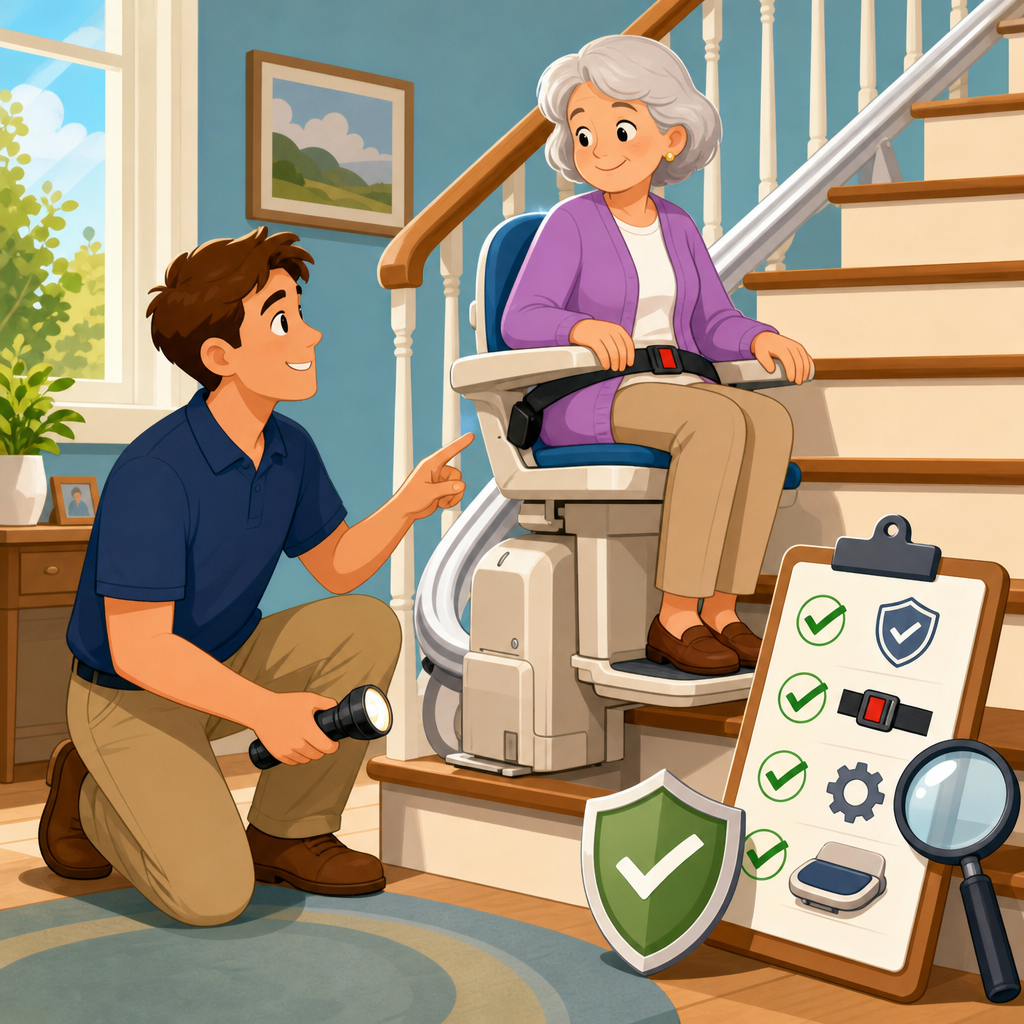
Budget chair lifts can be safe, but safety depends far more on engineering, installation quality, and long-term maintenance than on sticker price alone. In the stair lift industry, “budget-friendly options” usually refers to straight-rail models, basic seat packages, reconditioned units, rental programs, and entry-level brands that remove premium features without changing the core transport function. That distinction matters because shoppers often assume a low price automatically means lower safety, while others make the opposite mistake and focus only on affordability. After helping families compare stair lift quotes, inspect homes, and review product specifications, I have found that the safest budget chair lift is usually the one that matches the staircase correctly, is installed by a qualified technician, and has clearly documented safety systems.
Chair lifts, also called stair lifts or stair chairs, are motorized seats that travel along a rail fixed to the stairs. Most residential models use a battery-powered drive system, call/send controls, seat belts, swivel seats, obstruction sensors, and charge points at the top or bottom of the rail. For older adults, people recovering from surgery, and users with limited mobility, a stair lift can reduce fall risk dramatically. The buying challenge is that prices vary widely. A basic straight stair lift may cost a fraction of a custom curved model, and online marketplaces now advertise “cheap stair lifts” with sparse technical details. This article explains what to watch out for when evaluating budget chair lifts, how to separate cost savings from genuine risk, and which questions should guide any purchase under the broader Buying Guides & Product Reviews category.
What makes a budget chair lift safe or unsafe
A budget chair lift is safe when it meets the same essential performance standards as a premium model: stable rail mounting, controlled travel speed, dependable braking, adequate battery backup, secure seating, and reliable stop mechanisms. In practice, that means reviewing more than marketing claims. Ask whether the model complies with recognized standards such as ASME A18.1 in the United States, which covers platform lifts and stairway chairlifts. Reputable manufacturers and dealers should be able to explain compliance, load rating, incline limits, and required stair dimensions in plain language. If a seller cannot provide a specification sheet, installation checklist, or service documentation, that is an immediate warning sign regardless of price.
Unsafe budget options usually fail in one of three areas. First, the product may be underbuilt: weaker seat frames, lower-grade gearboxes, thin carriage housings, or minimal weather protection on outdoor models. Second, the installation may be rushed or outsourced to technicians with limited stair lift experience. A correctly designed rail can still perform poorly if brackets are spaced improperly, charge contacts are misaligned, or the seat is not leveled. Third, after-sales support may be weak. I have seen inexpensive lifts become unusable because replacement batteries, remote controls, or diagnostic service were unavailable locally. Safety is not just about the first week of ownership; it is about whether the lift remains dependable over years of daily use.
Core safety features every buyer should verify
Every chair lift, including budget-friendly options, should have a few non-negotiable safety features. Start with a seat belt. Many manufacturers offer a retractable belt or a fixed lap belt, and it should be easy for the intended user to buckle with limited hand strength. Next, confirm the presence of obstruction sensors on the footrest and carriage. These sensors stop the lift if it contacts an object on the stairs, reducing the chance of pinning a pet toy, shoe, or mobility aid. A swivel seat lock at the upper landing is also critical because it lets the user exit facing away from the stairs rather than stepping sideways toward the drop.
Battery backup is another must-have. Most modern stair lifts charge continuously at one or both ends of the rail and can make several trips during a power outage. Ask how many trips the batteries support when fully charged and how often batteries typically need replacement. Soft-start and soft-stop programming improves comfort and control, especially for users with back pain or poor trunk stability. A manual lowering system or emergency stop can add another layer of protection. Weight capacity deserves careful attention too. Budget models often carry 250 to 300 pounds, while heavy-duty lifts may support 350 to 600 pounds. Buying a cheaper lift with too little capacity is not a value decision; it is an unsafe mismatch.
| Safety checkpoint | Why it matters | What to ask the seller |
|---|---|---|
| Seat belt | Keeps user positioned during travel | Is it standard, retractable, and easy to operate? |
| Obstruction sensors | Stops lift if it hits an object | Where are sensors located: footrest, carriage, both? |
| Swivel seat lock | Safer exit at top landing | Does the seat lock securely at 45 or 90 degrees? |
| Battery backup | Works during outages | How many trips can it make without mains power? |
| Weight capacity | Prevents overload and strain | What is the tested user weight limit? |
| Standards compliance | Signals baseline engineering quality | Which codes or standards does the model meet? |
Where low prices come from and when the tradeoff is reasonable
Low stair lift pricing is not automatically suspicious. In many cases, the price drops because the staircase is straight, the rail is modular, and installation is faster. Straight stair lifts are manufactured in higher volume than curved systems, so they benefit from economies of scale. Dealers may also lower costs by offering standard upholstery, simpler call/send remotes, or a shorter warranty on parts. Reconditioned stair lifts can be another sensible budget path when the rail and carriage are professionally inspected, fitted with new batteries, tested under load, and backed by service support. Rentals are often cost-effective for temporary mobility needs after injury or surgery.
The tradeoff becomes risky when the low price depends on omitting essentials. For example, some ultra-cheap listings are effectively “supply only,” leaving the buyer to find independent installation without model-specific training. Others use generic photos and fail to state rail type, seat width, folded profile, or minimum staircase width. Outdoor stair lifts offered at indoor-model prices can also be misleading if they lack sealed controls, weatherproof covers, and corrosion-resistant components. As a rule, a fair budget option saves money through simpler configuration, not through missing safety equipment or nonexistent support. If the savings come from unknown provenance, undocumented refurbishment, or no service network, the lower price often costs more later.
Installation risks that matter more than the brand name
When families ask me whether a budget chair lift is safe, I usually start with the staircase and installer rather than the logo on the seat back. Most stair lift failures I have encountered in the field were installation or fit issues, not catastrophic manufacturing defects. The rail must be mounted to the stair treads at the correct spacing and torque, the carriage must track smoothly through the full incline, and the charging points must align reliably. On narrow stairs, folded footrest depth and arm width can affect both user comfort and pedestrian clearance. If the dealer skips a proper site survey, the chance of a poor fit rises sharply.
Ask whether the company performs an in-home assessment, measures stair pitch, checks top and bottom landing space, and reviews the user’s transfer ability. A strong installer will discuss whether the user can sit safely, operate the seat belt, and stand from the seat at the destination landing. They should also test the lift with the user present and explain parking positions, charging behavior, and manual controls. Permitting requirements vary by location, but reputable providers know the local rules. Be cautious with online-only sellers who ship a unit based on a few phone measurements. Precision matters. A lift that technically fits the stairs can still be unsafe if exit clearance, seat height, or rail overrun are wrong for the person using it.
Used, reconditioned, and rental stair lifts
Some of the best budget-friendly options are used or rental stair lifts, but they are only safe when rebuilt and supported properly. A quality reconditioned stair lift should include a documented inspection of the motor, gearbox, carriage rollers, seat swivel, charge system, remotes, and safety edges, plus new batteries and any worn cosmetic or structural parts. Dealers should identify the original manufacturer and model, confirm availability of replacement parts, and explain what exactly was reconditioned. I strongly prefer refurbished units from established brands such as Bruno, Harmar, Stannah, Access BDD, or Acorn over no-name imports with uncertain parts pipelines.
Rentals can be ideal for short-term recovery because they spread costs and usually include removal. However, the same safety rules apply. Confirm the age of the unit, service intervals, and whether the rail is new or reused. Curved stair lifts are rarely economical to rent because the rail is custom made, but straight rentals are common. Avoid peer-to-peer used purchases unless a certified stair lift technician will inspect and reinstall the unit. A stair lift taken from another home may be missing hardware, have worn batteries, or simply not match your stair geometry. The biggest mistake buyers make with secondhand equipment is assuming a successful ride in the seller’s house proves safe operation in theirs. It does not.
How to compare budget-friendly options with confidence
The safest way to compare budget chair lifts is to use a structured checklist that balances product, fit, and service. Start with staircase type: straight, curved, indoor, outdoor, narrow, or high-capacity. Then compare the folded width, seat height, arm spacing, and maximum load. Review warranty coverage separately for motor, gearbox, batteries, electronics, and labor, because budget brands often advertise a long headline warranty while limiting labor to one year. Ask about maintenance intervals, local technician coverage, average repair response time, and battery replacement cost. These details reveal the real ownership experience better than a sales brochure.
It also helps to compare the total installed price, not just the unit cost. A quote should state rail length, overruns, power supply requirements, installation labor, permit fees if applicable, and removal terms for rentals. Read reviews carefully for patterns: repeated comments about delayed service, jerky rides, or charging failures matter more than generic five-star praise. If you are building a broader shortlist, use this hub as your starting point and then move into related guides on straight versus curved lifts, refurbished models, rental programs, outdoor stair lifts, heavy-duty options, and stair lift warranty coverage. Budget-friendly options can be excellent purchases, but only when the comparison process is disciplined and the seller is transparent.
Red flags buyers should never ignore
Several warning signs consistently predict problems. The first is missing technical documentation. If the seller cannot provide a user manual, installation method, weight rating, and maintenance guidance, walk away. The second is vague claims such as “universal fit” or “works on all stairs.” Stair lifts are not universal; they are constrained by rail design, staircase width, landing space, and user needs. Third, avoid listings that do not identify the manufacturer clearly. Brand anonymity makes parts support and recall tracking difficult. Fourth, be wary of prices far below the market average without explanation. In mobility equipment, deep discounts usually reflect missing services, unknown condition, or poor parts availability.
Another major red flag is pressure selling. A trustworthy dealer will encourage measurement, comparison, and questions about service response. They will not insist that only one model fits if they have not surveyed the home. Finally, pay attention to usability. A lift can pass a demonstration and still be wrong for the user if the seat is too high, the controls are too small, or the swivel lever requires too much force. Safety includes human factors. For many older adults, the right budget stair lift is the one they can use confidently every day without assistance, because an unused lift provides no protection from falls.
Budget chair lifts are safe when buyers treat price as one variable, not the deciding factor. The best budget-friendly options usually share the same core protections found on more expensive lifts: seat belts, obstruction sensors, battery backup, controlled starts and stops, secure swivel seats, and clear weight limits. What separates a good low-cost purchase from a risky one is fit, installation quality, standards compliance, and dependable service after the sale. Straight stair lifts, rentals, and professionally reconditioned models often deliver the strongest value because they reduce customization costs without stripping away essential safety systems.
If you are shopping within the Buying Guides & Product Reviews section, use this page as your hub for evaluating budget-friendly stair lift choices. Build a shortlist, verify documentation, insist on an in-home assessment, and compare installed cost, warranty terms, and local service coverage before you commit. A careful review now can prevent expensive repairs, unsafe operation, and avoidable falls later. Start by requesting detailed quotes from reputable dealers and asking each one the same safety questions. That simple step will quickly show which budget chair lift is actually worth buying.
Frequently Asked Questions
Are budget chair lifts actually safe to use?
Yes, budget chair lifts can be safe, but price alone does not determine safety. In most cases, a lower-priced stair lift is simply a more basic configuration rather than a poorly designed one. Budget-friendly models often focus on core transportation features and remove nonessential upgrades such as powered swivels, premium upholstery, custom finishes, or advanced display controls. A straight-rail lift for a standard staircase, for example, is usually less expensive because it is simpler to manufacture and install, not because it is inherently unsafe.
What matters most is whether the lift comes from a reputable manufacturer, is installed correctly, and is maintained over time. A safe chair lift should include fundamental protections such as a seat belt, obstruction sensors, reliable braking, smooth start-and-stop operation, and a seat that locks securely into position. It should also be matched to the user’s weight, mobility needs, and staircase dimensions. In other words, the real safety question is not “Is it cheap?” but “Was it engineered well, fitted properly, and kept in working condition?” A basic model that meets these standards can be far safer than a premium-looking unit that is poorly installed or neglected.
What should I watch out for when comparing lower-cost stair lift options?
The biggest red flags are not always visible in the sales price. Shoppers should look beyond the quote and ask detailed questions about installation standards, service support, warranty coverage, parts availability, and the condition of the unit if it is reconditioned. A low upfront price can become much less appealing if the lift has limited service access, no local technician network, or expensive replacement parts. Safety depends on long-term reliability, so support after the sale is just as important as the equipment itself.
You should also be cautious if a seller cannot clearly explain the lift’s safety features, weight capacity, track fit, battery backup, and maintenance requirements. Watch for vague claims such as “universal fit” or “easy install” without a proper home assessment. Stair lifts are not one-size-fits-all products, and a rushed or inaccurate installation can affect rail stability, seat positioning, and safe entry and exit. If you are considering a used or reconditioned lift, ask whether key wear components were inspected or replaced, whether the batteries are new, and whether the rail and carriage were tested under load. The safest budget purchase is one backed by transparent information, qualified installation, and dependable service—not simply the cheapest listing you can find.
Are reconditioned or rental chair lifts safe for long-term use?
They can be, provided they are refurbished and installed by a reputable company. Reconditioned and rental stair lifts are common ways to reduce costs, and many are perfectly safe when handled professionally. In fact, these options often come from established manufacturers and may have a long record of dependable performance. The key difference is that they must be carefully inspected for wear, updated where necessary, and matched correctly to the new user and staircase. A reconditioned unit should never be treated like an unknown secondhand appliance that is simply moved from one home to another without testing.
If you are considering one, ask exactly what “reconditioned” means. A trustworthy provider should be able to explain what parts were replaced, how the motor and drive system were evaluated, whether new batteries were installed, and what testing was completed before reinstallation. It is also wise to ask about the age of the model, the availability of future parts, and whether the rail is new or reused. Rental units can be especially practical for temporary recovery periods, but they still need the same careful installation and safety checks as permanent systems. Long-term safety comes from the quality of refurbishment, the installer’s expertise, and ongoing maintenance—not from whether the unit was originally sold as new.
Does a basic stair lift have fewer safety features than an expensive one?
Sometimes it has fewer convenience features, but not necessarily fewer essential safety features. That is an important distinction. Many entry-level chair lifts still include the core protections that make stair lift travel safe: a seat belt, locking swivel seat, obstruction sensors, battery backup, speed regulation, and dependable braking. More expensive models often charge more because they add comfort, customization, or usability upgrades such as powered footrests, automatic folding rails, slimmer profiles, upgraded seating, or features designed for more complex staircases.
The safest way to evaluate a basic lift is to separate “must-have safety functions” from “nice-to-have premium features.” For example, a manual swivel seat may be less convenient than a powered swivel, but it can still be safe if it locks properly and is easy for the user to operate. Likewise, a straightforward straight-stair model may cost much less than a curved unit simply because the engineering is less customized, not because the manufacturer cut corners on braking or stability. The real concern is whether the basic model still suits the user’s physical needs. If someone has limited hand strength, balance issues, or trouble operating manual controls, then a stripped-down lift may become less safe in practice even if its core design is sound. Safety is not just about the machine’s feature list; it is also about how well the machine fits the person using it.
How can I make sure a budget chair lift stays safe over time?
Ongoing maintenance is one of the most important parts of stair lift safety, especially with budget-conscious purchases. Even a well-built lift can become less reliable if batteries weaken, sensors get dirty, moving parts wear down, or alignment issues go unchecked. To keep a chair lift safe, follow the manufacturer’s maintenance schedule, arrange professional servicing when recommended, and pay attention to changes in performance such as jerky starts, unusual noises, inconsistent stopping, or error lights. Small issues often appear before major failures, and addressing them early helps protect both the user and the equipment.
Daily safe use also matters. Keep the staircase clear, make sure the seat is fully locked before riding, use the seat belt every time, and avoid exceeding the lift’s rated weight capacity. Family members or caregivers should know how the controls work and what signs suggest the lift needs inspection. If the user’s mobility changes over time, it may also be necessary to reassess whether the current model is still appropriate. A budget chair lift can remain safe for years if it is professionally installed, properly serviced, and used as intended. In the long run, consistent upkeep is often a bigger factor in safety than whether the unit started out as an entry-level model or a premium one.