


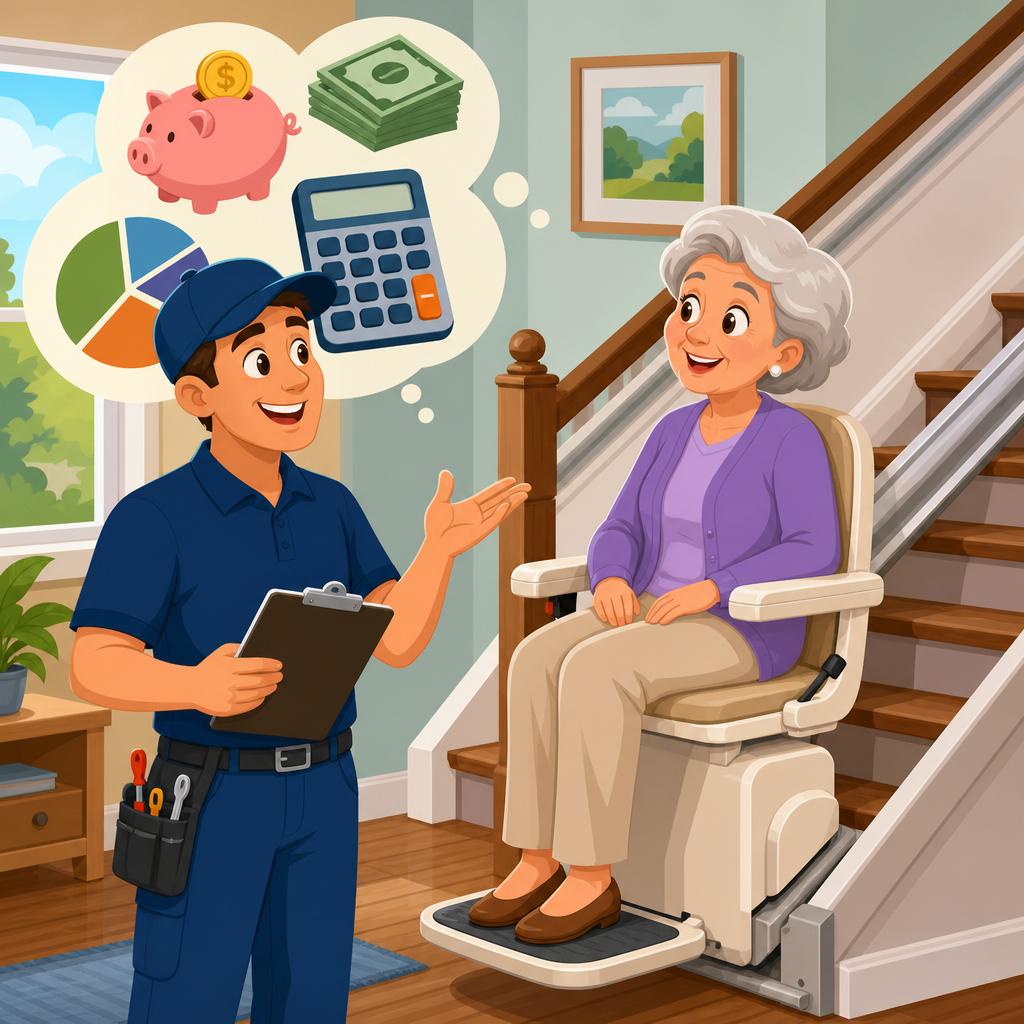
Chair lift installation costs vary far more than most homeowners expect, and the average installation fees for chair lifts explained clearly can help families budget without surprises. In practical terms, a chair lift is a motorized seat that travels along a rail attached to a staircase, allowing a person with limited mobility to move safely between floors. The total price includes more than the chair itself. It usually combines equipment, rail configuration, electrical setup, delivery, labor, permits in some areas, and follow-up service. When people ask, “How much do chair lifts cost?” they are often really asking for the full installed price, not just the catalog price of the unit.
From working with home access projects, I have seen quotes range from a few thousand dollars for a straight stair lift to well above ten thousand dollars for a curved system with custom fabrication. That spread exists because no two staircases are exactly alike, and because buyers have very different needs. A compact indoor model for a single user costs less than a heavy-duty outdoor lift rated for higher weight capacity and weather exposure. A simple rail on a short staircase installs faster than a custom rail wrapping around multiple landings.
This topic matters because chair lifts are usually purchased under time pressure. A fall, surgery, stroke, Parkinson’s progression, or caregiver strain can turn stairs into an immediate barrier. Families need clear price ranges, not vague promises. They also need to understand where installation fees come from, what can increase the bill, which add-ons are worth paying for, and what financing or funding sources may help. As the hub page for cost and financing options, this guide explains average installation fees for chair lifts, outlines the major cost drivers, and gives you a practical framework for comparing quotes with confidence.
What the average installed cost of a chair lift really includes
For most homeowners, the installed cost of a chair lift is the only number that matters. A straight indoor chair lift commonly lands between about $2,500 and $5,500 installed. Curved indoor models often run from $9,000 to $20,000 or more because the rail must be measured and manufactured specifically for the staircase. Outdoor chair lifts typically start around $4,000 and can exceed $12,000 depending on length, weatherproofing, and weight capacity. Those ranges reflect common U.S. market pricing and help answer the baseline question, “How much do chair lifts cost?”
Installation fees are often bundled into the quote, but they still represent real work and real expense. The technician must assess the staircase, confirm code-clearance and obstruction issues, assemble the rail, mount brackets to stair treads, calibrate stop positions, test battery charging points, and verify seat swivel and safety sensors. In straightforward jobs, labor may account for several hundred dollars to roughly $1,500. In more complex installations, labor and setup can climb higher, especially when the project includes rail modifications, unusually tight turns, or site access challenges.
Some buyers focus only on the advertised base price and miss the extra line items. Delivery can be separate. Removal of an old lift may add a fee. Permit requirements vary by locality, though many standard installations do not require one. Electrical work is usually minimal because modern lifts typically run on rechargeable batteries with a charging point at the rail, but adding an outlet nearby can still cost extra if none exists. Service plans and extended warranties may also be offered at checkout.
The key takeaway is simple: the average installed price is not just the chair. It is the combined cost of product selection, staircase fit, labor, and operational readiness. If a quote seems unusually low, ask what has been excluded.
Straight, curved, and outdoor models: why design changes the price
The fastest way to understand chair lift pricing is to separate lifts into three categories: straight, curved, and outdoor. Straight stair lifts are the least expensive because they fit a staircase with no turns or intermediate landings. The rail comes in standard sections, measurements are simpler, and installation is faster. This is why straight models dominate the lower end of the market and are frequently available as rental units or refurbished options.
Curved chair lifts cost much more because each rail is custom built. If the staircase bends, changes direction, or includes a landing that must be navigated, the manufacturer uses detailed measurements or digital mapping to create a rail that matches the home exactly. That custom production adds engineering time, fabrication cost, shipping complexity, and usually longer lead times. In real homes, this difference is dramatic. A homeowner may pay around $3,500 for a straight lift, while a curved system on a staircase with two turns can exceed $14,000 before premium features are added.
Outdoor chair lifts sit in the middle or upper range because they must handle moisture, temperature swings, UV exposure, and debris. The rail and seat materials are treated or upgraded for durability. Most include a protective cover, and many use higher-grade finishes to resist corrosion. Installation can also be more difficult because of porch geometry, concrete steps, or the need to preserve a safe walking path. If the staircase is exterior and curved, costs rise again because weatherproofing and custom rail fabrication are combined.
| Chair lift type | Typical installed cost | Main reason for price level | Common use case |
|---|---|---|---|
| Straight indoor | $2,500 to $5,500 | Standard rail, faster installation | Single run staircase with no turns |
| Curved indoor | $9,000 to $20,000+ | Custom rail engineering and fabrication | Staircase with bends or landings |
| Outdoor | $4,000 to $12,000+ | Weather-resistant materials and added setup | Porch, deck, or exterior steps |
If you are comparing options across categories, do not assume a bigger price tag always means a better unit. In most cases, it simply reflects the demands of the staircase and environment.
Installation fee breakdown: labor, measurements, power, and customization
Average installation fees for chair lifts explained in detail come down to four major buckets: labor, measurement, power readiness, and customization. Labor is the visible part. Most straight lifts can be installed in a few hours by trained technicians. Curved lifts can take longer because exact rail alignment matters more and the assembled system is heavier and more complex. Installers mount the rail to the stair treads rather than the wall in most residential setups, which usually minimizes structural changes to the home.
Measurement costs are easy to underestimate. For straight lifts, a technician can often measure quickly and use standard rail stock. For curved lifts, precision is critical. Companies may use photo measurement systems or digital tools to capture each angle, rise, run, and landing transition. A small error can delay manufacturing or require field adjustments. That process is one reason curved installations carry higher setup fees even before the rail arrives.
Power readiness is another factor. Most modern lifts charge from a standard household outlet, and the battery drives the lift even during a power outage. This is a major safety advantage and now common among brands such as Bruno, Harmar, and Stannah. However, if the nearest outlet is poorly located, inaccessible, or absent, an electrician may need to add one. That cost is not always included in the chair lift quote. Older direct-power systems are less common but may have different electrical requirements.
Customization can add meaningful cost. Examples include a folding rail at the bottom to reduce trip hazards near a doorway, a power swivel seat for users with limited trunk strength, a larger seat or higher weight capacity, upgraded upholstery, or a hinged rail to keep a hallway clear. None of these features are automatically unnecessary. In several home assessments I have seen, a power footrest or power swivel was the difference between independent use and caregiver assistance. The right way to judge add-ons is to ask whether they reduce transfer risk, improve fit, or solve a real access problem. If yes, they are functional upgrades, not cosmetic extras.
What makes one chair lift quote higher than another
Two quotes for the same staircase can differ by thousands of dollars, and the reasons are usually concrete. Brand reputation matters. Established manufacturers often price higher because they offer stronger dealer networks, longer parts support, and more refined diagnostics. Dealer experience matters too. A highly qualified local installer may charge more than a discount reseller, but better measuring, cleaner installation, and faster service response can save money over the life of the lift.
Weight capacity affects cost. Standard residential lifts often support around 300 to 350 pounds, while heavy-duty models may support 400 pounds or more. Higher-capacity systems need stronger components and sometimes larger seats or rails. Staircase length matters as well. A longer rail means more material, more shipping weight, and sometimes additional support brackets. Parking positions at the top or bottom can change the layout and affect rail length slightly.
Home layout can complicate the job. Narrow stairs may require a slimmer model or a more careful seat position to maintain walking clearance. Doorways or obstructions at the top landing can require a folding rail or custom stop placement. If the staircase ends directly into a hallway, the installer may recommend a hinged rail to prevent the rail from blocking the passage. These are common reasons one quote is higher but also safer.
Service coverage is another hidden variable. One company may include the first-year labor warranty, a service visit, and battery replacement terms, while another charges separately after installation day. Lead time also affects price. Faster turnaround, especially on curved rails, can come with premium scheduling or production costs. When comparing proposals, line up the details side by side: model name, rail type, weight rating, included features, warranty terms, service response, and total installed price. That is the only fair comparison.
New, used, and rental chair lifts: cost tradeoffs buyers should know
If budget is the main concern, buyers often ask whether a used or rental unit can cut installation fees. The answer is yes, sometimes significantly, but only in the right situation. Straight stair lifts are the best candidates for used or rental programs because the rails are standardized and can often be reconditioned. A refurbished straight lift may cost noticeably less than a new one, with installed pricing sometimes starting below the middle of the new-market range. Rentals may work well for short-term recovery after surgery or injury, especially when stair use is expected to improve within months.
Curved lifts are different. Because the rail is custom, the cost savings from a used chair unit are often limited. Even if the seat carriage is refurbished, a newly fabricated rail may still be required, which keeps total project cost high. That is why curved rentals are less common and often less economical than families expect. The expensive part is usually the custom rail, not just the chair.
There are tradeoffs with lower-cost options. Warranty coverage may be shorter on used equipment. Cosmetic wear is common. Available features may be more limited, and exact seat style or controls may not match the user’s needs. Still, for a straight staircase and a temporary need, rentals can be financially smart. Typical rental structures include an upfront installation fee plus ongoing monthly charges. Buyers should ask whether removal at the end of the rental is included, because that can affect the true total.
The practical rule is this: if the staircase is straight and the need may be temporary, explore used and rental options. If the staircase is curved or the user needs very specific seating, safety, or capacity features, a new unit usually offers the best fit and the most predictable support.
Financing, insurance, and ways to reduce out-of-pocket costs
Many families are surprised to learn that original Medicare typically does not cover chair lifts because they are generally classified as home modifications rather than durable medical equipment under standard rules. Some Medicare Advantage plans may offer supplemental benefits, but coverage varies widely. Medicaid waiver programs in some states may help when the lift supports community-based living and prevents institutional care. Veterans may have access to assistance through VA housing or accessibility programs, depending on eligibility and the purpose of the modification.
Beyond public programs, private long-term care insurance policies may provide benefits if the plan includes home modification support. Health savings accounts and flexible spending accounts can sometimes be used when documentation supports a medical necessity. Home equity lines of credit, medical financing programs, dealer financing, and local bank loans are common payment methods. Nonprofit organizations, Area Agencies on Aging, and state assistive technology programs can also point families toward grants or low-interest loan programs.
There are realistic ways to lower total cost without sacrificing safety. Get multiple quotes from authorized dealers. Ask whether a straight model is available in refurbished condition. Request line-item pricing so you can see whether a power swivel, folding rail, or extended warranty is driving the increase. If the need is short term, compare the rental total over six to twelve months against the purchase price. Also ask about battery replacement schedules and annual maintenance so you can budget beyond installation day.
The smartest next step is to schedule an in-home assessment with two or three reputable providers and compare complete installed quotes, not headline prices. When you understand the staircase type, the installation fee components, and the funding options available, you can choose a chair lift that fits both mobility needs and financial reality.
Frequently Asked Questions
What is typically included in the average installation fees for a chair lift?
Average installation fees for a chair lift usually cover much more than simply placing the chair on the stairs. In most cases, the total project price includes the lift unit itself, the rail or track system, delivery, basic installation labor, and system testing to make sure the lift operates safely. Many quotes also include standard seat features, call/send controls, a battery backup system, and a charging setup so the lift remains functional during a power outage.
That said, what is included can vary by company and by staircase design. A straightforward installation on a standard straight staircase tends to involve fewer parts and less labor, so the quote is often simpler and easier to understand. If the home requires rail modifications, a custom fit, extra power work, or removal of an old unit, those items may appear as separate charges rather than being bundled into the base installation fee. Homeowners should always ask for an itemized estimate so they can see exactly how much is being charged for equipment, labor, electrical preparation, and any optional upgrades.
Why do chair lift installation costs vary so much from one home to another?
Chair lift installation costs can differ significantly because no two staircases are exactly alike. The biggest cost factor is the type of staircase. A straight staircase is generally the least expensive because it uses a standard rail and requires less customization. A curved staircase, a staircase with landings, or one with unusual angles almost always costs more because the rail must be specially designed and manufactured to fit the home precisely.
Labor conditions also affect the final price. Installers may need more time if the staircase is narrow, if the home has limited access for bringing in materials, or if there are structural concerns that need attention before installation begins. Electrical requirements can add to the total as well, especially if a nearby outlet is not available or if additional work is needed to support the charging system. On top of that, optional features such as power swivel seats, folding rails, upgraded upholstery, higher weight capacities, or outdoor-rated materials can all raise the project cost. This is why the average installation fees for chair lifts explained in a clear way are so important: the “average” only provides a starting point, while the actual quote depends heavily on the home and the user’s needs.
How much more does a curved chair lift usually cost compared with a straight chair lift?
A curved chair lift usually costs substantially more than a straight chair lift, and the difference often surprises homeowners. Straight stair lifts are more affordable because they rely on standardized rail sections that can be cut and fitted with relatively simple installation work. Curved models, on the other hand, require custom-engineered rails that match every turn, landing, and angle of the staircase. That custom fabrication is one of the main reasons the overall installation fee rises so quickly.
In addition to the custom rail, curved installations often involve more detailed measuring, longer lead times, and more complex labor during setup. Installers must make sure the chair moves smoothly around bends and stops accurately at each landing, which can take more precision and adjustment than a straight run. If a homeowner is comparing bids, it is important not to focus only on the chair itself. The rail design, production, and installation labor are often the biggest drivers of price in a curved system. For budgeting purposes, families should expect curved chair lifts to sit well above the cost range of basic straight models, sometimes by a wide margin depending on the staircase layout.
Are there any hidden or unexpected charges homeowners should ask about before installation?
Yes, homeowners should absolutely ask about potential extra charges before approving a chair lift installation. While many companies provide all-in pricing, others may list only the base equipment cost upfront and add related expenses later. Common additional charges can include extended rail sections, custom brackets, electrical work, permit fees where required, disposal of packaging or an old lift, and service call fees if a follow-up adjustment is needed after installation.
Another area to review carefully is optional equipment. Features such as a folding footrest, powered seat rotation, retractable rail, upgraded seat materials, outdoor weatherproofing, or heavy-duty capacity may not be included in the advertised starting price. Delivery to remote areas or homes with installation challenges can also affect the bottom line. The best way to avoid surprises is to request a written quote that clearly separates the chair lift equipment, rail system, labor, accessories, and any conditional charges. A reputable installer should be willing to explain what is included, what could increase the price, and what kind of warranty or maintenance support comes with the purchase.
Is professional installation worth the cost, or can a chair lift be installed as a DIY project?
For most homeowners, professional installation is absolutely worth the cost because a chair lift is a mobility and safety device, not just a household convenience item. Proper installation ensures that the rail is securely mounted, the chair is correctly aligned, the charging points are functioning, and the unit stops and starts exactly where it should. Since the lift will be used by someone who may already be at increased risk of falls, reliability matters far more than saving a small amount on labor.
DIY installation is generally not recommended unless the manufacturer specifically allows it and the installer has strong technical experience. Even then, there are important safety, warranty, and performance concerns to consider. A poorly installed chair lift can create jerky movement, charging problems, track misalignment, or unsafe transfers at the top and bottom landings. Professional installers also know how to assess the staircase, make necessary adjustments, test all safety features, and show the household how to use the system properly. In many cases, choosing professional installation protects the warranty and gives families added confidence that the lift will perform safely day after day.