


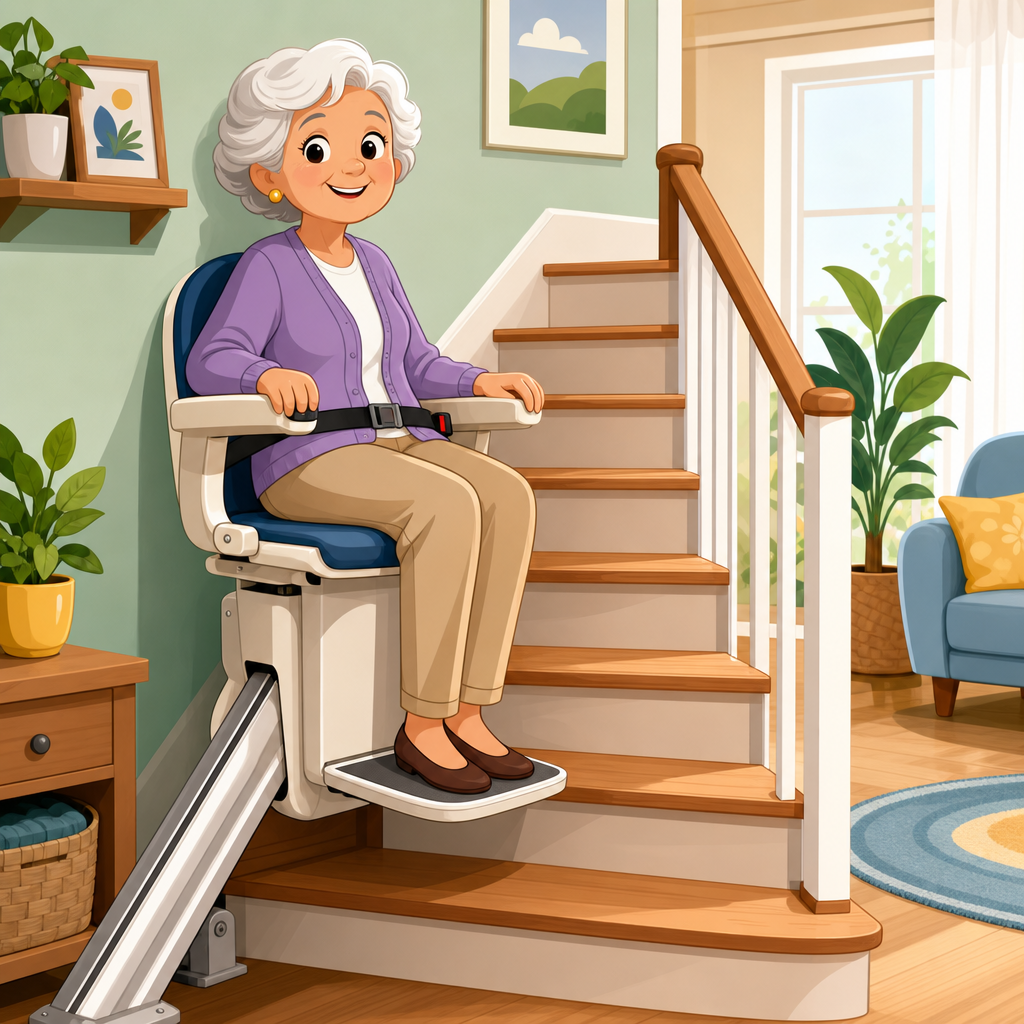
Best budget stair lifts for short staircases solve a very specific problem: how to make a compact flight of stairs safer without paying for unnecessary rail length, premium upholstery, or advanced features that do little for a simple layout. In practical terms, a short staircase usually means a straight run with roughly 8 to 12 steps, limited landing space, and no turns, intermediate landings, or spiral geometry. That matters because stair lift pricing is driven less by the chair itself than by engineering complexity, rail length, power options, and installation labor. When I help families compare quotes, the biggest savings nearly always come from matching the lift to the staircase instead of buying a model designed for a harder job.
A budget stair lift is not the cheapest unit on a website. It is the lowest-cost option that still meets safety standards, fits the user’s body and mobility needs, and can be serviced locally. Good short-staircase buyers focus on total installed cost, not base price alone. That includes rail measurement, seat style, charging method, call/send controls, warranty length, and whether a dealer includes maintenance in the first year. Established manufacturers such as Bruno, Harmar, Stannah, Handicare, Access BDD, and Acorn all sell models that can work well on compact staircases, but the right choice depends on fit, support, and available refurbishment channels in your region.
This guide is the hub for budget-friendly options within stair lift buying guides and product reviews. It explains what makes a lift affordable, which features are worth paying for, where buyers often overspend, and how to compare new, used, and rental programs with confidence. If you are choosing for an older parent, planning to age in place, or trying to keep a recovery period safe after surgery, the goal is the same: dependable mobility at the lowest sensible cost. Short staircases are often the best case for affordability, because straight rails are simpler to manufacture, faster to install, and easier to source in refurbished condition. Understanding that advantage is how you keep the project practical and the quote realistic.
What makes a stair lift affordable on a short staircase
The most budget-friendly stair lifts for short staircases are almost always straight models with standardized rails. A straight stair lift rides on a rail fixed to the stair treads, not the wall, so installation is usually less invasive than buyers expect. On a simple staircase, many dealers can complete fitting in a few hours. Because the rail is straight, it can often be cut to length on site or supplied in modular sections. That manufacturing efficiency lowers cost compared with curved lifts, which typically require a custom rail built from exact measurements.
In real purchases, four variables determine affordability. First is rail design. Shorter rails mean lower material cost and easier handling. Second is seat and carriage capacity. Standard-duty lifts generally cost less than heavy-duty models with wider seats and reinforced drives. Third is power system. Battery-powered lifts dominate the market because they continue to operate during power outages and charge at stations on the rail; they also avoid the dedicated electrical work some older non-battery systems required. Fourth is local dealer support. A low online price is not a bargain if installation, service travel, and replacement parts are difficult to obtain afterward.
Short staircases also create opportunities for simplification. Many buyers do not need powered swivel seats, powered footrests, or decorative trim packages. Manual swivel seats and manual folding components are usually adequate on a straight indoor staircase where the rider has moderate upper-body control. Safety should never be stripped out, but convenience upgrades can inflate the quote quickly. The core safety package should include a seat belt, obstruction sensors, overspeed governor, lockable controls if children are present, and a reliably rated load capacity that exceeds the user’s weight with margin.
Best budget stair lift types and who they suit
For a short staircase, three value-oriented buying paths dominate: new entry-level straight lifts, certified reconditioned straight lifts, and short-term rentals. A new entry-level straight lift suits buyers who want a full manufacturer warranty, current parts availability, and minimal uncertainty about battery age or component wear. This is the cleanest option for long-term ownership and often the best choice when the user expects daily use for years. Models in this category typically include basic call/send remotes, folding seat and footrest, and standard upholstery choices.
Certified reconditioned lifts are often the sweet spot for price-conscious households. Reputable dealers inspect or replace wear parts such as batteries, charge contacts, rollers, and seat belts, then test the drive system before resale. On short straight stairs, refurbished stock is easier to source because rails and carriages are common. I have seen families save substantially this way while still getting safe, reliable performance, provided the dealer offers installation, a written warranty, and access to service technicians rather than acting only as a reseller.
Rentals make sense when the need is temporary, such as post-operative recovery, hospice support, or a visitor with limited mobility. The economics are straightforward: rentals usually reduce upfront spending but can cost more over time if kept for many months. Some dealers install a used carriage on a new or reconditioned rail and charge a setup fee plus monthly rental. For a short staircase, that setup fee is often lower than on longer runs, which improves value.
| Option | Best for | Main cost advantage | Main tradeoff |
|---|---|---|---|
| New straight lift | Long-term daily use | Full warranty and latest parts | Highest upfront price |
| Certified reconditioned lift | Budget-conscious permanent use | Lower installed cost on common straight stairs | Warranty is usually shorter |
| Rental stair lift | Temporary mobility needs | Low initial outlay | Can become expensive over longer periods |
Features worth paying for and extras you can skip
When buyers ask how to cut cost without cutting safety, I separate features into essentials, high-value upgrades, and optional extras. Essentials are non-negotiable: battery backup, obstruction sensors on the footrest and carriage, a stable seat belt, swivel-and-lock seat at the top landing, and clear call/send controls. Most reputable manufacturers include these by default because they align with modern safety expectations and standard product design.
High-value upgrades depend on the user. A powered folding footrest is useful when bending is difficult. A perch seat can help users with restricted knee flexion on narrow stairs, though it is more specialized and not ideal for everyone. A hinged rail, sometimes called a folding rail, can be worth the added expense if the rail would otherwise obstruct a doorway or walkway at the bottom. On very short staircases near an entrance hall, this upgrade can prevent daily frustration and reduce trip risk for other household members.
Extras that often fail the budget test include premium upholstery packages, decorative rail colors, and remote features that duplicate functions already available on the armrest. Powered swivel seats can be excellent for users with severe trunk weakness, but they are not automatic must-haves. If the rider can safely operate a manual swivel lever, the simpler system usually saves money and maintenance complexity. The right approach is to match every upgrade to a specific mobility limitation or layout problem. If it does not solve one of those, it probably belongs on the skip list.
Leading brands, common models, and realistic price expectations
Several established brands consistently appear in budget discussions because they offer straightforward straight-lift models and broad dealer networks. Bruno’s Elan is commonly cited as a compact indoor straight stair lift with a good reputation for reliability and fit on narrow staircases. Harmar’s Pinnacle series is another familiar option, known for a slim profile and efficient drive design. Acorn’s 130 is widely marketed and often available through local dealers. Handicare and Access BDD also provide straight-lift lines in many markets, while Stannah dealers sometimes have reconditioned inventory that can be competitive even when new units sit at a higher price point.
Pricing varies by region, dealer structure, and included service, but broad expectations are useful. In many markets, a new straight stair lift for a short staircase lands in the lower end of the straight-lift range because rail length is limited. Reconditioned units typically reduce that number meaningfully, while rentals replace purchase price with installation and monthly fees. The figure to focus on is the all-in installed quote. Ask whether it includes rail cutting, power supply setup, two remote controls, warranty labor, first-year service, and removal terms if the lift is later no longer needed.
Be cautious with online list prices that exclude installation. I have reviewed quotes where the advertised bargain became average or even expensive once freight, local fitting, and warranty call-out charges were added. A realistic budget comparison always uses like-for-like totals and asks the dealer to itemize every line.
How to compare quotes and avoid expensive mistakes
The fastest way to overspend is to compare stair lifts by brochure claims instead of by staircase fit, user needs, and dealer support. Start with a simple checklist. Measure the staircase roughly, count steps, note width, and identify any bottom-doorway conflicts. Then define the rider’s needs: weight, height, hip width, transfer ability, and hand strength. A model that looks inexpensive may become unsuitable if the seat is cramped, the footrest is awkward, or the arm controls are too small for arthritic hands.
Next, get at least three quotes from authorized or experienced dealers. Ask each one whether the lift is new, reconditioned, or rental; whether batteries are new; how long parts are stocked; and what the response time is for service calls. Request the warranty in writing. Manufacturer warranties and dealer labor warranties are not the same thing. Some low quotes use a short parts warranty and minimal labor coverage, which shifts risk back to the buyer.
Also ask about standards and installation practice. Stair lifts should be installed according to manufacturer requirements, with correct tread fixing, charging points, final limit settings, and safety checks. A proper handover includes user instruction, demonstration of folding parts, seat swivel operation, emergency stop behavior if present, and battery charging explanation. If the dealer cannot clearly describe those steps, the price advantage is not worth the uncertainty.
New versus used versus rental for budget-conscious buyers
Choosing between new, used, and rental depends on duration of need, tolerance for risk, and available cash. New is the simplest long-term decision. You pay more up front, but you receive current components, a clearer service path, and usually the strongest warranty package. If the user will rely on the lift multiple times every day, that predictability has real value.
Used or reconditioned is ideal when the staircase is straight and the dealer has local inventory. The best sellers replace consumables, test safety circuits, verify charger operation, and disclose the age of the unit. Avoid private-party purchases unless an established technician will inspect and install the lift. Stair lifts are safety devices, not casual secondhand furniture. Improper removal, missing brackets, worn batteries, or incorrect limits can all create avoidable hazards.
Rental is best viewed as a medical-timeline product. If the rider is expected to recover within a few months, rental often wins. If recovery becomes indefinite, buying can quickly overtake rental in value. Ask whether rental payments can be credited toward purchase, because some dealers offer a conversion path that reduces regret if circumstances change.
Financial help, local support, and final buying guidance
Many buyers miss legitimate ways to lower out-of-pocket cost. Depending on location, assistance may come from veterans’ programs, Medicaid waiver pathways, state assistive technology programs, nonprofit aging organizations, or local councils and county agencies. Health insurance often does not cover stair lifts as standard durable medical equipment, but exceptions and supplemental programs exist. Tax treatment may also help in some cases when the lift is medically necessary, though professional advice is important before claiming deductions.
The practical takeaway is simple. For short staircases, the best budget stair lifts are usually straight battery-powered models from established brands, bought through a dealer who can install and service them locally. Reconditioned units often deliver the strongest value, rentals are useful for short-term needs, and new lifts make sense for long-term daily dependence. Spend on safety, fit, and support; save on decorative extras and convenience features the rider will not truly use.
As the hub for budget-friendly options, this guide should help you narrow the field before you dive into individual model reviews, used-versus-new comparisons, rental breakdowns, and funding resources. Start by defining the staircase, the rider, and the expected duration of use. Then compare all-in quotes, not teaser prices. A short staircase gives you a cost advantage; a careful buying process turns that advantage into a safer home at a manageable price. Gather three local quotes, ask better questions, and choose the stair lift that solves the mobility problem without paying for complexity you do not need.
Frequently Asked Questions
What makes a stair lift a good budget choice for a short staircase?
A good budget stair lift for a short staircase is one that matches the layout without adding cost for features you do not need. On a simple, straight staircase with around 8 to 12 steps, the biggest pricing advantage usually comes from the rail design. Straight rails are far less expensive than custom curved rails because they are standardized, easier to manufacture, and quicker to install. That is why homeowners with short, uncomplicated stair runs are often in the best position to find an affordable solution.
Beyond the rail, the best value comes from focusing on essentials: a reliable seat, smooth start-and-stop operation, basic safety sensors, a seat belt, swivel seat function for safer transfers, and simple call/send controls. Many budget-friendly models still include these core features because they are fundamental to safe daily use. Where costs rise is in upgraded upholstery, powered folding options, luxury seat styles, heavy customization, or premium brand add-ons that may not improve usability on a short, straight staircase.
In other words, the best budget choice is not necessarily the cheapest unit on the market. It is the stair lift that safely fits the staircase, supports the user’s mobility needs, and avoids unnecessary extras. A lower-priced model that fits properly and performs reliably is usually a better investment than a feature-heavy unit designed for more complex stairways.
Are straight stair lifts always cheaper than curved stair lifts for short staircases?
In most cases, yes. Straight stair lifts are almost always more affordable than curved stair lifts, even when the staircase is short. The reason is simple: straight stair lifts use modular, standardized rails that can be cut to length, while curved stair lifts require custom manufacturing to match turns, bends, or intermediate landings. That custom fabrication is what dramatically increases the price, not necessarily the number of steps alone.
For a short staircase that runs directly from one level to the next with no changes in direction, a straight model is typically the most economical option. Installation is usually faster, labor is more straightforward, and replacement parts may also be easier to source. This combination often lowers both upfront and long-term ownership costs.
However, homeowners should not assume that every short staircase automatically qualifies for the lowest possible price. Factors like narrow stair width, limited space at the top or bottom landing, wall obstructions, doorways near the rail, weight-capacity requirements, and local installation rates can still affect cost. Even so, if the staircase is truly straight and compact, a straight stair lift remains the most budget-friendly category by a wide margin.
How much should I expect to pay for a budget stair lift on a short staircase?
For a short, straight staircase, budget stair lift pricing is generally lower than many people expect because the rail is shorter and the installation is less complex. In broad terms, a basic straight stair lift for a compact staircase may fall into the lower end of the stair lift pricing spectrum, especially if it is a standard model from a well-known manufacturer. The final number depends on the brand, weight capacity, seat style, warranty coverage, installation labor, and whether the unit is new, refurbished, or rented.
Shorter stairs can reduce material cost somewhat, but it is important to understand that pricing is not based only on rail length. There are fixed costs built into nearly every installation, including the motorized chair unit, mounting hardware, service setup, and labor. That means a short staircase does not necessarily cut the price in half compared with a longer straight staircase, but it can still help keep the project within a more affordable range.
If budget is the top concern, ask for itemized quotes and compare what is included. Some companies bundle installation, warranty, and service calls, while others advertise a low base price and charge extra for essentials. Also consider certified pre-owned or refurbished stair lifts if available in your area. These can be a practical way to lower costs on a short staircase, provided the equipment is inspected, professionally installed, and backed by a meaningful warranty.
What features are worth paying for, and which ones can I skip to save money?
When shopping for the best budget stair lift for a short staircase, it helps to separate safety features from convenience upgrades. Features worth paying for usually include obstruction sensors, a seat belt, a swivel seat for safer entry and exit, dependable battery backup, and controls that are easy for the user to operate. These are not luxury items; they directly affect safety, reliability, and everyday usability. A foldable seat, armrests, and footrest can also be important if the staircase is narrow and the lift needs to stay out of the way when not in use.
Features you may be able to skip include premium fabric or leather-look upholstery, powered seat rotation if manual swivel works fine, decorative rail finishes, upgraded display panels, or advanced customization that does not improve function on a straight staircase. For a simple 8-to-12-step run, many households do perfectly well with a basic model that handles the core job safely and comfortably.
That said, “budget” should never mean compromising on proper fit or user needs. If the person using the lift has limited hand strength, poor balance, or difficulty bending, certain upgrades may be more than optional. A powered footrest or powered swivel seat, for example, can be genuinely helpful for some users. The smartest way to save money is to avoid paying for cosmetic or layout-specific extras while keeping the features that support safe and independent use.
Is it better to buy a new, used, or rental stair lift for a short staircase?
The right choice depends on how long the lift will be needed, the condition of the staircase, and how important warranty protection is to you. A new stair lift is usually the best option for long-term use because it offers the latest components, full manufacturer or dealer warranty coverage, and the greatest confidence in service life. For someone who expects to use the lift daily for years, a new straight stair lift on a short staircase can be a sensible value, especially since straight models are already the most affordable type.
A used or refurbished stair lift can be an excellent budget option if it comes from a reputable dealer that replaces worn parts, tests the equipment thoroughly, and includes professional installation and service support. Straight stair lifts are often better candidates for reuse than curved models because the rails are standardized and easier to adapt. This makes them especially practical for short, straight staircases where the goal is safe access at a lower cost.
Rental stair lifts can make sense if the need is temporary, such as recovery after surgery or a short-term mobility issue. However, rental programs are not always available in every market, and they are typically offered for straight staircases rather than curved ones. Over time, rental fees can exceed the cost of buying, so it is worth comparing the total projected cost over several months. In general, for short-term needs, rental may be the most economical; for moderate to long-term needs, a refurbished or new straight stair lift often provides better overall value.