


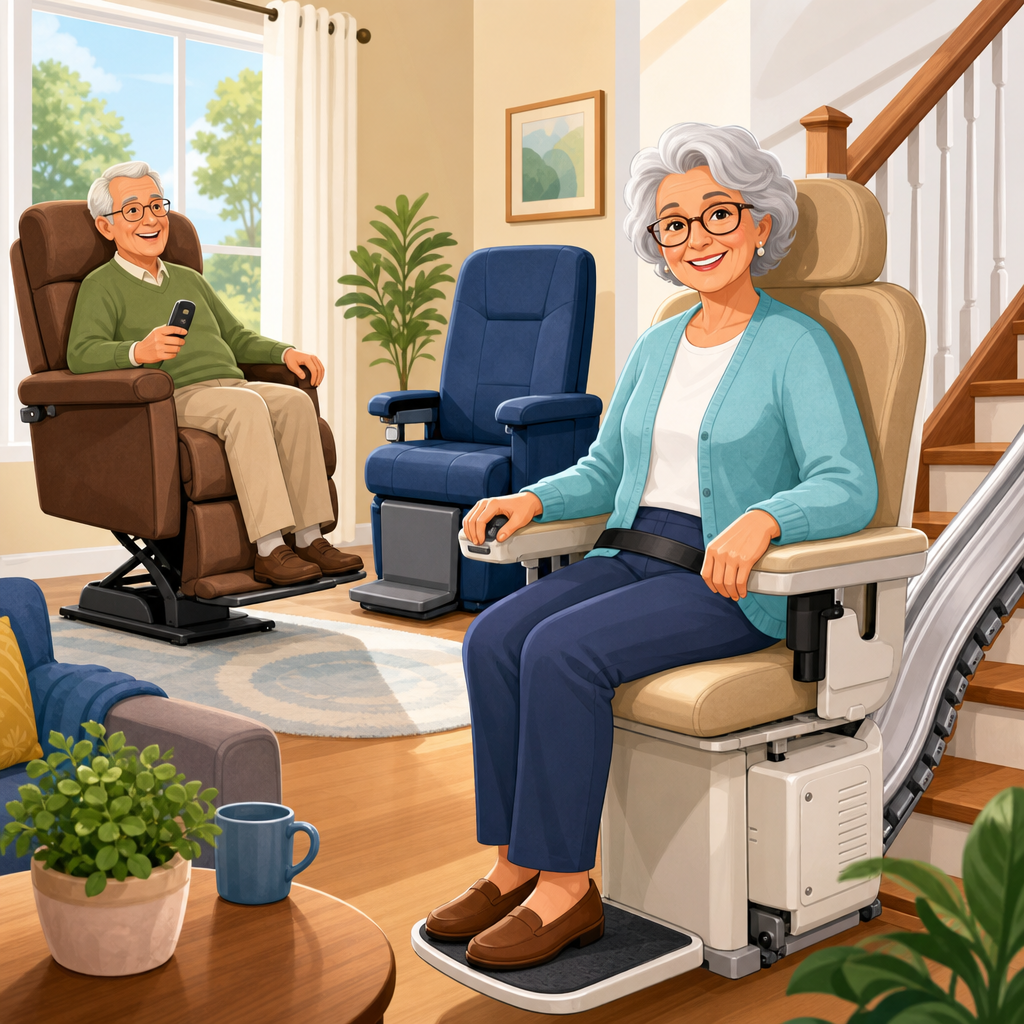
Chair lifts for seniors with arthritis or joint pain can restore safe, independent movement at home, but choosing the right model requires more than comparing prices or upholstery. A chair lift, often called a lift chair recliner, is a powered seat that gently tilts forward to help a person stand and reclines backward for comfort, pressure relief, or napping. For older adults with osteoarthritis, rheumatoid arthritis, spinal stenosis, hip pain, or knee degeneration, that movement support reduces the strain that usually comes from pushing up with sore joints. I have worked with families selecting mobility furniture for aging parents, and the biggest mistake I see is treating lift chairs like ordinary recliners. They are mobility devices first. The best chair lifts for seniors balance seat height, transfer safety, motor reliability, positioning options, and long-term comfort. This matters because poor seating can worsen pain, increase fall risk, and make daily routines harder than they need to be. A good lift chair supports independent living, reduces caregiver strain, and helps seniors remain active inside the home.
Not every senior needs the same type of chair lift. Someone with mild knee arthritis may do well with a compact two-position model that simply helps with standing. A person with advanced hip pain, edema, or post-surgical stiffness may need an infinite-position or zero-gravity chair with better pressure distribution and foot elevation. Weight capacity, armrest shape, fabric texture, backup battery, and remote-control design all affect usability. These details are especially important for seniors with hand pain or limited grip strength, because small buttons and stiff levers can turn a helpful chair into a daily frustration. In this guide, I will explain what features matter most, which lift chair categories fit specific pain patterns, how trusted brands differ, and what buyers should evaluate before ordering. If you are looking for the best chair lifts for seniors, this article gives you the complete framework needed to compare options confidently and choose a model that supports comfort, safety, and lasting mobility.
What Makes a Lift Chair Good for Arthritis and Joint Pain
The best lift chair for arthritis is one that reduces joint loading during both sitting and standing. That starts with correct seat dimensions. If the seat is too low, the knees flex too deeply and standing requires more force from painful hips and quadriceps. If the seat is too deep, the senior slides forward and loses lumbar support. In practical assessments, I look for a seat height that allows feet to rest flat with knees close to a ninety-degree angle. Medium and large chairs often work better than “one-size-fits-all” models because body proportions matter more than marketing labels. Armrests should be firm and high enough to provide leverage without forcing shoulder elevation, which can aggravate rotator cuff pain or hand arthritis.
Motor function is the next key factor. Two-position and three-position lift chairs can work for basic needs, but seniors with chronic pain often benefit from infinite-position systems using dual motors. These allow the backrest and footrest to move independently, so a user can find a pain-relieving angle without compromising transfers. For example, a senior with knee swelling may want the legs elevated higher than the heart, while someone with lumbar stenosis may need a slightly reclined torso with mild knee bend. Heat and massage are common add-ons, but they should be secondary. They can feel pleasant, yet they do not compensate for poor ergonomics, weak motors, or unstable lift motion. A sturdy steel frame, smooth actuator movement, and emergency battery backup are more important than luxury features.
Upholstery also affects pain management. Seniors with fragile skin, incontinence concerns, or long sitting periods usually do best with easy-clean performance fabric or medical-grade faux leather that reduces moisture retention. Overly soft padding can increase difficulty when transferring out of the chair, while overly firm foam can create pressure points at the sacrum or heels. High-density foam with layered support usually provides the best balance. Reputable manufacturers such as Pride Mobility, Golden Technologies, UltraComfort, and La-Z-Boy tend to specify weight capacities clearly and offer size variations, which is a strong signal of quality. Cheap imports often omit serviceability details and replacement parts information. For a mobility purchase expected to last years, that omission matters.
Types of Chair Lifts and Which Seniors They Suit Best
Lift chairs generally fall into four categories: two-position, three-position, infinite-position, and zero-gravity or advanced positioning models. Two-position chairs are the simplest and usually the least expensive. They recline modestly and are best for seniors who mainly need help standing rather than long periods of therapeutic seating. Three-position chairs recline farther and can support napping, making them a practical middle ground for buyers balancing cost and comfort. Infinite-position lift chairs use two motors and allow more precise control, which is valuable for seniors whose pain changes throughout the day. Zero-gravity models aim to distribute body weight more evenly, reducing pressure on the lower back and lower extremities. They can be especially useful for users with edema, sciatica, or postural fatigue.
The right choice depends on symptoms, daily schedule, and transfer ability. I typically recommend basic two-position models only when pain is mild and the senior still changes positions easily. For moderate arthritis in hips or knees, a three-position chair often works better because it gives more flexibility for rest breaks. If the senior spends several hours per day seated, has multiple pain sites, or needs leg elevation for circulation, infinite-position is usually worth the higher cost. Zero-gravity designs help some users tremendously, but they are not automatically best for everyone. A senior with severe shoulder stiffness may prioritize a simpler remote and easier exit path over advanced positioning. This is why matching features to symptoms matters more than buying the highest-end model available.
| Lift Chair Type | Best For | Main Advantage | Potential Limitation |
|---|---|---|---|
| Two-position | Mild joint pain, basic sit-to-stand help | Lower price, simple controls | Limited recline and pressure relief |
| Three-position | Moderate arthritis, occasional napping | Better comfort range | Less precise than dual-motor chairs |
| Infinite-position | Chronic pain, swelling, long sitting periods | Independent back and footrest adjustment | Higher cost |
| Zero-gravity | Edema, low-back pain, circulation support | Enhanced pressure distribution | Not ideal if user wants the simplest setup |
Best Chair Lift Features Seniors Should Prioritize
When families ask me how to compare the best chair lifts for seniors, I start with five practical factors: fit, transfer safety, control simplicity, service support, and power reliability. Fit means the chair matches the user’s height and weight, but also shoulder width, thigh length, and ankle position. A common buying error is selecting an oversized chair because it looks plush. Oversized seating can increase slouching and make the lift angle less effective. Transfer safety includes non-slip feet, a stable base, a predictable lift arc, and armrests that remain useful throughout the movement. Some cheaper chairs jerk slightly when rising, which can alarm seniors and create instability. That is a red flag.
Control simplicity matters more than many online reviews suggest. Seniors with finger pain, tremor, or neuropathy need large, clearly labeled remote buttons and a cord long enough to be reached without twisting. Illuminated controls help users at night. Memory settings can be useful on premium models, especially when a senior repeatedly returns to a comfortable pain-relief position. Service support is another overlooked feature. Good brands offer in-home service networks, available replacement transformers and hand controls, and transparent warranty language on frame, motor, and electrical components. The industry standard is not uniform, so buyers should read what is actually covered and for how long. A “lifetime warranty” often applies only to the lift frame, not electronics or labor.
Power reliability is essential. Lift chairs should include a battery backup or at least a straightforward emergency lowering system, because a power outage should never leave a senior stuck in a reclined position. If the chair will be used daily, I advise buyers to ask about duty cycle, motor noise, and transformer quality. Quiet operation is not just a comfort issue; it often indicates smoother engineering and less mechanical strain. Additional features such as heat, massage, USB ports, tray tables, and side pockets can be helpful, but they should never outrank clinical comfort and safe transfers. The best chair lift is the one a senior can use confidently every day, not the one with the longest feature list.
Top Brands and What They Do Well
Several established manufacturers consistently stand out in lift chair reviews and real-world home use. Pride Mobility is widely known for broad model selection, dependable motors, and sizing options that suit petite, medium, and tall users. Its VivaLift line includes modern positioning features and practical remotes, while traditional models remain strong choices for straightforward mobility support. Golden Technologies is another leading brand, particularly respected for seat comfort, quality fabrics, and refined positioning in lines such as MaxiComfort. Many therapists and home medical equipment providers recommend Golden for seniors who spend long hours seated because the chairs tend to offer better contouring and smoother transitions. UltraComfort, part of the same broader family as Golden, focuses heavily on therapeutic positioning and premium fit-and-finish.
La-Z-Boy and Ashley occasionally appeal to buyers who want a more residential furniture look, but they should be evaluated carefully because furniture styling alone does not guarantee strong medical utility. Catnapper has value-oriented options that can suit moderate needs, though feature sets and service coverage vary by retailer. The most important point is that the retailer matters almost as much as the brand. A reliable dealer will confirm measurements, explain white-glove delivery, assemble the chair correctly, and help if warranty service is needed. I have seen excellent chairs perform poorly because they were delivered without proper setup or because the household never received instruction on transfer technique and remote use.
Buyers should also compare each brand’s specialization. Pride often excels in broad accessibility and parts availability. Golden is especially strong for comfort engineering and advanced positioning. UltraComfort targets premium therapeutic seating. Lower-cost marketplace brands may look similar in photos but frequently provide less detailed specifications, weaker service networks, and shorter electrical warranties. For seniors with arthritis or joint pain, these differences are not minor. The chair becomes part of daily functional mobility, not a casual purchase. Paying more for dependable support, available repairs, and better fit usually produces better value over the full life of the chair.
How to Choose the Right Chair Lift for Your Home
The buying process should begin with the person, not the catalog. Measure the senior’s height from floor to knee, hip width when seated, and shoulder height against the chair back. Then assess how the chair will be used: reading, television watching, naps, edema management, post-surgical recovery, or all-day sitting. Flooring and room layout also matter. Lift chairs need wall clearance, safe extension space for the footrest, and access to a grounded outlet. If the home has narrow doorways or sharp entry turns, confirm shipping dimensions before purchase. White-glove delivery is usually worth it for seniors because it reduces setup errors and ensures packaging debris is removed.
Budget should include more than the sticker price. Buyers may need stain protection, an extended electrical warranty, backup battery accessories, or in-home service. If the chair is being considered for a medical condition, ask whether a physician can document medical necessity. In the United States, Medicare generally does not cover the entire chair, but under some circumstances it may cover the lift mechanism portion if criteria are met. Medicaid waivers, Veterans Affairs programs, or long-term care policies may also help. These funding details vary by state and policy, so verification is essential before purchase.
Finally, test whenever possible. Sit in the chair, run the full lift cycle, and evaluate how it feels on painful joints after several minutes, not just a quick showroom trial. If testing in person is impossible, work with a dealer that offers detailed sizing guidance and a fair return policy. The best chair lifts for seniors are the ones chosen through careful matching, not impulse buying. Use this hub as your starting point, compare models systematically, and focus on safe independence. A well-chosen lift chair can reduce pain, support mobility, and make everyday living noticeably easier for years.
Frequently Asked Questions
What features should seniors with arthritis or joint pain prioritize in a chair lift?
Seniors with arthritis or joint pain should focus first on features that reduce strain during the sit-to-stand transition, because that is often the most painful part of using a regular chair. A high-quality chair lift should provide a smooth, controlled lifting motion that gently tips the user forward without jolting the hips, knees, shoulders, or lower back. For people with osteoarthritis, rheumatoid arthritis, spinal stenosis, or chronic hip and knee pain, abrupt movement can worsen discomfort, so quiet motors and gradual positioning are especially important.
Seat height, seat depth, and overall fit are just as important as the lift mechanism itself. A chair that is too deep can force the user to scoot forward awkwardly, while one that is too low can increase pressure on painful knees and hips. Many of the best chair lifts for seniors are available in multiple sizes, which helps ensure that the person’s feet rest flat on the floor and their joints stay in a more natural alignment. Supportive cushioning also matters. The best models balance softness and structure so the user feels comfortable without sinking too deeply into the seat, which can make standing harder.
Other useful features include power headrests, lumbar support, and independent backrest and footrest controls. These options allow someone with joint pain to fine-tune the chair to reduce pressure points and maintain better posture. Heat and massage can be helpful for some users, especially for stiffness, but they should be viewed as comfort extras rather than core mobility features. Finally, easy-to-use hand controls, battery backup, sturdy armrests, and durable upholstery all contribute to safer, more reliable daily use. In short, the best chair lift for arthritis is one that combines gentle assistance, proper body fit, and customizable comfort.
Are lift chair recliners actually helpful for seniors with arthritis, or are they mainly a convenience item?
Lift chair recliners can be much more than a convenience item for seniors with arthritis or joint pain. For many older adults, they serve as an important mobility aid that supports independence and reduces the physical effort required to sit down and stand up safely. Arthritis commonly affects the knees, hips, hands, spine, and shoulders, making simple transfers painful and exhausting. A lift chair helps by doing part of the work mechanically, reducing the load on inflamed or weakened joints and lowering the chance of losing balance during transitions.
These chairs can also improve comfort throughout the day. When a person has chronic pain, staying in one position for too long can increase stiffness, pressure, and swelling. A lift chair recliner makes it easier to change positions, elevate the legs, recline for rest, and return to an upright seated posture without asking the user to push or pull forcefully with sore arms and hands. For seniors with rheumatoid arthritis or spinal conditions, that kind of support can make daily life more manageable and less fatiguing.
That said, a lift chair is not a cure and should not replace medical care, exercise, or physical therapy when those are recommended. Its value depends on matching the right model to the person’s body size, diagnosis, mobility level, and home setup. When selected carefully, a lift chair can reduce pain triggers, improve confidence, and help a senior remain safer and more self-sufficient at home. For many households, that moves it well beyond a luxury and into the category of a practical, quality-of-life investment.
What type of chair lift recline position is best for arthritis pain relief?
The best recline position for arthritis pain relief depends on where the pain is located and how the chair will be used during the day. For many seniors, a standard two-position or three-position lift chair provides enough flexibility for reading, watching television, resting, and standing with less effort. However, people with more persistent joint pain often benefit from chairs with infinite position or zero-gravity positioning, because these models allow more precise adjustment of the backrest and footrest independently.
Zero-gravity style positioning is especially popular for pressure relief because it elevates the legs and redistributes body weight in a way that can reduce stress on the lower back, hips, and knees. For someone with swollen knees, poor circulation, or lower body discomfort, gentle leg elevation may feel noticeably better than sitting upright for long periods. Infinite-position chairs can also be useful for people who need to shift frequently to avoid stiffness or to find a comfortable angle for napping. If shoulder, neck, or upper back pain is part of the problem, a power headrest or adjustable lumbar support may make an even bigger difference than the basic recline range alone.
The key is to choose a chair that supports frequent, easy repositioning without forcing the user into awkward movements. A chair lift should not just help someone stand; it should also help them stay comfortable once seated. Seniors with arthritis often do best with a model that allows several small adjustments rather than only a few fixed settings. That flexibility makes it easier to manage pain flare-ups and personalize support throughout the day.
How do you choose the right size lift chair for an older adult with knee, hip, or back pain?
Choosing the right size lift chair is critical, especially for an older adult dealing with knee, hip, or back pain. Even a well-built chair can become uncomfortable or hard to use if the dimensions do not match the person’s body. Start by looking at the user’s height, weight, inseam, and how they naturally sit. When seated, their feet should rest flat on the floor with knees at a comfortable angle, and their back should be supported without having to scoot forward or lean awkwardly. The seat depth should allow them to sit all the way back while still leaving a small gap behind the knees.
Seat height is one of the most important measurements for people with joint pain. If the chair sits too low, standing will place more strain on the hips and knees. If it sits too high, the feet may dangle or create uncomfortable pressure under the thighs. Armrest height also matters because many seniors use the arms for stability during transfers, even with the lift function engaged. A properly sized chair supports the body evenly and helps keep joints in a more neutral, less stressful position.
It is also wise to look at the manufacturer’s sizing categories carefully, since one brand’s medium may fit differently from another’s. Some companies offer petite, small, medium, large, and tall models specifically to improve fit. If possible, trying the chair in person is ideal. If that is not practical, compare exact measurements rather than relying only on labels. For seniors with arthritis, the right fit can make the difference between a chair that genuinely reduces daily pain and one that creates new pressure points or mobility challenges.
Are lift chairs covered by Medicare or insurance for seniors with arthritis?
In some cases, Medicare may cover part of the cost of a lift chair, but coverage is usually limited and often misunderstood. Typically, Medicare does not pay for the entire recliner itself. Instead, if the chair is considered medically necessary and prescribed by a healthcare provider, Medicare Part B may cover the seat-lift mechanism, which is the powered component that helps the user rise from a seated position. The upholstery, cushions, and general furniture portion of the chair are generally not covered. This means the buyer is often still responsible for a significant share of the total price.
For seniors with arthritis, eligibility usually depends on whether a doctor determines that the person has a severe mobility limitation and would otherwise have difficulty standing from a regular chair in the home. Documentation matters. The prescribing provider may need to show that the patient can walk once standing, that the lift chair will be used therapeutically, and that less costly alternatives are not sufficient. A supplier that accepts Medicare assignment can also affect what the patient pays out of pocket.
Private insurance, Medicare Advantage plans, Medicaid programs, and veterans’ benefits may have different rules, so it is important to verify coverage directly before making a purchase. Families should also ask whether prior authorization is required and whether the claim must be submitted by a specific supplier. Even when full coverage is not available, some plans may reimburse part of the cost. Because chair lifts can be a meaningful aid for seniors with arthritis or joint pain, it is worth checking all available benefit options rather than assuming the chair must be paid for entirely out of pocket.