


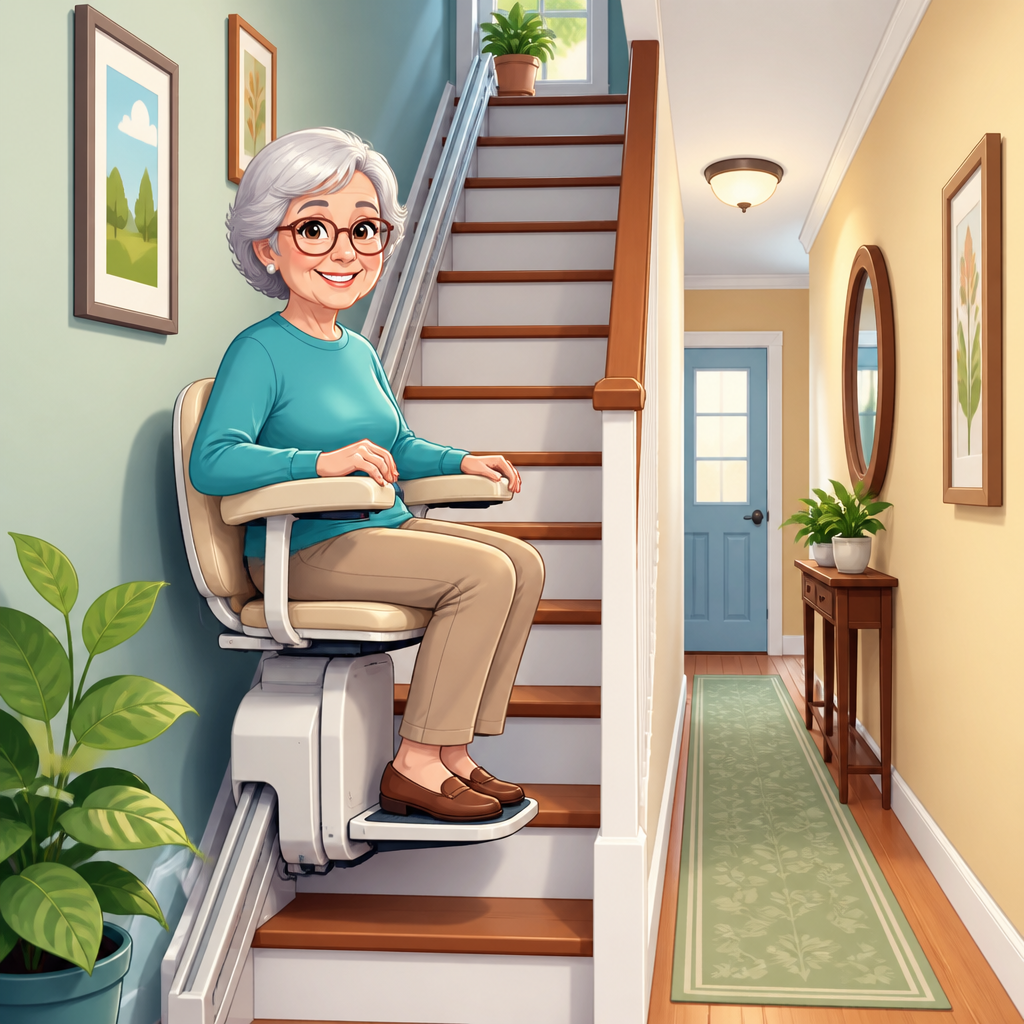
Narrow staircases and tight hallways create a mobility problem that standard accessibility advice often glosses over: a lift may fit the user, yet still fail the home. The best stair lifts for narrow stairs and tight hallways are models engineered around slim rails, compact carriage profiles, tight folding dimensions, and parking options that keep walkways usable when the lift is not in motion. In practice, selecting the right unit means measuring more than stair width. You need to evaluate folded seat depth, footrest projection, swivel clearance at the top landing, rail overrun, charge point placement, and whether doorways or radiators pinch circulation near the lower landing.
In homes I have assessed, the biggest mistake is assuming “narrow stairs” has one universal definition. Installers usually start with minimum clear width, but access also depends on hallway geometry, handrail position, wall protrusions, trim, and the user’s transfer ability. A staircase that measures 29 inches wide may accept a lift if the rail mounts efficiently and the chair folds tightly, while a 31 inch staircase can still be a poor candidate if a doorway swings into the travel path. That is why this guide ranks stair lift designs and brands by real fit considerations, not brochure claims alone.
This article serves as the hub for comparative and ranking content within chair lift types and designs. It explains which stair lifts tend to work best in confined layouts, why some popular models perform better on paper than in older homes, and what tradeoffs matter before you buy. You will find direct answers to the questions most homeowners ask: What is the narrowest stair lift? Which models leave the most walking space? Are standing stair lifts safer for tight stairs? How do curved lifts behave in cramped hallways? By the end, you should know which design category fits your home and what to ask during a survey so the installation improves mobility without creating a new bottleneck.
What Makes a Stair Lift Suitable for Narrow Stairs
A stair lift for a tight space succeeds when it preserves passable stair width and minimizes obstruction at both landings. Four specifications matter most. First is the rail footprint. Most modern lifts mount to stair treads rather than the wall, but rail thickness and bracket design still determine how far the system projects into the staircase. Second is folded size. A chair with a slim backrest, short arm profile, and vertically folding footrest can leave several additional inches of clear passage. Third is parking flexibility. A hinged rail, slide track, or zero intrusion lower end can prevent the rail from blocking a hallway or doorway. Fourth is user positioning. Perch and standing models reduce seat depth but require stronger balance and leg control.
Weight capacity, ride quality, and service network also matter, but they come after fit. The narrowest unit is not automatically the best stair lift if the user cannot sit comfortably, operate the controls, or transfer safely at the top landing. In older townhouses and split levels, I often prioritize a powered swivel seat and a call-send remote even if they add cost, because they reduce twisting and allow the chair to be parked away from the main traffic path. The best product is the one that fits the staircase, fits the user, and still lets everyone else move through the home without awkward sidestepping.
Best Overall Options for Straight Narrow Staircases
For straight stairs, several manufacturers consistently stand out in tight installations: Bruno, Handicare, Harmar, Stannah, and Access BDD through its Flow line for specific compact needs. Among seated straight lifts, Bruno’s Elan is widely respected because the rail is cleanly engineered, the ride is dependable, and the folded chair is compact enough for many staircases that cannot accept bulkier premium models. Harmar’s Pinnacle is another strong contender because its rail is notably narrow and mounts close to the stairs, preserving walking space. Stannah straight lifts are also well built and offer excellent finish quality, though actual suitability depends on the dealer’s measurement accuracy and the exact seat package selected.
Handicare earns attention for practical layout solutions such as the Slide Track, which moves the rail away from the hallway obstruction point as the lift travels. In a tight corridor, that feature can matter more than an extra inch saved on the staircase itself. If your lower landing opens directly into a passage used several times a day, a smart track solution often beats a nominally narrower chair. Buyers should also ask whether the chosen model has powered folding options, because the difference between a manually left-down footrest and one that folds reliably after every trip is significant in daily use.
Top Choices for Curved Stairs and Awkward Hallways
Curved stair lifts involve a different ranking because custom rail geometry, not just chair size, determines whether the system works. The strongest option for many narrow, turning staircases is the Access BDD Flow X, formerly known through the Flow 2 platform. Its defining advantage is Advanced Swivel and Leveling technology, which rotates the seat during travel to keep the user aligned and reduce required clearance on steep or narrow curves. In homes where a conventional seated lift would strike the opposite wall or consume too much knee room, the Flow platform often solves the problem elegantly.
Handicare’s Freecurve and Stannah’s Sadler-based curved configurations also deserve close review, especially where landings are restricted. The Freecurve offers custom rail routing that can park the chair around a corner, away from the main hall. That parking flexibility is often the difference between a usable installation and a daily annoyance. For extremely constrained layouts, installers may combine a compact seat with a hinge or with a park position at the upper floor to keep the lower hallway clear. Curved lifts cost more and require precise surveying, but they frequently outperform straight-lift workarounds because they are built for the staircase rather than forced onto it.
Best Perch and Standing Stair Lifts for Very Tight Spaces
When stairs are too narrow for a conventional seated chair, a perch or standing stair lift can be the best answer. These models let the user ride in a semi-standing position with a small seat or support pad, dramatically reducing the amount of space required in front of the body. The Stannah Sadler is one of the best-known examples. It places the user in a more upright posture, which shortens knee projection and helps on steep staircases common in older homes. Access BDD’s Flow X can also be configured for perch use, making it one of the most versatile options for difficult curves.
These lifts are not ideal for everyone. They require good trunk control, enough ankle and knee stability to maintain position, and the confidence to transfer without a full-depth seat. For users with significant weakness, vertigo, or poor balance, a standard seated model is usually safer even if the fit is tighter. Still, in homes where no seated lift can preserve enough passage, a perch lift can turn an impossible installation into a practical one. This is why many experienced assessors bring up perch options earlier than consumers expect; they are a specialist solution, not a compromise product.
Comparison of Leading Narrow Stair Lift Types
| Type or Model Category | Best Use Case | Main Strength | Main Limitation |
|---|---|---|---|
| Straight compact seated lift | Standard narrow straight stairs | Lower cost, simpler installation, reliable fit | Less flexible at tight hallways and corners |
| Straight lift with slide track or hinge | Hallways blocked by rail at lower landing | Keeps corridor or doorway clearer | Added mechanical complexity and cost |
| Curved compact lift | Winder, quarter-turn, or spiral-like layouts | Custom route and better parking positions | Highest price and longer lead time |
| Perch or standing lift | Very narrow or steep stairs | Minimal knee and seat projection | Requires better balance and leg strength |
This comparison shows why rankings should be based on the staircase configuration first, then the user profile. A straight compact lift may be the best value on one home visit and the wrong answer on the next, simply because the hallway at the bottom cannot tolerate a fixed rail end. Likewise, a curved lift may look expensive until you compare it with the remodeling cost of moving a doorway, radiator, or partition wall. The right ranking framework asks which design removes the mobility barrier with the least disruption to everyday movement through the home.
Features That Matter More Than Brand Names
Consumers often start with brands, but narrow-space success usually comes down to feature selection. The first feature to evaluate is folded depth, measured from the wall or rail to the outer edge of the folded chair. Ask for this number in writing. The second is seat height and footrest geometry, because a low seat can make standing transfers difficult while a large footplate may snag circulation space. The third is powered swivel and powered footrest capability. In tight top landings, a manual swivel can be physically demanding and less safe for users with arthritis or limited trunk rotation.
Next, look at rail ending options. A manual or automatic hinge can prevent the rail from projecting into a doorway at the base of the stairs. Slide tracks achieve a similar goal with a different mechanism. Parking points and charge locations also matter more than people realize. If the dealer places the primary charge point where the chair blocks a hall table, coat closet, or room entrance, everyday convenience suffers. Finally, confirm service support. A superbly compact lift is a poor choice if local technicians are scarce or parts lead times are long. In accessibility equipment, practical support is part of product quality.
Installation, Measurement, and Safety Mistakes to Avoid
The most common mistake is relying on a phone estimate before an in-home survey. Accurate stair lift fitting requires laser or tape measurements of total run, riser count, tread depth, landing clearance, and obstructions such as sills, banisters, and trim returns. Installers should also observe how the user approaches the stairs, which hand they prefer for support, and whether they use a walker or cane nearby. Those functional details influence whether the chair should park at the top or bottom and whether transfer space is genuinely safe.
Another frequent error is ignoring building use patterns. A lift may technically fit while making the stairs frustrating for everyone else. Ask the surveyor to demonstrate projected clear width with the chair folded, not just describe it. Discuss fire safety and evacuation planning too. Stair lifts are not evacuation devices during a fire, and users need an alternative plan. Battery backup is standard on most modern units and protects against power outages, but it does not replace emergency planning. Reputable dealers will discuss safety edges, seat belts, overspeed governors, and charging behavior plainly, without turning essential features into sales theatrics.
How to Choose the Best Stair Lift for Your Home
Start by classifying your staircase: straight, curved, or straight with hallway obstruction. Then classify the user: full seated rider, compact seated rider needing powered functions, or perch rider with adequate balance. With that framework, shortlist two or three models from established manufacturers and compare their folded dimensions, rail-end solutions, warranty terms, and local dealer reputation. If space is the limiting factor, insist on a site survey from a company experienced with narrow stairs, not just stair lifts generally. Ask for photos of similar installations they have completed.
For many homes, the best stair lifts for narrow stairs and tight hallways are compact straight units from Bruno, Harmar, or Stannah, and custom curved solutions from Access BDD or Handicare when landings are awkward. Where seated travel simply will not fit, a Stannah Sadler or perch-configured Flow can be the decisive option. The key takeaway is simple: buy for geometry and transfer safety, not for marketing labels. Schedule a detailed home assessment, compare measurements carefully, and choose the lift that keeps both mobility and everyday circulation intact.
Frequently Asked Questions
Can a stair lift really fit on narrow stairs and still leave enough room to walk?
Yes, in many homes a stair lift can be installed on a narrow staircase without making the stairs unusable, but the answer depends on more than the published width of the staircase. The most important detail is how far the rail and seat project into the stairway when the lift is folded and parked. Some models are specifically designed for tight spaces, with slim rails, narrow armrests, compact footrests, and seats that fold up tightly against the wall. Those features can make a major difference in preserving walking space for other household members.
That said, “fits on the stairs” and “fits the home” are not always the same thing. A lift may technically mount to the treads, yet still create a bottleneck if the footrest remains bulky, if the seat sticks out too far, or if the rail blocks a hallway at the top or bottom landing. This is why experienced stair lift dealers measure the full travel path, including the folded depth of the unit, the width of the usable stairway, the clearance at turns or doorways, and the amount of standing room at each landing. In narrow homes, parking position matters almost as much as in-use dimensions. A lift that can park away from the main traffic area may solve a space problem that a standard layout cannot.
In practical terms, the best candidates for tight staircases are lifts built with compact carriage designs and folding components that minimize intrusion when not in use. If your staircase is especially narrow, an in-home assessment is essential because a model that works beautifully in one small stairwell may be a poor match in another due to rail placement, hallway pinch points, or landing constraints.
What measurements matter most when choosing a stair lift for tight hallways and narrow staircases?
Stair width is only the starting point. For narrow stairs and tight hallways, the most important measurements include the clear width of the staircase, the folded depth of the seat and footrest, the projection of the rail from the wall or stair edge, and the amount of open floor space at the top and bottom landings. You also need to know whether doors open into the stair path, whether hallways are narrow enough to make parking difficult, and whether there is enough room for the user to get on and off the lift safely without twisting or stepping awkwardly.
Another critical factor is seat-to-wall clearance and how the user boards the chair. In very tight layouts, the seat may need to swivel at the top landing so the user can dismount onto a safer, more open area. A manual or powered swivel seat can be especially helpful where direct forward dismounting would place the user too close to the stair edge. Installers will also look at headroom, obstructions such as trim or radiators, and whether the staircase has any curves, intermediate landings, or changes in angle that affect rail placement.
For straight stair lifts, measurements are typically taken along the nose of the stair treads from the upper landing to the lower floor. For curved stair lifts, the process becomes much more detailed because the rail is custom-built to follow turns and landings. In both cases, the goal is not just to confirm installation is possible, but to verify that the lift remains practical after installation. A well-chosen stair lift should allow safe riding, easy transfers, and acceptable hallway clearance when folded and parked.
Which design features are most important in the best stair lifts for narrow stairs?
The most valuable features are those that reduce how much space the stair lift occupies when it is not actively being used. Slim or low-profile rails are one of the biggest advantages because they keep the system close to the staircase and reduce visual and physical bulk. Compact seats with narrow folded dimensions are also important, especially in homes where every inch matters. A folding footrest can make an equally big difference, since the footrest is often one of the first components to interfere with walking space on tight stairs.
Parking options are another major consideration. Many homeowners with tight hallways benefit from a hinged rail or a parking configuration that moves the chair away from a doorway or main walking route. On some layouts, sending the chair to the opposite end of the staircase when not in use can preserve critical floor space. Call/send controls are especially useful here, since they allow the lift to be summoned or parked remotely rather than left in the most inconvenient location.
Beyond compactness, look for features that improve transfer safety in confined areas. Swivel seats, safety sensors, seat belts, and easy-to-use controls all matter, but they are especially important when the user has limited room to maneuver. In narrow settings, the best stair lift is rarely just the smallest one; it is the one that balances compact dimensions, safe boarding and dismounting, and smart parking options that keep the home functional for everyone.
Are straight stair lifts better than curved models for narrow stairs and tight hallways?
Not necessarily. Straight stair lifts are often simpler, less expensive, and faster to install, which makes them a good option for narrow staircases that run in one uninterrupted line. Many straight models also offer slim profiles and folding seats that work very well in tight spaces. If your staircase is straight and both landings provide enough room for safe access, a straight lift may be the most efficient and cost-effective solution.
However, curved stair lifts can actually be the better choice in some tight hallway situations because they allow the rail to follow turns, wrap around corners, and park the chair away from the main staircase or walkway. In a home where the biggest problem is not the stair width itself but the lack of hallway space at the top or bottom, a curved configuration may improve usability by moving the boarding point to a safer, less crowded location. This can be especially helpful if a door swings into the landing or if a straight rail would leave the chair parked in the middle of a busy path.
The tradeoff is that curved lifts are custom-built and generally cost more than straight units. They also require more detailed surveying and longer lead times. Still, when space is unusually tight, customization can be the difference between a lift that merely fits and one that truly works. The best choice depends on the exact geometry of the staircase, the surrounding hallways, and how the user needs to transfer on and off the seat safely.
How do you know if a stair lift is safe and practical for a small, narrow home?
The best way to know is through a professional home assessment that looks at real-world use, not just installation minimums. A safe stair lift for a narrow home must allow the user to sit, ride, and dismount without losing balance or being forced into awkward body positions. It should also leave enough stair and hallway clearance so other people can still move through the home with reasonable comfort when the lift is folded. Safety and practicality go hand in hand: a lift that blocks a landing, narrows a passage too much, or creates a tripping hazard may be technically installable but still a poor solution.
During an evaluation, a qualified provider should assess the user’s mobility, body size, transfer ability, and whether they need features such as powered swivel, powered footrest, or remote parking. They should also examine how the lift affects the flow of the home. For example, if the bottom rail extends into a tight hallway, a hinged rail may be needed. If the top landing is cramped, the seat may need to swivel or park farther away. If multiple people use the staircase, folded clearance becomes an even bigger issue.
It is also wise to ask about safety sensors, battery backup, maintenance requirements, and warranty support. Battery-powered stair lifts are common and useful because they continue to operate during power outages and typically provide smoother everyday use. Ultimately, the safest and most practical stair lift for a small home is one chosen through precise measurement, thoughtful layout planning, and honest discussion about how the staircase and hallway are used every day. In narrow spaces, the details matter, and the right design decisions can make the difference between frustration and true accessibility.