


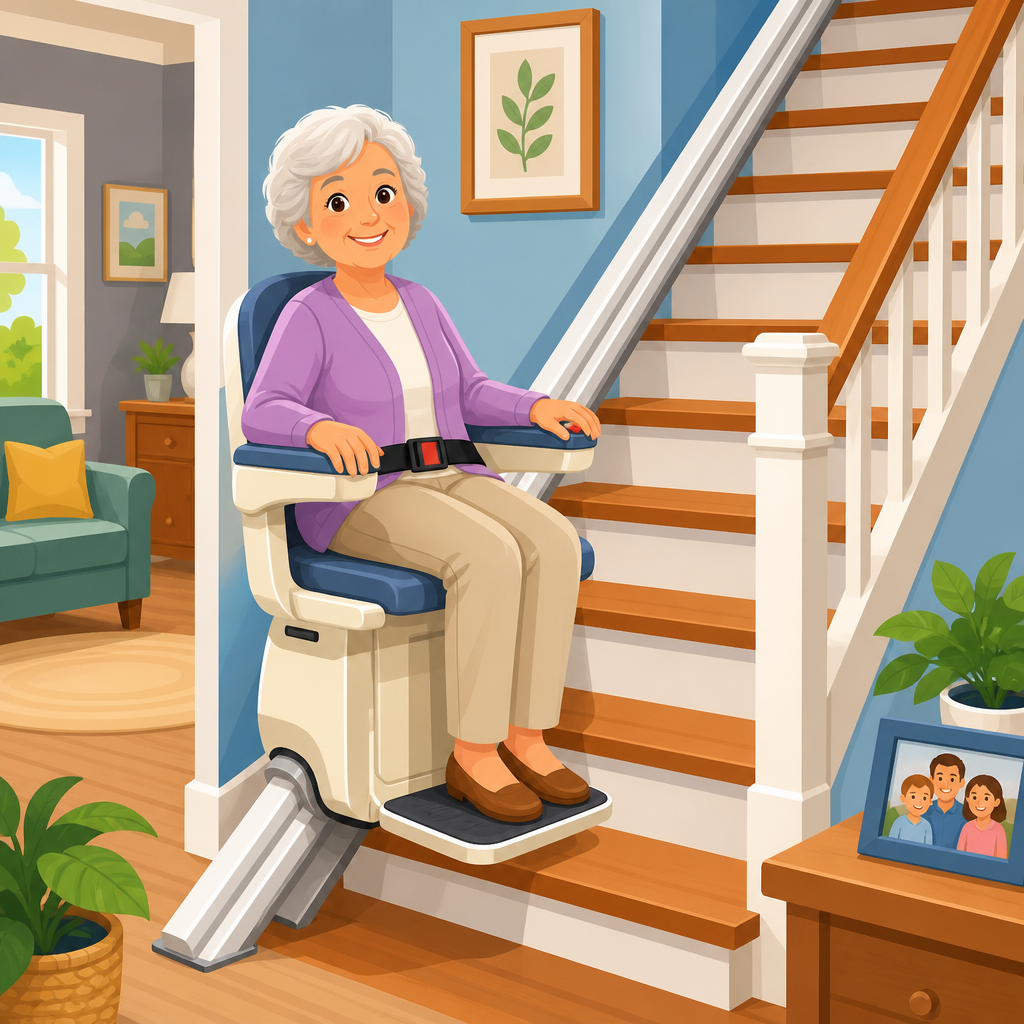
Choosing the best stair lifts for people with chronic balance and coordination problems starts with understanding how daily mobility breaks down in a home with stairs. Balance disorders affect stability, reaction time, foot placement, and confidence. Coordination problems can come from neurological conditions, stroke, multiple sclerosis, Parkinson’s disease, vestibular disorders, cerebral palsy, arthritis, or general frailty. In practice, I have seen the same pattern repeatedly: a staircase that once felt routine becomes the most dangerous part of the house. A stair lift, sometimes called a chair lift for stairs, reduces fall risk by carrying the user on a motorized seat that travels along a fixed rail. For disabled users, the right model is not simply the cheapest or most advertised option. It must match transfer ability, body size, staircase shape, power reliability, and the user’s specific symptoms.
This matters because stairs are a leading site of serious falls at home, especially for older adults and people with mobility impairments. According to the CDC, falls remain a major cause of injury-related hospitalization, and poor balance sharply increases the risk. A properly selected stair lift can allow a person to keep using a multilevel home, delay a forced move, and reduce dependence on caregivers. However, the wrong lift can create new hazards, such as difficult seat transfers, controls that are too small, or a folded seat that still blocks the stairs. This guide serves as a hub for buyers researching the best chair lifts for disabled users. It explains which lift types work best, what features matter most, how top brands compare, what installation involves, and when a stair lift is not the best answer. If you are evaluating options for yourself, a parent, or a client, start with stability, safety, and fit rather than brand claims.
What makes a stair lift suitable for chronic balance and coordination problems
The best stair lift for a person with chronic balance and coordination problems is one that minimizes the number of risky movements required before, during, and after the ride. That sounds obvious, but many buyers focus on weight capacity or upholstery before evaluating transfer mechanics. The critical question is this: can the user approach the seat, turn safely, sit with control, and stand up at the landing without twisting or losing balance? In home assessments, I pay close attention to seat height, armrest position, and whether the seat swivels and locks securely at the top landing. A powered swivel seat is often worth the added cost for users with poor trunk control, because it reduces the need to pivot over the open staircase.
Other essential features include a seat belt, obstruction sensors, soft start and stop, easy-touch controls, and a battery backup system. Soft start and stop are especially important for neurological users who react poorly to jerky movement. Footrest size matters more than many realize. Users with ataxia, neuropathy, or visual-perceptual problems need a stable, generous platform with edges that are easy to judge. Remote call/send controls are useful in shared homes, but they are not just a convenience. They let caregivers reposition the chair without climbing stairs. For some users, a perch-style seat can work if knee flexion is limited, but people with major balance deficits usually do better with a full seated model and strong arm support. The basic rule is simple: fewer complex movements equal safer daily use.
Types of stair lifts and which users they fit best
Straight stair lifts are the most common and usually the best value. They fit staircases without turns, intermediate landings, or curved steps. Because the rail is standardized rather than custom-bent, straight lifts are faster to install and easier to replace or remove. For a disabled user with chronic balance issues, a straight model often provides everything needed if the transfer areas at top and bottom are open and level. Brands such as Bruno, Harmar, Stannah, Acorn, and Handicare all offer straight lifts with folding seats, battery-powered drive systems, and call/send remotes. When buyers ask which type is easiest to service, straight lifts generally win because parts access is simpler and rail geometry is less complex.
Curved stair lifts are required when the staircase turns, has winders, or includes one or more intermediate landings. These rails are custom manufactured to the exact dimensions of the stairs, which makes them significantly more expensive. Even so, they are often the right long-term choice because they preserve safe access throughout the home without requiring dangerous transfers on a landing. Outdoor stair lifts are built with weather-resistant covers, sealed components, and marine-grade finishes. Standing or perch lifts exist, but they are rarely ideal for people with chronic balance and coordination problems unless an experienced clinician confirms the user can tolerate the posture. For many disabled users, platform lifts or vertical platform lifts may be better than chair lifts if wheelchair transfer is unsafe. That distinction matters: a stair lift carries a seated person, while a platform lift carries the user in a wheelchair or scooter. Buyers should not force a chair-lift solution when transfer ability is poor.
Best stair lift features to prioritize before comparing brands
When comparing the best stair lifts for disabled users, prioritize the features that directly reduce falls. First, confirm the lift is battery powered with automatic charging points. Battery operation means the lift can still run during a power outage, which is essential if the user is stranded on one level. Most modern residential units use batteries that recharge when the chair is parked. Second, verify the top landing setup. A manual or powered swivel seat allows the rider to dismount away from the stair edge. Some systems also offer a rail overrun, which moves the chair past the top step onto a safer floor area. In my experience, a top overrun is one of the most valuable upgrades for people with poor balance.
Third, look at control design. Large rocker switches or joystick-style controls are easier for users with tremor, weakness, or poor fine motor control than small buttons. Fourth, examine seat dimensions, back support, and armrest firmness. People with lateral instability need armrests that truly support weight during sit-to-stand, not decorative pads. Fifth, review service terms: local dealer support, labor warranty, battery replacement costs, and expected lead time for repairs. A low purchase price loses its appeal quickly when a broken lift leaves the user trapped upstairs for days.
| Feature | Why it matters for balance and coordination | What to ask the dealer |
|---|---|---|
| Powered swivel seat | Reduces twisting at the top landing | Does it lock automatically before standing? |
| Battery backup | Keeps the lift running during outages | How many trips will it provide without mains power? |
| Top rail overrun | Moves dismount point away from stair edge | Is there enough landing space for it? |
| Large controls | Helps users with tremor or weak grip | Can the user test the control style in person? |
| Obstruction sensors | Stops the lift if it hits an object | Where are sensors located on footrest and carriage? |
| Higher weight capacity | Improves fit and stability for larger users | Does capacity change on curved models? |
How leading brands compare in real homes
No single brand is best for every disabled user, but several manufacturers consistently perform well. Bruno is widely respected in the United States for sturdy build quality, comfortable seating, and dependable dealer support. Its straight lifts, including heavier-capacity options, are often a good fit for users who need a stable seat and simple controls. Harmar offers a broad range, from value-focused straight lifts to heavier-duty and curved solutions, and is often competitive on availability. Stannah has a strong reputation for custom curved stair lifts and refined ride quality, particularly in complex staircases. Handicare offers compact designs that can be useful where stair width is tight, while Acorn is known for broad consumer visibility and quick quoting in many markets.
In real homes, the decision usually comes down to dealer competence rather than brochure language. I have seen an excellent product underperform because the survey missed a transfer problem at the top landing. I have also seen mid-priced lifts work beautifully for years because the installer set the seat height correctly and the dealer responded quickly when batteries aged out. Ask each provider who handles installation, whether technicians are factory trained, how service calls are scheduled, and whether they stock common replacement parts locally. Also ask for a live demonstration if possible. A user with chronic disequilibrium may react very differently to actual ride motion than to a specification sheet. The best brand is the one that fits the staircase, the body, and the service network at the same time.
Buying process, pricing, and hidden costs buyers should expect
Stair lift pricing varies widely by rail type, weight capacity, and custom options. Straight stair lifts commonly start in the lower thousands installed, while curved stair lifts can cost several times more because the rail is custom fabricated. Outdoor models and heavy-duty seats add cost, and powered features such as swivel seats and folding footrests usually increase the total. Buyers should request written estimates that separate equipment, installation, delivery, permit fees if applicable, and service plan pricing. Rental units may be available for straight staircases, which can make sense after surgery or during hospice care, but rental economics are usually less favorable for long-term use.
Hidden costs often include battery replacement every few years, extended warranty fees, upholstery wear, and electrical preparation if a nearby outlet is missing. Insurance coverage is limited in many cases. Original Medicare generally does not cover stair lifts as standard durable medical equipment, although Medicaid waiver programs, veterans’ benefits, state assistive technology programs, nonprofit grants, or home modification loans may help some households. Used stair lifts can save money, but buyers should be careful. A reused straight lift rail may be acceptable when refurbished by a reputable dealer with new batteries and warranty support. Used curved lifts are much less practical because the rail was built for another staircase. Before signing, ask about return policies, cancellation terms for custom rails, and what happens if the user’s condition changes and transfers become unsafe.
Installation, safety checks, and when a stair lift is not enough
Proper installation is as important as product choice. The rail mounts to stair treads, not usually to the wall, and a professional survey should measure tread depth, width, landing clearance, and any doorway conflicts. Most residential lifts run on household current and charge through a standard outlet, but the installer should confirm circuit suitability. After installation, the user needs hands-on training: how to lock the seat, fold arms and footrest, fasten the belt, use call/send controls, and respond if the unit stops. I always recommend practicing several supervised transfers before independent use, especially for people with vestibular disorders or cognitive slowing.
A stair lift is not enough when the user cannot transfer safely onto the seat, lacks the cognition to operate it reliably, or needs wheelchair-level support on both floors. In those cases, a vertical platform lift, home elevator, first-floor bedroom conversion, or more intensive caregiving plan may be safer. Occupational therapists and physical therapists can help determine transfer safety and recommend adaptive techniques. The best outcome is not simply getting a lift installed. It is creating a home access plan that remains safe as conditions change. Start with an in-home assessment, compare at least three quotes, and choose the stair lift that makes every trip up and down the stairs predictable, stable, and low risk.
The best stair lifts for people with chronic balance and coordination problems are the models that reduce transfer difficulty, provide stable seated travel, and fit the home without compromise. Straight lifts are usually the most affordable and easiest to service, while curved lifts solve access problems on turning staircases that cannot be managed safely any other way. For disabled users, the most important features are battery backup, a secure swivel seat, simple controls, obstruction sensors, a comfortable transfer height, and dependable local service. Brand reputation matters, but correct assessment and installation matter more.
As a hub for best chair lifts for disabled users, this guide should help you narrow the field and ask better questions before you buy. Focus on the user’s actual movement pattern, not just the staircase measurements. Test ride if possible, get detailed written quotes, and involve a therapist when balance or coordination is severely impaired. A well-chosen stair lift can preserve independence and cut fall risk dramatically. The next step is straightforward: schedule an in-home evaluation and compare options based on safety, fit, and service support.
Frequently Asked Questions
What features matter most in a stair lift for someone with chronic balance and coordination problems?
The most important features are the ones that reduce transfers, limit sudden movements, and help the rider stay secure from the moment they approach the chair until they are fully off the lift. For people with chronic balance and coordination problems, a stair lift is not just about getting up and down the stairs. It is about controlling the most unstable parts of the task: turning, sitting, fastening in, riding, and standing back up safely.
Start with a seat that feels stable and easy to access. A well-padded seat with supportive armrests can make a major difference for people who need extra trunk support or who have difficulty lowering themselves in a controlled way. A swivel seat at the top landing is especially important because it allows the user to turn away from the staircase before standing. This creates a safer exit position and reduces the chance of losing balance near the edge of the stairs.
A seat belt is another essential feature, particularly for riders who have poor coordination, involuntary movements, tremors, or delayed reaction time. Footrest safety sensors are also critical. If the user’s feet do not stay placed consistently, those sensors help stop the lift if it meets an obstruction. Many higher-quality stair lifts also include sensors on the carriage and footrest edges, which is helpful in tight homes where a cane, slipper, pet toy, or dropped object could otherwise create a hazard.
Controls deserve close attention as well. People with coordination challenges often do better with large, simple, responsive controls rather than small toggles or buttons that require fine motor precision. Some users prefer rocker switches they can press with the side of the hand. Others benefit from armrest-mounted controls that are easy to reach without leaning. Remote call/send controls can also be useful if more than one person uses the staircase or if the chair needs to be repositioned without requiring someone to navigate stairs first.
Finally, smooth ride quality matters more than many families expect. A stair lift that starts and stops gently can be far easier for someone with vestibular issues, poor postural control, Parkinsonian rigidity, or generalized frailty. Sudden jerks can trigger fear, dizziness, or instability. In real-world use, the best stair lift for this population is usually the one that combines secure seating, safe entry and exit, intuitive controls, reliable sensors, and a calm, predictable ride every single time.
Are straight or curved stair lifts better for people with neurological or balance-related mobility issues?
Neither type is automatically better in terms of safety; the right choice depends on the staircase layout and how the user gets on and off at each landing. A straight stair lift is designed for stairs that run in one uninterrupted line. A curved stair lift is custom-built for staircases with turns, intermediate landings, or unusual shapes. For a person with chronic balance and coordination problems, the goal is not simply to match the stair lift to the stairs. The goal is to create the safest possible boarding and exit positions.
If the staircase is straight, a straight stair lift is often the simpler and more affordable option. It can still be an excellent choice when paired with key features such as a swivel seat, folding footrest, seat belt, and secure armrests. However, in homes where the top or bottom landing is cramped, the standard stop position may not be ideal for someone who is unsteady on their feet. In those cases, a track overrun can be especially valuable because it moves the rider away from the open stair edge before they stand up.
Curved stair lifts become especially important when the staircase includes corners, pie-shaped steps, split-level landings, or narrow transitions that would make walking part of the route dangerous. For someone with neurological conditions, a curved lift can eliminate the need to stop, turn, or transfer at an intermediate landing. That can significantly lower fall risk because every extra standing or pivoting moment on stairs creates another opportunity for instability.
From a clinical and practical standpoint, the best system is the one that minimizes complex movement patterns. People with stroke-related weakness, multiple sclerosis, Parkinson’s disease, vestibular dysfunction, or cerebral palsy often struggle most when they have to combine turning, stepping, and balancing in tight spaces. A properly designed curved stair lift can simplify that entire sequence. It keeps the user seated and supported throughout the route and places them in a more controlled position at the end.
So the real answer is this: straight lifts are excellent when the staircase is straight and the boarding areas are safe and open. Curved lifts are better when the staircase design itself increases fall risk or when a custom path is needed to give the rider a safer place to get on and off. The stair shape, landing space, and user’s transfer ability should guide the decision more than the label “straight” or “curved” alone.
How do I know if a stair lift is safer than continuing to use the stairs with a cane, walker, or caregiver assistance?
In many cases, a stair lift becomes the safer option when the person is no longer moving on the stairs with consistent control, even if they are still technically able to do it. That distinction matters. Many people with chronic balance and coordination problems can climb stairs on some days, or with help, or if they move very slowly. But safe stair use requires more than strength. It requires reliable foot placement, timing, grip, balance recovery, confidence, and the ability to respond quickly if something goes wrong.
Warning signs often appear before a major fall happens. These include using two hands on one railing, pulling heavily with the arms, pausing on nearly every step, catching toes on stair edges, crossing feet awkwardly, freezing mid-staircase, leaning heavily into a helper, or refusing to use the stairs unless someone is present. Near-falls are especially important to take seriously. If a person is having repeated slips, missteps, stumbles, or episodes of dizziness on the stairs, that usually means the safety margin is already very small.
Caregiver assistance can help, but it does not remove the risk completely. In fact, assisting someone on stairs can be dangerous for both people. A caregiver may not be able to control a sudden collapse, loss of footing, or unpredictable movement pattern. This is particularly true with neurological conditions, where symptoms may fluctuate from day to day or even hour to hour. A person may appear steady one trip and then struggle badly on the next because of fatigue, spasticity, tremor, pain, medication timing, or sensory changes.
A stair lift can be safer because it reduces the need for repeated high-risk stair negotiation. Instead of asking the person to coordinate stepping, turning, and balancing on a narrow, elevated surface, it allows them to sit, secure themselves, and travel on a guided system. That said, stair lifts are safest when the user can still complete the transfer onto and off the seat with reasonable support and consistency. If sitting down or standing up is already extremely unsafe, then a full home accessibility review may be needed to determine whether additional equipment or a different living arrangement is more appropriate.
The best way to decide is to look honestly at how stairs are being managed now, not how they were managed six months ago. If the person is white-knuckling every trip, depending more and more on assistance, or having frequent close calls, it is usually time to stop viewing the stair lift as a last resort and start seeing it as a proactive fall-prevention tool.
What stair lift options help if the user has tremors, dizziness, weakness, or trouble sitting and standing smoothly?
Different symptoms create different risks, so the best stair lift setup should match the person’s specific movement challenges. For tremors or involuntary movements, secure armrests, a reliable seat belt, and a seat with a supportive shape can help the rider stay centered and feel contained. Large, easy-to-operate controls are also helpful because small buttons can be frustrating or hard to use accurately when hand control is inconsistent.
For dizziness or vestibular disorders, smooth ride quality is one of the most overlooked priorities. A lift with gentle starts and stops can reduce the sensation of being jolted or thrown off balance. Some users also benefit from taking a moment to settle into the seat before moving and from making sure the top and bottom lighting are strong enough to reduce visual disorientation. If dizziness tends to worsen with head turns, a swivel seat that allows a controlled exit can be especially useful because it helps avoid awkward twisting near the stair edge.
For weakness, the key issue is often the transfer rather than the ride itself. A slightly higher seat height may make standing easier for some users because it reduces the effort required to rise. Stable armrests can provide leverage, and a powered swivel or powered footrest may help people who cannot safely bend, twist, or manage the setup manually. These features can be valuable for individuals with arthritis, post-stroke weakness, Parkinson’s disease, or generalized frailty.
For people who have trouble sitting down or standing up smoothly, think carefully about the approach path to the chair. There should be enough room to back up safely, turn in a controlled way, and use any mobility aid appropriately before sitting. In some cases, a perch-style lift may be considered for someone who cannot comfortably bend into a seated position, though this depends heavily on trunk control, endurance, and the user’s ability to