


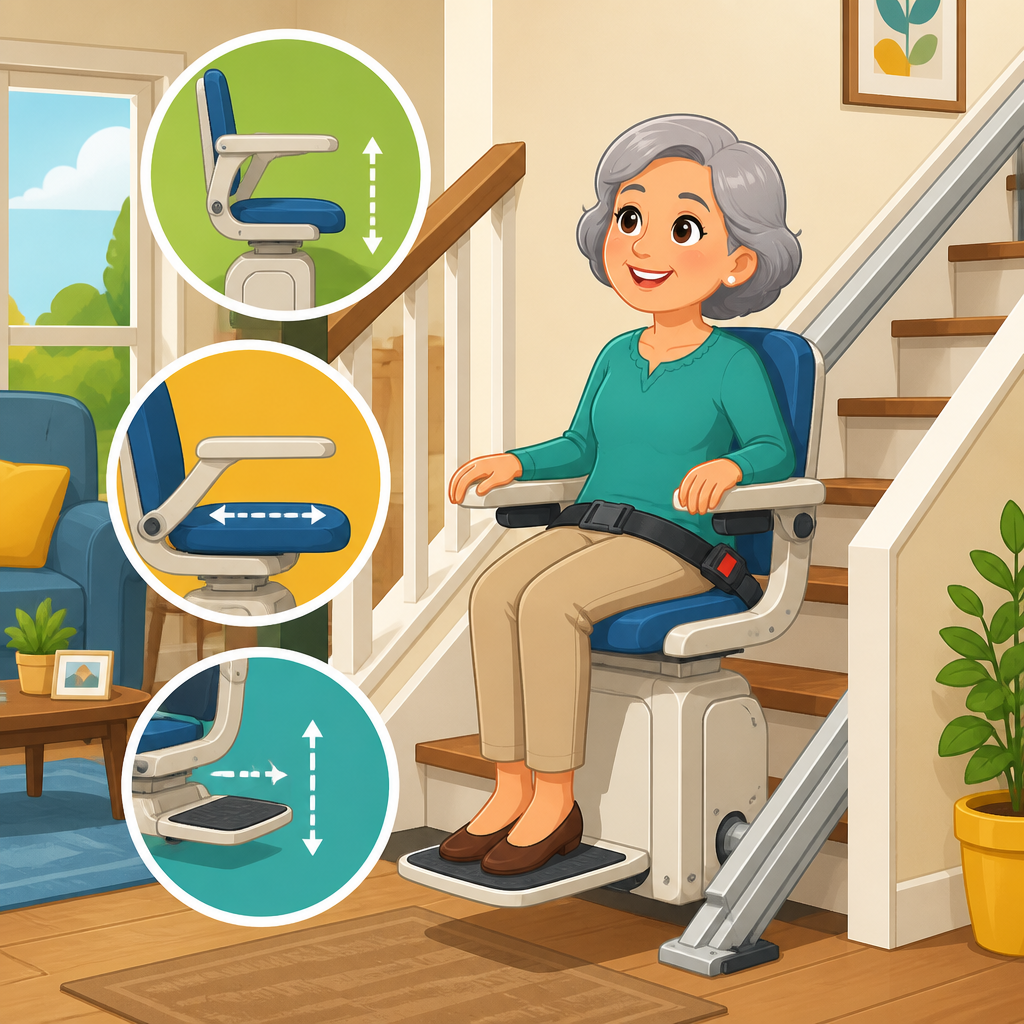
Choosing the best stair lifts for short users starts with one practical truth: fit matters more than brand reputation alone. A stair lift that feels stable and intuitive for an average-height rider can feel insecure, awkward, or even unsafe for someone with a shorter torso, shorter femur length, or limited ankle mobility. In this guide, I focus on adjustable seating features to compare, because those details determine whether a lift supports confident daily use or becomes an expensive compromise.
Short users are typically evaluating more than seat height. They often need a combination of lower seat-to-footrest distance, supportive armrest positioning, manageable swivel controls, and a seat depth that does not push them too far forward. In stair lift specifications, these factors may appear under terms such as seat height, perch height, folded dimensions, footrest height, swivel seat, arm width, and rail overrun compatibility. Manufacturers do not always present them consistently, which is why side-by-side comparison is essential.
This topic matters within chair lift types and designs because sizing challenges affect straight stair lifts, curved stair lifts, and outdoor models differently. A compact straight lift may offer better folded clearance, while a custom curved unit may allow better parking placement at the top landing. Through installations and product evaluations, I have seen short riders succeed when dealers measured hip-to-knee length, transfer height, and stair geometry instead of relying on broad statements like “fits most users.” The best results come from matching body proportions to adjustment range, not simply picking a premium model.
This article serves as a hub for comparative and ranking content in this category. It explains what short users should compare, which seat adjustments make the biggest difference, and how leading stair lift brands generally stack up. If you are researching the best stair lifts for short users, start here, then use the sections below to narrow the right chair lift design for your staircase, mobility needs, and daily transfer routine.
What short users should compare first in a stair lift
The most important measurement is not overall rider height; it is how the rider sits. Two people who are both 5’0″ can need different stair lift configurations because one has a shorter thigh length while the other has limited knee bend. For that reason, I always start with four fit checkpoints: seat height from footrest, seat depth, armrest position, and swivel ease at the landing. If any of those are wrong, comfort and transfer safety suffer immediately.
Seat height from the footrest controls whether the user’s feet rest flat and whether the knees sit at a natural angle. If the distance is too great, shorter users may dangle their feet or slide forward, increasing pressure under the thighs and reducing stability. Seat depth matters just as much. A deep seat can force a petite rider away from the backrest, weakening trunk support and making the armrests harder to use for leverage during sitting and standing.
Armrests are often overlooked in online comparisons, yet they are critical for short riders. If the armrests are too high, too far apart, or too far forward, the user cannot push up efficiently during transfer. Swivel controls also deserve close attention. Manual swivel levers placed low or behind the hip can be difficult to reach for users with shorter arms or reduced flexibility. Powered swivel seats cost more, but they can solve a real access problem at the top landing.
The final early comparison is staircase context. On narrow stairs, a compact chair with a slim folded profile may matter more than broad cushioning. On steep stairs, foot placement and seat angle become even more important. On curved staircases, parking the chair at a better transfer point can outweigh small differences in cushion dimensions. In other words, the best stair lift for a short user is the model whose adjustments work on the actual staircase, not the one with the longest feature list.
Adjustable seating features that make the biggest difference
When people search for adjustable seating features, they usually mean “Can this stair lift be fitted to a smaller body safely?” The answer depends on several interacting components. Adjustable seat height helps align the rider with the footrest and the landing. Adjustable seat depth reduces the gap between the rider’s knees and the seat edge. Flip-up or width-adjustable armrests can improve access in narrow spaces, while a height-adjustable footrest prevents leg strain and promotes secure posture.
Backrest design also matters more than brochures suggest. Short users often do better with a supportive, upright back rather than a deeply reclined seat that encourages slouching. In practice, moderate contouring with firm foam tends to feel more stable than oversized cushions. Some premium models offer seat pad kits or alternative seat sizes through dealers, and these dealer-installed options can be more valuable than headline features like app connectivity or cosmetic upgrades.
Swivel range is another decisive feature. A standard manual swivel seat usually locks at the top landing, allowing the user to turn away from the stairs before standing. For shorter users, the ease of activating that lock is just as important as the swivel itself. If the lever requires awkward reach or strong grip, a power swivel may be justified. I have also found that retractable rails or overruns can improve dismount angle, which reduces the need for the rider to shuffle forward from a too-deep seat.
Finally, do not ignore footrest controls and obstruction sensors. Short users are more likely to rely on careful leg placement, so a footrest that folds easily and offers enough toe room supports safer boarding. Obstruction sensors should stop the lift consistently without abrupt jolts. Good fit is not one measurement; it is a coordinated seating system that keeps the rider supported from the first sit-down to the final stand-up.
Best stair lifts for short users: feature comparison by leading type
The stair lift market includes several recognized names, including Stannah, Bruno, Handicare, Harmar, Access BDD, and Acorn. Availability varies by dealer network and country, so exact trim levels differ, but the comparative patterns are consistent. In general, Stannah and Bruno are strong for refined seat ergonomics and dealer-supported fitting. Handicare often performs well where modular options and compact folding dimensions matter. Harmar is widely considered for straightforward residential installations with practical seating options. Acorn is common in the market, though fit satisfaction depends heavily on installation quality and user proportions.
For straight stair lifts, compact seats with reliable footrest geometry are usually the best starting point for short users. Bruno’s Elan is frequently considered because it fits narrow staircases well and has a compact profile, while the Bruno Elite adds a larger platform and premium feel that may suit some petite riders if correctly adjusted. Stannah straight models are often praised for smooth ride quality and seat comfort, especially when the dealer takes time with customization. Handicare straight lifts can be strong contenders where hinged rails or parking flexibility are needed.
For curved stair lifts, custom rail placement changes the equation. A short rider may benefit from parking positions that improve transfer space more than from marginal seat differences. Stannah curved systems and Handicare curved systems are often shortlisted because custom fitting can be tuned to the landing geometry. Bruno’s curved offerings are also worth considering where dealer support is strong. In curved installations, I advise buyers to prioritize transfer demonstration on a layout plan or stair survey rather than relying only on catalog dimensions.
| Type or brand pattern | Why short users consider it | Main feature to verify in person | Possible tradeoff |
|---|---|---|---|
| Compact straight lift | Better folded clearance on narrow stairs | Seat depth and footrest distance | Less cushioning or fewer power options |
| Premium straight lift | Smoother ride and stronger armrest support | Whether the seat is too deep for petite riders | Higher price and larger chair footprint |
| Custom curved lift | Best chance to optimize transfer point at landings | Swivel position and parking location | Longer lead time and higher installation cost |
| Outdoor lift | Supports access where steps are exposed | Seat height with weather cover and foot placement | Bulkier components and seasonal maintenance |
The ranking question is understandable, but no universal number-one model exists for all short users. The best stair lifts for short users are the ones with the most usable seat-to-footrest geometry, the easiest transfer controls, and a dealer willing to document measurements before installation. If a provider cannot explain how they will fit the lift to a petite rider, move on.
Straight, curved, and outdoor stair lifts for petite riders
Straight stair lifts are usually the easiest to compare because their rails are standardized and many dealers can quote quickly. For short users, this category often delivers the strongest value because more budget can go toward seating upgrades, powered swivel, or a hinged rail instead of custom fabrication. A straight lift is ideal when the staircase is a single uninterrupted run and the landing space is adequate for safe transfer.
Curved stair lifts become necessary when the staircase includes turns, intermediate landings, or spiral elements. Petite riders sometimes do especially well with curved systems because custom rails can park the chair in a more forgiving position. For example, moving the dismount point a few inches farther from a wall or slightly deeper onto a landing can make swivel transfer dramatically easier. The disadvantage is price. Curved lifts cost substantially more, and adjustment choices may be limited by the rail design.
Outdoor stair lifts introduce another layer: weather-resistant materials can add bulk. That bulk may affect how the seat folds and how easy it is for a short user to climb on while wearing heavier footwear. If the user is petite and the steps are exposed, check the footrest height with the seat fully deployed and the cover removed. Cold-weather stiffness in hinges and controls is another real-world issue many glossy comparisons skip.
Across all three types, the decision should center on transfer mechanics. Ask where the rider’s feet will land, whether the knees bend comfortably, how the arms contact the rests, and what happens at the top dismount. The right chair lift design is the one that preserves control in these basic movements every day.
How to evaluate fit during a stair lift assessment
A proper assessment should feel more like a seating evaluation than a sales visit. The dealer should measure stair width, tread depth, landing clearance, and power access, but they should also assess the rider’s seated knee angle, lower-leg length, and preferred transfer side. If they only ask for body weight and staircase photos, the process is incomplete. For short users, detailed seating assessment is not optional.
I recommend having the rider wear the shoes they commonly use indoors or on entry steps. Even a small heel or thick sole changes footrest contact. During the assessment, ask the dealer to explain the seat height range, whether alternative seats are available, and how the user will operate the swivel. If the model offers a powered footrest linked to the seat, verify whether that mechanism changes usable legroom.
Also ask for a full demonstration of boarding, riding posture, and standing up. Many buyers focus only on travel up and down the stairs, but the risk points are at the landings. Watch whether the rider’s back reaches the backrest, whether the thighs are fully supported without pressure behind the knees, and whether the feet sit securely on the footrest. If the rider has to scoot forward repeatedly, the seat is probably too deep or the geometry is off.
Finally, request documentation. A trustworthy dealer should note the intended seat setup, rail placement, and any accessories promised. This becomes important if the installed unit feels different from the demonstration. Good stair lift fitting is measurable, and the best providers treat it that way.
Common mistakes when comparing stair lift seating features
The first mistake is comparing only weight capacity. Higher capacity sounds reassuring, but it tells a short user very little about fit. In fact, some heavy-duty seats are wider and deeper, which can make petite riders feel less secure. The second mistake is focusing on upholstery comfort over posture. A plush seat can still be a poor fit if the backrest angle and footrest relationship are wrong.
Another common mistake is ignoring control reach. Call/send remotes are useful, but they do not solve a badly placed swivel lever or hard-to-operate armrest. For users with arthritis, short arms, or limited trunk rotation, these small controls often determine daily usability. I have seen buyers reject otherwise excellent lifts because the manual swivel was too awkward to engage at the top landing.
Shoppers also underestimate installation quality. The same stair lift model can perform very differently depending on rail placement, seat setup, and final testing. That is why dealer experience matters as much as brand selection. Ask how often the company installs lifts for petite riders, what modifications they commonly use, and whether they offer post-install adjustment visits.
The last mistake is skipping future needs. A lift that barely fits today may not work after surgery, progression of arthritis, or balance changes. If budget allows, choose a design with adjustment headroom and easier powered features. That approach usually saves money and frustration over time.
How to choose the best stair lift for a short user
Start by identifying staircase type: straight, curved, or outdoor. Next, list the rider’s fit priorities in order, such as lower seat-to-footrest distance, shallow seat depth, easier swivel, narrower arm spacing, or compact folded size. Then compare brands through those priorities instead of shopping by marketing tier. This keeps the decision grounded in function.
Shortlist dealers, not just manufacturers. A strong dealer will explain what can actually be adjusted, what is fixed by the seat frame, and what depends on rail design. They should be comfortable discussing measurements plainly and should not dismiss concerns with “standard sizing fits everyone.” It does not. Petite riders deserve explicit fit answers.
Ask for an in-home assessment, a written proposal, and a walkthrough of expected transfer technique. If possible, test more than one seat style. During comparison, prioritize confidence over extras. A stair lift that the user boards easily every day is better than a fancier model with marginal fit.
The best stair lifts for short users combine practical adjustability, careful installation, and a transfer setup matched to the rider’s body. Use this hub as your starting point, compare seating features closely, and insist on a true fit assessment before you buy. That extra diligence is what turns a stair lift from a generic mobility product into a dependable part of daily living.
Frequently Asked Questions
What seating adjustments matter most when choosing a stair lift for a short user?
The most important seating adjustments are seat height, seat depth, footrest height and position, armrest spacing, and swivel seat control. For short users, the goal is not simply to “fit” on the chair, but to sit with stable posture and maintain easy access to the controls, footrest, and landing. A seat that is too deep can prevent the rider’s back from resting fully against the backrest, which reduces support and may make the user feel as though they are sliding forward. A seat that sits too high can leave the feet unsupported or force the knees into an uncomfortable angle, while a poorly positioned footrest may create strain at the ankle or make boarding and exiting harder.
Shorter riders should also pay close attention to how close they can sit to the backrest while still bending their knees naturally and resting both feet securely on the footplate. That alignment affects comfort, confidence, and safe transfers. Adjustable armrests can also make a meaningful difference because they influence how securely a person can brace themselves when sitting down or standing up. In many cases, a stair lift marketed as compact or space-saving is not automatically a better fit for a shorter person unless its seat dimensions and adjustment range actually support smaller body proportions.
If possible, compare models by measuring usable seat depth, the distance from seat to footrest, the width between armrests, and the ease of operating the swivel function at the top landing. These are the practical details that determine whether the chair feels controlled and supportive during everyday use. For short users, adjustability is often more valuable than a well-known brand name, because small differences in seating geometry can completely change how secure the lift feels.
How does seat height affect safety and comfort for shorter stair lift users?
Seat height is one of the most important factors because it directly affects how a short user gets on and off the stair lift and how stable they feel while riding. If the seat is too high, the rider’s feet may not rest flat and securely on the footrest, which can increase pressure behind the thighs and reduce overall stability. That unsupported feeling is especially problematic for users with limited ankle mobility, reduced balance, or weaker leg strength. A properly matched seat height allows the knees to bend comfortably, the hips to stay supported against the back of the chair, and the feet to remain planted on the footrest without strain.
At the transfer point, seat height also determines whether the user can sit down in a controlled way and stand up without excessive effort. For a short person, even a small height mismatch can make the chair feel awkward to approach from a standing position. At the top landing, where the rider often swivels the seat to get off safely, a poorly matched seat height can make the transition feel unstable. Ideally, the user should be able to place weight through the legs naturally without feeling as though they are climbing up onto the chair or dropping down into it.
When comparing models, ask whether the seat height is fixed or adjustable and what the adjustment range is. Some manufacturers offer different seat-post configurations or installation options that subtly change the riding position. Those details matter. The safest choice is usually a lift that allows a short rider to maintain full contact with the backrest, bend the knees comfortably, and keep both feet well supported throughout the ride and transfer process.
Why is footrest adjustment so important for short users, especially those with limited ankle mobility?
Footrest adjustment is essential because it supports leg positioning, reduces strain, and helps the rider feel secure throughout the trip. For short users, a footrest that sits too far away or too low can force the legs to extend uncomfortably, pulling the body away from the backrest and reducing the sense of support. If the feet do not sit naturally on the footplate, the rider may compensate by shifting posture, pointing the toes, or bracing awkwardly through the knees and hips. Over time, that can make the stair lift uncomfortable enough that the user avoids using it consistently.
This becomes even more important for people with limited ankle mobility, stiffness, swelling, or foot sensitivity. A well-positioned footrest allows the feet to rest in a stable, neutral position rather than forcing excessive flexion or extension at the ankle. It can also improve boarding and exiting because the rider is better aligned in the seat from the start. In practical terms, proper footrest positioning helps a short user feel grounded rather than perched.
When evaluating stair lifts, look beyond whether the footrest folds and focus on where it sits relative to the seat and how well it matches the user’s leg length. Ask whether the installer can adjust the relationship between the seat and the footplate or recommend a configuration suitable for smaller riders. Also consider how easy it is to fold the footrest up and down, especially if the user has limited reach or hand strength. Good foot support is not a minor comfort feature; for many short users, it is a major part of safe posture and confident daily use.
Should short users prioritize a narrower seat or a shallower seat depth?
In most cases, seat depth matters more than overall seat width, although both can affect comfort and control. A shallower seat is often more beneficial for a short user because it allows the rider to sit fully back against the backrest while keeping the knees in a natural position. If the seat is too deep, the front edge can press into the backs of the legs and push the user forward, which reduces lumbar support and can make the chair feel less stable. That problem is common for shorter riders and is one of the main reasons a stair lift may feel “not quite right” even when the user technically fits in the seat.
Seat width becomes important when it affects arm support and body positioning. If the seat is very wide relative to the user’s frame, the armrests may sit too far apart to offer meaningful support during transfers. That can make it harder to stabilize the body when sitting down, standing up, or rotating the seat at the landing. However, a slightly wider seat is usually less problematic than a seat that is too deep. Depth more directly affects whether the rider can use the backrest properly and keep the lower body aligned with the footrest.
The best approach is to compare the complete seating geometry rather than focusing on a single dimension. A short user should be able to sit back fully, rest both arms comfortably, reach the controls without leaning, and place both feet securely on the footrest. If forced to prioritize, start with seat depth and then evaluate width, armrest spacing, and back support together. Those combined features determine whether the stair lift feels tailored and secure rather than merely usable.
How can a buyer tell if a stair lift will truly fit a short user before purchasing?
The best way is to combine careful measurement with an in-person assessment whenever possible. Start by identifying the user’s practical seated dimensions: lower leg length, thigh length, hip width, and the height at which transfers feel comfortable from a standing position. Then compare those measurements to the stair lift’s seat height, seat depth, armrest spacing, backrest shape, and footrest position. Product brochures often emphasize weight capacity and general comfort, but for short users, the key question is whether the chair supports a smaller body without forcing awkward posture.
A showroom trial or home assessment is especially valuable because comfort on paper does not always translate to confidence in real use. During a trial, the user should practice sitting down, operating the controls, riding the lift, swiveling at the top landing, and standing back up. Watch for signs of mismatch: feet dangling or barely touching the footrest, difficulty sitting all the way back, knees pushed up too high or stretched too far forward, armrests that are hard to use for support, or a need to scoot forward to exit safely. Those are all indicators that the chair may not be an ideal fit.
It is also smart to ask the dealer very direct questions: What seating adjustments are available? Are there alternative seat sizes or configurations? Can the installer fine-tune the seat-to-footrest relationship? Is this model commonly recommended for petite or short riders? A reputable dealer should be able to explain fit considerations clearly rather than giving a generic answer about comfort. For short users, the right stair lift is the one that creates stable posture, easy transfers, and predictable control every day. A careful fitting process is the most reliable way to avoid paying for a lift that works in theory but feels like a compromise in practice.