


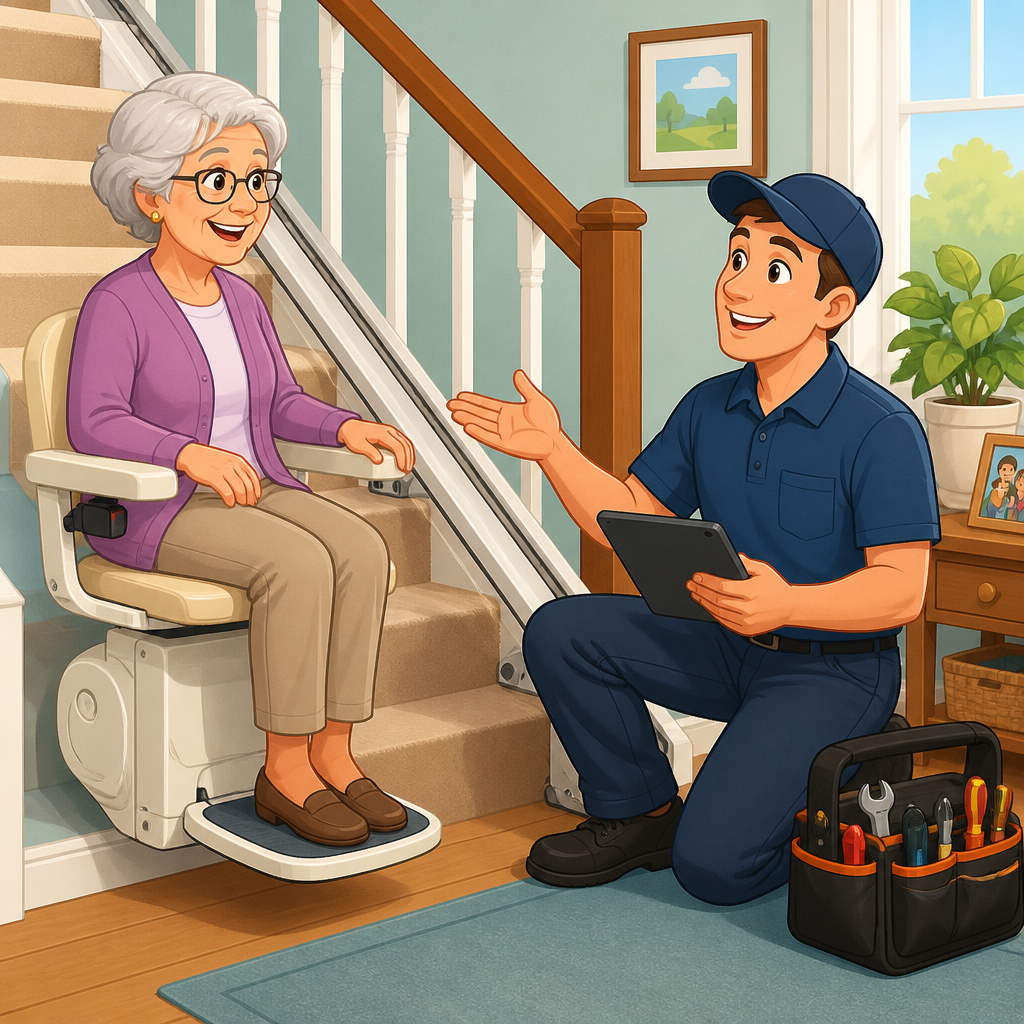
If you already own a stair lift, one practical question comes up sooner than most buyers expect: can a different dealer service or inspect your existing stair lift? In many cases, the answer is yes, but the real answer depends on the lift’s brand, rail type, age, parts availability, software access, and the policies of the local dealer you call. As someone who has worked with homeowners navigating maintenance calls, transfer-of-ownership units, and annual safety checks, I have seen this issue create unnecessary delay when the lift is otherwise serviceable. Understanding how annual inspections work, what another dealer can and cannot do, and how to prepare for a smooth service visit helps you keep the lift safe, reliable, and compliant with manufacturer guidance.
A stair lift is a motorized chair or perch system that travels along a rail mounted to the staircase. Service usually means diagnosis, adjustment, lubrication where specified, battery testing, charger verification, and replacement of worn parts. An inspection is broader: it evaluates whether the lift is operating safely, whether critical components meet expected condition standards, and whether the installation still suits the user and the stair environment. Annual inspections matter because stair lifts are safety devices, not convenience gadgets. They carry people with limited mobility, often daily, and small issues such as weak batteries, a misaligned swivel interlock, or a loose overrun bracket can become shutdowns or safety hazards if they are ignored.
This article serves as a hub for annual inspections within maintenance, troubleshooting, and safety. It explains when another dealer can help, when brand restrictions complicate service, what a proper inspection includes, how to evaluate a provider, and what homeowners should do before and after the visit. If you need a clear answer before calling for service, start here: a different dealer can often inspect your stair lift, but the best outcome depends on matching the dealer’s training and parts access to your specific unit.
When a Different Dealer Can Service Your Stair Lift
A different dealer can usually service your stair lift if the company works on your brand, has access to compatible parts, and is willing to take over support for a unit it did not originally sell. This is common with major manufacturers such as Bruno, Harmar, Handicare, Savaria, and Stannah, although local coverage varies. In practice, I have found that straight stair lifts are easier for a new dealer to accept than custom curved systems because straight rails are more standardized and many service issues involve common consumables such as batteries, seat switches, charge contacts, and carriage adjustments. Curved lifts often require brand-specific diagnostics, rail maps, or custom replacement sections, which can limit who will touch them.
The first question a service coordinator usually asks is the make and model. If you have the serial number, provide it immediately. That number tells the dealer the production generation, battery type, charger configuration, and sometimes whether the lift uses proprietary boards or diagnostic tools. A reputable dealer may also ask for photos of the rail, carriage, call/send stations, and label plate. This is not gatekeeping; it helps them confirm whether they can inspect it responsibly on the first visit. If a dealer does not support your model, the limitation is often logistical rather than technical incompetence. They may not be able to source boards quickly, obtain factory programming support, or warranty work performed on unfamiliar equipment.
Annual inspections are where crossover service is most practical. Even if a new dealer cannot promise major repairs without further review, they can often perform a condition and safety inspection, document deficiencies, test batteries and chargers, inspect the rail and mounting points, and advise whether ongoing service is realistic. That inspection is valuable because it establishes the lift’s baseline condition and helps you decide whether to repair, continue maintenance, or replace the unit.
What Can Prevent Another Dealer from Taking the Job
The biggest obstacles are proprietary systems, unsupported legacy models, and liability concerns. Some stair lifts rely on manufacturer-only diagnostic interfaces or firmware procedures. Others are older models with discontinued boards, obsolete remote controls, or batteries mounted in configurations that newer technicians rarely see. If the original dealer no longer serves your area, or if the lift was bought used and relocated, records may be incomplete. That makes another dealer more cautious because they are stepping into an unknown service history.
Curved stair lifts deserve special mention. Because the rail is custom fabricated to the staircase, any misalignment, movement, or damaged section can be harder to correct than on a straight lift. Dealers may inspect these units but decline major work if they cannot get factory engineering support. I have also seen dealers refuse service on lifts with obvious installation problems: nonstandard mounting, missing safety labels, incorrect power supply placement, bypassed seatbelt or swivel interlocks, and signs of water intrusion near outdoor units. In those cases, the concern is not unwillingness; it is risk management. A company that assumes service responsibility for a compromised mobility device has to be confident it can return the unit to safe operating condition.
Another limitation is parts economics. A dealer may be technically capable of replacing a gearbox, board, or charge strip, but if the parts are scarce and labor will exceed the value of the unit, they may recommend replacement instead of continued maintenance. That recommendation can be reasonable, especially for lifts over ten years old with repeated fault history. An honest inspection should explain that tradeoff clearly rather than simply labeling the lift unserviceable.
What an Annual Stair Lift Inspection Should Include
An annual stair lift inspection should be systematic, documented, and specific to the manufacturer’s service schedule. At minimum, the technician should inspect the rail, carriage, seat assembly, footrest, charging system, batteries, controls, safety edges, overspeed or transmission-related safety functions where applicable, seat swivel locks, seatbelt condition, final limits, and start/stop performance. The inspection should also include ride quality, unusual noises, leveling at landings, and the condition of hinges or powered folding sections if the unit has them. If the stair lift is outdoors, weather sealing, corrosion, and cover condition should be checked closely.
Battery testing is one of the most important parts of the annual visit. Most modern stair lifts are battery powered and charge continuously or intermittently at designated points. Homeowners often think the lift is plugged in, so the batteries must be fine. That is not how these systems fail. A charger can lose output, charge contacts can oxidize, or batteries can pass a no-load voltage check yet collapse under travel load. A proper inspection includes charger verification and load-aware battery assessment, not just a glance at a green light. In my field experience, weak batteries are among the most common causes of intermittent beeping, slow travel, and no-start complaints.
The technician should also verify that all safety devices stop the lift as designed. Footrest edges, carriage obstruction sensors, seat swivel interlocks, and limit switches are there to prevent movement in unsafe conditions. These components do not get a free pass because the lift still runs. Many annual inspections uncover sticky switches, frayed control wiring near moving joints, or loose seat hardware that the user had normalized over time. That is why an inspection is not the same as waiting for a breakdown.
Inspection Checklist Homeowners Should Expect
The most useful annual inspections follow a repeatable checklist. Ask for one. Good dealers already use service forms aligned with the manufacturer’s maintenance points and internal quality standards. The checklist below reflects the core items that should be reviewed on most residential stair lifts.
| Inspection Area | What the Technician Checks | Why It Matters |
|---|---|---|
| Rail and Mounts | Bracket tightness, rail alignment, overruns, hinge operation | Loose or shifted rails affect ride quality and safety |
| Batteries and Charger | Voltage, charging output, contact condition, age | Battery weakness is a leading cause of failures |
| Drive System | Motor response, transmission noise, gear rack engagement | Wear here can cause jerking, stalling, or shutdowns |
| Seat and Swivel | Locking at landings, seat play, arm condition, belt integrity | User stability depends on secure seating and transfers |
| Footrest and Sensors | Obstruction edges, folding linkage, wiring | Protects against striking objects on the stairs |
| Controls | Armrest controls, remotes, call/send stations, key switch | Reliable controls reduce misoperation and nuisance faults |
| Stops and Limits | Final limits, charging stop positions, soft start and stop | Ensures safe parking and proper charging |
| Environment | Power supply, trip hazards, stair clearance, corrosion | Surroundings can damage the lift or affect safe use |
If your inspection does not cover these basics, ask questions. A short visit that only wipes the rail and runs the chair once is not a meaningful annual inspection. You are paying for risk reduction, not a ceremonial tune-up.
How to Choose the Right Dealer for an Existing Lift
Start by confirming brand authorization or documented experience with your model. Ask how many units of that brand the company services each month, whether it stocks common parts locally, and whether technicians are factory trained or trained through established mobility-equipment programs. Experience matters because stair lift troubleshooting is often about pattern recognition. A seasoned technician can connect a symptom such as stopping short of the charge point with likely causes such as dirty contacts, drift in stop positioning, or battery decline, rather than swapping parts blindly.
Ask whether the company will perform an inspection-only visit before quoting larger repairs. That is often the best route when changing dealers. It lowers pressure, gives you a written condition report, and lets the technician assess whether the lift is a candidate for ongoing support. Also ask what documentation you will receive. A strong service company can provide an invoice that lists tests performed, defects found, parts recommended, and maintenance intervals. If your family coordinates care across siblings or with a case manager, that documentation becomes important.
Response time matters too. Some dealers sell stair lifts but outsource service, which can create delays. Others maintain dedicated technicians and stocked vans. Ask specifically about emergency response, battery replacement turnaround, and support for users who cannot safely use the stairs without the lift. In real homes, those details matter more than polished marketing. Finally, be cautious with any company that promises to service “any stair lift” without seeing the make, model, and condition first. Confidence is good; specificity is better.
How to Prepare for the Annual Inspection
Preparation makes the visit faster and more accurate. Clear the staircase, landings, and the area around the power outlet or charging point. Have the manual, previous invoices, and any error notes ready. If the lift beeps, stops intermittently, or behaves differently at certain points on the rail, write that down before the technician arrives. Details such as “fails near the bottom charging point after rain” or “swivel lever feels loose on the top landing” save time and often lead directly to the cause.
It also helps to know the age of the batteries and whether the unit has had prior board, motor, or remote replacements. Many homeowners do not realize that battery age alone can explain performance complaints. Sealed batteries in stair lifts commonly need replacement every few years, depending on charge quality, travel frequency, temperature, and whether the chair is consistently parked on charge. A unit used several times daily by two people will age differently from one used once a week. During the inspection, ride the lift only if the technician requests it and it is safe to do so. Otherwise, let the technician test under controlled conditions.
If the stair lift changed owners with the home, say so. Transfers often come with missing records, and the technician may pay extra attention to installation details and deferred maintenance. That is especially important with annual inspections because the goal is not merely restoring operation for one day; it is establishing whether the lift can be trusted for the next year.
What Happens After the Inspection
After the annual inspection, you should receive clear findings in plain language. The report should separate immediate safety issues from routine maintenance items and longer-term replacement planning. For example, a failed seat swivel interlock is urgent because it affects safe operation. A worn arm pad is cosmetic. Batteries that still function but test marginal may justify proactive replacement before winter, especially in homes where a shutdown would strand the user on one level.
Use the inspection to plan maintenance, not just react to problems. If the dealer supports your model, ask whether they recommend an annual service agreement or pay-as-needed scheduling. Neither approach is universally better. Service plans can make sense for users who rely on the lift every day and want priority response. Pay-as-needed may be fine for newer units with light usage. The right decision depends on how critical the lift is to daily living, not just on price. Also ask whether the technician identified any user-training issues, such as inconsistent parking on the charge points or forcing the seat swivel, because behavior affects reliability more than many owners expect.
This annual inspection hub should guide every related maintenance decision. If a different dealer is evaluating your existing stair lift, focus on compatibility, documentation, and inspection depth. A qualified provider can often take over service successfully, even when they did not install the unit. Your next step is simple: gather your model information, book a comprehensive annual inspection, and use the findings to keep the lift safe, dependable, and ready every day.
Frequently Asked Questions
Can a different stair lift dealer service or inspect a lift they did not originally install?
Yes, in many cases a different stair lift dealer can service or inspect a lift they did not install, but it is not automatic. Whether they can help depends on several practical factors, starting with the brand and model of the lift. Many local dealers only work on manufacturers they are authorized to represent, and some will only service units for which they can reliably source parts, access diagnostics, and verify safety specifications. If your stair lift is from a widely supported brand and the dealer has trained technicians familiar with that equipment, there is a good chance they can at least perform an inspection and basic maintenance.
That said, not every dealer will take on an outside unit. Some lifts require proprietary tools, brand-specific software, or access to technical support portals that only certain dealers have. Others may be older models with discontinued components, which makes service riskier and more time-consuming. A reputable dealer will usually ask for the manufacturer name, model number, serial number, rail configuration, and photos before committing to a visit. This helps them determine whether they can safely inspect the system, whether replacement parts are still available, and whether the lift meets current operating standards. In short, a different dealer often can help, but their willingness and ability depend on the exact equipment and the support structure behind it.
What determines whether another dealer will agree to work on an existing stair lift?
Several factors influence whether another dealer will agree to service your stair lift. The first is brand compatibility. Dealers tend to prioritize the manufacturers they actively sell because they have direct training, current documentation, and a reliable parts pipeline. If your lift is from a brand they do not carry, they may decline the work simply because they cannot guarantee repair quality or long-term support. The second major factor is the age of the unit. Older lifts may still function well, but if the model has been discontinued, obtaining batteries, circuit boards, carriage components, seat parts, or charging contacts can become difficult or impossible.
Rail type also matters. Straight stair lifts are generally easier for outside dealers to inspect and maintain because they are more standardized. Curved stair lifts are more specialized, often built around custom rails and model-specific programming, which can limit who is willing to work on them. In addition, some units need software access for troubleshooting error codes, calibrating features, or confirming system settings. If a dealer does not have that access, they may be able to perform only a limited inspection rather than full service. Finally, company policy plays a role. Some dealers welcome transfer-of-ownership units and outside equipment, while others focus only on lifts they installed themselves. The best approach is to call with clear information and ask directly what level of inspection, maintenance, or repair they can provide.
If a dealer did not install the stair lift, can they still perform a safe inspection?
Yes, a qualified dealer can often perform a safe inspection even if they were not the original installer, provided they know the brand and have experience with that type of equipment. A proper stair lift inspection usually includes checking the rail condition, carriage operation, seat lock function, footrest safety edges, charging system, batteries, remote controls, swivel mechanism, start and stop behavior, and any unusual noise or movement during travel. The technician may also look for mounting issues, signs of wear, loose hardware, damaged wiring, corrosion, and evidence that the lift has been modified since installation.
However, the depth of that inspection can vary. If the dealer has full familiarity with the model, they may be able to complete a comprehensive safety and performance review and recommend preventive maintenance or repairs. If they have only partial support for that brand, they may limit the visit to a visual assessment and basic operational checks. In those situations, they may be very clear that they are evaluating observable safety concerns but not certifying every internal component or software-controlled function. That is not necessarily a red flag; it is often a sign of a responsible company being honest about what they can verify. If your goal is an annual safety check on an older or inherited unit, ask the dealer exactly what their inspection includes and whether they can provide written findings on the lift’s condition and serviceability.
What information should you have ready before calling a new stair lift dealer for service?
Before you contact a new stair lift dealer, it helps to gather as much information as possible so they can tell you quickly whether they can assist. Start with the brand name, model number, and serial number of the stair lift. These are often found on a label near the carriage, under the seat, or along the rail. If possible, note whether the unit is a straight or curved stair lift, and whether it is installed indoors or outdoors. It is also helpful to know approximately how old the lift is, whether you are the original owner, and whether the unit has had any recent issues such as stopping mid-travel, beeping, slow movement, charging problems, or intermittent operation.
Photos are especially useful. Clear pictures of the seat, carriage, rail, call/send controls, and any labels can help a dealer identify the lift before they schedule a technician. If you have previous service records, warranty paperwork, or installation documents, keep those available as well. Dealers may want to know whether the lift was serviced regularly, whether batteries have been replaced, and whether any non-original repairs were attempted. The more complete your information, the more accurate their answer will be about inspection options, service charges, parts availability, and whether the lift is worth repairing. This saves time and helps avoid a visit that ends with, “We cannot support this model after all.”
Is it worth servicing an older or secondhand stair lift through a different dealer?
Often yes, but it depends on the unit’s condition, age, and long-term supportability. Many secondhand or inherited stair lifts can continue operating safely with proper inspection and maintenance, especially if they come from a major manufacturer and the rail and drive components remain in good shape. A different dealer may be able to replace batteries, tune up charging points, inspect safety systems, and address wear items that commonly develop over time. For homeowners who purchased a home with an existing lift or acquired one through a transfer of ownership, a professional inspection is usually a smart first step before relying on the unit daily.
At the same time, there are situations where service may not be the best investment. If the lift is very old, parts are obsolete, the rail is damaged, or the unit has repeated electronic faults, a dealer may advise against continued repair. This is especially common with discontinued curved models or lifts from manufacturers that no longer have local support. In those cases, paying for an inspection is still worthwhile because it gives you a clear picture of safety, remaining lifespan, and realistic repair options. A trustworthy dealer will not simply push replacement; they will explain whether the unit can be maintained responsibly, what future service may look like, and whether upgrading to a newer stair lift would provide better reliability and support. That practical, case-by-case guidance is exactly why bringing in an experienced outside dealer can be so valuable.