


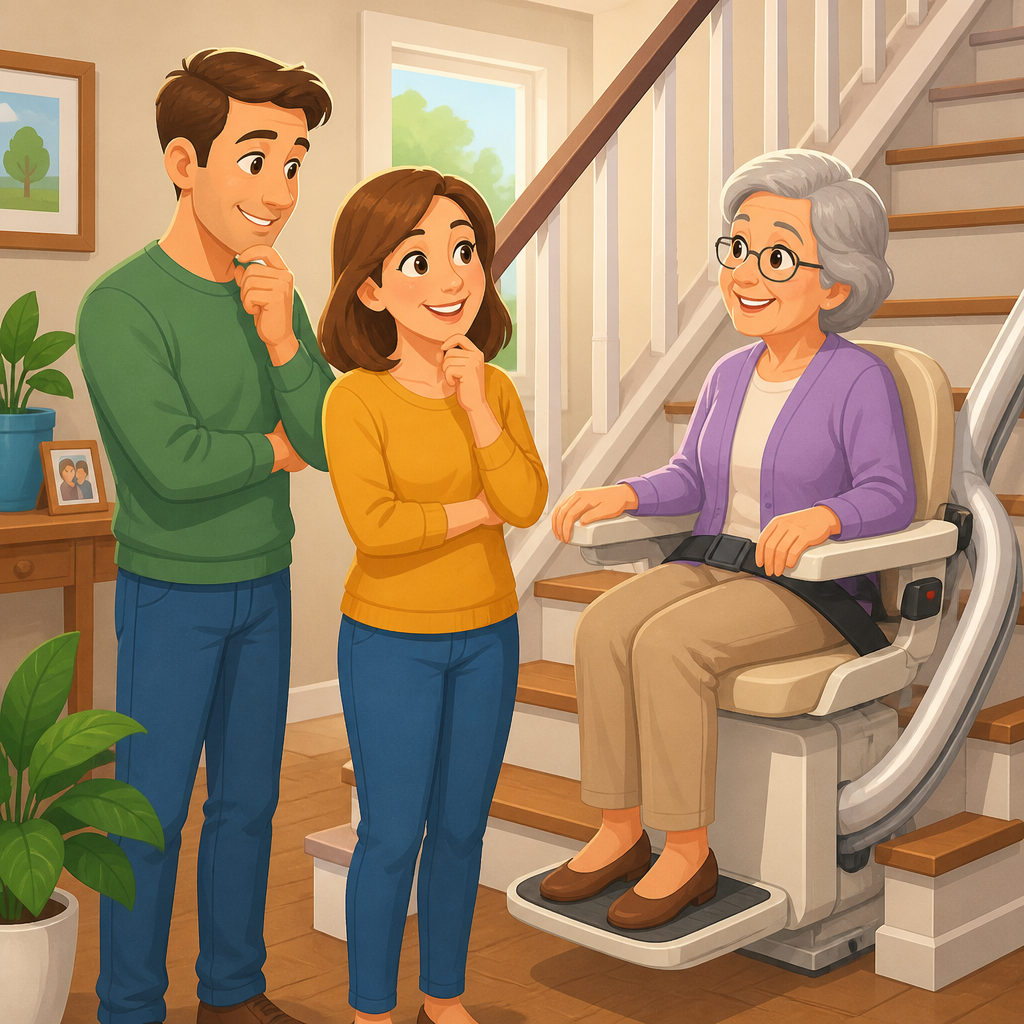
Families often ask whether a caregiver or adult child can claim a parent’s stair lift expense on taxes, and the answer depends on who paid, who uses the lift, how the parent qualifies as a dependent, and whether the cost is treated as a deductible medical expense under IRS rules. A stair lift is a motorized chair or platform attached to a staircase that helps a person with limited mobility move safely between floors. In practice, it is usually recommended for older adults with arthritis, stroke aftereffects, Parkinson’s disease, balance disorders, or recovery limitations after surgery. Because a stair lift can be expensive, often ranging from several thousand dollars for a straight run to much more for a custom curved system, families naturally look at whether tax deductions, reimbursement accounts, or other financing tools can reduce the out-of-pocket cost.
I have worked with families comparing invoices, physician letters, and tax guidance after installations, and the confusion is usually the same: the parent needed the equipment, but the son or daughter wrote the check. That alone does not settle deductibility. Tax treatment turns on medical necessity, dependency status, adjusted gross income thresholds, and whether the expense increased the home’s value. Those details matter because the stair lift expense may be fully deductible, partly deductible, or not deductible at all. Caregivers also need to distinguish between a stair lift purchased for convenience and one installed primarily to address a diagnosed mobility impairment. The IRS draws that line consistently across home modifications.
This article serves as a hub for the broader subject of tax deductions and medical expenses related to stair lifts. It explains when a parent’s stair lift may qualify, how adult children and caregivers should document the claim, what special rules apply to home improvements, and which related costs may also count. It also addresses common mistakes, including assuming every senior home upgrade is deductible or failing to reduce the claim by any increase in property value. If you need a clear framework before speaking with a tax professional, this guide covers the core rules and the practical steps that make a claim defensible.
When a Parent’s Stair Lift Qualifies as a Medical Expense
A stair lift can qualify as a medical expense when it is installed primarily to diagnose, cure, mitigate, treat, or prevent disease, or to affect a structure or function of the body. That standard comes from IRS Publication 502, the central reference for medical expense deductions. In plain terms, the lift must be medically necessary, not just helpful. If a parent has severe osteoarthritis and cannot safely climb stairs, a stair lift is much easier to justify than if the family installs one merely to make aging in place more convenient. Medical necessity should ideally be supported by a physician’s written recommendation describing the mobility limitation and explaining why the equipment is needed in the home.
In most stair lift cases, the expense is treated as a capital improvement to the home. IRS guidance allows medically necessary home improvements to be counted as medical expenses, but there is an important adjustment: only the amount that exceeds any increase in the property’s value is deductible. If a stair lift costs $8,500 and a qualified appraiser concludes it increased the home’s value by $1,500, the potentially deductible medical expense is $7,000. In many real-world cases, a stair lift adds little or no market value because it is highly specific to the user and may even be viewed as neutral or removable by future buyers. Still, families should not assume the increase is zero without support.
Deductibility also depends on itemizing deductions on Schedule A. Medical expenses are deductible only to the extent they exceed 7.5 percent of adjusted gross income under current federal rules. For example, if your adjusted gross income is $80,000, only the portion of total qualified medical expenses above $6,000 can be deducted. That means a stair lift does not automatically produce a tax benefit by itself. It usually becomes more valuable in a year when the family also has other large medical costs such as home health care, prescription expenses, hospital bills, hearing aids, or long-term therapy.
Can an Adult Child or Caregiver Claim the Expense?
An adult child or caregiver may be able to claim the stair lift expense if they paid the cost and the parent qualifies as their dependent for tax purposes. This is the point families miss most often. Paying for a parent’s medical equipment does not create a deduction unless the parent fits within the dependency rules or the parent claims the expense on their own return. For many households, the relevant category is a qualifying relative. Generally, the parent does not have to live with the child, but the child must provide more than half of the parent’s total support for the year, and the parent’s gross income must stay below the applicable annual limit unless an exception applies for certain nontaxable income sources.
Support includes housing, food, medical care, transportation, and other essentials. Social Security can complicate the calculation because nontaxable Social Security benefits are often excluded from gross income for dependency testing, yet they still count when measuring who provided support. I have seen situations where an adult daughter paid for a $9,000 stair lift and substantial prescription costs, but the parent’s own pension and Social Security meant the daughter did not actually provide more than half of total support. In that case, the daughter’s payment was generous but not deductible on her return. The parent might still deduct the expense if itemizing and otherwise eligible.
Caregivers who are not relatives usually cannot claim the expense unless they are legally entitled to claim the parent as a dependent under the same support rules, which is uncommon. Siblings present another wrinkle. If multiple children share support, a multiple support agreement may allow one child to claim the parent as a dependent if several contributors together provide more than half of support and each otherwise qualifies. That arrangement can preserve a medical deduction in a coordinated family plan, but it must be documented carefully. Tax software does not fix weak facts; the support test must be proven with records.
Documentation That Makes the Deduction Defensible
The strongest stair lift deduction file includes medical documentation, payment records, installation details, and property value support. Families should keep the physician’s prescription or letter of medical necessity, the signed sales contract, proof of payment, the installer’s invoice, warranty materials, and any correspondence showing the model was selected to address the parent’s mobility impairment. If the installation required electrical work, structural modifications, or permits, keep those invoices too. These records help show that the expenditure was a genuine medical home modification rather than a general remodeling project bundled with unrelated upgrades.
Property value evidence matters because home improvements are subject to the value-increase reduction rule. A formal appraisal before and after installation is ideal for high-cost projects, especially curved stair lifts or platform lifts with significant construction work. For lower-cost installations, some families obtain a broker price opinion or written statement from a real estate professional explaining that the lift did not materially increase market value. While that is not as strong as an appraisal, it is often better than having no support at all. If the stair lift is removable and customized to the user, note that fact in the file because it strengthens the argument that resale value impact was limited.
| Record | Why it matters | Best practice |
|---|---|---|
| Doctor’s letter | Shows medical necessity | Ask for diagnosis, mobility limits, and home-use recommendation |
| Invoice and receipt | Proves amount paid and date | Separate equipment, labor, and unrelated remodeling charges |
| Support calculation | Supports dependency claim | Track parent income and who paid each major living expense |
| Property value evidence | Determines deductible portion | Use an appraisal or written market analysis when possible |
| Tax return workpapers | Connects deduction to Schedule A | Keep medical expense summary with AGI threshold calculation |
Which Stair Lift Costs and Related Medical Expenses Count
The purchase price of the stair lift is only part of the picture. Installation charges generally count when they are necessary to place the equipment in service for medical use. Electrical upgrades required for the lift may also qualify if they are integral to the installation. In some cases, repairs and maintenance can be treated as medical expenses if they are necessary to keep the medically required lift operating. Rental fees for a temporary stair lift may qualify as well, particularly after surgery or during rehabilitation. If a used lift is purchased and professionally installed, the actual amount paid can still count, subject to the same medical necessity and home-improvement rules.
Other related home modifications may be deductible in the same year if they are medically necessary and not primarily for general home improvement. Examples include widening doorways, adding ramps, installing grab bars, modifying bathrooms, lowering cabinets, or improving access to an entrance. Publication 502 specifically recognizes several accessibility modifications that do not ordinarily increase a home’s value and are therefore often fully deductible. Families should review the stair lift expense in the context of the entire care plan. When several modifications are completed together, separating medical items from aesthetic remodeling is essential. New flooring chosen for style, for instance, is not converted into a medical deduction simply because a lift was also installed.
It is also worth checking whether any amount was reimbursed. If Medicare, Medicaid waiver programs, Veterans Affairs benefits, state assistive technology programs, or private long-term care coverage paid part of the cost, the reimbursed amount is not deductible. The same rule applies to payments made through a health savings account, flexible spending account, or health reimbursement arrangement. Families sometimes double count by deducting an expense already paid with pretax funds. A clean rule is simple: only unreimbursed medical expenses paid with after-tax dollars belong in the deduction calculation.
Common Scenarios, Mistakes, and Planning Opportunities
One common scenario involves an adult son paying for a stair lift installed in his mother’s home. If the mother is his dependent and a doctor prescribed the lift due to advanced knee degeneration, the son may claim the unreimbursed deductible portion, reduced by any increase in home value and limited by the 7.5 percent adjusted gross income floor. Another scenario involves a daughter installing the lift in her own home because her father moved in with her. That can still qualify if the father is her dependent and the modification was medically necessary for him. The location of the equipment matters less than the medical purpose and dependency facts.
The most frequent mistake is assuming every accessibility expense is deductible in full. Families forget the adjusted gross income threshold, fail to itemize, or overlook the value-added rule for capital improvements. Another mistake is weak support documentation. A receipt that says “home mobility project” is not enough if it combines a stair lift with painting, flooring, and decorative carpentry. Ask vendors for line-item invoices. A third mistake is poor dependency analysis. Adult children often provide substantial help but not more than half of total support, especially when a parent owns a home outright or receives significant retirement income. In those cases, shifting the deduction to the parent’s own return may be the better route.
Good planning can improve the tax result. Bunching medical expenses into one tax year may push total costs above the 7.5 percent threshold. Scheduling the stair lift, dental work, hearing aids, and other major care expenses in the same calendar year can make itemizing worthwhile. Families should also compare whether the parent or the child receives the larger benefit. Some states offer medical deductions or credits that differ from federal treatment, and a few have more favorable thresholds. For large projects, it is reasonable to involve a CPA or enrolled agent before installation so invoices, appraisals, and support records are structured correctly from the start.
How This Hub Fits the Broader Tax Deductions and Medical Expenses Topic
This page is the starting point for the broader tax treatment of stair lifts under cost and financing options. From here, families should also explore related topics such as whether stair lift repairs are deductible, how rental stair lifts are treated, whether a home equity loan used for accessibility improvements changes tax planning, and how health savings accounts interact with mobility equipment expenses. Another important branch is state-level assistance, since property tax relief programs, Medicaid home and community-based services waivers, and veterans’ benefits can change the amount that remains deductible on a federal return.
The central rule to remember is straightforward: a caregiver or adult child can sometimes claim a parent’s stair lift expense, but only when the expense is medically necessary, unreimbursed, properly documented, and paid for a parent who qualifies as a dependent or is otherwise eligible to claim the expense on their own return. The tax code rewards precision, not assumptions. Keep the doctor’s letter, separate the invoices, measure support carefully, and account for any increase in home value. If you are evaluating a stair lift purchase now, organize the paperwork before installation and review the numbers with a qualified tax professional so you can capture every legitimate medical deduction available.
Frequently Asked Questions
Can an adult child claim a parent’s stair lift expense on their taxes?
Yes, an adult child may be able to claim a parent’s stair lift expense, but only if several tax rules are met. In general, the key questions are who paid for the stair lift, whether the parent qualifies as the taxpayer’s dependent, and whether the stair lift counts as a deductible medical expense under IRS standards. If an adult child pays out of pocket for a stair lift that is installed for a parent with limited mobility, the expense may qualify as a medical deduction if the parent is a qualifying dependent and the lift is primarily for medical care rather than convenience or general home improvement.
A stair lift is typically considered a medical-related expense when it is used to help someone with a diagnosed mobility limitation safely access different levels of the home. This often applies in cases involving arthritis, stroke recovery, neurological conditions, or other impairments that make climbing stairs difficult or unsafe. However, even if the stair lift is medically necessary, the adult child cannot simply deduct it because they helped a parent. The parent usually must meet dependency rules, which often include financial support and other IRS tests. Also, medical expenses are generally deductible only if the taxpayer itemizes deductions and only to the extent total qualified medical expenses exceed the applicable adjusted gross income threshold. Because of these limits, eligibility does not always mean the expense will produce a tax benefit.
Does a parent have to be claimed as a dependent for the stair lift cost to be deductible by a caregiver or adult child?
In most situations, yes. If a caregiver or adult child wants to deduct a parent’s stair lift expense on their own tax return, the parent generally must qualify as that taxpayer’s dependent under IRS rules. This is one of the most important parts of the analysis. Paying for a parent’s medical equipment alone is not enough. The taxpayer usually must show that the parent meets the requirements to be treated as a qualifying relative, which commonly involves providing more than half of the parent’s support during the year, along with meeting income and residency or relationship rules that apply under federal tax law.
There can be some nuance here. A parent does not always have to live with the adult child to qualify as a dependent, because parents are treated differently from some other relatives for dependency purposes. Even so, the support test is still critical. If multiple siblings share a parent’s expenses, it may be harder for one person to establish that they alone provided more than half of the parent’s support. In some family situations, a multiple support agreement may come into play, but that is a separate tax issue with its own requirements. The practical takeaway is that the dependency question should be confirmed before assuming the stair lift cost can be claimed. Without dependent status, the adult child or caregiver often cannot deduct the parent’s stair lift expense on their own return.
Is a stair lift considered a deductible medical expense by the IRS?
A stair lift may be treated as a deductible medical expense if it is installed for a medical reason and is intended to help a person with a physical limitation or disability. The IRS generally allows deductions for qualified medical expenses that are primarily for the diagnosis, cure, mitigation, treatment, or prevention of disease, or for affecting a structure or function of the body. When a stair lift is recommended because a parent cannot safely use stairs due to limited mobility, it can often fit within that medical expense framework.
That said, stair lifts fall into a category that can overlap with home improvements, which is why documentation matters. If the stair lift is installed in a home and also affects the value of the property, the deductible amount may depend on whether the installation increases the home’s value. In many cases involving medically necessary accessibility improvements, the cost may be deductible in full or in part, depending on the facts. Taxpayers should keep detailed records, including invoices, proof of payment, and ideally a doctor’s statement or written recommendation explaining why the stair lift is necessary. This helps show that the expense was incurred for medical care and not merely for comfort, aging in place preferences, or resale-related renovation. Because these rules can be fact-specific, a tax professional can help determine how much of the stair lift cost, if any, is deductible.
Who should claim the stair lift expense if the parent, caregiver, and adult child all contribute to the cost?
When more than one person contributes to the cost of a parent’s stair lift, the tax treatment can become more complicated. In general, a person can deduct only the qualified medical expenses they actually paid, and only if all other tax requirements are satisfied. That means if an adult child paid part of the cost, a parent paid part, and another family member or caregiver paid the rest, each person’s ability to claim a deduction depends on their own circumstances. The adult child may only be able to deduct the portion they paid, and only if the parent qualifies as their dependent. The parent may be able to deduct the portion they paid on their own return if they itemize and otherwise qualify.
This is why families should be careful about assumptions. Simply splitting the expense informally does not automatically produce the best tax result. It is also important to avoid double claiming the same amount. If one person reimburses another, the person who was ultimately out of pocket is usually the one whose payment matters. Families should maintain a clear paper trail showing who paid what, whether any reimbursements occurred, and whether insurance, grants, or other assistance covered part of the cost. If siblings or caregivers are coordinating support for an older parent, discussing the payment structure before installation can help prevent confusion later. A tax advisor can often identify the cleanest and most defensible way to handle the deduction.
What records should families keep to support a stair lift tax deduction?
Families should keep complete and organized records to support any deduction related to a parent’s stair lift expense. At a minimum, that should include the sales contract or invoice for the stair lift, installation receipts, canceled checks or credit card statements showing who paid, and any financing documents if the lift was paid over time. If the taxpayer plans to claim the expense as a medical deduction, it is also wise to keep medical documentation showing why the stair lift was needed. A letter, prescription, or written recommendation from a physician can be especially helpful in demonstrating that the lift was medically necessary because of a mobility condition such as severe arthritis, stroke-related weakness, balance issues, or another impairment.
Families should also retain records that support dependency status if an adult child or caregiver is claiming the deduction for a parent. This can include documentation of household expenses, amounts paid for food, housing, medical care, and other support, as well as records of the parent’s own income. If the stair lift installation affected the home itself, any appraisal or documentation related to the home’s value before and after the improvement may also be useful in cases where the medical deduction rules require analysis of property value changes. Good records do more than help at tax filing time. They also provide protection in the event of questions from a tax preparer or the IRS. When in doubt, keep more documentation than you think you need.