


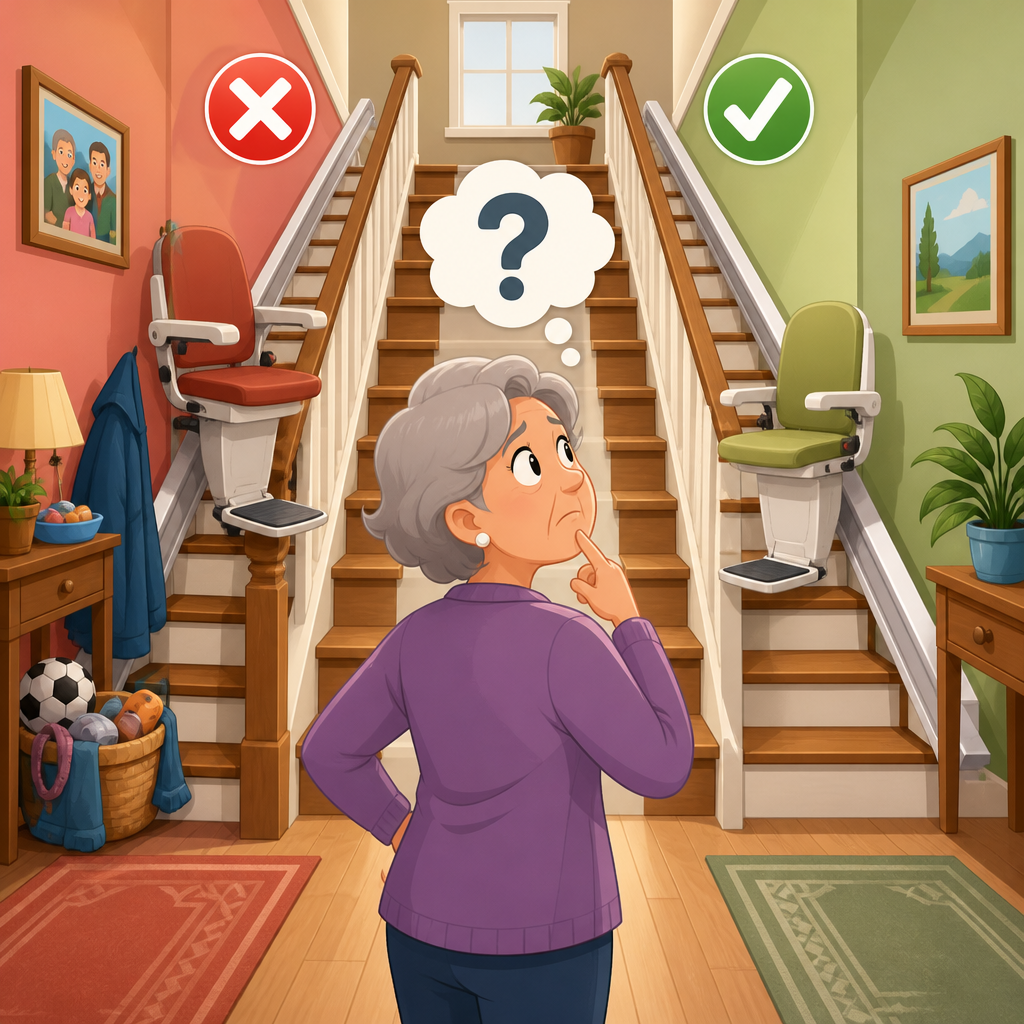
Choosing the wrong side of the staircase for a stair lift installation is one of the most expensive and disruptive mistakes homeowners make during accessibility upgrades. In practice, side selection affects safety, comfort, installation time, electrical planning, door clearance, transfer ease, and even whether the lift can be used daily without frustration. When I assess a home for a stair lift, the conversation is rarely just about left side versus right side. It is about travel path, hinge points, obstructions, user mobility, building layout, and future needs. This article explains the installation mistakes to avoid, with a focus on how choosing the wrong side can create cascading problems across the entire setup.
A stair lift is a motorized chair that travels along a rail fixed to the stair treads, not the wall. The “side” of installation usually means the side of the staircase the rail follows when viewed from the bottom looking up. For straight stair lifts, the choice may appear simple, yet details such as handrail projection, nearby doors, radiator covers, banisters, and landing space often change the best answer. For curved stair lifts, side choice becomes more technical because bends, parking positions, and overrun sections must match the user’s approach and exit path precisely.
This topic matters because stair lifts are long-term mobility devices, not decorative add-ons. A poor side choice can narrow the walking route for other users, block a doorway, interfere with a cane or walker, force awkward transfers, or require a costly rail remake. It can also affect resale conversations, service access, and battery charging points. As the hub page for installation mistakes to avoid, this guide connects side selection to the broader setup decisions that determine whether a stair lift feels seamless or becomes a daily obstacle.
Why Stair Lift Side Selection Is a Critical Installation Decision
The best side for a stair lift is the side that provides the safest boarding and exit, the clearest rail path, and the fewest conflicts with the home’s layout. That sounds straightforward, but installers know the staircase itself is only one part of the decision. I start by mapping the entire user journey: where the person approaches the lift, how they turn to sit, where their knees and feet land, how they stand at the top, and whether they need space for a walker, wheelchair, or caregiver. A technically installable side is not always the correct side.
One common mistake is choosing the side with the most open wall rather than the safest landing. For example, a rail may fit neatly on the inside of the staircase, but if the top landing opens directly toward a narrow hallway, the rider may step off into a pinch point. Another mistake is assuming the existing handrail determines the stair lift location. Since the rail mounts to the stairs, handrails can sometimes stay, move, or be removed depending on local code and practical needs. The correct question is not “Which side is easier to mount?” but “Which side creates the safest everyday use?”
Standards and manufacturer instructions matter here. Reputable brands such as Bruno, Handicare, Acorn, Stannah, and Harmar all require minimum clearances, proper charging positions, and defined landing safety zones. Professional assessments also consider seat height, swivel function, footrest fold profile, and call-send controls. Ignoring these factors often leads to installations that technically work but feel cramped or unsafe. When homeowners tell me they regret a lift, the problem is usually not the machine. It is the planning.
Top Installation Mistakes to Avoid When Choosing a Side
The most frequent error is choosing based only on price. A shorter or straighter rail on one side may look cheaper at quote stage, but if it forces a difficult transfer or blocks a frequently used doorway, the long-term cost is higher. I have seen homeowners save a small amount upfront only to pay later for powered hinges, track modifications, or a complete rail replacement after discovering the chair parked across a threshold. Side choice must be led by function first, then budget.
Another major mistake is ignoring door swing and circulation space. At the bottom landing, an inward-opening door can collide with the parked chair or rail. At the top landing, a bedroom or bathroom door may not clear a folded footrest. Side choice also affects whether family members can still carry laundry, groceries, or suitcases on the stairs safely. In homes with narrow staircases, a rail on the wrong side can reduce the remaining walking width enough to create a hazard for everyone else.
A third mistake is overlooking the user’s stronger side and transfer habits. Many riders have one weak knee, limited hip rotation, or reduced balance on one side after stroke, surgery, or arthritis progression. The side of the lift determines how they pivot into the seat and how they stand off at the landing. If a rider must twist toward their painful side every trip, use declines quickly. I always test the seating motion during the survey because a comfortable transfer pattern is often more important than a seemingly cleaner installation line.
People also underestimate obstructions that are not part of the staircase itself. Window ledges, newel posts, radiators, trim details, low sills, and half-landings can all affect armrest clearance and seat orientation. For curved models, side choice influences bend radius and parking positions. Install on the wrong side, and the chair may intrude into living space or stop where it becomes visually and physically intrusive. These are classic installation mistakes to avoid because they are predictable before work begins.
How to Evaluate the Best Side Before Installation
A proper stair lift survey includes measurements of staircase width, tread depth, riser height, landing length, overhead clearance, and obstruction projection. It also includes a functional assessment of the rider. The right side is identified by combining both. In one recent installation, the left side seemed ideal because it avoided a radiator at the base. However, the right side allowed a safer top dismount directly onto a spacious landing beside the user’s bedroom door. We chose the right side, moved a small console table, and avoided an unsafe top exit that would have required a sideways step near the stair edge.
The table below shows the core criteria I use when comparing stair lift side options during an installation assessment.
| Assessment factor | Why it matters | Warning sign of the wrong side |
|---|---|---|
| Top landing space | Safe exit requires room to stand, turn, and stabilize | User steps off toward a door, wall, or stair edge |
| Bottom landing clearance | Chair must park without blocking circulation | Rail crosses a doorway or walking route |
| User transfer direction | Seat approach must match strength and balance | Painful twisting or awkward pivot to sit |
| Obstructions | Posts, radiators, and trim affect rail and chair clearance | Armrest or footrest clashes during travel |
| Other stair users | Stairs still need workable walking width | Family cannot pass safely on folded lift |
| Power and charging points | Battery units need correct charge stations | Extension cord solutions or inaccessible outlet plans |
| Future mobility changes | Needs may shift from cane to walker support | Current fit works only under ideal conditions |
Manufacturers typically specify a minimum staircase width for standard models, often around 28 inches for some straight lifts, though practical comfort can require more depending on body size and seat style. Clearance should always be verified against the exact product data sheet. If a home has a split-level entry, multiple landings, or a door at the top stair nose, digital measuring systems such as Handicare PhotoSurvey or comparable templating tools for curved rails can prevent expensive errors. Exact geometry matters.
Homeowners should also ask where the chair will be parked when not in use. Parking location affects visibility, charging, and room flow. A side that works during travel may be wrong if the parked chair dominates a living room opening or hallway. Side selection is not complete until the full operating cycle is planned: call, sit, ride, exit, park, and recharge.
Side Choice and Other Installation Errors That Often Appear Together
Choosing the wrong side rarely happens alone. It often accompanies other planning mistakes, which is why this page serves as a hub for installation mistakes to avoid across the broader setup process. One related error is failing to think about powered options early enough. A manual swivel seat may be acceptable on one side with a generous top landing, but not on the opposite side where the rider must turn away from the stair edge in a tighter space. Similarly, a manual hinged rail may be manageable for one household and impractical for another if users cannot bend to lift it.
Another linked mistake is treating all stair lifts as interchangeable. Seat width, arm profile, footrest height, and rail design differ by brand and model. A compact seat from one manufacturer may preserve more walking space than a larger perch seat from another. Side selection should be made after narrowing the product range, not before. In narrow homes, a model with a folding rail or a zero-intrusion bottom overrun can turn a marginal side into the best side. Product fit and side choice must be evaluated together.
Electrical planning is also commonly neglected. Most modern stair lifts use battery power and charge at designated points on the rail, while the charger plugs into a standard outlet. If the chosen side leaves no practical outlet nearby, people sometimes propose extension cords or improvised cable routes, which is poor practice. The right solution is a properly located outlet installed to code if needed. Side selection should include this discussion before the rail is ordered.
Finally, homeowners often fail to plan for maintenance access and emergency use. Service technicians need room to inspect the carriage, rail joints, and charging contacts. If the lift is installed on the wrong side behind a door swing or within a constricted landing, routine service becomes more difficult. In an emergency, the user may also need help transferring off the chair. A side that gives a caregiver better access can be the safer long-term choice.
Practical Scenarios Where the Wrong Side Causes Daily Problems
Consider a straight staircase with a front door directly at the bottom. Installing the rail on the side nearest the door may seem logical because it keeps the chair close to the wall. In reality, the lower overrun can obstruct entry, and a parked footrest may interfere with the door path. In these cases, the opposite side or a hinged rail may be the better answer. I have seen households realize the problem only after family members started bumping into the folded lift while bringing in shopping or opening the door fully.
Another common scenario is a top landing that meets a narrow hallway. If the lift is installed on the inside of the staircase, the rider may dismount into the hall with no turning radius. On the outside, a short overrun may allow the chair to stop farther from the top step, creating a safer standing area. That difference can decide whether the user feels secure or anxious every trip. Small geometry changes have large usability consequences.
Curved staircases create even more opportunities for mistakes. On one project, the homeowner preferred the side that hid the rail visually. However, that side required a sharper lower bend, placing the parked chair across the dining room opening. The opposite side produced a smoother travel line and tucked the parked seat discreetly along a less-used wall. Aesthetic concerns matter, but they should be addressed within the limits of safe operation, not ahead of them.
The lesson across these examples is consistent: the wrong side is usually the side that ignores how the home is actually used. A stair lift installation succeeds when it supports everyday movement for the rider and everyone else in the house. Measure carefully, test transfers realistically, compare product profiles, and insist on a full landing analysis before approving the plan.
Choosing the correct side of the staircase is the foundation of a successful stair lift installation. It affects safety at both landings, comfort during transfer, compatibility with doors and hallways, remaining stair access for others, electrical planning, and future serviceability. When homeowners choose the wrong side, the result is rarely a single inconvenience. It is a chain of avoidable problems that make the lift harder to use and more expensive to correct.
The clearest takeaway is simple: never decide stair lift side placement by appearance or initial price alone. Base the decision on the user’s movement pattern, the geometry of the landings, the location of obstructions, and the exact specifications of the chosen lift model. A professional survey should include measured clearances, parking positions, charge points, and a live evaluation of how the rider will sit, travel, and stand. That level of planning prevents the most common installation mistakes to avoid in this category.
If you are planning a stair lift under an installation and setup project, use this article as your starting hub and review every related decision through the lens of daily function. Ask for side-by-side layout options, request a demonstration of transfer positions, and confirm how the lift will affect doors, walkways, and other users. A few careful questions before installation can prevent years of frustration after it. Make side selection the first decision you get right.
Frequently Asked Questions
How do you decide which side of the staircase is best for a stair lift installation?
The best side for a stair lift is not chosen by guesswork or by what looks symmetrical from the hallway. It is decided by how the user will approach the staircase, sit down, ride safely, and get off at both ends without twisting, reaching, or stepping into a hazard. In a proper assessment, the installer looks at handrail placement, wall obstructions, door swings, nearby hallways, bottom-step traffic flow, and whether the user has stronger movement on one side of the body. The “correct” side is often the one that creates the easiest and safest transfer, not simply the side with the most open wall.
Another major factor is the rail path itself. Stair lift rails are mounted to the stair treads, but the side chosen affects how the chair parks, where the footrest sits when folded, and whether the unit blocks walkways or doorways. If the track ends near a doorway, closet, or narrow landing, the wrong side can create daily frustration or even make the lift unsafe to use. In many homes, a side that seems workable at first glance becomes a poor choice once you account for folded chair clearance, hinge rail movement, electrical access, and the user’s need to enter and exit naturally. That is why side selection should always be treated as a functional planning decision, not a cosmetic one.
Why is choosing the wrong side of the staircase such an expensive mistake?
It becomes expensive because side selection affects almost every part of the installation. If the lift is placed on the wrong side, the homeowner may later discover that the chair blocks a doorway, creates an awkward transfer, interferes with daily foot traffic, or cannot park where it needs to. Correcting those problems after installation can mean reordering rail sections, changing overrun configurations, moving charging points, adjusting electrical plans, or in some cases replacing a custom rail entirely. Those changes are far more costly than getting the assessment right the first time.
The disruption matters just as much as the price. A stair lift is meant to restore independence, but a poorly placed unit can do the opposite by making the user feel unstable or reluctant to use it. If someone has to twist painfully to sit down, step around the footrest at the bottom, or exit onto a cramped landing at the top, the lift may technically work but fail in everyday use. That often leads to service calls, modification requests, and avoidable delays. In real-world accessibility planning, the most expensive mistake is not just spending more money later; it is installing a lift that the user does not feel comfortable using every day.
What safety issues can happen if a stair lift is installed on the wrong side?
Safety problems usually show up at the transfer points, not during the ride itself. Most modern stair lifts include seat belts, obstruction sensors, and reliable controls, but those features cannot compensate for a poor approach or exit path. If the chosen side forces the user to step backward from a landing, pivot in a tight space, or get on and off near a doorway threshold, the risk of stumbling goes up significantly. This is especially important for users with limited balance, reduced hip mobility, stroke history, arthritis, or one-sided weakness. The safest side is the one that supports the most stable, natural transfer at both ends.
There are also environmental safety concerns. A rail on the wrong side can reduce clear walking space for other household members, create congestion at the bottom of the stairs, or interfere with doors that need to open fully. On upper landings, a bad side choice can place the user too close to the stair edge while turning the seat, which is exactly the kind of issue a professional should identify before installation. In some homes, a hinged rail or track overrun is used to solve clearance problems, but those features still need room to operate safely. If the side selection is wrong from the beginning, even advanced options may only partially reduce the risk rather than eliminate it.
Can door clearance, electrical setup, and stair traffic really affect which side the lift should go on?
Yes, and they often affect the decision more than homeowners expect. Door clearance is one of the biggest practical issues because the folded chair, footrest, and rail can occupy space that seems minor on paper but becomes very noticeable in daily life. If there is a door at the top or bottom of the stairs, the installer must make sure the lift does not block the swing path or force the user to manage the door from an awkward position. Hallways, radiators, trim details, baseboard heaters, and nearby furniture can also influence whether one side is more workable than the other.
Electrical planning matters because the stair lift needs a dependable charging location and a layout that supports continuous use without exposed cords or inconvenient outlet placement. While many battery-powered lifts charge from simple household power, the rail position still determines where charging contacts and park points will be located. Stair traffic is equally important. A side that works for the rider may create pinch points for everyone else if the staircase is narrow or heavily used. Good planning balances accessibility for the lift user with safe passage for other people in the home. That is why experienced installers evaluate the staircase as a traffic route, not just as a place to mount equipment.
If both sides seem possible, what should homeowners ask during a stair lift assessment?
Homeowners should ask the installer to explain exactly how the user will get on and off the lift at both the bottom and top of the staircase. That includes where the chair will park, whether the seat swivels comfortably, how much open space is available for standing and turning, and whether the user’s stronger or more mobile side is being considered. It is also smart to ask how the selected side affects folded clearance, footrest position, door access, and normal stair use for everyone else in the household. If the answer is vague or based only on “this is where we usually put them,” that is a sign the assessment may not be thorough enough.
They should also ask about future usability. A side that works today may become less suitable if the user’s mobility changes, if a cane becomes a walker, or if a caregiver later needs to assist with transfers. Ask whether a hinged rail, track overrun, power swivel seat, or call/send controls would improve safety and convenience on one side more than the other. A high-quality stair lift assessment should feel like problem-solving, not product placement. When the installer walks through traffic flow, landing space, body mechanics, and everyday routine in detail, homeowners are much more likely to end up with a lift that feels safe, comfortable, and easy to use for years.