


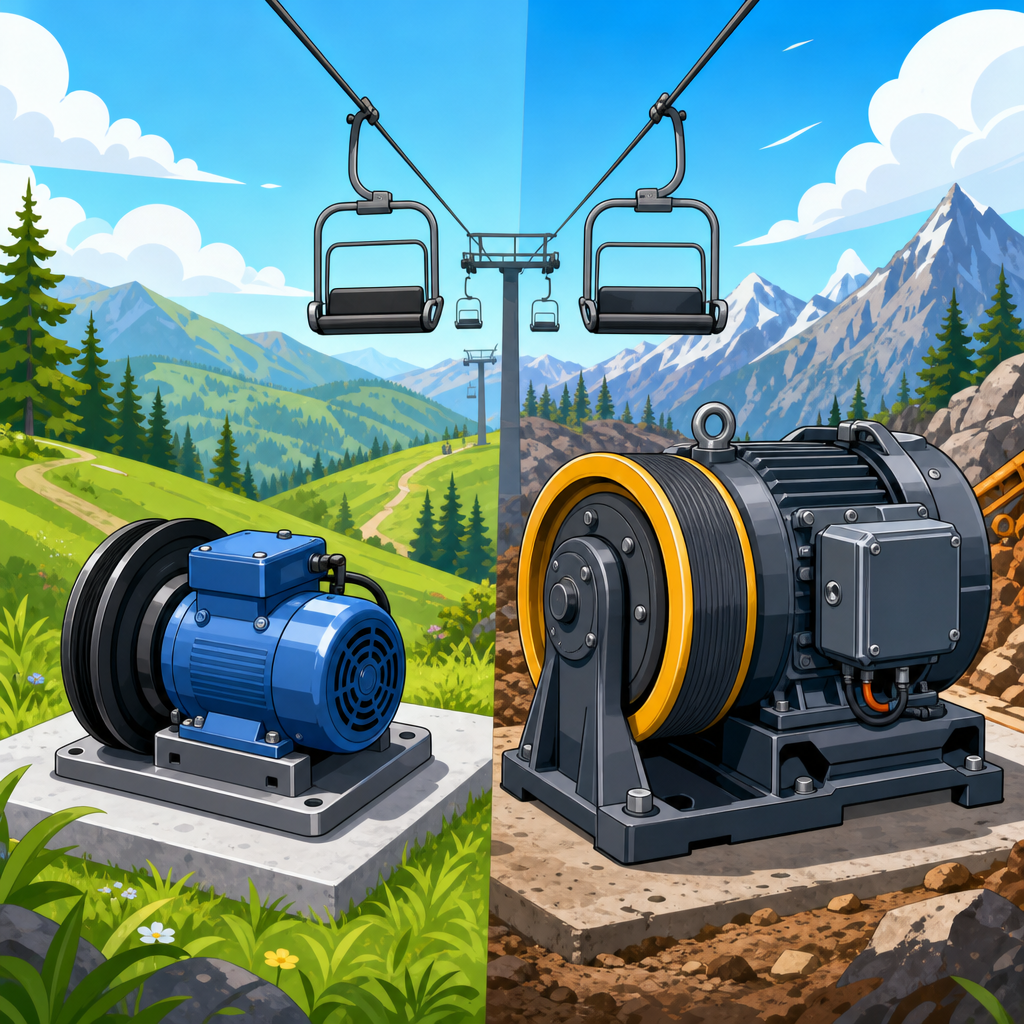
Choosing between a standard and a heavy-duty chair lift motor affects safety, ride quality, durability, installation cost, and long-term satisfaction. In the chair lift industry, the motor is not just the part that makes the carriage move. It works with the gearbox, drive system, battery pack, charger, rail, carriage frame, and seat assembly to determine how much weight the lift can carry, how smoothly it starts and stops, and how reliably it performs over years of daily use. When homeowners, occupational therapists, and installers compare chair lift motors, they are really comparing complete lifting systems designed for different body types, stair layouts, duty cycles, and accessibility goals.
Standard chair lift motors are typically engineered for average residential use and user weights commonly around 250 to 350 pounds, depending on brand and model. Heavy-duty chair lift motors are designed for higher capacities, often 400, 500, or 600 pounds, and they usually require a wider seat, reinforced carriage, stronger transmission components, and more space on the staircase. That distinction matters because a lift motor cannot be evaluated in isolation. A higher-capacity motor places greater demands on braking, rail anchoring, seat structure, charging behavior, and electrical controls. After working on lift selection projects, I have seen buyers focus on published weight capacity while missing the practical consequences: narrower clearance, larger folded dimensions, slower travel, and stricter fit requirements at landings and turns.
This guide explains the differences clearly and comprehensively so this page can serve as the central resource for heavy-duty lifts within the broader chair lift types and designs category. If you are deciding whether a heavy-duty stair lift is necessary, the key question is simple: does the user need more than extra power, or do they need a system purpose-built for higher loads, larger body dimensions, and more demanding daily use? In most cases, the right answer comes from matching motor performance to real living conditions, not from buying the biggest model available.
What Standard and Heavy-Duty Chair Lift Motors Actually Do
Most modern residential chair lifts use a DC motor powered primarily by onboard batteries, even though the unit charges from household electricity. During normal operation, the motor draws energy from the batteries and converts electrical power into rotational force. A gearbox reduces speed and increases torque, allowing the carriage to climb the rail under load. The motor control board manages acceleration, deceleration, overspeed monitoring, limit switches, and fault handling. When people ask whether a lift has a stronger motor, what they usually need to know is how much usable torque the drive system can deliver consistently without overheating, stalling, or shortening component life.
In standard models, the motor and transmission are sized for typical home use: a few trips a day, one rider at a time, moderate stair length, and average body dimensions. Heavy-duty models use higher-torque motors or more robust gear reduction to move greater loads safely. They also tend to include reinforced drive racks, heavier carriage frames, upgraded bearings, and larger seat bases. Manufacturers do this because simply installing a stronger motor on a standard rail is not enough. Load path engineering matters. Every component between the seat and the staircase must tolerate repeated stress without excessive flex, noise, or wear.
A practical example is the difference between a standard straight stair lift rated at 300 pounds and a heavy-duty version rated at 500 pounds. The heavier unit may use a wider rail or dual-rail design, a broader seat, stronger armrest supports, and a lower travel speed to keep operation stable. The motor’s role is central, but system design determines whether the published capacity is meaningful in real use.
Weight Capacity, Torque, and Why Ratings Are More Than Marketing
Weight capacity is the first specification most buyers notice, but capacity ratings are only useful when understood in context. A heavy-duty chair lift motor must produce enough torque to start moving from a standstill on an incline, maintain controlled travel, and stop smoothly without jerking. Stair angle, rider weight distribution, seat height, and carriage geometry all influence effective load. A 400-pound rating on a short straight staircase is not identical to the same rating on a longer run with frequent use and limited charging opportunities between trips.
Installers often look beyond the headline number and review the manufacturer’s technical sheet for duty cycle assumptions, maximum track length, stair pitch limits, and seat dimensions. Reputable companies publish clear ranges. Bruno, Harmar, Handicare, and Stannah all distinguish between standard and high-capacity products because the engineering constraints are real. For example, some heavy-duty lifts only fit stairs at least 36 inches wide, while many standard lifts can work on narrower staircases. That requirement is directly related to the larger carriage and the need to preserve a usable walking path.
Torque also affects user comfort. When a motor is undersized for the rider and staircase, the lift may feel strained at startup, sound louder under load, or trigger fault codes more often. A correctly matched heavy-duty system should not feel dramatic or labored. It should feel controlled. In my experience, the best heavy-duty lifts are deliberately conservative. They trade a little speed for stable motion, lower mechanical stress, and predictable braking.
| Feature | Standard Chair Lift Motor/System | Heavy-Duty Chair Lift Motor/System |
|---|---|---|
| Typical weight capacity | 250 to 350 pounds | 400 to 600 pounds |
| Seat width | Compact to mid-width | Wider seat and arm spacing |
| Stair width needed | Often works on tighter stairs | Usually needs about 36 inches or more |
| Motor and gearbox | Sized for average residential use | Higher torque and reinforced drivetrain |
| Ride speed | Moderate | Often slightly slower for stability |
| Best use case | Typical household mobility support | Larger users or high-load daily operation |
Performance Differences in Daily Use
In everyday operation, the biggest differences between standard and heavy-duty chair lift motors show up in startup behavior, smoothness under load, braking confidence, and noise. A standard lift carrying a user near its maximum rated capacity may still perform safely, but it often feels less relaxed. You may hear more gear noise on ascent, notice firmer starts, or see the batteries lose charge faster if the staircase is long. None of that automatically signals a defect. It means the system is working closer to its design limit.
Heavy-duty lifts are built to keep more performance in reserve. That reserve matters when the rider transfers slowly, leans heavily on one armrest, or uses the lift several times per day. It also matters in households where the lift is shared by more than one user with different body sizes. A properly specified heavy-duty motor tends to maintain steadier travel on uphill segments and better composure during stop-start cycles. The charger and battery system are usually matched accordingly, because higher torque demand can increase energy draw.
Another daily-use factor is seat ergonomics. Heavy-duty models generally have higher seat-to-footrest dimensions, wider arm spacing, and more substantial frames. Those features are not cosmetic. They reduce side loading on the carriage and make transfers safer for larger users. In projects where clients originally requested “just a stronger motor,” the final recommendation often shifted to a true heavy-duty lift because seating geometry and stability were more important than raw power alone.
Installation Requirements and Staircase Fit
Heavy-duty lifts impose stricter installation requirements than standard lifts, and this is often the deciding factor. The rail mounts to stair treads, not usually to the wall, so the staircase must support concentrated loads through the bracket system. For high-capacity applications, installers pay close attention to tread condition, anchoring points, rail span, and bottom landing clearance. Older homes with worn wood treads or irregular stair geometry may need reinforcement or may be poor candidates for a high-capacity unit.
Width is the most common constraint. Many heavy-duty stair lifts need at least 36 inches of staircase width, and some require more depending on seat style and folding dimensions. If the home has a narrow stairwell, a standard lift may physically fit while a heavy-duty model will not. This is why an in-home assessment is essential. Good providers measure clear width, tread depth, riser height, nosing profile, top and bottom overruns, power outlet proximity, and obstruction points such as radiators, door swings, or trim projections.
Straight staircases are the easiest environment for heavy-duty lifts because the rail is simpler and stronger. Curved staircases complicate the equation. Custom curved lifts can be engineered for higher capacities, but the cost rises sharply and available model choices narrow. On some curved layouts, the required turning radius and parking position make a heavy-duty seat impractical. In those cases, platform lifts, vertical platform lifts, or first-floor room modifications may provide better value and safer access.
Safety, Standards, and Reliability Considerations
Safety in chair lift motor selection depends on much more than the ability to move weight. Reliable heavy-duty lifts integrate overspeed governors, obstruction sensors, electromagnetic braking, seat swivel locks, retractable seat belts, and charging contacts designed for repeat use. In North America, many residential stair lifts are evaluated to ASME A18.1 and applicable electrical safety requirements, while manufacturers follow internal testing for load cycles, temperature performance, and fault response. Buyers should ask which standards the model meets and whether the dealer is factory trained.
Battery-backed DC operation is a major safety advantage because the lift continues to run during many power outages. However, battery condition matters more in heavy-duty applications. Higher loads mean deeper discharge if the lift is used repeatedly without adequate charging time. I advise homeowners to treat unusual slowdowns, beeping, or parking-position issues as maintenance signals, not minor annoyances. Weak batteries on a high-capacity system can lead to nuisance stoppages that users experience as reliability problems even when the motor itself is healthy.
Routine maintenance should include rail cleaning, charge contact inspection, seat and footrest hardware checks, battery testing, and verification of limit switch function. For heavy-duty lifts, I also like technicians to listen for gearbox noise changes and inspect carriage play under load. Small deviations become bigger issues when forces are higher. A reputable dealer will document service intervals and keep model-specific parts available.
Cost, Value, and When Heavy-Duty Is the Right Choice
Heavy-duty chair lifts cost more because they use more material, more robust drivetrains, and often require more installation labor. A standard straight stair lift may cost several thousand dollars less than a heavy-duty equivalent, while custom curved heavy-duty options can move into premium pricing quickly. Yet cost should be measured against suitability, not against the cheapest route upstairs. If a standard lift is too narrow, too close to maximum load, or uncomfortable during transfers, it is not a value purchase.
The right choice is usually clear when you evaluate five questions directly. What is the user’s current weight, and is there a realistic need for margin above it? Is the user broad-hipped, tall, or reliant on upper-body support during transfer? How wide is the staircase at its tightest point? How many trips will the lift make each day? Is the home likely to need the same lift for several years as mobility needs change? If the answers point toward higher load, larger seating geometry, or more demanding use, a heavy-duty lift is the correct category.
As the hub page for heavy-duty lifts, this comparison should guide your next step: get a measured in-home assessment and compare complete system specifications, not just motor labels. A chair lift motor must match the rail, seat, staircase, and user as one integrated solution. Standard lifts remain excellent for many homes, but heavy-duty lifts deliver the stability, fit, and durability larger users need. When capacity, comfort, and confidence all matter, choosing the properly engineered heavy-duty system is the safest investment. Review related heavy-duty lift guides, then schedule a professional evaluation before you buy.
Frequently Asked Questions
1. What is the main difference between a standard chair lift motor and a heavy-duty chair lift motor?
The biggest difference is the amount of load the system is engineered to handle and how that affects the entire lift’s performance. A standard chair lift motor is typically designed for average residential use and for users within the common weight range supported by most straight stair lifts. A heavy-duty chair lift motor, by contrast, is built to move greater weight more consistently and with less strain over time. That does not mean the motor alone is larger and everything else stays the same. In most cases, a heavy-duty setup is part of a broader system that may also include a reinforced carriage, stronger frame, upgraded gearbox, wider or more supportive seat, and sometimes a different rail configuration.
This matters because chair lift performance is never determined by the motor in isolation. The motor works with the transmission, batteries, charger, rail, and drive components to control acceleration, hill-climbing force, smooth stopping, and day-to-day reliability. A standard motor may be perfectly appropriate for a typical homeowner who wants dependable transportation up and down the stairs with normal daily use. A heavy-duty motor becomes more appropriate when a lift must support a higher capacity, accommodate a larger seat design, or provide extra confidence for users who want a sturdier ride platform.
In practical terms, heavy-duty systems are often chosen for strength, durability, and user comfort, while standard systems are chosen for efficiency, fit, and lower upfront cost. The right choice depends less on labels and more on matching the lift’s engineering to the user, the staircase, and expected usage patterns.
2. Does a heavy-duty chair lift motor make the ride safer or smoother?
It can, but only when it is matched correctly to the user and the stair lift design. Many people assume a heavy-duty motor automatically means a safer or smoother ride. In reality, safety and ride quality come from the way the entire system is balanced. Motor output, gearbox ratio, battery power, rail stability, carriage design, seat positioning, and onboard controls all influence how the lift starts, travels, and stops. A well-designed standard chair lift can feel extremely smooth and secure for an average-capacity user, while a properly engineered heavy-duty model can provide better stability and confidence when additional support is needed.
Heavy-duty systems often offer advantages for users who need a higher weight capacity or a more robust seating platform. Because these lifts are built to handle more load, they may reduce strain on the drive components during regular use and help maintain steady movement under higher demand. That can translate into a more planted, controlled feel, especially during initial acceleration and final stopping. However, smoother performance is not simply a result of “more power.” If a lift is oversized for the situation or installed on a staircase that does not suit the model well, the ride may not feel meaningfully better than a standard option.
From a safety standpoint, the most important factor is using a chair lift that is rated appropriately for the user and installed according to manufacturer specifications. Overloading a standard model can compromise performance and accelerate wear. Choosing a heavy-duty unit when the application requires it can improve long-term reliability and reduce stress on the system. Features such as seat belts, obstruction sensors, swivel seats, braking systems, battery backup, and proper rail anchoring remain just as important as motor size when evaluating overall safety.
3. When should a homeowner choose a heavy-duty chair lift motor instead of a standard one?
A homeowner should consider a heavy-duty chair lift motor when the lift must support a higher user weight, when a larger or taller user needs a roomier seat and stronger carriage, or when the household expects demanding daily use that may place more stress on the system. It is also worth considering when comfort and confidence are major priorities. Some users feel more secure on a lift built with a wider seat, reinforced frame, and heavier-capacity drivetrain, even if they are near rather than above the capacity range of a standard model.
Another important reason to choose a heavy-duty system is long-term durability in the right application. If the user is close to the upper limit of a standard unit, the lift may operate within specification, but a heavy-duty model may provide a better margin for wear, more consistent performance, and greater peace of mind over time. This is especially relevant in homes where the chair lift will be used multiple times a day, every day, for years. The goal is not simply to make the lift move; it is to preserve dependable operation, ride comfort, and component life under realistic conditions.
That said, heavy-duty is not automatically the best answer for every staircase. Some heavy-duty lifts require more installation space, a wider staircase, or a rail and seat arrangement that may not fit well in tighter homes. A professional assessment is essential because the staircase width, landing space, track layout, user transfer needs, and electrical charging setup all influence what can be installed safely. The best choice is the one that matches user needs without overcomplicating the installation or sacrificing accessibility for others in the home.
4. How do standard and heavy-duty chair lift motors compare in durability, maintenance, and lifespan?
In general, both can be highly durable when they are used within their intended capacity and maintained properly. A standard chair lift motor can last for many years in a typical residential setting if the lift is not overloaded, the batteries are kept in good condition, the rail stays clean, and routine service is performed as recommended. A heavy-duty motor and its related drive components are usually built to tolerate higher loads and may experience less strain when used in a demanding capacity range that would push a standard model closer to its limits.
However, lifespan is not determined by motor type alone. The gearbox, charging system, battery pack, call/send controls, track alignment, carriage rollers, and seat hardware all contribute to overall reliability. In battery-powered chair lifts, for example, declining battery health can affect performance even if the motor itself is still in good shape. Likewise, a high-capacity heavy-duty model will not necessarily outlast a standard model if it is poorly installed, rarely serviced, or exposed to use conditions outside the manufacturer’s recommendations.
From a maintenance perspective, heavy-duty systems may have similar service routines but can involve more substantial components and, in some cases, higher parts costs. On the other hand, using a properly sized heavy-duty lift can reduce premature wear that might occur if a standard lift is consistently pushed near its maximum capacity. The most reliable way to maximize lifespan is to choose the correct capacity from the start, work with a qualified installer, and follow a regular maintenance schedule that includes battery checks, charger verification, rail inspection, lubrication where appropriate, and prompt attention to unusual sounds or changes in ride quality.
5. Is a heavy-duty chair lift motor worth the higher installation cost?
It can be well worth the investment if the user genuinely needs the added capacity, structural support, or long-term performance margin. Heavy-duty chair lifts often cost more because the system may include a stronger motor assembly, reinforced carriage components, a larger seat, upgraded drivetrain elements, and sometimes additional installation requirements related to staircase width or rail design. That higher price is not just for extra power. It reflects a lift engineered to perform reliably under greater demand while maintaining safety and comfort.
For the right user, that extra cost can prevent more expensive problems later. Installing a standard lift that is too close to its maximum capacity can lead to reduced comfort, more wear on components, and the possibility that the homeowner will need to replace or upgrade the unit sooner than expected. In that sense, choosing a heavy-duty model upfront may deliver better value over the life of the system. It can also improve daily confidence, especially for users who need a wider seat, a more stable feel, or a stronger support structure during transfers on and off the chair.
On the other hand, if the user falls comfortably within the standard model’s intended range and the staircase is a good match, a standard chair lift may offer excellent performance at a lower cost. The smartest approach is to compare not just purchase price, but total value: user fit, ride quality, service life, warranty support, installation complexity, and future needs. A qualified stair lift professional can help determine whether the premium for a heavy-duty motor system is necessary or whether a standard configuration will provide the same safety and satisfaction without unnecessary expense.