


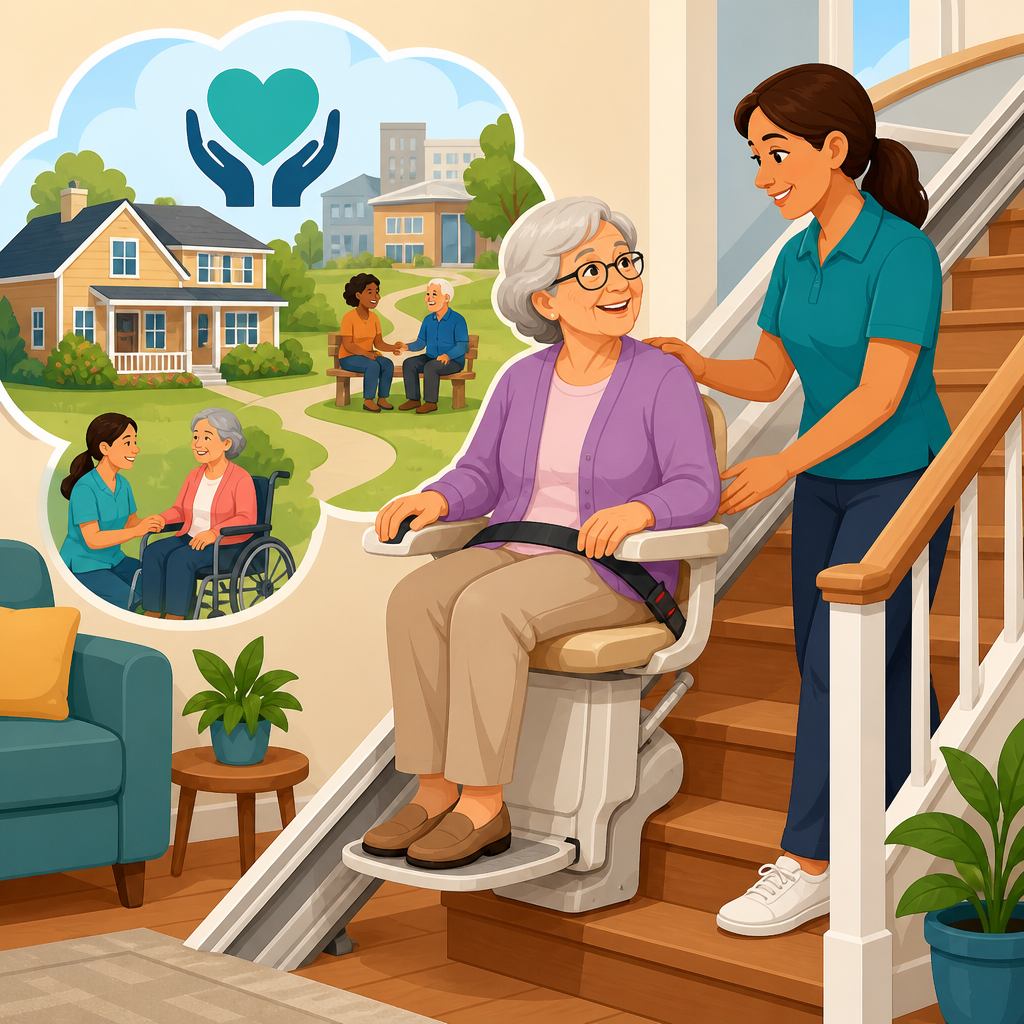
Medicaid can cover stair lifts through Home and Community-Based Services, but coverage is never automatic, and the answer depends on your state, your waiver program, your medical need, and whether the lift is considered a cost-effective home modification that keeps you safely out of a nursing facility. For families researching cost and financing options, that distinction matters because a stair lift often sits in the gray area between medical equipment, home accessibility improvement, and long-term care support. I have worked with clients comparing private pay quotes, Medicare denials, waiver applications, and managed care approvals, and the same question comes up every time: does insurance cover chair lifts, or are they always out of pocket? The accurate answer is that most traditional health insurance plans, including Medicare, usually do not cover a stair lift installed in the home, but Medicaid sometimes does when the request is tied to functional limitations and community living goals. In this article, chair lift refers to a motorized stair lift that carries a seated rider up and down stairs on a rail, while Home and Community-Based Services refers to Medicaid programs that fund supports helping older adults and people with disabilities remain at home instead of moving into institutional care. Understanding how these programs work can save thousands of dollars, prevent unsafe stair use, and help you ask the right questions before paying a deposit or abandoning the idea too early.
Why Medicaid coverage for stair lifts is different from standard insurance
When people ask whether insurance covers chair lifts, they are usually thinking about a straightforward medical claim, similar to a walker, wheelchair, or hospital bed. Stair lifts rarely fit that model. Commercial insurance generally treats them as home improvements, and Medicare usually excludes them because they are not classified as durable medical equipment under Part B. That is the first critical distinction. A stair lift can be medically necessary in a practical sense and still fall outside the benefit design of a standard health plan.
Medicaid operates differently, especially through Home and Community-Based Services waivers and managed long-term services and supports programs. These programs are designed around function, safety, and cost avoidance. If a stair lift prevents falls, enables bathroom access on another floor, or allows a caregiver to continue providing support at home, the lift may qualify as an environmental accessibility adaptation or home modification. In other words, Medicaid may not pay because the device is a classic medical item; it may pay because the modification supports community living at a lower cost than institutional placement.
That difference explains why one person hears a flat no from Medicare and a qualified yes from Medicaid. It also explains why documentation matters. The approval process usually focuses on activities of daily living, transfer safety, mobility within the home, caregiver burden, and whether a cheaper intervention could meet the same need. A clear narrative from an occupational therapist, physician, case manager, or waiver assessor often carries more weight than a generic prescription that simply says stair lift needed.
How Home and Community-Based Services decide whether to fund a stair lift
Home and Community-Based Services programs vary by state, but most use a similar framework. First, the applicant must qualify financially and functionally for Medicaid and for the specific waiver or long-term care program. Second, the program must determine that the person is safe to remain at home with supports. Third, the requested item must be linked to an assessed need and included in the plan of care. Finally, the state or managed care organization must confirm that the modification is allowable under program rules and is a reasonable use of funds.
In practice, stair lift approvals often turn on four questions. Is the person unable to safely use the stairs? Is there an essential living area such as a bedroom or full bathroom that cannot otherwise be accessed? Would the lift reduce risk of falls, injury, or caregiver strain? Is the total project cost justified compared with alternatives such as a first-floor bedroom setup, ramping another entrance, or relocating to accessible housing? States do not use identical wording, but these are the real decision points I see most often.
Programs may cover straight stair lifts more readily than curved models because straight rails are simpler and cheaper to install. Curved stair lifts require custom fabrication, and the price can be two to three times higher. If a case manager believes a lower-cost rearrangement of the home could solve the problem, a curved lift may be denied even when a straight lift might have been approved in another home. That is why the home assessment is not a formality. It is the basis for the cost-effectiveness argument.
When Medicaid is most likely to approve a stair lift
Medicaid is most likely to approve a stair lift when the request is clearly connected to documented medical and functional need, the home is appropriate for installation, and the modification helps the person avoid institutional care. Strong cases often involve a diagnosis such as multiple sclerosis, Parkinson’s disease, stroke-related hemiparesis, severe arthritis, spinal cord injury, or advanced cardiopulmonary disease that makes stair climbing unsafe or impossible. The diagnosis alone is not enough, but it establishes the clinical context.
I have seen approvals move faster when the records specifically describe recent falls, near falls, unsafe transfers, exhaustion from stair climbing, or inability to reach a necessary bathroom or sleeping area. A therapist’s report can be decisive if it explains why grab bars, handrails, or caregiver assistance are no longer sufficient. Medicaid reviewers need to see that the lift is not a convenience item. They need evidence that it directly supports essential daily function.
Another favorable factor is caregiver sustainability. If a spouse or adult child is physically helping someone on stairs, that arrangement may be unsafe for both people. A stair lift can reduce musculoskeletal strain on the caregiver and lower the chance of emergency room visits from falls. Programs built to support aging in place understand that preserving the caregiver arrangement can postpone or prevent nursing facility admission. That is exactly the type of outcome Home and Community-Based Services were created to achieve.
Common reasons stair lift requests are denied
Denials usually happen for predictable reasons. The most common is that the program does not cover this category of home modification at all, or it has a cap that has already been reached. Some waivers cover environmental accessibility adaptations broadly; others are narrower. Another frequent reason is insufficient documentation. A short doctor’s note without functional detail rarely answers the reviewer’s core question: why this modification, in this home, for this person, right now?
Requests are also denied when the installation appears to benefit the property more than the Medicaid member. For example, major structural work, electrical upgrades unrelated to the lift, or home remodeling bundled into the quote can trigger concern. Programs want the least costly effective solution. If the proposal includes premium features, cosmetic upgrades, or an unnecessarily expensive curved model, approval becomes harder.
Safety and feasibility issues matter too. Some staircases are too narrow to allow safe pedestrian use when the rail and folded seat are installed. Others have landing constraints, power limitations, or code-related concerns. If the installer cannot certify safe installation, Medicaid will not fund the project. Finally, some requests fail because the person could live entirely on one floor with modest rearrangement. If a first-floor sleeping and toileting setup is practical, reviewers may see the lift as optional rather than necessary.
What documentation usually strengthens a Medicaid stair lift request
A successful request package is specific, consistent, and tied to the care plan. The strongest files typically combine a physician order, therapy assessment, case manager narrative, contractor quote, and proof that less costly options were considered. Medicaid does not want marketing language. It wants clinical reasoning and implementation details.
| Document | What it should show | Why it matters |
|---|---|---|
| Physician statement | Diagnosis, mobility limits, fall risk, and why stairs cannot be used safely | Establishes medical necessity context |
| Occupational or physical therapy evaluation | Functional impact on bathing, toileting, sleeping, transfers, and caregiver assistance | Connects the lift to daily living needs |
| Home assessment | Stair dimensions, installation feasibility, and alternatives reviewed | Supports safety and cost-effectiveness |
| Vendor quote | Model, rail type, warranty, installation scope, and total cost | Allows program review and comparison |
| Person-centered care plan | How the lift keeps the member at home and reduces institutional risk | Aligns request with waiver goals |
If you are building the request, ask every professional involved to answer the same basic question in their own discipline: what problem does the stair lift solve that other interventions cannot solve safely and affordably? Consistency across documents matters. If the physician says the member cannot use stairs, but the therapy note says standby assistance is enough, the file weakens. Precision wins approvals.
How Medicaid compares with Medicare, private insurance, and veterans benefits
For a hub page on cost and financing options, it helps to compare the major payers directly. Medicare usually does not cover stair lifts because they are not recognized as durable medical equipment for home use. Medicare Advantage plans may offer supplemental benefits, but stair lift coverage is still uncommon and highly plan specific. Private health insurance generally follows the same logic, though a few policies may contribute under exceptional home care or case management arrangements.
Medicaid is different because it can pay for supports that are not traditionally medical if they prevent higher-cost care. That makes it the most promising insurance pathway for many low-income older adults and disabled individuals. Still, Medicaid is not universal stair lift insurance. State rules, waiver availability, waiting lists, and annual service caps all affect access.
Veterans may have additional options through the Department of Veterans Affairs. Depending on eligibility, programs such as Home Improvements and Structural Alterations can help with medically necessary home changes, and some veterans also receive support through prosthetics or caregiver-related channels. Workers’ compensation or liability settlements can also fund stair lifts when the mobility impairment stems from a covered injury. The larger point is practical: if Medicaid says no, there may still be another financing route, but each route uses different rules and evidence.
What stair lifts cost and why pricing affects coverage decisions
Straight stair lifts commonly cost about $3,000 to $8,000 installed, while curved stair lifts often range from $10,000 to $20,000 or more, depending on the number of turns, rail length, seat features, and electrical setup. Outdoor models, heavy-duty units, and custom options increase the total. Reconditioned straight lifts can lower costs substantially, although availability depends on the dealer and staircase layout. Curved lifts are less likely to be available used because the rail is custom built for the home.
These numbers matter because Medicaid reviewers often compare the lift cost with alternatives. If a straight lift costs less than several months of personal care hours needed for stair assistance, the argument is stronger. If a custom curved lift approaches the cost of a major first-floor modification, the analysis becomes more complicated. In managed care settings, plans look closely at short-term and long-term spending. They want proof that the one-time capital expense will meaningfully reduce ongoing service use or institutional risk.
Families should also understand nonpurchase expenses. Some programs cover the lift but not electrical work, permit fees, annual maintenance, or post-installation repairs. Others approve a capped amount, leaving the member responsible for the difference. Before installation, get an itemized quote showing equipment, labor, warranty, and any home preparation required. Hidden costs are one of the most common reasons approved projects stall.
Practical steps for applying and improving your chances of approval
Start with the Medicaid case manager, waiver support coordinator, or managed care service coordinator, not with the stair lift dealer. Ask whether environmental accessibility adaptations are a covered benefit under the exact program you have. Then ask about limits, prior authorization requirements, preferred vendors, and whether therapy documentation is expected. Those details vary enough that generic advice can send families in the wrong direction.
Next, schedule a clinical assessment that documents the functional problem clearly. If possible, request an occupational therapy home safety evaluation. Therapists are often best positioned to explain why the individual cannot safely access critical areas of the home and why a stair lift is the least restrictive effective solution. Then obtain at least one detailed quote from a reputable installer familiar with funding paperwork. Dealers who regularly work with waiver clients know how to separate covered installation from noncovered upgrades.
If the request is denied, ask for the denial reason in writing and appeal promptly. Many denials are not final judgments on medical need; they are documentation failures, missing forms, or benefit classification disputes. On appeal, respond directly to the stated reason. If cost was the issue, submit a lower quote or explain why alternatives are unsuitable. If necessity was questioned, add therapy findings, fall history, and caregiver burden detail. Persistence matters because review decisions improve when the file becomes more concrete.
The bottom line is that Medicaid may cover stair lifts through Home and Community-Based Services, but approval depends on program rules, medical necessity, functional need, home feasibility, and cost-effectiveness. That makes this a financing question, not just a product question. Families who assume all insurance covers chair lifts are usually disappointed; families who assume no insurance ever helps may miss the one program most likely to pay. Medicaid stands out because it can treat a stair lift as a targeted home modification that supports safe community living and helps avoid nursing facility care.
The smartest approach is to frame the request around daily function and risk reduction, not convenience. Document why the stairs are unsafe, identify the essential rooms that are inaccessible, show why lower-cost options are inadequate, and tie the lift to the care plan. Use precise records from the physician, therapist, case manager, and installer. If one funding source denies the claim, review alternatives such as veterans benefits, state assistive technology programs, nonprofit grants, loans, or used equipment.
If you are exploring cost and financing options now, contact your Medicaid coordinator and request a home modification review before signing an installation contract. A well-prepared application can turn a major out-of-pocket expense into a covered accessibility solution.
Frequently Asked Questions
Does Medicaid pay for a stair lift through Home and Community-Based Services?
Sometimes, yes. Medicaid may cover a stair lift through a Home and Community-Based Services (HCBS) waiver or a similar state-based long-term care program, but coverage is not automatic and is rarely guaranteed just because a person has Medicaid. In most cases, the key issue is whether the stair lift is approved as a medically necessary home modification that helps the individual remain safely at home instead of moving into a nursing facility or other institutional setting. That is the core purpose of many HCBS programs.
Whether a stair lift is covered depends heavily on where you live, which Medicaid program you qualify for, and how your state defines allowable home accessibility modifications. Some states may specifically allow environmental accessibility adaptations, while others may impose tight limits, exclusions, or annual spending caps. Even within the same state, one waiver program may be more flexible than another. For example, a program designed for seniors or adults with physical disabilities may evaluate stair lifts differently than a waiver focused on developmental disabilities or another care population.
Another major factor is how the stair lift is categorized. A stair lift can fall into a gray area between durable medical equipment, assistive technology, and home modification. If your state does not treat stair lifts as standard medical equipment, approval may require stronger documentation showing that the lift directly supports mobility, safety, and continued community living. In practical terms, families often need to show that the person cannot safely manage stairs, that essential rooms are inaccessible without help, and that installing the lift is more cost-effective than institutional care or extensive in-home support.
So the short answer is yes, Medicaid can pay for a stair lift through HCBS in some situations, but approval depends on state rules, waiver eligibility, medical necessity, and whether the request fits the program’s cost and safety standards.
What makes a stair lift medically necessary under Medicaid rules?
Medical necessity usually means the stair lift is not merely convenient, but needed to protect the person’s health, safety, and ability to function in the home. Medicaid programs typically want evidence that the individual has a documented mobility limitation or disabling condition that makes stair use unsafe, painful, or impossible without substantial help. Common examples include severe arthritis, neurological disorders, stroke-related weakness, balance disorders, advanced heart or lung disease, or other conditions that make climbing stairs a serious fall risk.
To support a medical necessity claim, Medicaid often requires written documentation from a physician, therapist, case manager, or other approved professional. That documentation should do more than say a stair lift would be helpful. It usually needs to explain the diagnosis, the functional limitations involved, why stairs cannot be safely navigated, what risks exist without the lift, and how the lift would help the person access essential parts of the home. Programs may also want to know whether the bedroom, bathroom, or kitchen is located on another floor and whether rearranging the home to avoid stairs is possible.
Cost-effectiveness is also part of the medical necessity conversation. HCBS programs are designed to provide services in the community at a lower cost than institutional care when possible. Because of that, the state may ask whether the stair lift is a reasonable and efficient solution compared with alternatives such as relocating a bedroom to the first floor, using personal care aides, moving to an accessible residence, or entering a facility. If a stair lift is shown to be the safest and least costly way to preserve independence at home, that can strengthen the request significantly.
In other words, medical necessity under Medicaid is usually a combination of clinical need, safety risk, functional impact, and financial practicality. The stronger the evidence that the lift is essential to daily living and helps prevent institutional placement, the better the chance of approval.
Why does coverage vary so much from one state to another?
Coverage varies because Medicaid is a joint federal-state program, and while federal law sets broad parameters, each state has substantial flexibility in designing HCBS waivers, defining covered services, setting budgets, and deciding how home modifications are evaluated. That means stair lift coverage is not governed by one simple nationwide rule. Instead, every state can create different standards for eligibility, prior authorization, medical review, spending limits, and approved categories of equipment or modifications.
One state may include stair lifts under environmental accessibility adaptations, another may review them under assistive technology, and another may exclude them unless extraordinary circumstances are shown. Some waiver programs have annual or lifetime caps on home modifications, which can affect whether a stair lift fits within the available budget. Other programs may prioritize lower-cost modifications such as grab bars, ramps, or bathroom changes before approving something more expensive. Waiting lists and enrollment caps can also affect access, even when a service is technically covered.
There can also be variation within a single state. Medicaid managed care plans, waiver populations, and target groups may all operate under somewhat different service rules. For example, an older adult receiving long-term services and supports through one pathway may face a different approval process than a younger adult with a physical disability receiving services through another waiver. Families are often surprised to learn that having Medicaid alone does not answer the question; the exact Medicaid category matters a great deal.
This is why state-specific research is essential. The best sources are usually your state Medicaid agency, the HCBS waiver handbook, a case manager or support coordinator, and the managed care plan if one is involved. Those sources can clarify whether stair lifts are considered potentially covered, what documentation is required, and how the state evaluates these requests.
What steps should families take when applying for Medicaid stair lift coverage?
Start by identifying the exact Medicaid program the person is enrolled in or may be eligible for. The most important question is not simply, “Do they have Medicaid?” but rather, “Which Medicaid benefit pathway or waiver program applies?” Once that is clear, ask whether the program covers home modifications, environmental accessibility adaptations, or assistive technology, and specifically whether stair lifts may qualify. Getting this information early can save time and prevent families from paying out of pocket for something that needed prior approval.
Next, gather detailed medical and functional documentation. Families should request supporting letters or assessments from the primary care physician, physical therapist, occupational therapist, or another treating professional who can clearly explain why the stair lift is needed. Strong documentation usually describes the person’s diagnosis, mobility restrictions, history of falls or near-falls if relevant, inability to safely reach essential living areas, and why less costly or simpler options are not adequate. Photos, home assessments, and layout descriptions can also help demonstrate the barrier created by the stairs.
Most programs will also require a formal assessment or care plan review by a Medicaid case manager, waiver coordinator, or managed care representative. During that process, the family should be prepared to explain how the stair lift would help avoid institutional care, reduce caregiver burden, and allow the person to function more safely at home. It is also common to need contractor bids, product specifications, or proof that the installation meets safety and building standards. Some programs require multiple quotes before approving a modification.
Just as important, do not install the stair lift before confirming the approval rules. Many Medicaid programs will not reimburse a purchase made before authorization, even if the lift might otherwise have qualified. If the request is denied, ask for the denial in writing, review the reason carefully, and find out whether there is an appeal process, a chance to submit additional documentation, or another funding category under the same program. Persistence matters, especially when the first denial is based on incomplete paperwork rather than a true exclusion.
If Medicaid will not cover a stair lift, are there other ways to pay for one?
Yes. If Medicaid denies coverage, families still have several possible funding paths to explore. The first is to determine whether the denial was based on missing documentation, use of the wrong Medicaid pathway, or a misunderstanding about whether the stair lift should have been reviewed as a home modification rather than medical equipment. Sometimes a request that is denied initially can be approved on appeal or through a different waiver or managed care process.
Outside Medicaid, families may look into Medicare Advantage supplemental benefits, although Original Medicare generally does not cover stair lifts as standard durable medical equipment. Veterans may have options through the Department of Veterans Affairs if the person is eligible. State assistive technology programs, nonprofit disability organizations, local Area Agencies on Aging, and community grant programs may also offer financial assistance, device loan programs, or referrals to lower-cost vendors. Some states and counties provide small home modification grants for seniors or people with disabilities, separate from Medicaid.
Families can also consider practical cost-reduction strategies such as buying a used or refurbished stair lift, renting when appropriate, comparing installation quotes, or choosing a straight-rail model if the staircase allows it, since curved lifts are usually much more expensive. Manufacturer financing and third-party medical financing may be available as well, though families should review repayment terms carefully.
The bottom line is that a Medicaid denial does not necessarily end the conversation. Because stair lifts sit at the intersection of health care, accessibility, and long-term care planning, the best approach is to review every possible source of support. In many cases, a combination of appeals, state programs, nonprofit help, and financing options can make the project more affordable even when full Medicaid coverage is not available.