


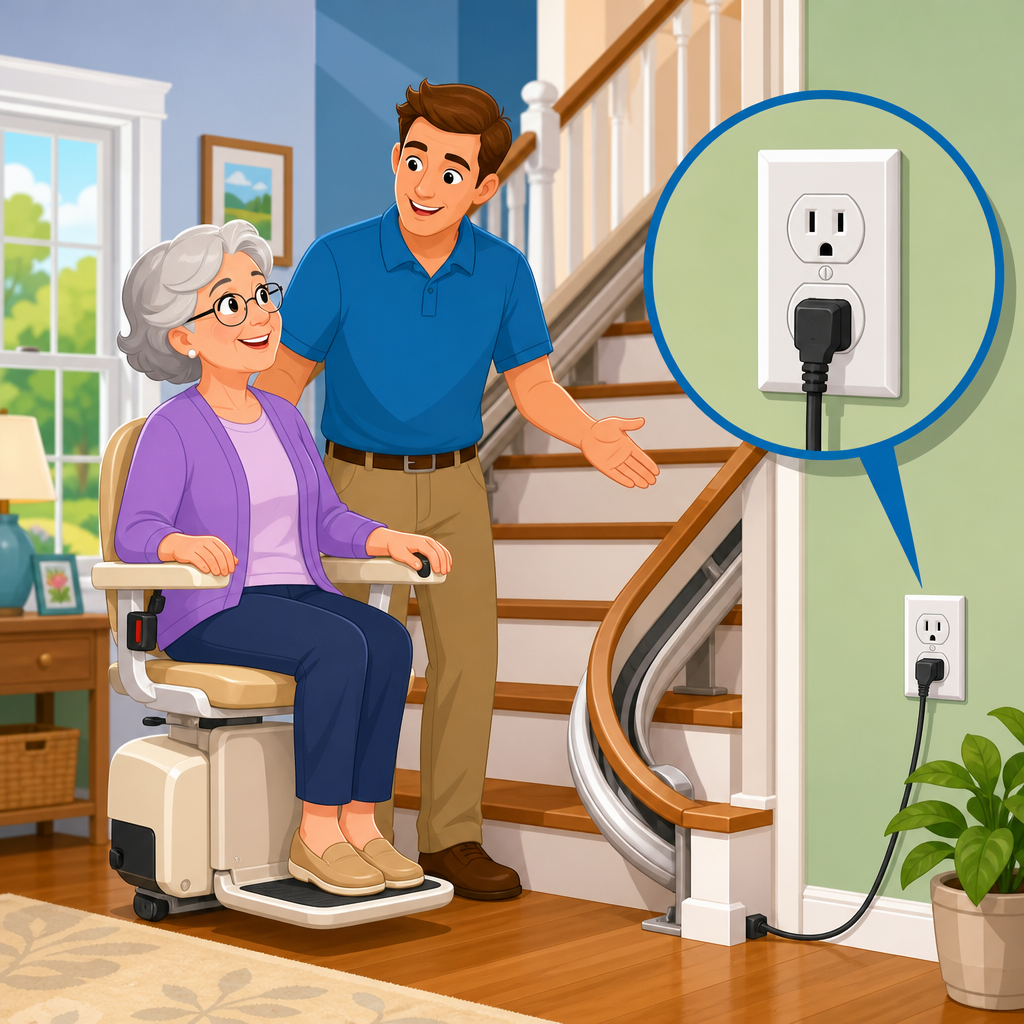
Installing a stair lift starts long before the rail is fastened to the staircase, because the most common delay I see in home projects is not the chair or the track but the electrical outlet requirements for stair lifts. Homeowners often assume a stair lift simply plugs into the nearest receptacle, yet pre-installation assessments routinely uncover outlet location problems, overloaded circuits, missing grounding, damaged receptacles, or code issues that affect safety and performance. In practical terms, a stair lift is a motorized chair that travels on a rail mounted to the stairs, while the electrical supply is the dedicated or manufacturer-approved power source that charges onboard batteries or, less commonly, powers a non-battery unit directly. Understanding electrical outlet requirements for stair lifts matters because it shapes installation cost, scheduling, reliability during outages, and long-term maintenance. A thorough pre-installation assessment identifies whether the home has a suitable outlet, whether a new receptacle should be added, and whether an electrician is needed before installation day. As the hub page for pre-installation assessments, this guide explains what installers evaluate, what electricians may need to correct, and what homeowners should verify before signing a proposal.
Why stair lifts need careful electrical planning
Most modern residential stair lifts use a battery-powered drive system. That surprises many homeowners, but it is an important design feature. The lift plugs into household power through a charger, and the charger keeps the batteries topped up while the unit is parked at a charge point. If the home loses power, the batteries usually allow multiple trips until electricity is restored. Because of that design, the outlet does not typically run the motor continuously; it supports the charging system. Even so, the outlet must be correctly located, properly grounded, and consistently energized. An outlet on a switched circuit, for example, can silently stop charging the batteries and leave the lift unavailable when needed most.
In my experience walking homes before installation, electrical planning is often the difference between a same-day install and a postponed job. A straight stair lift in a newer home may need nothing more than a nearby standard 120-volt receptacle, but a curved lift, a lift serving a narrow staircase, or a home with older wiring can require more planning. Manufacturer instructions usually specify acceptable voltage, frequency, and charger configuration. In the United States, that commonly means a 120-volt grounded outlet within a prescribed distance of the rail end or charge point. Some manufacturers and dealers prefer a dedicated circuit, while others allow a shared general lighting circuit if the circuit load is appropriate and the receptacle is reliable. The exact requirement comes from the product manual, the local authority having jurisdiction, and the site conditions identified during the assessment.
Electrical planning also intersects with usability. Outlet placement affects where the rail can start and stop, where the chair parks, and whether a folding rail or overrun is feasible. Homeowners sometimes focus only on travel length, but an outlet placed behind a doorway swing, inside a cluttered landing, or too far from the charge contacts can create compromises in parking position or cable routing. Good planning prevents those compromises.
What happens during a pre-installation assessment
A proper pre-installation assessment for a stair lift is part measuring appointment, part safety review, and part electrical audit. The installer measures overall stair length, tread depth, riser height, staircase width, landing clearances, headroom, handrail projection, and obstruction points such as baseboard heaters, door casings, radiators, vents, and trim. At the same visit, the installer checks the home’s power setup because outlet suitability directly affects mounting layout and final commissioning.
During the electrical portion of the assessment, I typically verify five things. First, I confirm the lift type and manufacturer power specification. Second, I identify the preferred charge location, often at the top or bottom landing depending on model and parking preference. Third, I inspect the nearest outlet for grounding, physical condition, and accessibility. Fourth, I look at the branch circuit to see what else it serves, especially heavy intermittent loads like vacuums, space heaters, treadmills, or freezers. Fifth, I decide whether the existing outlet can be used as is, whether a new receptacle should be installed, or whether the homeowner needs a licensed electrician before the lift can be scheduled.
This assessment should not be rushed. A suitable staircase can still be a poor candidate for immediate installation if the only nearby receptacle is controlled by a wall switch, mounted where the rail will block access, or part of a circuit with known nuisance trips. Conversely, an older home that looks challenging can often be made installation-ready with a simple electrician visit to add a new outlet near the landing. The value of the assessment is clarity: it turns assumptions into specific site requirements.
Core electrical outlet requirements homeowners should expect
For most residential stair lifts in North America, the baseline expectation is a standard 120-volt grounded outlet positioned close enough to the charger lead or charge point specified by the manufacturer. The receptacle should be continuously live, not controlled by a switch, and accessible for service. Grounding matters because the charger and associated electronics are designed to operate on a properly grounded branch circuit. A two-prong adapter is not an acceptable long-term solution.
Many battery-powered stair lifts draw relatively modest power for charging, often similar to a small appliance, but low power draw does not eliminate the need for a sound circuit. A loose receptacle can cause intermittent charging. Reverse polarity or open ground, both easily identified with a receptacle tester, can create reliability and safety concerns. In older homes, installers sometimes encounter ungrounded two-slot outlets, cloth-insulated wiring, or multiwire branch circuits with shared neutrals; those conditions are not automatic deal breakers, but they do require a qualified electrical review.
Dedicated circuits are sometimes recommended rather than strictly required. The advantage of a dedicated circuit is predictability: nothing else competes for capacity, and troubleshooting is simpler. The downside is cost. If the panel is full or far from the staircase, adding a dedicated circuit can become the most expensive part of pre-installation prep. A balanced recommendation depends on the lift model, charger demand, local code interpretation, and the existing circuit load. Homeowners should ask the dealer to state the outlet requirement in writing, including whether a standard existing receptacle is acceptable.
Where the outlet should be located
Outlet location is not arbitrary. It should support the charger without creating a trip hazard, exposed extension-cord style routing, or interference with the moving chair and footrest. In many installations, the ideal receptacle is near the top or bottom landing where the chair normally parks, because that is where the charge contacts are engaged. Some stair lifts charge at one end only, while others can charge at both ends. That distinction affects outlet strategy and should be clarified during the assessment.
Distance matters. If the outlet is too far away, installers should not improvise with extension cords. Extension cords are vulnerable to damage, can become unplugged, and are a poor permanent solution for mobility equipment. A new receptacle placed by an electrician is the correct fix. Height and sidewall position also matter, especially where a hinged rail, a doorway, or a walkway could block access. The outlet should remain reachable after the rail is installed so the charger can be disconnected for service.
In homes with finished basements or slab construction, running a new circuit to the stair area can be more involved than homeowners expect. That is why outlet location should be settled before ordering a custom curved rail. Once the rail geometry is approved, changing the park position to chase a better outlet can affect comfort, clearances, and lead time.
Common findings during home assessments
These are the issues most often identified before a stair lift installation and what they typically mean for the project:
| Assessment finding | Why it matters | Typical next step |
|---|---|---|
| No outlet near top or bottom landing | Charger lead will not reach safely | Have an electrician add a receptacle |
| Outlet is switch-controlled | Lift may stop charging without notice | Rewire outlet to constant power or add new outlet |
| Two-prong ungrounded receptacle | Does not meet grounded equipment needs | Electrical evaluation and outlet upgrade |
| Damaged or loose receptacle | Intermittent charging and overheating risk | Replace receptacle and inspect branch wiring |
| Circuit already serves heavy loads | Breaker trips or voltage drop can affect charging | Load review; possibly add dedicated circuit |
| Outlet blocked by rail or door swing | Service access becomes difficult | Relocate outlet during prep work |
These findings are common, not catastrophic. The purpose of a pre-installation assessment is to catch them early, price them accurately, and prevent surprises on installation day.
How older homes change the electrical conversation
Older homes deserve special attention because the staircase may be structurally perfect for a lift while the electrical system needs upgrades. In houses built before modern grounding standards were common, outlets near stairways may be ungrounded or connected to aging conductors. I have also seen receptacles tied into lighting circuits that homeowners assumed were fine because “they have always worked.” A stair lift charger is not unusually demanding, but reliability is essential when the lift is a daily mobility device.
Panel capacity is another concern. If the service equipment is obsolete, fully occupied, or shows signs of overheating, adding a new circuit may not be straightforward. Fuse panels, double-tapped breakers, missing panel directories, and aluminum branch wiring all call for a more cautious assessment. None of these conditions automatically prevent a stair lift installation, but they can change sequencing. In some projects, the right order is electrical remediation first, then lift installation.
Historic homes add a practical challenge: preserving finishes. Homeowners may want a new outlet without opening plaster walls or visible conduit in prominent areas. A good assessment discusses those constraints openly so the electrician and lift dealer can coordinate an acceptable route.
When to involve a licensed electrician
Homeowners should involve a licensed electrician whenever the existing outlet is missing, ungrounded, damaged, poorly located, or on a questionable circuit. An electrician should also be called if the manufacturer specifies a dedicated circuit, if local code requires permit work, or if the installer notes panel issues. While some stair lift companies can perform basic plug-in commissioning, they are not there to reconfigure branch circuits or diagnose whole-home wiring defects.
The electrician’s scope may be simple, such as changing a switched receptacle to unswitched power, or more extensive, such as installing a new 15-amp or 20-amp circuit from the service panel. In many jurisdictions, receptacle additions or circuit modifications require permits and inspection. That protects the homeowner and creates a record that the work was done properly. It is also important for insurance and resale disclosure. Asking for a permit when required is not bureaucracy for its own sake; it is quality control.
Coordination matters. The installer should provide the exact preferred outlet location before electrical work begins. I recommend marking the wall during the assessment and sharing a photo or drawing with dimensions. That simple step prevents the common mistake of placing the receptacle on the wrong side of the staircase or behind the parked chair.
Questions homeowners should ask before installation day
Homeowners can avoid delays by asking direct questions during the proposal stage. Where exactly will the chair park and charge? Is the existing outlet acceptable for this specific model? Does the manufacturer require a dedicated circuit or just a grounded outlet? Will the outlet remain accessible after the rail is installed? What happens during a power outage, and how many trips will the batteries typically support? If electrical work is needed, who is responsible for permits and scheduling?
It is also smart to ask for documentation. A reputable dealer should be able to note the electrical requirement on the quote or survey form. If the home will need an electrician, get that work completed before the final installation date is locked in. For households relying on the lift as a mobility necessity, timing is not a small issue. A one-week electrical delay can mean a week of unsafe stair use.
Finally, think beyond the outlet itself. Remove clutter from both landings, confirm that doors can open with the parked chair in place, and discuss whether future needs may justify options such as a powered hinge rail, call/send controls, or alternate parking positions. The best pre-installation assessments treat the outlet as one part of a full access plan, not as an isolated checkbox.
Electrical outlet requirements for stair lifts are straightforward once they are assessed properly: the lift needs a safe, grounded, correctly located, continuously powered receptacle that matches the manufacturer’s instructions and the home’s real-world conditions. For most homeowners, the critical step is not memorizing electrical terminology but completing a thorough pre-installation assessment that reviews stair dimensions, landing clearances, outlet placement, branch circuit condition, and any need for an electrician. That process reduces delays, prevents improvised solutions, and gives the lift the reliable charging source it needs for daily use.
As the hub page for pre-installation assessments within stair lift installation and setup, this guide points to the core decision every related topic supports: is the home truly ready for installation day? The answer depends on measured facts, not guesswork. A nearby outlet may be enough, or the project may need a new receptacle, a dedicated circuit, or a broader electrical upgrade, especially in older homes. Either way, identifying the requirement early protects safety, budget, and schedule.
If you are planning a stair lift, schedule an in-home assessment and ask the dealer to document the exact outlet requirement before you order. That one step will make every other installation decision easier.
Frequently Asked Questions
Do stair lifts need a dedicated electrical outlet or circuit?
In many homes, a stair lift does not always require a brand-new dedicated circuit, but it does need a reliable, properly installed outlet that can safely support the unit according to the manufacturer’s specifications. Most modern residential stair lifts, especially battery-powered models, plug into a standard household outlet to keep the batteries charged. Even though the lift may not draw a large amount of power continuously, that outlet still needs to be in good condition, correctly grounded, and not part of an overloaded circuit that already serves high-demand devices.
Where homeowners run into trouble is assuming any nearby receptacle will work. If the outlet is shared with space heaters, vacuum cleaners, entertainment equipment, or other appliances that create fluctuating demand, the stair lift charger may not perform as intended. That can lead to slow charging, battery wear, nuisance tripping, or intermittent operation. For non-battery or older direct-power models, the electrical requirements may be stricter, and a dedicated circuit is more likely to be needed.
The best approach is to verify the exact power requirements of the lift model being installed and have the outlet and circuit evaluated before installation day. An installer or licensed electrician can confirm whether the existing circuit capacity, breaker size, grounding, and receptacle type are appropriate. That small step can prevent delays, avoid code issues, and help ensure the lift operates safely and consistently from day one.
Where should the electrical outlet be located for a stair lift?
Outlet location matters more than many homeowners expect. A stair lift is designed with a specific charging point or power connection in mind, and the outlet should be placed where the manufacturer recommends so the unit can plug in cleanly without extension cords, exposed wiring across walking areas, or awkward bends in the power cord. In most cases, the preferred outlet location is near one end of the rail, often at the top or bottom landing, depending on where the lift parks and charges.
Proper placement is important for both safety and appearance. An outlet that is too far away may tempt someone to use an extension cord, which is generally not recommended for permanent mobility equipment. Cords stretched across a hallway or landing create trip hazards, may be damaged by foot traffic, and can interfere with the normal operation of the chair or swivel functions at the landing. If the outlet sits behind the rail in an inaccessible position, routine service or emergency unplugging also becomes more difficult.
During a pre-installation assessment, professionals usually determine not only whether an outlet exists, but whether it is located in the correct spot for the specific lift design. Straight stair lifts and curved stair lifts may have different charging arrangements, and some installations require the chair to charge at one end only. That is why homeowners should not install or relocate an outlet based on guesswork. The exact rail layout, parking position, and charger location should guide the electrical setup so the installation is safe, code-conscious, and visually tidy.
Can a stair lift be plugged into a standard household outlet?
Yes, many residential stair lifts are designed to plug into a standard household outlet, but “standard” should not be confused with “automatically acceptable.” The outlet must be properly grounded, securely mounted, in good physical condition, and supplied by a circuit that is functioning correctly. A loose, cracked, ungrounded, or damaged receptacle is not suitable just because the plug physically fits. Stair lifts are accessibility devices, and dependable power is essential to keep charging systems working properly.
Most modern stair lifts use batteries, which means the outlet powers the charging system rather than the full lift motor during travel. That design helps the lift continue operating during a short power outage, but the batteries still depend on consistent charging from the outlet. If the receptacle has wiring faults, reversed polarity, poor grounding, or intermittent power, the lift may appear to work at first while battery performance gradually declines. Homeowners sometimes mistake that for a mechanical issue when the real problem is electrical.
Another point to keep in mind is local code compliance. Older homes may have two-prong outlets, ungrounded branch circuits, or DIY electrical modifications that no longer meet modern standards. A licensed electrician can test the outlet, verify proper voltage and grounding, and determine whether upgrades are needed before the stair lift is installed. Using a correct, code-compliant household outlet is common, but verifying that the outlet is truly suitable is the key step homeowners should not skip.
Why are extension cords and power strips not recommended for stair lifts?
Extension cords and power strips are generally discouraged because a stair lift is not a temporary device. It is a permanently installed mobility system that should have a stable, direct connection to an appropriate electrical outlet. Extension cords can loosen over time, become pinched, fray, or be exposed to repeated foot traffic, especially near stair landings where people turn, carry items, or use mobility aids. That creates unnecessary safety risks in exactly the area of the home where clear access is most important.
Power quality is another concern. Some extension cords are undersized for the application or intended only for light-duty use. Even if the stair lift charger does not have an especially high draw, voltage drop, poor connections, and plug movement can still affect charging performance. Power strips add more points of failure and are often used for multiple devices, increasing the chance of overloads or accidental unplugging. In practical terms, that can lead to batteries not charging fully, which may leave the lift unavailable when it is needed most.
There is also a code and liability angle. Manufacturers and installers often specify that the lift must plug directly into a properly installed receptacle. Ignoring that guidance may affect warranty coverage, service recommendations, or inspection outcomes. If no suitable outlet exists in the right location, the right solution is not a cord across the landing. The right solution is to have a qualified electrician install or relocate a receptacle that meets the lift’s requirements and the home’s electrical standards.
What electrical issues commonly delay stair lift installation, and how can homeowners avoid them?
The most common delays are surprisingly basic: the outlet is too far from the charging point, the receptacle is damaged or loose, the circuit is overloaded, the outlet is not grounded, or the existing wiring does not meet current safety expectations. In older homes, installers also encounter worn receptacles, questionable DIY wiring, missing GFCI or AFCI protection where required, undersized circuits, or breaker panels that need evaluation before any new electrical work is added. These issues may not be obvious during everyday use, but they become important when a permanent accessibility device is being installed.
Another frequent problem is timing. Homeowners often schedule the stair lift installation first and assume electrical details can be figured out on the same day. If the installer arrives and finds there is no acceptable outlet in the proper location, the project may need to be postponed until an electrician can make corrections. That delay can be especially frustrating when the lift is needed urgently after surgery, a fall, or a change in mobility. A short pre-installation electrical review can prevent that situation entirely.
To avoid delays, homeowners should ask for the lift’s electrical specifications early, confirm exactly where the outlet needs to be, and have that location inspected before installation day. If there is any uncertainty about the age, condition, or capacity of the home’s wiring, bringing in a licensed electrician is a smart investment. That proactive step helps identify grounding problems, code concerns, and circuit limitations before they interfere with the schedule. In real-world projects, the smoothest stair lift installations are usually the ones where the electrical outlet requirements are addressed first, not treated as an afterthought.