


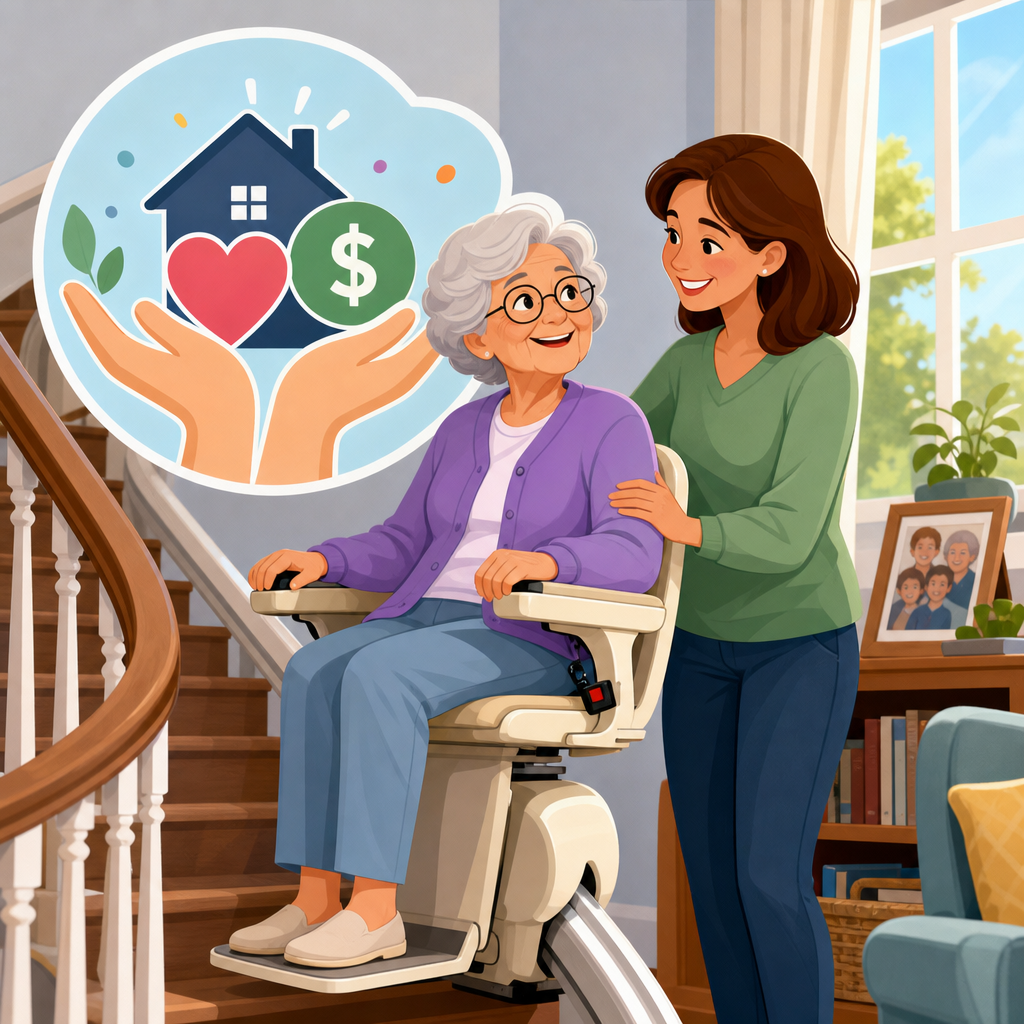
Grants for seniors can turn a chair lift from a major expense into an achievable home safety upgrade. For older adults who want to remain in a multilevel home, a stair lift often prevents falls, preserves independence, and delays or avoids a move. Yet affordability is the barrier I see most often when families begin researching mobility equipment. Chair lifts, also called stair lifts, typically include a motorized seat, rail, power supply, safety sensors, and installation. Depending on the staircase and model, costs can range from a few thousand dollars for a straight indoor unit to well above that for curved rails, outdoor systems, or custom features. That price point forces many households to ask the same question: are there grants for seniors that help pay for a chair lift?
The short answer is yes, but assistance rarely comes from one universal source. Funding may come from federal disability programs, state home modification grants, Medicaid waivers, veterans benefits, nonprofit organizations, local aging agencies, or disease-specific charities. Some programs provide direct grants, while others offer loans, reimbursements, or bundled home accessibility services. In practice, success depends on understanding eligibility rules, preparing the right documentation, and applying to several sources at once. Families who treat funding like a coordinated project usually do better than those who wait for a single perfect program.
This hub article explains the main grants and assistance programs that can make chair lifts affordable, how they work, who usually qualifies, and what steps improve approval odds. It also clarifies where grants end and other financing options begin, because many households use a mix of aid, savings, and installment plans. If you are comparing cost and financing options for a stair lift, this page is the starting point for the grants and assistance side of that decision.
What Counts as a Chair Lift Grant and Who Usually Qualifies
A chair lift grant is any public or charitable funding that reduces the out-of-pocket cost of a stair lift or related home accessibility modification. That definition matters because many seniors search only for the word grant and miss programs that pay in another form. A Medicaid waiver may authorize home modifications. A state assistive technology program may provide low-interest financing. A local nonprofit may fund emergency accessibility projects. A veterans program may reimburse medically necessary improvements. All of these can make a chair lift affordable even if the program does not market itself as a senior grant.
Eligibility usually depends on four factors: age or disability status, income, medical necessity, and housing situation. Age alone is not always enough. Many strong programs are disability-based rather than senior-only. Medical necessity is often demonstrated by a physician, occupational therapist, or discharge planner who documents fall risk, impaired stair negotiation, or inability to reach essential rooms such as a bedroom or bathroom. Income thresholds vary widely. Some grants are reserved for low-income homeowners, while others use a sliding scale or prioritize households with the highest need. Housing status matters because some grants are available only to owner-occupants, while renters may need landlord approval and a different funding route.
In my experience helping families compare options, the most common mistake is assuming Medicare covers the full cost. Original Medicare generally does not pay for stair lifts because they are not typically classified as durable medical equipment under standard coverage rules. That does not mean there is no help. It means families need to look at the broader landscape of grants, waivers, housing programs, and charitable funding rather than relying on one health insurance answer.
Federal and National Programs Worth Checking First
Start with nationwide programs because they set the baseline for what may be available. Medicaid is often the most important path for lower-income seniors, especially through Home and Community-Based Services waivers. These waivers are administered by states, so names and benefits differ, but many are designed to keep people safely at home instead of in institutional care. If a stair lift is documented as necessary to access essential areas of the home, a waiver may cover part or all of the cost, subject to caps and prior authorization. Because waiver slots can be limited, apply early and ask specifically about environmental accessibility adaptations or home modifications.
Veterans should look at U.S. Department of Veterans Affairs programs next. The VA offers several housing-related grants, including HISA, SHA, and SAH, each with distinct eligibility rules. HISA, the Home Improvements and Structural Alterations benefit, can help fund medically necessary home changes for veterans with qualifying conditions when the modification improves access to the home or essential facilities. For severely disabled veterans, specially adapted housing programs may provide much larger support. A stair lift is not automatically covered, but if a clinician ties it to functional need, it can fit within the broader accessibility purpose of the benefit.
Another often overlooked national resource is the network of Area Agencies on Aging, accessible through the Eldercare Locator. These agencies do not always provide grant money directly, but they frequently know which county, city, or nonprofit programs are active now. That local referral function is more valuable than it sounds. Funding pools open and close, waiting lists change, and small community grants can disappear from search results while still operating through referral-based intake.
State and Local Home Modification Grants
State housing finance agencies, departments of aging, and disability services offices commonly administer home modification assistance. These programs vary dramatically by state, but the pattern is consistent: funds are limited, guidelines are specific, and applicants who submit complete paperwork move faster. Some states fund accessibility through aging programs, while others route support through rehabilitation, independent living, or housing repair departments. The eligible work may include stair lifts, ramps, bathroom modifications, widened doorways, and zero-step entries under one home accessibility category.
County and city governments can also be significant sources of aid. Community Development Block Grant-funded programs, local housing rehabilitation initiatives, and emergency repair grants sometimes cover accessibility improvements for income-qualified homeowners. In several markets I have reviewed, local programs were the only practical option for middle-income seniors who did not meet Medicaid criteria but still could not absorb a stair lift quote. These programs may impose contractor requirements, inspection steps, or property lien terms, so applicants should read the award conditions carefully before signing.
Nonprofit organizations fill many of the gaps left by public funding. Rebuilding Together affiliates, Centers for Independent Living, religious charities, and disease-specific foundations may sponsor accessibility projects or one-time grants. While these programs usually have smaller budgets, they can move quickly when a case is urgent, such as a hospital discharge after a fall or surgery. The strongest applications combine a clear medical need, a written estimate from a licensed installer, and a short explanation of why the lift will prevent further injury or institutional placement.
How Major Funding Sources Compare
Families often ask which program is most likely to help. The answer depends on income, disability status, military service, and local availability. This comparison shows how the main sources typically differ.
| Funding source | Who it best serves | What it may cover | Key limitation |
|---|---|---|---|
| Medicaid HCBS waivers | Low-income seniors or disabled adults needing home-based care | Home modifications, including stair lifts when medically necessary | State rules differ; waitlists and prior authorization are common |
| VA housing and alteration benefits | Veterans with qualifying service-connected or medically documented needs | Accessibility improvements tied to functional limitations | Clinical documentation and specific eligibility criteria apply |
| State or local housing grants | Income-qualified homeowners, sometimes seniors specifically | Repairs and accessibility upgrades | Funding cycles, geographic limits, and contractor rules vary |
| Nonprofit and charitable assistance | Households with urgent need and limited alternatives | Partial grants, project sponsorship, emergency support | Amounts are often modest and availability is inconsistent |
| Assistive technology loan programs | Applicants who need affordability rather than a full grant | Low-interest loans for mobility equipment | Repayment is still required |
Documents That Strengthen a Chair Lift Application
Most grant denials are not about the lift itself; they are about incomplete proof. Build a documentation packet before applying. Start with a prescription or letter of medical necessity from a physician. The letter should explain the diagnosis or mobility limitation, recent falls if applicable, inability to safely climb stairs, and why a stair lift is the appropriate intervention. Stronger letters mention the specific access problem, such as the bedroom and full bathroom being on the second floor.
Add a home assessment whenever possible. Occupational therapists are especially effective because they connect the person’s functional limits to the environment. Their evaluations often carry weight with waiver managers, veterans programs, and charitable review committees. Include one or two written estimates from reputable stair lift dealers. The estimate should specify whether the staircase is straight or curved, indoor or outdoor, and whether electrical work, a folding rail, or heavy-duty capacity is required. If the installer offers both new and reconditioned units, ask for both prices. I have seen that simple comparison rescue an application that was above a grant cap.
Also gather proof of income, proof of home ownership or lease rights, photographs of the staircase, and any discharge notes showing fall-related hospitalization or rehabilitation. If time is short, ask a hospital social worker or aging services case manager to help package the case. Reviewers are more likely to act quickly when the file clearly shows risk, need, and a realistic solution.
Common Roadblocks and How to Work Around Them
The biggest roadblock is timing. Families often start looking for grants after an accident, when the need is immediate but funding timelines are not. Some public programs take weeks or months. To reduce delay, pursue parallel tracks: apply for grants, request nonprofit referrals, and get financing quotes at the same time. That way, if a grant covers only part of the cost, installation is not pushed back unnecessarily.
Another barrier is program fit. A senior may have enough income to miss one grant threshold but too little liquid savings to pay out of pocket. In those cases, layered funding works well. For example, a county accessibility grant may pay a fixed amount, a nonprofit may cover a gap, and the dealer may offer a payment plan for the remainder. Renters face a different challenge because stair lift installation usually requires owner permission. A concise landlord packet that includes the medical letter, installer insurance, and removal terms can improve approval odds.
Staircase configuration also affects affordability. Straight lifts are far less expensive than curved models because the rail is standardized. Curved lifts require custom measurement and fabrication, which can push a project beyond smaller grants. When the layout allows it, some homes can be served by relocating a bedroom to the main floor or combining a straight lift with other modifications. That is not the right answer for everyone, but it is worth discussing when funding is tight.
When Grants Are Not Enough: Practical Backup Options
Even strong applicants may receive only partial assistance. That is why a grants strategy should include backup options. State assistive technology programs, available in every state under the federal Assistive Technology Act framework, often provide device loans, demonstration programs, or financing partnerships. Credit unions and medical financing companies may also offer lower monthly payments than a standard credit card, though interest rates vary and should be compared carefully.
Used and refurbished stair lifts can reduce cost substantially for straight staircases. Reputable dealers inspect the carriage, replace worn components, confirm battery health, and provide a limited warranty. Curved lifts are harder to reuse because rails are custom-made, but occasionally a reconditioned chair on a new rail lowers the price. Temporary rentals are another option for recovery after surgery, but long-term rental economics are mixed. Over enough months, rental fees can exceed the purchase price of a straight unit.
Families should also ask whether the quote includes maintenance, warranty, service calls, and removal. The cheapest bid is not always the lowest total cost. A grant that pays for a reliable installation from an established dealer is usually more valuable than a larger nominal award attached to poor service. Safety equipment must work every day, especially for users transferring alone.
How to Build a Smart Funding Plan
The most effective approach is to treat grants and assistance programs as a sequence rather than a single application. Begin with a needs assessment and stair lift quote, then contact the local aging agency for a current list of programs. Screen for Medicaid waiver eligibility, veterans benefits, and state accessibility grants first because those sources can be substantial. Next, approach county housing programs, nonprofits, and disease-specific organizations. If there is still a gap, compare assistive technology loans, dealer financing, and refurbished equipment.
This structure matters because each source may ask whether other funding has been pursued. A coordinated file with medical documentation, estimates, photos, and income records can be reused across applications, saving time and reducing errors. It also helps to keep notes on contact names, deadlines, and required forms. Families who stay organized are better positioned to respond when a waitlisted program suddenly opens funding.
Grants for seniors make chair lifts affordable not by eliminating every cost in every case, but by expanding the number of realistic paths to safer living at home. The key takeaway is simple: do not stop at Medicare, and do not rely on one program alone. Explore federal, state, local, veterans, and nonprofit assistance together, build a complete documentation packet, and compare partial-grant scenarios with financing backup plans. If you are starting this process now, use this hub as your roadmap, then move quickly into the specific program pages and local referrals that match your situation.
Frequently Asked Questions
What types of grants or financial assistance can help seniors afford a chair lift?
Several types of funding may help reduce the cost of a chair lift, and the right option often depends on a senior’s income, health status, veteran status, and where they live. In many cases, families begin with federal, state, and local programs designed to support aging in place and home accessibility. Medicaid waiver programs are one of the most important places to look, because some state-based waivers may help cover home modifications that improve safety and reduce the risk of institutional care. If the older adult is a veteran, the U.S. Department of Veterans Affairs may offer grants or housing adaptation benefits that can sometimes be used for mobility-related improvements, including stair lifts when medically justified.
Beyond government programs, seniors may also find support through nonprofit organizations, Area Agencies on Aging, community action agencies, disability resource centers, and local charitable foundations. Some counties and municipalities offer home repair or accessibility grant programs for older residents with limited income. In addition, certain low-interest loan programs, forgivable loans, or deferred-payment assistance may be available when a traditional grant is not. While these are not free funds, they can still make a chair lift much more affordable by spreading out costs.
It is also worth checking whether a long-term care insurance policy includes benefits for home modifications or durable mobility support. Medicare generally does not cover stair lifts in most situations, because they are usually classified as home modifications rather than durable medical equipment, but families should still verify plan details and ask about any exceptions or related benefits. The most effective approach is usually to combine several resources: a grant, a local assistance program, and installer financing, if needed. That layered strategy often turns a large upfront purchase into a manageable home safety investment.
Who typically qualifies for a senior chair lift grant?
Eligibility requirements vary widely, but most programs look at a few common factors. Income is one of the most frequent qualifiers, especially for grants offered through state agencies, county programs, or nonprofits serving low- to moderate-income seniors. Age may also matter, with many programs defining a senior as someone age 60, 62, or 65 and older. In addition, the applicant often needs to show that the chair lift is medically or functionally necessary, meaning the person has difficulty safely using the stairs due to mobility limitations, balance concerns, arthritis, injury, or another health condition.
Many grant programs also require that the senior lives in the home where the lift will be installed, and some are limited to primary residences only. Homeownership can be another factor. Certain programs are available only to homeowners, while others may assist renters if the landlord gives written permission for the modification. Veteran-specific benefits usually require documentation of service and, in some cases, a service-connected disability or a medical need tied to mobility challenges. Medicaid-related assistance may require both financial and clinical eligibility.
The key point is that qualification is not based on age alone. Programs often want to see that the chair lift will directly improve safety, support independent living, and reduce the chance of falls or a move to assisted living or nursing care. This is why supporting documentation matters so much. A doctor’s note, occupational therapist recommendation, or in-home assessment can strengthen an application significantly. Even if a senior does not qualify for one grant, they may still be eligible for a different local or nonprofit funding source, so it is usually worth applying in more than one place.
How do families apply for chair lift grants for seniors?
The application process usually starts with identifying every program that may fit the senior’s circumstances, then gathering the documents those programs require. In most cases, families should begin by contacting the local Area Agency on Aging, state Medicaid office, veterans’ services office if applicable, and any county housing or home repair departments. These organizations can often explain what funding exists locally and whether chair lifts fall under accessibility or home modification assistance. Because programs differ so much by location, local guidance is extremely valuable.
Once likely funding sources are identified, applicants are commonly asked to provide proof of age, income, residency, and ownership or occupancy of the home. They may also need estimates from licensed chair lift installers, photos of the staircase, and a written explanation of why the equipment is needed. Medical documentation is especially important. A physician, physical therapist, or occupational therapist may be asked to confirm that the senior has a mobility limitation and that a stair lift would improve safe access between floors. Some programs also require a home assessment before approval.
Families should be prepared for processing time. Grants are rarely immediate, and some programs have waiting lists, annual funding limits, or application windows. It helps to keep copies of every form, note deadlines, and follow up regularly. If one source declines the request, ask whether there is an appeal process or whether the program can refer you elsewhere. Another practical step is to speak with chair lift companies that have experience working with grant-funded purchases. Installers who regularly serve seniors often know which documentation is needed and may be able to coordinate estimates or installation timelines to match funding requirements.
How much can a grant reduce the cost of a chair lift?
The amount a grant can cover depends on the program and the complexity of the installation. Chair lifts vary in price based on whether the staircase is straight or curved, how many floors are involved, the rail length, weight capacity, seat features, and installation requirements. A straight stair lift typically costs less than a custom curved model, so the amount of aid needed can differ substantially from one home to another. Some grants may pay only a portion of the cost, while others may cover a larger share if the applicant meets strict financial and medical criteria.
In practice, many families use grants to offset the most significant upfront expenses, such as the equipment itself, installation labor, or related home modifications. For example, one source may provide a few hundred or a few thousand dollars, while another may cover additional accessibility improvements. This means the final out-of-pocket cost could range from minimal to moderate, depending on how many funding sources can be combined. It is common for families to pair grant assistance with manufacturer promotions, refurbished lift options, or payment plans to bridge any remaining gap.
It is important to ask each program exactly what it will pay for. Some grants cover only permanent home modifications, while others may exclude service plans, repairs, electrical work, or upgraded features. Families should also ask whether reimbursement happens after installation or whether the provider is paid directly. That distinction matters because reimbursement-based programs may require the family to front the money first. A careful cost breakdown from the installer can make the process much smoother and help ensure the grant funds are applied to the highest-priority safety needs.
What should seniors look for when choosing a chair lift after receiving financial assistance?
Price matters, but safety, fit, and long-term reliability matter just as much. A chair lift should be selected based on the user’s mobility needs and the home’s staircase layout, not just on the lowest quote. Families should start by confirming whether the stairs are straight, curved, narrow, or interrupted by landings, because that determines what kind of rail system is required. The lift should also match the user’s physical needs, including seat height, weight capacity, ease of transferring on and off, swivel seat function, armrest design, and control simplicity. Features such as seat belts, obstruction sensors, battery backup, and folding components are especially valuable for safety and convenience.
Installation quality is another major consideration. Seniors should work with an experienced provider that offers an in-home assessment, explains all options clearly, and uses trained installers. A reputable company should provide a written estimate, warranty details, service terms, and information about maintenance or future repairs. This is particularly important when grant funds are involved, because some funding sources require licensed contractors, itemized invoices, or proof that the modification meets program standards. Choosing a provider familiar with accessibility funding can prevent paperwork problems later.
Finally, think beyond the initial installation. Ask whether the lift can be serviced locally, what happens if the battery needs replacement, and whether parts are readily available. If the senior’s mobility needs may change, discuss whether a higher-capacity or more supportive model makes sense now rather than replacing the unit later. A chair lift is not just a purchase; it is a home safety system that should support confidence, independence, and daily access to the full home. When families evaluate both the financial side and the practical side carefully, they are much more likely to choose a solution that remains affordable and effective over time.