


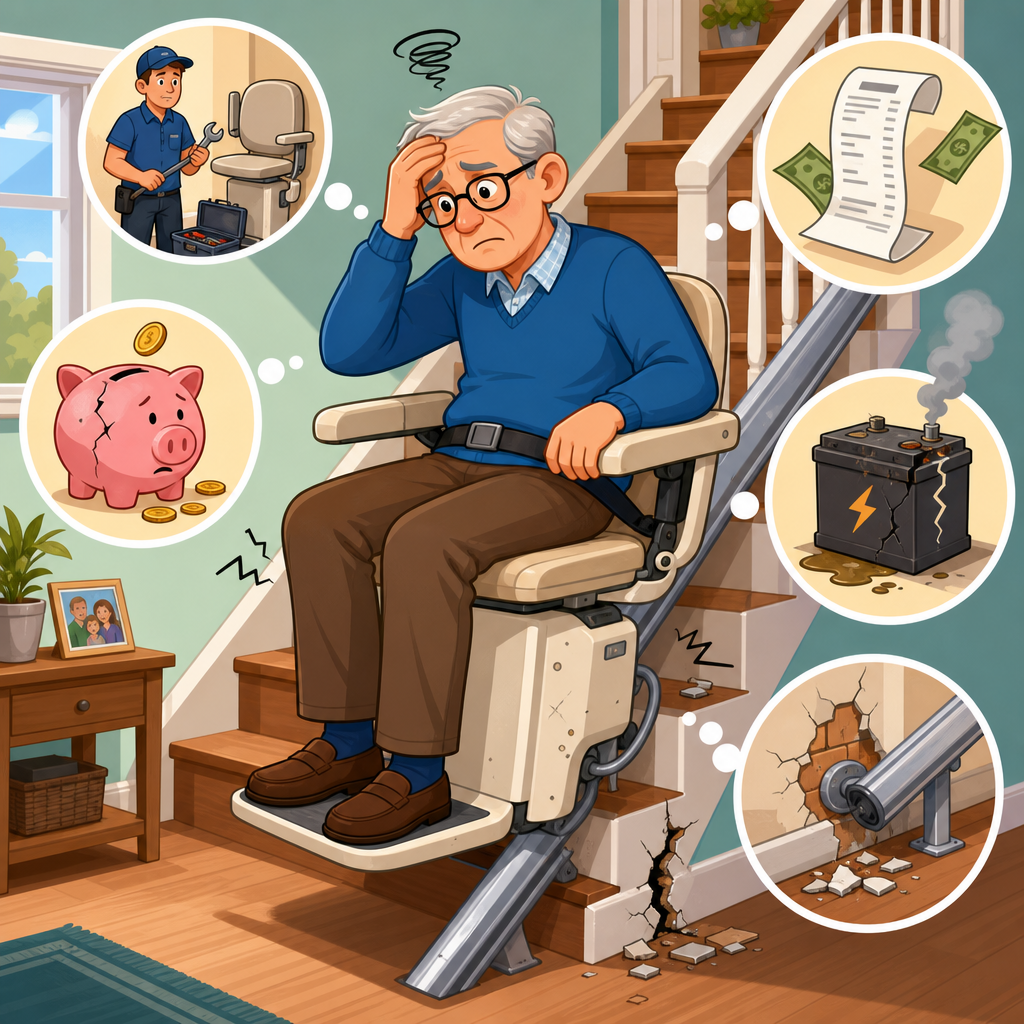
Buying a cheap chair lift can look like a smart way to solve a mobility problem quickly, but the lowest upfront price often hides costs that appear in installation, maintenance, repairs, home modifications, and long-term reliability. In the mobility equipment industry, “cheap” rarely means only a lower sticker price. It usually means compromises in rail quality, weight capacity, battery performance, warranty coverage, customization, dealer support, and after-sales service. For families comparing budget-friendly options, that distinction matters because a chair lift is not just another appliance. It is a safety device that must carry a person up and down stairs consistently, often multiple times a day, in a home where one failure can create a medical, financial, and emotional emergency.
I have worked with homeowners who started with online bargain listings and later paid more than they would have spent on a mid-range model from a reputable dealer. The pattern is common. Someone sees a low advertised number, assumes all stair lifts do roughly the same job, and only later discovers extra charges for power swivel seats, folding rails, call-send remotes, installation labor, permit work, service visits, and replacement batteries. In some cases, the product itself is discontinued within a few years, making parts difficult to source. Budget-friendly options absolutely exist, and some are excellent values, but value and cheap are not the same thing.
This guide explains the hidden costs of buying a cheap chair lift, how to compare budget-friendly options intelligently, and what questions to ask before signing a quote. It also serves as a central resource for buyers researching straight stair lifts, curved stair lifts, used and refurbished models, rental programs, warranties, and home accessibility planning. If your goal is to save money without creating a future safety problem, the best approach is to evaluate total cost of ownership, not just advertised price.
Why Cheap Chair Lifts Often Cost More Over Time
The biggest hidden cost is lifecycle expense. A lower-priced chair lift may save money on day one, yet cost more over five to ten years because of shorter component life, weaker warranty terms, and more frequent service calls. In practice, total cost of ownership includes purchase price, installation, service, replacement parts, power backup, annual maintenance, and the cost of downtime if the lift stops working. For a user with limited mobility, downtime can mean sleeping on a couch downstairs, missing medical appointments, or paying for temporary caregiving support.
Many entry-level imports use lighter-duty gear systems, less durable seat plastics, and basic battery packs that degrade faster under regular use. A quality stair lift typically runs on batteries charged from household power. When batteries weaken, symptoms include slow travel, beeping, or failure during a power outage. Replacement is not usually ruinous, but when a bargain unit uses proprietary or hard-to-source parts, labor and shipping inflate the bill. I have seen low-cost lifts sold online that looked attractive at purchase, then required a specialized technician who was not available locally, turning a simple repair into a logistical problem.
Another common issue is limited adjustability. A cheap chair lift may fit the staircase but not the rider well. Seat height, armrest spacing, footrest dimensions, and swivel function all affect safety and comfort. If the user struggles to transfer on and off the seat, the lift can become effectively unusable even though it technically works. Paying less for a model that does not match the user’s body size, balance, or dexterity often leads to replacement sooner than expected.
Installation Fees and Home Modifications That Surprise Buyers
People often assume chair lift installation is straightforward because the rail mounts to the stairs rather than the wall. That is true in principle, but the actual installation cost varies widely based on stair width, landings, power access, obstructions, and code-related concerns. Low advertised prices frequently exclude delivery, site assessment, installation labor, and post-installation adjustments. If the staircase is narrow, a folding hinge rail may be necessary at the bottom to prevent blocking a doorway or hall. That upgrade can add substantial cost and is rarely included in teaser pricing.
Electrical work is another hidden expense. Most modern stair lifts charge from a standard outlet, but the nearest outlet may not be positioned correctly for the charging points. In older homes, electricians may need to install a receptacle or address grounding issues. If the home has worn carpeting on the stairs, uneven treads, or loose balusters, those conditions may need correction before installation. A reputable dealer flags these issues during a survey. A discount seller may not, leaving the homeowner to discover problems on installation day.
For curved staircases, the price gap becomes even more dramatic. Custom rails are measured precisely, manufactured to order, and more difficult to install. Cheap quotes for curved units sometimes refer only to a base package before customization. Even on straight staircases, parking a chair away from the main living area may require a rail overrun at the top or bottom so the user can dismount safely on a flat surface. That is not a cosmetic extra. It is often a safety feature.
| Cost Category | Often Included in Premium Quote | Often Extra in Cheap Quote | Why It Matters |
|---|---|---|---|
| Home assessment | Yes | No | Identifies fit, safety, and electrical issues before purchase |
| Installation labor | Usually | Sometimes | Professional setup affects reliability and warranty validity |
| Power hinge or folding rail | Quoted clearly | Added later | Prevents blocked walkways and trip hazards |
| Warranty labor | Often partial or full | Rarely | Service charges can exceed expected savings |
| Battery replacement support | Available locally | Unclear | Consumable parts need easy sourcing |
Maintenance, Repairs, and Parts Availability
Chair lifts require less maintenance than elevators, but they are not maintenance-free. The rail must stay clean, charging contacts must align properly, and moving parts need periodic inspection. Established manufacturers such as Bruno, Stannah, Handicare, Harmar, and Access BDD generally have stronger dealer networks and better parts support than no-name brands sold through marketplaces. That dealer network has real financial value. When a lift stops working, local support can mean same-week service instead of a long wait for remote troubleshooting.
Repairs are where the hidden cost of buying a cheap chair lift becomes most obvious. A stripped gearbox, failed circuit board, damaged seat swivel switch, or charging fault can be manageable if parts are stocked domestically and technicians know the platform. If not, service becomes expensive quickly. Homeowners may pay diagnostic fees, travel charges, expedited shipping, and repeat labor when the first appointment cannot be completed because the correct part was unavailable. The cheapest unit on paper can become the most expensive one to keep operating.
Warranty language deserves close reading. Some low-cost lifts advertise a multiyear warranty that covers parts only, not labor, trip charges, batteries, remote controls, upholstery, or wear items. Others require installation by authorized partners, which can be difficult if the seller operates nationally without a local service footprint. In practical terms, a strong warranty is useful only if someone nearby will honor it promptly.
Used and refurbished stair lifts can be smart budget-friendly options when sold by reputable mobility dealers who inspect rails, replace batteries, verify safety sensors, and provide installation with warranty support. They can be risky when purchased peer-to-peer without service records or compatibility checks. Straight lifts are easier to refurbish because rails are more standardized. Curved lifts are usually custom and much harder to reuse without significant modification.
Safety Tradeoffs Buyers Should Never Ignore
A chair lift is a medical-adjacent mobility device, so safety features are not optional luxuries. At minimum, buyers should expect a seat belt, obstruction sensors on the carriage and footrest, a swivel seat with locking positions, battery backup, call-send controls, and a weight rating appropriate for the user. Cheap chair lifts sometimes meet minimum functionality while falling short on usability details that prevent accidents. For example, a manual swivel seat may be difficult for an older adult with arthritis, making transfers awkward at the top landing where balance is most critical.
Weight capacity is one of the most overlooked variables. Many standard residential stair lifts support around 250 to 350 pounds, while heavy-duty models may handle 400 pounds or more and require wider stairs. Buying solely on price can result in selecting a lift too close to the rider’s actual weight, leaving little margin for coats, carried items, or future health changes. Manufacturers publish these ratings for a reason. Exceeding them accelerates wear and raises safety risk.
Noise and ride quality also matter more than shoppers expect. Excess vibration, jerky starts, and abrupt stops undermine rider confidence and can discourage use. I have seen families think a user “refused the lift,” when the real problem was that the ride felt unstable. Better units usually offer soft start and stop, smoother gear engagement, and more secure seating geometry. Those features are not just comfort upgrades; they directly affect whether the device solves the mobility issue it was bought to address.
How to Compare Budget-Friendly Options the Right Way
If you want an affordable stair lift, compare quotes using a full checklist rather than a single number. Start with staircase type: straight, curved, or outdoor. Then verify user requirements including body size, transfer ability, hand strength, and whether the rider uses a cane, walker, or oxygen. Ask each provider for the installed price, warranty details, estimated service response time, dealer location, and expected availability of batteries and parts after five years. A strong buying guide should always bring the discussion back to fit, support, and long-term cost.
Budget-friendly options usually fall into four categories. First, new straight stair lifts from established brands offer the best balance of price and reliability for standard staircases. Second, refurbished straight lifts can reduce cost meaningfully when installed by a local dealer. Third, rental programs can make sense for short-term recovery after surgery, though repeated monthly fees may exceed the price of ownership over time. Fourth, financing or manufacturer promotions may make a better unit affordable without forcing the buyer into a low-support product.
When evaluating quotes, ask direct questions. Is installation included? Who services the lift locally? Are batteries, remotes, and labor covered under warranty? Is there a charge for annual maintenance? What happens if the staircase measurement changes because of new carpet? Can the seat, footrest, and armrests fold to preserve walking space? Is a powered hinge needed to avoid blocking a doorway? A reputable dealer answers these questions clearly and in writing.
This article is the hub for broader budget-friendly mobility buying decisions, so it should connect your next research steps logically. After this guide, many shoppers benefit from reading deeper comparisons on used versus new chair lifts, stair lift rental costs, best brands for straight staircases, warranty questions to ask dealers, and whether a vertical platform lift or home elevator may be more cost-effective in a multigenerational home. The right next article depends on whether your priority is lowest upfront cost, easiest installation, or longest service life.
When a Low Price Is Worth It and When It Is Not
There are cases where a lower-cost chair lift is the right purchase. A straight staircase, average-size user, local dealer installation, and access to a refurbished unit from a recognized brand can create excellent value. So can a short-term rental after joint replacement if the need is temporary. In these scenarios, the buyer saves money because the product matches the situation, not because corners were cut invisibly. That is the key distinction.
A low price is usually not worth it when the staircase is curved, the user has complex transfer needs, service support is unclear, or the home requires a hinge rail or other customization. It is also risky when the quote lacks detail or the seller cannot explain parts sourcing, maintenance expectations, and warranty exclusions. If the family depends on the lift every day, resilience matters more than bargain pricing. Paying modestly more for dependable operation is often the true budget-conscious choice.
The hidden costs of buying a cheap chair lift are rarely hidden to installers, service technicians, or families who have already been through a breakdown. They show up in rushed replacement decisions, repeat service calls, and equipment that never felt secure enough to use confidently. Smart buyers focus on total value: safe fit, transparent installation, local support, serviceable parts, and a realistic ownership cost over time. If you are comparing budget-friendly options, use this article as your starting point, then build a checklist, gather detailed quotes, and ask hard questions before choosing. That extra diligence is the simplest way to save money and protect independence at home.
Frequently Asked Questions
What hidden costs can come with buying the cheapest chair lift?
The biggest misconception about a low-priced chair lift is that the sticker price reflects the true cost of ownership. In reality, the least expensive unit often becomes more costly once installation, required accessories, service calls, and future repairs are added in. A budget chair lift may not include essentials such as a powered swivel seat, folding rail, upgraded seat size, safety sensors, or a battery backup system, which means the “cheap” quote can rise quickly once the lift is configured for real-life use.
There are also less obvious costs tied to lower build quality. Cheaper models may use lighter-duty rails, lower-capacity motors, and less durable upholstery or controls, which can lead to more frequent maintenance issues. If the lift is installed in a home with a narrow staircase, a landing obstruction, or a curved stairway, the homeowner may also face added charges for rail customization or home adjustments. Over time, repeated repairs, shorter component lifespan, and limited warranty coverage can easily erase any initial savings. For many families, the hidden cost is not just financial—it is also the inconvenience, downtime, and stress that come from owning a lift that does not hold up well under daily use.
Why can installation make a cheap chair lift much more expensive than expected?
Installation is one of the most common areas where the advertised price and the actual price differ. Many entry-level quotes are based on a simple straight staircase with no special obstacles, standard user weight, and minimal setup requirements. Once a technician evaluates the home, additional costs can appear for longer rail sections, overrun rails at the top or bottom landing, electrical work, or modifications needed to keep the staircase safe and accessible.
In some homes, installation becomes more complex because of tight corners, doorways near the staircase, baseboard heaters, uneven steps, or limited landing space. If the chair lift needs to be positioned in a specific way to avoid blocking traffic or creating a fall hazard, that can increase labor time and parts costs. Curved staircases are especially important here, because they require custom rail fabrication and careful measurement. A low advertised price may apply only to a basic straight model and have no relevance to what the homeowner actually needs. Reputable providers usually explain this early, but bargain sellers may emphasize the starting price and leave the full installation cost unclear until later in the process.
How do maintenance and repair costs affect the long-term value of a low-cost chair lift?
Maintenance and repair costs are often where a cheap chair lift stops looking like a bargain. Lower-priced units may rely on lower-grade batteries, drive systems, circuit boards, and seat mechanisms that wear out faster with everyday use. Even if the lift works well initially, repeated service issues can add up quickly, especially if the owner must pay out of pocket for labor, travel charges, diagnostic visits, or replacement parts. A single repair may not seem overwhelming, but multiple calls over several years can make the total ownership cost significantly higher than expected.
Another major factor is downtime. A chair lift is not a convenience item for most people—it is essential mobility equipment. If a low-cost model breaks down often or parts are difficult to source, the user may temporarily lose safe access to another floor of the home. That can force families to arrange alternative caregiving help, limit the use of bedrooms or bathrooms, or even consider temporary relocation. Better-quality lifts from established manufacturers often cost more at the start because they are designed for reliability, easier servicing, and stronger dealer support. In practical terms, fewer breakdowns and faster repairs can be worth far more than a lower purchase price.
Does a cheaper chair lift usually come with a weaker warranty or less dealer support?
Very often, yes. Warranty coverage is one of the clearest indicators of whether a chair lift’s low price reflects genuine value or hidden compromise. Less expensive units may offer only limited coverage on major components, shorter protection periods on labor, or exclusions that leave the homeowner responsible for common service expenses. For example, a lift may advertise a warranty on parts but not include technician labor, travel fees, battery replacement, or wear-related issues. That means the owner can still face substantial bills even while the product is technically “under warranty.”
Dealer support matters just as much as the written warranty. A chair lift is not like buying a standard appliance off the shelf; it requires professional assessment, installation, adjustment, and ongoing service. If the seller has a weak local service network, poor response times, or limited inventory of replacement parts, the customer may struggle to get help when it is needed most. Strong dealer support usually includes in-home evaluations, clear pricing, trained installers, responsive repair service, and guidance on choosing the right features for the user’s needs. When those things are missing, the hidden cost shows up in frustration, delays, and higher service expenses later on.
Is buying a cheap chair lift ever worth it, or is it better to focus on long-term value?
A lower-cost chair lift can make sense in some situations, but only if the buyer clearly understands what is included, what is excluded, and how well the lift matches the user’s mobility needs. For instance, a simple straight stair lift from a reputable manufacturer, sold by a dependable dealer, may still be affordable without sacrificing quality. The key issue is not just whether the lift is inexpensive, but whether the lower price comes from reasonable efficiency or from cutting corners in safety, durability, comfort, and support.
For most families, focusing on long-term value is the smarter approach. That means comparing total ownership cost rather than only the purchase price. A slightly more expensive chair lift may offer a stronger rail system, higher weight capacity, better battery life, smoother ride quality, longer warranty coverage, and more reliable service support. It may also fit the staircase better and require fewer modifications over time. When the equipment is used every day, reliability and safety are not optional features. Choosing based on value instead of the lowest quote often leads to fewer surprises, better performance, and greater peace of mind for both the user and the family.