


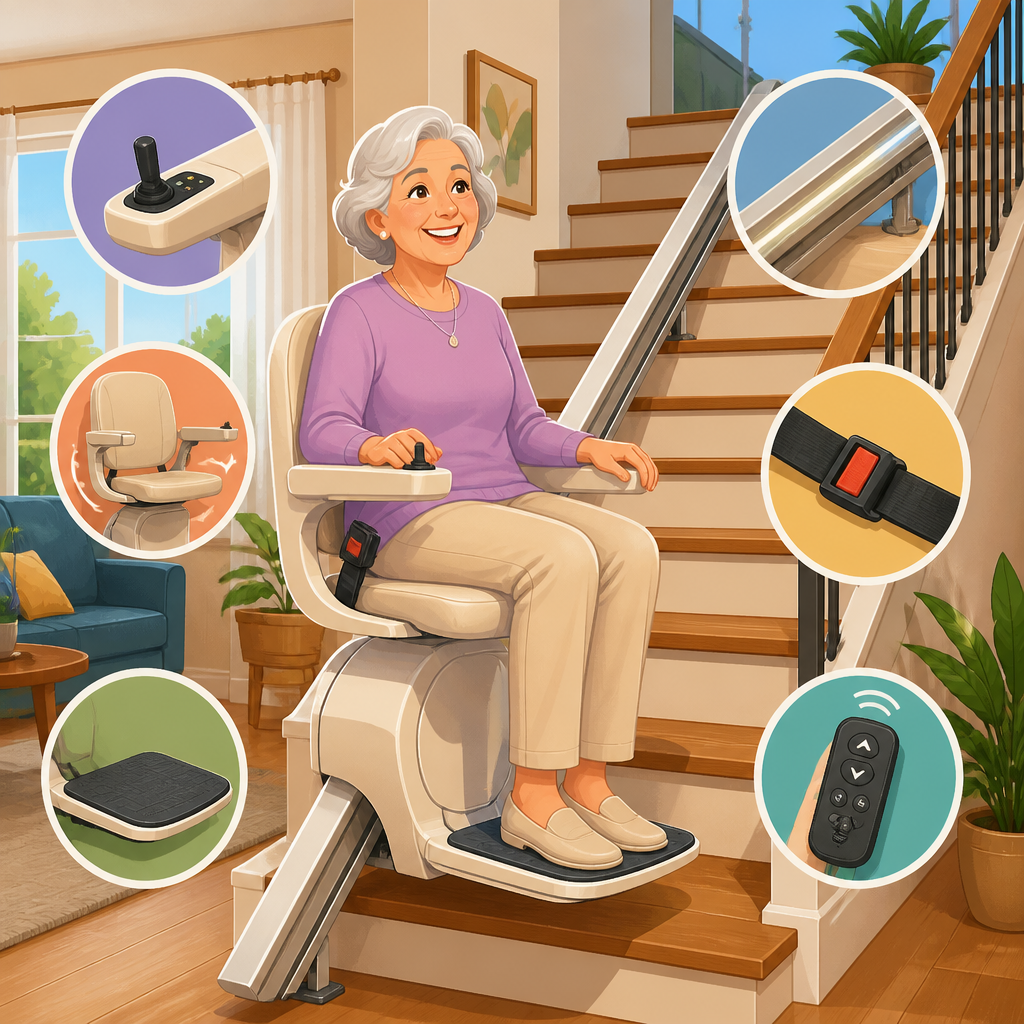
High-end stair lift features can transform a necessary mobility device into a daily comfort upgrade, but only when buyers understand which premium options genuinely improve safety, convenience, and long-term usability. In the luxury and premium models segment, the difference is not just upholstery or branding. It includes engineering choices such as powered swivel seats, advanced rail designs, soft-start motor control, battery backup systems, weight capacity, ride quality, and smart diagnostics. I have worked with families comparing entry-level and premium stair lifts, and the pattern is consistent: the most satisfied buyers focus on comfort features that reduce strain every single day, not cosmetic upgrades that look impressive in a showroom. This matters because a stair lift is used in moments when balance, pain, fatigue, or confidence may already be compromised. A rough stop, awkward seat position, or hard-to-use control can make the device feel burdensome. A well-designed premium model does the opposite. It becomes predictable, supportive, and easy to trust. This guide serves as the hub for luxury and premium stair lift buying decisions, helping you identify the features that actually improve daily comfort and how they compare across leading product categories.
What defines a high-end stair lift
A high-end stair lift is defined by ride refinement, ergonomic support, installation flexibility, and integrated safety systems rather than by price alone. Premium models are typically built by established manufacturers such as Bruno, Handicare, Stannah, Savaria, and Access BDD, and they tend to offer tighter engineering tolerances, quieter drive systems, more durable seat materials, and better customization for the user and staircase. In practice, the premium category usually includes straight and curved stair lifts with advanced seat articulation, automatic folding components, upgraded controls, and cleaner rail aesthetics.
The most important distinction is that comfort in a stair lift is cumulative. One feature rarely changes the experience by itself. Instead, comfort comes from several small improvements working together: a seat that supports the hips well, armrests set at a useful height, a footrest that folds automatically, a rail that allows safe overrun at the top landing, and a transmission that does not jerk at startup. Premium models often justify their higher cost because they remove friction from repeated use. For a buyer using the lift multiple times per day, these details matter far more than decorative finishes.
Seat comfort, posture support, and transfer ease
The seat is the feature users interact with most, so it has the greatest effect on everyday comfort. The best luxury stair lifts use wider, better-contoured seats with supportive padding that does not compress too quickly over time. Good posture support reduces lower back strain and helps users remain stable during travel. In homes where the user has arthritis, spinal stenosis, or reduced core strength, seat depth and armrest placement are not minor specifications. They determine whether sitting down and standing up feels controlled or difficult.
Transfer ease is equally important. A premium powered swivel seat can rotate at the top landing so the user exits onto the floor rather than toward the staircase. This lowers fall risk and reduces twisting through the hips and knees. On several installations I have evaluated, buyers initially focused on upholstery color and rail style, but after a few weeks they told me the powered swivel was the feature they appreciated most. If a user has limited hand strength or shoulder mobility, a manual swivel can become frustrating. The same logic applies to seat height. Better premium units offer a seating position that feels more natural for standing transfers, especially for taller users.
Look for flip-up armrests with secure latching, seat belts that are easy to grasp, and padding materials that clean well without becoming slippery. Some premium seats are narrower than expected because manufacturers prioritize folded clearance. That tradeoff may help other household members use the stairs, but it should never come at the expense of user stability. The right balance depends on body size, transfer method, and who else uses the staircase daily.
Ride quality: soft starts, smooth stops, and quiet operation
Ride quality separates true premium stair lifts from models that merely advertise extra features. A high-quality ride starts with soft-start and soft-stop programming. Instead of lurching forward, the motor ramps up gradually and decelerates smoothly. This protects users with back pain, vestibular sensitivity, or anxiety about movement. It also makes the lift feel far more secure. Even a technically safe chair can feel unsafe if the first second of motion is abrupt.
Noise is another daily comfort factor that buyers underestimate. Better premium stair lifts use refined drive systems, well-machined gear components, and rails designed to minimize rattling. In a quiet home, especially one with open stairwells near bedrooms or living areas, reduced motor noise matters every day. Premium models also tend to handle curves and transitions with better consistency. On curved rails in particular, poor tuning can create small jolts that are tiring for users with joint pain.
Ask dealers to demonstrate the lift under real conditions, not just in a showroom. Listen for grinding, vibration, and changes in sound as the chair starts, travels, and parks. A smooth ride is not a luxury in the superficial sense. It is a functional comfort feature that directly influences confidence and willingness to use the device without assistance.
Powered features that reduce daily effort
The most useful powered features are the ones that eliminate repetitive bending, twisting, and reaching. Automatic footrests are a prime example. Manually folding a footrest can require awkward balance and lower-body flexibility that many users do not have. In premium models, the footrest folds with the seat or via a powered control, reducing strain and helping caregivers. Power swivel seats, power folding rails, and automatic seat folding can provide similar benefits when chosen for the right user profile.
Call-send controls also deserve more attention. In shared households, they allow the chair to be moved away from the main living area after use, keeping the staircase visually cleaner and making access easier for others. This becomes especially valuable with straight stair lifts installed near an entryway or central hall. Some high-end systems add diagnostic displays or status indicators that clearly show charging state, fault alerts, and seat position, reducing confusion and unnecessary service calls.
| Feature | How it improves daily comfort | Best for |
|---|---|---|
| Powered swivel seat | Reduces twisting at the top landing and supports safer standing transfers | Users with arthritis, weak knees, or limited balance |
| Automatic footrest | Eliminates bending to raise or lower the platform | Users with back pain or limited flexibility |
| Power folding rail | Keeps doorways and walkways clear when the lift is parked | Homes with tight hallways or doors near the stairs |
| Soft-start motor control | Prevents jolting and creates a smoother ride | Users with pain sensitivity or motion anxiety |
| Diagnostic display | Makes troubleshooting simpler and confirms operating status | Shared households and remote caregivers |
Not every powered function is worth the added cost. For example, automatic seat folding may be less valuable in a home where the lift remains parked in one position and the user has caregiver support. Prioritize the features that remove the specific physical actions the user struggles with most often. That is how luxury translates into measurable comfort.
Rail design, parking positions, and staircase fit
Rail design has a direct effect on both user comfort and household convenience. In straight stair lifts, premium rail systems often provide slimmer profiles, cleaner mounting hardware, and more precise parking options at the top or bottom landing. In curved stair lifts, the rail is custom fabricated to match turns, intermediate landings, and variable widths. High-end manufacturers invest heavily in rail measurement accuracy because poor rail geometry leads to awkward parking angles, cramped knees, and uneven motion.
One of the most beneficial premium features is a track overrun, where the chair travels beyond the staircase to a safer mounting and dismounting point. A top overrun can move the user away from the stair edge before they stand, while a bottom overrun can place the seat farther into a hallway where transfers feel less rushed. Hinged or folding rail sections are especially helpful when the lower rail would otherwise block a doorway or create a trip hazard. In many homes, that single feature makes a stair lift feasible without compromising circulation.
Premium fit also includes folded dimensions. A well-designed high-end chair can offer generous seated comfort while still folding compactly enough to preserve stair access. Always compare the open and folded footprint, minimum staircase width, and the user’s knee position relative to the wall or banister. Comfort depends on how the entire installation interacts with the architecture, not just the chair in isolation.
Safety systems that also improve comfort
Comfort and safety are closely linked. A user who feels secure rides with less tension, transfers more smoothly, and is more likely to use the lift consistently. Premium stair lifts typically include obstruction sensors on the carriage and footrest, overspeed governors, locking swivel mechanisms, retractable or fixed seat belts, and battery-powered operation that continues during a power outage. These are safety features, but they also improve daily comfort because they reduce uncertainty.
Battery backup is especially important. Most modern stair lifts charge from household power while operating on onboard batteries, allowing multiple trips during an outage. In real homes, this can prevent a stressful situation where a user becomes stranded on one level. Premium charging systems also tend to be more forgiving about parking alignment, though correct parking remains important to maintain charge. Better models provide clear audible or visual feedback when the chair is not parked on a charging point.
Comfort also comes from predictable control response. Joystick, rocker, or armrest-mounted controls should require minimal force and provide immediate, smooth engagement. If the control is stiff or poorly placed, the user may tense their shoulder or grip too hard. During evaluations, I pay close attention to whether the user can operate the control naturally while maintaining stable posture. Small ergonomic errors become major frustrations over years of use.
Customization for body type, diagnosis, and home design
The best luxury stair lift is the one configured for the person and the staircase, not the most expensive model in a catalog. Body size is a major variable. Standard premium seats may still feel restrictive for larger users, while petite users may need a shorter seat depth or lower footrest relationship to avoid pressure behind the knees. Heavy-duty models can offer higher capacities, often around 400 to 600 pounds depending on design, but comfort should not be assumed just because capacity is higher. Seat geometry, arm spacing, and ride smoothness still matter.
Medical context matters too. Users with Parkinson’s disease may need especially intuitive controls and stable transfer positioning. Users with neuropathy may benefit from better foot support and highly visible edges. People recovering from joint replacement often appreciate a higher seat and powered swivel. For clients with significant postural instability, I recommend careful assessment of seat belt style, armrest support, and landing space before selecting features.
Design customization also matters in premium homes, where the stair lift must coexist with interior finishes and resale concerns. Upholstery choices, rail colors, and compact parking can make the installation feel integrated rather than intrusive. Appearance should never outrank function, but in well-designed spaces, aesthetics can contribute to emotional comfort and acceptance. That often improves long-term satisfaction, especially when more than one family member was hesitant about the purchase.
How to shop premium models wisely
When comparing luxury and premium stair lifts, start with the user’s daily movement challenges, then match features to those specific pain points. Request an in-home assessment, not just a brochure. A qualified dealer should measure the staircase, evaluate landing space, review medical and transfer needs, and explain which features are essential versus optional. Ask who manufactures the unit, how long parts are stocked, what the warranty covers, and how service is handled locally. Premium pricing is only justified when support is equally strong.
Test the controls, seat padding, swivel action, and folded clearance. Ask how many trips the battery typically supports during an outage, whether the rail includes overruns, and whether any feature changes the stairway width for other users. Curved models deserve particular scrutiny because installation quality determines performance. Digital photo measuring systems used by leading brands can improve custom rail accuracy, but dealer experience still matters.
Use this hub as your starting point for deeper comparisons across straight, curved, heavy-duty, and design-forward premium stair lifts. Focus on features that reduce effort, improve transfer safety, and make the ride calmer every single day. That is the real value of high-end stair lift features. If you are shopping now, book an in-home assessment and compare comfort-focused options side by side before you decide.
Frequently Asked Questions
1. Which high-end stair lift features make the biggest difference in everyday comfort?
The premium features that most consistently improve daily comfort are the ones you notice every single ride, not the ones that simply sound impressive in a brochure. A powered swivel seat is one of the most valuable upgrades because it reduces the twisting and shifting required when getting on or off the chair at the top landing. That matters not only for convenience, but also for confidence and safety, especially for users with reduced balance, hip stiffness, or limited core strength. Soft-start and soft-stop motor control is another feature that often separates a truly refined lift from a basic one. Instead of lurching forward or stopping abruptly, the chair begins and ends its travel smoothly, which creates a more stable, comfortable ride and can reduce anxiety for users who feel uneasy on stairs.
Ride quality also depends heavily on the rail design and transmission system. Better-engineered premium lifts tend to feel quieter, steadier, and less shaky as they move. This becomes especially important in homes where the stair lift is used multiple times per day. A comfortable seat with proper back support, armrest positioning, and cushioning can also have a noticeable impact, but comfort here should be judged by ergonomics rather than luxury appearance alone. Features such as a folding footrest, easy-to-use controls, and remote call/send options further improve daily usability by making the lift simpler to operate and less intrusive when not in use. In short, the best comfort upgrades are the ones that reduce strain, minimize sudden movement, and make each transfer feel easy and predictable.
2. Is a powered swivel seat really worth it on a premium stair lift?
For many buyers, a powered swivel seat is one of the most worthwhile premium features available. Its purpose is straightforward: when the chair reaches the top landing, the seat rotates automatically so the user can exit onto the floor rather than toward the staircase. That may sound like a small convenience, but in practice it can make a major difference in comfort and safety. Manual swivel seats require the user to operate a lever and twist their body, which can be difficult for people with arthritis, back pain, reduced dexterity, or limited leg strength. A powered swivel system removes much of that effort and turns a potentially awkward transition into a smoother, more controlled movement.
This feature becomes even more valuable in real-world daily use because getting on and off the lift is often the most vulnerable part of the process. The ride itself may be smooth, but if the transfer at the top or bottom landing feels unstable, the overall experience suffers. A powered swivel seat helps create a more natural exit position and reduces the need for repositioning. It is especially useful for users who rely on one stronger side of the body, who have caregiver assistance, or who want to remain as independent as possible. While it does add to the cost, it is one of the few luxury-tier features that frequently delivers a clear, measurable improvement in everyday comfort rather than just cosmetic appeal.
3. How do soft-start motors and advanced rail designs improve ride quality?
Soft-start and soft-stop motor control improves ride quality by managing acceleration and deceleration more gradually. On a lower-end stair lift, the chair may begin moving with a noticeable jerk and stop just as suddenly. That can feel unsettling, particularly for older users or anyone with joint pain, neurological conditions, or sensitivity to abrupt motion. A high-end model with refined motor control eases into movement and slows down gently at the end of the trip. The difference may only last a few seconds, but over repeated daily use it creates a significantly calmer and more comfortable experience.
Advanced rail design contributes just as much to comfort, even though it is less visible to buyers. Premium rail systems are often engineered for tighter tolerances, smoother engagement with the drive system, and more stable travel around bends or over longer distances. In curved stair lifts especially, rail quality affects whether the chair feels fluid and balanced or slightly uneven and mechanical. Better rail design can also help reduce vibration, operational noise, and chair wobble. In some homes, a more compact rail layout additionally improves convenience by preserving walking space on the staircase and reducing obstruction at the landing. Together, these engineering details produce the kind of ride quality that distinguishes a luxury model: quieter operation, more predictable movement, and less physical stress during each trip.
4. Why are battery backup, weight capacity, and diagnostics important in a high-end stair lift?
These features matter because long-term comfort depends on reliability just as much as seat padding or quiet operation. Battery backup is essential in a premium stair lift because it allows the unit to continue working during a power outage. That is not simply a technical bonus; it prevents the stress and inconvenience of being stranded on one level of the home. Most quality modern lifts use battery-powered operation with charging points at the rail, but the strength of the system, consistency of charging, and quality of battery management can vary by manufacturer. A dependable battery setup supports uninterrupted use and protects the user’s routine during emergencies or electrical interruptions.
Weight capacity is equally important because it affects both safety and ride performance. A lift that is appropriately rated for the user’s body type often feels more stable and less strained in motion. Higher-capacity premium models are not only for heavier users; they can also indicate a sturdier platform, stronger frame, and more robust drivetrain. Smart diagnostics adds another layer of everyday reassurance by making maintenance easier and downtime less likely. Advanced systems can identify faults quickly, display service codes, or help technicians diagnose issues before they become major problems. In practical terms, that means faster repairs, fewer interruptions, and better long-term dependability. For a device used every day, those behind-the-scenes features play a major role in preserving comfort, confidence, and peace of mind.
5. How can buyers tell whether a premium stair lift feature is truly useful or just marketing?
The best way to judge a premium feature is to ask whether it improves one of four things: transfer safety, ride smoothness, ease of operation, or long-term reliability. If a feature helps the user get on and off the chair more securely, makes the ride feel steadier, simplifies day-to-day use, or reduces the chance of service disruption, it is usually worth serious consideration. Powered swivel seats, soft-start controls, better seat ergonomics, strong battery backup, and quality rail engineering all fit that standard because they solve practical problems users encounter repeatedly. By contrast, cosmetic upgrades alone may look impressive but do little to improve actual comfort.
Buyers should also evaluate features in the context of the specific user and home. A narrow staircase may make a compact rail design especially valuable. A user with hand weakness may benefit more from easy-touch controls and a powered footrest than from upgraded upholstery. Someone planning to age in place for many years may place a higher priority on diagnostics, service support, and overall build quality. Product demonstrations are extremely helpful here, because comfort is easier to assess in person than on a specification sheet. During a demo, pay attention to how the chair starts, stops, swivels, and feels over the full ride. Ask what happens during a power outage, how maintenance alerts are handled, and which features are standard versus optional. Truly valuable premium features tend to show their benefits immediately in daily usability, while marketing-driven extras usually do not meaningfully change the user’s experience.