


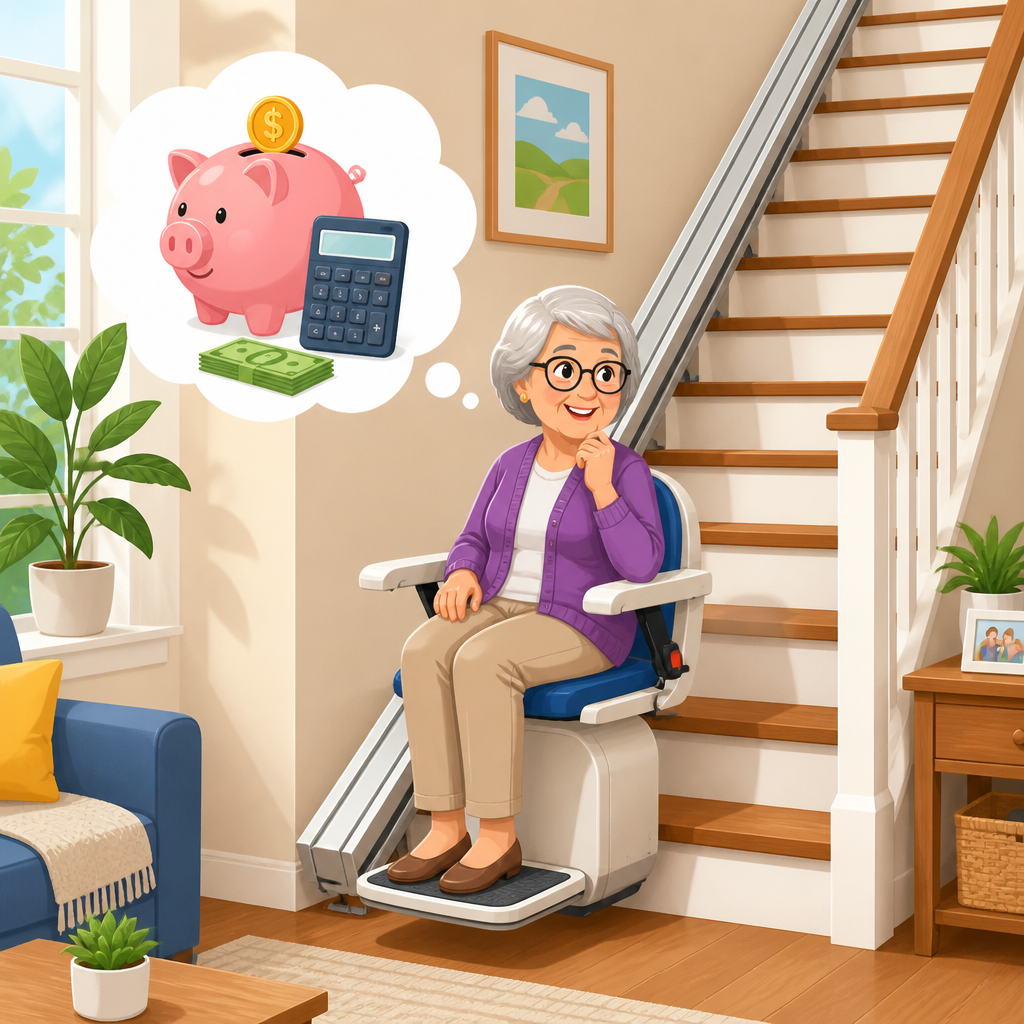
For homeowners comparing mobility solutions, the first question is usually simple: how much does a stair lift cost for a straight staircase? A straight stair lift typically costs less than a curved model because the rail is standardized, the installation is faster, and fewer custom measurements are required. In most U.S. markets, a new straight stair lift usually ranges from about $2,500 to $6,000 installed, while premium models with powered features, heavier weight capacities, or upgraded seats can push total pricing higher. Used and rental options can lower upfront cost, but they come with tradeoffs in warranty length, feature availability, and long-term value.
A stair lift, sometimes called a chair lift for stairs, is a motorized seat that travels along a rail mounted to the stair treads. For a straight staircase, the rail runs in a single line without turns, intermediate landings, or spirals. That matters because straight systems are the most common product configuration in the market, which keeps manufacturing and installation more predictable. When clients ask me why two quotes for “the same thing” differ so much, the answer usually comes down to configuration details: rail length, power options, seat style, brand support, and whether the quote includes electrical work, permit handling, or service coverage.
This topic matters because stair lifts sit at the intersection of safety, independence, and household budgeting. A fall on stairs can lead to hospital bills, rehabilitation costs, and a forced move long before a family is emotionally or financially prepared. In comparison, the cost of a straight stair lift can be manageable, especially when weighed against the cost of assisted living, first-floor remodeling, or repeated caregiver visits. This page serves as the hub for chair lift costs, so it explains the base price, the factors that change the final number, how new and used models compare, what rental programs include, and which financing routes are commonly available.
It also helps to define what “installed price” should include. A complete quote should cover the rail, carriage, seat, call/send controls, battery charging system, standard installation labor, and basic user instruction. It may also include a folding footrest, swivel seat, obstruction sensors, and a limited parts warranty. Optional features such as power swivel, power folding rail, upgraded upholstery, outdoor weatherproofing, or extended coverage usually add cost. Knowing these terms upfront makes quote comparisons much easier and prevents the common mistake of choosing the lowest number before checking what was left out.
Average Cost of a Straight Stair Lift
The most useful short answer is this: a straight stair lift generally costs between $2,500 and $6,000 installed, with many homeowners landing in the middle of that range. Entry-level models from established brands often start near the lower end when the staircase is standard length and the home does not need extra electrical work. Mid-range systems with battery backup, a powered swivel seat, or a folding rail are more likely to fall between $3,500 and $5,500. Heavy-duty models designed for higher weight capacities, wider seats, and reinforced components can exceed $6,000.
In day-to-day quoting, I have found that buyers often assume the chair itself is the main expense. In reality, pricing reflects the complete system and service package. Installation labor for a straight staircase is usually straightforward because the rail attaches to the steps rather than the wall, minimizing structural modification. Even so, a longer staircase, a rail overrun at the top or bottom, or the need to park the chair away from a doorway will affect the total. Local labor rates also matter. The same model may cost more in a high-cost metro area than in a smaller regional market because service coverage and installer travel are built into the quote.
Another point that affects average cost is product tier. Basic models prioritize safe transport and simple controls. Premium models add comfort and easier transfers with features like larger armrests, soft-start and soft-stop travel, powered footrests, and advanced diagnostic displays. For someone using the lift several times daily, those upgrades can be worth the higher price. For someone recovering from surgery for a few months, a simpler system may be the more rational financial choice. Cost only makes sense when matched to use case, not when viewed in isolation.
What Changes the Price of a Chair Lift for Stairs
Several variables determine where a project lands within the price range. Staircase length is one of the biggest. A standard straight staircase may need around 12 to 16 feet of rail, but longer runs require more material and can increase price. Weight capacity is another major factor. Standard residential lifts often support around 250 to 350 pounds, while heavy-duty units can support 400 pounds or more and usually cost more because they require larger seats, stronger motors, and reinforced rails.
Power features also shift the cost. A manual swivel seat is common on entry-level models, but a powered swivel can help users with limited upper-body strength exit more safely at the landing. A manual footrest may be acceptable for some households, while others need a powered footrest to avoid bending. A hinged rail, sometimes called a folding rail, is important when the track would otherwise block a doorway or walkway at the bottom of the stairs. That convenience adds cost, but in many homes it is not optional; it is the difference between a workable installation and one that creates a tripping hazard.
Brand reputation and after-sale service matter as much as hardware. Reputable manufacturers and dealers typically provide clearer parts support, better diagnostic tools, and more consistent technician networks. I advise families to ask how quickly service calls are handled, whether replacement batteries are stocked locally, and what the labor warranty covers after installation. A lower upfront quote can become the expensive option if repairs are slow or parts are hard to source. The best stair lift price is not simply the lowest number; it is the best combination of safe fit, support, and total ownership cost.
New, Used, and Rental Stair Lifts Compared
New stair lifts are the most expensive option upfront, but they usually offer the best warranty coverage, the latest safety features, and the strongest long-term reliability. For a permanent mobility need, buying new often makes the most financial sense because the product can be matched exactly to the user’s body size, transfer needs, and daily usage. New systems also have the clearest service history because they start with fresh batteries, untouched gears, and full manufacturer support. If the user expects years of use, these advantages outweigh the higher initial price.
Used or refurbished straight stair lifts often cost less, commonly in the range of about $1,800 to $3,500 installed depending on condition, rail length, and warranty. Straight lifts are better candidates for resale than curved lifts because the rails are easier to reuse. However, not every used deal is a good deal. The key questions are who refurbished it, whether wear parts were replaced, how old the electronics are, and what labor coverage comes with installation. A lightly used premium model from a strong dealer can be a smart buy, but a private-party purchase without installation support can create safety and service problems quickly.
Rental stair lifts are popular for short-term recovery after surgery, injury, or hospital discharge. They typically involve an installation fee plus monthly rental charges. Depending on the market, a family might pay several hundred dollars upfront and then a monthly rate that continues as long as the lift is needed. Rentals can be cost-effective for temporary use, but after enough months the total can exceed the purchase price of a used unit. The break-even point varies, so it is worth asking the dealer to compare twelve-month rental cost against used and new purchase options.
| Option | Typical Cost Range | Best For | Main Tradeoff |
|---|---|---|---|
| New straight stair lift | $2,500–$6,000+ | Long-term daily use | Highest upfront cost |
| Used/refurbished straight stair lift | $1,800–$3,500 | Budget-conscious buyers | Shorter warranty, variable inventory |
| Rental stair lift | Setup fee plus monthly payments | Short-term recovery | Can cost more over time |
Installation, Maintenance, and Hidden Costs
Most straight stair lift installations are completed in a few hours, but the total project cost can still include line items buyers overlook. Some homes need a dedicated nearby outlet for the charger, especially if the selected parking point is not close to an existing receptacle. Permit requirements vary by jurisdiction. Many stair lifts do not require major permitting because they are equipment mounted to the stairs, but local rules differ, and dealers may charge for permit handling where applicable. If trim, doors, or narrow hallways complicate access, labor can also increase modestly.
Maintenance costs are usually moderate but should not be ignored. Most residential stair lifts use rechargeable batteries that charge while the chair is parked. Those batteries do not last forever. Depending on usage patterns, climate, and charging habits, replacement may be needed every few years. Service visits after the labor warranty expires can also add to ownership cost. In practice, the most common service issues I see involve batteries nearing end of life, obstruction sensors being triggered by debris, or user error after a power interruption. These are manageable problems, but they are part of the real cost picture.
Removal and resale are another hidden consideration. If the lift is no longer needed, some dealers offer buyback or removal services, while others charge only for uninstallation. Straight stair lifts generally retain more resale value than custom curved systems, but resale depends heavily on brand, age, and condition. Buyers who anticipate a future move should ask about this before signing. A quote that includes removal or trade-in terms can offer better overall value than a slightly cheaper quote without a clear end-of-use plan.
Does Insurance, Medicare, or Financial Assistance Cover Stair Lift Costs?
Many families hope health insurance will pay for a stair lift, but coverage is limited. Original Medicare generally does not cover stair lifts because they are typically classified as home modifications or accessibility equipment rather than medically necessary durable medical equipment under standard coverage rules. Some Medicare Advantage plans may offer supplemental benefits related to in-home support, but coverage varies widely by insurer and plan design. The only reliable approach is to request written confirmation from the plan administrator before making assumptions about reimbursement.
Medicaid waiver programs can be more promising, especially for individuals who qualify for home- and community-based services. Some state programs help cover accessibility modifications that reduce institutional care needs. Veterans may also have options through Department of Veterans Affairs programs when the stair lift supports independent living or service-connected disability needs. In addition, nonprofit organizations, Area Agencies on Aging, and state assistive technology programs sometimes provide grants, low-interest loans, or device reuse programs. These sources are not universal, but they are worth investigating because even partial assistance can significantly lower out-of-pocket cost.
Financing through the stair lift dealer is another common path. Many dealers partner with lenders that offer installment plans, and some advertise promotional periods for qualified borrowers. Home equity products, personal loans, or health care credit lines are other possibilities, though interest costs should be compared carefully. When I walk families through financing, I encourage them to calculate the monthly payment alongside avoided costs: reduced fall risk, fewer caregiver transfers, and the ability to remain in a familiar home. Those benefits do not erase the expense, but they often clarify why the investment is justified.
How to Compare Quotes and Choose the Right Straight Stair Lift
The best way to shop is to request in-home assessments from reputable local dealers and compare detailed written quotes, not just headline prices. Ask each company to measure the staircase, evaluate transfer space at the top and bottom landings, and explain whether a standard rail, overrun, or hinged section is recommended. Confirm the weight capacity, seat dimensions, folded width, power features, battery type, and warranty terms. If a user has limited knee flexion, weakness on one side, or difficulty standing from a seated position, mention it during the assessment because those factors can change the right configuration.
Also ask service questions that reveal long-term value. How long has the dealer represented the brand? Are technicians employed directly or subcontracted? What is the average response time for a service call? Is labor covered for one year, longer, or not at all? Are replacement parts stocked locally? In my experience, these answers often distinguish a dependable provider from a discount seller. A stair lift is not just a product drop-off; it is an installed mobility system that may need adjustment and support over time.
As the cost and financing hub for chair lifts, this page should leave you with a practical benchmark: most straight stair lifts cost $2,500 to $6,000 installed, while used and rental options can reduce upfront expense when the situation fits. The final price depends on rail length, weight capacity, power features, dealer support, and local installation conditions. Coverage from Medicare is uncommon, but Medicaid waivers, veterans benefits, nonprofit aid, and financing programs may help bridge the gap. Start by scheduling two or three in-home estimates, then compare total value, not just the base number, so you can choose a stair lift that is safe, durable, and financially sensible for your household.
Frequently Asked Questions
What is the average cost of a stair lift for a straight staircase?
A new stair lift for a straight staircase typically costs between about $2,500 and $6,000 installed in most U.S. markets. That range covers many standard residential models designed for a single, uninterrupted staircase. The reason straight stair lifts are usually more affordable than curved stair lifts is simple: they use a standardized rail, require less custom fabrication, and can often be installed more quickly. In many homes, the final price depends on the lift brand, the length of the staircase, the seat style, weight capacity, and whether the homeowner chooses powered upgrades such as a power swivel seat or power folding footrest.
At the lower end of the range, homeowners may find basic models with standard seating and essential safety features. Toward the higher end, pricing often reflects premium options such as larger seats, upgraded upholstery, advanced controls, battery backup systems, and higher weight capacities. Some dealers also bundle delivery, installation, warranty coverage, and an in-home assessment into the quoted price, so it is important to compare what is actually included. For most buyers, a realistic starting expectation is that a straight stair lift will cost less than a curved model but more than just the base equipment price once installation and options are added.
Why does a straight stair lift cost less than a curved stair lift?
A straight stair lift costs less mainly because the rail is standardized rather than custom-built. Straight staircases have a simple layout with no turns, landings, or intermediate bends, so manufacturers can produce rails in consistent sections that are easier to ship, trim, and install. That reduces both manufacturing costs and labor time. In contrast, a curved stair lift requires precise measurements and a rail made specifically for that staircase, which increases production complexity and overall price.
Installation is another major reason for the price difference. A straight stair lift can often be installed in just a few hours because the process is more predictable and involves fewer adjustments. Curved systems usually take longer to design and install, and any unusual staircase features can increase the amount of work needed. For homeowners focused on affordability, this makes a straight stair lift one of the most cost-effective long-term mobility solutions for a single-level staircase with no bends.
What factors can increase the cost of a straight stair lift?
Several factors can raise the cost of a straight stair lift even when the staircase itself is simple. One of the biggest variables is the length of the staircase, since a longer run may require additional rail sections. Weight capacity also matters. Heavy-duty stair lifts built for higher user capacities often include reinforced components, larger seats, and stronger motors, all of which can increase the total price. Powered features are another common upgrade. Homeowners may choose a power swivel seat, power folding rail, or power footrest for added convenience and safety, and each option can add to the final installed cost.
Brand reputation, warranty coverage, and dealer service can also affect pricing. Some manufacturers charge more for premium models that offer quieter operation, smoother starts and stops, or enhanced safety features. In addition, homes with tight hallways, narrow stairs, or obstructions near the top or bottom landing may require special adjustments that increase labor costs. While the staircase may still qualify as straight, these practical installation details can influence the quote. That is why an in-home evaluation is so valuable: it helps identify the exact model and options needed before the homeowner commits.
Does the quoted price usually include installation and other services?
In many cases, yes, but homeowners should never assume that every quote includes the same services. A stair lift quote for a straight staircase often includes the unit itself, the rail, standard installation, and basic user instruction. However, what counts as “standard” can vary by dealer. Some companies include the initial consultation, delivery, warranty, and follow-up service in the quoted amount, while others may list those items separately. It is always smart to ask for a written breakdown so there are no surprises.
Homeowners should also ask whether the quote covers permit requirements if applicable, battery charging components, remote controls, and removal or repositioning of obstacles near the staircase. If the home needs electrical adjustments or if the buyer wants optional features, those costs may appear outside the base estimate. A clear proposal should explain exactly what is included, what is optional, and what could create extra charges after the site inspection. Comparing stair lift quotes on an item-by-item basis is one of the best ways to make sure the lower price is truly the better value.
Are there ways to save money on a straight stair lift without sacrificing safety?
Yes, there are several practical ways to lower the cost of a straight stair lift while still choosing a safe and reliable system. One option is to focus on essential features rather than adding every available upgrade. Many standard straight stair lifts already include key safety elements such as a seat belt, obstruction sensors, battery backup, and lockable controls. If a homeowner does not need premium seat materials or powered folding components, choosing a simpler configuration can help keep the price closer to the lower end of the range.
It may also be worth asking about refurbished or gently used straight stair lifts, since straight rails are easier to reuse than curved systems. Not every dealer offers them, but when available, they can provide meaningful savings. In addition, some homeowners explore financing plans, veterans’ benefits, long-term care insurance possibilities, or local assistance programs, depending on eligibility. The best approach is to balance price with reliability, warranty support, and professional installation. Saving money is important, but long-term safety, comfort, and service support matter just as much when the lift will be used every day.