


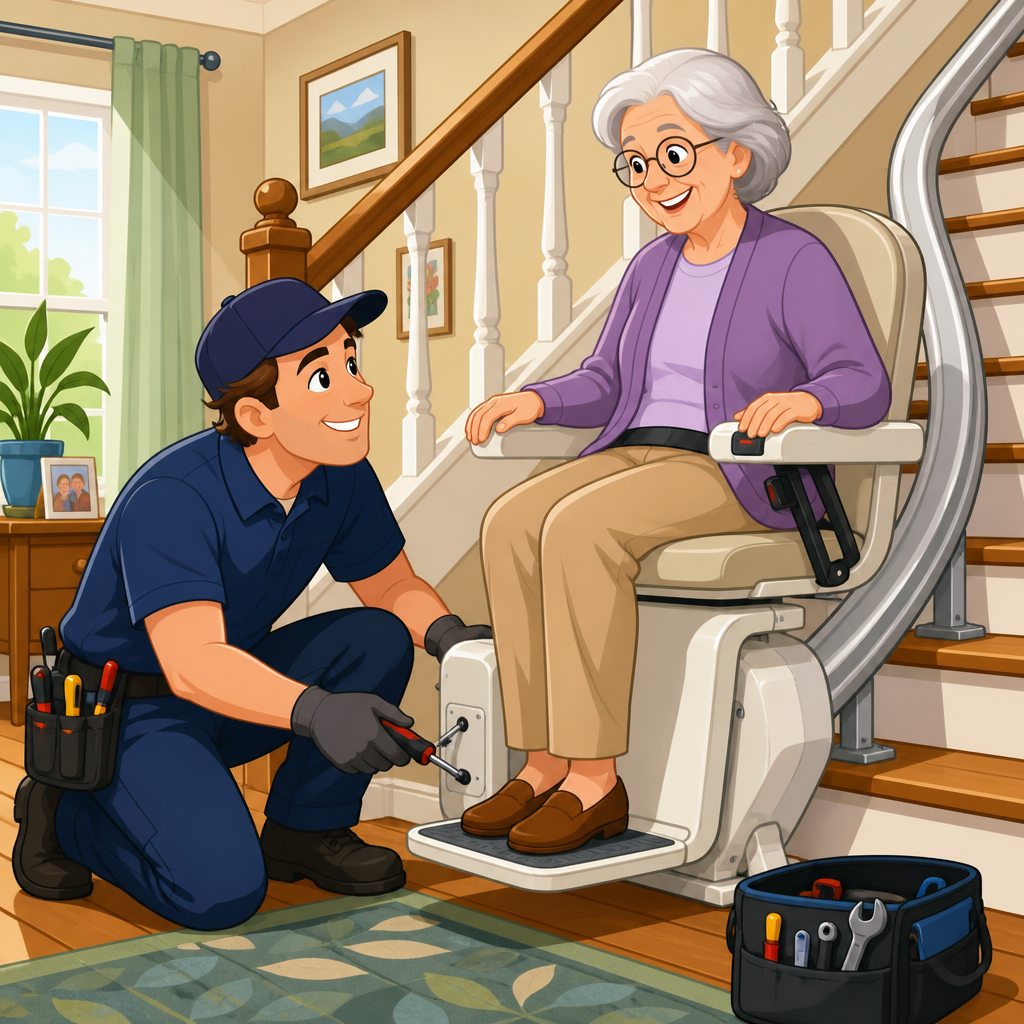
A heavily used stair lift should usually be serviced every three to six months, with a full annual inspection acting as the nonnegotiable baseline for safety, reliability, and warranty compliance. In practice, “heavily used” means the lift completes many trips each day, serves multiple users, operates in a commercial or semi-public setting, or supports a user who depends on it as essential mobility equipment rather than occasional convenience. I have worked with homeowners, facilities teams, and mobility dealers long enough to see the same pattern repeat: stair lifts that receive routine preventive maintenance last longer, break down less often, and deliver smoother, quieter travel than lifts serviced only after a fault appears. That matters because a stair lift is not just another household appliance. It is a critical accessibility device with electrical, mechanical, and safety components that must work together every time the seat swivels, the footrest folds, the carriage travels, and the safety edges respond to an obstruction.
Servicing is the scheduled inspection, testing, adjustment, cleaning, and replacement of wear items performed by a qualified technician. An annual inspection is the comprehensive once-a-year assessment that verifies core safety functions, confirms condition trends, and catches hidden wear before it becomes a shutdown. For heavily used units, annual inspections are necessary but rarely sufficient on their own. Think of the yearly visit as the anchor point in a broader maintenance plan that may also include quarterly checkups, battery testing, rail cleaning, call/send control checks, and reviewing diagnostic logs where the model provides them. This article serves as the hub for annual inspections within stair lift maintenance, troubleshooting, and safety, so it explains not only how often service should happen, but also what an annual inspection includes, what changes the schedule, what signs mean you should call sooner, and how to build a maintenance rhythm that protects both users and equipment.
How often should a heavily used stair lift be serviced?
The direct answer is every three to six months for preventive service, plus a detailed annual inspection every year without exception. If the lift is in a private home and used several times daily by one primary rider, six-month service is often appropriate. If it is in a busy household with repeated daily trips, used by multiple residents, or installed in an assisted living, church, office, or community building, a three-month interval is usually the safer standard. Manufacturers may specify minimum inspection frequencies in owner manuals, and local service providers often tailor intervals based on track length, usage counts, battery performance, and environmental conditions such as dust, pet hair, humidity, or temperature swings.
Why not just wait for problems? Because most stair lift failures do not begin as sudden catastrophic events. They start as battery capacity decline, loosened seat hardware, worn rollers, contaminated charge contacts, rail debris, drift in limit switch alignment, or intermittent safety edge faults. Those issues are easier and cheaper to correct during planned maintenance than during an emergency breakdown call. In one common scenario, a heavily used lift begins moving more slowly or beeping unexpectedly near charge points. The root cause is often weak batteries or dirty charging contacts. A technician can confirm battery voltage under load, inspect the charger output, clean contacts, and restore reliable charging before the unit strands a user midway on the staircase.
Usage level is the biggest scheduling factor, but not the only one. Stair lift type matters. Straight stair lifts generally have fewer variables than curved models because curved systems use custom rails, more complex travel paths, and sometimes tighter tolerances. Outdoor stair lifts need more frequent attention because moisture, airborne debris, and temperature exposure accelerate corrosion and electrical wear. Older units also benefit from shorter service intervals because plastics harden, wiring insulation ages, and replacement parts may already be under greater stress. If a user relies on the lift for every stair transition, the service schedule should lean conservative, because downtime has direct quality-of-life consequences.
What an annual inspection should include
An annual inspection is the foundation of stair lift safety. Even where interim service happens every few months, the annual visit should be the most comprehensive review of the year. A qualified technician should test travel in both directions, inspect the rail and carriage, verify charging function, evaluate batteries, confirm seat belt condition, check swivel seat locks, inspect footrest and carriage safety edges, and review call/send controls. The technician should also assess unusual noise, vibration, hesitation, stopping accuracy, overrun behavior, and the condition of wiring, connectors, gear racks, rollers, and fasteners. On models with fault codes or onboard diagnostics, those records should be reviewed and documented.
Annual inspections are also the right time to compare current condition against the prior year. That trend analysis is what turns a basic service visit into real preventive maintenance. If the batteries passed comfortably last year but now show reduced reserve, replacement can be planned before winter or before a period when service delays are likely. If seat play has increased, mounting hardware can be retorqued and monitored. If an outdoor unit shows early corrosion around charge points, protective treatment and more frequent cleaning can be scheduled. Documentation matters here. Good service records should note parts tested, adjustments made, measured readings where relevant, and recommendations for follow-up. That history helps owners, family members, and facility managers make sound decisions instead of reacting to surprises.
| Inspection item | What the technician checks | Why it matters on a heavily used lift |
|---|---|---|
| Batteries and charger | Voltage, charge retention, charger output, contact cleanliness | High cycle counts shorten battery life and increase stall risk |
| Rail and carriage | Debris, wear, alignment, lubrication points per manufacturer guidance | Frequent travel accelerates roller and drive wear |
| Safety edges and sensors | Obstruction response on footrest and carriage surfaces | Faulty sensors can cause unsafe operation or nuisance stops |
| Seat, arms, and swivel lock | Movement, secure locking, hardware tightness, seat belt condition | Transfer safety depends on stable seating and positive locking |
| Controls and diagnostics | Arm controls, call/send stations, key switches, error codes | Intermittent control faults often appear first under heavy use |
Factors that change the ideal service interval
Not every heavily used stair lift needs the same schedule, so the best maintenance plan weighs several variables together. First is trip frequency. A lift used ten to twenty rides per day experiences more battery cycling, more starts and stops, and more wear on contact points than one used twice daily. Second is user profile. Transfers are harder on seat swivels and armrests when users place significant body weight on them during entry and exit, particularly if multiple users have different heights and movement patterns. Third is environment. Pet hair, carpet lint, renovation dust, and kitchen grease can contaminate rails, rollers, and charging points surprisingly quickly. In coastal regions or unconditioned spaces, humidity can encourage corrosion and oxidation that affect connectors and contacts.
Installation layout matters too. Long rails, hinged rails, powered swivel seats, and powered footrests add convenience but also add components that need testing and adjustment. Curved rails tend to demand greater installation precision, and any shift in brackets or vibration-related loosening can affect ride quality over time. Weight capacity usage is another practical consideration. A unit routinely carrying loads near its rated maximum is not necessarily being misused, but it may need closer monitoring of seat structure, drive components, and braking performance. Finally, support availability matters. If the lift is in a remote area where emergency service takes time to arrange, preventive visits should be scheduled more aggressively to reduce outage risk.
For that reason, I usually recommend framing service frequency in tiers. Moderate daily reliance may justify service every six months. High daily reliance or multiple-user household use often points to every four months. Institutional or publicly accessible use usually points to quarterly service with strict annual inspection documentation. This tiered approach mirrors how other mobility equipment is maintained: the more essential and heavily cycled the device, the shorter the preventive interval should be.
Signs a stair lift needs service before the next annual inspection
Even the best schedule cannot replace paying attention to operating changes. The clearest warning signs include beeping at charge points, slow travel, jerky starts, rough stops, repeated mid-rail halts, inconsistent response from arm controls, failure of call/send remotes, seat wobble, and unusual grinding or clicking noises. A lift that only works after being parked in a certain spot often has charging contact issues. A footrest or carriage that stops the lift unexpectedly may have a misaligned or overly sensitive safety edge, though debris can cause the same symptom. If batteries are aging, the lift may complete one trip but struggle on the return trip after a period away from the charger.
Users and caregivers should also watch for transfer-related issues. If the seat does not lock firmly at the top landing, or the swivel release feels loose, stop using the lift until it is assessed. Transfer safety at the landing is just as important as travel safety on the stairs. Another red flag is any change after a power outage. Most stair lifts are battery powered and should continue operating for a limited number of trips, but outages can expose charger faults, weak batteries, or electrical protection issues. If the lift’s behavior changes after power is restored, schedule service rather than assuming the problem will clear itself.
When these symptoms appear, the right response is not home experimentation with internal components. Owners can do simple checks such as confirming the unit is parked on a charge point, folding and unfolding the seat and footrest fully, looking for obvious obstructions, and cleaning accessible surfaces per the manual. Beyond that, service should be handled by a trained technician using the manufacturer’s procedures. Stair lifts contain safety circuits and mechanical systems that should not be bypassed casually.
What owners can do between professional service visits
Professional service remains essential, but light routine care between visits extends reliability. Keep the rail clean and free of dust, hair, and clutter using manufacturer-approved methods. Make sure the stairway stays dry and clear, especially near folded footrests and lower overruns where small objects collect. Park the lift correctly so batteries continue charging. Test call/send controls periodically rather than discovering a dead remote during an urgent need. Listen for changes in sound and note when they began. That timing helps technicians isolate whether a problem is battery related, mechanical, or environmental.
It also helps to maintain a simple log. Record the service date, technician recommendations, battery replacement dates, and any intermittent faults. In facilities, add trip estimates and user reports. This creates a practical history that supports annual inspections and often shortens troubleshooting time. If the manufacturer recommends periodic battery replacement based on age, follow that guidance even if the lift still runs. Batteries often decline gradually, and heavily used lifts expose that decline faster than occasional-use units.
Finally, use qualified service providers and genuine or approved parts. A stair lift is a safety device, not a generic motorized chair. Correct torque settings, software resets where applicable, switch adjustments, and battery specifications matter. Good annual inspections tie all of that together by turning scattered maintenance tasks into a documented safety strategy.
Conclusion
So how often should a heavily used stair lift be serviced? In most cases, every three to six months, with a full annual inspection required every year. That annual inspection is the hub of a smart maintenance program because it verifies the charger, batteries, rail, carriage, controls, seat, sensors, and transfer safety features in one documented review. Heavier usage, outdoor exposure, multiple users, older equipment, and mission-critical reliance all justify shorter intervals. Waiting for failure is risky, inconvenient, and usually more expensive than prevention.
The practical takeaway is simple: treat the annual inspection as the minimum standard, not the complete plan. Pair it with preventive service based on actual usage, respond quickly to changes in performance, and keep clear records. That approach reduces breakdowns, protects users, and helps the lift deliver dependable access every day. If your stair lift gets frequent daily use, book the next annual inspection now and ask your service provider whether quarterly or semiannual maintenance is the better fit for your model and usage pattern.
Frequently Asked Questions
How often should a heavily used stair lift be serviced?
A heavily used stair lift should generally be serviced every three to six months. That interval is a practical rule of thumb for lifts that complete frequent trips each day, are used by more than one person, operate in a commercial or semi-public environment, or serve someone who relies on the lift as essential mobility equipment. In all cases, a full annual inspection should be treated as the minimum nonnegotiable baseline, even if the lift appears to be running normally.
The reason for more frequent servicing is simple: higher use creates more wear on critical components such as the batteries, charging system, rollers, track, footrest safety edges, seat swivel mechanism, and controls. A stair lift may still seem functional while parts gradually fall out of adjustment or begin to deteriorate. Routine servicing helps identify those issues before they become breakdowns, safety hazards, or expensive repairs. For owners and facilities teams, the most reliable approach is to match the service schedule to actual usage rather than relying only on the manufacturer’s minimum recommendation.
What counts as “heavy use” for a stair lift?
“Heavy use” usually means the stair lift is doing far more than occasional household duty. If the lift is making many trips every day, transporting multiple users, or being used as a primary mobility solution rather than a convenience, it should be considered heavily used. The same applies if the lift is installed in a setting such as a care home, assisted living property, medical office, church, community building, or other environment where usage is frequent and less predictable.
Another important factor is dependency. Even in a private home, a stair lift may qualify as heavily used if one person depends on it for safe daily access between floors several times a day. In that situation, reliability matters just as much as frequency. A lift that fails unexpectedly can seriously disrupt daily life and create immediate accessibility problems. When in doubt, it is safer to classify the lift as heavily used and service it more proactively. Preventive maintenance is far less disruptive than an emergency repair visit.
Why is servicing every three to six months better than waiting for a problem to appear?
Waiting until a stair lift shows obvious signs of trouble is risky, especially when the equipment is used heavily. Many performance and safety issues start gradually. Batteries may lose capacity over time, charging contacts may become dirty or misaligned, moving parts can loosen, and sensors can become less responsive. By the time the lift begins stopping unexpectedly, moving roughly, beeping frequently, or struggling to complete trips, the problem may already be affecting safety and reliability.
Regular servicing every three to six months allows a qualified technician to inspect, test, clean, adjust, and verify the condition of the lift before small issues turn into major failures. That often includes checking the rail, drive system, carriage operation, seat functions, remote controls, obstruction sensors, limit switches, and power supply. It also helps preserve manufacturer warranty coverage and creates a documented maintenance history, which can be valuable for both residential owners and facilities managers. In short, preventive service reduces downtime, extends equipment life, and gives users confidence that the lift will work when they need it most.
Are there signs that a heavily used stair lift needs service sooner than scheduled?
Yes. A heavily used stair lift should be serviced immediately if it shows any change in normal performance, even if the next maintenance visit is not due yet. Warning signs include slower travel, unusual noises, jerky movement, intermittent stopping, inconsistent charging, warning beeps, trouble with the seat swivel or footrest, or remotes that do not respond reliably. If the lift hesitates at the start of travel, fails to park and charge properly, or seems to drain the battery faster than usual, those are also strong indicators that it should be checked.
Environmental and usage changes can also justify earlier service. For example, if the lift has recently started serving additional users, is now being used more times per day, or is installed in an area with more dust, pet hair, humidity, or temperature fluctuation, maintenance needs can increase. The same is true after a power outage, minor impact, home renovation, or any period when the lift has been unused and then placed back into regular service. A good rule is not to ignore “minor” symptoms. With accessibility equipment, small irregularities often signal a need for prompt professional attention.
What should be included in a proper stair lift service visit for a heavily used unit?
A proper service visit for a heavily used stair lift should be more than a quick visual check. It should include a full inspection of the lift’s mechanical, electrical, and safety systems. A technician should test travel in both directions, verify smooth start and stop operation, inspect the track and carriage, examine the batteries and charging points, check wiring and controls, and confirm that all safety edges, obstruction sensors, seat locks, arm controls, and limit functions are operating correctly. Moving parts may need cleaning, adjustment, or lubrication according to the manufacturer’s specifications.
For heavily used lifts, documentation and trend tracking are also important. A strong maintenance program records battery condition, wear patterns, previous repairs, and any recurring issues so that parts can be replaced before failure. In commercial or multi-user settings, that recordkeeping supports safety compliance and helps avoid unplanned outages. The best service providers will also advise whether the current service interval is still appropriate or should be shortened based on actual wear. For example, a lift used intensively every day may benefit from quarterly visits rather than twice-yearly maintenance. The goal is not just to keep the lift running today, but to keep it dependable, safe, and fully functional over the long term.