


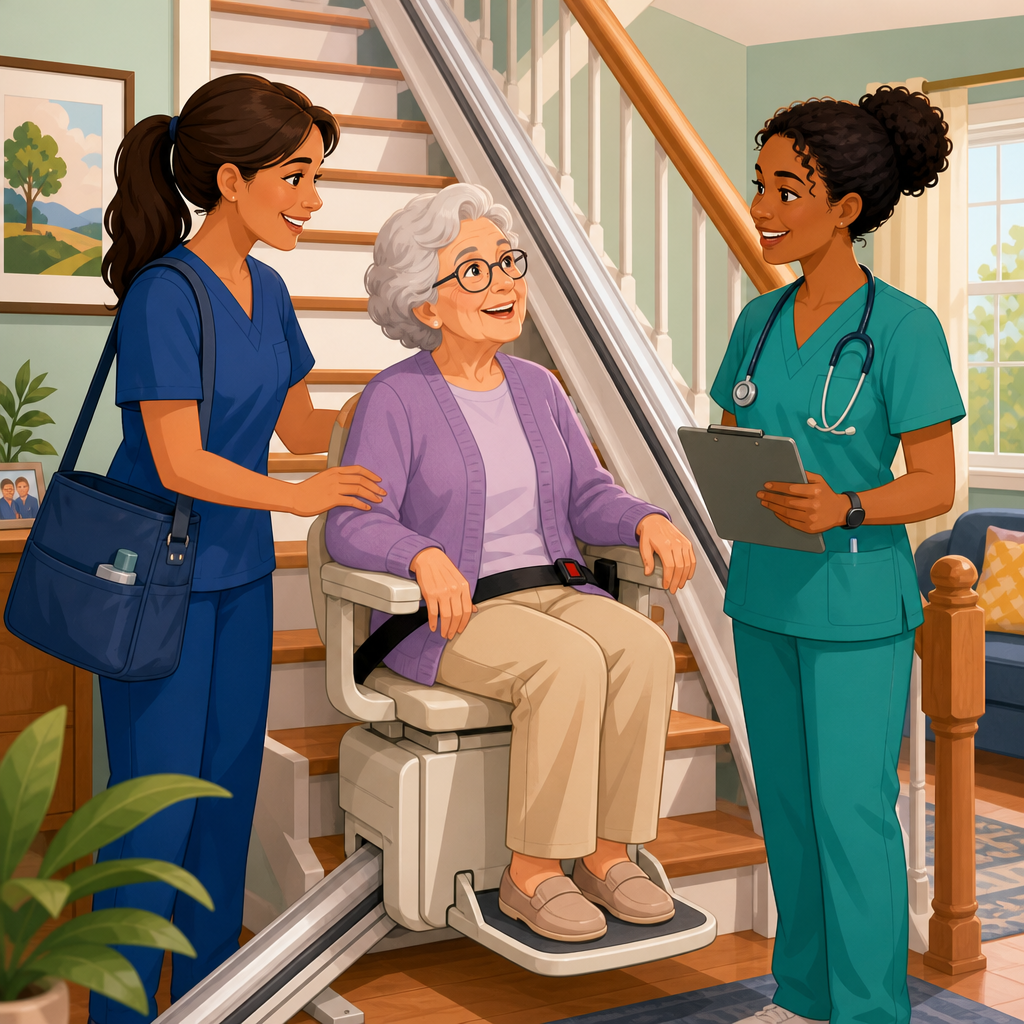
Coordinating stair lift use with home health aides and visiting nurses protects safety, preserves dignity, and keeps care routines consistent in homes where mobility changes faster than floor plans. A stair lift is a motorized chair or perch that travels along a rail attached to the staircase, while home health aides typically assist with personal care and daily tasks and visiting nurses provide intermittent clinical services such as medication management, wound care, assessments, and teaching. When these roles overlap, small missteps can create outsized risks: a footrest left down becomes a trip hazard, a transfer rushed during fatigue increases fall potential, and unclear cleaning responsibilities can undermine infection control. I have seen otherwise well-run home care arrangements struggle simply because nobody defined who parks the chair, who checks the seat belt, or when the nurse can safely assist a transfer. This topic matters because stair lifts often become the link between sleeping, bathing, eating, and receiving care on the correct level of the home. Good coordination turns the lift from a piece of equipment into a dependable part of the care plan, reducing falls, missed visits, caregiver strain, and avoidable emergency calls.
Effective coordination starts with shared language and realistic expectations. The stair lift does not replace safe transfer technique, supervision judgment, or manufacturer instructions. It works best when the patient’s mobility status, cognition, endurance, and weight capacity are matched to the device and to the skill level of the people helping. In practice, that means documenting whether the person can sit independently, whether they lean to one side after a stroke, whether oxygen tubing must travel with them, and whether edema, pain, or dizziness is worse at certain times of day. It also means recognizing the limits of home health aides and nurses under agency policy and state scope-of-practice rules. Some aides may cue and guard but not lift; some nurses can assess transfer safety but still need a second person for hands-on assistance. The central goal is simple: every caregiver should know exactly how stair lift use fits into the daily care routine, what to do before, during, and after each ride, and when to stop and escalate concerns.
Build a stair lift coordination plan before the first assisted ride
The safest home setups begin with a written coordination plan created before aides and nurses start using the stair lift with the patient. I recommend a brief one-page protocol kept near the care binder and duplicated digitally if the agency uses an app such as WellSky, AxisCare, or AlayaCare. The plan should list the stair lift brand and model, weight capacity, emergency stop location, battery status indicator, call/send controls, swivel-seat operation, folding armrests, footrest function, and any site-specific hazards such as narrow landings or throw rugs at the top step. Include the manufacturer manual location and the dealer service number. A clear plan prevents improvisation, especially when relief staff or weekend clinicians enter the home for the first time.
The plan also needs patient-specific criteria. Document whether the individual transfers with a gait belt, walker, cane, transfer board, or contact guard assist. Note orthostatic hypotension, Parkinsonian freezing, post-surgical precautions, oxygen use, catheter tubing, visual neglect, or confusion that may affect boarding and disembarking. If the person has a pacemaker, anticoagulation, pressure injuries, or recent fractures, that information changes how quickly and how firmly caregivers should move. In one case I managed, a nurse noticed that a patient became lightheaded after morning antihypertensives; shifting upstairs bathing to later in the day prevented repeated near-falls at the top landing. That is the kind of practical detail a coordination plan should capture.
Finally, assign responsibilities. Decide who performs the pre-use check, who accompanies the patient, who sends the chair back, and who reports malfunctions. If the aide arrives before the nurse, the aide may bring the patient downstairs and park the chair; the nurse then avoids delaying wound care while waiting for access. If multiple relatives also use the stairs, establish parking rules so the lift does not block the hallway or create confusion. Homes run better when responsibilities are explicit rather than assumed.
Train every caregiver on the same workflow and safety standard
Training must be standardized, not handed down informally. Dealers usually provide installation orientation, but that is rarely enough for a rotating care team. Ask the installer or manufacturer representative for hands-on instruction for family and professional caregivers, then reinforce it with return demonstrations. Every aide and nurse should show that they can position the seat, lock the swivel if required, secure the belt, fold components, use the remote, and respond to a stop triggered by an obstruction sensor. If the home care agency has a skills checklist, add stair lift assistance as a documented competency instead of treating it as common sense equipment.
Consistency matters because stair lifts vary. Some models, such as Bruno Elite, Harmar Pinnacle, Stannah, and Handicare units, may differ in seat height, armrest controls, overspeed governors, and charging points. Outdoor lifts introduce weather covers and moisture concerns; curved lifts often have slower travel and more complex parking positions. I have seen experienced caregivers make errors simply because the previous client’s lift operated differently. A standardized workflow corrects that problem: approach, inspect, position, transfer, belt, feet, hands, travel, swivel, stand, clear, fold, park, document. When repeated the same way by everyone, the sequence becomes reliable.
Training should also define when not to use the lift. If the patient cannot maintain sitting posture, becomes acutely confused, reports chest pain, or shows new unilateral weakness, stair transport should stop until a clinician assesses the change. Likewise, if the chair jerks, alarms unexpectedly, fails to charge, or stops short of the landing, caregivers should not “make it work” by force. Unsafe workarounds cause injuries. A simple rule helps: if the lift or the rider is not stable, the trip is canceled and the issue is escalated immediately.
Match stair lift use to the care schedule and the home layout
Most coordination failures are scheduling failures in disguise. The lift should support the daily care plan, not interrupt it. Map out when the patient needs to reach each floor for toileting, bathing, meals, dressing, medication, therapy, and rest. Then align aide shifts and nursing visits around those transitions. For example, if the only full bathroom is upstairs and the patient tires easily after breakfast, place the aide’s hygiene routine earlier and schedule the nurse’s wound care after the patient is downstairs and settled. That avoids repeated rides and conserves energy.
Home layout determines whether one or two caregivers are needed. A narrow top landing may leave too little room for a walker turn unless furniture is moved. A laundry basket near the rail can interfere with transfers. On paper, a patient may be “standby assist”; in reality, the geometry of the home may require hands-on guarding. I always advise walking the route with all usual equipment present: walker, oxygen concentrator tubing, incontinence supplies, wound kit, even meal trays. The point is to eliminate surprises.
| Coordination task | What aides typically handle | What visiting nurses typically handle | Shared standard |
|---|---|---|---|
| Pre-use check | Seat position, footrest, belt, pathway clear | Confirm safe timing based on symptoms and medications | Do not use if any defect or acute change is present |
| Transfer assistance | Cueing, guarding, gait belt per care plan | Assess tolerance, pain, dizziness, new weakness | Use agreed transfer method every time |
| After-ride tasks | Fold seat and footrest, park chair, remove clutter | Document response and update plan if needed | Leave landing safe for next user |
| Problem reporting | Notify family and agency supervisor | Escalate clinical concerns and equipment risks | Record issue the same day |
When the plan is tied to the rhythm of the day, the lift becomes predictable. Predictability lowers anxiety for patients with dementia, reduces rushed transfers for aides, and gives nurses a stable environment for assessments. It also limits unnecessary stair lift cycles, which is good for battery life and long-term maintenance.
Use clinical judgment for transfers, medications, and changing conditions
Safe stair lift coordination depends on recognizing that the patient’s condition can change between visits. Aides often notice day-to-day patterns first: increased fatigue, more help needed to stand, or new hesitation at the top step. Nurses then connect those observations to causes such as dehydration, infection, medication side effects, neuropathy, edema, or pain progression. The stair lift plan should create a feedback loop between these perspectives. Aides report functional changes; nurses evaluate whether the care plan and transport timing still fit the patient.
Medication timing deserves special attention. Sedatives, opioids, insulin, diuretics, antihypertensives, and some Parkinson’s medications can alter balance, urgency, alertness, and motor control. If a patient needs to use the lift soon after a medication that causes dizziness, coordination may mean delaying the trip, adding standby supervision, or moving care to a different floor temporarily. After surgery or hospitalization, reassess immediately. Patients often return home weaker than before admission, and the old stair lift routine may no longer be appropriate without two-person assistance or therapy input.
Clinical judgment also includes skin protection and pain control. Patients with pressure injuries, severe arthritis, or recent joint replacement may tolerate the chair poorly unless transfers are slow and seated posture is corrected. Nurses can recommend cushions only if they do not interfere with manufacturer safety requirements. If swelling changes leg position, the footrest may need extra attention to avoid dragging. These details sound small, but they determine whether stair lift use remains therapeutic support or becomes a painful obstacle.
Document, communicate, and maintain the equipment without gaps
Documentation is not bureaucracy here; it is risk control. Every agency and family should track three categories: patient response, caregiver assistance level, and equipment status. A concise note can state that the patient used the stair lift twice, required contact guard assist to sit and stand, tolerated travel without dizziness, and that the battery indicator remained normal. When there is a problem, describe it precisely: “chair stopped midway and resumed after armrest toggle reset” is far more useful than “lift acted up.” Specific documentation helps service technicians, clinicians, and family decision-makers respond quickly.
Communication should follow one channel that everyone honors. That can be a home logbook, a secure agency app, or both, but avoid scattering information across sticky notes, text messages, and memory. Include maintenance dates, battery replacement history, service visits, and any manufacturer advisories. Stair lifts commonly use rechargeable batteries that continue working during power outages, but batteries weaken over time, often after several years depending on usage and charging habits. If the chair is repeatedly left away from the charging point, failures become more likely. This is an operational issue, not just a mechanical one, and it should be corrected through team habits.
Cleaning and infection control also need assignment. The seat, armrests, and controls should be wiped according to manufacturer guidance, especially when multiple caregivers assist with toileting or wound care. Avoid soaking electronics or using harsh chemicals that damage upholstery and switches. For homes with immunocompromised patients, tighter surface hygiene may be warranted, but safety labels and moving parts must remain visible and functional. Well-maintained equipment signals professionalism and supports confidence in the entire home care setup.
Know when caregiver support resources should expand beyond the current plan
This page serves as a hub because stair lift coordination often reveals wider support needs. If visits are repeatedly delayed by transport time, consider a therapy reassessment, a home safety evaluation, or relocation of essential activities to one floor. If family members disagree about how the lift should be used, bring in the agency supervisor or a certified aging-in-place specialist to mediate practical solutions. If the patient is declining cognitively, ask whether additional supervision, respite coverage, or hospice consultation is appropriate. Good caregiver support resources are not abstract; they are the extra layers that keep a workable arrangement from collapsing under stress.
Several outside resources can help. Occupational therapists assess transfers, reach ranges, and bathroom setup. Physical therapists address strength, gait, and endurance that affect boarding the lift. Area Agencies on Aging may connect families with respite, transportation, benefits counseling, and caregiver training. Equipment dealers provide maintenance schedules and troubleshooting guidance, while organizations such as the National Council on Aging offer planning resources for older adults and caregivers. In complex cases, a geriatric care manager can coordinate among family, clinicians, and agencies. The right support depends on the bottleneck you are trying to solve.
The benefit of a coordinated approach is straightforward: safer movement between floors, less caregiver confusion, and more reliable in-home care. Start with a written stair lift protocol, train every aide and nurse to the same standard, align trips with the care schedule, and document both patient tolerance and equipment status. Reassess whenever health, medication, or home layout changes. If current routines are strained, expand support early rather than waiting for a fall, a missed treatment, or caregiver burnout to force the issue. Review your home care plan this week, update stair lift procedures, and make sure every person entering the home can follow them with confidence.
Frequently Asked Questions
How should families introduce stair lift procedures to home health aides and visiting nurses?
The best approach is to treat stair lift use as part of the home’s formal care routine rather than as an informal household detail. Start with a clear orientation the first day a home health aide or visiting nurse begins services. Show where the lift is parked, how the seat, armrests, footrest, and controls work, and how to safely fold or reposition the unit if others need to use the stairs. Explain who is expected to ride the lift, who may assist, and what the household’s expectations are for transfers on and off the chair. It is also helpful to identify whether the client uses a cane, walker, gait belt, or wheelchair before or after the ride, since those details affect how aides and nurses cue movement and position themselves during assistance.
Families should also share the stair lift manufacturer’s instructions, any safety notices, and any home-specific guidance from the installer or dealer. If the client has cognitive impairment, poor balance, weakness, vision changes, or anxiety about riding the lift, that should be explained directly so caregivers know what kind of supervision is needed. Many families find it useful to keep a simple written protocol near the staircase that covers essentials such as locking wheelchair brakes before transfers, making sure feet are fully on the footrest, fastening the seat belt, and confirming the path is clear before moving. This kind of consistency reduces confusion between multiple caregivers, protects the client’s dignity, and helps nurses and aides provide safer, more confident support.
Who should be allowed to operate the stair lift during home care visits?
In most homes, the stair lift should be operated only by the person receiving care if they can do so safely, or by caregivers who have been properly oriented to the equipment and the individual’s transfer needs. Whether a home health aide or visiting nurse should physically operate the lift depends on the client’s abilities, the caregiver’s agency policies, and the practical realities of the home visit. Some clients can independently sit, buckle the belt, and use the control toggle without hands-on help, while others need close supervision or direct transfer assistance. The key is not simply whether someone knows which button to press, but whether they understand the entire transfer process before, during, and after the ride.
Families should avoid assuming that every visiting clinician will automatically provide lift assistance. Visiting nurses often focus on skilled clinical tasks such as medication setup, wound care, assessment, and teaching, and their role may be intermittent rather than extended. Home health aides are usually more involved in day-to-day mobility support and personal care, but they also work within training and agency guidelines. The safest practice is to confirm in advance what each caregiver is permitted and comfortable doing. If there is any uncertainty, ask the agency supervisor for clarification and request that stair lift assistance be specifically included in the care plan when appropriate. Clear role definition helps prevent rushed decisions, unsafe transfers, and misunderstandings during busy visits.
What safety checks should be done before and during each stair lift ride?
Every stair lift trip should begin with a quick but deliberate safety check. First, make sure the staircase and landing areas are free of obstacles such as laundry baskets, oxygen tubing, pet toys, shoes, walkers, or folded rugs. Confirm that the seat is fully lowered into riding position, the footrest is down, and the armrests are secure if the model uses them for stability. The user should be seated all the way back in the chair or positioned correctly on a perch-style model, with their feet placed safely on the footrest and clothing, blankets, or medical tubing kept away from moving parts. If the lift has a seat belt, it should be fastened every time, not just on “longer” rides or when someone seems unsteady.
During the ride, the person assisting should stay attentive rather than multitasking. Watch for signs of fear, dizziness, pain, leaning, or attempts to shift position while the lift is moving. If the user carries medical equipment such as a catheter bag, portable oxygen, or a drain, the caregiver should make sure lines and devices are secure and will not drag on the stairs or catch on the rail. At the top or bottom landing, the transfer off the lift deserves just as much attention as the ride itself. The caregiver should ensure the chair is in the correct stop position, help the user pause before standing if they are prone to lightheadedness, and verify that any walker or cane is placed within safe reach before the next step. These repeated checks may feel routine, but they are exactly what prevent falls and near-misses.
How can families coordinate stair lift use when multiple caregivers and nurses visit on different schedules?
Consistency becomes much easier when the household creates one shared system that every caregiver can follow. A written care plan should spell out when the client typically uses the stair lift, how much assistance is needed, what transfer method works best, and any precautions related to fatigue, pain, weakness, incontinence, confusion, or recent medical changes. This information should be available in a central location and updated whenever the client’s mobility changes. If one aide assists in the morning and a visiting nurse comes later in the day, both should be able to quickly understand the current routine without relying on secondhand verbal reports that may be incomplete or outdated.
A communication log is especially helpful. Caregivers can note whether the lift was used successfully, whether the client appeared more short of breath or less steady than usual, whether a battery warning appeared, or whether the person needed more help than on previous days. Small changes matter. A client who managed the transfer independently last week may now need standby assistance after an illness, medication adjustment, or hospitalization. Coordinating with the home care agency and clinical team ensures those changes are recognized early and reflected in the plan. Families should also identify backup procedures for days when the lift is temporarily unavailable due to charging problems, maintenance, or power-related issues. Good coordination keeps care routines predictable and reduces stress for everyone involved.
When should a family reassess whether the current stair lift routine is still appropriate for the person receiving care?
A stair lift routine should be reassessed anytime the person’s mobility, cognition, endurance, or medical condition changes. Warning signs include increased difficulty standing up or sitting down, leaning dangerously during rides, forgetting how to use the controls, new fear of the lift, frequent near-falls during transfers, or needing substantially more physical help than before. Clinical changes such as stroke symptoms, worsening arthritis, progressing dementia, sedation from new medications, shortness of breath, or recent surgery can all affect whether the current setup remains safe. Even changes that seem minor, such as swelling in the legs or reduced grip strength, can make getting on and off the chair more difficult than families realize.
Reassessment should also happen if caregivers begin improvising, such as manually repositioning the client in ways they were not trained to do, skipping seat belts to “save time,” or avoiding use of the lift because the process feels too difficult. Those are signs that the routine is no longer matching the client’s needs. In that situation, families should involve the stair lift provider, the home care agency, and the client’s healthcare team. A nurse may identify new medical concerns, while a therapist or mobility specialist may recommend changes in transfer technique, equipment placement, or assistive devices. In some cases, the solution is better training; in others, it may mean adjusting the care schedule, adding more hands-on support, or exploring a different mobility plan within the home. Reassessment is not a sign of failure; it is a practical step that helps preserve safety, dignity, and continuity of care.