


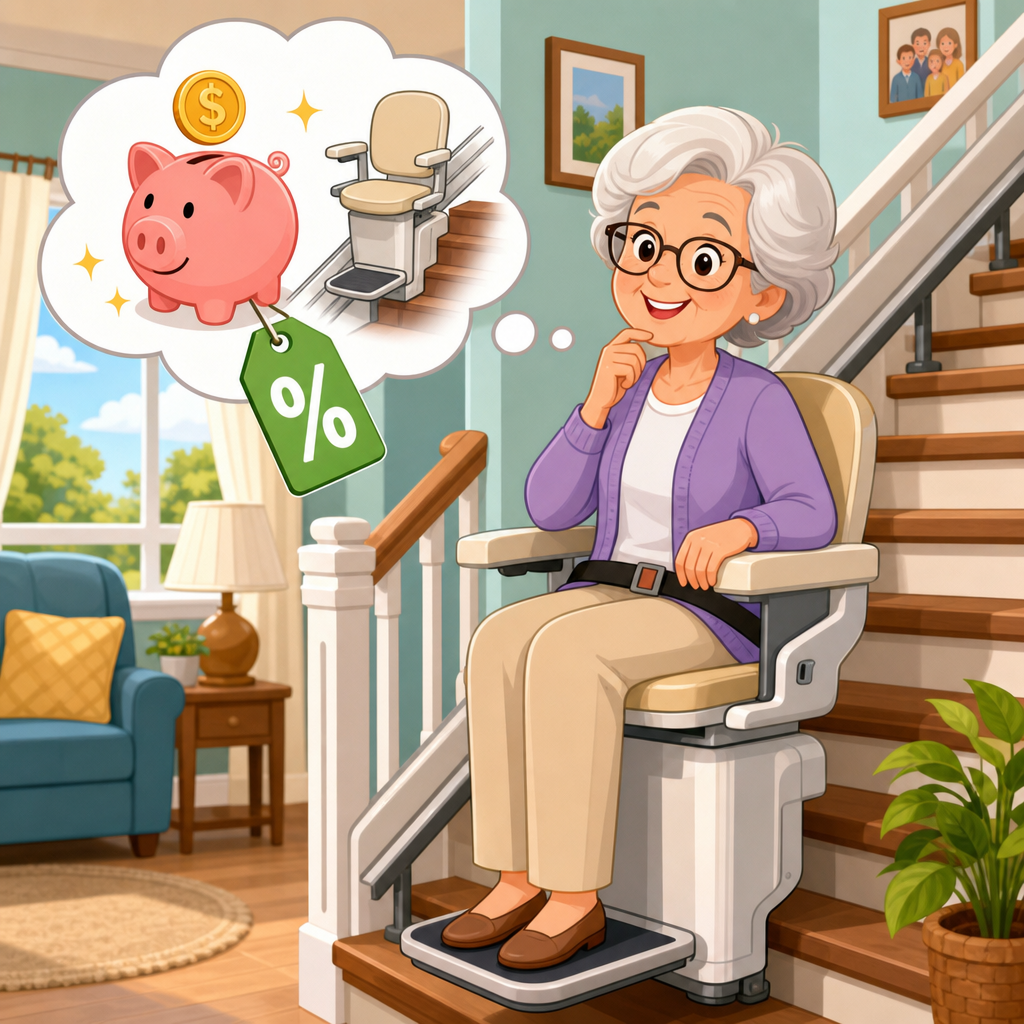
Finding discounted stair lifts for seniors starts with understanding how these devices are priced, where the biggest savings usually appear, and which compromises are safe to make. A stair lift is a motorized chair or perch mounted to a rail that carries a user up and down stairs. For older adults who want to stay in a multilevel home, it can be the difference between independent living and an urgent move. I have helped families compare models, request quotes, review dealer contracts, and spot hidden costs, and the same pattern shows up every time: the best deal is rarely the lowest sticker price. The right budget-friendly stair lift is the one that matches the staircase, fits the user safely, includes dependable service, and avoids expensive surprises after installation.
This matters because stair lifts are a major purchase, yet they are often bought during a stressful health transition after a fall, surgery, or new mobility diagnosis. New straight stair lifts commonly cost between $2,000 and $5,000 installed, while curved models often range from $10,000 to $20,000 or more because they require custom rails. Those numbers vary by dealer, brand, seat options, weight capacity, and home layout, but they explain why shoppers search for discounted stair lifts for seniors. The market also includes used units, rental programs, financing plans, veteran assistance, nonprofit help, and local dealers willing to negotiate. Knowing how each option works can save thousands without sacrificing reliability.
Budget-friendly options do not all mean the same thing. A discounted stair lift may be a factory promotion on a new unit, a refurbished model with a warranty, a short-term rental after surgery, or a grant-supported purchase through a community program. Savings can come from choosing a standard seat instead of power features, selecting a straight rail when possible, or buying from a dealer that services its own installations. This hub article explains how to compare those paths, what questions to ask, and how to avoid the common mistakes that turn a bargain into a costly problem. If you want a practical roadmap for buying a stair lift on a budget, this is where to begin.
Know what drives stair lift prices before you shop
The fastest way to find a real discount is to learn what makes one stair lift cost much more than another. The staircase shape is the biggest factor. Straight stair lifts use standardized rails and are usually the most affordable. Curved stair lifts are built around turns, landings, and intermediate bends, so the rail is custom manufactured. That custom fabrication is why curved systems are dramatically more expensive and why used curved rails rarely transfer neatly from one home to another. If a seller offers a suspiciously cheap curved unit, assume you still may need a new rail.
User requirements also affect price. Heavy-duty models with capacities around 350 to 600 pounds cost more than standard lifts rated near 300 pounds. Powered swivel seats, folding footrests, and power hinges increase convenience, especially where a rail could block a doorway, but every motorized add-on raises the quote. Upholstery, seat width, track overruns, and outdoor weatherproofing do the same. In my experience, many families can save meaningfully by choosing only features that solve a real mobility problem instead of adding every upgrade shown in a brochure.
Installation and service matter as much as equipment cost. A low online price can become a bad deal if the installer is outsourced, travel charges are high, or local repair support is weak. Good dealers include an in-home assessment, code-aware installation, user training, and a clear labor warranty. Ask whether batteries are included, how quickly service calls are handled, and whether annual maintenance is recommended. A discounted stair lift for seniors should still come from a company that can answer the phone when the unit stops midway up the stairs.
Compare the main budget-friendly options
Most shoppers should compare four routes: new promotional units, refurbished stair lifts, rentals, and financial assistance. New discounted units are best for long-term use when the staircase is straight and the dealer is running a seasonal sale. Refurbished models can be excellent values if they are reconditioned by an established dealer, fitted with fresh batteries, tested under load, and backed by a written warranty. Rentals are often smart for temporary recovery periods, especially after knee replacement or a stroke, but monthly fees can overtake a purchase price if used for too long. Assistance programs reduce out-of-pocket costs, though eligibility and processing times vary.
| Option | Best for | Typical savings | Main limitation |
|---|---|---|---|
| New on sale | Long-term use on straight stairs | Moderate dealer or manufacturer discounts | Still higher upfront cost than used |
| Refurbished | Permanent need with tighter budget | Often 20% to 40% below new | Availability depends on staircase fit and local stock |
| Rental | Short-term recovery or hospice situations | Lower initial payment | Can cost more over time |
| Grant or aid program | Income-qualified buyers or veterans | Potentially substantial cost reduction | Applications may be slow or restrictive |
A practical example helps. If a senior needs a straight stair lift indefinitely and has a fixed income, a refurbished Bruno, Harmar, or Stannah unit sold by a local dealer with a one-year warranty is often the strongest value. If the need is expected to last only three months after surgery, a rental may be cheaper even with installation fees. If the staircase is curved, ask about financing and aid first, because used inventory is harder to match and custom rails limit resale value. The correct budget choice depends on duration of need, staircase geometry, and how much service support the household requires.
Where to find discounted stair lifts for seniors
The most reliable place to start is with local authorized dealers for recognized brands such as Bruno, Harmar, Access BDD, and Stannah. Local dealers often have showroom models, canceled orders, trade-ins, or refurbished stock that never appears on national comparison sites. They can also inspect the staircase before quoting, which prevents unrealistic pricing. I recommend getting at least three quotes when possible. Ask each dealer to separate equipment, installation, service coverage, and optional features so the comparison is clean.
Manufacturer websites are useful for locating certified dealers and current promotions. Many brands run periodic rebates, especially during home accessibility campaigns or end-of-quarter sales periods. Medical equipment providers, aging-in-place specialists, and home access contractors also know which dealers maintain used inventory. Occupational therapists and hospital discharge planners can sometimes point families toward reputable local companies because they hear feedback from patients after installation.
Online marketplaces, estate sales, and classified listings can advertise very low prices, but they carry more risk. A used stair lift sold privately may be missing parts, unsupported by local technicians, or incompatible with your staircase. Straight lifts are more transferable than curved ones, yet even a straight rail must match stair length and landing conditions. If you consider a private-sale unit, confirm the model number, age, battery type, parts availability, installation requirements, and whether any dealer in your area will service it. In many cases, the safest “discount” is buying refurbished from a dealer rather than buying used from a stranger.
How to evaluate used and refurbished stair lifts safely
Used stair lifts can save money, but only if they are inspected and restored properly. Refurbished should mean more than wiped down and reboxed. A competent dealer should examine the motor, gearbox, carriage, charging system, safety sensors, seat belt, swivel mechanism, and remote controls. Batteries should be tested and often replaced, because weak batteries are a common cause of stoppages. The rail should be checked for wear and mounting hardware should be complete. Ask for the refurbishment checklist in writing.
Warranty terms are the clearest sign of quality. A dealer that trusts its refurbishment process will usually offer coverage on major components and labor for a defined period. Clarify whether the warranty is full or limited, whether batteries are included, and how service calls are billed after the warranty expires. Also ask if the lift meets current manufacturer recommendations for the user’s weight and staircase angle. Safety edges and obstruction sensors must work correctly, and the seat should lock firmly in the travel position and at the landing.
Watch for red flags. If the seller cannot identify the brand, cannot explain who will install it, or avoids discussing parts availability, walk away. Very old models may be impossible to repair because boards, remotes, or charger components are no longer manufactured. A bargain that strands a senior upstairs is not a bargain. For this reason, I usually advise families to prioritize service network strength over the absolute lowest purchase price.
Discounts beyond price cuts: aid programs, insurance realities, and negotiation
Many buyers assume Medicare will pay for a stair lift, but Original Medicare generally does not cover stair lifts because they are considered home modifications rather than durable medical equipment in the usual reimbursement sense. Some Medicare Advantage plans may offer supplemental benefits tied to home safety, but coverage is inconsistent and plan-specific. Medicaid waiver programs in some states may help with home accessibility if the modification supports community-based living. Veterans may qualify for assistance through VA programs such as Home Improvements and Structural Alterations when medically justified. Area Agencies on Aging, nonprofit groups, and state assistive technology programs can also provide grants, loans, or device reuse options.
Negotiation is another underused source of savings. Dealers have more flexibility than many shoppers realize, especially on straight stair lifts, discontinued upholstery colors, or bundled service plans. Ask whether there is a cash discount, seasonal promotion, open-box unit, or price match. Request that optional features be removed one by one to see their exact cost impact. If the quote includes a power swivel or power footrest, ask whether those upgrades are medically necessary or simply convenient. The goal is not to strip away useful safety features, but to align the product with actual needs.
Financing can also make a stair lift affordable, though it should be approached carefully. Zero-interest dealer promotions are preferable to high-rate medical credit. Review origination fees, late-payment penalties, and whether the agreement includes service. Some families pair a smaller grant with dealer financing to reduce the loan amount. If cash flow is the problem rather than total cost, that combination can make a higher-quality lift accessible without forcing a risky used purchase.
How this hub helps you choose the right budget path
Because this page is the hub for budget-friendly options, use it as a starting map for deeper buying decisions. If you are comparing manufacturers, your next step is a brand-by-brand review of reliability, warranty support, and dealer networks. If you are deciding between new and refurbished, focus on inspection standards, battery replacement, and service response times. If your need is temporary, move next to rental-specific guidance that breaks down monthly fees, removal policies, and minimum term clauses. And if cost remains the main obstacle, prioritize resources on grants, veteran benefits, state waiver programs, and local nonprofit assistance.
In practice, the best buying sequence is simple. First, confirm whether the stairs are straight or curved and whether the need is temporary or permanent. Second, obtain multiple local quotes from reputable dealers. Third, compare new sale pricing against refurbished availability and rental math. Fourth, check financial assistance before signing anything. Fifth, review warranty, service territory, and installation details in writing. Families who follow that order usually avoid overspending because they compare the right categories instead of reacting to the first urgent quote.
The central lesson is that discounted stair lifts for seniors are available, but the strongest savings come from informed comparison, not impulse buying. A straight stair lift with a trusted local service team, appropriate weight capacity, and a written warranty often beats a rock-bottom online listing. Curved stair lifts require more caution because custom rails change the economics. Used and refurbished units can be excellent, rentals can be ideal for short-term recovery, and aid programs can close major affordability gaps. Start with a clear assessment of the staircase and the user’s needs, gather competitive quotes, and ask direct questions about service, warranty, and total installed cost. If you are building your shortlist now, use this hub to guide your next step and compare each budget-friendly option before you commit.
Frequently Asked Questions
What is the best way to find a discounted stair lift for seniors without sacrificing safety?
The best approach is to shop in layers instead of focusing only on the lowest advertised price. Start by identifying the exact type of stair lift needed: straight stair lifts are usually the most affordable, while curved stair lifts cost more because the rail is custom made for the staircase. Once you know the stair configuration, request quotes from multiple local dealers and ask each one to break down the total cost into equipment, rail, installation, warranty, service, and any electrical work. This makes it much easier to compare real value rather than headline pricing.
The biggest savings often come from choosing a basic model with essential safety features instead of paying for convenience upgrades that may not be necessary. Seniors should still look for core protections such as a seat belt, obstruction sensors, a swivel seat for safer entry and exit, battery backup, and a weight capacity that fits the user comfortably. It is usually safe to skip cosmetic upgrades, premium upholstery, or advanced remote features if the goal is affordability. It is not safe to cut corners on installation quality, rail fit, or ongoing service support.
Ask dealers whether they offer seasonal promotions, floor models, open-box units, rental programs, reconditioned lifts, or manufacturer rebates. Many families also save money by asking if a stair lift can be removed and repurchased from a previous customer, although this option is generally more practical for straight staircases than curved ones. A discounted stair lift is a smart buy only if it is properly matched to the home and the user. The right deal is not simply the cheapest one; it is the one that delivers dependable operation, safe installation, and a fair warranty at the lowest total cost.
Are used or reconditioned stair lifts a good option for seniors trying to save money?
Used and reconditioned stair lifts can be an excellent way to reduce costs, but they need to be evaluated carefully. In many cases, a professionally reconditioned straight stair lift from a reputable dealer offers meaningful savings compared with a new model. Dealers often inspect these units, replace worn parts, test the motor and battery system, and reinstall the lift on a rail sized for the new home. For seniors with a standard straight staircase, this can be one of the most practical discount options available.
Curved stair lifts are different. Because curved rails are custom built to fit a specific staircase, a used curved lift is harder to reuse without major modification or a new rail. Even if the chair itself can be repurposed, the custom rail often eliminates much of the expected savings. That is why families shopping for a lower-cost solution should be realistic about where used equipment helps most. Straight lifts usually present better resale and reuse opportunities than curved models.
Before buying a used or reconditioned unit, ask who refurbished it, what parts were replaced, whether the lift meets current safety standards, and what warranty is included. Also confirm that installation will be handled by trained technicians rather than by a handyman or general contractor without stair lift experience. A low purchase price can become expensive if the unit needs frequent repairs or if replacement parts are hard to obtain. The safest route is to work with an established dealer who services the brands they sell and can provide a written service agreement. In other words, used can be a smart discount strategy, but only when the unit has been properly inspected, professionally installed, and backed by support after the sale.
Where do most seniors and families find the biggest stair lift discounts?
The largest discounts usually come from sources that reduce equipment cost, installation cost, or both. Local mobility equipment dealers are often the first place to look because they may offer manufacturer promotions, end-of-season pricing, showroom models, rental returns, or reconditioned inventory. Some dealers also lower prices when installation is straightforward and does not require unusual rail modifications. Asking directly about discontinued models, overstock units, and package pricing can uncover savings that are not publicly advertised.
Another strong option is to explore assistance programs and indirect financial help. Depending on location and eligibility, seniors may find support through veterans benefits, Medicaid waiver programs, state assistive technology programs, nonprofit organizations, aging services agencies, or local disability resource centers. In some cases, long-term care insurance policies or home modification grants can offset part of the stair lift expense. These programs do not always appear as traditional “discounts,” but they can reduce out-of-pocket cost substantially.
Families should also compare buying versus renting. For short-term recovery after surgery or injury, a stair lift rental may be cheaper than purchasing. For long-term use, ownership often makes more financial sense, especially with a straight stair lift. Finally, do not overlook negotiation. Dealers may be willing to match competitor quotes, waive installation fees, include a longer warranty, or bundle service visits. The biggest savings often come from combining several strategies: comparing multiple quotes, asking about refurbished stock, checking benefits and grant programs, and negotiating on total package value rather than just the chair price alone.
What features should seniors prioritize when buying a discounted stair lift?
When shopping for a discounted stair lift, seniors should focus first on safety, fit, and ease of use. The most important features usually include a secure seat belt, obstruction sensors that stop the lift if something is in the way, a swivel seat that locks in place at the top landing, and battery backup so the lift still works during a power outage. These are not luxury extras; they are practical protections that help reduce the risk of falls and make daily use more dependable.
Comfort and physical fit are also essential. The seat should be easy to get into and out of, the armrests should feel stable, and the controls should be simple enough for the user to operate with confidence. Weight capacity matters more than many buyers realize. A lift should support the user comfortably, not just meet the minimum requirement on paper. If the senior has arthritis, balance issues, limited grip strength, or uses a walker, those factors should be discussed during the in-home assessment. A lower-priced unit is not a bargain if it is awkward, cramped, or difficult for the user to manage safely.
On the other hand, some add-ons may be optional depending on budget. Powered folding footrests, premium fabrics, upgraded seat styles, and decorative rail finishes can increase cost without significantly improving safety. The goal should be to choose a model with strong core performance and the right dimensions for the staircase, then avoid paying extra for features that do not address the senior’s actual mobility needs. A discounted stair lift should still feel reliable, secure, and comfortable every time it is used.
What questions should families ask before signing a stair lift contract?
Before signing anything, families should ask for a complete written quote and a clear explanation of what is included. That means confirming the price of the lift, rail, installation, warranty, service calls, maintenance, batteries, and any removal or reinstallation fees if the unit must be relocated later. It is also important to ask whether the quote is based on a true in-home assessment or just a phone estimate. Stair lift pricing can change if the staircase has tight landings, unusual dimensions, or structural details that affect installation.
Warranty and service questions are especially important when comparing discounted offers. Ask how long the warranty lasts, what parts and labor are covered, who performs repairs, and how quickly service is available if the lift stops working. A low-cost contract with weak service support can be a poor value for a senior who depends on the lift every day. Families should also ask whether the dealer stocks replacement parts locally and whether technicians are trained on that specific brand and model.
Finally, clarify cancellation terms, return policies, and what happens if the stair lift does not fit or perform as expected. For curved stair lifts, confirm whether the rail is custom and nonrefundable once manufacturing begins. For used or reconditioned equipment, ask for details about inspection, refurbishment, and prior usage. A reputable dealer should be comfortable answering detailed questions and putting key terms in writing. That level of transparency is often the clearest sign that a discounted stair lift offer is legitimate, professionally supported, and worth considering.