


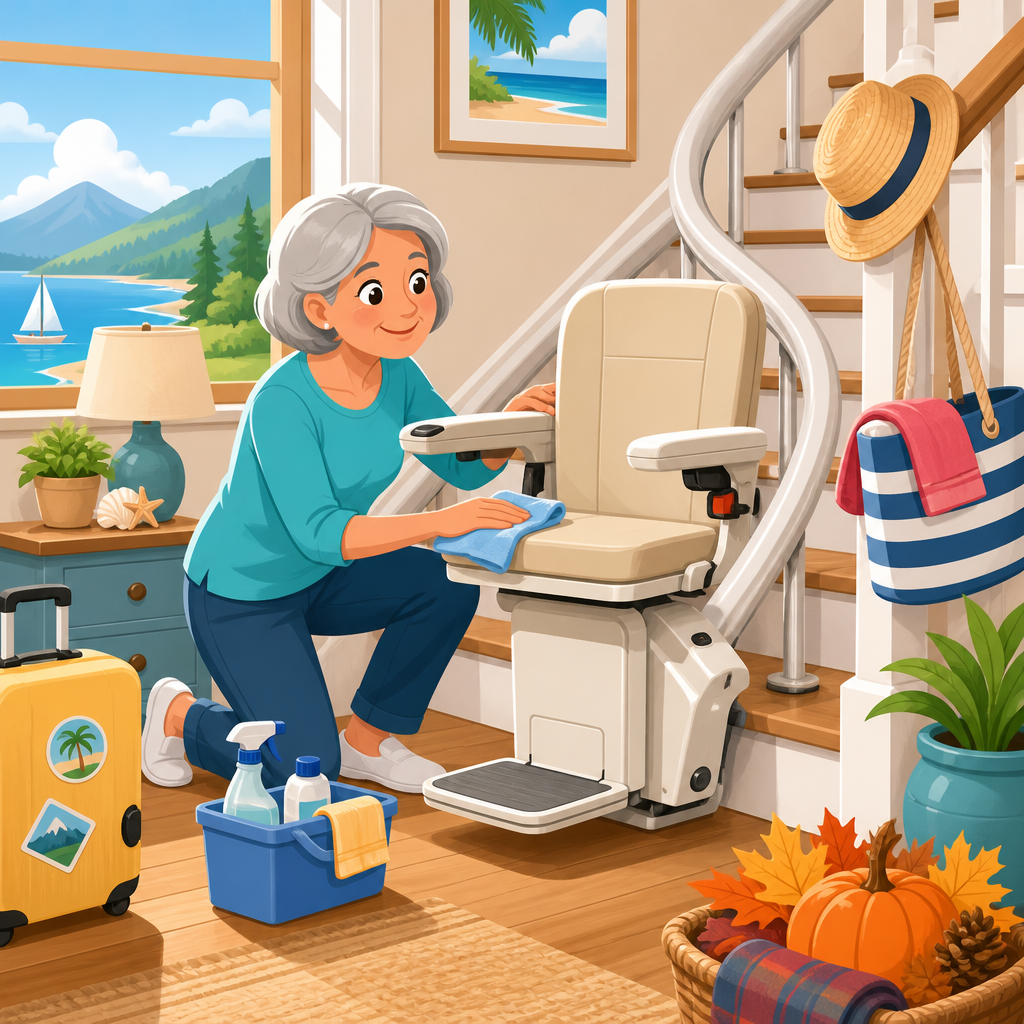
A stair lift in a vacation or seasonal home faces a different maintenance profile than one used every day, and that difference matters. Long idle periods, fluctuating temperatures, dust buildup, and infrequent inspections can shorten battery life, trigger nuisance faults, and leave the lift unreliable precisely when a guest or family member needs it most. If your property sits empty for weeks or months at a time, routine stair lift maintenance is not just about preserving equipment. It is about protecting access, safety, and peace of mind.
When I maintain stair lifts in second homes, I approach them as low-use but high-consequence systems. A low-mileage unit can still develop problems because inactivity is hard on batteries, charge contacts, lubricated parts, seat swivels, and safety edges. Seasonal properties also introduce environmental stress. Beach homes deal with salt air corrosion, mountain cabins face cold starts and condensation, and lakeside homes often accumulate humidity and airborne debris. Even a premium stair lift from brands such as Bruno, Stannah, Handicare, or Acorn will perform poorly if storage conditions and maintenance routines are ignored.
Routine maintenance tips begin with understanding the core components. Most residential stair lifts include a rail fixed to the staircase, a carriage with motor and gearbox, rechargeable batteries housed in the base, charge points at one or both ends of the rail, call-send controls, and safety sensors that stop travel when they detect obstructions. Smooth operation depends on clean power delivery, healthy batteries, unobstructed track surfaces, correctly functioning seat and footrest mechanisms, and periodic professional service. In a seasonal home, the goal is simple: keep every one of those systems stable during periods of use and inactivity.
This hub article explains how to keep a stair lift running smoothly in a vacation or seasonal home with a practical maintenance schedule, clear inspection steps, and realistic guidance about what owners can do themselves versus when to call a technician. It also points to the wider maintenance, troubleshooting, and safety issues that connect to routine care, because a well-maintained lift is easier to troubleshoot, safer for visitors, and less expensive to own over time.
Start With an Idle-Period Maintenance Strategy
The most important shift for seasonal properties is to stop thinking only in terms of wear from use. Many stair lift problems come from sitting still. Sealed lead-acid batteries, still common in residential units, self-discharge gradually and degrade faster if left partially charged. If the lift is not parked on a charging point, the batteries can drop low enough to sulphate, which permanently reduces capacity. Lithium battery systems tolerate inactivity better, but they still depend on proper charging and stable temperature conditions.
For that reason, always leave the stair lift parked at its designated charging station before you close the home for the season. Verify that the charging indicator is showing normal status according to the manufacturer manual. If your model uses a keyed power switch, follow the maker’s recommendation on whether the unit should remain powered on while charging. In many cases, the lift should stay connected so the charger can maintain the batteries. Cutting main power without understanding the charging design is a common cause of dead batteries at reopening.
Idle-period planning also means reducing environmental exposure. Close windows near the staircase, run humidity control where needed, and prevent direct sun from overheating upholstery and plastic shrouds. If the home is winterized, confirm the indoor temperature will remain within the lift manufacturer’s recommended storage and operating range. Electronics, battery chemistry, and grease viscosity are all affected by extreme temperatures. A lift that works fine in a climate-controlled primary residence may fault repeatedly in an unheated cabin.
Create a Simple Seasonal Inspection Checklist
Routine stair lift maintenance works best when it is repeatable. I recommend a short checklist at three points: before closing the home, immediately after reopening it, and monthly during occupied periods. This catches the issues that most often turn into service calls: drained batteries, dirty rails, blocked charge contacts, loose seat parts, and sensor faults caused by debris.
| Timing | What to Check | Why It Matters |
|---|---|---|
| Before leaving | Park on charge point, confirm indicator lights, clean rail, fold seat and footrest properly | Prevents battery depletion and reduces dust accumulation |
| When returning | Test call-send controls, ride full travel both directions, inspect seat swivel lock and footrest sensors | Confirms core functions before a user relies on the lift |
| Monthly in season | Wipe track, inspect charger area, listen for unusual noise, check remote batteries | Finds developing problems early and supports smooth operation |
During each inspection, ride the lift through a complete cycle if it is safe for you to do so. Listen for grinding, clicking, or hesitation. A healthy stair lift should sound consistent from top to bottom. Any change in motor pitch, intermittent beeping, or jerky starts often signals battery weakness, contaminated charge strips, rail obstruction, or a seat not fully locked into travel position.
Do not skip the user controls. Test the armrest toggle or rocker switch, the call-send stations, the seat swivel at the landing, and the folding footrest. In seasonal homes, these are often handled by different guests with different levels of care, so misuse is more common than on an owner-occupied daily-use unit. Small alignment issues can go unnoticed until the lift refuses to move.
Keep the Rail, Charge Points, and Surrounding Area Clean
Cleanliness has an outsized effect on stair lift reliability. Dust, pet hair, insect debris, and beach grit are frequent causes of rough travel and charging problems. The rail should be wiped with a dry or lightly damp soft cloth, following the manufacturer instructions. Avoid soaking the track, using abrasive pads, or applying household degreasers unless the manual specifically allows them. Some rails are designed to run dry, while others have a factory-applied lubrication strategy that should not be disturbed.
The charging contacts deserve special attention. Most residential stair lifts charge through metal strips or contact points at the upper or lower parking position. If those contacts oxidize or collect grime, the lift may park but not recharge properly. I have seen homes where a unit seemed functional during one weekend visit, then failed on the next because the batteries never actually recovered between trips. Cleaning contacts with the approved method from the manufacturer, often a dry cloth or very light contact-safe cleaning, prevents this slow failure pattern.
Also clean the staircase itself. Doormats that shed fibers, nearby litter boxes, and open windows that blow in dust can all affect the lift. Check for objects under the footrest and around the lower overrun if the rail extends beyond the staircase. Safety edges on the footrest and carriage will stop travel when they touch an obstacle, but those stops are protective, not corrective. If they trigger repeatedly, something in the environment needs attention.
Protect Battery Health During Low-Use Periods
Battery care is the single most important routine maintenance topic for seasonal-home stair lifts. Most service calls after a long vacancy trace back to batteries that were old, partially discharged, or not maintained on charge. Residential stair lifts typically use one or two 12-volt rechargeable batteries inside the carriage. Under normal conditions, many batteries last around three to five years, though actual life varies with temperature, usage pattern, charger performance, and brand.
What keeps batteries healthy is regular charging, not frequent riding. Always park the lift where it charges. If your model has charge points at both ends, make sure users know either designated park position is acceptable. If it charges at only one end, label that location clearly for guests and caregivers. In second homes, confusion about parking is common because different people use the property intermittently.
Watch for signs of battery decline: slower travel, audible low-battery alarms, the lift stopping midway under load, dim indicators, or operation that works for one trip but not repeated trips. Battery replacement is routine service, but it should use the correct chemistry and specification listed by the manufacturer. Installing generic batteries with the wrong terminal configuration or capacity can create charging issues and shorten lifespan.
If the property will be vacant for an extended period and utility power may be unreliable, talk with the manufacturer or dealer about the best storage procedure. In some cases, a technician can advise on safe shutdown or periodic caretaker checks. The wrong approach can leave the unit deeply discharged, which is harder on batteries than normal daily use.
Inspect Safety Features and Moving Parts Regularly
A stair lift running smoothly is not only one that moves. It is one whose safety systems work exactly as intended. Every seasonal inspection should include the seat belt, seat swivel lock, armrests, footrest hinges, obstruction sensors, final limit stops, and any key switch or isolation switch. The seat should lock firmly in travel position. At the top landing, the swivel should engage positively so a rider can exit away from the stairs. If that lock feels loose or inconsistent, schedule service before continued use.
Footrest and carriage safety edges should stop the lift when they contact an object. Test them carefully according to the manual, using a safe method recommended by the manufacturer rather than improvising. Many brands also have overspeed governors, transmission brakes, and diagnostic fault codes, but these are not owner-service items. Their presence is one reason regular professional maintenance matters even when the unit appears to work normally.
Pay attention to hardware and upholstery condition as well. Loose armrest fasteners, cracked seat pads, and sticky swivel levers affect safe transfers. In rental-style vacation homes, transfer safety is often the biggest real-world risk because occasional users are unfamiliar with the equipment. A stair lift can be mechanically sound yet still unsafe if the seat does not rotate and lock properly at the landing.
Know What Owners Can Do and What Technicians Should Handle
Owners should absolutely handle routine cleaning, visual inspections, battery-parking habits, control testing, and basic checklist tracking. Those tasks prevent many avoidable failures. However, internal mechanical adjustments, gearbox work, board diagnostics, brake testing, battery replacement on some models, and rail alignment checks are technician jobs. Residential stair lifts are safety devices, and unauthorized repair can create liability as well as malfunction.
As a rule, call a professional if the lift beeps persistently, shows fault codes, hesitates under load, stops away from charge points, or has any issue with the seat swivel interlock or final landing stop. The same applies after a power surge, water intrusion, pest infestation, or physical impact to the rail. Annual service is a sensible minimum for a seasonal home, and twice-yearly service is often justified in harsh environments such as coastal properties or homes with heavy guest turnover.
Good service visits should include battery testing under load, inspection of charge voltage, sensor checks, fastener review, carriage and rail inspection, and confirmation that the lift meets the maker’s operating standards. Keep records of those visits. Documentation helps with warranty questions, resale disclosures, and faster troubleshooting later.
Build a Routine That Supports the Whole Maintenance and Safety Plan
This article serves as the hub for routine maintenance tips because nearly every troubleshooting and safety topic starts here. Clean rails reduce nuisance stops. Healthy batteries prevent no-start complaints. Correct parking habits preserve charging. Functional seat swivels and sensors protect users at the landing. In practice, the easiest stair lifts to troubleshoot are the ones that have been maintained consistently, because you can rule out the common preventable causes first.
The best approach is simple: create a written checklist, leave the lift on charge, control humidity and temperature, inspect the unit when opening and closing the property, and schedule regular professional service. If multiple family members, guests, or property managers use the home, post a brief operating guide near the lift so everyone knows where to park it, how to fold it, and what warning signs to report. That one step prevents many low-battery and misuse issues.
Keeping a stair lift running smoothly in a vacation or seasonal home is not complicated, but it does require consistency. Treat the lift like any other critical home access system, not like furniture that can be ignored between visits. A few minutes of routine stair lift maintenance protects reliability, extends battery and component life, and helps ensure that anyone who depends on the lift can use it safely when they arrive. Review your current maintenance routine, update it for seasonal conditions, and schedule the next service visit before the busy season begins.
Frequently Asked Questions
How often should a stair lift in a vacation or seasonal home be checked if it is not used every day?
Even if a stair lift is only used occasionally, it should still be checked on a consistent schedule. A good rule is to perform a basic visual and operational check before each stay at the property and again before you leave it unoccupied for an extended period. In addition, the lift should receive a professional service inspection at least once a year, and more often if the manufacturer recommends it. Seasonal homes create a unique maintenance pattern because the lift may sit idle for weeks or months, and that lack of regular operation can allow small issues to go unnoticed until the moment the equipment is suddenly needed.
Before using the lift after a long idle period, inspect the rail for dust, debris, pet hair, or corrosion, confirm that the seat, footrest, and armrests are secure, and run the lift through a full cycle in both directions. Listen for unusual sounds such as grinding, hesitation, or beeping that was not present before. Make sure the unit charges properly when parked in its designated charging position. These simple checks help catch early warning signs before they turn into service calls or a nonworking lift during a family visit or guest arrival.
The most important point is that low usage does not mean no maintenance. In fact, infrequent use often increases the need for deliberate inspections because problems related to storage conditions, battery discharge, dust buildup, and temperature swings can develop quietly over time.
What happens to a stair lift battery when the home sits empty for long periods?
Battery condition is one of the biggest concerns in a seasonal property. Most stair lifts rely on rechargeable batteries that are designed to stay topped off while the lift is parked correctly on its charging contacts. When a home is vacant, several things can affect battery health. If the lift is not left on charge, the batteries may slowly discharge. If power to the home is interrupted, the charger may stop maintaining the batteries. If temperatures become very hot or very cold, battery performance and lifespan can drop more quickly than expected. Over time, this can lead to weak operation, fault signals, shortened travel range, or complete failure when the lift is finally needed.
To protect battery life, leave the lift parked exactly where the manufacturer specifies for charging, and confirm the home’s electrical service remains active if that is safe and practical for the property. If power is routinely shut off between visits, ask a qualified stair lift technician what storage steps are best for your specific model. Some lifts tolerate inactive periods better than others, and brand-specific guidance matters. It is also wise to test the lift promptly when reopening the home instead of waiting until someone with mobility needs depends on it.
If the lift seems sluggish after sitting unused, do not assume it just needs a few rides to recover. Batteries that have been deeply discharged or repeatedly exposed to extreme conditions may need replacement. In a seasonal home, proactive battery attention is one of the simplest ways to avoid reliability problems.
How do dust, humidity, and temperature changes affect stair lift performance in a seasonal property?
Environmental conditions can have a major effect on a stair lift, especially in homes that are closed up for part of the year. Dust can collect on the rail, charging contacts, sensors, and moving parts, which may interfere with smooth travel or proper charging. Humidity can contribute to corrosion on metal components or electrical contacts, particularly in coastal, lakeside, or mountain homes where moisture levels fluctuate. Large temperature swings can affect lubrication, electronics, and battery efficiency, making the lift feel less responsive or causing nuisance fault codes when it is restarted after a dormant period.
The best way to manage these risks is through regular cleaning and climate awareness. Keep the rail free of debris using methods approved by the manufacturer, and never apply household cleaners, grease, or spray lubricants unless specifically recommended in the owner’s manual. If the home is in a damp environment, consider steps that reduce indoor moisture, such as ventilation improvements or humidity control. If the property is exposed to extreme cold or heat, understand that those conditions may shorten battery life and place extra stress on the system.
Seasonal homes often feel clean at a glance, but mechanical equipment can still suffer from fine dust, stale air, and months of inactivity. A stair lift works best when it is treated as a piece of mobility equipment rather than ordinary furniture. Paying attention to the home’s indoor environment helps preserve safe operation and reduces the chance of surprise malfunctions.
What should I do before closing up a vacation home to help keep the stair lift reliable?
Before leaving the property vacant, take a few deliberate steps to put the stair lift in the best possible condition. First, clean the visible rail area and remove any dust or debris around the unit. Fold the seat, footrest, and armrests as appropriate, and park the lift in its correct charging position. Confirm that the charger indicator shows the unit is charging normally. If your property management routine includes shutting off breakers or reducing utility service, verify whether the stair lift charger will still receive power, because losing the charging supply for a long period can damage battery performance.
It is also smart to perform a short functional test before departure. Run the lift up and down, make sure the controls respond properly, and listen for any new noises. If anything seems off, schedule service before the home sits empty. Small issues rarely improve during storage. In fact, they often become more pronounced after a period of nonuse. If the property is managed by a caretaker, cleaning service, or neighbor, consider leaving simple written instructions asking them to visually check the lift and notify you if the home loses power or if the unit displays an error.
Closing the home properly is really about reducing preventable stress on the lift. A few minutes of preparation can protect the batteries, minimize dust-related issues, and make the equipment more dependable when the house is reopened.
Is professional stair lift maintenance still necessary if the lift is only used occasionally by family or guests?
Yes, professional maintenance is still necessary, and in many cases it becomes even more important in a seasonal home. Occasional use can create a false sense of security because the lift may appear fine on the surface while hidden issues develop in the batteries, charger, sensors, drive system, or safety circuits. A trained technician can inspect wear points, test charging performance, verify proper operation of safety features, check for software or diagnostic faults where applicable, and identify environmental damage caused by long idle periods or fluctuating indoor conditions.
Professional service is also important because stair lifts are safety devices. If a guest, older family member, or anyone with limited mobility depends on the lift, you want confidence that it will start, stop, charge, and travel correctly every time. An annual service visit is a strong baseline, but properties in harsh environments or homes that remain vacant for extended stretches may benefit from a more customized maintenance schedule. Following the manufacturer’s recommendations and keeping service records is also helpful for warranty support and long-term planning.
The bottom line is simple: occasional use does not eliminate risk. It changes the risk profile. A stair lift in a vacation home has to be ready after periods of inactivity, and that readiness comes from routine checks, proper storage practices, and professional maintenance performed on a regular schedule.