


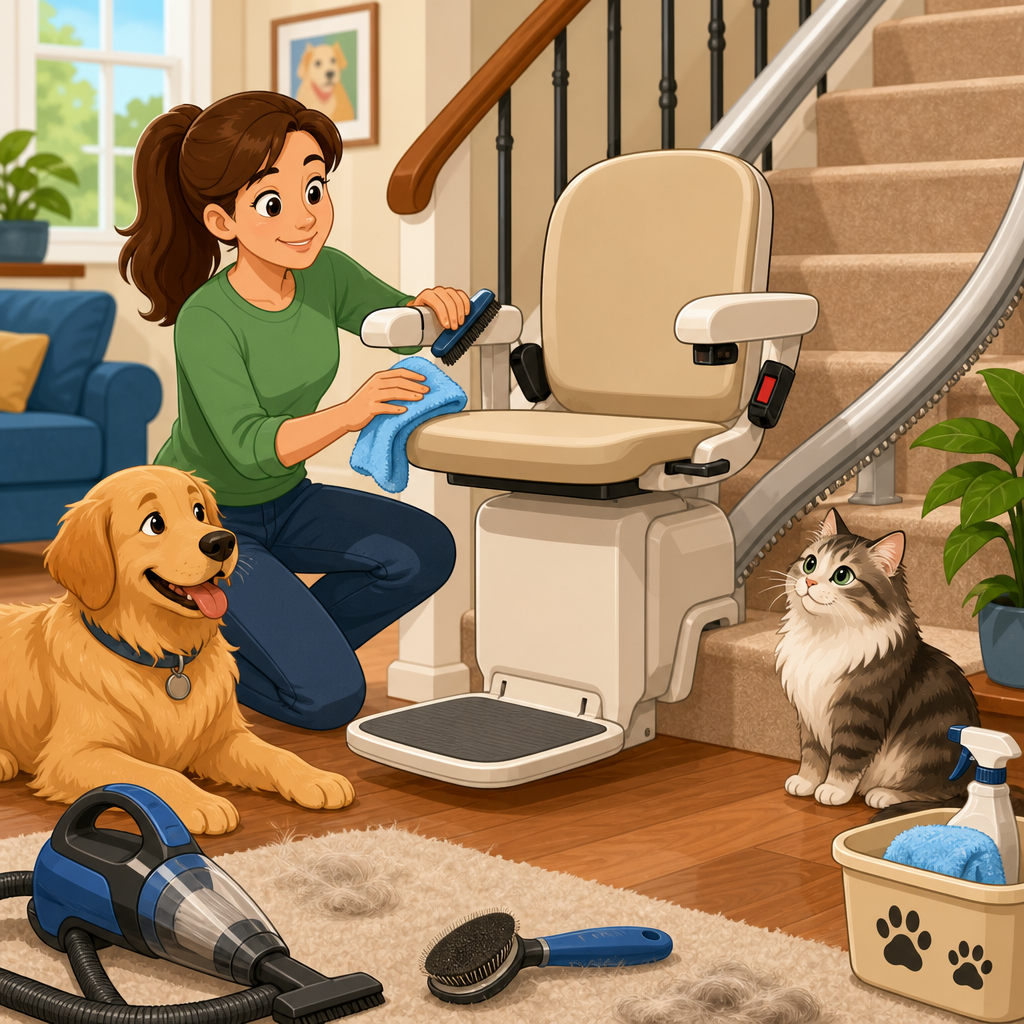
Keeping a stair lift reliable in a home with pets starts with understanding that fur, dander, tracked-in grit, and curious animal behavior create a maintenance environment very different from a pet-free house. A stair lift is a motorized mobility device that carries a user along a rail mounted to the staircase, usually powered by rechargeable batteries and controlled by onboard switches, call stations, and safety sensors. In homes with dogs or cats, routine maintenance matters more because pet hair can collect around the carriage, footrest hinges, charge points, and track edges, while pet accidents, scratching, and toy clutter can interfere with safe operation. I have worked on home accessibility plans where the lift itself was mechanically sound, yet daily performance suffered because golden retriever undercoat packed around the lower rail and cat litter granules kept reaching the charging contacts. That pattern is common: the problem is rarely one dramatic failure, but a steady buildup of contamination and small safety risks.
This article explains how to maintain a stair lift in a home with pets and pet hair, with a strong focus on routine maintenance tips that prevent breakdowns, reduce service calls, and preserve safety. It also serves as a hub for the wider maintenance, troubleshooting, and safety topic by covering the core tasks every owner should know before moving into model-specific care, battery issues, sensor faults, or service planning. You will learn what to clean, what not to touch, how often to inspect critical parts, how to manage pet-related hazards around the staircase, and when a professional technician should take over. The goal is straightforward: keep the lift clean, charged, obstruction-free, and predictable so the rider can trust it every day.
Why Pet Hair Changes Stair Lift Maintenance
Pet hair affects stair lifts in three practical ways: it insulates surfaces that should stay clean, it carries dust and oils into moving areas, and it hides hazards that users may not notice until performance declines. On many residential stair lifts, the rail is exposed along the edge of the stairs. That makes it easy for floating fur, paw dirt, and litter dust to settle along the rail and at the parking points where charging contacts meet. Long-haired pets add another challenge because loose strands can wrap around exposed pivot areas under the footrest or collect near the carriage cover seams. Hair itself is rarely strong enough to damage a drive system directly, but it traps abrasive grit, and grit is what accelerates wear.
Pets also change user behavior. Owners often keep beds, bowls, gates, scratching posts, or toy baskets near the staircase, which increases the chance of blocked travel paths. A stair lift depends on clear boarding space at both landings, and many models include pressure-sensitive edges or obstruction sensors that stop movement when they detect resistance. Those features are important, but they are not a substitute for housekeeping. If a dog toy repeatedly jams the footrest edge, the lift may stop suddenly, which is unsettling for the rider and can lead people to think the unit is failing when the real issue is environmental. For that reason, maintenance in a pet-friendly home is as much about managing the surrounding area as cleaning the machine itself.
Build a Pet-Safe Weekly and Monthly Routine
The most effective stair lift maintenance plan is scheduled, simple, and repeatable. In practice, I recommend separating tasks into daily awareness, weekly cleaning, and monthly inspection. Daily awareness means looking at the staircase before use: check for toys, leashes, litter scatter, wet paw prints, and sleeping pets near the rail. Weekly cleaning addresses pet hair before it compacts. Monthly inspection focuses on wear, fasteners, unusual noise, and charging consistency. This cadence works because stair lifts do not usually need heavy maintenance every few days, but pet contamination accumulates fast enough that waiting several months is a mistake.
For most homes, vacuuming the stairs and the area around the rail once or twice a week is the baseline. During shedding season, especially with double-coated breeds like huskies, German shepherds, or Maine coon cats, increase cleaning frequency. The key is to remove loose material from around the lift rather than pushing it toward the track with a broom. Use a vacuum with a soft brush attachment on the stair treads, risers, and corners where fur drifts gather. Then wipe approved exterior surfaces with a dry or lightly damp microfiber cloth, following the manufacturer instructions in the owner manual. Avoid spraying cleaners directly onto the lift. Liquids can reach switches, seams, and charging points.
| Task | Recommended Frequency | What to Check | Pet-Related Reason |
|---|---|---|---|
| Clear staircase and landings | Daily | Toys, bowls, leashes, beds, litter, sleeping pets | Prevents obstructions and trip hazards |
| Vacuum stairs and rail area | 1–2 times weekly | Hair buildup on steps, corners, lower landing | Removes fur before it reaches moving parts |
| Wipe seat, armrests, footrest, outer covers | Weekly | Dander, paw prints, sticky residue | Keeps controls and hinges clean |
| Inspect charging points and park positions | Monthly | Dust, corrosion, misalignment signs | Hair and grit can interrupt charging |
| Listen during travel | Monthly | Grinding, rubbing, beeping, hesitation | Early sign of contamination or wear |
| Professional service | Annually or per manufacturer | Battery health, safety circuit, drive system | Finds issues routine cleaning cannot |
Clean the Right Parts Without Creating New Problems
Many owners do too much in the wrong places. A stair lift is not like a household appliance that should be saturated with general-purpose cleaner, furniture polish, or lubricant from the garage shelf. Routine cleaning should focus on user-contact surfaces and exposed areas where pet hair visibly gathers. Wipe the seat, armrests, seatbelt buckle, footrest top, and outer plastic shrouds with a soft cloth. If the manufacturer permits mild soap on a damp cloth, use minimal moisture and dry the surface immediately. This removes dander oils that can make controls feel sticky and can attract more dust over time.
The rail deserves special attention, but with restraint. On most units, the rail should be kept free of visible dust and fur, yet the drive mechanism may be enclosed, geared, or require a specific lubricant that only the manufacturer or technician should apply. Never assume a squeak means “add oil.” I have seen homeowners spray silicone, penetrating oil, or grease on rails and charging strips, only to create dirt paste that worsened the problem and voided service recommendations. The correct approach is to check the manual for approved rail cleaning steps, wipe accessible surfaces gently, and leave internal lubrication and drive adjustments to qualified service personnel.
Charging contacts are another high-priority area in homes with pets. Most battery-powered stair lifts recharge when parked at designated points, often at the top or bottom of the rail. If those contacts are coated with dust, hair, or oxidation, the batteries may not charge fully, and the user may discover the issue only when the lift slows or stops after repeated trips. Keep contacts visibly clean according to manufacturer guidance. If you are unsure, do not scrape or sand them aggressively. A technician can clean and align them properly during service.
Protect Batteries, Sensors, and Moving Components
Battery health is central to stair lift reliability. Even lifts connected to household power typically run from onboard batteries, which means a charging problem can look like a mechanical problem. In pet households, the main threats are interrupted charging, moisture, and unnoticed obstruction events. If the lift is habitually left slightly away from its charging point because someone parked it quickly while managing a dog at the door, the batteries may remain undercharged. Over time, chronic undercharging shortens battery life. Make it a habit to park the chair exactly where the manufacturer intends after every use.
Sensors and safety edges also need attention. Stair lifts commonly include obstruction sensors on the footrest or carriage that stop the unit if it meets an object on the stairs. Pet toys, loose blankets, and even matted fur clumps can trigger these systems. Test basic operation as described in the manual, but do not bypass or tape down sensors to stop nuisance interruptions. That creates a serious safety risk. Instead, identify the environmental cause. If the lower landing is where your dog sleeps or where toys collect, redesign the space so the lift path stays clear. A small storage basket placed away from the staircase solves more “faults” than many people expect.
Moving components such as seat swivels, folding hinges, and footrest linkages can also collect debris. These areas are not usually dangerous when touched externally, but they should not be forced if they feel stiff. Hair packed into a hinge can make folding rough; repeated forcing can then strain the mechanism. Remove visible debris carefully from accessible exterior gaps and schedule service if movement remains difficult. Stiffness, grinding, or uneven travel is information, not an invitation to improvise repairs.
Manage the Staircase Environment Around the Lift
A clean stair lift in a cluttered pet zone will still produce service issues, so environmental control is part of maintenance. Start with flooring and traffic patterns. If the staircase begins near an exterior door, pets may bring in grit, moisture, and salt during wet or winter weather. Place absorbent mats at entry points and brush pets when they come inside during heavy shedding periods. If a litter box is near the stairs, move it. Fine litter dust travels farther than most owners realize and can settle on rails, landings, and contact points. The same logic applies to bird seed, rabbit hay, and pet treats that crumble.
Behavioral management matters too. Train pets not to rest on the stairs or near the lift’s parking area. This is not only for machine reliability but for rider safety when boarding and exiting. Older dogs and cats often prefer the warm, narrow edge near a rail because it feels sheltered. Unfortunately, that is exactly where a user needs clear footing and visual certainty. Use gates where appropriate, but make sure any gate placement does not obstruct access to the chair or interfere with fold-away sections. In multi-pet homes, create a designated waiting area away from the staircase during lift use.
If allergies are part of the household picture, stair lift cleaning supports indoor air quality as well as function. Pet dander becomes airborne easily on stairs because foot traffic disturbs settled particles. Using a vacuum with a sealed system and HEPA filtration can reduce recirculation. Grooming pets regularly, laundering bedding, and keeping HVAC filters on schedule all reduce how much material reaches the lift in the first place. Preventive maintenance works best when the machine and the home are treated as one system.
Know When to Call a Professional Technician
Routine maintenance is essential, but it has limits. Owners should handle cleaning, visual inspection, and environmental control. Professional technicians should handle annual service, internal adjustments, battery testing, diagnostic fault tracing, lubrication that requires manufacturer-approved materials, and any repair involving covers, wiring, gears, or safety circuits. This boundary is important because stair lifts are safety devices, not convenience gadgets. An incorrect home repair can create a failure that appears only under load, when someone is riding.
Call for service if you notice repeated beeping, inconsistent charging, slower travel, abrupt stopping without a visible obstruction, unusual grinding or clicking, wobble in the seat or rail area, damaged wiring, cracked plastics affecting fit, or persistent stiffness in folding parts. Also call if a pet has urinated on or near the unit. Even if the lift still runs, urine can corrode metal, damage finishes, and affect electrical components if it reaches seams or lower assemblies. Prompt cleaning and inspection prevent longer-term damage.
Choose a provider familiar with your brand and model. Bruno, Harmar, Stannah, Handicare, and Acorn units all have distinct service procedures, parts, and diagnostic methods. Keep the owner manual accessible, note the model number, record maintenance dates, and write down any error behavior before the appointment. Good documentation shortens service visits and helps technicians distinguish between intermittent charging, obstruction sensing, and battery aging. It also supports warranty claims and ongoing safety compliance with manufacturer guidance.
Conclusion: A Simple Routine Prevents Most Pet-Related Problems
The best way to maintain a stair lift in a home with pets and pet hair is to combine consistent cleaning with smart household management. Clear the stairs and landings every day, vacuum often enough to stay ahead of shedding, wipe approved surfaces gently, keep charging points clean, and park the chair correctly after each use. Watch for changes in sound, movement, or charging behavior, because early signs are easier and cheaper to address than full failures. Most importantly, resist the urge to over-lubricate, disassemble, or bypass safety features. In stair lift care, disciplined routine beats improvised fixes.
As the hub for routine maintenance tips within the broader maintenance, troubleshooting, and safety topic, this guide covers the practices that protect reliability across nearly every stair lift brand and layout. Pet owners face extra challenges, but they are manageable with a structured plan and timely professional support. If you want fewer breakdowns, longer battery life, cleaner operation, and safer daily use, start with a weekly checklist and an annual service appointment. Then review the rest of your stair lift maintenance resources and build a care routine that fits your pets, your staircase, and your mobility needs.
Frequently Asked Questions
How often should I clean a stair lift in a home with pets?
In a home with dogs or cats, a stair lift should usually be checked lightly every few days and cleaned more thoroughly at least once a week. Pet hair, dander, dust, and tracked-in debris can collect much faster than in a pet-free home, especially around the rail, footrest, seat edges, charging points, and safety sensors. If your pets shed heavily, use the stairs often, or like to rest near the lift, you may need to do quick touch-up cleaning even more frequently. A simple routine works best: visually inspect the rail for fur and dirt, wipe exposed surfaces with a soft dry or slightly damp cloth, and remove hair from crevices before it builds up.
Regular cleaning is important because stair lifts rely on smooth rail travel, dependable charging contact, and unobstructed safety systems. When pet hair accumulates, it can interfere with moving parts, reduce charging reliability, and trigger sensor-related stoppages. Staying ahead of buildup is much easier than trying to correct a neglected system later. It also helps preserve upholstery, reduce odors, and make the lift feel safer and more hygienic for the user. Always follow the manufacturer’s cleaning instructions and avoid soaking any component or spraying cleaners directly onto switches, motors, or electronic controls.
What parts of a stair lift are most affected by pet hair and dander?
The areas most commonly affected are the rail, carriage exterior, seat base, footrest, hinges, charging contacts, call/send controls, and safety sensors. Pet hair tends to gather along the rail and around the lower portions of the unit where airflow, static, and normal use pull fine debris into corners and seams. Dander and dust can settle on exposed surfaces and slowly work into crevices, while grit brought in on paws can end up on the staircase and rail area. In many homes, the bottom landing is especially vulnerable because that is where pets often enter, rest, or shed most heavily.
Charging points deserve particular attention. Most stair lifts use rechargeable batteries that charge when the unit is parked at designated points on the rail. If pet hair or dust coats those contacts, the lift may not charge consistently, which can shorten battery life or lead to poor performance. Safety edges and obstruction sensors can also be affected if debris collects around them, causing unexpected stops or making the lift less responsive. While pet hair usually does not damage a stair lift immediately, long-term accumulation can contribute to avoidable service issues. That is why routine inspection of these specific areas is one of the most effective forms of preventive maintenance in a pet-friendly home.
What is the safest way to clean a stair lift when pets are constantly shedding?
The safest approach is to use a gentle, dry-first cleaning method and keep moisture away from electrical and mechanical components. Start by turning the stair lift off if the manufacturer recommends it for cleaning, and make sure the chair is parked securely. Use a soft microfiber cloth to wipe the seat, armrests, and rail surfaces. For pet hair in seams and corners, a handheld vacuum with a soft brush attachment can work well, provided you use light pressure and avoid sensitive controls, wiring, or exposed contact points. A small soft-bristled brush is also useful for loosening hair from folds in the seat, around the footrest, and near non-electrical trim areas.
If a slightly damp cloth is permitted by the manufacturer, use it only on appropriate exterior surfaces and dry everything thoroughly afterward. Do not use dripping cloths, aerosol sprays, harsh household cleaners, polishes, or solvent-based products, as these can damage finishes and interfere with components. Never lubricate the rail or moving parts unless the manufacturer specifically instructs you to do so, since many stair lifts are designed to operate without homeowner-applied lubrication and added products can attract more pet hair and dust. In a high-shedding household, the goal is not aggressive deep cleaning every time, but consistent, careful removal of fur and debris before it migrates into places where it can affect operation.
Can pets damage a stair lift or cause it to stop working properly?
Yes, pets can contribute to both minor nuisances and more significant operating problems, even when they are not intentionally rough with the equipment. Hair and dander buildup are the most common issues, but pets can also scratch upholstery, chew exposed edges on older units, bump controls, block the stairway, or leave toys and bedding near the rail. Curious cats may jump onto the seat or perch on folded components, while dogs may brush against call stations or sleep at the base of the stairs where the lift parks and charges. These habits do not always create immediate failure, but they can increase wear, interfere with normal travel, and create safety risks for the user.
The best response is prevention. Keep the staircase and landings clear, discourage pets from lounging directly beside the lift, and inspect the path before each use. If your pet sheds heavily, vacuum nearby carpeting and stair treads regularly so loose fur is less likely to migrate onto the unit. Watch for signs of trouble such as inconsistent charging, unusual noises, rough starts and stops, or repeated sensor stoppages. Those symptoms may not always be caused by pets, but pet-related buildup is common enough that it should be one of the first things you check. If the lift continues acting irregularly after basic cleaning, schedule service with a qualified technician rather than trying to open panels or repair internal parts yourself.
When should I schedule professional stair lift maintenance if I have dogs or cats?
In a home with pets, professional maintenance should generally be scheduled at least once a year, and in heavy-shedding or high-use households, more frequent service may be wise. A technician can inspect the rail alignment, charging system, battery condition, seat mechanisms, sensors, and overall performance in a way that routine home cleaning cannot. Pet owners often benefit from a more proactive service schedule because fur and airborne dander create a persistent maintenance load that is easy to underestimate. Even if the lift seems to be operating normally, preventive service helps catch early wear and contamination before they turn into breakdowns.
You should also call for service sooner if you notice pet hair collecting inside hard-to-reach areas, charging interruptions, warning beeps, unexpected stops, sticky controls, or any change in ride smoothness. If a pet has urinated near the unit, chewed a component, or caused the lift to strike an obstruction, a professional inspection is especially important. Ongoing maintenance is not just about keeping the lift clean; it is about protecting a critical mobility device that someone in the home depends on every day. In pet-friendly homes, the most reliable strategy is a combination of frequent light cleaning, consistent monitoring, and scheduled professional service based on manufacturer guidance and the realities of your household’s shedding and stair lift usage.