


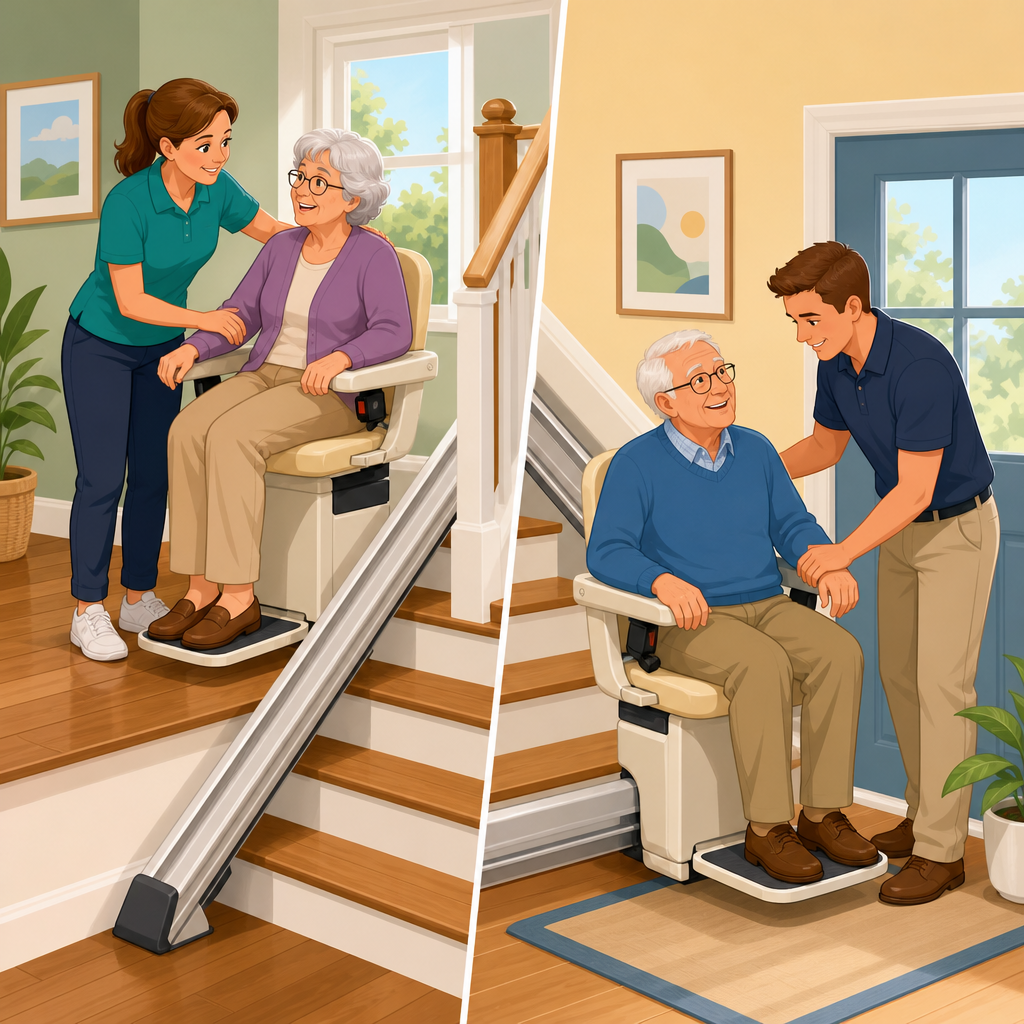
Transfer falls at the top and bottom of a stair lift are among the most preventable accidents in home mobility, yet they remain one of the biggest worries I hear from families adapting a house for aging, disability, or post-surgery recovery. A transfer fall happens when a user moves on or off the stair lift seat rather than while riding it. Those moments combine several risks at once: balance changes, fatigue, poor lighting, rushed movement, and often a caregiver trying to help in a tight space. In caregiver support resources, this issue deserves hub-level attention because safe transfers affect equipment choice, home layout, training, emergency planning, and confidence for both users and helpers.
Stair lifts are designed to move a person safely between floors, but the transfer zone at each landing determines whether that trip ends securely. The top landing is usually more hazardous than the bottom because a misstep can lead toward the staircase. The bottom landing carries lower drop risk but still causes many injuries through twisting, foot placement errors, and standing before balance is established. Key terms matter here. A transfer is the move from a walker, wheelchair, cane-assisted stance, or standing position onto the seat, or from the seat back to stable standing. A swivel seat turns the chair away from the stairs to face the landing. A track overrun extends the rail past the staircase so the user dismounts farther from the edge.
This matters because falls are rarely caused by one dramatic failure. In most homes I have assessed, transfer falls come from small breakdowns: the seat is not fully locked, a foot catches the footrest, medication causes dizziness, or the caregiver provides support from the wrong side. Reducing transfer falls requires more than buying a stair lift. It means matching the equipment to the user’s strength and cognition, creating predictable routines, and giving caregivers practical support resources they can apply every day. When those pieces work together, stair lift use becomes safer, less stressful, and far more sustainable at home.
Understand Why Transfer Falls Happen
The first step is to identify the mechanics of transfer falls. Most occur during sit-to-stand or stand-to-sit transitions, when the body’s center of gravity shifts quickly and the user has only one or two points of contact. At the top landing, users often lean forward to stand, then pivot before their feet are planted. If they push from the armrests too soon or turn toward the stairs, they can lose balance instantly. At the bottom landing, users may step away before fully straightening, or they may place a foot on an uneven mat, shoe edge, or threshold.
Medical factors amplify these hazards. Weak quadriceps make rising from the seat harder. Peripheral neuropathy reduces foot sensation. Parkinsonian freezing can interrupt a turn. Orthostatic hypotension can cause lightheadedness after standing. Sedating medications, poor vision, and urinary urgency also increase risk. In caregiver training, I stress that these are not minor background issues; they directly shape transfer safety. A user who transfers well at noon may struggle before breakfast or after taking evening medication. Safe stair lift use has to account for those fluctuations.
Environment also plays a decisive role. Narrow landings, poor contrast between flooring surfaces, clutter, and dim bulbs all raise fall risk. So does haste. Many incidents happen when someone tries to answer the door, get to the bathroom quickly, or use the lift without their usual aid. Knowing these patterns helps caregivers focus on prevention instead of reacting after an accident.
Choose Stair Lift Features That Protect the Landing
Not all stair lifts offer the same transfer safety. The most important features are a manual or powered swivel seat with a firm lock, a folding footrest, obstruction sensors, and a track overrun where space allows. If the user has limited trunk control, a higher seat back and supportive armrests can improve stability. If hand function is weak, large rocker-style controls or remote call stations are easier than small toggles. The right configuration depends on the user, staircase geometry, and who assists with transfers.
For top landing safety, a track overrun is often the single best upgrade because it moves the dismount point away from the stair edge. In straight stair lifts, this may extend onto the hallway. In curved systems, custom rail design can place the chair in a safer final position. A powered swivel is especially valuable for users with pain, reduced dexterity, or cognitive fatigue because it lowers the chance that they will forget or fail to rotate the seat fully. The seat should audibly or tactilely lock before the user stands.
Reputable manufacturers and dealers typically assess weight capacity, staircase width, seat height, and landing clearance before installation. Ask direct questions: Can the user place both feet flat on the floor at each landing? Will a walker fit beside the chair? Is the armrest height appropriate for push-off? Equipment decisions should never be made from brochures alone. In-home evaluation is a safety requirement, not a sales extra.
Set Up the Top and Bottom Landings for Safe Transfers
Landing design is where caregiver support resources become practical. Every transfer zone should create a simple path: stop, swivel, plant feet, stand, pause, then reach the mobility aid. Remove small tables, baskets, shoes, cords, and decorative rugs. Improve lighting with bright, even bulbs and consider motion-sensing fixtures for nighttime use. If vision is reduced, add contrast tape or contrasting flooring cues so the edge of the footrest and the stable standing area are obvious.
Space for mobility aids is critical. A walker should be positioned so it is reachable after standing, not used as the object to pull up on while rising. Wheelchair users need enough landing space for a proper angle and brake application before transferring. Handrails near the landing can help, but they must not encourage unsafe twisting toward the stairs. In some homes, a small wall-mounted grab bar on the landing wall provides a better support point after standing than the stair rail itself.
| Risk factor | Why it causes transfer falls | Recommended fix |
|---|---|---|
| Seat not fully swiveled | User stands while facing partly toward stairs | Use a locked swivel seat and confirm lock every trip |
| Footrest obstruction | Toe catches during stand or pivot | Fold footrest up after arrival if the model allows |
| Poor lighting | User misjudges floor position or aid placement | Install brighter bulbs and motion-activated lighting |
| Walker placed too far away | User reaches or steps before balance is secure | Stage the walker within easy reach on the landing side |
| Loose rug or clutter | Foot slips or catches during pivot | Clear the landing and remove unstable floor coverings |
| Caregiver on wrong side | Assistance pulls user toward the staircase | Stand on the safer landing side and guard the weaker side |
At the top landing, I recommend a deliberate “no-turn zone” toward the stairs. The user should always rotate away from the stair opening, stand with both feet on the landing, pause, and only then reach for the walker or cane. That sequence reduces impulsive movement and gives blood pressure time to stabilize.
Train the User and Caregiver in a Consistent Transfer Routine
Consistency prevents falls better than verbal reminders delivered in the moment. Every household should establish one transfer routine and practice it until it becomes automatic. A reliable sequence is: bring the chair to a complete stop, lower or position the dominant foot first, swivel the seat fully toward the landing, verify the seat lock, place both feet shoulder-width apart, push from the armrests, stand upright, pause for balance, then reach for the mobility aid. The caregiver should use the same cue words every time, such as “swivel, feet, stand, pause.”
Caregiver body mechanics matter just as much. The helper should not lift from under the arms or pull the user by the hands. That reduces stability and can injure both people. Instead, guard at the gait belt if one is clinically appropriate and the user has been trained to use it, block the weaker knee only when necessary, and stand where a loss of balance will move the person toward the landing, not the stairs. If two-person assistance is required, that is a sign the setup needs clinical review, because many residential stair lift transfers are not safely managed by improvised two-person techniques.
Written instructions posted near the landing can help substitute caregivers and home aides. Short checklists work well for memory impairment: lock seat, feet flat, stand fully, count to three, reach walker. Training is not a one-time event. Reassess after hospitalization, medication changes, new pain, or any near miss.
Use Caregiver Support Resources to Build Safer Daily Practice
Families often think safety depends only on the device, but caregiver support resources are what keep good technique in place over months and years. The most useful resources include occupational therapy home safety assessments, physical therapy transfer training, dealer instruction at installation, manufacturer manuals, and follow-up maintenance visits. An occupational therapist can analyze the exact landing setup, determine whether grab bars or a track overrun are warranted, and teach transfer methods tailored to stroke weakness, arthritis, amputation, or cognitive decline. A physical therapist can address leg strength, sit-to-stand mechanics, gait aid selection, and orthostatic management.
Community aging agencies, hospital discharge planners, and nonprofit disability organizations often maintain referral lists for vetted home modification contractors and mobility equipment providers. For caregivers, support groups and respite services matter too. Fatigue leads to shortcuts, and shortcuts cause falls. I have seen safer outcomes when families rotate assistance, use written routines, and schedule periodic reviews rather than relying on one exhausted spouse to manage every transfer alone.
Digital tools can support consistency. A shared care app or simple phone note can track which side the user transfers best, whether dizziness occurred, when batteries or maintenance are due, and who has been trained. If paid caregivers are involved, require return demonstration, not just verbal agreement. The standard should be simple: every helper must show they can position the user, cue the transfer, and respond to imbalance correctly.
Plan for Special Situations, Near Misses, and Emergencies
Even with good routines, special situations require adaptation. After joint replacement, the preferred leading leg may change. After a stroke, neglect or weakness may make one turning direction unsafe. Progressive conditions such as multiple sclerosis may require powered swivel, perch seats, or eventual transition away from a stair lift if transfers become unreliable. A near miss is a warning, not an anecdote. If the user sat down hard, forgot to swivel, or became dizzy after standing, investigate the cause the same day.
Emergency planning should be explicit. Users should wear a personal emergency response device if they are ever alone during transfers. Caregivers need to know how to stop the lift, use the manual lowering or backup features if the model includes them, and call the service provider. Keep dealer contact information, model number, and maintenance records accessible. Most manufacturers recommend regular service intervals; follow them. Worn seat locks, battery decline, or sticky swivel mechanisms should never be treated as inconveniences.
Finally, know when a stair lift is no longer the safest option. Recurrent transfer falls, severe impulsivity, inability to follow one-step commands, or the need for substantial physical lifting are strong indicators that the home setup requires reevaluation. The goal is not to keep using a device at all costs. The goal is safe movement through the home with the least risk and the most dignity.
Reducing transfer falls at the top and bottom of a stair lift comes down to matching the equipment, the environment, and the caregiving routine to the real needs of the person using it. The biggest gains usually come from simple but disciplined actions: choose a lift with the right safety features, create clear landing space, install strong lighting, stage mobility aids correctly, and use the same transfer sequence every time. When caregivers understand why falls happen and how small details affect balance, they can prevent the moments that most often lead to injury.
As a hub within caregiver support resources, this topic connects directly to home safety assessments, transfer training, mobility aid selection, respite planning, and emergency preparedness. That broader view matters because transfer safety is never just about one chair on one staircase. It is about the user’s strength, medications, vision, cognition, habits, and support system. The safest homes are not the ones with the most equipment; they are the ones where equipment, training, and caregiver follow-through work together reliably.
If you want to reduce stair lift transfer falls in your home, start with an in-home evaluation from a qualified stair lift provider and ask for occupational or physical therapy transfer training. Then review your landings today, remove hazards, and practice a safer routine before the next ride.
Frequently Asked Questions
What causes most transfer falls at the top and bottom of a stair lift?
Most transfer falls happen during the transition on and off the stair lift seat, not while the lift is moving. That is important because it shifts the focus from the machine itself to the setup, the user’s habits, and the immediate environment. At the top and bottom landings, users often have to turn, stand, pivot, reach for a walker or cane, and regain balance in a very limited area. If any part of that sequence is rushed or awkward, the chance of a fall rises quickly.
Several factors tend to show up again and again. Poor lighting makes it harder to judge foot placement. Clutter near the landing can block a stable exit path. Seat height that does not match the user’s strength and mobility can make standing much harder. Fatigue is another major contributor, especially for older adults, people recovering from surgery, or anyone with weakness on one side. Some users also slide forward too early, try to stand before both feet are planted, or reach for an unstable object such as a loose handrail, small table, or folded walker.
Caregiver assistance can help, but it can also create risk if the helper is in the wrong position or trying to manage too many tasks at once. In many homes, there is simply not much room at the top or bottom of the stairs, so the user and caregiver may end up crowding each other. The safest way to reduce transfer falls is to treat the transfer as a planned movement: good lighting, a clear landing, proper body positioning, and a consistent routine every time.
How can I make getting on and off a stair lift safer every day?
The best daily strategy is to create a repeatable transfer routine and stick to it. Consistency matters because it reduces guesswork and helps the user move in the same safe order every time. A good routine usually includes bringing the stair lift to a full stop, making sure the seat is securely positioned, placing both feet flat on the landing, using the armrests or designated supports for balance, and standing only when the user feels steady and ready. If the stair lift has a swivel seat, it should be fully locked in the transfer position before the user tries to stand up or sit down.
It also helps to slow the process down. Many transfer falls happen because someone feels rushed, embarrassed about needing help, or eager to “just get it done.” Encourage the user to pause before standing, check foot placement, and make sure any cane, walker, or handhold is within safe reach. The area should be free of shoes, baskets, cords, pet items, and small rugs that can slide. Good lighting at both landings is essential, and light switches should be easy to access without forcing the user to twist or step awkwardly.
Routine maintenance and fit are just as important as technique. The seat should be at a workable height, the footrest should fold away properly if needed, and the controls should be easy to use. If the user’s condition has changed since the stair lift was installed, the original setup may no longer be ideal. A safer transfer often comes from small adjustments: adding a stable grab bar at the landing, rethinking where a walker is parked, or having an occupational therapist review the transfer method in the actual home environment.
Are there specific stair lift features that help prevent transfer falls?
Yes, and these features can make a meaningful difference when chosen and used correctly. One of the most valuable is a swivel seat, especially at the top landing. A swivel seat allows the user to rotate away from the staircase and exit onto the landing rather than toward the stairs. That reduces the danger of losing balance near the stair edge. However, the feature only helps if it locks firmly into place, so users should be taught to confirm the seat is fully engaged before standing.
Seat height, armrest design, and footrest position also affect transfer safety. A seat that is too low can be difficult for someone with weak legs or painful joints to rise from. Supportive armrests can provide leverage, but they should not force an awkward push-off angle. Some lifts also offer powered swivel seats and powered footrests, which can be especially helpful for users who cannot bend easily or who have limited trunk control. These options can reduce strain and simplify the sequence of movements required during the transfer.
Track overruns are another important feature to discuss. A top or bottom overrun moves the user away from the staircase before the transfer occurs, creating a safer landing zone in case balance is lost. Safety sensors, seat belts, and easy-to-operate controls are useful as well, although they do not replace good transfer technique. The key is to match the lift’s features to the user’s actual physical needs, not just the staircase layout. A reputable stair lift provider or therapist can help identify which features will reduce transfer risk most effectively.
What should a caregiver do to help without increasing the risk of a fall?
Caregivers can be incredibly helpful during stair lift transfers, but only if they use the right approach. A common mistake is trying to lift, pull, or catch the person from an awkward angle in a cramped landing. That can throw both people off balance. In most cases, the caregiver should assist with setup, cueing, and supervision rather than physically hauling the person up. The goal is to support safe movement, not to overpower it.
Good caregiver assistance starts before the transfer begins. Make sure the landing is clear, the lighting is on, the mobility aid is positioned properly, and the stair lift seat is locked in the correct transfer position. Give calm, simple cues such as “feet flat,” “pause,” “lean forward,” or “reach for the walker once you are standing.” If hands-on help is needed, the caregiver should be trained in safe transfer technique, including where to stand, how to support the trunk or gait belt, and how to avoid blocking the user’s feet or exit path.
It is also important for caregivers to recognize limits. If the user has become significantly weaker, more dizzy, or more fearful, yesterday’s transfer method may no longer be safe today. In that situation, it is wise to pause and get input from a physical therapist, occupational therapist, or home safety professional. The safest caregiver is not the strongest one, but the one who plans ahead, uses proper technique, and knows when a transfer needs reassessment.
When should a stair lift transfer setup be reevaluated by a professional?
A professional reevaluation is a good idea anytime the user’s mobility, strength, balance, vision, or cognition changes. Even a small decline can make transfers much harder. Warning signs include needing more than one attempt to stand, grabbing at nearby objects for support, leaning heavily to one side, hesitating because of fear, complaints of dizziness, or having near-falls during the transfer. If a user has recently had surgery, started new medications, experienced a stroke, or become more fatigued, the transfer routine should be reviewed promptly.
It is also worth reevaluating the setup if the home environment has changed. A new walker, a rearranged room, thicker flooring, dimmer bulbs, or added furniture at the landing can all affect safety. Sometimes families focus on the stair lift itself and miss the surrounding factors that actually drive fall risk. An occupational therapist can assess body mechanics, hand placement, and whether the landing space supports a safe exit. A stair lift professional can inspect the equipment, confirm that safety features are functioning properly, and recommend modifications such as a powered swivel seat or track overrun.
The right time to ask for help is before a serious fall happens. One near-miss is enough reason to take a closer look. Transfer falls are among the most preventable stair lift accidents because they usually respond well to practical changes: better technique, a clearer landing, stronger caregiver training, or equipment adjustments. A timely reassessment can turn a stressful, risky transfer into a much safer and more confident daily routine.