


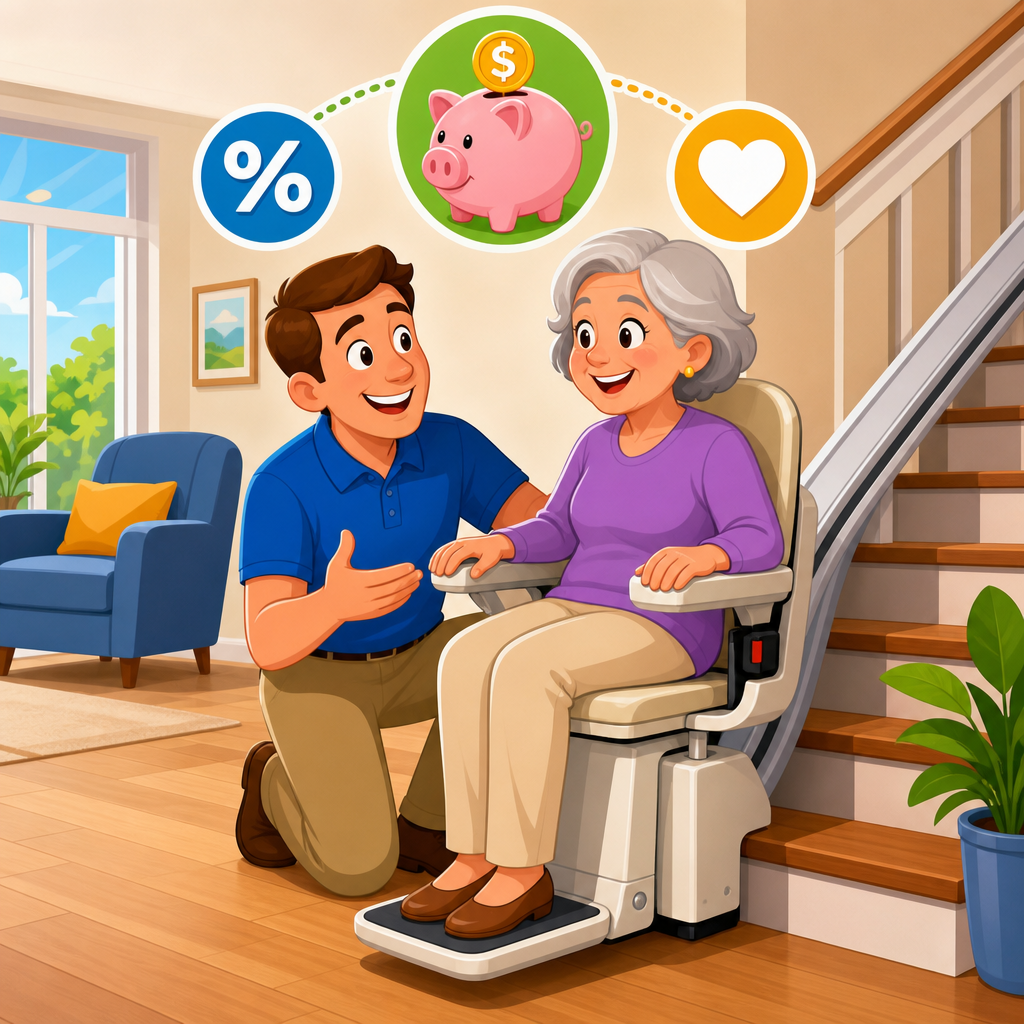
Interest-free chair lift financing can make a necessary mobility upgrade affordable without forcing a family to drain savings, delay installation, or choose a lower-quality stair lift that does not truly fit the home. In practical terms, interest-free financing means borrowing for a fixed period, often six to twenty-four months, without paying finance charges as long as every payment is made on time and the balance is cleared within the promotional window. Chair lift financing and payment plans matter because stair lifts are rarely discretionary purchases. Most buyers I have worked with were responding to a fall, a hospital discharge, worsening arthritis, or a caregiver strain problem that could not wait six months for budgeting. The challenge is that installed pricing commonly ranges from a few thousand dollars for a straight stair lift to significantly more for a custom curved model, outdoor unit, or heavy-duty seat. This article explains where to find interest-free chair lift financing, how major financing channels differ, which questions to ask before signing, and how to compare payment plans without getting trapped by deferred-interest terms, fees, or unrealistic monthly obligations.
Where interest-free chair lift financing is usually available
The most common place to find interest-free chair lift financing is directly through a stair lift dealer or manufacturer-authorized provider. In the field, I have seen local dealers advertise six, twelve, or eighteen months at zero percent through third-party lenders such as Synchrony, Wells Fargo, or specialized healthcare financing platforms. This route is popular because the dealer can bundle equipment, installation, warranty options, and financing into one transaction. It is also where many consumers first encounter promotional terms like no interest if paid in full within twelve months. That wording matters. A true zero percent installment loan charges no interest during the term. A deferred-interest plan can retroactively add interest from the purchase date if even one dollar remains after the promotional period.
Medical credit cards are another source. CareCredit is the name many families recognize because it is used across healthcare, dental, vision, and some durable medical equipment categories. Depending on the provider, chair lift purchases may qualify for short-term no-interest promotions or longer fixed-rate plans. The benefit is speed. Approval can happen quickly, which is useful when discharge planners want a safe home entry route before someone leaves rehabilitation. The drawback is that promotional financing can carry high standard rates after the offer ends, so borrowers need a realistic payoff schedule before accepting the account.
Retail credit cards can work when a national accessibility company or home improvement chain processes stair lift orders through a consumer financing program. I have also seen families use general-purpose zero percent introductory APR credit cards, especially for straight stair lifts with lower installed costs. That option is best for borrowers with strong credit, disciplined repayment habits, and enough available limit to avoid high utilization. It is less suitable for larger curved stair lift projects, because the credit line may be insufficient and card rates after the intro period can be steep.
Local dealers, national brands, and manufacturer programs
When people ask where to start, I usually recommend contacting three sources: a local independent dealer, a regional accessibility specialist, and a national brand dealer. Bruno, Harmar, Stannah, Acorn, and AmeriGlide are among the names shoppers often encounter, though exact financing availability varies by market, dealership, and season. A manufacturer may promote financing nationally, but the actual offer is often administered by the local dealer. That means one dealer may have twelve months interest-free while another offers only fixed-rate monthly payments or no promotional financing at all.
Local dealers can be surprisingly competitive because they want to win urgent, high-intent leads. They may discount installation, waive a rail overrun charge, include a power swivel upgrade, or align payments with the promotional period. National brands may bring stronger marketing offers, but service responsiveness depends on the installer network behind the brand. Financing should never be evaluated in isolation. A zero percent plan loses value if installation is delayed, measurements are sloppy, or service calls are difficult after the sale.
Ask whether the quote includes the full installed cost, permit requirements if applicable, removal of existing obstructions, electrical preparation, and any restocking or cancellation policy. For curved lifts, ask whether the financing covers the custom rail deposit and whether the promotional term begins at order placement or installation date. That distinction affects borrowers because custom projects can take longer to manufacture, reducing the effective no-interest repayment window if the lender starts the clock early.
How to compare financing offers without missing hidden costs
The cleanest way to compare financing and payment plans is to reduce each offer to five numbers: total installed price, promotional length, required monthly payment to avoid interest, fees, and post-promo APR. Consumers often focus only on the monthly payment shown on a sales sheet. That is a mistake. A low payment can simply mean a longer amortization period, a balloon risk, or deferred interest waiting in the background.
| Offer type | Typical term | Best use case | Main risk |
|---|---|---|---|
| True 0% installment loan | 6 to 24 months | Borrowers who can repay within a fixed schedule | Late payments may void promotional terms |
| Deferred-interest medical card | 6 to 18 months | Urgent purchases needing fast approval | Retroactive interest if balance remains |
| Intro APR credit card | 12 to 21 months | Strong-credit borrowers with lower project costs | High APR after intro period and utilization impact |
| Fixed-rate dealer loan | 24 to 84 months | Large curved or outdoor stair lift projects | Higher total borrowing cost |
Here is the simple calculation I use with clients. If a straight stair lift costs $4,800 installed and the promotion is twelve months with no interest, the payment needed to avoid finance charges is $400 per month. If the lender’s minimum payment is only $125, that minimum is irrelevant if the plan uses deferred interest. Paying the minimum would leave a large balance and trigger accumulated interest. On a curved stair lift quoted at $12,000, an eighteen-month no-interest offer requires about $667 per month. Many households find that too aggressive, which is why a lower-rate installment loan or a rental arrangement may be safer than chasing a promotion they cannot realistically complete.
Also review administrative fees, annual card fees, lien requirements for home-improvement loans, autopay discounts, and prepayment penalties. Most consumer mobility financing should not carry a prepayment penalty, but it is worth confirming in writing. If a salesperson cannot clearly explain whether interest is deferred or truly waived, pause the process until the lender’s disclosure documents are in front of you.
Alternative places to find help beyond standard financing
Interest-free financing is not the only path. Many families lower out-of-pocket cost by stacking multiple funding sources. If the chair lift is medically necessary, start with flexible spending accounts or health savings accounts. While a stair lift is not universally reimbursable as a medical expense, a physician’s letter of medical necessity can support tax-advantaged payment in some cases. Check IRS rules, your benefits administrator, and a tax professional before assuming eligibility.
State assistive technology programs are another underused resource. Many states operate alternative financing programs, device loan banks, or low-interest loan partnerships for accessibility equipment. These are not always interest-free, but they may beat dealer terms and can be more flexible for borrowers with limited credit history. Area Agencies on Aging, Centers for Independent Living, and state vocational rehabilitation agencies may also point residents toward grants, waiver programs, or local nonprofit assistance.
Veterans should investigate VA-related housing adaptation benefits and nonprofit veteran service organizations. Benefits such as HISA grants may help with medically necessary home modifications, though eligibility rules differ and funds may not directly mirror a retail financing plan. Medicaid waiver programs, where available, can sometimes assist with home accessibility, but coverage for stair lifts varies sharply by state and program structure. Traditional Medicare generally does not cover stair lifts as durable medical equipment, a fact that surprises many buyers. That gap is one reason financing and payment plans play such a large role in this market.
Some dealers also offer rentals, especially for straight stair lifts. Rentals are not interest-free financing, but they can be the lowest-cost solution for short recoveries after surgery or temporary caregiver support. Typical structures include an upfront installation fee plus a monthly rental charge. For a need lasting only three to six months, renting may cost far less than financing a purchase.
Credit requirements, approval tips, and timing your application
Approval standards vary by lender, but credit score is only one factor. Income, debt-to-income ratio, housing status, existing revolving balances, and recent inquiries can all affect terms. In my experience, borrowers with fair to good credit often qualify for some type of chair lift financing, but the best interest-free offers usually go to stronger profiles. If two spouses are involved, ask whether a joint application improves approval odds or available credit.
Before applying, gather the exact installed quote, estimated installation date, income documentation if needed, and a payoff plan that fits your monthly cash flow. Do not apply repeatedly with multiple lenders in a scattered way. Start by asking each dealer whether they can prequalify with a soft credit pull. Soft-pull prequalification helps you compare likely terms without immediately affecting your credit file. Once you identify the best option, move to the formal application.
Timing matters. If the home needs additional modifications such as railings, a threshold ramp, or electrical work, coordinate financing so all known costs are visible before you borrow. I have seen families finance only the stair lift, then scramble when they realize they also need a folding rail, transfer platform changes, or service plan coverage. It is better to finance the complete safe-use package than to underborrow and leave an access problem unsolved.
If your credit is marginal, ask about a down payment. Even a modest deposit can reduce the financed amount enough to fit within promotional limits. Another strategy is to reserve interest-free financing for the portion you can confidently clear within the term and pay the remainder in cash. The goal is not just approval. The goal is a repayment structure that stays affordable even if household expenses change.
Questions to ask before signing any chair lift payment plan
Every buyer should ask the same direct questions. Is this true zero percent financing or deferred interest? When does the promotional clock start? What payment retires the full balance before interest can apply? Are there late fees, annual fees, or mandatory autopay requirements? What APR applies after the promotion? Is there a penalty for paying early? Does the financing cover installation, warranty extensions, and service plans, or equipment only?
Then ask operational questions that affect value. What is the estimated install timeline? Who services the lift after installation? Is the rail custom and nonreturnable? What happens if the staircase measurement changes after deposit? Can the lift be transferred or repurchased if the user’s condition changes? These are not small details. They determine whether a financing plan supports a reliable mobility solution or simply moves cost into the future.
For a hub page on financing and payment plans, the central lesson is straightforward: the best interest-free chair lift financing is the offer you can verify, understand, and complete on schedule. Start with local and national stair lift dealers, compare lender disclosures carefully, and widen the search to medical credit cards, state assistive technology programs, HSA or FSA funds, veteran benefits, and rentals when appropriate. Look beyond the advertised monthly payment to the full installed price, the true payoff amount, and the service quality behind the equipment. A chair lift is purchased to restore safe movement at home. Your financing should support that outcome, not complicate it. Review written terms, ask hard questions, and choose the payment plan that protects both mobility and budget.
Frequently Asked Questions
What does interest-free chair lift financing actually mean?
Interest-free chair lift financing usually refers to a promotional payment plan that lets you spread the cost of a stair lift over a set period without paying finance charges, provided you meet the terms exactly. In most cases, that means the financing term is fixed for a limited window, often anywhere from 6 to 24 months, and you must make every required payment on time while paying the full balance before the promotional period ends. If those conditions are met, you pay only the purchase price and any agreed fees, not interest.
That said, families should read the financing agreement carefully because “interest-free” does not always mean “risk-free.” Some plans are true 0% APR loans, while others are deferred-interest offers. With deferred interest, no interest is charged during the promotional period only if the balance is completely paid off by the deadline. If even a small amount remains, interest may be added retroactively from the original purchase date. For a mobility product as important as a chair lift, this distinction matters. A good financing offer can make installation possible right away without draining savings, but the best plan is one that is easy to understand, realistic for your monthly budget, and clearly outlines what happens if a payment is late or the loan extends beyond the promotional term.
Where can you find interest-free financing for a chair lift?
Interest-free chair lift financing is most commonly found through stair lift dealers, manufacturers, medical equipment providers, and healthcare-focused financing companies. Many local dealers partner with third-party lenders that specialize in home accessibility products, allowing qualified buyers to apply for promotional financing at the time of purchase. Some national stair lift brands also advertise limited-time 0% financing offers directly through their dealer networks, especially for straight stair lifts, which are generally less expensive and easier to install than custom curved models.
It is also worth checking with home improvement financing providers, local mobility equipment companies, and credit unions. In some cases, a dealer may not advertise financing prominently online, but can still offer promotional plans if you ask. Families should compare several sources rather than accepting the first option presented. Ask whether the offer is a true no-interest loan or deferred interest, what credit qualifications are required, whether there are application or administrative fees, and whether installation costs are included. You may also want to ask whether used, rental, or reconditioned chair lifts qualify for the same financing terms. The most affordable path is not always the longest term or the lowest monthly payment; it is the plan that helps you get the right lift installed promptly without creating surprise costs later.
How do you know if an interest-free stair lift payment plan is a good deal?
A good interest-free stair lift payment plan should do more than advertise a low monthly payment. It should be transparent, manageable, and attached to a quality chair lift that actually meets the user’s mobility and safety needs. Start by reviewing the total installed cost, including the lift unit, rail, power supply, labor, warranty, service coverage, and any modifications needed for the home. Then compare that total with the financing terms. If the plan is truly interest-free and there are no hidden fees, the payment schedule should divide the real cost into predictable monthly amounts.
You should also evaluate whether the payment timeline fits your household finances. For example, a 12-month no-interest plan may look attractive, but if the monthly payment is too high, missing a payment or carrying a balance beyond the promotional period could trigger major extra charges. Ask for the annual percentage rate after the promotion ends, the penalty for late payments, and whether interest is deferred. It is also smart to compare financing across multiple providers while keeping the lift model and service package as similar as possible. A slightly higher upfront price with better warranty coverage, professional installation, and a cleaner financing structure may be the better long-term value. In short, the best deal is the one that keeps the chair lift affordable without forcing compromises on safety, fit, reliability, or repayment terms.
Can interest-free financing help if you need a chair lift installed quickly?
Yes, one of the biggest advantages of interest-free chair lift financing is that it can help families move forward with installation right away instead of waiting months to save the full amount. For many households, a stair lift is not a convenience purchase; it is a necessary accessibility upgrade tied to fall prevention, recovery after surgery, aging in place, or daily caregiving. Delaying installation because of cost can create safety risks, limit independence, and add stress for everyone in the home. Financing can remove that delay by turning a large one-time expense into structured monthly payments.
This can be especially useful when a family wants to avoid settling for a lower-quality or poorly fitted lift simply because it has the cheapest upfront price. A proper chair lift should match the staircase layout, user weight requirements, seat comfort needs, and transfer safety considerations. Financing gives you more flexibility to choose the model that truly fits the home and the user rather than the one that merely fits the cash currently available. If speed matters, ask the dealer how long approval takes, whether same-day financing decisions are available, and whether installation can be scheduled immediately after approval. Also confirm whether the quoted financing covers the full project so there are no last-minute out-of-pocket expenses that delay the order.
What should you ask before signing a chair lift financing agreement?
Before signing any chair lift financing agreement, ask detailed questions about both the product and the payment terms. On the financing side, you should know the length of the promotional period, whether the plan is 0% APR or deferred interest, the exact monthly payment, the total amount due by the end of the promotion, and what happens if a payment is missed. Ask whether there are late fees, prepayment penalties, setup charges, or interest charges that apply if the balance is not fully paid on time. Request everything in writing and review the agreement carefully before committing.
On the product side, confirm exactly what is included in the financed amount. That should cover the chair lift model, track or rail configuration, installation labor, warranty, service terms, and any accessories or home adjustments required. Ask whether the quote is final, how long the price is valid, and whether future service visits are covered. If the lift is custom, ask about return policies and cancellation terms. It is also wise to discuss alternatives such as rental units, reconditioned lifts, manufacturer promotions, or shorter financing terms with lower overall risk. The goal is not just to get approved; it is to choose a financing arrangement that supports a safe installation now without creating financial strain later. A reputable provider will welcome these questions and answer them clearly.