


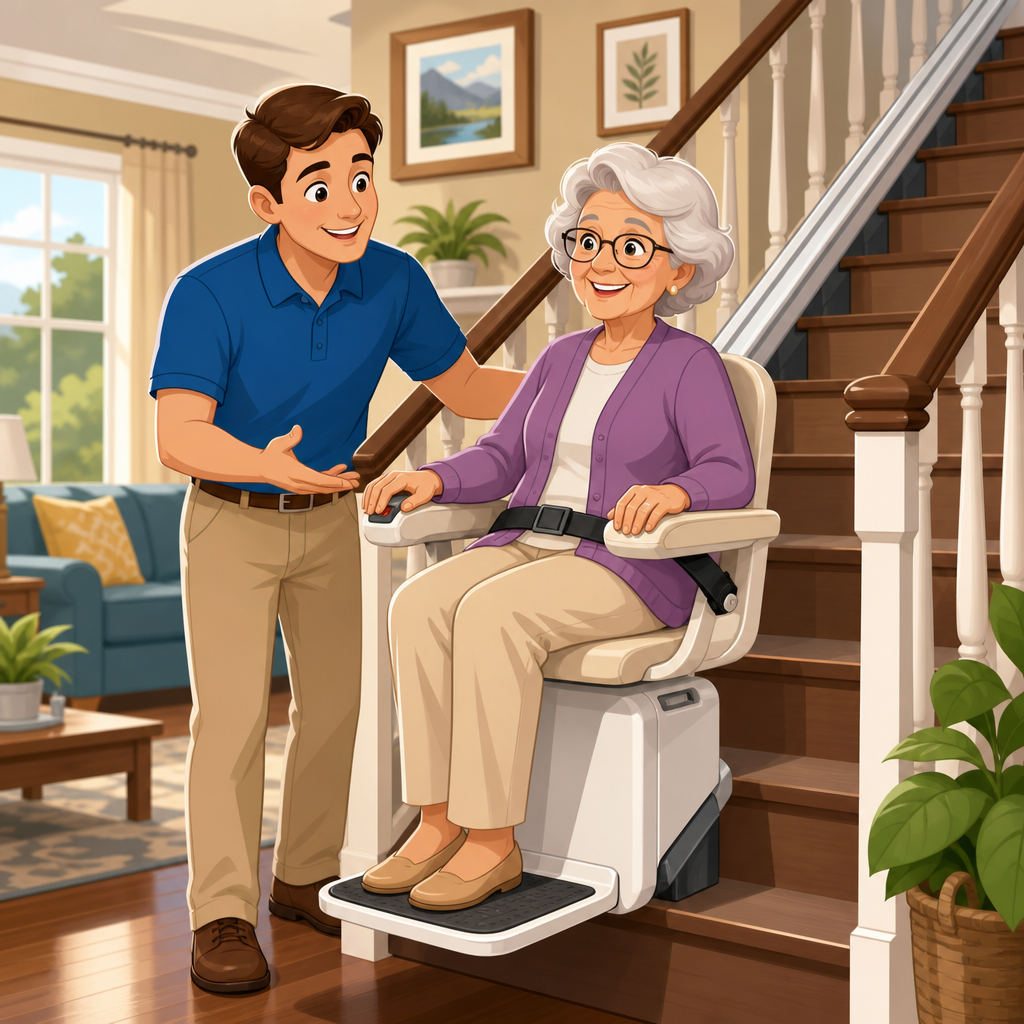
Lifeway Mobility stair lifts are a frequent starting point for families comparing top stair lift brands because the company combines national reach, in-home assessment, installation, rental options in some markets, and a broad product catalog rather than pushing a single manufacturer. In practical terms, that means a buyer is not reviewing one machine alone but evaluating a provider that matches homes, stair layouts, budgets, and mobility needs with several stair lift models. For anyone building a realistic buying plan, that distinction matters. A stair lift is a motorized chair system mounted to a stair rail that helps a rider travel safely between floors, and the right purchase depends on staircase shape, user weight, transfer ability, seat comfort, safety sensors, service support, and long-term cost. I have worked with families comparing Bruno, Harmar, Handicare, and Access BDD systems, and the biggest mistake I see is choosing based on headline price before confirming fit, service coverage, and daily usability. Lifeway Mobility deserves a close review because it operates as both dealer and adviser, which can simplify shopping but also requires buyers to ask sharper questions about model selection, warranties, maintenance, and installation standards.
As a sub-pillar guide within top stair lift brands, this review also serves as a hub. If you are comparing indoor straight stair lifts, custom curved stair lifts, heavy-duty stair lifts, or temporary stair lift rentals after surgery, Lifeway Mobility is relevant because it participates across all of those categories depending on location and inventory. The company has expanded through acquisitions and regional service coverage, giving it visibility in the mobility market that smaller local dealers may not match. At the same time, the most useful review is not brand promotion. Buyers need to know where Lifeway Mobility is strong, where another stair lift provider may be better, what features should be nonnegotiable, and how to judge whether a quoted system is truly appropriate for the user. This article explains Lifeway Mobility’s business model, stair lift options, installation process, pricing factors, service reputation, and how it compares with other leading names so you can move from general research to a shortlist with confidence.
What Lifeway Mobility Sells and How Its Model Works
Lifeway Mobility is best understood as a mobility equipment provider and stair lift dealer, not simply a single stair lift manufacturer. That difference affects everything from product choice to warranty interpretation. In many markets, the company sells and installs stair lifts from established manufacturers such as Bruno, Harmar, Handicare, and sometimes other regional or specialized lines depending on branch relationships and project requirements. For the customer, the advantage is practical: one consultation can cover multiple fit options. A straight staircase may suit a standard battery-powered Bruno Elan or Harmar Pinnacle, while a narrow or more customized staircase may call for a different rail design, folding profile, or higher-capacity chair.
In homes I have evaluated, this multi-brand approach often solves the most common problem in stair lift shopping: assuming every staircase can take the same unit. That is not true. Straight stair lifts use standardized rail sections and usually install faster at lower cost. Curved stair lifts require custom rail fabrication based on precise measurements, often taken digitally, and costs rise because the rail is made for one staircase. Outdoor stair lifts must handle rain, temperature variation, ultraviolet exposure, and corrosion. Heavy-duty models need larger seats, stronger frames, and enough landing space to park safely. A dealer with access to several lines can theoretically match the home more precisely than a one-brand seller.
The tradeoff is that the buyer must ask exactly which make and model is being quoted, who manufactures the rail and chair, what the labor warranty covers, and who performs future service. A strong dealer relationship is valuable, but ownership experience ultimately depends on product engineering and after-sale support. When reviewing Lifeway Mobility, that is the frame to use: evaluate the company as a consultative provider with regional installation and service infrastructure, then evaluate the actual stair lift model proposed for your stairs.
Types of Stair Lifts Available Through Lifeway Mobility
Lifeway Mobility typically covers the main stair lift categories that most buyers research. Straight stair lifts are the entry point for many households because they fit stairs without turns, intermediate landings, or curved sections. These units are usually the fastest to install and the most affordable. Battery-powered drive systems are now standard in reputable models because they continue operating during a power outage and charge at designated points or continuously along the rail, depending on design.
Curved stair lifts are where dealer expertise becomes more important. A curved lift is custom-built to follow turns, landings, and nonstandard geometry. The rail must be engineered to maintain proper seat positioning, footrest clearance, and smooth travel through bends. In older homes with tight transitions, the difference between a workable installation and a frustrating one often comes down to measurement quality and model selection. Lifeway Mobility’s value proposition is strongest here if the local branch has experienced survey and installation teams.
Outdoor stair lifts serve users who need access to porches, garages, decks, or front entryways. These units require weather-resistant covers, sealed components, and materials that tolerate moisture and sunlight. However, outdoor does not mean maintenance-free. I tell buyers to expect routine cleaning, battery replacement over time, and seasonal inspections in harsher climates. Heavy-duty or high-capacity stair lifts are another category worth noting. They are designed for users who need a wider seat, higher weight capacity, or more stable transfer surface. The critical caveat is space. A larger chair on a narrow staircase can create clearance issues for other household members and emergency egress.
| Stair Lift Type | Best Use Case | Main Advantage | Main Limitation |
|---|---|---|---|
| Straight | Single uninterrupted staircase | Lower cost and faster installation | Cannot handle turns or landings |
| Curved | Stairs with bends or intermediate landings | Custom fit for complex layouts | Higher price and longer lead time |
| Outdoor | Steps to porches, decks, or garages | Weather-resistant construction | More exposure-related maintenance |
| Heavy-duty | Users needing higher capacity or wider seating | Improved stability and comfort | Requires more staircase clearance |
Installation Quality, Home Assessment, and Safety Standards
A stair lift review is incomplete without discussing installation because even an excellent model can perform poorly if the rail is misaligned, charging points are set incorrectly, or seat height is wrong for the user’s transfer pattern. Lifeway Mobility generally provides an in-home assessment before quoting. That visit should include staircase measurement, power location review, obstruction checks, discussion of left-side versus right-side rail placement, and a transfer-safety conversation focused on the rider’s strength, balance, and cognitive status. If the assessment is rushed, that is a warning sign regardless of brand.
Most residential stair lifts mount to stair treads, not the wall. This is important because many buyers wrongly assume they need major structural wall work. A professional installation team should secure the rail to the stairs, test the travel path, confirm swivel seat lock function at the landing, and verify obstruction sensors. Reputable products are typically built to recognized safety standards, and many leading manufacturers align with ASME A18.1 requirements for platform lifts and chairlifts where applicable. While homeowners do not need to memorize codes, they should expect the dealer to explain safety features plainly: seat belt, overspeed governor or braking mechanism, obstruction sensors on the carriage and footrest, battery backup, call-send controls, and secure parking positions.
From experience, the most meaningful installation detail is not technical jargon but transfer confidence. Can the rider sit without dropping heavily into the seat? Can the seat swivel and lock firmly at the top landing? Is the footrest easy to fold? Can another person still use the stairs safely when the chair is parked? Lifeway Mobility’s success with a project depends on answering those practical questions before installation day, not after.
Pricing, Rentals, Warranties, and Long-Term Ownership Costs
How much does a Lifeway Mobility stair lift cost? The honest answer is that the company’s pricing varies widely because it depends on staircase design, model, location, installation complexity, and whether the system is straight, curved, outdoor, or reconditioned. In the current U.S. market, straight stair lifts commonly start in the low thousands, while custom curved stair lifts can rise into the high thousands or well beyond ten thousand dollars depending on rail complexity and options. Outdoor and heavy-duty units usually cost more than baseline indoor straight models.
Lifeway Mobility is often competitive because it may offer new, certified pre-owned, or rental stair lift solutions in selected markets. Rentals can be especially useful for temporary mobility needs after orthopedic surgery, injury recovery, or hospice care. However, shoppers should understand that a rental may involve installation charges, monthly fees, and removal charges. For a long use period, buying can be less expensive than renting. For a short recovery period on a straight staircase, rental may be financially sensible.
Warranty review deserves more attention than it usually gets. Ask for separate details on manufacturer coverage for motor, gearbox, electronics, batteries, and rail, plus dealer labor warranty. Batteries are consumable items and usually have shorter coverage periods. Also ask about annual service recommendations, emergency call response times, and parts availability for older units. A low quote with weak service support can become expensive quickly if the user relies on the lift daily. Stair lifts are durable, but they are still electromechanical systems that need occasional adjustment and eventual battery replacement.
How Lifeway Mobility Compares With Other Top Stair Lift Brands
Because this page sits within top stair lift brands, comparison matters. Lifeway Mobility differs from Bruno, Harmar, Handicare, and Access BDD because those companies are primarily manufacturers, while Lifeway Mobility is typically the retail, installation, and service layer presenting one or more of those brands to the customer. That means a direct brand-versus-brand comparison is not perfectly symmetrical. A better question is whether you want a dealer with multiple product options or a local seller focused tightly on one line.
Bruno is often praised for build quality, indoor and outdoor reliability, and strong dealer support. Harmar is widely recognized for broad product coverage and practical straight-lift options. Handicare is known for modular and customized solutions, including some applications where space efficiency matters. Access BDD has a reputation in custom curved systems and premium rail engineering. If Lifeway Mobility offers several of these, its advantage is choice. Its risk is inconsistency between branches, because dealer experience and technician quality can vary by region more than factory engineering does.
That is why reviews should be read in layers. First, assess Lifeway Mobility’s local office reputation for responsiveness, installation quality, and service follow-through. Second, assess the exact stair lift brand and model being proposed. Third, compare that quote with at least one alternative provider. In my work, the winning quote is rarely just the cheapest. It is the one that balances proper fit, dependable service, clear warranty terms, and confidence that the rider will actually use the lift every day without fear or frustration.
Who Should Consider Lifeway Mobility and What Questions to Ask
Lifeway Mobility is a strong option for buyers who want guided selection instead of sorting through manufacturers alone. It is especially worth considering if you have a curved staircase, need a short-term rental, are comparing multiple mobility products beyond stair lifts, or want one provider to handle assessment, installation, and service. It may also suit adult children coordinating a purchase from another city, since a larger regional company can offer more structured communication than a very small local dealer.
Still, no buyer should treat the company name as the whole answer. Ask direct questions: Which stair lift brand and model are you recommending, and why this one over the alternatives you sell? What is the installed price, including rail, seat options, power supply work, and taxes? Is the unit new, used, or reconditioned? How long is lead time? What happens if the user cannot transfer safely after installation? Who provides emergency service on weekends? Can I test a similar chair before purchase? Does the top landing allow a safe swivel and dismount?
Those questions uncover the quality of both the provider and the product. The best stair lift purchase is not the one with the most features on paper. It is the one that fits the home, fits the rider, and comes with dependable support when needed.
Lifeway Mobility stair lifts earn serious consideration because the company addresses the part of the market many buyers struggle with most: turning broad research into a workable, installed solution. Its core strength is access to multiple stair lift categories and established manufacturers, paired with in-home assessment and regional service. For straight stairs, that can mean quick and economical installation. For curved stairs or higher-need users, it can mean better matching of rail design, chair profile, and safety features than a single-line seller may offer. The limitations are equally clear. Since Lifeway Mobility is often a dealer framework rather than one manufacturer, your ownership experience depends heavily on the specific branch, technician skill, and exact model quoted. That is why careful comparison is essential.
For most shoppers, the smart path is straightforward: use Lifeway Mobility as one of your benchmark quotes when evaluating top stair lift brands, verify the manufacturer behind the proposed unit, compare warranty and service terms, and judge the assessment quality as carefully as the product itself. A stair lift is not just a purchase; it is a daily mobility tool that affects safety, independence, and whether someone can remain comfortably in a multilevel home. If you are building your shortlist, start by scheduling an in-home evaluation, then compare the recommendation against at least one competing provider before you decide.
Frequently Asked Questions
What exactly is Lifeway Mobility, and how is it different from buying a stair lift directly from a single brand?
Lifeway Mobility is best understood as a stair lift provider and accessibility company rather than just one stair lift manufacturer. That distinction matters. When families research Lifeway Mobility stair lifts, they are not simply comparing one machine with another. They are evaluating a company that helps match a person’s mobility needs, home layout, budget, and long-term goals with products from multiple stair lift brands and models. In other words, Lifeway Mobility functions more like an advisor, installer, and ongoing service partner than a one-brand retailer.
This model can be especially helpful for buyers who are unsure whether they need a straight stair lift, a curved stair lift, an outdoor unit, or a temporary rental. Instead of forcing every situation into one product line, Lifeway Mobility can typically assess the staircase and recommend a solution that fits the home. That can be a major advantage for households with unusual stair configurations, tight landings, or users with specific transfer, seat height, or safety needs.
Another difference is the in-home assessment process. Rather than asking buyers to choose based only on online specifications, Lifeway Mobility commonly starts with a home visit where a specialist evaluates the staircase, user needs, and installation conditions. This tends to lead to more accurate recommendations and fewer surprises. For many families, that consultative approach reduces the stress of making a high-stakes mobility decision.
Buying through a provider like Lifeway Mobility may also mean access to installation, maintenance support, and rental options in some regions. That broader service structure can make the experience feel more complete than purchasing from a brand alone. For shoppers building a comparison list, the key takeaway is that Lifeway Mobility is often reviewed not just for product quality, but for selection, guidance, installer experience, and after-sale support.
What types of stair lifts does Lifeway Mobility typically offer?
Lifeway Mobility generally offers a broad catalog designed to address a range of staircase types and mobility situations. That usually includes straight stair lifts for standard staircases, curved stair lifts for stairs with turns or landings, and outdoor stair lifts for porches, decks, garage entries, or exterior steps. In some markets, rental stair lifts may also be available, which can be particularly useful for short-term recovery needs after surgery, illness, or injury.
Straight stair lifts are typically the simplest and most cost-effective option because they run on a standard rail along a staircase with no bends. These are often installed more quickly and are a common fit for homes with a single uninterrupted flight of stairs. Curved stair lifts, by contrast, are customized to the exact shape of the staircase. They are usually more expensive because the rail must be made to fit each home’s dimensions, but they can provide a practical solution for more complex layouts that a straight model cannot handle.
Outdoor stair lifts are designed to handle weather exposure and often include features such as durable finishes, protective covers, and weather-resistant controls. These can be an excellent option for people who have difficulty safely navigating exterior steps, especially if those steps are the main route into or out of the home. Depending on the product mix available in a given area, buyers may also encounter lifts with features such as folding seats and footrests, swivel seats for safer entry and exit, seat belts, call/send controls, battery backup, and safety sensors that stop the lift if something is blocking the path.
Because Lifeway Mobility works across multiple product lines rather than focusing on one manufacturer alone, the real benefit is usually flexibility. Instead of asking whether one specific stair lift is good enough, shoppers can ask a more useful question: which lift is the best fit for this user and this staircase? That broader selection is one of the main reasons Lifeway Mobility often appears early in the research process for families comparing top stair lift companies.
How does the Lifeway Mobility buying process work, from assessment to installation?
The process usually begins with an initial conversation about the user’s mobility challenges, the staircase layout, and what the household hopes to accomplish. From there, Lifeway Mobility commonly schedules an in-home assessment. This step is especially important because stair lifts are not one-size-fits-all products. The specialist can take measurements, look for potential installation issues, evaluate the width and shape of the stairs, and discuss whether the user can safely get on and off the chair at the top and bottom landings.
During that assessment, families can usually ask practical questions about safety, comfort, rail placement, controls, weight capacity, and budget. If more than one model could work, the company may explain the tradeoffs between them. For example, a buyer may need to choose between a lower-cost standard solution and a model with upgraded seating, power folding features, or a more customized rail design. This is also the stage where short-term versus long-term use is discussed, which can influence whether a purchase or rental is the better fit.
Once a recommendation is selected, the installation timeline depends on the type of lift. Straight stair lifts are often faster to install because they use more standardized rails, while curved stair lifts generally take longer because they require custom manufacturing. Installation itself is typically completed by trained technicians, and the work is usually done on the staircase rather than by major structural remodeling. In many cases, the rail is mounted to the stair treads, not the wall, which is a point many homeowners appreciate because it may reduce concerns about wall damage or extensive construction.
After installation, the technician generally demonstrates how to use the lift, including seat operation, folding components, charging behavior, call/send controls, and key safety features. A strong provider should also explain what to do if the lift stops, how battery backup works, and who to contact for service. For families comparing providers, this end-to-end process matters just as much as the lift itself. A good buying experience includes a careful assessment, transparent recommendations, professional installation, and clear user training afterward.
Are Lifeway Mobility stair lifts expensive, and what should buyers expect in terms of pricing and value?
Pricing varies widely because Lifeway Mobility does not sell a single universal stair lift. Cost depends on the staircase design, the type of lift needed, the selected features, and whether the buyer is purchasing or renting. In general, straight stair lifts tend to be the most affordable category, while curved stair lifts are significantly more expensive due to custom rail fabrication. Outdoor models may also carry added cost because of weather-resistant components and installation considerations.
That means shoppers should not expect one flat price for “a Lifeway Mobility stair lift.” Instead, they should expect a quote based on their specific home and needs. This can actually be a positive for buyers who want a tailored recommendation rather than a generic estimate. The in-home evaluation helps identify whether a standard solution is sufficient or whether special features are necessary for comfort and safety. It also reduces the risk of underestimating the total cost because the quote can account for the real staircase conditions.
In terms of value, the company’s appeal often comes from the combination of product access and service support. Buyers are not just paying for a chair and rail. They are typically paying for professional assessment, product matching, installation expertise, and ongoing service availability. That can be worth a premium for households that want confidence in the recommendation and a clear support path if issues arise later. For some families, the ability to explore rental options in certain markets adds further value, especially when the need is temporary and a full purchase would not make financial sense.
When evaluating cost, it helps to compare Lifeway Mobility with both direct-to-brand sellers and local accessibility dealers. The lowest quote is not always the best overall value if it comes with limited service, narrow product selection, or less experienced installation support. A better approach is to compare total fit: product quality, warranty details, installation experience, maintenance access, and whether the recommendation truly matches the user’s mobility needs. In that context, Lifeway Mobility is often viewed as a strong option for buyers who prioritize choice and guidance over bargain-basement pricing alone.
Is Lifeway Mobility a good option for families who are still comparing stair lift companies?
Yes, for many families Lifeway Mobility is a strong starting point precisely because it is not centered on pushing one stair lift brand above all others. If someone is still early in the buying process and trying to understand the differences between lift types, installation requirements, rental possibilities, and feature options, a provider with a broader catalog can make comparison easier. It allows the conversation to focus on the person and the home first, instead of forcing the buyer into a predetermined product line.
This can be particularly helpful in situations where needs are evolving. A family may not know whether the lift will be used temporarily during recovery or as a long-term aging-in-place solution. They may also be unsure whether the user needs a basic seat and simple controls or more supportive features for comfort and transfer safety. Lifeway Mobility’s provider-based model tends to be well suited for those kinds of discussions because it frames the purchase as a matching process, not just a transaction.
That said, whether it is the best choice depends on what the buyer values most. Families who want the widest possible product selection, in-home guidance, and professional installation often find Lifeway Mobility appealing. On the other hand, buyers who already know the exact brand and model they want may also compare direct brand dealers