


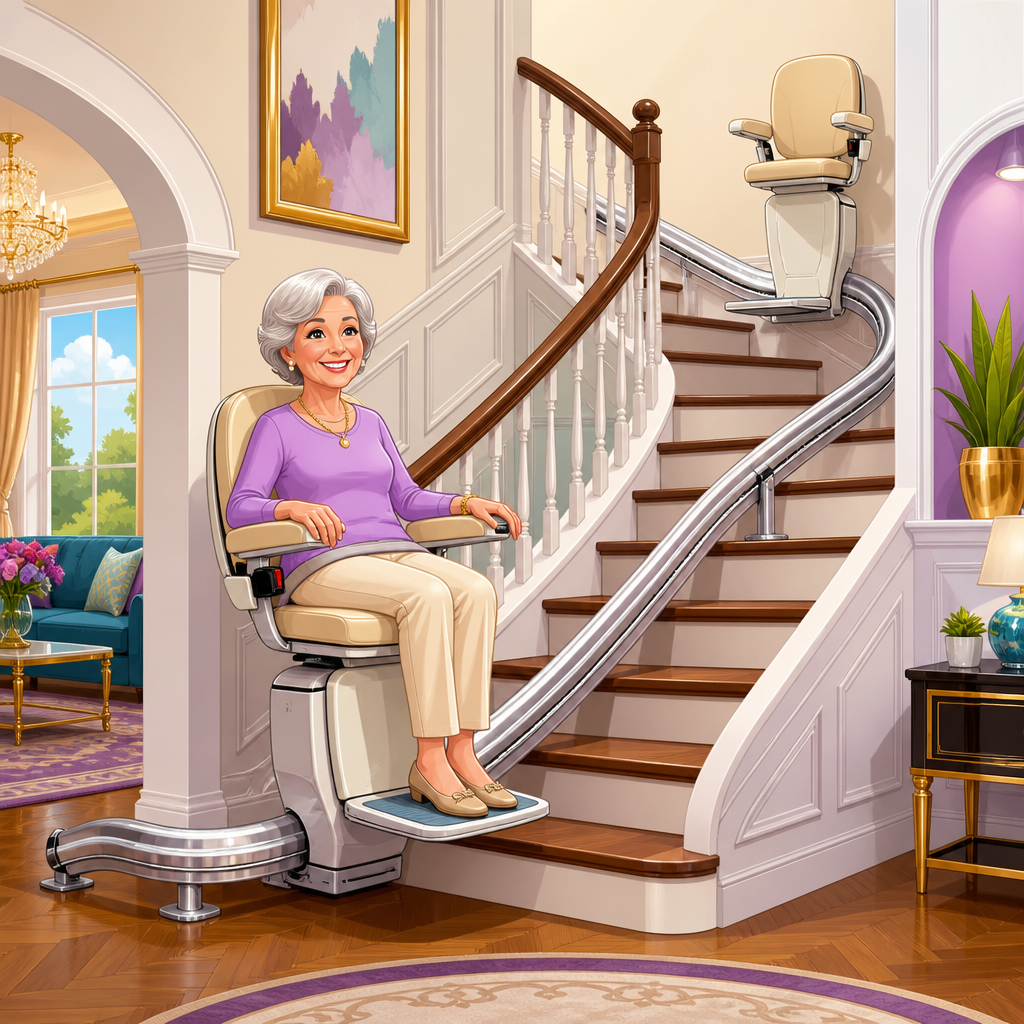
Luxury stair lifts with custom parking positions and rail overruns solve two high-priority problems at once: they preserve independent movement between floors and protect the look, flow, and safety of an upscale home. In practical terms, a luxury stair lift is not just a powered chair on a rail. It is a tailored accessibility system designed around staircase geometry, interior finishes, user mobility, and daily routines. Custom parking positions allow the chair to be sent to a chosen location when not in use, while rail overruns extend the track past the top or bottom step so the rider can mount and dismount on a safer landing rather than directly above the stairs.
For buyers shopping premium models, those details matter more than brochure language about comfort or elegance. I have seen homeowners focus on upholstery color, then later realize that the chair parks in the middle of a formal foyer or stops too close to the first tread for safe transfers. In high-end installations, the real difference is often engineering: powered swivel seats, hinged rails, multi-stop programming, custom call stations, and precise overrun lengths that reduce trip risk without dominating the room. A premium unit should feel integrated into the house and intuitive for the user, whether installed on a straight staircase in a townhouse or a curved staircase wrapping around a central hall.
This buying guide hub covers the premium end of the market comprehensively. It explains what custom parking positions and rail overruns are, how they work, which luxury features justify the higher price, what design and safety standards should shape your decision, and how leading brands approach curved rails, finishes, and advanced controls. If you are comparing luxury stair lifts for yourself, a parent, or a client, this page gives you the framework to evaluate fit, not just features. The goal is simple: choose a system that improves access every day without compromising safety, convenience, or the visual character of the home.
What Custom Parking Positions and Rail Overruns Actually Do
A custom parking position is a programmed resting place where the stair lift chair sits when not carrying a rider. On many basic units, the chair simply stays where it was last used. Luxury models improve on that by letting the installer assign one or more preferred parking points along the rail. The user can send the chair there with a remote, wall control, or integrated smart control. In a large home, that means the chair can disappear from the main sightline, clear a doorway, or stay near the person who needs it most.
Rail overruns are physical extensions of the track beyond the staircase itself. A bottom overrun pushes the boarding point away from the first step. A top overrun moves the exit point onto the landing. Both are designed to reduce the risk associated with transferring on or near the staircase. On premium curved systems, the overrun may wrap around a corner, align beside a wall, or terminate in a recess so the chair is less visible. The best installations combine the overrun with a powered swivel seat and footrest, creating a stable transfer zone with more body clearance and better caregiver access.
These features are especially important for users with limited trunk control, balance impairment, or difficulty pivoting. They also matter in homes where circulation space is valuable. A chair parked at the base of the stairs can obstruct an entry sequence, while one parked around a bend or higher up the rail can preserve the room’s function. From a design perspective, custom parking positions are one of the easiest ways to make a stair lift feel less medical and more architectural.
How Premium Stair Lift Systems Differ From Standard Models
The premium segment is defined by customization, ride quality, and finish options rather than simple lifting capability. Most standard straight stair lifts use modular rail sections with limited configuration choices. Luxury systems, particularly for curved stairs, are measured to the millimeter and manufactured to the exact profile of the staircase. That allows smoother starts and stops, tighter parking solutions, and cleaner alignment through turns, intermediate landings, and spiral sections.
In my experience, buyers notice three differences immediately during a showroom demonstration: motion, noise, and ergonomics. Better systems accelerate gradually, brake smoothly, and produce less drivetrain noise. The seat feels supportive rather than utilitarian, with higher-grade padding, arm design that assists transfers, and upholstery choices that match surrounding furniture. Premium units also tend to include powered functions that reduce effort for users with arthritis or reduced dexterity, including power swivel, power footrest folding, and one-touch send controls.
There is also a substantial difference in installation planning. A luxury stair lift should begin with a site survey that considers stair width, headroom, nose-to-nose tread dimensions, landing depth, obstructions, charger placement, and how the staircase is actually used by other occupants. Installers should discuss where the chair will park during daily life, not only whether the rail can technically fit. That planning is what separates a merely expensive lift from a genuinely premium one.
| Feature | Standard Model | Luxury or Premium Model |
|---|---|---|
| Rail design | Often modular, limited customization | Custom-built for staircase geometry |
| Parking options | Single default or last-used position | Custom parking points and multi-stop programming |
| Overruns | Basic straight extensions | Tailored top, bottom, or wraparound overruns |
| Controls | Simple rocker or remote | Advanced remotes, powered functions, programmable behavior |
| Finishes | Limited upholstery and rail colors | Broader upholstery, rail colors, and trim coordination |
| Ride quality | Functional | Smoother starts, quieter operation, refined seating |
Why Custom Parking Positions Matter in Luxury Homes
In premium residential settings, the staircase is rarely just a circulation path. It may be a visual focal point framed by millwork, stone flooring, or a double-height entry. A stair lift that parks in the wrong place can undermine the room every hour of the day, even if it works perfectly mechanically. Custom parking positions address that issue by allowing the chair to rest where it is least intrusive and most useful.
For example, in a formal front hall with a sweeping staircase, the ideal parking point may be several feet above the bottom tread, around the first curve and out of direct view from the entrance. In a multi-user household, the preferred position may shift depending on who uses the lift in the morning versus evening. Some systems can accommodate multiple remotes so family members can call the chair without leaving it parked prominently in a shared space. In homes with staff or regular caregivers, reliable parking behavior can also streamline routines and reduce frustration.
Parking positions can improve safety as well as aesthetics. If the chair parks clear of a narrow passage or away from a door swing, there is less chance of obstruction. If it parks near a charging point designed into the rail, battery health is maintained without requiring the chair to stop in an awkward location. Premium buyers should ask exactly where the charge contacts are placed and whether the selected parking position supports daily charging. A beautiful installation is only successful if it remains practical over years of use.
When Rail Overruns Are Worth the Investment
Rail overruns add cost, but they are often the single most valuable upgrade in a luxury stair lift system because they improve transfer safety and visual integration simultaneously. A top overrun is especially important when the upper landing is narrow or when a fall backward toward the stairs is a realistic risk. By moving the dismount point farther onto the landing, the system creates a more controlled transfer area. For users with walkers, canes, or limited balance, that extra distance can be decisive.
Bottom overruns are equally useful in homes where the first step begins close to an entry door, hallway, or radiator. Instead of boarding directly at the base tread, the rider can sit down on a level floor area beyond the staircase line. In luxury interiors, bottom overruns can also be used to park the chair around a corner or along a less visible wall. Curved overruns are particularly effective because they hide the chair without sacrificing convenience.
There are tradeoffs. A longer overrun requires more space, may affect furniture placement, and usually increases manufacturing complexity. Hinged rail sections may be necessary where a doorway or path of travel must stay clear. That is why measuring and scenario planning matter. Buyers should ask the dealer to map at least three real-life routines: morning ascent, nighttime descent, and visitor circulation when the chair is parked. If the overrun improves those routines, it is usually money well spent.
Design, Materials, and Finish Options in Luxury & Premium Models
Luxury stair lifts are expected to perform like medical mobility devices while looking like they belong in a carefully designed home. The best manufacturers understand that rail profile, seat shape, color matching, and hardware finish all influence acceptance. A bulky carriage under a delicate staircase can look clumsy, whereas a slim rail in a coordinated finish can recede visually. Powder-coated rails in white, brown, gray, or custom-adjacent tones are common in the premium market, and higher-end upholstery options often include faux leather or easy-clean woven fabrics.
That said, aesthetics should never be separated from maintenance. Light upholstery may look elegant but show transfer wear more quickly. Glossy finishes may highlight fingerprints near the armrests. I usually advise buyers to think in terms of “quiet durability”: select materials that blend with the staircase and can withstand repeated contact, cleaning, and sunlight exposure. UV stability matters if the stairwell has large windows, and textured seat surfaces can improve confidence during transfers.
Premium design also includes mechanical concealment. Better units integrate wiring, charging contacts, and fold points more discreetly. Folded dimensions are a practical design metric: a narrow folded profile keeps the staircase usable for others and reduces visual bulk. Ask for the folded seat, arm, and footrest dimensions in writing, then compare them to the clear walking width needed by other residents. Good design is measurable, not subjective.
Safety Standards, Measurements, and Installation Planning
Any stair lift purchase should begin with safety, but premium installations demand even more rigorous planning because they often involve complex staircase shapes and higher expectations for integration. Reputable dealers should assess compliance with applicable codes, manufacturer requirements, and recognized safety standards such as ASME A18.1 in the United States for platform and chairlifts. Not every detail of residential installation is governed identically in every jurisdiction, so local code review is essential, especially in condominiums, historic properties, or homes undergoing broader renovation.
Key measurements include staircase width, landing depth, tread depth, riser height, nosing profile, obstruction points, and electrical access. Curved stair lifts are typically mounted to the treads, not the wall, which surprises many first-time buyers. That means the strength and condition of the staircase matter. Installers should also evaluate whether a hinged rail is needed to prevent blocking a doorway or tripping hazard at the bottom.
Ask about seat belt style, obstruction sensors, manual lowering procedures, battery backup behavior, and service intervals. Premium systems usually run on batteries charged from a household supply, allowing operation during a power outage for a limited number of trips. Buyers should request a realistic explanation of range during outages rather than a vague assurance. Clear answers now prevent disappointment later.
Leading Brands, Product Positioning, and What to Compare
Several established manufacturers compete in the premium stair lift category, including Stannah, Handicare, Bruno, Platinum, Access BDD, and TK Home Solutions, known previously in many markets as Thyssenkrupp Home Solutions. Product availability varies by region, dealer network, and staircase type, so the strongest brand on paper is not always the best local option. What matters is the combination of engineering, customization, installer skill, parts access, and after-sales support.
For curved staircases, compare rail manufacturing lead time, maximum weight capacity, seat options, powered features, folded width, and parking flexibility. Some brands excel in compact rails; others stand out for upholstery quality, heavier weight capacities, or sophisticated curve handling. Dealer execution matters enormously because a premium stair lift is a custom project. I have seen excellent products undermined by weak surveys and average products perform well because the installer carefully planned the overrun, charging points, and final parking location.
This hub page should be the starting point for deeper comparisons across luxury and premium models. From here, buyers should move into focused reviews on straight versus curved premium lifts, top brands for custom rails, best powered swivel seats, maintenance expectations, and design-led installations for historic or contemporary homes. Use this article as your evaluation checklist: if a model cannot answer the questions raised here, it is not truly competing at the premium level.
Luxury stair lifts with custom parking positions and rail overruns are worth serious consideration because they solve mobility needs without forcing a home to feel clinical or compromised. The central lesson is straightforward: premium value comes from fit, transfer safety, and integration, not from price alone. A chair that parks discreetly, charges reliably, and allows boarding on a stable landing will deliver more day-to-day benefit than a more expensive unit with weaker planning.
As you compare luxury and premium models, focus on the decisions that shape daily use: where the chair parks, how the overrun changes the transfer, whether powered features reduce strain, and how the rail works with the architecture of the staircase. Ask brands and dealers for exact measurements, real installation photos, standard references, and a written explanation of why the proposed parking position is the best one for your routine. Specific answers are a sign of a serious provider.
If you are building a shortlist under the Buying Guides & Product Reviews category, use this hub as your foundation and then review model-specific comparisons, curved rail guides, and premium brand breakdowns before requesting quotes. A well-chosen stair lift should feel safe, quiet, and visually at home from the first ride onward. Start with a professional site survey and insist on customization that serves both the rider and the house.
Frequently Asked Questions
What are custom parking positions on a luxury stair lift, and why do they matter in a high-end home?
Custom parking positions are designated stopping points where the stair lift chair can be sent when it is not in use. Instead of leaving the chair parked in the most visible part of the staircase, a luxury system can be configured so the unit rests at a more discreet location, such as around a corner, at the top landing, at the bottom away from the main sightline, or in another area that better suits the home’s layout. In upscale interiors, this matters because the staircase is often a major architectural feature, not just a functional route between levels. A carefully selected parking position helps preserve open views, maintain symmetry, and reduce visual clutter.
These positions also improve everyday usability. A homeowner may want the chair parked near a bedroom at night, but out of the foyer during the day when guests are present. In some homes, different family members may use separate call/send controls to move the chair to the most convenient location before use. This level of customization supports both independence and discretion. Rather than forcing the home to adapt to a standard mobility product, the stair lift is designed to fit the household’s routine, traffic flow, and aesthetic priorities.
How do rail overruns improve safety and convenience?
Rail overruns extend the stair lift track beyond the top or bottom step so the user can get on or off the chair away from the edge of the staircase. This is one of the most valuable safety features available, especially for users who may have balance limitations, reduced leg strength, or concern about stepping too close to an open stair edge. By moving the boarding or exit point onto a landing or a safer floor area, the lift reduces the risk of missteps and creates a more controlled transfer experience.
Convenience is another major advantage. In a luxury installation, the goal is not simply to move someone up and down the stairs, but to make that movement feel smooth, intuitive, and secure. A top overrun can position the chair so the user dismounts farther into the upper hallway, while a bottom overrun may place the boarding point away from a busy entry path. Combined with swivel seats, folding arms, and easy-to-use controls, overruns help make the lift more comfortable to live with on a daily basis. They also pair especially well with custom parking positions, since the track extension can allow the chair to be stored in a less noticeable location when not in use.
Can a luxury stair lift be designed to match the home’s architecture and interior finishes?
Yes. One of the defining differences between a luxury stair lift and a basic model is the degree of design integration. Premium systems are selected and configured with close attention to staircase shape, railing placement, wall conditions, flooring transitions, and surrounding finishes. For curved stairs, custom-fabricated rails are built specifically to the home’s geometry, which allows the lift to follow turns, landings, and elevation changes with a refined, space-conscious fit. This is essential in homes where the staircase is a focal point and any added equipment must feel intentional rather than intrusive.
On the visual side, many luxury stair lifts offer upgraded upholstery, slim-profile seats, coordinated rail colors, and folding components that reduce the system’s footprint when parked. Installers and designers may work together to choose parking locations that minimize the chair’s presence in formal spaces such as grand foyers, living areas, or gallery-style stair halls. The result is an accessibility solution that supports mobility without undermining the home’s character. In the best installations, the stair lift feels less like a medical add-on and more like a thoughtfully integrated feature of the residence.
Who benefits most from custom parking positions and rail overruns?
These features are especially beneficial for homeowners who want to remain in a multi-level home without compromising comfort, safety, or appearance. Older adults aging in place are a common example, but they are not the only users. Individuals recovering from surgery, people with joint pain or neurological conditions, and families planning proactively for long-term accessibility can all benefit from a stair lift designed around how they actually live. When a home has a prominent staircase, narrow circulation areas, or an active household with guests, staff, or children, custom parking positions become particularly valuable because they help keep the stair lift out of the main traffic pattern when it is not needed.
Rail overruns are most important for users who need a more secure transfer point, especially at the top of the stairs where the consequences of a loss of balance can be serious. They are also useful in homes where the bottom of the staircase opens into an entry hall or passageway, since the lift can be positioned to reduce obstruction. In short, these upgrades are ideal for homeowners who want accessibility without settling for a one-size-fits-all installation. They provide a better fit physically, functionally, and visually.
What should homeowners consider before choosing a luxury stair lift with these custom features?
Homeowners should begin with a professional assessment of the staircase and the user’s mobility needs. The right solution depends on several factors, including whether the stairs are straight or curved, where the safest boarding and exit points are located, how much landing space is available, and where the chair can be parked without interrupting the home’s layout. It is also important to consider who will use the lift, how often it will be used, and whether the needs may change over time. A lift that works beautifully today should still support comfort and safety years from now.
From a design standpoint, homeowners should ask how the rail will be routed, how visible the chair will be from major living spaces, what finish options are available, and whether the parking positions can be aligned with the home’s daily rhythm. It is equally important to work with an experienced provider who understands both accessibility engineering and residential aesthetics. A quality installer will explain the tradeoffs between different rail overrun lengths, seat styles, and storage positions, and will ensure the system meets safety standards while complementing the architecture. For luxury homes, success is not just about installing a stair lift that works. It is about creating a tailored mobility solution that protects independence, preserves beauty, and feels natural to use every day.