


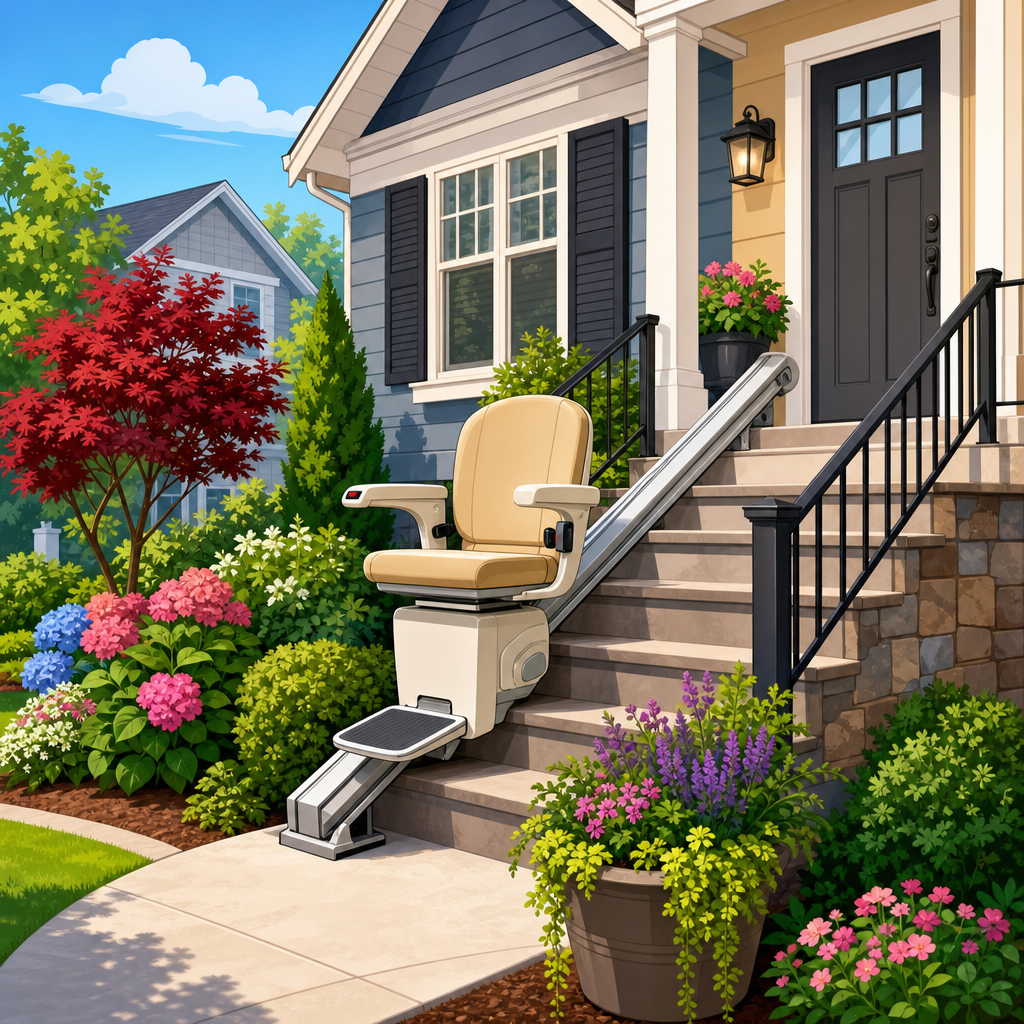
Outdoor stair lift design ideas for curb appeal start with a simple truth: accessibility equipment does not have to look clinical, bulky, or out of place. An outdoor chair lift is a motorized seat that travels along a rail mounted to exterior steps, giving people a safe way to move between levels without climbing. In practice, it is part mobility device, part exterior renovation, and part long-term aging-in-place strategy. Because it sits at the front walk, porch stairs, garden steps, or a rear deck entrance, its appearance affects how the whole property feels from the street.
I have worked with homeowners who delayed installing an outdoor stair lift because they feared it would make a beautiful entrance look institutional. That concern is understandable, but it is usually based on outdated products or poor planning rather than current design options. Today’s outdoor chair lifts come with slimmer rails, folded seats, weather-resistant finishes, parking positions, remote controls, and upholstery choices that make them far easier to blend into residential architecture. When the lift is selected with the home’s materials, layout, and sightlines in mind, it can support mobility while preserving curb appeal.
This matters for several reasons. First, the outdoor entrance is the most visible part of the installation. Second, exterior conditions are hard on equipment, so design choices must account for rain, sun, corrosion, temperature swings, and drainage. Third, front-entry accessibility affects independence, safety, and resale conversations. Buyers may not all need a lift, but they do notice whether an exterior addition looks intentional, well maintained, and integrated. A well-designed system signals care and practicality; a poorly placed one can interrupt circulation, block handrails, or dominate the facade.
For this reason, the best outdoor stair lift design ideas combine function with architectural compatibility. That means understanding rail placement, seat style, folding dimensions, color coordination, landing clearance, code considerations, and maintenance access. It also means recognizing that not every staircase should get the same solution. A narrow brick stoop, a broad concrete front stair, and a winding garden path each present different visual and technical constraints. The goal is not to hide the lift at all costs. The goal is to make it look like a deliberate extension of the home rather than an afterthought.
Start with the staircase, approach, and sightlines
The most effective outdoor chair lift designs begin with the path a visitor sees and the path a user takes. Before discussing finishes or seat colors, assess the staircase geometry: width, rise, run, tread condition, drainage slope, top landing size, and bottom clearance. On site, I first stand at the curb, then at the front walk, then at the door. Those viewpoints reveal where the rail will be most visible and whether it can align with an existing edge, wall, or guardrail. Straight outdoor stair lifts are usually the cleanest visual option because the rail is simpler, lighter, and easier to predict in elevation.
Width matters because the rail is mounted to stair treads, not typically to the wall, and the folded chair still occupies space. Many manufacturers recommend enough clear stair width to maintain safe pedestrian passage when the unit is parked or folded. If the staircase is already tight, a side-mounted rail on the less visible edge often improves appearance and usability. For example, placing the rail on the inside edge of porch steps can reduce how much hardware is seen from the street, while also protecting the carriage from accidental impact. On open landscape steps, the outside edge may be better if it avoids shrubs and preserves handrail continuity.
Landings deserve equal attention. A cramped top landing creates both safety and visual problems because the chair may stop where users feel exposed or where the folded seat crowds the door swing. In those cases, a rail overrun can move the parked chair away from the immediate threshold. A hinged rail at the bottom can also help where the track would otherwise extend into a walkway. These details are not cosmetic extras. They are core design tools that keep the installation from interrupting circulation and from becoming the first thing guests notice.
Choose a lift model that suits exterior use and architecture
Not every stair lift can be used outdoors. A true outdoor model should have weather-sealed controls, marine-grade or corrosion-resistant components, UV-stable plastics, protected wiring, and a cover designed for year-round exposure. Reputable brands such as Bruno, Harmar, and Access BDD offer outdoor-rated systems, but specifications differ. Some focus on heavier weight capacities, while others prioritize compact folding dimensions or smoother start-stop performance. Matching the model to the house is as important as matching it to the user. A large-capacity unit may be essential for one household, but on a narrow decorative stoop it can also appear oversized if a more compact version would meet mobility needs.
Architectural style should guide selection. On a traditional colonial or craftsman facade, neutral tones such as beige, bronze, stone, or muted gray generally integrate better than bright medical-looking finishes. On a contemporary home with black metal railings and crisp concrete steps, a darker rail and streamlined seat profile usually look more intentional. I often recommend treating the rail like exterior trim or metalwork. If existing elements are black powder-coated steel, choose a rail finish that visually belongs to that family. If the entry relies on warm masonry and painted wood, a softer finish often works better than stark white.
Seat shape also affects curb appeal. High-back seats read more prominently from a distance, while compact folded chairs reduce visual mass when not in use. Footrests and armrests should fold easily and hold securely, because partially open components make the installation look cluttered. If several people use the same entrance, remote call-send controls are valuable because they let the chair park at the top or bottom rather than remain centered on the stairs. That single choice can dramatically improve the look of the entry between uses.
Use rail placement and parking positions to reduce visual clutter
Rail placement is the biggest design decision for outdoor stair lifts because it determines how much metal is visible, how the chair intersects the architecture, and where the eye lands. A well-placed rail follows the stair line cleanly and avoids awkward projections. On most straight exterior stairs, I try to keep the lower end from extending into the main approach path unless a folding section is necessary. A bottom overrun can improve transfer safety, but if it interrupts a walkway, the result feels intrusive. In those situations, a hinged rail or an alternate parking location usually offers a better balance of appearance and function.
Top and bottom parking positions are underrated curb appeal tools. If the home’s front elevation is symmetrical and formal, parking the chair out of sight near the porch rather than at the front walk can preserve the intended visual balance. If the back deck is the main access point, parking at the lower patio may be less noticeable and more convenient. Some homeowners assume the chair must always remain in the most accessible spot. In reality, with call-send remotes, the unit can be staged where it has the least visual impact until needed.
When several design variables must be balanced, a side-by-side comparison helps narrow the right approach.
| Design choice | Best use case | Curb appeal benefit | Key tradeoff |
|---|---|---|---|
| Inside-edge rail placement | Porch stairs with visible street frontage | Reduces rail visibility from curb | May tighten clearance near wall or posts |
| Outside-edge rail placement | Landscape stairs or open-sided steps | Can preserve handrail line and doorway approach | Often more visible from the street |
| Top parking position | Homes where bottom walkway is prominent | Keeps chair out of the main sightline | User must call the lift before descending |
| Bottom parking position | Rear entries or hidden side access | Can conceal the chair from the facade | May crowd approach if landing is small |
| Hinged rail | Walkways where track extension blocks circulation | Prevents rail from cutting across entry path | Higher cost and more moving parts |
| Compact folded seat | Narrow stairs or highly visible entries | Minimizes visual bulk when not in use | May offer less padding or seat width |
Coordinate materials, color, and landscaping with the lift
The easiest way to improve outdoor stair lift appearance is to stop treating it as a stand-alone appliance and start treating it as part of the exterior palette. Look at the fixed materials already present: brick, stone veneer, painted risers, wrought iron, aluminum railings, decking, and trim. Then select a rail and seat color that belongs with those surfaces. Powder-coated finishes generally outperform painted field modifications, and factory finishes tend to hold up better in weather. I discourage homeowners from improvising cosmetic wraps or nonapproved coatings because they can trap moisture, void warranties, or interfere with service access.
Landscaping can soften the installation without concealing critical moving parts. Low plantings beside the stair base can visually anchor the lower rail end, while planters on the porch can balance the upper landing. The rule is simple: plants should frame the lift, not obstruct it. Keep shrubs clear of the carriage path, charging points, and footrest swing zone. Ornamental grasses that flop into the track after rain create both maintenance and safety issues. Better choices include compact evergreens, boxwood, dwarf holly, or seasonal containers placed outside operational clearances.
Lighting is another design element with practical impact. Soft path lighting or stair tread lighting draws attention to the architecture rather than the equipment while also improving safety in low light. If the chair lift serves a front entrance used after dark, choose fixtures that illuminate the transfer areas at top and bottom landings. Good lighting does more than help users see controls. It makes the whole installation look planned, permanent, and cared for.
Protect safety, weather performance, and long-term appearance
Curb appeal only lasts if the lift continues to operate reliably and look maintained. Outdoor environments accelerate wear, especially in coastal areas, freeze-thaw climates, and regions with intense sun exposure. Stainless hardware, sealed gear systems, UV-resistant seats, and fitted weather covers are not optional details; they are appearance-preserving measures as much as functional ones. A faded seat, rusty fasteners, or debris-packed track can make even a well-designed installation look neglected within a season.
Routine maintenance should be built into the design conversation from the start. Ask where water drains after storms, whether mulch or gravel can splash onto the lower rail, and how easily a technician can access charging contacts and diagnostic points. I have seen excellent-looking installs compromised by gutters that discharged directly onto the upper landing. Redirecting runoff solved both corrosion risk and staining on surrounding materials. In snowy climates, homeowners need a clear snow-removal plan that protects the rail and keeps transfer zones level and slip resistant.
Safety details also influence aesthetics. A swivel seat at the top landing can reduce awkward transfers and lets the chair stop in a more controlled position. Obstruction sensors, seat belts, locking armrests, and constant-pressure controls are standard on quality units and should never be viewed as optional add-ons for appearance reasons. Likewise, local code issues, homeowner association rules, and manufacturer clearance requirements must be reviewed before installation. The best-looking outdoor chair lift is the one that fits the site correctly, respects circulation, and continues working year after year.
Plan the outdoor chair lift as part of a broader access strategy
Because this page serves as a hub for outdoor chair lifts, it helps to place design decisions in a wider context. Front-step lifts, deck-access lifts, garden-step lifts, and side-entry installations all solve the same mobility problem, but they do so under different site constraints. A straight front stoop lift may emphasize facade integration. A backyard deck lift may prioritize weather resistance and transfer space near a grill or patio door. A long landscape stair may call for stronger drainage planning and more attention to rail visibility through planting beds. Thinking in subtypes makes product comparisons more useful and helps homeowners ask better questions.
Outdoor stair lifts also sit within a larger access toolkit. In some cases, a vertical platform lift, modular ramp, or regraded walk is the better solution, especially when stairs are very steep, users rely on wheelchairs full time, or multiple family members need step-free entry. A chair lift is ideal when a seated transfer is practical and when preserving the existing stair is preferable to major reconstruction. The main benefit is targeted accessibility with less structural disruption than many alternatives. For many homes, that means faster installation, lower project scope, and far less impact on the front elevation.
Outdoor stair lift design ideas for curb appeal work best when they start with the home, the user, and the approach route at the same time. Assess sightlines first, choose an outdoor-rated model that matches the architecture, use rail placement and parking positions strategically, and coordinate colors, lighting, and planting with the existing exterior. Do not ignore weather, maintenance, or code realities, because long-term appearance depends on long-term performance. When these factors are handled well, an outdoor chair lift looks intentional, protects independence, and keeps a welcoming entrance intact. If you are planning one now, measure the stairs, photograph the entry from several angles, and speak with a qualified installer who can turn accessibility needs into a design-led solution.
Frequently Asked Questions
Can an outdoor stair lift really improve curb appeal instead of hurting it?
Yes, absolutely. A well-chosen outdoor stair lift can support accessibility while still complementing the look of the home. The key is to treat it as part of the exterior design rather than as an afterthought. Modern outdoor chair lifts are available with slimmer rails, compact folding seats, and finishes that feel much more integrated than older, institutional-looking models. When the rail color works with the stair material, trim, or railing, the lift tends to blend in rather than dominate the entry.
Curb appeal improves most when the installation is visually intentional. That means looking at the whole setting: the width of the stairs, the style of the handrails, nearby landscaping, porch details, and even the front door hardware. A lift placed on one side of the steps with a tidy, low-profile rail and a seat that folds neatly away can preserve the clean lines of the entrance. Thoughtful placement also helps keep the main path open and balanced, which matters for both appearance and function.
Many homeowners are surprised to find that adding an outdoor stair lift can actually make the property feel more welcoming. It signals that the home is usable, adaptable, and designed for long-term living. For families focused on aging in place, that has real value. Instead of seeing accessibility and beauty as competing goals, it is more accurate to think of the best outdoor stair lift designs as a blend of safety, usability, and architectural fit.
What design features help an outdoor stair lift blend in with the front steps, porch, or garden path?
The best design ideas start with proportion and placement. A stair lift should fit the scale of the staircase rather than overwhelm it. On narrow front steps, a slim rail and compact folded seat are especially important. On wider porch stairs or long garden runs, there may be more flexibility to incorporate a slightly more substantial system without it feeling intrusive. In either case, the goal is visual balance. The lift should support movement without interrupting the character of the entry.
Color coordination makes a major difference. Homeowners often choose neutral finishes or tones that echo existing exterior elements such as black iron railings, bronze light fixtures, white trim, or natural stone. Matching or harmonizing the rail with nearby metalwork can make the lift appear more intentional. Seat materials and weatherproof covers also matter. A tailored outdoor cover in a complementary color can keep the unit protected while making it look neat and cared for when not in use.
Landscaping can also soften the appearance of an outdoor stair lift. Planters, low shrubs, and well-edged flower beds can frame the stair area without interfering with operation. Lighting is another useful tool. Gentle path lighting or step lighting can visually anchor the lift into the surrounding exterior design while improving nighttime safety. Finally, if the staircase itself is dated, updating the treads, railings, or paint at the same time as the installation can make the stair lift feel like part of a complete exterior upgrade rather than a standalone add-on.
Where should an outdoor stair lift be installed for the best mix of accessibility, safety, and appearance?
The ideal location is usually one that provides the most direct, comfortable route while keeping the lift as unobtrusive as possible. For many homes, that means mounting the rail along one side of the main front steps, porch stairs, rear entrance, or garden access stairs. The exact side depends on the staircase layout, clearance needs, gate or door swing, handrail position, and where the rider can safely get on and off at the top and bottom. Appearance matters, but safe boarding and exit points matter even more.
From a design standpoint, side placement that preserves open sightlines often works best. A lift should not make the entrance feel cluttered or block architectural features. If there is a more private side entry that still gives convenient access to the home, some homeowners prefer that option to keep the front facade more visually open. Others want the main entrance to remain fully accessible, especially if that is where guests, deliveries, and everyday traffic come through. In those cases, selecting a lower-profile model and coordinating the finish becomes especially important.
Professional installers evaluate stair width, landing depth, drainage, electrical access, and exposure to weather before recommending placement. They also consider how the folded chair will sit when parked and whether a call-send control can move the lift out of the primary view when it is not in use. The best installation point is one that feels natural in daily use and visually settled in the landscape, not forced into a spot that creates awkward circulation or draws unnecessary attention.
How do you protect an outdoor stair lift from weather without making it look bulky or out of place?
Outdoor stair lifts are specifically built for exterior conditions, but good design still includes weather protection. Quality outdoor models are made with durable finishes, weather-resistant upholstery, sealed components, and materials meant to handle moisture, temperature shifts, and sun exposure. Even so, a protective cover is one of the smartest additions because it helps preserve the seat, controls, and overall appearance. The difference is that today’s covers can look far more tailored and unobtrusive than the loose, obvious covers people may picture.
To keep the setup attractive, choose a fitted cover in a neutral tone that relates to the home’s exterior palette. A snug cover looks cleaner, resists flapping, and reads as intentional rather than temporary. Parking the chair at either the top or bottom landing in the least visually prominent spot can also reduce how much of the unit is visible from the street. Some homeowners coordinate the parking area with nearby screening elements, such as a porch post, side wall, or landscaping, as long as the lift remains fully accessible and safe to operate.
Routine maintenance also plays a role in appearance. Keeping the rail clean, clearing leaves and debris from the stairs, and checking that the cover is in good shape helps the lift continue to look like a well-maintained feature of the home. In colder or wetter climates, it is especially important to work with an experienced provider who understands local weather demands. The most appealing installations are not just stylish on day one; they continue to function smoothly and look cared for through every season.
Is adding an outdoor stair lift a good long-term investment for aging in place and home value?
For many households, yes. An outdoor stair lift supports one of the most practical goals in residential design: making it easier to stay in the home safely over time. If exterior stairs are a daily barrier, the front porch, yard, or secondary entrance can effectively become unusable. Installing a lift restores access to those spaces and can reduce fall risk significantly. That makes it more than a convenience feature. It becomes part of a broader aging-in-place strategy that helps the home remain functional as needs change.
From a design and renovation perspective, an outdoor chair lift can also be more cost-effective and less disruptive than major structural changes. Rebuilding exterior grades, adding long ramps, or reworking entry layouts can take more space and may have a larger visual impact than a well-designed lift. In many cases, a stair lift offers a cleaner solution that preserves the architecture while improving usability. When integrated thoughtfully, it can make the property feel better planned and more adaptable rather than compromised.
As for resale, the impact depends on the buyer and the market, but accessibility features are increasingly relevant as more homeowners prioritize multi-generational living and long-term comfort. Even if a future buyer does not need the lift immediately, the presence of an accessible entry can still be seen as a practical advantage. The strongest return usually comes when the lift is professionally installed, visually coordinated with the home, and kept in excellent condition. In that sense, the investment is both personal and practical: it improves everyday life now while supporting the home’s usability and appeal for years to come.