


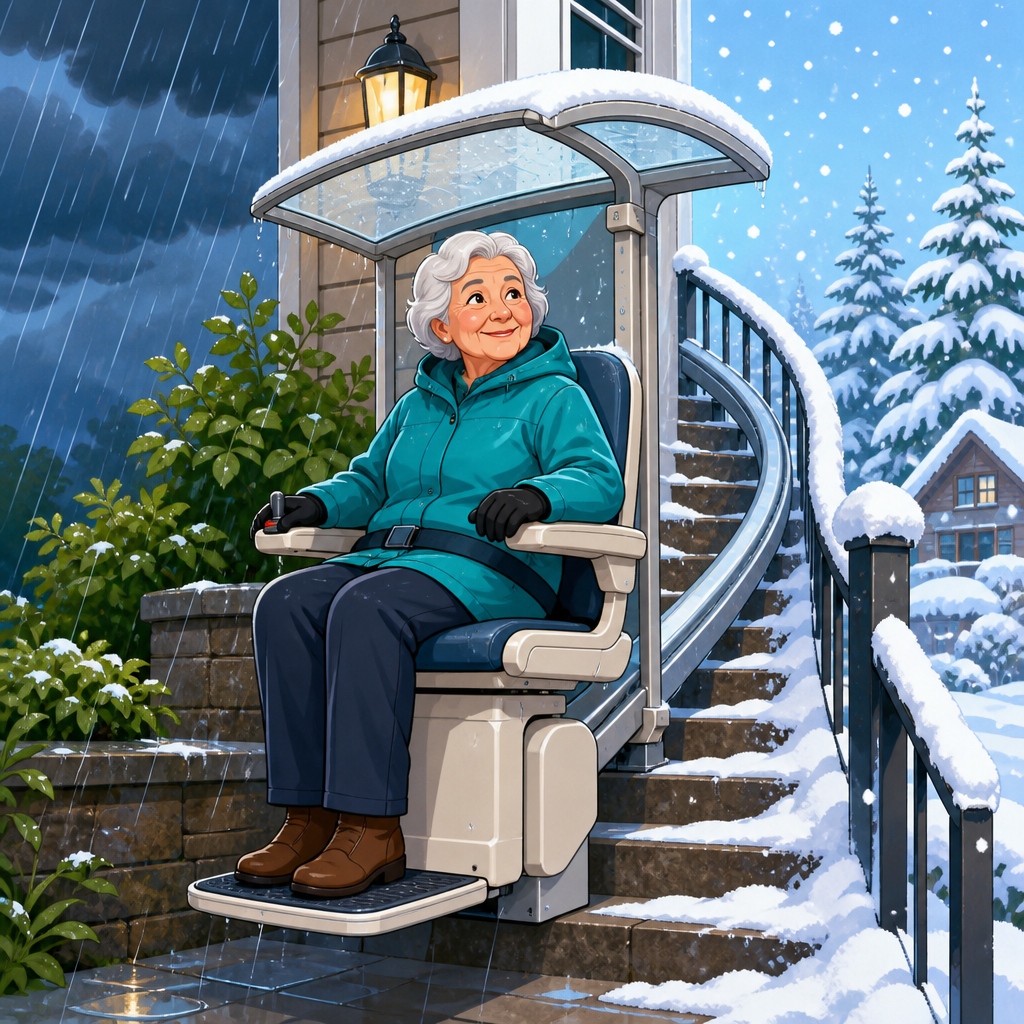
Outdoor stair lifts extend safe access to porches, decks, garden paths, and split-level entries, but weather changes everything. A lift that performs well inside can fail quickly outdoors if it is not engineered for rain, snow, ice, ultraviolet exposure, and large temperature swings. When homeowners research outdoor chair lifts, they are really evaluating a system of components: the rail, drive, battery, controls, seat, cover, power supply, and drainage details that protect the machine over years of exposure. I have specified and reviewed these systems for homes in wet coastal climates and freeze-thaw regions, and the difference between a durable installation and a constant service problem usually comes down to design features that are easy to miss on a brochure.
An outdoor stair lift is a motorized chair that travels on a rail mounted to the stair treads or, less often, nearby structure, allowing a user to ride up and down exterior steps safely. Outdoor chair lifts are built specifically for exposed installations and should never be treated as standard indoor units with a rain cover added later. True outdoor models use weather-resistant materials, sealed electronics, coated hardware, low-temperature-capable batteries, and upholstery designed to resist moisture and fading. In heavy rain and snow, those features are not optional. They determine reliability, safety, service life, and total ownership cost.
This matters because exterior stairs are often the most hazardous route into a home. According to long-established accessibility and fall-prevention guidance, slips, rushed transfers, and unstable footing are major contributors to injury, especially when surfaces are wet or icy. For many households, the outdoor stair lift is not a convenience product; it is the primary accessible entrance. If it stops after a storm, the user may lose access to medical appointments, deliveries, or even emergency egress. Choosing the right design means understanding how outdoor lift systems handle water intrusion, corrosion, traction loss, battery stress, and maintenance in real conditions, not showroom conditions.
As the hub page for outdoor chair lifts, this article explains the features that matter most in severe weather, the tradeoffs between common designs, and the questions to ask before buying. It also points you toward the broader decision criteria that connect this topic to the wider chair lift types and designs category: straight versus curved rails, transfer geometry, power systems, seating options, controls, and service support. If you want one clear answer up front, it is this: in heavy rain and snow, the best outdoor stair lifts combine marine-grade materials, sealed electrical architecture, dependable battery drive, effective covers and drainage, and installation practices tailored to the site.
Why outdoor stair lifts need weather-specific engineering
Outdoor stair lifts operate in a harsher environment than most people realize. Rain does not only wet the seat; it migrates into joints, fastener interfaces, charging contacts, footrest hinges, and call station housings. Snow is not just frozen water; when it melts and refreezes, it creates expansion stress, corrosion cycles, and ice buildup that can block a carriage or prevent a seat from folding properly. Add windblown debris, road salt, pollen, bird droppings, and ultraviolet radiation, and the lift becomes a small transportation system living outdoors full time.
The most reliable outdoor chair lifts are designed around ingress control and corrosion resistance from the start. That means powder-coated or anodized finishes, stainless or similarly protected hardware, gaskets at critical enclosures, UV-stable plastics, and drainage paths that move water away from electronics and mechanical interfaces. Manufacturers may describe weather resistance differently, but the principle is constant: every exposed part needs a reasoned defense against moisture, contamination, and temperature stress. A simple vinyl cover helps when the lift is parked, but it is not a substitute for sealed design.
Climate also affects usability. In a cold snap, battery chemistry changes, lubricants thicken, and plastic becomes less forgiving. In humid coastal zones, corrosion can progress faster than owners expect, especially on charging strips, connectors, and rail brackets. In mountain regions, drifting snow can bury the lower overrun area and create an impact point for plows or shovels. I have seen otherwise good products struggle because the site planning ignored runoff from a roof valley, causing repeated icing directly at the charging point. Good outdoor performance is always the result of both product design and installation judgment.
Materials, finishes, and corrosion protection
If you compare outdoor stair lifts carefully, materials tell you a lot about long-term durability. The rail and brackets need a finish that resists chipping and oxidation; the fasteners should be stainless steel or equally corrosion-resistant; and the seat frame and hinge hardware should tolerate repeated wet-dry cycles without seizing. Powder coating is common because it provides strong surface protection, but coating quality and substrate preparation matter. Once chips expose base metal, corrosion can begin at edges and drilled points, especially where standing moisture persists.
Hardware quality is especially important in heavy rain and snow because exterior lifts move through small repeated loads while moisture is constantly present. Bolts, washers, hinge pins, and footrest linkages must resist rust staining and binding. Better systems isolate dissimilar metals where possible to reduce galvanic corrosion. That detail matters near the coast, where salt in the air accelerates electrochemical damage. Reputable manufacturers also use UV-stabilized polymer panels and upholstery that resist cracking, chalking, and water absorption. When seat foam absorbs moisture, cold weather makes it uncomfortable and can shorten material life dramatically.
For buyers comparing products, ask exactly what is stainless, what is coated steel, and what remains vulnerable. A marketing phrase like “weatherproof” is less useful than a parts-level explanation. Request information about rail finish, bracket hardware, seat upholstery composition, and whether the charging contacts are protected when parked. Also ask dealers what they replace most often on outdoor installations in your climate. That answer often reveals more than the brochure does.
Electrical sealing, battery systems, and charging reliability
Most modern outdoor chair lifts are battery-powered units that charge at one or both ends of the rail. This is the right architecture for weather resilience because the lift can still complete trips during short power outages and does not rely on a continuously energized trailing cable exposed to the elements. But battery drive alone is not enough. The charger location, contact design, enclosure sealing, and cold-weather battery behavior determine whether the lift is dependable after storms.
Electronics should be housed in sealed or well-protected compartments, with wiring routed to prevent water tracking into connectors. Charging contacts need alignment that stays consistent despite thermal expansion, vibration, and minor debris. In heavy rain, poorly shielded contacts can corrode or lose conductivity. In snow country, the parking station should be positioned where drifting and meltwater are minimized. Some installations benefit from parking the chair under a small canopy or at the top landing where drainage is better, though that must be balanced with user access and transfer safety.
Batteries deserve special attention. Sealed lead-acid batteries remain common in stair lifts because they are proven, cost-effective, and capable of delivering high current, but capacity drops in cold conditions. If a lift sits uncharged during freezing weather, performance can fall sharply. That is why regular charging and healthy battery replacement intervals matter. When I evaluate an outdoor stair lift for a snowy home, I look closely at how the owner will keep the unit parked on charge and how technicians can access the batteries for routine service. A technically sound system can still disappoint if basic charging habits are inconvenient.
| Design feature | Why it matters in rain and snow | What to ask before buying |
|---|---|---|
| Powder-coated or anodized rail | Reduces corrosion and finish breakdown after repeated wet-dry cycles | How is the rail finished, and what is the warranty on exterior corrosion? |
| Stainless or protected fasteners | Prevents rust seizure at brackets, hinges, and footrest linkages | Which hardware is stainless, and which parts need periodic replacement? |
| Sealed electronics housing | Limits water intrusion that can disable controls or charging systems | Where are control boards and connectors located, and how are they sealed? |
| Battery-powered drive | Allows operation during brief outages and avoids exposed powered travel cables | How many trips are typical in an outage, and how does cold affect range? |
| Weather cover and protected parking point | Shields seat, controls, and charging contacts from direct exposure | Is a fitted cover included, and where will the chair be parked daily? |
| Slip-resistant seat and footrest surfaces | Improves transfers when shoes, mobility aids, or clothing are wet | What texture or drainage features reduce slipping during boarding? |
Rail design, drainage, and snow management
The rail is the backbone of the outdoor stair lift, and its design affects both performance and maintenance. Straight outdoor stair lifts are generally simpler and more robust than curved models because they have fewer custom bends and fewer variables in carriage movement. For many exterior applications, especially front steps and deck stairs, a straight rail is the practical first choice. Curved outdoor systems do exist for complex approaches, but they require careful engineering and usually higher budgets.
Drainage is a critical but under-discussed factor. Water should not pool at the lower end of the rail, around bracket feet, or at charging points. Installers need to account for stair pitch, adjacent landscaping, roof runoff, and winter melt patterns. If the bottom landing collects slush, the carriage may repeatedly pass through contaminated moisture that carries grit and deicing chemicals. In those cases, moving the lower stop slightly, adding a rail overrun, or adjusting drainage nearby can meaningfully improve reliability.
Snow management is equally practical. No outdoor chair lift should be expected to push through accumulated snow. Owners need a clear plan for brushing the seat, clearing the footrest area, and keeping the rail path unobstructed. The best systems make this easier with smooth surfaces, simple folding mechanisms, and durable covers that can be removed and replaced without struggle. A dealer should explain exactly what daily winter care looks like. If that explanation sounds vague, service expectations are probably vague too.
Seat design, transfer safety, and user controls
In bad weather, the user’s interaction with the seat matters as much as the machine’s weather resistance. Wet coats, boots, gloves, and mobility aids change the transfer process. A good outdoor chair lift has a seat shape that supports stable sitting, armrests that provide secure leverage, and a footrest that is easy to deploy without forcing the user into an awkward reach. Swivel seats and locking positions at the top landing are especially important because they reduce the chance of stepping down onto stairs during a transfer.
Surface texture matters more outside than inside. Smooth vinyl may be easy to wipe down, but it should not become slippery when damp. Footrests should provide traction and enough edge definition to help users place their feet accurately. Controls must also work with gloves or cold hands. Large rocker switches or joystick-style controls often perform better than tiny buttons in winter conditions. Call-send stations should be mounted where they are sheltered when possible and easy to use from a doorway or landing.
Safety circuits, seat belts, overspeed governors, obstruction sensors, and final limit switches should be standard expectations, not premium extras. The question is how well those systems continue working after years outdoors. Reliable outdoor lifts are designed so safety edges and switches are protected from direct exposure and contamination. During demos, ask the dealer to explain where the critical sensors sit and how they are protected from moisture and debris.
Installation details, service support, and buying decisions
The best outdoor chair lift can still fail if it is installed without regard to site conditions. Stairs must be structurally sound, bracket spacing must match the manufacturer’s engineering, and electrical supply for charging must be protected properly, often through a dedicated outlet with weather-appropriate protection. Installers should inspect landing sizes, door swing conflicts, handrail interactions, and whether the folded chair leaves adequate pedestrian clearance. Exterior installations also deserve more discussion about drainage and snow-removal habits than indoor jobs typically require.
Service support is a deciding factor. Outdoor systems need routine inspection, cleaning, battery checks, and occasional adjustment because the environment is unforgiving. Before purchase, ask who performs service, what response times look like during winter storms, whether parts are stocked locally, and what preventive maintenance is recommended. Brands with strong dealer networks often justify their price through faster support and better parts access. From experience, the difference between a good ownership experience and a frustrating one is often local service competence rather than the headline specifications alone.
As the central guide to outdoor chair lifts within the wider chair lift types and designs topic, the most important takeaway is simple. Heavy rain and snow demand purpose-built outdoor stair lifts with corrosion-resistant materials, sealed electrical systems, dependable battery charging, thoughtful rail drainage, and transfer-friendly seat design. Straight rails are often the most durable and economical option, but every site should be assessed individually. If you are comparing models now, use this article as your checklist, then review the related pages in this hub on rail configurations, seating options, power systems, and maintenance planning so you choose an outdoor chair lift that stays safe and reliable in real weather.
Frequently Asked Questions
1. What design features matter most for an outdoor stair lift in heavy rain and snow?
The most important design features are the ones that protect the lift as a complete outdoor system, not just the chair itself. A true outdoor stair lift should use weather-resistant materials throughout, including corrosion-resistant rails, sealed electrical components, protected wiring, and a seat designed to tolerate moisture, ultraviolet exposure, and temperature swings. In heavy rain, the key issue is water management. That means the lift should have sealed controls, weather-protected charging points, and design details that help shed water rather than trap it around the motor, carriage, or rail. In snow and freezing weather, cold tolerance, battery performance, and resistance to ice buildup become just as important.
Buyers should also pay close attention to the rail finish and hardware. Outdoor installations are exposed to standing water, road salt residue, wind-driven rain, and freeze-thaw cycles that can accelerate rust and surface breakdown. Powder-coated aluminum or other corrosion-resistant metals generally perform better than untreated materials. The same goes for fasteners, brackets, and mounting points. Even a high-quality chair can develop problems if the rail hardware or mounting components are not designed for exterior use. A dependable outdoor model is engineered so that each exposed part contributes to long-term durability, safe travel, and predictable operation throughout the year.
2. Can an outdoor stair lift still operate safely after rain, snow, or freezing temperatures?
Yes, but only if it is specifically built for outdoor conditions and properly maintained. Outdoor stair lifts are designed to handle normal exposure to wet weather, but “weather-resistant” does not mean “immune to every condition.” After heavy rain, the lift should be able to function normally if the controls, charging contacts, and drive components are sealed and protected as intended. After snowfall or freezing rain, however, the lift should be inspected before use. Snow packed onto the seat, footrest, rail, or carriage should be cleared away, and any visible ice should be removed carefully. Trying to run the lift through accumulated ice can strain the drive system, interfere with sensors, and create a slipping or obstruction hazard.
Battery-powered operation is especially important in winter because many stair lifts continue to run during power outages as long as the batteries are charged. That said, very low temperatures can reduce battery efficiency, so cold-weather performance depends on both the battery condition and the lift’s charging reliability. Homeowners should think of the lift the same way they think about other exterior mechanical equipment: capable in bad weather, but safest when kept clear, clean, and routinely checked. If a region sees repeated ice storms or blowing snow, it is wise to choose a model with strong protective covers, robust safety sensors, and service support familiar with harsh-climate installations.
3. Why are batteries, power supply, and charging systems so important on an outdoor chair lift?
They are critical because outdoor performance depends as much on electrical reliability as on structural durability. Most modern stair lifts run on batteries and charge when parked at designated points on the rail. Outdoors, those charging points must stay protected from moisture, corrosion, and debris. If the charging contacts become dirty, wet, misaligned, or iced over, the lift may not recharge properly, which can lead to reduced range, slower performance, or a dead unit when it is needed most. In an environment with rain, snow, and fluctuating temperatures, dependable charging design is not a luxury feature; it is central to day-to-day reliability.
The power supply itself also needs thoughtful placement. It should be installed where it is protected from direct weather exposure and where wiring can be routed safely without creating weak points for water intrusion. In colder climates, battery quality matters even more because repeated low-temperature operation can shorten battery life if the system is not designed for it. Homeowners should ask how the batteries perform in winter, how often they typically need replacement, and whether the charger and control electronics are rated for exterior conditions. A well-designed outdoor lift is one where the electrical system is shielded, stable, and easy to service, because even the strongest rail and seat will not matter if the lift cannot charge consistently.
4. How do seat materials, covers, and controls affect long-term outdoor durability?
They affect it more than many buyers expect. The seat, armrests, footrest, and controls are the parts users interact with every day, and they are also the parts most directly exposed to sunlight, rain, frost, and grime. Outdoor-rated seat materials should resist cracking, fading, mildew, and water absorption. If the upholstery or padding holds moisture, it can become uncomfortable, deteriorate faster, and create conditions for mold or unpleasant odors. Ultraviolet resistance is especially important in sunny climates because prolonged sun exposure can make plastics brittle and weaken fabrics, even if rain is not a major issue.
A fitted weather cover is another essential feature, not an optional accessory. A good cover helps shield the seat and controls from direct precipitation, leaf debris, airborne dirt, and snow accumulation when the lift is parked. Controls should also be easy to operate with cold hands and designed to resist moisture intrusion. Sealed call/send stations, protected toggle or rocker controls, and durable housings help prevent failures that often begin with small amounts of water getting into frequently used components. Over time, outdoor reliability comes from minimizing exposure at every touchpoint. If the seat materials, cover quality, and control design are weak, the lift may look acceptable at installation but age quickly after a few seasons outdoors.
5. What maintenance and installation details help an outdoor stair lift last through multiple winters?
Proper installation and routine maintenance are what turn a weather-resistant product into a dependable long-term mobility solution. Installation should start with drainage and placement. The rail should be mounted so water does not pool around brackets, charging points, or the lower landing area. If the base of the staircase tends to collect slush, leaves, or runoff, those conditions should be addressed before installation. The path of travel should remain clear, and the parked position should ideally reduce direct exposure when possible. Small site details, such as where snow drifts form or where roof runoff lands, can have a major impact on lift lifespan.
Maintenance should include regular cleaning of the rail, checks for debris buildup, inspection of covers and seals, and monitoring of battery and charging performance. Before and during winter, homeowners should verify that the unit is charging properly, that the cover fits securely, and that no rust or wear is developing on exposed hardware. Snow should be brushed off gently, not chipped away aggressively in a way that could damage finishes or components. It is also smart to schedule professional service at intervals recommended by the manufacturer, especially in climates with repeated freeze-thaw cycles. The lifts that last best outdoors are usually not just well built; they are also installed with attention to drainage, exposure, and access, then maintained consistently as part of seasonal home care.