


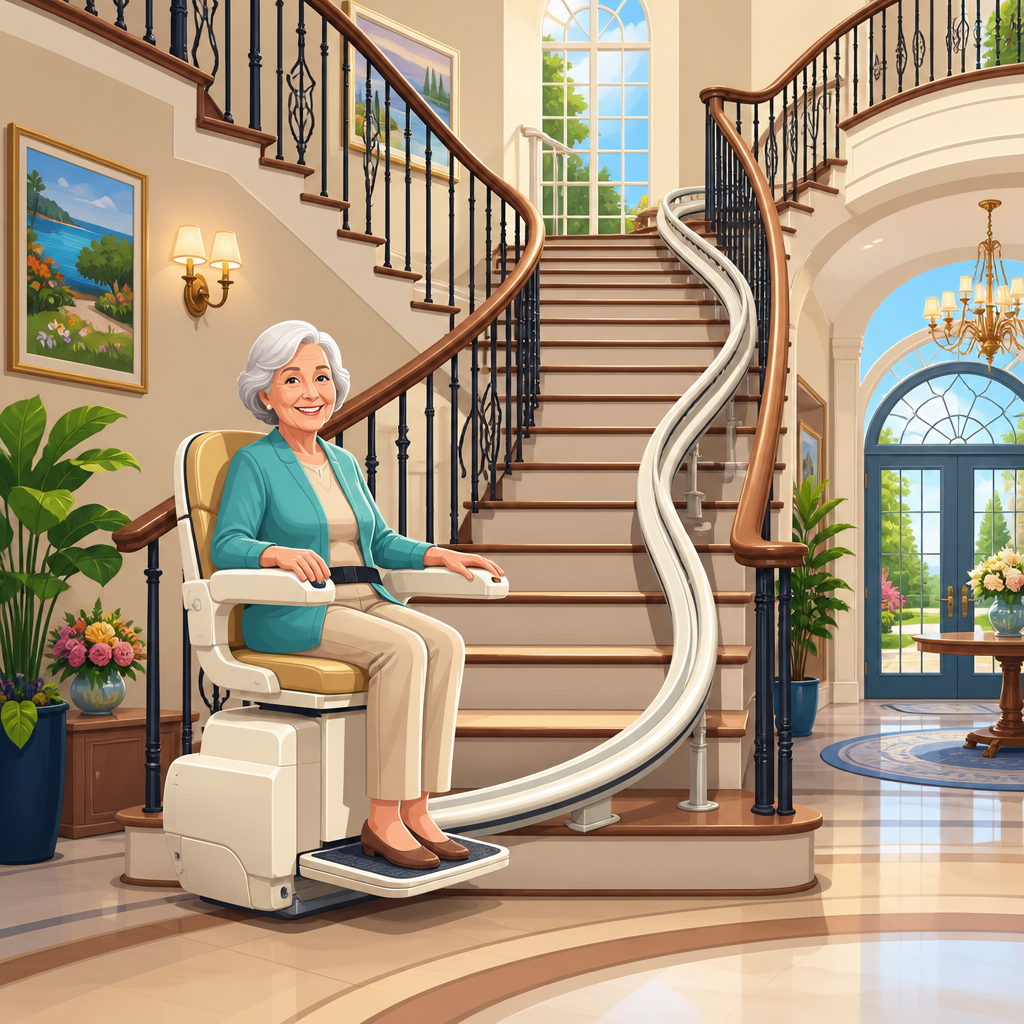
Premium stair lifts for wide staircases and grand entryways occupy a specialized corner of the mobility market where accessibility, architecture, and design quality must work together. In practical terms, a premium stair lift is not simply a motorized seat on a rail. It is a tailored mobility system built for homes with generous proportions, higher aesthetic expectations, heavier usage demands, and often more complex structural details such as sweeping turns, wide treads, intermediate landings, or statement foyers. I have worked with homeowners comparing luxury models in historic houses, custom builds, and multilevel estates, and the same issue appears every time: they need safe, dependable access without making the front staircase look like an afterthought.
Wide staircases and grand entryways matter because they change the buying criteria. On a narrow utility stair, basic function usually leads the decision. On a broad formal staircase, buyers weigh rail finish, upholstery, power swivel options, custom parking positions, noise levels, and integration with surrounding millwork just as carefully as load capacity or warranty support. They also ask better questions. Will the rail hug the inside or outside curve? Can the unit park away from the foyer? Does the chair look proportional on a wider run? Can two remotes serve different landings? These are not cosmetic concerns alone. They affect safety, daily convenience, and long-term satisfaction.
This article serves as a hub for luxury and premium models within a larger buying guide framework. It explains what separates premium stair lifts from standard units, which features matter most for wide staircases, how leading brands approach customization, and what installation realities owners should expect. If you are evaluating stair lifts for a grand entryway, the goal is straightforward: preserve the visual impact of the staircase while delivering smooth, secure mobility for years.
What Defines a Premium Stair Lift
A premium stair lift combines custom engineering, higher-end materials, quieter operation, and expanded configuration options. Standard straight lifts are manufactured in set lengths and adjusted on site. Premium systems, especially for curved or showcase staircases, are typically measured in detail and built to order. Installers use digital photo surveys, angle measurements, tread dimensions, landing geometry, and clearance checks to create a rail that follows the staircase precisely. This matters on wide stairs because oversized spaces can expose poor fit immediately. A generic-looking rail floating too far from the wall or ending abruptly in the middle of an entry hall can make an expensive home feel compromised.
Premium models also differentiate themselves through ride quality. Better units start and stop with less jerk, maintain steadier speed through bends, and use refined transmission and motor systems that reduce vibration. In real homes, that refinement is noticeable. On a dramatic staircase near entertaining areas, a noisy drive system will be heard by everyone in the foyer. High-end systems also offer powered seat swivels, powered footrests, folding rails, and advanced diagnostic displays. These are convenience features, but they also reduce physical strain for users who may have arthritis, limited trunk rotation, or balance concerns.
Materials and finishes are another dividing line. Luxury stair lifts may offer leather-look upholstery, slimmer arm profiles, rail color choices, upgraded seat padding, or parking positions that conceal the chair from main sightlines. Some homeowners prioritize discreet design over every other feature. Others want a seat that looks substantial enough to suit a broad staircase rather than appearing undersized. Premium lines address that concern with better proportions and more finish control.
Why Wide Staircases Need a Different Buying Approach
Wide staircases create opportunities and constraints that do not exist on compact stairs. The extra width can improve usability because there is usually ample walking space remaining beside the rail. At the same time, the visual center of the staircase becomes more important. On a narrow run, almost any lift will visually dominate. On a grand staircase, poor placement becomes obvious because viewers see the rail from multiple angles across an open foyer. That is why premium planning focuses on travel path, chair parking, and rail termination points from the start.
The first strategic decision is usually inside versus outside rail placement. On a curved staircase, the inside path often creates a shorter rail with lower cost and tighter turning radius. However, on some grand entry stairs, the outside edge may offer better aesthetics or smoother access to a landing. I have seen owners choose a slightly more expensive outside route because it allowed the chair to park beyond the main sightline and kept the central vista open from the front door. That is a good trade when preserving architectural character is a priority.
Wide stairs also raise questions about seat scale and user fit. Premium buyers often include taller users, heavier users, or households planning for aging in place over a decade or more. Seat width, arm spacing, footrest depth, and rated capacity all matter. A staircase may be wide, but the rider still needs stable transfer positions at the top and bottom. In practice, that means checking whether a powered swivel or offset parking position improves the mount and dismount path more than a basic manual swivel would.
Best Features for Grand Entryways and Showcase Stairs
For grand entryways, the most valuable premium stair lift features are custom curved rails, retractable or hinged rail sections, powered swivel seats, quiet drive systems, multiple remote controls, and finish options that blend with the staircase. Each serves a specific purpose. A custom curved rail follows the architecture closely and avoids awkward gaps. A hinged or folding section prevents the rail from extending into a doorway or central hall. Powered swivel seats reduce twisting at landings, which is critical for users with hip or back limitations. Quiet operation protects the calm feel of a formal home.
Parking customization deserves special attention. Many premium systems can be sent to an intermediate point, upper landing, or lower off-angle position using call-send controls. In a grand foyer, this feature can make the difference between a visible mobility device and one that disappears when not in use. I recommend homeowners ask the dealer to physically mark proposed parked positions before ordering. Floor tape and temporary outlines reveal quickly whether the chair interrupts traffic flow, artwork views, or the symmetry of the staircase.
Safety systems should be nonnegotiable even in luxury categories. Look for obstruction sensors on the carriage and footrest, seat belts, overspeed governors, lockable controls, battery backup, and clear status indicators. Better systems continue operating during a household power outage because they run from onboard batteries charged along the rail. That feature is especially important in larger homes where stair access to bedrooms may be essential during storms or electrical interruptions.
| Feature | Why It Matters on Wide or Grand Staircases | Premium Benefit |
|---|---|---|
| Custom curved rail | Matches sweeping turns and landings precisely | Improves appearance and ride smoothness |
| Powered swivel seat | Helps safer transfers at upper landing | Reduces twisting and fall risk |
| Call-send controls | Moves chair out of main sightline | Keeps foyer visually uncluttered |
| Hinged or folding rail | Prevents blockage at doorway or hall | Maintains circulation in entry spaces |
| Quiet motor and transmission | Noise carries in open stair halls | Protects comfort and perceived quality |
| Finish and upholstery options | Coordinates with woodwork and decor | Makes the lift feel intentional |
Leading Premium Models and Brand Considerations
Several established manufacturers dominate the premium stair lift discussion, though availability depends on region and dealer network. Stannah is widely recognized for curved customization, refined ride quality, and polished seat design. Handicare offers strong curved capabilities and models with notable fit flexibility. Bruno has a long reputation in North America for durable indoor systems and dependable dealer support, with the Elite line often considered in premium straight applications. Savaria is another important name, particularly where custom accessibility solutions are part of a broader project. TK Elevator, formerly Thyssenkrupp Access, has also been known for custom curved systems in many markets.
Brand comparison should go beyond brochure language. Ask how the rail is manufactured, how many charging points are available, whether service diagnostics can be read quickly, and how replacement parts are handled after ten years. Premium buyers often assume every high-end unit offers the same engineering depth. They do not. Some systems feel smoother through compound curves. Some provide better seat ergonomics. Others excel in after-sales support, which matters more than small styling differences.
Dealer quality often determines ownership experience more than brand prestige alone. A strong dealer will perform a detailed site survey, discuss sightlines, provide finish samples, confirm electrical requirements, and explain service intervals honestly. They should also know relevant standards, including ASME A18.1 in the United States for platform and stairway chairlifts, and be comfortable discussing local code considerations. In luxury homes, coordination with interior designers, builders, or estate managers is common, and experienced dealers handle that communication well.
Installation, Design Integration, and Cost Expectations
Installing a premium stair lift on a wide staircase is usually less about structural drama and more about precision. Most stair lifts mount to the stair treads rather than the wall, which surprises many buyers. That means installation is often possible without major wall reconstruction, even in ornate foyers with plaster, paneling, or stone. However, tread depth, baluster positions, nosing profiles, and landing clearance still affect bracket design and rail alignment. On custom curved systems, accurate surveying is everything. A measurement error of even a small amount can create unacceptable gaps or landing issues.
Design integration starts before fabrication. Good installers ask where the user approaches the chair, whether left or right-side loading is easier, how the footrest clears trim, and where remotes should be mounted. In one large colonial home I evaluated, the owners assumed the lower park position should be at the base of the staircase. After walking the route, we shifted parking around a curve near a side wall. The lift became less visible, the foyer looked cleaner, and the user had a more direct transfer path from a nearby seating area. Small planning choices often produce the best premium result.
Costs vary significantly by configuration. A premium straight stair lift commonly starts several thousand dollars above entry-level units, while custom curved models for grand staircases can move into the low five figures or substantially beyond depending on rail complexity, powered options, and installation challenges. Buyers should budget for surveying, fabrication, installation, warranty coverage, and future service. The right question is not simply “What does a premium stair lift cost?” but “What level of customization, support, and usability am I buying for this home and this user?”
How to Choose the Right Luxury Model
The best premium stair lift for a wide staircase is the one that fits the user, the architecture, and the service reality of your area. Start with user needs: height, weight, hand strength, trunk stability, and whether more than one rider may use the lift. Then evaluate staircase geometry and sightlines. Ask each dealer for a clear proposal showing rail path, parking positions, folded dimensions, seat height, power features, and lead time. If a curved rail is involved, request visuals or drawings that show exactly where the chair begins and ends.
Next, compare ride quality and controls in person whenever possible. A showroom test or local installation visit can reveal more than specification sheets. Pay attention to seat comfort, joystick feel, armrest stability, swivel action, and the smoothness of starts and stops. Premium models should feel composed and predictable, not abrupt. Also ask about response time for service calls, battery replacement intervals, and whether annual maintenance is recommended. A beautiful lift that sits idle waiting for parts is not a premium ownership experience.
Finally, think of this page as your hub for luxury and premium models within stair lift buying guides. From here, explore deeper comparisons of curved systems, upholstery and finish choices, heavy-duty options, and brand-specific reviews. Premium stair lifts for wide staircases and grand entryways succeed when they protect dignity, preserve architecture, and deliver reliable daily movement. Shortlist dealers with proven custom experience, insist on detailed planning, and choose the model that solves mobility needs without compromising the home you value.
Frequently Asked Questions
What makes a premium stair lift different from a standard stair lift for wide staircases and grand entryways?
A premium stair lift is designed as a custom mobility solution rather than a basic add-on. In homes with wide staircases, sweeping curves, decorative balustrades, and prominent entryways, the lift must do much more than carry a user from one floor to another. It needs to fit the architecture precisely, operate smoothly over longer travel distances, navigate turns and intermediate landings, and complement the home’s design instead of distracting from it. That usually means a made-to-measure rail, upgraded seat materials, refined finishes, quieter drive systems, and more sophisticated controls.
Premium models also tend to offer higher weight capacities, improved ride comfort, advanced safety sensors, power swivel seats, and folding components that help preserve the openness of the staircase. In grand homes, aesthetics are often just as important as performance, so manufacturers may provide custom upholstery, rail color matching, slim-profile engineering, and parking positions that keep the chair out of the main sightline. The result is a stair lift that feels integrated into the home rather than visibly retrofitted.
Can a stair lift be installed on a curved or extra-wide staircase without compromising the look of the space?
Yes, in most cases a premium stair lift can be installed on a curved or extra-wide staircase with minimal visual disruption, provided the system is properly designed for the home. Wide staircases and grand entryways often include complex features such as split runs, sweeping bends, decorative newel posts, broad treads, and formal landings. These layouts usually require a custom rail that is fabricated to match the staircase exactly. Because the rail is tailored to the dimensions and contours of the stairs, the lift can follow the path cleanly and maintain a polished appearance.
Appearance is often addressed through details that matter in high-end interiors: slim rails, concealed wiring, coordinated finishes, elegant seat designs, and folding arms, footrests, and seats that reduce the lift’s footprint when not in use. In many installations, the chair can also be parked at a less visible location, such as a landing or end point away from the center of the entryway. A professional assessment is essential, because preserving both accessibility and architectural character depends on careful measurements, placement strategy, and product selection.
Are premium stair lifts suitable for heavier daily use and multiple users in large homes?
Premium stair lifts are often a strong fit for larger homes where the equipment may see more frequent use or need to accommodate different users over time. Compared with entry-level units, premium systems commonly provide more durable construction, higher-capacity seating options, smoother start-and-stop performance, and upgraded components built for long-term reliability. That matters in homes with longer stair runs, more elaborate layouts, or residents who rely on the lift several times a day.
Many premium models also include features that improve flexibility for multiple users, such as easy-to-use call/send controls, adjustable seat heights, seatbelt options, remote operation, and ergonomic seat designs. If one user needs extra support with transfers, powered swivel seats and footrests may be especially helpful. For households planning for aging in place, a premium system can be a more future-ready investment because it can better address evolving mobility needs while maintaining comfort, safety, and a high level of finish.
How is a premium stair lift customized for a luxury home or architecturally significant entryway?
Customization typically begins with an in-home evaluation in which the staircase is measured in detail and the surrounding design elements are reviewed. In a luxury or architecturally significant home, installers and manufacturers are not just looking at stair dimensions. They also consider sightlines, trim work, flooring transitions, banister placement, landing depth, lighting, and how the lift will appear from the foyer or main living spaces. This planning phase helps determine the best rail path, chair orientation, parking location, and finish selections.
From there, premium customization can include rail colors chosen to blend with the staircase, upholstery and seat materials that coordinate with the interior, and seat styles that feel more refined and less clinical. On curved or statement staircases, the rail is usually fabricated specifically for that exact configuration. Additional options may include powered folding features, advanced safety packages, key locks, upgraded controls, and special seating dimensions. The goal is to create a system that meets mobility needs while respecting the craftsmanship and visual balance of the home.
What should homeowners consider before buying a premium stair lift for a wide staircase?
Homeowners should start by evaluating both mobility needs and the character of the staircase itself. Wide staircases may seem easier to fit than narrow ones, but large or ornate stairways often present their own challenges, including curves, long travel distances, broad landings, open sides, and architectural details that affect rail placement. It is important to think about who will use the lift, how often it will be used, whether future mobility changes are likely, and what level of comfort and automation would be most beneficial.
Beyond function, buyers should compare customization options, weight capacity, warranty coverage, service support, battery backup, and the installer’s experience with curved or high-end residential projects. In premium applications, workmanship and design sensitivity matter a great deal. A lower-priced option may not deliver the same ride quality, finish, or long-term fit for the home. Asking for a detailed site assessment, product demonstration, and clear explanation of installation methods can help ensure the final system is safe, visually appropriate, and well suited to the home’s architecture and the user’s daily routine.