


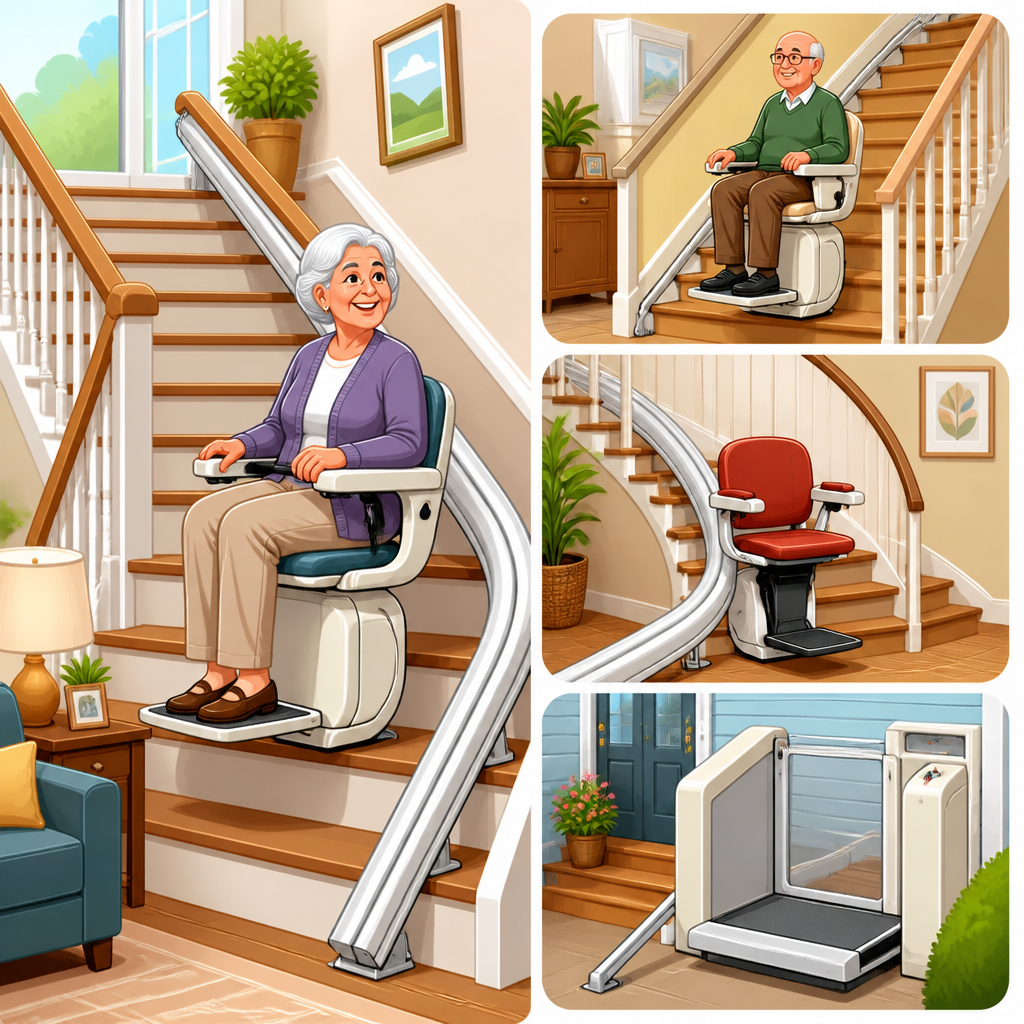
Chair lift prices vary widely because the equipment, the staircase, and the installation conditions all shape the final quote, so any useful guide to common home chair lift setups must explain what buyers are actually paying for. In accessibility work, I have seen homeowners focus only on the seat price, then get surprised by rail upgrades, electrical changes, or outdoor weatherproofing that can shift the budget by thousands of dollars. A chair lift, also called a stair lift, is a motorized seat that travels along a rail mounted to the stair treads or, less often, an adjacent surface, helping people move safely between levels without climbing steps. When people ask, “How much do chair lifts cost?” the honest answer is that a basic straight indoor model usually starts in the low thousands, while custom curved, outdoor, and heavy-duty systems can move far beyond that range.
This matters because a chair lift is rarely an impulse purchase. Most buyers are comparing it against aging-in-place remodeling, in-home care costs, a first-floor room conversion, or even a move to a single-level home. The financial stakes are real: one wrong assumption about fit, code needs, or maintenance can turn a sensible mobility investment into a stressful project. This hub article explains the most common home chair lift setups, what each setup typically costs, which features drive prices up, and where financing or savings opportunities may exist. It is designed to answer broad pricing questions first, then help you narrow the estimate based on your staircase type, user needs, and installation conditions so you can approach quotes with realistic expectations.
Typical chair lift price ranges by setup
The simplest way to estimate cost is to start with the staircase configuration. In current residential markets, a straight indoor chair lift commonly runs about $2,500 to $5,500 installed for a standard-length staircase, depending on brand, seat style, rail length, call-send controls, and dealer labor. Reconditioned straight lifts can lower that starting point, sometimes landing around $2,000 to $3,500 installed, though warranty coverage and cosmetic condition vary. A curved chair lift, which uses a custom rail built to match turns, intermediate landings, or spiral-like geometry, often ranges from $10,000 to $20,000 or more. Outdoor chair lifts usually begin around $4,000 to $7,500 for straight runs because weather-resistant components add cost. Heavy-duty models with larger seats, higher weight capacities, and reinforced drivetrains typically sit above standard models, often from about $4,500 upward on straight stairs.
These ranges are useful because they align with how dealers build proposals. A buyer is not paying for “a chair lift” in the abstract; they are paying for a defined system configuration. The rail is often the major cost difference. Straight rails are modular and quicker to install. Curved rails are fabricated to exact measurements, which raises engineering, manufacturing, and lead-time costs. Power options matter too. Most current lifts use battery-powered operation with a charger at one or both ends, which allows continued use during a power outage. That battery system is usually standard, but replacement batteries become a future maintenance cost. Across brands such as Bruno, Harmar, Stannah, Handicare, and Acorn, pricing changes less by logo alone than by staircase complexity, customization, and local labor rates.
| Common setup | Typical installed price | What affects the estimate most |
|---|---|---|
| Straight indoor chair lift | $2,500 to $5,500 | Rail length, seat upgrades, power swivel, labor |
| Reconditioned straight indoor lift | $2,000 to $3,500 | Availability, warranty, rail fit, dealer service terms |
| Curved indoor chair lift | $10,000 to $20,000+ | Custom rail design, landings, turns, fabrication |
| Outdoor straight chair lift | $4,000 to $7,500 | Weatherproofing, cover quality, exposure conditions |
| Heavy-duty or high-capacity model | $4,500 to $14,000+ | Capacity rating, seat width, staircase layout |
Straight stair lifts: the most common and most affordable option
Straight stair lifts are the standard answer for homeowners asking how much chair lifts cost because they fit the most common staircase design and deliver the lowest installed price. A straight lift is used on stairs that run in one uninterrupted line with no turns, pie-shaped steps, or mid-stair landings requiring a directional change. In homes where the staircase has 12 to 16 risers and adequate width, installation is typically completed in a few hours. I have watched many of these projects move from site measure to usable equipment in less than a week when the dealer had inventory in stock. Because rails come in cut-to-length sections rather than full custom fabrication, material and labor remain manageable.
For budgeting, homeowners should assume the entry-level straight lift quote includes the chair, rail, battery system, charging points, call-send controls, and basic installation. Common add-ons include a powered swivel seat at the top landing, a power footrest, a folding rail to reduce obstruction near a doorway, upgraded upholstery, and key locks. A folding rail alone can add several hundred to more than a thousand dollars depending on the model. Weight capacity also matters. Standard residential straight lifts often support around 300 to 350 pounds, while premium or heavy-duty versions may support 400 pounds or more. If you need a narrower seat for a tight staircase or a larger seat for user comfort, ask whether that changes required stair clearance, because fit can be just as important as price.
Curved chair lifts: custom rails create the biggest price jump
When homeowners react to a curved chair lift quote with sticker shock, the reason is usually the rail, not dealer markup. Curved systems are built for stairs with one or more turns, switchbacks, intermediate landings, or unusual geometry. The rail is measured precisely, then manufactured to match the staircase path, which can include horizontal overrun sections at top or bottom landings for safer mounting and dismounting. That custom production process explains why curved lifts cost several times more than straight models. In practical terms, even a compact L-shaped staircase often moves the budget from a few thousand dollars into five figures.
Lead time is another factor buyers should expect. A straight lift can often be installed quickly from stocked parts, but a curved lift may require weeks for survey, design approval, fabrication, shipping, and final installation. Changes after measurement can be expensive. If flooring, trim, or stair dimensions change during a remodel, the rail may need revision. I strongly advise buyers to finalize any staircase carpentry before committing to the curved rail order. While some manufacturers offer modular alternatives for specific layouts, truly custom rails remain the norm. The benefit is excellent fit and smoother travel on difficult staircases; the tradeoff is significantly higher upfront cost and less flexibility for returns because the rail is made for one home.
Outdoor, heavy-duty, and specialty setups
Outdoor chair lifts deserve separate budgeting because weather exposure changes both materials and maintenance expectations. These units typically include sealed components, more durable finishes, UV-resistant upholstery, and protective covers. Even with those features, climate matters. A lift installed on a shaded porch in a mild region will generally experience less wear than one exposed to freeze-thaw cycles, wind-driven rain, salt air, or intense sun. For that reason, I treat outdoor quotes as both purchase and lifecycle cost discussions. Expect a higher starting price than for indoor straight lifts, and plan for more vigilant upkeep, including cover use, track cleaning, battery monitoring, and occasional service calls tied to environmental wear.
Heavy-duty and specialty lifts address user-specific needs rather than staircase complexity alone. A high-capacity model may offer a wider seat, stronger transmission, and a higher load rating, but it also requires enough clear stair width to remain safe for both the rider and other household members. Some models are built specifically for narrow stairs, standing or perched use, or limited transfer mobility. These are not always cheaper simply because they look smaller; the engineering can be specialized. If the rider uses a walker, has limited trunk stability, or struggles with hip and knee flexion, the right seat height, arm design, and swivel configuration may matter more than finding the lowest quote. Good dealers price around actual usage, not just rail geometry.
What is included in a chair lift estimate and what costs extra
A complete chair lift estimate should separate equipment cost, rail cost, installation labor, and optional features. If a proposal bundles everything into one number with little explanation, ask for an itemized version. In my experience, that single step prevents many misunderstandings. Core inclusions usually cover the chair assembly, rail, mounting brackets, battery charger, remote controls, and standard installation. Standard installation generally assumes a structurally sound staircase, no major carpentry changes, and accessible electrical service for the charger. It may also include a basic orientation on safe use, folding the seat and footrest, and using the seat belt and swivel lock.
Extras can include powered folding rails, power swivel seats, upgraded upholstery, diagnostic displays, larger seats, higher-capacity drivetrains, parking stations, and extended warranties. Electrical work is sometimes minimal because many battery-powered lifts plug into a nearby standard outlet, but outlet relocation or dedicated circuits can add cost. On older homes, I have also seen expenses for handrail adjustments, trim clearance, or minor stair repairs before installation. Removal of an old lift is another item to confirm. If you are replacing existing equipment, ask whether disposal is included. Finally, service plans differ sharply by dealer. Some include the first year of labor; others cover parts only. That difference matters when comparing quotes that look similar on day one.
Installation, maintenance, and financing considerations
Installation quality affects both safety and long-term cost. Reputable dealers assess stair width, headroom, landing space, user transfer ability, and seat positioning before they recommend a model. They also explain obstruction sensors, battery charging behavior, and manual lowering procedures. The best installation is not just secure fastening to treads; it is a setup that allows safe entry and exit at both landings with minimal twisting. Poor placement can turn a technically functional lift into one the user avoids. For that reason, the lowest quote is not automatically the best value. A dealer experienced in accessibility, not just general home products, usually produces a better fit.
Ownership costs continue after installation. Batteries often need replacement every few years depending on usage patterns, charging habits, and temperature conditions. Annual service is not always mandatory, but preventative maintenance can catch worn rollers, seat switches, or alignment issues before they become breakdowns. For financing, buyers should ask about manufacturer promotions, dealer payment plans, home equity options, health savings or flexible spending eligibility for certain medically necessary expenses, and potential veterans’ assistance where applicable. Medicare generally does not cover stair lifts because they are commonly treated as home modifications rather than durable medical equipment, but state waiver programs, nonprofit grants, or local aging agencies may help in limited cases. Compare total ownership cost, support responsiveness, and fit, then request detailed quotes from qualified local providers.
The real answer to how much chair lifts cost is that price follows setup. A straight indoor chair lift is usually the most affordable path, often landing between $2,500 and $5,500 installed. Reconditioned units can trim that budget, while curved systems often start around $10,000 because custom rails drive the quote. Outdoor, heavy-duty, and specialty models add cost for good reasons: weather resistance, higher capacities, and user-specific design needs. Once you understand those categories, chair lift pricing becomes far less confusing. You are no longer reacting to one big number; you are evaluating equipment, rail type, installation conditions, and support terms in a structured way.
For homeowners planning to age in place, that clarity is the main benefit. A well-matched chair lift can reduce fall risk, preserve access to the full home, and delay larger relocation or remodeling expenses. The smartest next step is simple: measure your staircase type, list the rider’s mobility needs, and get itemized estimates from experienced local dealers. Use this page as your hub for comparing costs, features, financing options, and follow-up articles on each setup so you can choose a solution that fits both your home and your budget.
Frequently Asked Questions
What is typically included in a chair lift price estimate?
A chair lift price estimate usually includes much more than the motorized seat itself. In most cases, the quote covers the rail that mounts to the stairs, the drive system, the seat and footrest assembly, safety sensors, charging components, and standard installation labor. Many estimates also include basic remote controls or call/send stations, which let the user move the lift up or down the staircase when not seated on it. For a simple straight staircase, this bundled price is often fairly predictable because the rail can be cut to length from a standard design rather than custom-fabricated.
Where homeowners often get surprised is in the add-ons and jobsite conditions that fall outside a “base” price. For example, a folding rail at the bottom of the stairs may be recommended if a doorway or hallway would otherwise be blocked. A powered swivel seat, power folding footrest, upgraded seat width, or heavy-duty capacity model can also raise the cost. On the installation side, the estimate may need to account for electrical work if there is no convenient outlet near the charging point, carpentry adjustments if trim or obstructions interfere with the rail, or permit and inspection fees in some jurisdictions. A good estimate should clearly separate standard equipment from optional upgrades so buyers can see exactly what is driving the final number.
Why does a straight stair lift usually cost less than a curved stair lift?
A straight stair lift is generally the most affordable home chair lift setup because it uses a simpler rail system and a more standardized installation process. If the staircase runs in one uninterrupted line from bottom to top, the manufacturer can use a rail that is easier to produce, transport, and install. That efficiency lowers both material and labor costs. Installers can often complete a straight lift job relatively quickly, which also keeps pricing more manageable.
Curved stair lifts are more expensive because they are built around the exact shape of the staircase. If the stairs have turns, intermediate landings, spirals, or unusual angles, the rail usually has to be custom-made to match those dimensions precisely. That custom fabrication raises manufacturing costs and often lengthens lead times. Installation is also more specialized, since the rail must be aligned carefully so the seat travels smoothly through every bend and stopping point. In practical terms, homeowners are not just paying for more rail; they are paying for custom engineering, more complex production, and a more involved installation. That is why two homes with similar square footage can receive dramatically different lift quotes if one has a straight staircase and the other has a curved or multi-landing layout.
What staircase and home conditions can raise the final chair lift quote?
Several site-specific conditions can affect pricing, and this is one of the biggest reasons estimates vary so widely from home to home. Staircase width is a major factor. A narrower stairway may require a more compact model or special positioning to maintain safe walking clearance. The number of steps, total rail length, and presence of turns or landings also directly influence cost. Even seemingly small details, such as a door opening too close to the top or bottom step, can lead to rail overruns or folding sections that add to the total.
The condition of the home matters too. While most chair lifts attach to the stair treads rather than the wall, installers still need a structurally sound staircase. Damaged treads, loose carpeting, or obstacles along the route may need to be addressed first. Power supply can also affect the quote. Many modern stair lifts use battery-powered operation with a charging point plugged into a standard outlet, but if there is no suitable receptacle nearby, an electrician may need to add one. Outdoor chair lifts introduce even more variables, including weather-resistant components, protective covers, sealed controls, and materials designed to handle moisture and temperature changes. All of these details can shift the quote upward, which is why an in-home assessment is usually the only reliable way to get a realistic final number.
Are outdoor chair lifts more expensive than indoor models?
Yes, outdoor chair lifts are often more expensive than comparable indoor models because they need to withstand a much harsher environment. An indoor stair lift is designed for controlled conditions, while an outdoor unit must handle rain, humidity, temperature swings, sun exposure, and debris. To do that safely and reliably, manufacturers use weather-resistant materials, protected electronics, specialized finishes, and covers that help shield the seat and controls when the lift is not in use. Those design upgrades increase the equipment cost before installation even begins.
Installation conditions can also make outdoor projects more expensive. Exterior staircases may be made of concrete, brick, metal, or other materials that require different mounting methods than standard interior wood stairs. The layout may be steeper or more exposed, and installers may need to account for drainage, corrosion resistance, and long-term durability. In colder climates, ice and snow can affect how and when the lift is used, which may influence model selection and maintenance planning. For homeowners budgeting an exterior setup, it is important to understand that the added cost is not just for convenience; it reflects the engineering needed to keep the system safe, functional, and durable in outdoor conditions over time.
How can homeowners compare chair lift estimates and avoid unexpected costs?
The best way to compare chair lift estimates is to look beyond the headline number and review exactly what each proposal includes. Ask whether the quote covers the rail, seat, installation labor, warranty, service call terms, remote controls, and any required site modifications. Confirm whether the model is standard-duty or heavy-duty, whether it includes manual or powered seat functions, and whether features like a folding rail or track overrun are optional or already built into the price. Two estimates can look similar at first glance but represent very different scopes of work.
It is also wise to ask what could change the price after the home evaluation. Reputable providers should explain potential extras such as electrical work, custom rail fabrication, permit requirements, or upgrades needed for unusual staircase conditions. If the article topic is price estimates for common home chair lift setups, this is really the key point: buyers are paying for a complete accessibility solution, not just a seat on a track. A detailed quote should spell out the equipment model, rail type, warranty length, installation timeline, and any exclusions. When homeowners understand those line items up front, they are far less likely to be surprised by added charges later, and they can make a more informed decision based on long-term value instead of just the lowest starting price.