


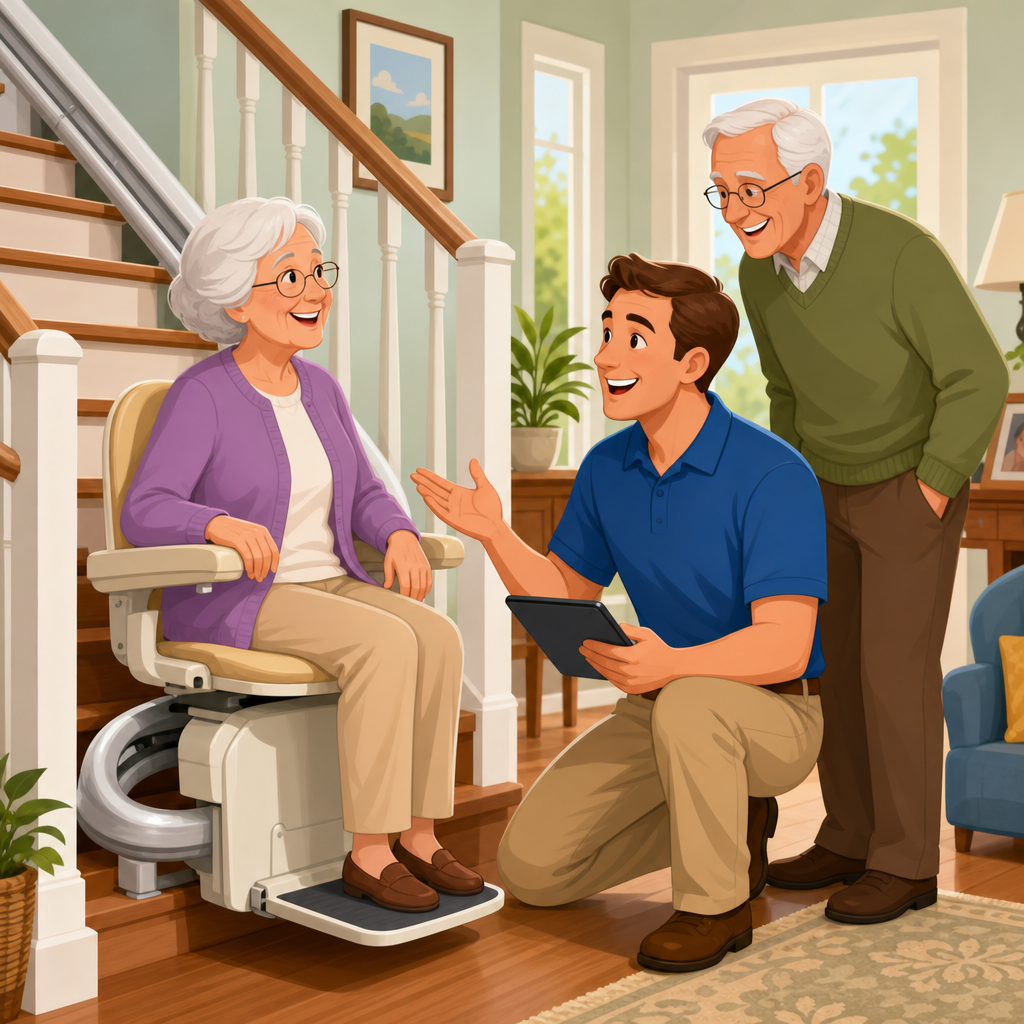
Finding reputable dealers for used stair lifts near you starts with understanding what “used” and “refurbished” really mean, how local service affects safety, and why dealer quality matters as much as the lift itself. In this market, a used stair lift is typically a previously installed unit sold again with limited updates, while a refurbished stair lift has been inspected, repaired, cleaned, tested, and prepared for resale to a defined standard. That distinction matters because a mobility device is not like buying secondhand furniture; it is a mechanical system carrying a person on stairs, often daily, often after surgery, injury, or age-related balance changes. I have worked with families comparing new and reconditioned lifts, and the pattern is consistent: the best outcomes come from buyers who evaluate dealers, warranty terms, rail compatibility, and ongoing service before they look at price. This guide explains how to find a dependable local seller, what questions to ask, and how used and refurbished chair lifts fit into the broader buying process for straight and curved staircases.
Used stair lifts appeal to buyers for practical reasons. A new straight stair lift from established brands such as Bruno, Harmar, Stannah, and Access BDD commonly costs several thousand dollars installed, while curved models can rise much higher because the rail is custom built to the staircase. Refurbished options can lower the initial cost significantly, especially on straight staircases where rails and carriage systems are easier to reuse or adapt. For families paying out of pocket, that price difference can determine whether a loved one remains safely at home. At the same time, buying purely on price is risky. Reputable dealers evaluate motor condition, transmission wear, battery health, seat locking function, charge contacts, overspeed governors, footrest safety edges, and call-send controls. They also verify that the model still has available parts and factory support. A bargain unit without reliable installation and service can become expensive quickly if it fails, lacks parts, or does not meet the user’s physical needs. That is why this hub page covers both buying strategy and product realities.
What makes a used stair lift dealer reputable
A reputable dealer combines product knowledge, proper installation, transparent pricing, and local service coverage. In practice, the strongest dealers perform an in-home assessment, measure the staircase precisely, ask about the rider’s height, weight, transfer ability, and hand strength, and then recommend suitable models instead of pushing whatever is in stock. They explain whether the lift is a true refurbished unit, a lightly used takeout, or a dealer demo. They identify the manufacturer, model number, age, installation history, and whether the rail is original or newly supplied. Good dealers also disclose limitations. For example, many curved stair lifts cannot be meaningfully “used near you” unless the rail is remanufactured or replaced, because a curved rail is made to one staircase. A trustworthy dealer will say that clearly rather than implying all used units are interchangeable.
Local reputation matters because stair lifts require more than delivery. Dealers should employ or directly manage trained installers, carry liability coverage, and offer post-installation service. In my experience, the most dependable companies can describe their refurbishment checklist item by item and show how they test charge cycles, swivel-seat locks, obstruction sensors, and final limit switches. They also explain code-related realities. While stair lifts are generally installed in private homes rather than governed by the same rules as commercial platform lifts, recognized safety expectations still apply, and reputable brands design to standards such as ASME A18.1. Dealers should never bypass factory safeties, improvise mounting methods, or install a unit on a staircase that cannot support safe fastening. If a salesperson avoids technical questions, cannot confirm parts availability, or pressures you to pay before a site visit, treat that as a warning sign.
Used vs. refurbished chair lifts: what buyers should expect
The terms are often used loosely, so buyers need precise definitions. A used chair lift may simply mean the unit was removed from another home and offered for resale. A refurbished chair lift should mean it has been reconditioned through inspection, replacement of worn components, cosmetic cleanup, and functional testing. The best dealers document what was replaced, such as batteries, seat covers, rollers, wiring harnesses, charge strips, or remotes. They also tell you whether the gearbox and motor were tested under load and whether the rail was recut or newly supplied. On straight stair lifts, refurbishment is usually more practical because the rail is modular and easier to size. On curved stair lifts, the chair assembly may be reusable, but the rail usually must be custom made, which reduces the savings compared with buying new.
Buyers should also understand that “certified” means different things depending on the dealer and manufacturer. Some brands support formal dealer refurbishment processes; others simply allow resale through authorized channels. Ask whether the unit was refurbished by an authorized dealer, whether firmware or diagnostic settings were checked, and whether the warranty comes from the dealer, the manufacturer, or both. A reputable used stair lift seller will be specific. They should state the weight capacity, folded width, seat height, battery type, charging method, and any known cosmetic blemishes. They should also address fit. A petite user recovering from hip surgery may need a different seat height and swivel arrangement than a taller rider with limited knee flexion. The right dealer treats the stair lift as a mobility solution, not just a machine to move up and down.
How local service affects cost, uptime, and long-term value
When people search for used stair lifts near you, they often focus on proximity because service response time matters. Most modern residential stair lifts use battery power with automatic charging at one or both ends of the rail. That design allows operation during a brief power outage, but batteries eventually wear out, charge contacts can become dirty or misaligned, and safety sensors may need adjustment. A local dealer can usually inspect and repair these issues faster than a distant online seller shipping parts from another state. For an older adult who relies on the lift every day, downtime is not a small inconvenience. It can make an entire floor of the home inaccessible.
Local service also affects total ownership cost. An online listing may advertise a low base price, then add freight, rail cutting, installation labor, permit-related work where applicable, and future travel charges for service calls. A local dealer may appear more expensive upfront but include home assessment, installation, user training, and a labor warranty. That bundled value is often better. Dealers with regional technician coverage also tend to stock common parts for popular models from Bruno, Harmar, and other widely installed brands. Parts support is crucial because some discontinued units become poor candidates for resale even if they run today. If the board, charger, or transmission fails later, the repair may be uneconomical. Reputable local dealers know which legacy models to avoid and which ones still have a sustainable parts pipeline.
Questions to ask before buying any used stair lift
The fastest way to separate strong dealers from weak ones is to ask detailed questions and listen for detailed answers. Start with basics: What brand and model is the unit? What year was it manufactured? Was it removed from another home, used as a demo, or rebuilt from dealer inventory? What exactly was refurbished? Is the rail new, reused, or custom cut? What is the installed price, and what does it include? Ask about the warranty in writing, including coverage for batteries, labor, and service visits. Ask whether there is a return policy if the lift does not fit the rider well after installation. Then move to suitability. Can the model handle the user’s weight and body dimensions? Does it have a powered swivel seat, powered footrest, or folding rail if a doorway is at the bottom landing? Can controls be used with limited hand dexterity?
| Question | Why it matters | Strong dealer answer |
|---|---|---|
| Is this used or refurbished? | Defines expected condition and value | Explains inspection, replaced parts, and testing |
| Is the rail new or reused? | Affects fit, safety, and savings | States exact rail plan and staircase measurements |
| Who provides the warranty? | Determines service accountability | Gives written labor and parts terms |
| Are parts still available? | Protects long-term repairability | Confirms current supply through manufacturer channels |
| Who installs and services it? | Installation quality directly affects safety | Uses trained in-house or authorized technicians |
You should also ask about removal and buyback policies. Many reputable dealers handle temporary stair lift rentals, trade-ins, and removal when the lift is no longer needed. That flexibility matters for short-term recovery after surgery and for family planning. Finally, ask for local references or reviews that mention service after installation, not just the sales process. A company can be responsive during quoting and difficult once the contract is signed. The most useful testimonials mention how quickly the dealer handled adjustments, battery replacement, or user retraining months later.
Straight and curved stair lifts: where used inventory makes sense
Used and refurbished stair lifts are most viable for straight staircases. A straight rail can usually be cut to length, mounted efficiently, and paired with a refurbished carriage if the model remains supported. That is why many buyers searching for affordable used chair lifts find the best value in straight configurations. Installation is typically faster, and price savings can be meaningful. In many homes, a straight lift from a respected brand with new batteries and a dealer warranty delivers years of reliable service at a lower entry cost than new equipment.
Curved stair lifts are different. Because the rail follows turns, landings, and intermediate bends, it is custom fabricated to exact measurements. Even if the chair assembly is refurbished, the rail often must be newly manufactured. That means the savings on a so-called used curved stair lift may be modest. Reputable dealers explain this early so buyers do not chase unrealistic prices. They may still offer value by using a refurbished carriage with a new custom rail, but expectations need to be grounded. For some homes, alternatives such as relocating a bedroom, adding a temporary first-floor setup, or comparing a vertical platform lift may be worth discussing. A competent dealer explores those options instead of assuming one product fits every staircase.
Brands, features, and red flags that matter most
Brand matters in the used market because support networks and replacement parts vary widely. Bruno is known for durable straight stair lifts and broad dealer coverage in the United States. Harmar offers several residential models and is widely represented through mobility dealers. Stannah has a strong reputation for engineering and ride quality, especially in many international markets. Access BDD and Handicare are also recognized names in residential stair lift discussions, though local availability differs by region. When evaluating a used unit, look beyond the logo. Confirm model-specific support, because even a respected brand may have discontinued a particular line.
Feature selection should match the rider’s daily needs. A manual swivel seat may work well for one user, while another needs a powered swivel to exit safely on the landing. A hinged or folding rail is valuable when the bottom of the staircase opens near a doorway or walking path. Larger footrests, seatbelt design, armrest shape, and remote-call controls all affect usability. In homes with multiple users or caregivers, call-send stations are particularly important. Reputable dealers demonstrate these features during the home visit and explain the tradeoffs. Powered options improve convenience but can add complexity and cost. That is not a reason to avoid them; it is a reason to buy from a dealer who can maintain them.
Watch for red flags: anonymous online marketplaces with no local installer, listings that hide the model number, cash-only sellers, and dealers unwilling to provide written warranty terms. Be cautious if the staircase has very narrow clearances, unusual landings, or heavy daily traffic and the seller dismisses those concerns without measurement. Another concern is poor battery health. A stair lift that stops mid-travel or alarms because it is not charging properly may only need simple service, but it may also indicate neglect. Reputable dealers test and replace batteries proactively because sealed lead-acid batteries are wear items, not lifetime components.
How this hub fits your buying journey
This page is the hub for used and refurbished chair lifts within a larger buying-guides library, so use it as the starting point for deeper comparisons. From here, buyers should move into model-specific reviews, brand comparisons, straight-versus-curved buying guides, rental-versus-purchase articles, and warranty checklists. That path mirrors how good dealers work in practice: first define the staircase and rider needs, then compare appropriate product categories, then evaluate seller quality, and only then narrow the budget. If you skip those steps, you may save money on the invoice and lose money through poor fit, repeated service calls, or an early replacement.
The core takeaway is simple. The best reputable dealers for used stair lifts near you are not just resellers; they are local mobility partners who assess the home, match the rider to the right chair lift, document refurbishment work, install correctly, and remain available for service. For straight staircases, a refurbished unit can be an excellent value. For curved stairs, savings are usually narrower, and honest guidance matters even more. Prioritize supported brands, written warranties, current parts availability, and technicians who know the product line. If you are comparing options now, schedule an in-home evaluation with a local dealer, ask the questions in this guide, and use the answer quality to choose both the stair lift and the company behind it.
Frequently Asked Questions
What should I look for in a reputable dealer for used stair lifts near me?
A reputable dealer should offer much more than a low price or a quick installation date. Start by looking for a company that clearly explains the difference between a used stair lift and a refurbished stair lift. That matters because a previously installed unit may not have gone through the full inspection, repair, cleaning, testing, and parts replacement process that a true refurbishment requires. A strong dealer will be transparent about the lift’s history, age, condition, brand, model compatibility, and what work was completed before resale.
You should also evaluate the dealer’s local service capabilities. Stair lifts are mobility devices, which means reliable support after the sale is just as important as the equipment itself. Ask whether the dealer has trained technicians in your area, how quickly they respond to service calls, whether they stock parts locally, and if they handle both installation and maintenance directly rather than outsourcing everything. A reputable dealer should be comfortable discussing warranty coverage, safety checks, battery condition, weight capacity, rail fit, and whether the lift meets the needs of the user and the staircase.
It is also wise to check reviews, credentials, and the company’s track record. Look for consistent feedback about professionalism, responsiveness, and problem resolution, not just sales experience. Dealers with strong reputations usually perform in-home assessments, provide written quotes, explain limitations honestly, and never pressure you into buying a unit that is not appropriate for your home. In short, the best used stair lift dealers combine product knowledge, refurbishment standards, installation expertise, and dependable local service.
What is the difference between a used stair lift and a refurbished stair lift?
The difference is important, and it can directly affect safety, reliability, and long-term value. A used stair lift generally refers to a unit that was previously installed in another home and is being sold again. In some cases, it may have had very little work done beyond removal, storage, and basic inspection. A refurbished stair lift, on the other hand, has typically gone through a more structured process that may include cleaning, inspection, repairs, replacement of worn components, testing of electrical and mechanical systems, battery checks, and preparation for resale according to the dealer’s standards.
For buyers, this distinction matters because not every stair lift is equally suited for a second installation. Straight stair lifts are often easier to reuse because the rail systems are more standardized, while curved stair lifts are frequently custom-built for a specific staircase and may not transfer well to another home. A reputable dealer should explain whether the unit is simply pre-owned or fully refurbished, what components are new versus reused, and how the unit was tested before being offered for sale.
When comparing options, ask for specifics rather than relying on labels alone. “Refurbished” should mean more than cosmetic cleaning. It should indicate that the dealer has inspected safety sensors, seat function, charging system, controls, track condition, and overall operation. It should also come with some form of warranty or service support. In practical terms, a properly refurbished stair lift from a qualified local dealer often provides a better balance of affordability and dependability than a basic used unit with limited preparation and no support plan.
Why does local dealer service matter when buying a used stair lift?
Local service matters because a stair lift is not just a product you buy once and forget about. It is a mobility and safety device that may need adjustments, maintenance, battery replacement, troubleshooting, or emergency service over time. If a used stair lift stops working, the person relying on it may lose safe access to part of the home. That is why buying from a nearby dealer with established service coverage can be far more valuable than purchasing from a distant seller offering a lower upfront price.
A local dealer is usually better positioned to perform an in-home assessment before the sale, confirm that the staircase is a good fit, identify obstacles such as narrow landings or doorway conflicts, and recommend the right model for the user’s mobility needs. After installation, local technicians can respond faster if the chair needs recalibration, the batteries weaken, or a sensor issue appears. Many reputable dealers also provide follow-up support, annual maintenance, and direct access to replacement parts for the brands they sell.
There is also a practical accountability advantage. A company serving your area depends on its local reputation, so it has more incentive to stand behind its installations and resolve problems properly. When evaluating dealers, ask who will service the lift after installation, what the average response time is, and whether they routinely support used or refurbished units. A local dealer with experienced technicians and ongoing service capacity often offers greater peace of mind than a remote marketplace seller or general reseller with limited after-sale involvement.
Are used stair lifts safe to buy, and how can I tell if one has been properly inspected?
Yes, used stair lifts can be safe to buy, but only when they come from a dealer that follows a thorough inspection and refurbishment process. Safety depends less on whether the lift is brand-new or pre-owned and more on its condition, compatibility with your staircase, the quality of installation, and the dealer’s willingness to stand behind the equipment. A properly prepared used stair lift should operate smoothly, stop correctly, charge consistently, and include functioning safety features such as obstruction sensors, seat locks, armrests, and seat belts where applicable.
To judge whether a unit has been properly inspected, ask the dealer specific questions. Find out whether the motor, gearbox, batteries, carriage, controls, rail, charging contacts, and safety sensors were tested. Ask if worn parts were replaced, whether the lift was cleaned and recalibrated, and whether it was tested under operating conditions before installation. You should also ask if the model is still supported by the manufacturer or if replacement parts remain readily available. A reputable dealer should be able to explain this clearly and provide documentation or a written service summary.
Installation quality is equally important. Even a well-refurbished lift can become unsafe if it is installed incorrectly or matched to the wrong staircase. That is why an in-home evaluation matters. The dealer should measure the stairs carefully, assess the user’s needs, verify weight capacity, and confirm safe entry and exit points. As a final safeguard, look for a meaningful warranty and a local service plan. A dealer that inspects thoroughly, installs professionally, and offers support afterward is far more likely to provide a safe and dependable used stair lift solution.
Is buying a used stair lift from a dealer better than buying one from a private seller?
In most cases, yes. Buying from a reputable dealer is generally the safer and more practical option because the dealer is more likely to evaluate the equipment, confirm compatibility, install it correctly, and provide support after the sale. A private seller may offer a lower price, but that lower price often comes with major limitations. The unit may be sold as-is, with no guarantee of condition, no proof of inspection, no installation included, and no assurance that parts or service will be available later.
Dealers also understand the technical and structural realities that many private sellers do not. For example, not all stair lifts can be reinstalled easily, and some models are not suitable for every staircase. Curved stair lifts are especially challenging because many are custom-made for a specific stair layout. A dealer can determine whether a used unit can be adapted safely, whether it should be refurbished before reuse, and whether another option would be better. They can also verify that the lift meets the user’s physical needs, which is a critical factor in comfort and safety.
Another major advantage of buying from a dealer is accountability. If something goes wrong, you have a business to call, not just a one-time seller who may no longer be reachable. Reputable dealers typically offer warranties, installation by trained technicians, service plans, and local support. While private sales may seem appealing from a budget standpoint, the hidden risks can outweigh the savings. For a device that directly affects mobility, independence, and household safety, professional dealer support is usually worth the added cost.