


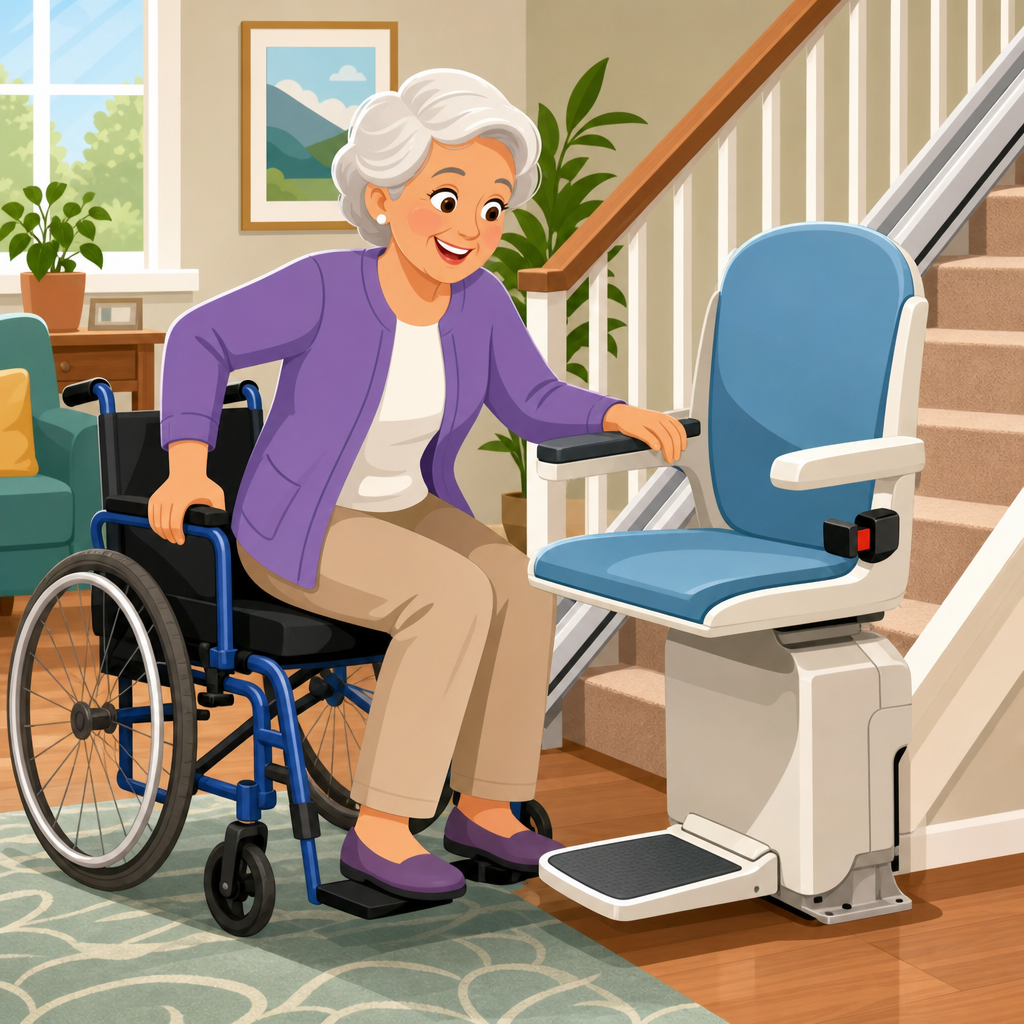
Side-loading chair lifts make transfers easier because they reduce twisting, shorten reach distance, and create a more predictable path between a wheelchair, bed, toilet, recliner, or vehicle seat. In practical buying terms, a side-loading chair lift is any lift or transfer chair designed so the user can enter from the side rather than being lowered straight down from above or pulled awkwardly from the front. That design matters for disabled users, family caregivers, and professional aides because most transfer injuries happen during repositioning, not during transport. After evaluating home lifts, transfer chairs, patient lifts, and vehicle-access solutions, I have found that side access consistently improves setup speed, user comfort, and caregiver safety when the lift matches the user’s body size, transfer ability, and room layout. This guide explains how side-loading chair lifts work, who they help most, what features matter, and how to compare the best chair lifts for disabled users without wasting money on the wrong category.
Many shoppers use “chair lift” to describe several different products: stair lifts, patient lifts, transfer chairs, bath lifts, and vehicle seat lifts. For easier transfers, the most relevant products are mobile patient lifts, sit-to-stand lifts, transfer chairs with side-opening frames, and rotating or lowering vehicle seat systems. Each solves a different transfer problem. A person with limited trunk control may need a full-body sling lift, while someone who can bear some weight often does better with a sit-to-stand model that preserves strength and dignity. A wheelchair user transferring into an SUV may benefit more from a side-loading seat base that rotates and lowers to curb height. Understanding these categories is the foundation for buying well, especially if this article serves as your hub before diving into detailed product reviews.
The stakes are high. According to guidance from OSHA and major rehabilitation programs, manual lifting exposes caregivers to significant risk of back and shoulder injury, and repeated poor transfers can also cause skin shear, bruising, and falls for the user. The best side-loading chair lifts reduce those risks by supporting the body through the strongest, safest path available. They also improve daily routines: toileting becomes faster, bathing less stressful, bed transfers more consistent, and car rides more realistic for families who want to maintain work, appointments, and social life. For buyers comparing the best chair lifts for disabled users, the right question is not simply which model is strongest or cheapest. The right question is which side-loading design fits the user’s transfer profile, environment, and long-term care plan.
What side-loading chair lifts are and when they work best
A side-loading chair lift is best understood as a transfer device that allows lateral entry with minimal forward bending, pivoting, or overhead maneuvering. In home care, this usually means a transfer chair with removable or swing-away arms, a commode or shower chair with side access, or a patient lift positioned to pick up and place a user from the side of the destination surface. In vehicle mobility, side-loading often refers to a seat that rotates out of the cabin and lowers, or a hoist that brings a mobility device through a side door rather than the rear hatch. The core advantage is mechanical: the body moves through a shorter arc, and the caregiver can keep the user closer to center of gravity throughout the transfer.
These systems work best when the transfer destination has usable clearance on at least one side. A bed pushed tightly into a corner, a narrow powder room, or a vehicle with low roof clearance can eliminate the benefit of side access. I always tell buyers to measure before they compare features. You need doorway width, turning radius, bed height, seat height, floor-to-base clearance, and obstruction notes such as radiator covers, recliner feet, and toilet paper holders. A lift can be excellent on paper and still fail in a real home because the legs will not fit around the furniture base or the boom cannot clear the armrest at the right angle.
Side-loading designs are especially helpful for users with hemiplegia, lower-body weakness, joint contractures, obesity, pain with hip flexion, or fatigue that makes pivot transfers unreliable. They are also valuable after surgery, during progressive neurological decline, and in situations where one caregiver must complete transfers alone. However, they are not automatically the best answer for every disabled user. Some people with good standing tolerance and strong upper body control can transfer faster with a transfer board or grab bar setup. Others need a ceiling lift because floor lifts are too bulky in their home. The best buying decision starts with transfer assessment, not product marketing.
How to choose the best chair lifts for disabled users
When I compare lifts for easier transfers, I prioritize six variables: user weight, weight-bearing ability, trunk and head control, transfer frequency, room geometry, and caregiver capacity. Weight capacity matters, but safe working load is only the beginning. Sling dimensions, seat width, foot platform stability, boom range, and battery runtime determine whether the capacity is usable in daily life. A 450-pound-rated lift is not truly suitable if the sling rides up into the axilla, the seat opening is too narrow for toileting, or the base cannot widen enough to straddle a power wheelchair.
The biggest decision is usually between a full-body patient lift and a sit-to-stand lift. Full-body lifts support users who cannot reliably stand, pivot, or maintain posture during the transfer. Sit-to-stand lifts are ideal when the user can bear some weight through the legs and follow cues. In real homes, a sit-to-stand model often preserves a more active transfer routine and takes less space, but it becomes unsafe if the user has knee buckling, orthostatic symptoms, severe spasticity, or inconsistent cognition. I have seen families buy sit-to-stand units because they look less clinical, then replace them within months because fatigue or disease progression made them impractical.
Another key factor is destination compatibility. A lift for bed-to-chair transfers may not work well for toileting if the sling blocks clothing removal. A chair that works over a standard toilet may not fit over a comfort-height bowl with grab bars. A vehicle seat lift may be excellent for curb transfers but too slow for users who cannot tolerate cold or rain while the mechanism cycles. Good product reviews should always state use case clearly: home transfer, toileting, bathing, standing support, or vehicle access. That is why this hub article matters within Buying Guides & Product Reviews: it helps readers sort categories first, then compare models with the right expectations.
| Lift type | Best for | Main advantage | Main limitation |
|---|---|---|---|
| Full-body patient lift | Users with little or no standing ability | Highest support and broadest transfer range | Bulky footprint and sling setup time |
| Sit-to-stand lift | Users who can bear partial weight | Faster transfers and more active participation | Unsafe for users with poor knee or trunk control |
| Side-opening transfer chair | Short transfers in tight home spaces | Easy lateral access for bed, toilet, and shower use | Less suitable for full dependent lifts |
| Vehicle rotating/lowering seat | Car entry and exit | Reduces twisting and step-up height | Vehicle-specific installation and higher cost |
Features that actually improve transfers
Marketing language often highlights comfort padding or sleek styling, but the features that truly improve transfers are mechanical and ergonomic. For floor lifts, powered base widening is one of the most valuable upgrades because it lets a single caregiver adjust the leg stance while supporting the user. Low base clearance is equally important if the lift needs to roll under beds or recliners. On sit-to-stand lifts, pay close attention to shin pad adjustment, knee support contour, and footplate traction. Poor leg positioning causes pain and instability long before the rated weight limit is reached.
Sling selection deserves more attention than buyers usually give it. Divided-leg slings are versatile for general transfers, toileting slings expose more of the lower body for clothing management, and full-support slings with head support are essential for users with poor neck control. Fabric also matters. Mesh dries quickly for bathing, while padded polyester may be better for routine room-to-room transfers. Reputable manufacturers such as Hoyer, Invacare, Joerns, Arjo, and Etac publish sling compatibility charts for a reason: mismatching a sling to a lift or user profile compromises balance, comfort, and safety. If a review does not discuss slings in detail, it is incomplete.
Battery and control systems also affect everyday usability. A battery-powered lift with an easy-read charge indicator, emergency stop, and manual emergency lowering is the standard to expect. For home users, I prefer systems with removable battery packs so one can charge while another is in use. In vehicle applications, powered rotation and lowering should operate smoothly without jerking, and controls should be usable by someone with reduced hand strength. Side-loading systems are supposed to reduce effort; if buttons are tiny, levers stiff, or the sequence too complicated, the device will not get used consistently.
Real-world use cases at home and in vehicles
At home, the most common side-loading scenario is bed-to-wheelchair transfer. A full-body floor lift can approach from the side, lower the sling-supported user into the chair, and reduce the need for a pivot that may trigger knee collapse or shoulder strain. For toileting, a side-opening transfer chair or toileting sling can save several minutes per transfer because clothing adjustment is easier and the caregiver has better access from both sides. In a small bathroom, this difference is not trivial; it often determines whether one caregiver can manage the routine safely.
Shower and commode combinations are another strong case for side-loading equipment. Brands in the rehab space have long used side-entry rolling shower chairs because they let users slide laterally from bed or wheelchair with less friction and less arm pulling. The result is lower shear risk, which matters for anyone with fragile skin or a history of pressure injuries. In long-term care settings, I have seen side-access chairs reduce rushed handling during morning care because staff can position once and complete several tasks without repeated lifting. That same efficiency translates well to home care, where energy and time are limited resources.
Vehicle transfers deserve special attention because buyers often underestimate the difference between a portable aid and an installed seat system. A swivel cushion or transfer board may help some ambulatory users, but for many disabled users the better answer is a rotating and lowering seat base from mobility specialists such as BraunAbility, Bruno, or adapted vehicle installers working with OEM-compatible systems. These units bring the seat outward, lower it, and then return it to travel position. For someone with painful hip rotation, weakness after stroke, or limited standing tolerance, that side-loading motion can make car travel practical again. The tradeoff is cost, vehicle compatibility, and the need for professional installation and service.
Safety standards, fitting, and common buying mistakes
Safe transfers depend on matching the device to the user and following established guidance from clinicians, manufacturers, and workplace safety standards. Start with a physical or occupational therapy assessment whenever possible. Therapists evaluate range of motion, sitting balance, skin risk, cognition, and whether the user can participate actively. This is far more useful than shopping by online star rating alone. A five-star lift that fits a post-operative knee patient may be wrong for a person with multiple sclerosis, cerebral palsy, or advanced arthritis.
The most common buying mistake is choosing by price before checking dimensions and transfer method. The second is assuming the lift alone solves the problem. In practice, outcomes depend on the whole setup: sling fit, bed height, wheelchair armrest removability, caregiver training, charging routine, and floor surface. Thick carpet, uneven thresholds, and crowded furniture can make a decent floor lift miserable to use. Another frequent mistake is ignoring progression. If the user has a degenerative condition, buying at the edge of current ability often means replacing the device too soon. A slightly more supportive system may cost more initially but save money and disruption over time.
Maintenance and support should also influence product reviews and purchase decisions. Ask about replacement batteries, actuator availability, service network, and lead times for slings and parts. Established brands usually perform better here than generic imports. Read the manual before purchase if possible. Check cleaning instructions, emergency lowering procedures, and inspection intervals. The best chair lifts for disabled users are not simply strong; they are serviceable, well-documented, and realistic for the people who will rely on them every day.
How this hub helps you compare detailed reviews
As a sub-pillar hub under Buying Guides & Product Reviews, this page is meant to help you narrow the field before reading individual comparisons. If you need maximum support for bed, recliner, and wheelchair transfers, start with full-body patient lift reviews. If the user can stand with assistance and you want faster daily transfers, move next to sit-to-stand lift reviews. If bathing and toileting are the main challenge, focus on side-opening transfer chairs and rolling shower commodes. If the problem is car access, skip generic home lift articles and read vehicle seat lift and transfer aid reviews instead.
The smartest buyers compare products only within the right category, using the same decision points each time: transfer ability, dimensions, sling or seat interface, portability, maintenance, and total cost of ownership. That process prevents the classic mistake of comparing a budget patient lift to a premium rotating vehicle seat as if they solve the same problem. They do not. Side-loading chair lifts for easier transfers deliver the best results when the product category matches the transfer environment exactly.
For most households, the main benefit is simple: safer, less painful transfers that can be repeated consistently without exhausting the user or caregiver. Measure your space, document the transfer tasks that happen every day, and involve a therapist or mobility dealer before you buy. Then use this hub to move into the most relevant detailed reviews and find the best chair lift for your specific needs.
Frequently Asked Questions
What is a side-loading chair lift, and how is it different from other transfer devices?
A side-loading chair lift is a lift or transfer chair designed so the user can move onto the seat from the side instead of being lowered straight down from above or approached awkwardly from the front. That difference may sound small, but in everyday use it can make transfers much more manageable. With a side-entry design, the chair can be positioned next to a wheelchair, bed, toilet, recliner, or vehicle seat so the user has a shorter, more natural path during the transfer. In many cases, this means less twisting through the spine and hips, less reaching across open space, and fewer awkward body positions for both the user and the caregiver.
Traditional transfer methods often require a pivot, a lift from under the arms, or a front-facing movement that can feel unstable. Ceiling lifts and sling lifts can be excellent in the right environment, but they work differently because the user is suspended and lowered from above. A side-loading chair lift is often preferred when the goal is to create a more direct seated transfer with better alignment and a more predictable motion path. For many households, this can improve comfort, reduce transfer anxiety, and support safer day-to-day mobility.
Why do side-loading chair lifts make transfers easier for wheelchair users and caregivers?
Side-loading chair lifts make transfers easier because they simplify body mechanics. Instead of forcing a user to twist, lean, or bridge a wide gap, the lift is designed to come alongside the person and support a more controlled move onto the chair. That shorter reach distance matters. When the destination seat is close and aligned properly, the transfer usually feels more stable and less physically demanding. This is especially important for people with limited trunk control, weakness on one side, painful joints, balance problems, or fatigue.
Caregivers benefit for the same reason. Safer transfers are not just about preventing falls for the user; they are also about reducing back strain, shoulder strain, and repetitive lifting injuries for family members and professional aides. A side-loading approach tends to reduce awkward pulling and repositioning because the transfer path is more direct. It also creates a more predictable routine. Predictability is a major practical advantage in home care, rehabilitation settings, and assisted living environments, because when the chair approaches from the side in a repeatable way, everyone involved can prepare their hand placement, foot positioning, and timing more effectively.
In real-world terms, this often translates into smoother bed-to-chair, wheelchair-to-toilet, chair-to-recliner, and even vehicle transfers. The user may feel less intimidated, the caregiver may use less force, and the overall process may take less time. That combination of reduced strain and increased confidence is one of the main reasons side-loading systems are so often recommended for easier transfers.
Where are side-loading chair lifts most useful in daily life?
Side-loading chair lifts are especially useful anywhere a person needs to move between two seated or semi-seated surfaces with limited standing ability or limited ability to pivot safely. Common home uses include transfers between a wheelchair and bed, wheelchair and toilet, wheelchair and shower chair, or wheelchair and a favorite recliner or sofa. In these settings, side-entry access can make the movement feel more natural because the chair can line up beside the user rather than forcing a front-facing approach or a suspended overhead transfer.
They can also be very helpful in vehicle access applications. A side-loading transfer chair or lift can support movement into a car seat, van seat, or passenger seat when stepping in or rotating into place is difficult. In these cases, reducing the amount of twisting required can make a major difference for people with arthritis, spinal conditions, neurological disorders, post-surgical restrictions, or general weakness. The same benefit applies in facility settings, where caregivers may be assisting multiple transfers every day and need equipment that is efficient, repeatable, and easier on the body.
The best environments for side-loading lifts are usually the ones where space allows proper positioning and where users benefit from a controlled lateral transfer path. Before buying, it is wise to consider floor space, doorway clearance, bed height, wheelchair dimensions, bathroom layout, and whether the lift needs to move between rooms. Matching the device to the actual transfer locations in daily life is just as important as choosing the general category of lift.
What should I look for when buying a side-loading chair lift?
Start with transfer compatibility. The lift should match the user’s most common transfer situations, such as bed to chair, wheelchair to toilet, or chair to vehicle seat. A model can look excellent on paper but still fail in daily use if its seat height range, base width, turning radius, or side-access geometry does not fit the home or the vehicle. Measure carefully. Look at seat-to-seat height differences, the width of hallways and bathroom doors, clearance under beds and chairs, and whether the lift can position close enough to reduce gaps during transfer.
Next, consider the user’s physical needs. Important factors include weight capacity, trunk support, armrest design, foot support, pressure management, and whether the person can assist partially or needs near-total support. Some side-loading transfer chairs are better for users who can participate in the move, while others are designed to provide more complete assistance. If the user has spasticity, contractures, one-sided weakness, pain with rotation, or fragile skin, those details should guide the selection.
Caregiver usability matters too. Look for controls that are easy to reach and understand, smooth movement during loading and unloading, dependable brakes, stable casters or base supports, and a design that does not force the caregiver into awkward positions. If the device is powered, battery life and charging convenience are important. If it will be used in the bathroom, confirm that materials, seat surfaces, and cleaning methods are appropriate for moisture exposure and hygiene needs.
Finally, pay attention to service and long-term ownership. A well-built side-loading chair lift should come from a manufacturer or dealer that offers training, replacement parts, warranty support, and clear maintenance guidance. Because transfers are safety-critical, support after the sale is not a minor detail. If possible, request a demonstration or trial so you can see how the lift performs with the actual user in the real transfer spaces where it will be used.
Are side-loading chair lifts safe, and who should help choose one?
Yes, side-loading chair lifts can be very safe when they are properly matched to the user, correctly installed or set up, and used according to the manufacturer’s instructions. In fact, one of their biggest advantages is that they can make transfers more controlled and repeatable, which helps reduce the risk of falls, missed landings, and caregiver overexertion. Their side-entry design often improves alignment between the starting surface and the destination surface, and that can significantly reduce the unpredictable movements that cause transfer problems.
That said, safety depends on fit and technique. The wrong device, or even the right device used in the wrong space, can create hazards. Seat height mismatch, poor floor clearance, inadequate locking mechanisms, or insufficient support for the user’s posture can all affect transfer safety. This is why it is best to involve experienced professionals when choosing a lift. An occupational therapist, physical therapist, rehab technology supplier, or mobility equipment specialist can help evaluate the user’s strength, balance, cognition, range of motion, and transfer goals. They can also identify environmental obstacles and recommend features that improve safety in the specific home or care setting.
For families, the most important takeaway is that safety is not only about the product itself; it is about the complete transfer system. That includes the user’s abilities, the caregiver’s technique, the room layout, the destination surfaces, and consistent training. When those pieces are addressed together, a side-loading chair lift can be an excellent solution for easier, safer, and more comfortable transfers.