


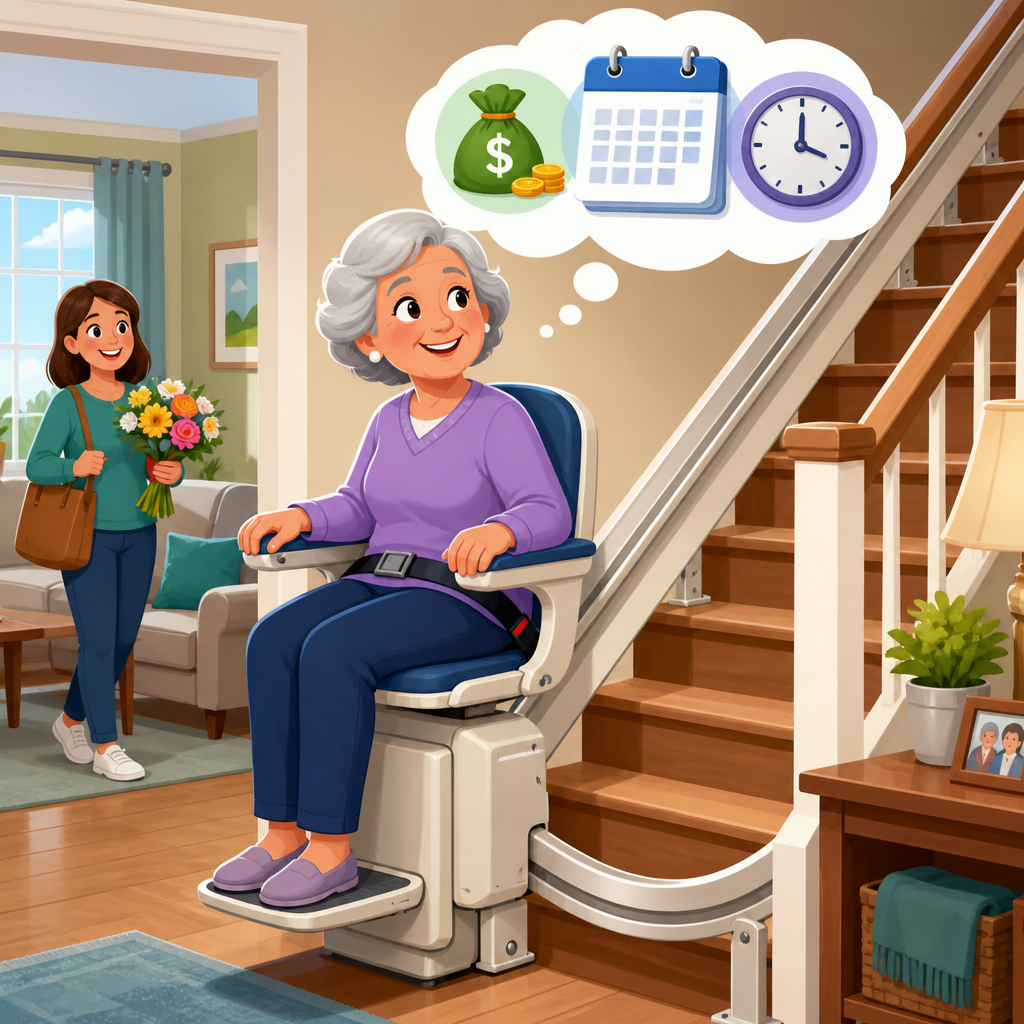
Recovering from surgery often turns a familiar staircase into the hardest part of the day, which is why stair lift rental for surgery recovery has become a practical short-term mobility solution for many households. A stair lift is a motorized chair or perch that travels along a rail mounted to the stairs, allowing a person with limited strength, balance, or weight-bearing ability to move safely between floors. Rental means paying for temporary use of the equipment rather than buying it outright, usually with installation, service, and later removal included under a time-based agreement. For patients returning home after knee replacement, hip surgery, spinal procedures, cardiac operations, or major injury repair, that distinction matters because the need may last weeks or months, not years.
I have worked with families arranging access equipment on tight hospital discharge timelines, and the same questions come up every time: How much does a stair lift rental cost, how quickly can it be installed, what are the contract terms, and when does buying make more financial sense than renting? Those are not small questions, because discharge planners, physical therapists, and caregivers are trying to reduce fall risk while also protecting the budget. A single avoidable fall can lead to readmission, delayed rehabilitation, or a move to temporary ground-floor living that disrupts the entire household. The right stair lift plan can preserve independence, conserve energy for healing, and let a patient stay in the home that supports recovery best.
This article serves as the hub for rental versus purchase decisions within cost and financing options. It explains typical pricing structures, minimum rental periods, insurance realities, installation timing, and the main tradeoffs between short-term and long-term use. It also addresses a point many buyers miss: the staircase itself heavily influences feasibility and price. Straight staircases are usually the fastest and least expensive for rental because providers can often use reconditioned rails and chairs. Curved, multi-landing, or unusually narrow stairs often require custom equipment, making rental less available and purchase more common. Understanding those practical constraints early helps families choose faster and avoid wasting time on options that will not fit the home or the recovery timeline.
What stair lift rental usually includes and who it suits best
A stair lift rental is typically designed for temporary need. In most markets, the provider installs a reconditioned or lightly used chair on a straight staircase, charges an upfront fee that covers delivery and installation, then bills a monthly rental amount for continued use. Many contracts also include service, standard maintenance, and removal at the end of the term. That bundled structure is why rental works well for surgery recovery: the customer avoids the full purchase price and does not have to manage resale later. It is especially appropriate when the expected need is under six to twelve months, though the exact break-even point depends on local pricing and the staircase configuration.
The strongest candidates for rental are patients with a clear rehabilitation path. Common examples include total knee arthroplasty, total hip replacement, rotator cuff repair with reduced railing support, lumbar fusion, ankle reconstruction, and recovery after a prolonged hospital stay that causes deconditioning. I have also seen rentals used effectively after cardiac surgery, when fatigue makes stair climbing technically possible but unsafe to repeat several times a day. In those cases, a stair lift is not replacing rehabilitation; it is preserving energy and reducing risk during the period when strength, endurance, or weight-bearing status is limited. Therapists often support this approach when bedrooms and full bathrooms are on separate levels and temporary first-floor living is not realistic.
Rental is less suitable when the user has a progressive condition or permanent mobility decline, because repeated monthly charges can outgrow the value of ownership. It is also less available for curved stairs. Most curved lifts require a custom rail built to the exact dimensions of the staircase, including every turn, landing, and overrun. Because the rail is specific to one home, suppliers rarely offer true short-term curved rentals at attractive rates. Some may structure a “rental” financially, but the customer is still effectively paying for a large portion of a custom system. Families should ask early whether the quoted rental is a genuine month-to-month program or simply financing on a custom installation.
Stair lift rental costs, fees, and the real break-even point
For a straight staircase, stair lift rental cost commonly includes an upfront charge of roughly $300 to $1,500 and a monthly fee of about $100 to $300, depending on region, equipment age, stair length, weight capacity, and service terms. In higher-cost urban markets, numbers can run above those ranges. Purchase prices for straight lifts often fall between $2,500 and $5,500 installed, while premium models, heavy-duty units, or longer tracks can exceed that. Curved stair lifts usually start much higher, often around $10,000 and rising significantly based on rail complexity. These ranges vary by provider, but they are consistent with how the market is structured: straight lifts can be redeployed, curved lifts usually cannot.
The most important cost question is not “What is the monthly price?” but “What is the total cost over the expected recovery period?” I advise families to model three timelines: eight weeks, six months, and twelve months. Include the installation fee, monthly rent, any minimum term, removal charge if separate, and taxes. Then compare that with the net cost of purchase, including whether the provider offers a buyback, trade-in, or resale support. A rental that looks inexpensive at first can become more expensive than buying by month eight or nine. Conversely, buying for a six-week recovery almost never makes financial sense unless the home will need the lift again soon for another household member.
| Option | Typical Upfront Cost | Typical Ongoing Cost | Best Use Case | Main Limitation |
|---|---|---|---|---|
| Straight stair lift rental | $300–$1,500 | $100–$300 per month | Short-term surgery recovery | Usually limited to straight stairs |
| Straight stair lift purchase | $2,500–$5,500 installed | Low after warranty | Need longer than 6–12 months | Higher upfront expense |
| Curved stair lift purchase | $10,000+ | Low after warranty | Permanent need on curved stairs | Custom rail increases price and lead time |
Another hidden variable is service response. A lower monthly rental quote is not a bargain if the contract excludes labor, batteries, or emergency calls. Stair lifts commonly rely on battery-powered operation with charging points on the rail, and batteries eventually wear out. Ask whether replacements are included during the rental term. Also ask about seat swivel locks, footrest safety edges, call/send controls, and fault diagnostics. Reputable providers explain these details clearly because reliability matters most when a patient cannot safely “just use the stairs” during an outage.
Rental terms, contract details, and timing around hospital discharge
Most stair lift rental agreements include a minimum term, often one to three months, though some companies charge a set initial period and then move to month-to-month billing. For surgery recovery, timing is everything. If discharge is scheduled for Friday, waiting until Thursday to request an in-home assessment is risky. Straight-lift providers can sometimes install within twenty-four to seventy-two hours after confirming stair measurements, power access, and user fit, but same-week service is never guaranteed during busy periods. My strongest recommendation is to start the process as soon as surgery is booked, not after the patient comes home and discovers the stairs are unmanageable.
Contract language should cover installation, removal, damage responsibility, cancellation, pause provisions, and transfer rules if the patient relocates temporarily. Some families assume they can stop billing the day the chair is no longer used; in practice, many companies require notice and a scheduled removal date. There may also be charges if the stair lift was installed on a staircase that requires extra brackets, rail cuts, or electrical preparation beyond standard scope. Ask whether the quote is all-inclusive and whether post-installation wall or carpet touch-up is necessary. Stair lift rails attach to the stair treads, not usually to the wall, but minor marks or holes can still matter for homeowners and landlords.
Installation timing depends heavily on staircase type. Straight stairs are measured quickly and often fit stocked rail sections. Curved stairs require a detailed survey, often using photo measurement, digital templating, or manual dimensions sent to the manufacturer for a custom rail. That process can take several weeks. For surgery patients, that difference is decisive. If the staircase is curved and the surgery date is close, you may need a temporary recovery setup downstairs, a bedside commode, or a short rehabilitation stay while the custom lift is built. It is far better to know that limitation before discharge planning than to learn it when the ambulance crew arrives home.
Rental versus purchase: how to choose with confidence
The rental versus purchase decision should be based on expected duration, staircase type, cash flow, and future household need. Rent when the need is temporary, the stairs are straight, and preserving cash matters more than minimizing long-term cost. Buy when the mobility limitation is likely to last beyond several months, when the staircase requires a custom curved system, or when another family member may use the lift later. In real cases, I have seen families rent after joint replacement and remove the unit within ten weeks with excellent value. I have also seen households rent too long after complications extended recovery, then realize they paid nearly the full purchase price without gaining ownership.
Purchase has advantages beyond cost over time. Owned equipment may come with a longer manufacturer warranty, options for larger seats or higher weight capacities, folding rails to protect door clearance, upgraded upholstery, power swivel seats, and diagnostic displays. If the user has arthritis, limited trunk rotation, or caregiver transfer needs, those features can materially improve safety. Purchase also avoids recurring billing and potential minimum-term restarts if the equipment is removed and reinstalled later. However, ownership carries responsibility for eventual maintenance and for disposal or resale when the lift is no longer needed. Resale value exists mainly for straight lifts, and even then it depends on age, brand, and local demand.
Families should compare at least three providers and ask the same questions each time: Is the unit new or reconditioned? What is the weight limit? How wide is the folded profile on the stairs? Are service calls included? What is the installation timeline? Is there a warranty on motor, gearbox, batteries, and rail? Which brands do you install? Established manufacturers such as Bruno, Harmar, Handicare, Stannah, and Acorn have different model lineups and service networks. Brand alone does not guarantee the best outcome; local dealer support often matters more. A well-supported model with fast parts access is more valuable during recovery than a cheaper option with weak service coverage.
Insurance, financing, and alternatives if rental is not available
Most standard health insurance plans, including original Medicare, do not routinely cover stair lifts because they are generally classified as home modifications rather than durable medical equipment under typical benefit rules. Some Medicare Advantage plans, Medicaid waiver programs, workers’ compensation cases, Veterans Affairs benefits, or state assistive technology programs may offer partial help, but eligibility is highly specific. Health savings accounts and flexible spending accounts may allow reimbursement when supported by a letter of medical necessity, and that can improve the economics of both rental and purchase. Families should verify documentation requirements before installation so receipts, diagnosis language, and provider letters match plan rules.
If stair lift rental is unavailable, especially for curved stairs, financing and temporary care planning become the next best tools. Many dealers offer installment plans through third-party lenders, and some nonprofits or local aging agencies maintain equipment loan closets for basic mobility items, though full stair lifts are less common there. Alternatives include moving the sleeping area downstairs, using a hospital bed on the main floor, adding a commode, arranging home health support, or scheduling a short inpatient rehabilitation stay until stair negotiation improves. Those options are not equivalent to a stair lift, but they can bridge the gap when custom equipment cannot be sourced in time. Start with an in-home safety assessment and get quotes now.
Frequently Asked Questions
How much does stair lift rental for surgery recovery usually cost?
Stair lift rental pricing usually includes a one-time installation charge plus a recurring monthly rental fee, and the total depends on the staircase layout, the type of lift needed, and how long the equipment will be used. For many straight staircases, the upfront portion is often the biggest cost because the provider must deliver the unit, install the rail, test the system, and later remove it. Monthly rental fees are then added for the duration of the recovery period. Curved staircases are typically more expensive because they require a custom rail, and in some markets they may not be practical to rent at all. In addition to the base price, some companies charge for service calls outside normal coverage, expedited installation, or optional upgrades such as powered swivel seats, folding rails, or heavier-capacity models.
For surgery recovery, it is important to look beyond the headline monthly price and ask for the full short-term cost over the expected healing window. A rental that looks affordable month to month can become less cost-effective if the installation fee is high and recovery lasts longer than planned. Ask whether the company offers minimum rental periods, whether there is a discount for multiple months paid upfront, and what happens if the lift is needed for a shorter or longer time than expected. Also ask whether maintenance, standard repairs, and removal are included in the agreement. The most useful quote is one that clearly lists installation, monthly rent, service coverage, removal, and any taxes or permit-related fees so there are no surprises while the patient is recovering.
When should I arrange a stair lift rental before surgery?
The best time to arrange a stair lift rental is as soon as the surgical plan and expected mobility restrictions are reasonably clear. In many cases, that means scheduling consultations before the procedure rather than waiting until the patient is home and struggling on the stairs. Recovery periods can be unpredictable, but if a surgeon, discharge planner, physical therapist, or orthopedic team expects limited weight-bearing, reduced stamina, fall risk, or difficulty climbing steps, it makes sense to start evaluating stair access early. This gives the household time to compare providers, confirm whether the staircase can accommodate a lift, and make sure the system will be available when needed.
Timing matters because installation slots can fill up, especially during busy periods or in areas with fewer mobility equipment providers. A pre-surgery home assessment also allows the installer to identify practical issues such as narrow stairs, nearby doorways, obstructions at landings, power supply needs, and whether the user can safely transfer on and off the seat. Ideally, the lift should be installed before the patient returns home so the first trip up the stairs is not the hardest part of recovery. If surgery is unplanned or urgent, many companies can still help on short notice, but availability, pricing, and equipment options may be more limited. Early planning generally leads to a safer, smoother transition home.
What rental terms should I pay attention to before signing an agreement?
The most important rental terms are the minimum rental period, the total upfront charges, what service and maintenance are included, and the process for ending the rental. Many stair lift rentals require a minimum commitment, even if the patient only needs the equipment for a few weeks. That means you should ask whether billing is monthly, whether partial months are prorated, and how much notice is required before removal. You should also confirm whether the installation fee is refundable, which it usually is not, and whether there are charges for cancelling after scheduling but before installation. These details matter because surgery recovery can improve faster or slower than expected.
It is also wise to review the practical and liability-related parts of the agreement. Ask who is responsible if the lift stops working, how quickly service calls are handled, whether batteries are covered, and whether misuse or accidental damage creates extra charges. Confirm whether removal is included at the end of the rental or billed separately. If more than one person may use the lift, ask whether the chosen model is appropriate for each user’s height, weight, and transfer ability. Finally, make sure the company explains any limitations in writing, such as stair width requirements, parking positions, or weight capacity. A clear contract should tell you exactly what is included, what could cost extra, and how the provider supports the patient throughout the recovery period.
Is renting a stair lift better than buying one for temporary post-surgery mobility needs?
For short-term recovery, renting is often the more practical choice because it avoids the higher upfront cost of ownership and aligns better with a temporary medical need. If the expected use is limited to a few weeks or a few months, rental can provide safe access to the second floor without committing to a permanent purchase. This is especially helpful when the patient’s long-term mobility outlook is uncertain. After many surgeries, people gradually regain strength, balance, and weight-bearing ability, so a lift may only be needed during the most restrictive phase of healing. Renting also usually includes basic service support, which can reduce stress for families managing medications, follow-up visits, and rehabilitation.
That said, buying may make more sense if recovery is expected to be lengthy, if the patient had mobility challenges before surgery, or if the home is likely to need accessibility equipment again in the future. Ownership can become more cost-effective over time, particularly for straight stair lifts, and it may offer a wider choice of features and models. The decision often comes down to expected duration, total quoted rental cost, and whether the mobility limitation is truly temporary. A good provider should be willing to discuss both options honestly. If the projected rental expense over several months approaches the price of a purchased unit, it is reasonable to compare both paths side by side before deciding.
Who is a good candidate for a stair lift rental during surgery recovery, and are there situations where it may not be the right solution?
A stair lift rental is usually a good fit for someone who can safely transfer to and from the seat, sit upright during the ride, and use the lift as part of a broader recovery plan after surgery. This often includes patients recovering from joint replacement, spinal procedures, fractures, abdominal surgery, or other operations that temporarily reduce strength, balance, endurance, or weight-bearing ability. It can be especially useful when the bedroom or full bathroom is on another floor and main-floor living is not practical. A stair lift may help reduce fall risk, conserve energy, and allow the patient to remain at home rather than relocating during recovery.
However, it is not automatically the right answer for every patient or every home. Some staircases are too narrow, have complex curves, or present landing issues that limit rental options. In other cases, the person may have difficulty bending the knees enough to sit comfortably, may be unable to transfer safely even with assistance, or may have cognitive or medical issues that make independent use unsafe. That is why input from the surgeon, physical therapist, occupational therapist, or discharge team can be valuable. A reputable stair lift company should also complete a home assessment to confirm fit and safe operation. If a stair lift is not ideal, alternatives might include temporarily setting up living space on one level, using in-home support, or exploring other mobility equipment based on the patient’s specific recovery needs.