


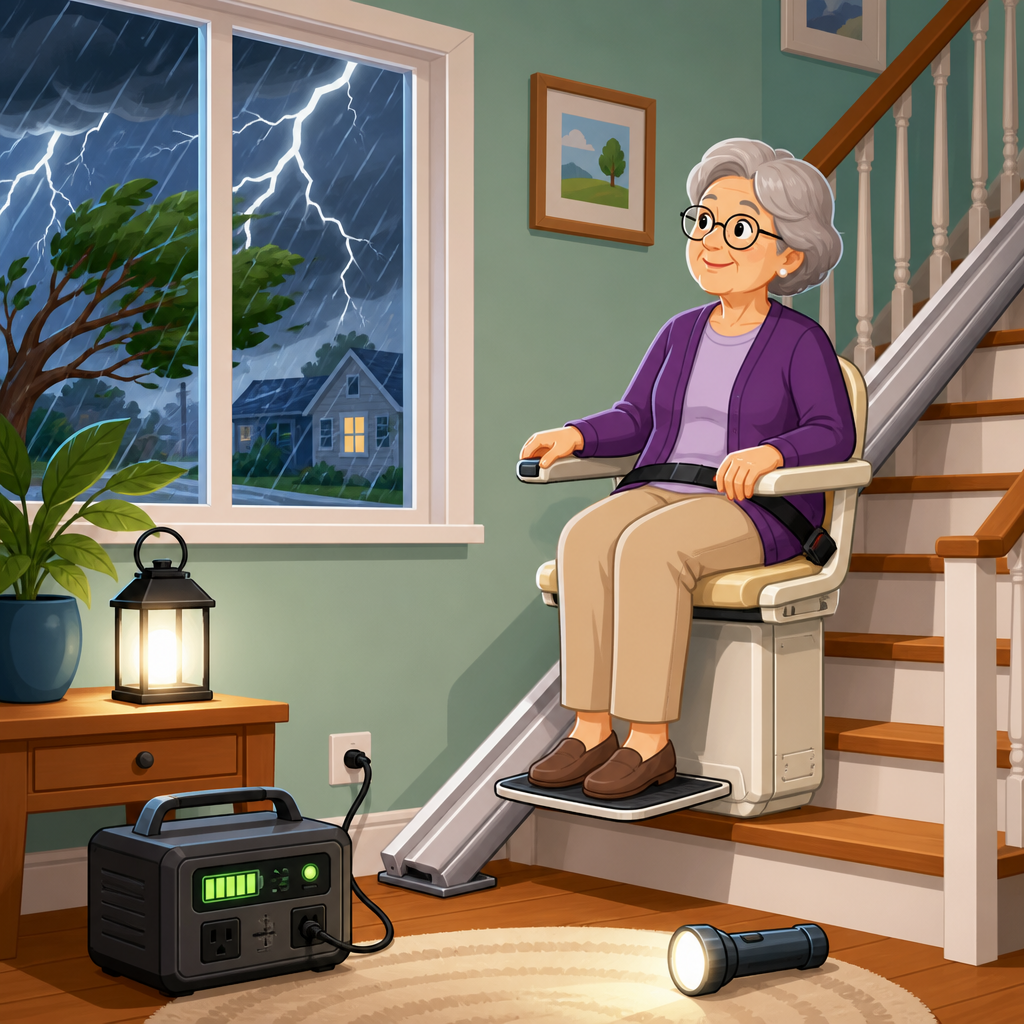
Stair lift safety during severe weather and electrical outages depends on one principle above all others: users need a clear plan before conditions turn risky. A stair lift is a motorized chair or platform that carries a person along a rail attached to the staircase, and modern models usually include batteries, charging points, seat belts, obstruction sensors, and manual controls. Severe weather includes thunderstorms, high winds, ice storms, hurricanes, tornado outbreaks, flooding, extreme heat, and heavy snow; electrical outages range from short voltage interruptions to multi-day utility failures. In homes where a stair lift is essential for mobility, these events can turn a routine trip between floors into a serious safety issue.
I have worked with families who assumed their lift would “just work” in any outage because it had batteries, only to discover that neglected batteries, tripped breakers, or blocked charging contacts reduced travel capacity at the worst possible moment. That gap between what owners believe and what the equipment can actually do is why this topic matters. The most important user safety best practices are straightforward: keep the unit maintained, know how your specific model behaves during a power failure, reduce stair traffic during unstable conditions, and prepare backup plans for sheltering, evacuation, and communication. Those practices protect users, caregivers, and emergency responders.
This article serves as a hub for user safety best practices within maintenance, troubleshooting, and safety. It explains how stair lifts behave in storms and outages, what users should check before and during an event, and when it is safer not to ride at all. It also connects the safety discussion to related topics homeowners should understand, including battery care, charging faults, rail obstructions, manual lowering procedures, and professional service intervals. If a household depends on a stair lift daily, severe weather planning belongs in the same category as medication access, backup lighting, and emergency contact lists.
Most residential stair lifts sold today use a battery-powered drive system. The lift charges when parked at designated contact points, and the batteries power travel even when house power is off. That design improves safety because it allows limited operation during an outage, but it does not make the lift limitless. Battery age, rider weight, staircase length, ambient temperature, and whether the unit was fully charged before the outage all affect runtime. Some non-battery systems or older units may stop completely when utility power fails. The owner’s manual is the first authority; model-specific behavior always overrides generic guidance.
How Severe Weather and Power Loss Affect Stair Lift Operation
Severe weather affects stair lifts through both direct and indirect mechanisms. The direct risks are water intrusion, temperature stress, lightning-related electrical surges, and debris or ice that interferes with outdoor units. The indirect risks are utility outages, reduced lighting, rushed decision-making, caregiver absence, and emergency movement through the home. In practice, outages are usually the primary concern indoors. A battery-powered lift may continue to run, but if charging stops for many hours, each trip depletes the reserve. Manufacturers commonly state that a fully charged battery can provide multiple trips during a power failure, but the number varies widely by model and conditions.
Electrical instability can also create confusing symptoms. A lift may beep because it is off the charge point, show a diagnostic code, move more slowly than usual, or stop because a circuit breaker has tripped. Homeowners sometimes mistake these signs for total mechanical failure and attempt unsafe transfers on the stairs. During weather events, treat unusual lift behavior as a reason to pause, verify the environment, and review the manual or call support rather than improvise. If flooding, smoke, or structural damage is present, the issue is no longer equipment performance; it is emergency evacuation, and standard lift use may not be appropriate.
Outdoor stair lifts face additional exposure. Snow can pack along the rail, ice can build on footrests and seats, and wind-driven rain can reach switches or charging contacts. Even weather-resistant models are not designed to be used when surfaces are slick or submerged. I advise clients to think of outdoor lifts as mobility equipment first, not all-terrain devices. If severe weather is active, the safest decision is often to avoid riding until the path, seat, controls, and landing zones are dry, visible, and stable.
Pre-Storm Preparation: The Safety Checks That Matter Most
Preparation is where most risk reduction happens. Start with the owner’s manual and identify four things: whether the lift runs on batteries during an outage, where the charge points are located, what alarms or indicators mean, and whether there is a manual swivel, lowering, or emergency stop feature. Then inspect the basic operating condition of the unit. Confirm that the seat locks firmly, the footrest folds and unfolds correctly, the arm controls respond normally, and the seat belt latches without sticking. If the lift hesitates, jolts, or emits repeated fault tones during normal weather, schedule service before storm season rather than hoping the problem will stay minor.
Battery condition deserves special attention. Sealed lead-acid batteries, common in many stair lifts, degrade with age whether or not the lift is used heavily. A unit that travels normally on utility power may still have weak reserve capacity. If your installer recommends replacement every few years, follow that interval. Keep the lift parked on its charging point when not in use. I have seen users leave the chair midway on the rail for convenience, which slowly depletes the batteries and shortens available travel during an outage. In a severe weather forecast, charge discipline is not optional.
Environmental preparation matters too. Place flashlights at both landings, verify that stairway lighting works, remove loose rugs near the boarding area, and clear any clutter that could block the user from sitting down or standing up steadily. If the household has a backup generator, confirm whether the stair lift charger or outlet is on a powered circuit. If not, the lift may still run on battery but will not recharge until utility service returns. Families should also decide in advance where the user will stay during a multi-day outage if stair travel becomes limited. Sometimes the safest plan is temporary single-floor living with medications, water, phone chargers, and toileting support moved to that level.
Safe Use During an Outage or Active Weather Event
When the power goes out, the first step is to slow down. Check whether the user truly needs to travel between floors immediately. Every trip consumes battery reserve, and in unstable conditions fewer trips are safer than more. If travel is necessary, turn on landing lights or use a flashlight to ensure the boarding areas are fully visible. The user should sit fully back in the seat, fasten the seat belt, keep feet centered on the footrest, and avoid carrying bulky items on the lap that could affect balance during loading or unloading. Caregivers should never push or pull the chair while it is moving.
If the lift stops unexpectedly, do not encourage the user to climb off onto the stairs unless there is an immediate life threat such as fire. Mid-stair transfers are one of the highest-risk situations because they combine poor footing, limited hand support, and panic. Instead, check simple causes: is the seat fully locked in travel position, is the armrest control being held correctly, is the footrest obstructed, and was the unit left off the charge point long enough to discharge the batteries? Many models will not move if the swivel seat is not returned to the locked travel position. A quick, calm check prevents unnecessary falls.
Communication is part of safe use. The stair lift user should keep a phone or medical alert device on their person, not on a side table upstairs or downstairs. In several homes I have assessed after outages, the equipment itself worked, but the user became stranded because they had no way to call for help once separated from the caregiver. For users with cognitive impairment, severe anxiety, or poor trunk control, independent stair lift use during storms may be inappropriate even if they usually ride alone. Weather stress changes judgment and coordination, so the safe supervision threshold is often higher than normal.
Decision Guide for Common Severe Weather Scenarios
Different events call for different responses. The safest choice depends on immediate hazards, battery status, and the user’s physical ability.
| Scenario | Main Risk | Best Practice | When to Avoid Use |
|---|---|---|---|
| Brief outage, indoor lift | Limited battery depletion | Conserve trips, confirm full seat lock, keep phone nearby | If lift shows faults, jerks, or stops mid-run |
| Multi-hour outage | Battery exhaustion | Move essentials to one floor, minimize travel, monitor charger status | If remaining trips are uncertain or user cannot tolerate interruption |
| Thunderstorm with surges | Electrical damage | Use surge protection if approved by manufacturer, inspect after storm | If burning smell, breaker trips repeatedly, or controls behave erratically |
| Snow or ice at outdoor lift | Slip hazard and rail obstruction | Clear and dry seat, footrest, rail, and landings before use | If ice remains, visibility is poor, or surfaces are slick |
| Flooding or wind damage | Structural and electrical danger | Shut off area if safe and call professionals | Always avoid use until the home and lift are inspected |
The table highlights an important rule: a stair lift is safe only when the surrounding environment is safe. Users sometimes focus narrowly on whether the chair still moves, but movement alone is not the standard. Stable landings, dry footing, adequate lighting, and predictable equipment response are the real criteria. If any of those conditions fail, defer use and activate the household backup plan.
Maintenance, Troubleshooting, and When to Call for Service
Routine maintenance supports safety long before a storm arrives. Follow the manufacturer’s cleaning instructions, keep the rail free of dust and pet hair, and test call/send controls and seat functions regularly. Most brands recommend periodic professional inspection, especially for heavily used lifts. During service visits, technicians typically check battery voltage under load, charging output, gear or rack condition, limit switches, overspeed systems where applicable, seat swivel interlocks, and obstruction sensors. Those checks are not cosmetic. They determine whether the lift will respond predictably when utility power is unreliable and the user has little margin for error.
Troubleshooting should stay within the user tasks listed in the manual. Safe homeowner checks usually include confirming that the unit is switched on, parked correctly on a charge point, free of footrest obstructions, and supplied by an active circuit. It is also reasonable to inspect for obvious issues such as a tripped breaker or a loose seat lock. It is not safe to open covers, bypass interlocks, force the swivel mechanism, or continue repeated restart attempts after fault codes appear. Repetitive cycling can worsen electrical problems and drain already limited battery capacity.
Call for professional service immediately if the stair lift emits smoke or a burning odor, makes grinding sounds, stops at inconsistent points, loses power rapidly during outages, or shows water exposure. After a flood, surge event, or visible lightning damage, the lift should be treated like any other electrical mobility device: out of service until inspected. The same applies if the staircase itself has shifted, carpeting has lifted into the rail path, or the mounting points may have been affected by structural movement. User safety best practices start with user behavior, but they depend on sound equipment and a sound staircase.
Building a Household Emergency Plan Around the Stair Lift User
The strongest safety plans integrate the stair lift into the household emergency routine instead of treating it as a separate appliance. Identify who will assist the user, where backup batteries and flashlights are stored, which floor offers the safest shelter for regional hazards, and how the user will access medication, hydration, toileting, and communication if movement between floors becomes impossible. In hurricane and ice storm regions, I recommend a written plan taped inside a kitchen cabinet and saved on family phones. Include the stair lift model, installer phone number, serial number, battery replacement date, and emergency contacts.
Families should rehearse simple scenarios. For example: the power fails at night; what light source is used, who checks the charging status, and does the user remain upstairs or relocate downstairs? Practice reduces panic and reveals weak points, such as a phone charger stored on the wrong floor or a caregiver who does not know how to return the seat to travel position. If local emergency management offers special needs registries, enrollment may help first responders understand that a mobility-dependent resident lives in the home. That does not guarantee immediate evacuation assistance, but it improves situational awareness during widespread outages.
The key takeaway is simple: stair lift safety during severe weather and electrical outages is not just about the machine. It is about preparation, realistic limits, and disciplined decision-making under stress. Know how your model performs without house power, keep batteries and service current, reduce unnecessary trips, and never force use when lighting, footing, or equipment behavior is uncertain. A well-maintained stair lift can be a reliable mobility tool during bad weather, but only when paired with a household plan that protects the user first. Review your manual, schedule a preventive inspection, and update your emergency checklist before the next storm warning appears.
Frequently Asked Questions
Can a stair lift still be used safely during a power outage?
In many cases, yes. Most modern stair lifts are battery powered, which means the lift typically runs from onboard batteries even when household electricity goes out. Under normal conditions, those batteries are kept charged through charging points positioned along the rail, and the home’s electrical supply replenishes them automatically. During an outage, the biggest safety issue is not whether the lift can move once or twice, but whether the user already knows how their specific model behaves when power is interrupted. Some units continue to operate for multiple trips on battery backup, while others may have more limited reserve capacity depending on battery age, user weight, stair length, and how recently the unit was fully charged.
The safest approach is to confirm in advance whether your stair lift has battery backup, how many trips it can usually provide without household power, and what low-battery warnings sound or look like. Keep the chair parked at a charging point whenever it is not in use so the batteries stay topped off. If severe weather is forecast, make sure the lift is fully charged before conditions worsen. If the outage is extended, conserve battery power by avoiding unnecessary trips and deciding where the user should remain for the safest access to food, medication, bathroom facilities, and emergency exits. If there is any uncertainty, review the owner’s manual ahead of time and contact the manufacturer or installer for outage-specific guidance. A stair lift should never be treated like an unknown device in an emergency; users should know exactly what to expect before they need it.
What should be included in a stair lift severe weather and outage safety plan?
A good plan should answer one simple question: what will the user do if the weather turns dangerous or the electricity fails right now? Start by identifying the safest location in the home during different events. For example, a tornado warning may call for sheltering on the lowest interior level away from windows, while a hurricane or flood threat may make an upper level safer if rising water is a concern. The stair lift user should not have to make these decisions under stress. The plan should spell out where the person should go, when they should relocate, and who will assist if help is needed.
The plan should also include practical stair lift details. Confirm how to operate the chair, fasten the seat belt, use the armrest or remote controls, and recognize indicator lights or alarms. Make sure all household members and caregivers know how to send the chair to another floor, fold it when not in use, and identify charging locations. Include emergency contact numbers, the installer’s service number, and the stair lift model information in an easy-to-find place. If the user has limited mobility and cannot manage the stairs without the lift, the household should decide in advance whether to relocate early to one level of the home before a storm arrives. Add backup essentials such as flashlights, charged phones, medications, water, and any mobility aids near the planned shelter area. The best safety plans are simple, practiced, and tailored to the user’s actual mobility needs rather than based on guesswork.
Is it safe to use a stair lift during thunderstorms, hurricanes, ice storms, or other severe weather events?
It can be safe, but only if the lift is used thoughtfully and as part of a larger emergency plan. The weather itself does not usually damage a properly installed indoor stair lift in the moment, but severe weather can create secondary hazards that affect safe use. Thunderstorms and hurricanes can knock out power. Ice storms can leave users stranded if batteries are weak or if other parts of the home become inaccessible. High winds and tornado outbreaks may require urgent relocation to a safer part of the home, which means timing matters. Flooding creates a very different risk because water exposure can affect electrical components, damage the home, and make certain areas unsafe long before the stair lift itself stops functioning.
For indoor stair lifts, the key is to move early rather than waiting until conditions become chaotic. If weather alerts indicate a likely outage or a need to shelter in place, position the user on the level of the home that best fits the emergency plan while the lift is fully functional and the batteries are charged. Avoid using the lift if there is visible water intrusion near the rail, outlet, charger, or wiring, and do not operate any electrical mobility device in conditions that appear unsafe or damaged. During extreme heat, keep in mind that backup batteries and electronics may be affected over time by high indoor temperatures, especially in homes without reliable cooling. In every scenario, the safest use of a stair lift comes down to preparation: charge it, inspect it, know the plan, and relocate before the emergency reaches the point where every trip becomes more urgent and more risky.
How can I prepare a stair lift before a storm, outage, or other emergency happens?
Preparation should begin well before storm season and then become more specific when severe weather is forecast. First, keep the stair lift professionally maintained according to the manufacturer’s schedule. Batteries, charging contacts, sensors, and controls all need to be in good condition for the unit to perform reliably under stress. Test the lift periodically, not just when something seems wrong, and learn the normal sounds and indicator signals so unusual behavior stands out quickly. Make sure the rail is clear, the seat swivels and locks properly if applicable, the seat belt latches securely, and the footrest and obstruction sensors work as intended.
Before an expected storm or outage, park the lift at its charging point and leave it there until it is needed. Charge phones and medical devices, place flashlights on both levels of the home, and review the user’s relocation plan. If the person depends on the stair lift and cannot safely climb stairs without it, think carefully about whether it makes sense to stay on one floor before the weather arrives. This is especially important if the home has only one accessible bathroom or if the safest shelter location is on a different level than where the user normally spends time. Keep emergency supplies within reach of the chosen location, including medications, water, hearing aids or glasses, and any communication devices. Also, save the installer’s phone number and keep the owner’s manual accessible. Good preparation reduces panic, preserves battery capacity, and gives the user more control if the weather disrupts normal routines.
What should I do if the stair lift stops working during an outage or severe weather emergency?
First, stay calm and focus on the user’s immediate safety. If the chair stops while the user is seated, make sure the seat belt remains fastened until you understand the situation and can help safely. Check for simple causes such as a partially turned seat, a footrest obstruction, a switched-off power key, or an emergency stop setting if the model has one. Many stair lifts will not operate unless the seat is locked in the travel position and all safety features are properly aligned. If household power is out, determine whether the unit should still be operating on battery backup and whether there are warning lights or beeps indicating low battery or a charging problem.
If the lift will not move and the user cannot safely transfer independently, do not attempt an improvised rescue on the staircase unless you are trained and it is absolutely necessary for immediate life safety. Falls on stairs are one of the most serious risks in these situations. Follow the manufacturer’s instructions for any manual lowering or emergency operation features, if your model includes them and you have been shown how to use them. Contact the service provider if conditions allow, and call emergency services if the user is stranded in a dangerous location, has a medical issue, or must be moved because of fire, flooding, structural damage, or another urgent threat. Once the emergency passes, schedule a professional inspection before returning the lift to normal use if there is any chance it was affected by water, electrical surges, impact, or prolonged malfunction. The most important lesson is that troubleshooting should be learned before an emergency, not during one.