


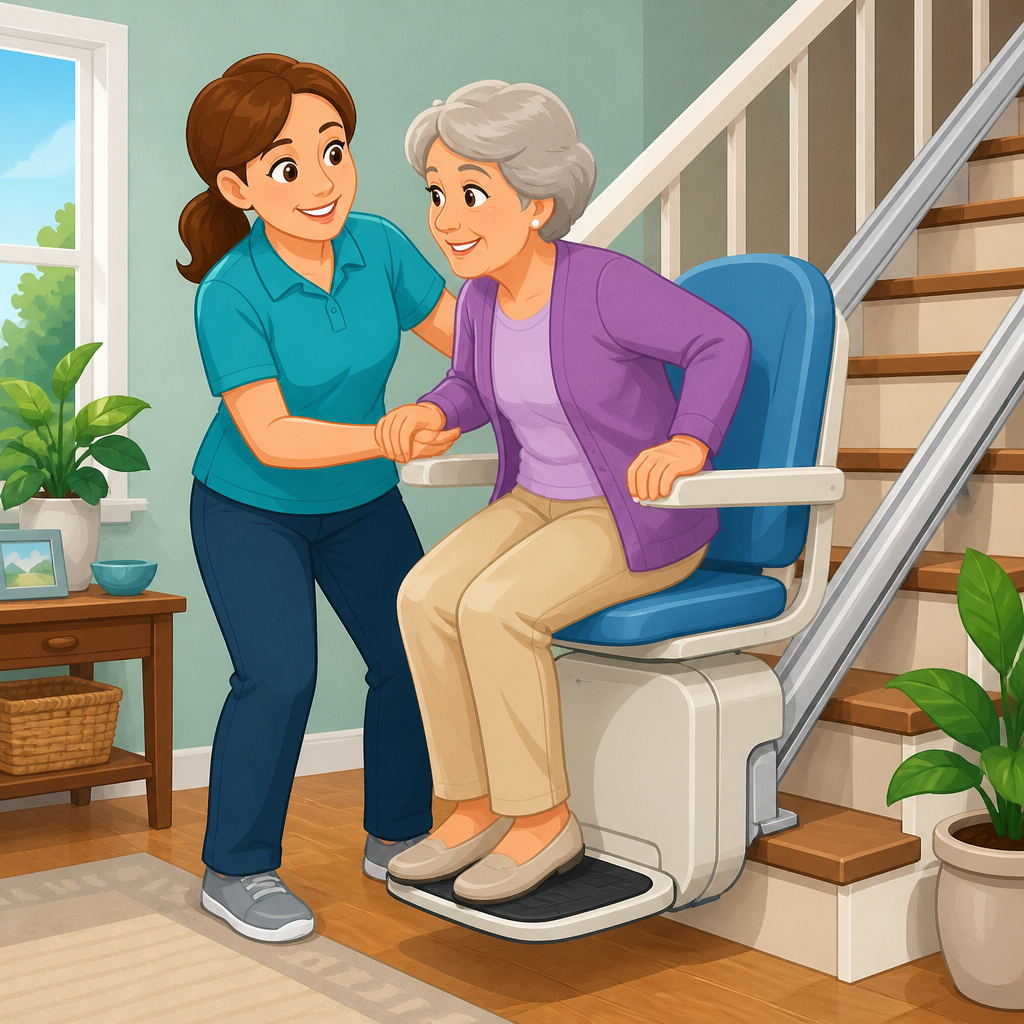
Stair lift safety for users with poor balance during transfers starts with one reality: the ride itself is usually the easiest part, while getting on and off the chair is where most close calls happen. A stair lift is a motorized chair that travels along a rail fixed to the staircase, and a transfer is the movement from standing, walking, or using a mobility aid into the seat and then back out again at the destination. Poor balance can stem from stroke, Parkinson’s disease, neuropathy, vestibular disorders, arthritis, muscle weakness, medication effects, or simple deconditioning, but the risk pattern is similar across conditions. In home assessments I have seen the same issue repeatedly: users trust the machine, yet underestimate the complexity of turning, backing up, sitting in a controlled way, and rising without momentum. That gap is exactly why a safety-focused approach matters.
For this sub-pillar hub within maintenance, troubleshooting, and safety, the goal is to explain user safety best practices in practical terms and connect the key pieces that make transfers safer every day. Safe use depends on more than a seat belt or an armrest. It includes correct stair lift fit, adequate landing space, swivel-seat use, footrest clearance, charging reliability, rail position, lighting, caregiver technique, footwear, and realistic emergency planning. Manufacturers such as Bruno, Handicare, Harmar, and Stannah build important protections into modern lifts, but equipment features only work when the user, installer, and family understand the transfer sequence. This article covers the highest-risk moments, the home setup changes that reduce falls, and the habits that help a user with poor balance stay predictable and secure.
The most important principle is simple: reduce moving parts during the transfer. A person with poor balance is safest when they can approach the chair with a stable handhold, turn as little as possible, sit straight down onto a properly positioned seat, secure the seat belt, ride without obstruction, then stand onto a flat landing with the seat locked in its swivel position. Every added demand, such as stepping backward on a narrow top landing, twisting while holding a cane, or rushing because the battery alarm is sounding, increases risk. Good stair lift safety is therefore not one tip but a system of setup, technique, maintenance, and supervision calibrated to the user’s actual abilities.
Why transfers are the highest-risk part of stair lift use
Most stair lift injuries do not come from dramatic equipment failure. They come from loss of balance before sitting, sliding forward because the user did not reach the back of the chair, catching a foot on the footrest, standing before the seat is fully locked, or trying to step away from the top landing while still rotated. Transfer biomechanics explain why. During sit-to-stand and stand-to-sit, the center of mass moves forward and then over the feet. If a user has weak quadriceps, impaired proprioception, or delayed reaction time, that normal shift becomes unstable quickly. The narrow geometry of a stair landing compounds the problem because there is less room to recover from a wobble.
Top landings deserve special attention. A properly installed overrun can move the user away from the stair edge before they dismount, which materially reduces fall exposure. When a top overrun is not present or cannot be fitted, the user may need to stand very close to the stair opening, and that is rarely ideal for someone with poor balance. I advise families to ask the dealer to document the dismount position and explain why it was chosen. If the user is stepping off toward open stairs, that is a red flag requiring reassessment. Bottom landings matter too, especially when the chair parks where rugs, door swings, or walkers create congestion.
Another frequent problem is mismatch between user ability and transfer demands. A stair lift does not replace the need to perform a controlled transfer. If a person needs moderate physical assistance to stand from a chair, cannot pivot safely, or forgets multi-step instructions, independent stair lift use may not be appropriate. In those cases, safety may depend on supervised use, additional grab rails on the landing, or a different accessibility solution altogether. That judgment should come from direct observation, not guesswork. A home safety evaluation by an occupational therapist, physical therapist, or experienced accessibility provider often identifies risks that family members have normalized.
Core safety features every user with poor balance should understand
Users often know the hand control makes the chair move, but they are less clear on the features that matter most during transfers. The swivel seat is central because it lets the user rotate away from the staircase and stand onto a level landing. On quality lifts, the seat should lock firmly in the ride position and in the transfer position. If the lock feels soft, sticky, or inconsistent, stop using the lift until it is serviced. A seat that swivels unexpectedly or fails to lock can cause a side fall in one motion. The seat belt is not optional. It keeps the pelvis stable in the chair, particularly if the user has trunk weakness or tends to shift while the lift starts and stops.
Armrests help more than many users realize. They provide a broad contact point during sitting and rising, and they improve confidence when the user pauses to re-center balance. Footrests with obstruction sensors are also important, but they are not a substitute for proper foot placement. The user’s feet should be fully on the footrest before travel begins. Dangling feet, one foot on and one off, or a cane trapped under the footplate create avoidable hazards. Call/send controls matter as well because they allow a caregiver to reposition the chair instead of having the user step awkwardly around it. Finally, battery backup is a safety feature, not just a convenience. In a power outage, a battery-powered stair lift can usually complete multiple trips, while a neglected battery may strand the user.
| Safety element | What it does | Why it matters for poor balance |
|---|---|---|
| Swivel seat with lock | Rotates the chair at the landing and holds position | Reduces twisting and lets the user stand away from the stair edge |
| Seat belt | Secures the pelvis during travel | Prevents sliding or trunk drift during starts and stops |
| Armrests | Provides upper-body support during sitting and rising | Improves stability during the transfer phase |
| Footrest sensors | Stops the lift if the footrest meets an obstacle | Helps prevent collisions, though not poor foot placement |
| Call/send controls | Moves the chair without the user being seated | Keeps landings clear and reduces awkward repositioning |
| Battery backup | Allows operation during a power outage | Prevents unsafe improvisation on the stairs when power fails |
Weight capacity and seat dimensions are equally important. A chair that is too high can make the user slide forward before they are stable; too low and standing becomes harder. Some lifts offer powered swivel, powered footrest, and perch-style seating, but extra features should match the user’s needs rather than complicate operation. In my experience, the safest setup is the one the user can repeat correctly every time with minimal steps. If pressing multiple buttons, folding components, or manually lifting the footrest strains the user, those tasks should be simplified or delegated.
Best transfer technique at the top and bottom landings
A safe stair lift transfer follows a repeatable sequence. First, make sure the landing is clear: no shoes, baskets, pet bowls, oxygen tubing, or loose mats. Second, bring the chair to the correct position using the call/send control if needed. Third, approach with any prescribed mobility aid, but do not let the device block the path of the knees or feet. Fourth, back up until the legs touch the seat. Fifth, reach for the armrests or another approved support point, not the moving edge of the seat or a flimsy nearby table. Sixth, sit fully back before lifting the feet onto the footrest. Seventh, fasten the seat belt before moving.
The dismount sequence is just as important. At the destination, the user should wait until the chair stops completely, rotate the seat into the locked transfer position, place both feet securely on the landing, lean forward slightly, push from the armrests, and stand only when balanced. Then they should pause for a moment before stepping away. That pause sounds minor, but it is one of the most effective protections against immediate post-stand dizziness or backward sway. Users with orthostatic hypotension, common in older adults and people taking blood pressure medication, especially need that moment to stabilize.
Caregivers often try to help by pulling the user up under the arms. That is unsafe. It can injure the caregiver and destabilize the user. Proper assistance usually means guarding at the pelvis or gait belt level, cueing the sequence, and letting the user do as much of the movement as they safely can. If hands-on help is routinely needed, the person should have a professional transfer assessment. Requiring more than steadying assistance may indicate that independent stair lift transfers are no longer safe. Good practice also includes wearing well-fitting, closed-back shoes with slip-resistant soles. Socks alone, backless slippers, and long robes near the footrest are common but preventable hazards.
Home setup, maintenance, and troubleshooting that directly affect safety
User safety best practices are inseparable from maintenance. A stair lift that hesitates, beeps unexpectedly, stops short of the charge point, or has a loose swivel mechanism should never be dismissed as merely annoying. Those issues change user behavior. People rush, lean, twist, or try to force controls when they are uncertain whether the lift will work, and that is when transfers break down. Routine servicing should follow the manufacturer’s schedule, typically with periodic inspection of batteries, charge contacts, seat locks, rail condition, footrest operation, and safety edges. Document the service date where the family can see it.
Daily checks are simple and valuable. Confirm the chair is charging in its parked position, the armrests are secure, the seat swivels and locks cleanly, the footrest folds or powers correctly, and the remote works from both landings. Listen for new noises such as grinding, repeated clicking, or a motor strain sound on startup. Those are not normal aging sounds to ignore. Keep the rail clean according to the manufacturer’s instructions, usually avoiding harsh household cleaners that can damage finishes or electrical contacts. If there is a fault code display, record the exact code before calling service because that speeds diagnosis and reduces downtime.
Environmental maintenance is just as important. Improve lighting at both landings and along the stairwell. Motion-activated lights can help, but they must turn on early enough for the transfer, not halfway through it. Remove loose rugs, secure cords, and make sure nearby doors do not swing into the transfer space. If the user relies on a walker, designate a parking spot that does not require reaching or twisting after dismount. Pet management matters more than families expect. Small dogs and cats frequently move into the landing area silently, creating trip hazards precisely when the user is weight shifting off the chair.
Who should use a stair lift independently, and when supervision is safer
Not every person with poor balance is a safe independent stair lift user. The deciding factors are transfer ability, judgment, vision, hand function, and consistency. A user can generally ride independently when they can approach the chair, turn, sit, fasten the belt, operate the control, swivel the seat, stand, and step away on level ground without physical help. They also need to understand basic problem solving, such as stopping if something feels wrong and calling for help instead of improvising. Mild balance impairment does not rule out independence; unpredictable freezing, severe impulsivity, or frequent near-falls often does.
Cognitive impairment changes the equation quickly. Someone with dementia may forget the seat belt, stand before the chair is fully positioned, or attempt to use the stairs when the lift is not immediately available. Visual deficits also matter. Reduced depth perception can make the footrest and landing edge harder to judge, increasing missteps. Hand weakness from arthritis or neurologic disease may make it hard to hold the rocker switch continuously, which some models require during travel. In those cases, a powered option, alternate control style, or supervised use may be safer. When families ask for a simple rule, I give this one: if the user cannot repeat the full transfer sequence reliably on their best and worst days, plan for supervision.
Training should be formal, not casual. The dealer or clinician should demonstrate, then observe return demonstrations at both landings. I recommend practicing under normal daytime conditions and again when the user is tired, because evening fatigue often exposes balance deficits hidden earlier in the day. Written cue cards near the call/send control can reinforce the sequence. Review after any hospitalization, medication change, or fall, because function can shift abruptly. Stair lift safety is not a one-time installation event; it is an ongoing fit between the person, the equipment, and the home.
Building a broader safety plan around the stair lift
A stair lift works best when it is part of a larger fall-prevention strategy. Strength and balance therapy can improve transfer quality, especially sit-to-stand power and turning control. Medication review can identify sedatives, sleep aids, or blood pressure adjustments contributing to dizziness. Hearing and vision care matter because sensory deficits reduce environmental awareness at the landing. Emergency planning should include a charged phone or alert device within reach at both levels of the home, especially if the user lives alone. If the lift fails, the plan should state clearly who to call and whether the user should remain on one floor rather than attempt the stairs.
Families should also set practical house rules. Do not carry laundry baskets, heavy bags, or grandchildren on the stair lift. Do not let anyone stand on the footrest or use the chair as storage. Park the chair where it charges and where it does not obstruct others using the stairs. If multiple people use the same staircase, teach everyone the purpose of the call/send controls and the need to keep landings clear. As a hub page for user safety best practices, this article points to the larger truth: most stair lift incidents are preventable when transfer technique, equipment condition, and home setup are treated as one system. Review your current setup, schedule any overdue service, and arrange a hands-on transfer assessment if balance has changed.
Frequently Asked Questions
Why are transfers the riskiest part of using a stair lift for someone with poor balance?
For many users, the stair lift ride itself is smooth and predictable. The higher-risk moments usually happen during transfers, which are the times when a person moves from standing, walking, or using a mobility aid into the stair lift seat, and then back out again at the top or bottom of the stairs. During those few seconds, the user must turn, position the body correctly, control weight shifting, and sit down or stand up without losing stability. If someone has poor balance from stroke, Parkinson’s disease, neuropathy, vestibular disorders, muscle weakness, arthritis, or general deconditioning, those movements can be much harder than they appear.
Several factors raise the risk during transfers. The staircase area is often narrow, which limits where feet, walkers, canes, or a caregiver can stand. There may also be a height difference between the user’s natural standing position and the seat, making it difficult to lower down slowly or rise safely. If the chair is not fully parked, not properly locked, or not swivelled into the safest boarding position, the user may twist awkwardly or reach too far. Even small issues such as poor lighting, socks on a slick floor, loose rugs near the base of the stairs, or rushing the process can turn a manageable transfer into a fall hazard.
That is why transfer safety should be the main focus when choosing and using a stair lift for a person with poor balance. Features such as a swivel seat with locking positions, sturdy armrests, a seat at the right height, a clearly accessible seat belt, and enough landing space at the top and bottom can make a major difference. Safe technique matters just as much. Users should be encouraged to pause, line up carefully, hold stable supports rather than the moving parts of the lift, and transfer only when the chair is fully stopped and positioned correctly. In practical terms, preventing falls is less about the ride and more about making every transfer calm, repeatable, and well supported.
What stair lift features improve safety for users who feel unsteady when sitting down or standing up?
The most helpful stair lift features for users with poor balance are the ones that reduce twisting, minimize unsupported standing time, and create a more controlled transfer. A swivel seat is one of the most important. At the upper landing especially, the seat should rotate away from the staircase and lock securely in place so the user can get on or off facing the landing instead of stepping toward the stairs. A powered swivel can be especially valuable for someone who cannot safely rotate the seat manually while maintaining balance. Locking positions matter because the seat should not drift or move unexpectedly during a transfer.
Seat height and armrest design also play a big role. If the seat is too low, standing up requires more leg strength and balance control. If it is too high, the user may struggle to sit back fully and safely. Supportive armrests can help with controlled sitting and standing, but they need to be the right shape and height for pushing up without causing awkward shoulder strain. Many users also benefit from a folding footrest, especially a powered footrest, because it reduces the need to bend forward while balancing. A seat belt is essential during travel, but the buckle should be easy to manage for someone with weakness, tremor, reduced coordination, or limited hand function.
Other valuable safety features include obstruction sensors, which stop the lift if something is on the stairs or in the path of the footrest, and a smooth start-and-stop system that reduces jarring motion. Call-send controls can help position the chair without unnecessary walking. For some homes, a rail overruns section at the top or bottom can move the chair away from the edge of the staircase so transfers happen on a flatter, safer landing. In many cases, the best setup is not the model with the most features, but the one matched carefully to the user’s balance, strength, reach, cognition, and staircase layout. An in-home assessment by a qualified stair lift professional, and often input from a physical or occupational therapist, is the best way to identify which features truly improve transfer safety.
How should someone with poor balance get on and off a stair lift as safely as possible?
Safe transfers start with a consistent routine. Before getting on, the chair should be fully stopped in the correct position, with the seat swivelled and locked if that feature is part of the setup. The landing should be well lit and free of clutter, cords, rugs, pet toys, or anything else that could catch a foot or mobility aid. The user should approach slowly, position the feet securely, and back up until the backs of the legs make contact with the seat. That simple contact point helps confirm alignment and reduces the chance of sitting too early or missing the chair. The person should then reach for stable supports, usually the armrests if they are designed for weight bearing during transfer, and lower down in a controlled way rather than dropping into the seat.
Once seated, the user should sit fully back in the chair, bring the feet onto the footrest, and fasten the seat belt before traveling. During the ride, it is important to remain seated upright and avoid leaning or trying to reposition. At the destination, the process should be just as deliberate. The lift must come to a full stop, the seat should swivel and lock into the exit position if applicable, and the user should move to the edge of the seat before standing. The feet should be placed solidly on the landing surface, not too far underneath and not too far forward. Using the armrests or another approved support, the user should stand slowly, pause to gain balance, and only then reach for a cane, walker, or nearby support.
One of the most common mistakes is trying to combine too many steps at once, such as standing and turning while grabbing a walker, or stepping away before balance is established. Another common mistake is holding onto parts of the stair lift that are not intended as transfer supports. If a user needs more than minimal assistance, a therapist can teach a transfer method matched to that person’s exact abilities, including foot placement, hand placement, pacing, and the safest way to incorporate a cane or walker. For some users, having a caregiver nearby for standby supervision is enough. For others, hands-on assistance may be needed. The safest technique is always the one that can be repeated the same way every time without rushing or improvising.
Can a person use a stair lift safely if they have Parkinson’s disease, neuropathy, or a history of falls?
Often yes, but only if the stair lift and transfer routine are matched carefully to the person’s specific challenges. Poor balance is not one single problem. Parkinson’s disease may involve freezing, slowness, rigidity, and difficulty turning. Neuropathy can reduce sensation in the feet, making it harder to feel foot placement and maintain stability. A history of falls may reflect weakness, impaired reaction time, dizziness, medication side effects, or several issues at once. Because of that, safety depends less on the diagnosis alone and more on how the person transfers, follows steps, manages the seat belt, tolerates sitting posture, and handles standing up at both landings.
For example, someone with Parkinson’s may do better with extra time, a clearly practiced sequence, and a powered swivel seat that reduces twisting. A person with neuropathy may need especially bright lighting, secure footwear, and careful coaching on exact foot placement. Someone with prior falls may need a therapist to evaluate whether the problem is leg weakness, orthostatic blood pressure changes, impulsivity, or poor use of a walker. In some cases, the stair lift is very appropriate and greatly reduces risk compared with climbing stairs. In other cases, the lift may still be useful, but only with supervision, home modifications, or transfer training.
Warning signs that more assessment is needed include frequent near-falls during sit-to-stand movements, inability to remain seated upright without sliding, confusion about how to operate the lift, severe dizziness when standing, or not having enough safe space at the landings. If any of those apply, it is wise to involve a physician, physical therapist, or occupational therapist before relying on the lift independently. A stair lift can be an excellent mobility solution for someone with poor balance, but it is not automatically safe just because it removes stair climbing. The deciding factor is whether the person can transfer on and off the chair with a predictable and acceptably low level of risk.
What home setup changes and caregiver strategies can make stair lift transfers safer?
The environment around the stair lift matters almost as much as the equipment itself. At both the top and bottom landings, there should be enough clear space for the user to approach, turn, and step away without crowding. Remove loose rugs, low furniture, baskets, plant stands, and anything that narrows the path. Improve lighting so shadows do not hide edges or obstacles. If the user relies on a cane or walker, there should be a practical and consistent place to position that device before sitting and to retrieve it safely after standing. Shoes with supportive soles are usually safer than slippers, socks, or backless footwear. Even a small improvement, such as reducing glare or repositioning a side table, can make a transfer more controlled.
Caregivers can improve safety by using a repeatable routine instead of verbal overload. Short, clear cues such as