


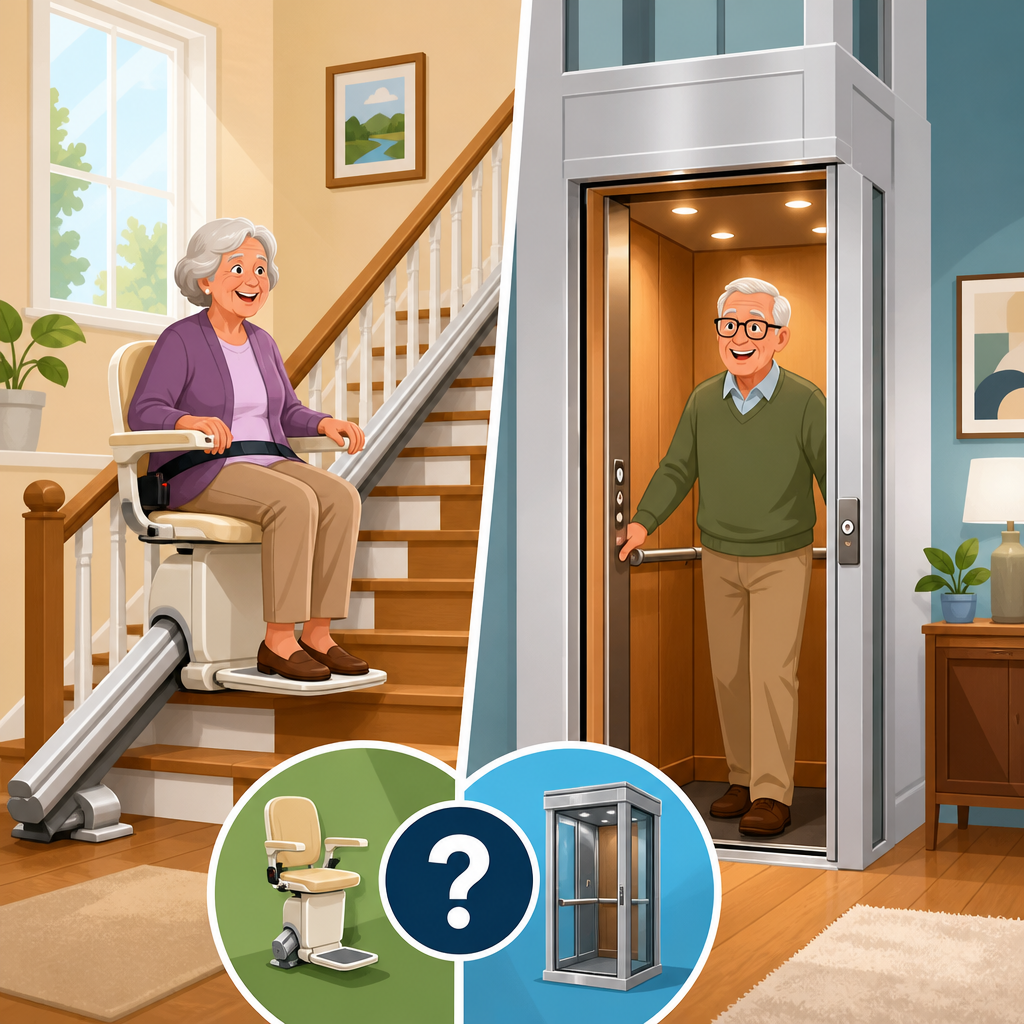
Choosing between a stair lift and a home elevator starts with three practical questions: how much space you have, how you move through your home today, and what level of accessibility you will need in the coming years. Both systems help people navigate multiple floors safely, but they solve different problems. A stair lift carries one seated rider along a rail mounted to the staircase, while a home elevator travels vertically inside a shaft or through a floor opening and can carry standing users, wheelchairs, or multiple passengers depending on the model. That core difference affects cost, installation, maintenance, appearance, and long-term usefulness.
In projects I have worked on with mobility equipment dealers, remodelers, and aging-in-place specialists, the best choice was rarely about price alone. It was about fit. A compact straight stair lift can be installed in hours and restore access almost immediately after surgery, illness, or a fall. A residential elevator, by contrast, usually requires more planning, more construction, and a higher budget, but it can deliver broader accessibility and raise the home’s functional value for decades. Homeowners often begin by asking which option is better. The more accurate question is which option matches the house, the user, and the future care plan.
This comparison matters because mobility changes often happen faster than remodeling timelines. Many families are making decisions under pressure after a hospitalization, a diagnosis such as Parkinson’s disease or multiple sclerosis, or the realization that carrying laundry, groceries, or oxygen equipment upstairs has become unsafe. Others are planning proactively for aging in place and want to avoid a rushed retrofit later. Building codes, staircase geometry, wheelchair needs, and resale considerations all shape the answer. Understanding stair lift versus home elevator options clearly helps homeowners avoid expensive missteps and choose a system that supports independence, safety, and daily convenience.
How stair lifts and home elevators differ at the design level
A stair lift is a mechanical chair attached to a rail that follows the line of the stairs. Most residential models are designed for one user at a time and include a foldable seat, footrest, armrests, seat belt, call-send controls, obstruction sensors, and battery backup. Straight stair lifts fit a single uninterrupted staircase. Curved stair lifts are custom-built for stairs with landings, turns, pie-shaped treads, or intermediate bends. Because the rail is mounted to the stair treads rather than the wall in most systems, installation usually does not require major structural work.
A home elevator is a vertical transportation system designed for residential use. Depending on the model, it may be cable drum, hydraulic, machine-room-less traction, winding drum, pneumatic vacuum, or a shaftless through-floor unit. Traditional residential elevators typically need a hoistway, a cab, doors or gates, a controller, electrical upgrades, and sometimes a machine space, pit, or overhead clearance. Through-floor elevators and shaftless models reduce some construction demands, but they still require precise structural planning and code compliance. Unlike stair lifts, elevators can often accommodate walkers, wheelchairs, laundry carts, and another person assisting the rider.
The design distinction leads to different user experiences. Stair lifts preserve the basic architecture of the staircase and are especially effective when the user can transfer into a seated position safely. Home elevators create a dedicated accessibility route that can feel more natural for households already using wheelchairs or transporting bulky items between floors. If the question is simply how to move one person up and down stairs quickly, a stair lift is usually the leaner solution. If the question is how to make the whole home more universally accessible, an elevator is usually the stronger platform.
Space requirements: staircase footprint versus vertical shaft planning
Space is often the deciding factor in stair lift versus home elevator projects. A stair lift uses the existing staircase, so it avoids giving up closet space, hall area, or room square footage for a shaft. However, the stairs must remain usable for others. Most manufacturers publish folded dimensions carefully because codes and practical circulation matter. In many homes, a folded stair lift seat and footrest still leave enough walking width for another user, but on narrow stairs the remaining clearance can feel tight. Curved stairs can also require rail parking solutions at the top or bottom to keep hallways clear.
Home elevators need a defined vertical path. In remodels, that path may come from stacked closets, a corner of a great room, an unused pantry zone, or an exterior bump-out. Standard residential elevator footprints often start around 12 to 15 square feet for compact cabs, but total construction needs are larger once wall thickness, landing clearances, door swing, and mechanical components are included. Wheelchair-friendly cabins generally require more room. Shaftless and through-floor elevators shrink the footprint, yet they still occupy floor area on both levels and may affect furniture layout, sightlines, and structure.
| Feature | Stair Lift | Home Elevator |
|---|---|---|
| Primary space used | Existing staircase | Dedicated vertical path through floors |
| Typical construction impact | Low for straight models | Moderate to high, depending on type |
| Wheelchair accommodation | No, user transfers to seat | Often yes, if cab size allows |
| Effect on other residents | May narrow stair passage | Leaves stairs unchanged |
| Best fit for small homes | Often excellent | Possible, but more planning required |
When I walk homes with clients, I measure more than the obvious width and height. I check door approaches, top and bottom landing depth, whether a mobility device can turn safely, and whether a caregiver can assist without awkward positioning. A stair lift may technically fit yet create a daily pinch point with handrails, radiators, or a front door swing. An elevator may seem impossible until we identify stacked storage areas that can be repurposed. Space decisions become easier when assessed as circulation planning rather than just equipment dimensions.
Convenience in daily use: who benefits most from each option
Convenience is not the same as accessibility, though the two overlap. Stair lifts are convenient because they are direct, intuitive, and fast to install. A user sits down, buckles in, and rides the rail. For someone with stable sitting balance who can step on and off securely, that is often enough. Controls are simple, and many models include remote call-send stations so the chair can be parked away from the main living area. In multigenerational households, that matters because the staircase can look less visually crowded when the seat is folded and parked.
Home elevators are convenient in a broader sense. They transport people plus things. Groceries, luggage, vacuum cleaners, pet supplies, and laundry baskets all become easier to move. This benefit is underestimated until homeowners use the system daily. A rider with limited stamina may strongly prefer entering an elevator with a rollator instead of transferring to a stair lift seat. Caregivers also benefit because they can assist inside the elevator cabin more naturally than on a staircase. For users with progressive conditions, that reduced transfer demand can be the difference between staying upstairs independently and needing help every trip.
Noise, ride quality, and waiting time affect convenience too. Modern stair lifts are generally quiet, but gear movement and rail joints are still noticeable. Residential elevators vary more. Hydraulic units often feel smooth and solid. Pneumatic vacuum elevators create a distinct sound profile and visual presence. Shaftless elevators can be efficient in compact homes, but travel speed and cabin size may be modest. Families should test ride equipment whenever possible. Convenience is personal, and the best specifications on paper can still feel wrong if boarding, controls, or door operation are awkward for the actual user.
Installation complexity, timeline, and code considerations
Installation is where the gap between these systems becomes most visible. Straight stair lifts are among the fastest accessibility upgrades available. After measuring and ordering, many units can be installed in a few hours. Electrical needs are usually straightforward because most current residential stair lifts charge from a standard household circuit while operating on onboard batteries. Curved stair lifts take longer because the rail is custom-fabricated from detailed measurements or digital scans. Even then, disruption is usually limited compared with major remodeling.
Home elevator installation is more like a construction project than an appliance delivery. The process may include architectural design, structural review, permit applications, framing, electrical work, finish carpentry, inspections, and final equipment commissioning. Requirements vary by jurisdiction, model type, and whether the project is new construction or retrofit. Many residential elevators are governed by ASME A17.1 or A18.1 provisions through local adoption, and code details such as emergency communication, door interlocks, pit depth, overhead clearance, and fire separation can shape the design. Planning early prevents costly redesigns.
Timeline matters for households facing urgent mobility changes. If someone is expected home from rehab next week, a stair lift may be realistic while an elevator is not. Some families install a stair lift immediately, then plan a long-term elevator when budgets and permits allow. That staged approach is common and sensible. It also reduces pressure, allowing time to compare dealers, verify service coverage, and coordinate renovations properly. Installation should never be evaluated only by how quickly equipment can arrive. The better metric is how safely and reliably the solution fits into the home and the user’s care needs.
Cost, maintenance, and long-term value
Cost comparisons are often oversimplified. Stair lifts usually have a far lower initial price than home elevators, especially for straight stairs. Curved stair lifts cost more because each rail is custom built. Residential elevators carry higher equipment and construction costs, and the total can rise substantially with structural changes, finish upgrades, and electrical work. However, upfront price is only one part of ownership. Maintenance, battery replacement, service availability, warranty terms, and expected years of use all matter. A less expensive system that no longer matches the user within two years may not be the better value.
Maintenance profiles differ. Stair lifts need regular cleaning of the rail, battery checks, and periodic service for drive components, call stations, and seat mechanisms. Residential elevators require scheduled inspection and servicing of doors, controllers, drive systems, safety devices, and backup features according to manufacturer guidance and local rules. The best dealers offer preventive maintenance plans and maintain local technicians plus stocked parts. Before purchase, ask who performs service after the sale, average response times, and whether support is available on weekends. Equipment reliability depends as much on dealer infrastructure as product branding.
Long-term value includes resale, but homeowners should stay realistic. A home elevator may appeal strongly to buyers seeking luxury, multigenerational usability, or aging-in-place features, yet it will not return dollar for dollar in every market. A stair lift usually serves a narrower buyer pool and is sometimes removed before sale. Still, both systems can deliver enormous functional value by preventing a forced move, reducing fall risk, and preserving full use of the home. For many families, the financial question is not whether the equipment pays back at resale, but whether it helps avoid assisted living sooner.
Choosing the right system for your home and future mobility plan
The right choice depends on the user’s transfer ability, diagnosis, prognosis, home layout, and budget. Choose a stair lift when the primary need is safe seated travel on one staircase, space for a shaft is limited, and installation speed is important. It is especially effective after joint replacement, during cardiac recovery, or for older adults who can still stand and pivot safely. Choose a home elevator when wheelchair access is needed, when multiple household members will benefit, when carrying household items between floors is a daily burden, or when planning for long-term mobility decline.
Good decision-making starts with an in-home assessment. Ask the dealer to evaluate staircase width, landing clearances, power supply, structural limitations, and user transfer safety. If wheelchair use is current or likely, involve an occupational therapist or certified aging-in-place specialist early. Confirm local permit requirements and request detailed written proposals, not ballpark numbers. Compare warranties, service response times, and what happens during a power outage. Reputable companies explain limitations plainly. For example, they will tell you when a narrow stair can technically fit a lift but still be frustrating for other family members.
Stair lift versus home elevator is not a question of which product is universally superior. It is a question of matching a mobility solution to real living patterns. Stair lifts win on speed, lower installation burden, and efficient use of existing stairs. Home elevators win on broad accessibility, cargo convenience, and stronger future-proofing. If you are weighing both, schedule assessments from qualified providers, ride the equipment if possible, and plan for the next ten years, not just the next ten weeks. The best system is the one that keeps every floor of your home usable, safe, and practical.
Frequently Asked Questions
What is the main difference between a stair lift and a home elevator?
The biggest difference is how each system moves a person between floors and who it is designed to serve. A stair lift is a motorized chair that travels along a rail attached to an existing staircase. The user sits down, fastens a seat belt, and rides up or down one flight at a time. It is typically intended for one seated rider and is often the simplest way to make a staircase safer for someone with limited mobility, balance concerns, or reduced stamina.
A home elevator works more like a compact residential lift. Instead of following the path of the stairs, it travels vertically between levels in a dedicated shaft or through a floor opening, depending on the model. That means it can often accommodate standing users, walkers, and in many cases wheelchairs or multiple passengers, depending on the cab size and weight capacity. In practical terms, a stair lift solves the problem of safely using the stairs, while a home elevator solves the broader issue of full-floor access with fewer physical limitations on how the rider enters, exits, and rides.
For many households, the decision comes down to present and future needs. If one person needs seated stair access right now, a stair lift may be enough. If the goal is long-term accessibility, easier movement of mobility equipment, or a more universal solution for several family members, a home elevator is usually the more comprehensive option.
Which option takes up less space in the home?
In most cases, a stair lift requires less structural space because it uses the staircase that is already there. The rail is mounted to the stair treads, not usually the wall, and the chair folds up when not in use on many models. Even so, it still occupies part of the stairway, and that matters. On narrower stairs, the lift can reduce the clear walking path for other people in the home. Curved staircases, landings, and doorways near the rail can also affect fit and day-to-day convenience.
A home elevator generally requires more dedicated space because it needs a vertical travel path between floors. Depending on the type of elevator, this may mean a shaft, machine space, overhead clearance, and room at each landing for access. Some through-floor models reduce the footprint compared to a traditional shafted elevator, but they still require planned floor space on each level. In exchange, the elevator does not occupy the staircase itself and can leave the stairs fully open for everyone else.
So if the question is strictly about minimizing construction impact, the stair lift usually wins. If the question is about preserving stair usability and creating a more seamless accessibility route, the elevator can be the better use of space despite the larger installation footprint. The right answer depends on whether your home has available square footage for vertical lift space and whether the staircase can comfortably accommodate a rail system without becoming cramped.
Which is more convenient for everyday use?
Convenience depends on how you move through your home today and what kind of assistance you need each time you change floors. A stair lift is straightforward for a person who can transfer safely into and out of a seated position. It is especially convenient for routine up-and-down travel on a staircase that is otherwise difficult or unsafe to use. Most models are simple to operate, with call/send controls, swivel seats for safer entry and exit, and battery backup for use during some power outages.
That said, stair lifts can feel limiting in certain situations. The rider usually needs to sit, ride alone, and then stand again at the other floor. If the user relies on a walker or wheelchair, the equipment must usually be transported separately or already be waiting on another level. It is also not ideal for carrying bulky items, laundry baskets, or multiple passengers.
A home elevator is often more convenient for broader household use because it allows a more natural transition between floors. Depending on the model, a user may be able to enter while standing, with a walker, or in a wheelchair. It can also help with everyday tasks such as moving groceries, luggage, or household items between levels. Family members of different ages and mobility levels often find an elevator easier to integrate into daily life because it functions as a full-home access solution rather than a staircase-specific aid.
If convenience means the least physical effort and the greatest flexibility, a home elevator usually offers more. If convenience means fast installation, simple operation, and practical help for one rider on an existing staircase, a stair lift may be the better fit.
How does installation compare between a stair lift and a home elevator?
A stair lift is generally much faster and less invasive to install. In many homes, the system can be measured, customized, and mounted directly to the staircase with minimal structural modification. Straight stair lifts are usually the simplest installations, while curved staircases require custom rails and more planning. Even so, the process is typically far less disruptive than major remodeling, which makes stair lifts attractive for households that need an accessibility solution quickly.
Home elevator installation is a more involved project because it requires construction planning, code compliance, and coordination between multiple trades. The home may need framing changes, electrical work, a hoistway or floor opening, finished landing access, and sometimes additional structural reinforcement. The exact timeline depends on whether the elevator is being added during new construction, built into a renovation, or retrofitted into an existing home with limited available space.
Because of that complexity, elevator installation usually takes longer and requires more upfront design decisions. However, that investment often creates a more integrated result. In a well-planned retrofit or new build, the elevator can feel like a permanent part of the home rather than an added mobility device. For homeowners comparing installation alone, the stair lift is usually easier and quicker, while the home elevator is more construction-intensive but offers a larger accessibility upgrade once complete.
Which choice is better for long-term accessibility and aging in place?
For long-term accessibility, a home elevator is often the stronger option because it can adapt to a wider range of mobility needs over time. A person who currently manages with minor support may later need a walker, caregiver assistance, or wheelchair access. A stair lift can be very effective for someone who remains able to transfer independently into a seat, but it is less flexible if mobility declines significantly. In that sense, stair lifts are often an excellent targeted solution, while elevators are more often a future-oriented accessibility investment.
A home elevator can also support changing household needs beyond a single user. It may benefit a spouse, visiting relatives, or anyone recovering from surgery or injury. It can make the home more usable for longer, especially in multistory houses where essential rooms are split between levels. For homeowners who want to reduce the chance of another major accessibility upgrade later, installing an elevator can offer greater peace of mind.
That does not mean a stair lift is only a short-term fix. For many people, it provides years of safe and reliable service and can be the most practical answer when space, budget, or construction limits rule out an elevator. The better long-term choice depends on whether your goal is to improve stair safety for one person now or create the broadest possible access to all floors as needs evolve. Looking ahead five to ten years, not just at current mobility, is often the smartest way to make the decision.