


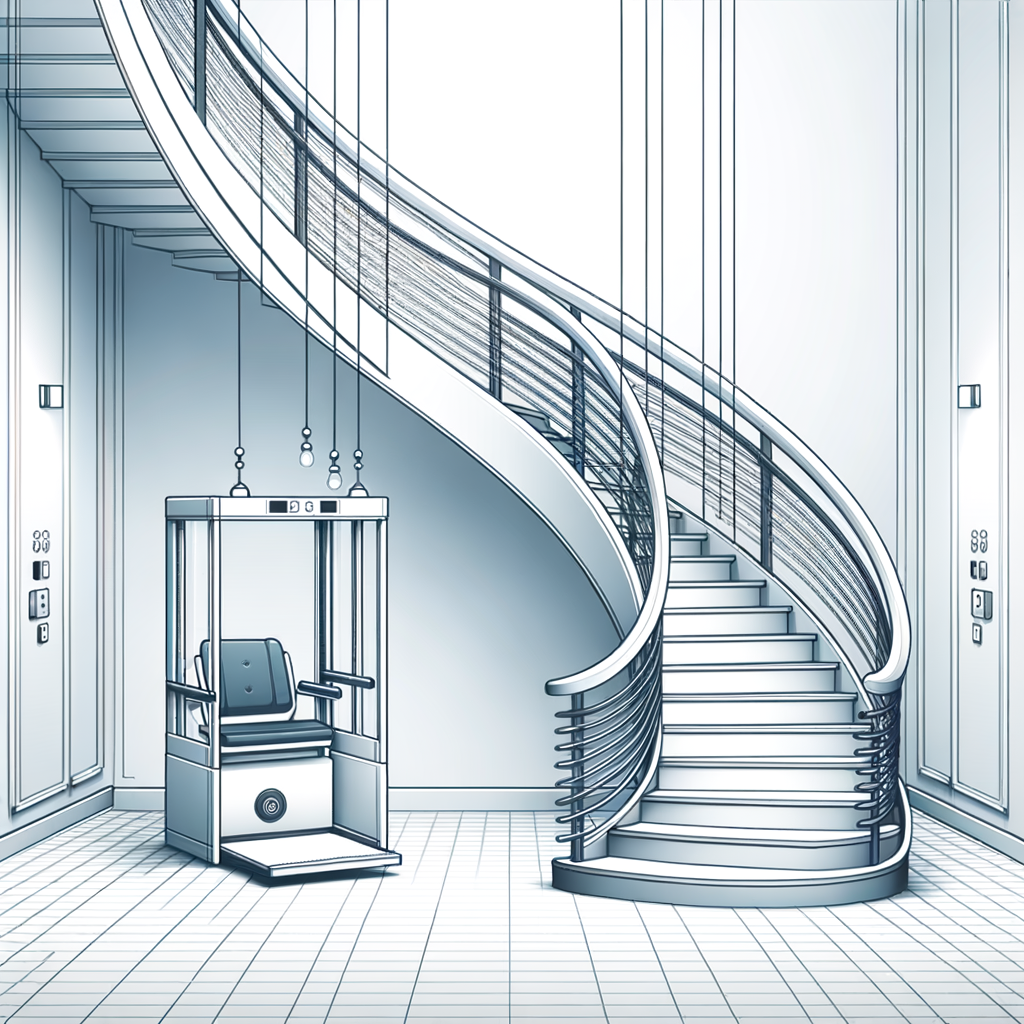
When living with limited mobility, navigating stairs can present a significant challenge. Traditional staircases often prove cumbersome and potentially hazardous for individuals with mobility issues. For those seeking independence within their homes, stair lifts offer a viable solution, enhancing accessibility and safety. However, when it comes to spiral staircases, the intricacies multiply. Spiral staircases are not just functional as they also add architectural aesthetics to a home. Their compact design saves space while providing a striking visual element. Yet, when it comes to adapting these artistic structures for those with mobility challenges, stair lift solutions can be complex and unique. This article explores the essential aspects of installing stair lifts for spiral staircases, highlighting their benefits, the variations available, installation procedures, and factors to consider when selecting the right stair lift for such staircases.
Understanding spiral staircases’ unique design is crucial when considering stair lifts. While aesthetically pleasing, their curvatures, tight turns, and reduced width require specially tailored solutions that differ significantly from those for straight staircases. The goal for any homeowner is to merge accessibility and design seamlessly, ensuring that mobility aids do not detract from the original visual appeal of their home. Besides, safety remains a non-negotiable consideration. Hence, it becomes imperative to have a deep understanding of the adaptations required for spiral staircases. Thus, homeowners can make informed decisions, balancing aesthetics, functionality, and safety. Before diving into the logistics and technicalities, let’s explore why spiral staircases are a popular choice and how mobility solutions enhance their usability.
Benefits of Stair Lifts for Spiral Staircases
Spiral staircases, famously known for their space-saving design and unique aesthetic appeal, pose specific challenges for individuals with mobility issues. Stair lifts significantly alter the experience of navigating these stairs, providing an accessible solution without compromising the architectural style. One primary advantage of stair lifts is the independence they afford. With stair lifts, homeowners regain the freedom to move between multiple levels of their homes devoid of assistance. This independence enhances the resident’s confidence and quality of life, reducing one’s sole reliance on caregivers or family members.
Furthermore, stair lifts contribute significantly towards enhancing household safety. The foot placement on a narrow spiral stair tread can be dangerously unstable for someone with balance issues. Installing a stair lift directly addresses the risk of falls, fostering a safer environment. Additionally, stair lifts are designed with user-friendly controls, which make operation straightforward, even for individuals unfamiliar with technological systems. Many stair lifts come with safety belts, swivel seat options, and remote control mechanisms, ensuring that safety is never compromised. The presence of power backups also guarantees that the stair lift remains operational even during power outages, thus offering consistent accessibility.
Aesthetically, stair lifts engineered for spiral staircases are designed to complement the staircase’s elegance. Many manufacturers offer a variety of customizable options, from seat fabrics to rail finishes, ensuring that the installed lift maintains the architectural integrity and style of the staircase. Offering solutions that do not invade or dramatically alter the spatial perception of the staircase, they merge modern utility with classic design attractiveness, appealing to homeowners keen on preserving their home’s artistic flair.
Types of Stair Lifts for Spiral Staircases
Stair lifts for spiral staircases are generally categorized based on their rail system and power operation options. Here, the rail systems are specifically designed to follow the curves and spirals of the stairway tightly, fitting the staircase’s precise contours with meticulous detail. The two main types encompass outdoor stair lifts and custom curved stair lifts.
Outdoor stair lifts are particularly tailored for applications where spiral staircases lead to porch areas or garden spaces. These stair lifts are constructed with robust materials capable of withstanding various weather elements. Regardless of rain, intense sunlight, or snow, outdoor stair lifts are engineered to maintain optimal functionality. These lifts are especially equipped with weather-resistant coatings, ensuring longevity and consistent performance, crucial for external stair applications.
Custom curved stair lifts for spiral staircases are specifically designed to navigate the intricate winding of indoor spiral staircases. The rails for these stair lifts are highly bespoke and usually require professional assessment to ensure fitment accuracy and operational efficacy. The cost of such custom designs is typically higher due to the bespoke craftsmanship involved, but they offer seamless operation with personalized designs that complement existing home decor. These are powered using either battery systems for uninterrupted operation during electrical failures, or directly through the home’s electric system for consistent energy access.
Key Considerations for Installation
Embarking on installing a stair lift for a spiral staircase necessitates keen attention to details crucial for performance and safety. The very first step involves intricate and precise measurements. Since spiral staircases vary widely in terms of diameter, winding direction, and ascent angle, details such as step height, breadth, width, and clearance play a pivotal role in crafting a functional stair lift. Seeking professional advice ensures these elements are accurately captured and that the rail system can be tailored to match every twist and turn effectively.
Load capacity is another essential factor to be vigilant about. Each stair lift comes with a specified weight limit which should match or exceed the user’s weight plus any additional items carried. Exceeding the lift’s capacity can lead to malfunctions or even accidents, so adhering to the specified limits is paramount. Battery backup is often recommended, guaranteeing operational dependence even during unexpected power outages.
Space considerations, although spontaneous with spiral designs, often require that the installer suggests a compact and space-efficient model. Before purchasing, assess potential obstructions like light fixtures, surrounding wall spaces, and any decorative elements that may impede the stair lift installation. Furthermore, adhering to local building codes and regulations is necessary to ensure safety compliance meets required standards. Securing the appropriate permissions and following guidelines makes the process smoother and avoids potential legal complexities later down the line.
Procedure of Installing Stair Lifts
The procedure for installing a stair lift on a spiral staircase demands precision and expertise. Initially, an in-depth assessment is conducted to evaluate the staircase’s specific requirements. This involves capturing dimensions, step count, and noting potential hurdles in the installation path. High-tech scanning equipment may be used to render a 3D model of the staircase, enabling more accurate measurement of curves and angles.
Once measurements are secured, the supplier crafts a custom-fit rail system. Due to the bespoke nature, crafting these rails can take time. During this period, consideration of styles and customization options are finalized based on the homeowner’s preferences and budget. Following the fabrication, professional installation experts are engaged for the setup process. The installation involves mounting the rail securely along the staircase curvature, ensuring it aligns perfectly with each twist and turn. Then, the lift chair is installed on the rail, confirming stability and proper alignment. The entire installation process might span over a day or two, depending on the intricacies involved.
Upon completion, a thorough testing level ensues. This process ensures that the stair lift moves seamlessly along the track, stops correctly at each terminal, responds appropriately to remote commands, and that all safety features are functioning accurately. The installer provides a detailed walkthrough on operating the stair lift, including emergency usage and maintenance tips, ensuring users are comfortable and confident with their newly installed stair lift.
Common Challenges and Solutions
Despite careful planning, several common challenges can arise while installing stair lifts on spiral staircases. One major challenge involves fitting the track accurately, necessitating precise measurements and bespoke construction. Even slight errors in calculation can lead to poor alignment, impact functionality, or cause slow, noisy operation. Hence, employing professionals skilled in customized installations is crucial.
An additional challenge might be the integration of the stair lift with existing architectural elements. Homeowners must consider whether they are willing to make slight adaptations, like shifting decorative items or altering lighting arrangements, to accommodate the stair lift. The lift’s integration must align with, rather than disrupt, the existing decor.
Power source accessibility presents another challenge during installation. Ensuring that the dedicated power outlets or backup battery positioning reduces risks of unexpected operation outages. Addressing potential power-related issues from the onset alleviates technical hurdles immediately.
Lastly, the aesthetic impact remains a significant concern for many homeowners. However, innovative designs and customizable options mean today’s stair lifts can complement rather than detract from the desired visual profile. Addressing these potential challenges ensures the stair lift’s functionality while integrating seamlessly into the existing home design.
Conclusion
The process of selecting and installing stair lifts for spiral staircases demands careful attention to detail and a keen understanding of both the technical and aesthetic aspects involved. For individuals with limited mobility, stair lifts for spiral staircases significantly enhance accessibility, safety, and independence. They address the unique challenges posed by spiral designs, providing practical solutions that do not undermine the staircase’s visual appeal.
Opting for a stair lift that marries functionality with style is crucial for homeowners seeking to maintain their home’s architectural integrity. Therefore, knowledge regarding the balance between these elements is indispensable. Engaging experts throughout the decision-making and installation processes ensures accuracy, mitigates potential problems, and guarantees that the stair lift solution impeccably fits the user’s needs and the home’s specific contour features. Elevating not just the home’s access but also its overall living quality, stair lifts for spiral staircases stand as a testament to the remarkable synergy of innovation and design in enhancing life’s daily experiences.
Frequently Asked Questions
1. Can stair lifts be installed on spiral staircases?
Absolutely! Although installing a stair lift on a spiral staircase can be more complex than on a straight or curved staircase, it is indeed possible. Spiral staircases have unique aesthetic and space-saving benefits, which can make them a bit trickier for stair lift installation. The process needs to be carefully assessed by professionals who specialize in custom stair lift solutions. These experts will typically take precise measurements and design a curving rail system that follows the contours of the spiral staircase, ensuring a snug and secure fit. The aim is not to disrupt the beauty and structure of your staircase, but to blend the stair lift aesthetically with its unique spirals. Remember, when considering a lift for your spiral staircase, you are not just investing in accessibility, but also preserving the elegance of your home’s design.
2. What are the considerations before installing a stair lift on a spiral staircase?
Before installing a stair lift on a spiral staircase, several critical factors must be evaluated. First, measure the dimensions of your staircase, including width and rise, as these will influence the custom design of the lift. Next, consider the weight capacity of the stair lift to ensure it meets your needs without compromising safety. It’s vital to evaluate power outlet availability and ensure the electrical system can support your stair lift. Additionally, look into how much space the lift will occupy; spiral staircases often have less available room than straight staircases. Consider the impact on the staircase’s aesthetics—custom-built options allow the lift to blend seamlessly with your home’s existing design. A professional assessment will address these considerations, providing detailed guidance and solutions tailored to your staircase’s dimensions and construction.
3. How much does a stair lift for a spiral staircase typically cost?
The cost of a stair lift for a spiral staircase generally comes in higher than lifts designed for straight or gently curved stairs. This is primarily due to the custom fabrication required to match the intricate path of a spiral staircase. Prices can vary widely, typically ranging from $10,000 to $20,000, or more depending on the complexity of the staircase, specific design requirements, and additional features like powered options or folding rails. This price also includes precise custom design and installation by experienced professionals who ensure your lift is safe and functions seamlessly. While the upfront costs might seem considerable, the investment in quality installation and enhanced mobility is invaluable, often including comprehensive warranties and reliable aftercare services, which contribute to long-term peace of mind.
4. Do spiral staircase lifts differ in function from standard stair lifts?
In terms of basic operation, stair lifts for spiral staircases function similarly to those for standard staircases. They typically consist of a seat, armrests, footrest, control switch, and a safety belt for secure movement. However, the main differences lie in their rail design and installation. Spiral staircase lifts require uniquely engineered, curved rails that perfectly follow the intricate path of the staircase. The adaptable rail structure addresses the spiral nature, allowing the seat to glide smoothly along the stairs’ twists and turns. This customization ensures optimal performance and safety, unlike standard models which are often straight or gently curved. Additionally, rail installation must achieve a fine balance, keeping the lift close to the stair edge without obstructing the staircase’s function or movement area. It’s a beautifully orchestrated blend of form and functionality.
5. Are there any limitations or challenges regarding the safety of spiral staircase stair lifts?
Stair lifts designed for spiral staircases are generally safe, especially when customized and installed by professional technicians. However, given the complex curves and tighter spaces inherent in spiral stairs, several challenges need managing to maintain safety. The spiral design requires meticulous engineering to ensure the rail perfectly matches the stairs, preventing any possibility of derailment. The footplate must be strategically positioned to accommodate reduced space, ensuring no protrusion that could cause accidents. Safety sensors are essential and strategically placed to stop the lift if obstacles are detected, providing an additional layer of protection. Furthermore, considering that spiral stairs can be steeper, it’s important that the seat, armrests, and footrest provide a comfortable and secure ride. Adhering to maintenance schedules and addressing wear and tear promptly is essential to retain safety standards.