


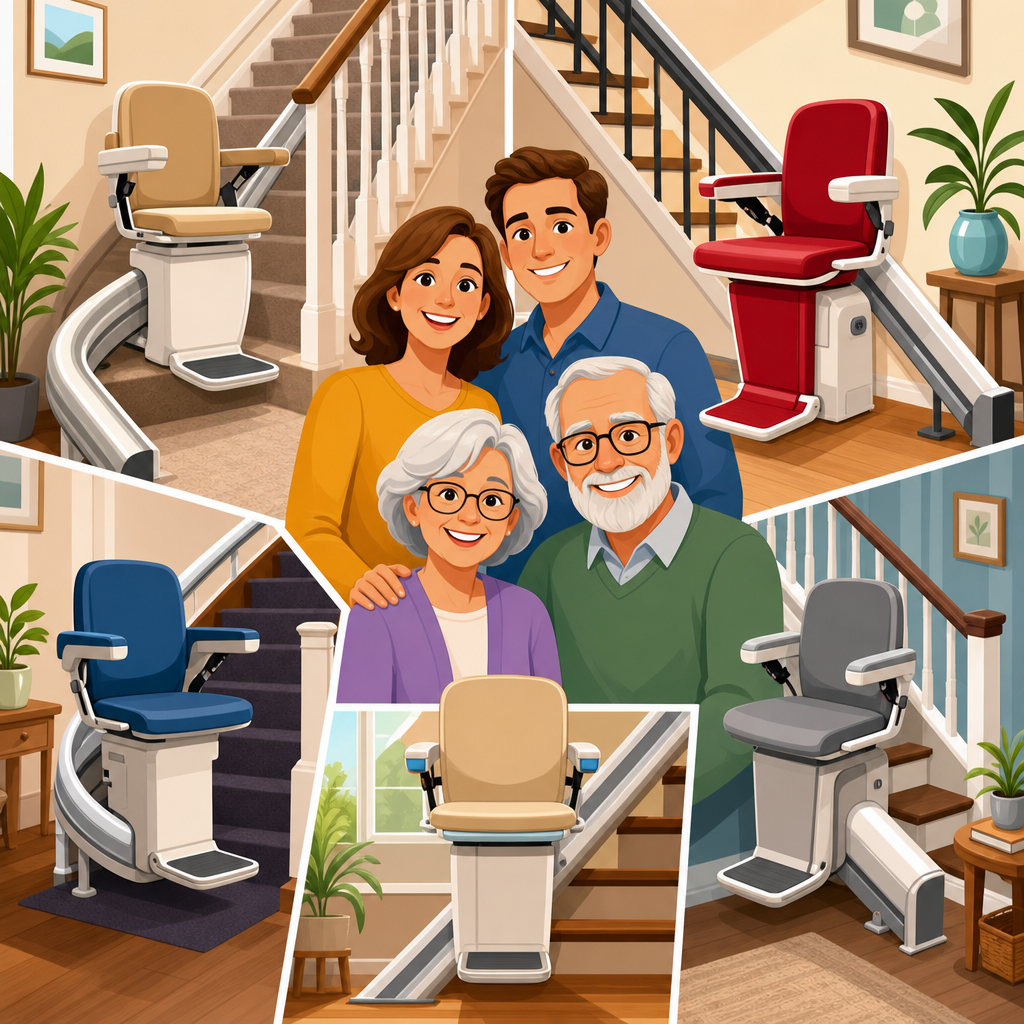
Choosing among the top stair lift brands for residential use is not just a product comparison; it is a decision about safety, mobility, home layout, service access, and long-term ownership cost. A stair lift is a motorized chair or perch mounted to a rail attached to the stairs, designed to help people move between floors when climbing steps becomes difficult or unsafe. In practice, the right brand matters because the lift itself is only part of the purchase. Installation quality, rail customization, battery reliability, maintenance support, warranty coverage, and parts availability all shape whether a stair lift feels dependable every day or frustrating after a few months. After reviewing residential lift quotes, dealer networks, and specification sheets for years, I have found that most buyers ask the same questions: Which brands are most reliable, which handle curved stairs best, which offer the strongest value, and which have service teams nearby if something fails?
The leading residential stair lift brands tend to separate themselves in a few measurable ways. First is product range: some manufacturers focus on straight stair lifts, while others are stronger in curved stair lifts, outdoor stair lifts, heavy-duty models, or standing platforms. Second is engineering: seat swivel design, obstruction sensors, track overruns, charge points, and diagnostic systems all affect everyday usability. Third is dealer support. Unlike many home products, stair lifts are usually sold, installed, and serviced by authorized local dealers, so brand quality and local execution must both be strong. Finally, there is fit. A narrow staircase in a century-old home needs a different solution than a wide modern staircase with intermediate landings. This guide covers the five brands most often worth serious consideration in the U.S. residential market, explains where each one excels, and helps you narrow your options before requesting in-home assessments.
What makes a residential stair lift brand worth considering
Before comparing specific companies, it helps to define what separates a strong stair lift brand from a merely familiar one. The best residential brands offer straight and curved models, clear weight capacities, dependable battery backup, and safety features that meet recognized standards such as ASME A18.1 for platform and stairway chairlifts. A good system should continue operating during a household power outage because most modern stair lifts charge from household current but run from onboard batteries. In practical terms, that means the user can still complete multiple trips if electricity fails. I also look closely at seat-to-footrest geometry, folded width, and rail footprint, because these details determine whether other household members can still use the staircase comfortably.
Service infrastructure is equally important. A stair lift is durable equipment, but it still contains batteries, drive components, call/send controls, and sensors that may eventually need adjustment or replacement. Brands with broad dealer coverage usually provide faster installation and more predictable repair support. Custom curved lifts add another layer: the rail is manufactured to match the staircase, so precision measuring and manufacturing consistency matter enormously. Buyers should ask how long installation usually takes, whether the rail is made domestically or overseas, how preventive maintenance is handled, and whether rental, reconditioned, or buyback options exist. These are not minor details. They directly affect uptime, resale possibilities, and the total cost of ownership over five to ten years.
Bruno: best-known premium choice for straight, curved, and outdoor lifts
Bruno is one of the most recognized names in the U.S. stair lift market, and its reputation is built on broad product coverage and a mature dealer network. For residential buyers, the major attraction is range. Bruno offers straight stair lifts, custom curved stair lifts, and outdoor stair lifts, so the brand can usually serve standard interior staircases as well as more complex homes with turns, landings, or exterior entry steps. Its Elan straight model is often positioned as a value-oriented option, while the Elite straight and curved lines emphasize a more refined ride, stronger customization, and higher weight capacities. In many homes I have assessed, Bruno becomes the default recommendation when the buyer wants a proven U.S.-assembled system and easy access to local service.
What sets Bruno apart is the balance between engineering polish and mainstream availability. Seats typically feel sturdy, controls are intuitive, and the rail systems are designed to keep the ride smooth without making the staircase feel obstructed when folded. Many models include swivel seats, obstruction sensors, seat belts, and call/send controls as standard equipment. Bruno’s outdoor systems also stand out because exterior installations need weather resistance, sealed controls, and covers that actually hold up through sun, rain, and temperature swings. The downside is price. Bruno is rarely the cheapest quote, especially on curved projects, and dealer pricing can vary meaningfully by region. Still, for buyers prioritizing reliability, model selection, and long-term parts support, Bruno consistently ranks among the safest bets.
Stannah: strong curved-lift engineering and polished ride quality
Stannah is a global manufacturer with a long history in lift equipment, and in residential stair lifts it is especially respected for curved staircases and refined user experience. If your home has multiple bends, a narrow turning section, or a staircase that terminates near a doorway, Stannah often deserves a close look because its curved configurations are highly adaptable. The company has built a reputation for clean design, comfortable seating, and smooth starts and stops. Those may sound like cosmetic details, but for older users with balance concerns, jerky acceleration or awkward seat positioning can make a lift feel intimidating. Stannah products generally aim to reduce that friction by making operation simple and the ride predictable.
Another practical advantage is compactness. Some Stannah models are engineered to fold tightly, preserving more walking space on the stairs when the lift is parked. This matters in homes where multiple residents share the staircase and the lift cannot dominate the path. The company also typically emphasizes diagnostics and safety sensors that stop the unit when an obstruction is detected on the stairs or footrest. Where Stannah can be less straightforward is pricing transparency. Because installations are dealer-driven and heavily customized, shoppers often need a site survey before they get a realistic number, particularly for curved rails. Even so, for buyers with architectural challenges or a premium budget who want a highly tailored system, Stannah remains one of the top stair lift brands for residential use.
Harmar: practical value and broad accessibility options
Harmar is widely known for accessibility equipment beyond stair lifts, including vehicle lifts and vertical platform solutions, and that broader focus shows up in its residential stair lift line. For buyers comparing value, Harmar is often compelling because the brand typically offers competitive straight-lift pricing while still covering curved and outdoor applications. Its Pinnacle series has been especially visible in the U.S. market, and many dealers like it because installation can be efficient and the units are familiar to service technicians. In homes where budget matters but the buyer still wants a recognized brand with nationwide distribution, Harmar frequently lands on the shortlist.
The main strength of Harmar is practical flexibility. The company offers standard seated lifts, heavy-duty options for higher weight capacities, and platform-style products that can complement broader home accessibility planning. That can help families trying to solve for both current stair use and future mobility changes. I have also seen Harmar perform well in situations where the buyer needs a faster installation timeline for a straight staircase, since simpler rail systems can sometimes be fitted quickly after assessment. The tradeoff is that perceived fit and finish may vary more by model and installer than with some premium competitors. Buyers should test the seat comfort, folded profile, and control feel in person if possible. When matched with a strong dealer, however, Harmar delivers solid day-to-day performance at a price point many households find easier to justify.
Savaria: custom capability and wider accessibility portfolio
Savaria is another major accessibility brand with a broad catalog that includes home elevators, wheelchair lifts, and stair lifts. That wider engineering base can be an advantage for residential buyers because it gives the company experience across different mobility solutions and allows dealers to recommend alternatives if a stair lift is not ideal. Within stair lifts, Savaria is often considered strongest in customized installations and homes where a standard straight product is not enough. Its products are generally positioned as durable and capable, with options that suit both conventional indoor stairs and more specialized layouts.
One reason Savaria appears often in serious stair lift comparisons is that it can serve buyers whose needs may evolve. For example, a user who can transfer independently today may eventually need a different accessibility system, and working with a dealer already familiar with Savaria’s broader product line can simplify future planning. Savaria curved units are commonly discussed in projects with intricate landings or when homeowners want the rail designed to park away from a main entry point. Pricing, as with most customized brands, depends heavily on measurements and local labor. Buyers should also verify service coverage in their area, because the strength of the dealer relationship matters as much as the brand name itself. Overall, Savaria is a strong option for households that want a respected manufacturer with deep mobility expertise and room to scale solutions over time.
Handicare: versatile seating, customization, and narrow-stair appeal
Handicare has built a strong reputation by offering versatile stair lift configurations and seating options that suit a wide range of users and home layouts. In residential use, Handicare is frequently praised for curved rail flexibility and solutions that work well on narrow stairs. That matters because narrow staircases are one of the most common obstacles in older homes, where preserving clear walking width is essential. Handicare systems often include features such as powered swivel seats, hinged rails, and different upholstery or seat styles, allowing the lift to be configured around both user comfort and household traffic flow.
From a buying perspective, Handicare stands out when the challenge is not just getting a lift onto the stairs, but making it coexist with the rest of the home. A hinged rail, for instance, can prevent the track from blocking a doorway or hallway at the bottom landing. That can be the difference between a workable installation and one that creates a daily annoyance. The company also offers models aimed at heavier users and applications where transfer space is limited. As with other brands in this category, dealer expertise is critical, especially on curved installations where exact measurement drives rail performance. Handicare may not have the same consumer name recognition in every U.S. market as Bruno or Stannah, but among professionals comparing adaptable residential systems, it is consistently one of the top brands worth quoting.
How the top 5 stair lift brands compare for residential buyers
The best brand depends on the staircase, the user, and local service availability, not just the logo on the brochure. Straight lifts usually cost far less than curved lifts because the rail is standardized, while curved systems are custom fabricated and require more detailed surveying and manufacturing. Outdoor lifts add weatherproofing demands, and heavy-duty models may require more staircase clearance. The table below summarizes where each leading brand commonly fits best.
| Brand | Best known for | Typical strengths | Potential drawback |
|---|---|---|---|
| Bruno | Broad residential lineup | Straight, curved, outdoor models; strong U.S. dealer presence | Often priced above entry-level options |
| Stannah | Premium curved solutions | Smooth ride, compact folding, refined design | Custom quotes can be expensive and less transparent upfront |
| Harmar | Value and accessibility range | Competitive straight-lift pricing, broad distribution | Experience can vary more by model and dealer |
| Savaria | Customization and mobility portfolio | Strong for complex homes and future accessibility planning | Dealer coverage should be checked carefully by region |
| Handicare | Narrow stairs and flexible options | Hinged rails, seat options, adaptable curved systems | Consumer awareness is lower in some local markets |
For many households, the simplest way to use this comparison is to match the brand to the primary constraint. If the staircase is straight and budget is central, Harmar or Bruno often lead the conversation. If the staircase curves and space is tight, Stannah or Handicare may deserve priority. If the project is part of a larger aging-in-place plan, Savaria becomes especially relevant because it connects stair lifts to other residential accessibility products. No matter which brand looks best on paper, request an in-home assessment from at least two authorized dealers. Measurements, transfer comfort, and service reputation often change the ranking once the installer sees the actual staircase.
What to ask before choosing a stair lift brand
Brand comparison should end with practical questions, not assumptions. Ask each dealer whether the quoted model is battery powered, what the weight capacity is, how wide the folded lift will be, and where the charge points are located on the rail. Confirm whether the rail attaches to the stair treads rather than the wall, because many homeowners worry unnecessarily about wall damage. Ask about warranty specifics, including whether coverage differs for motor, gearbox, electronics, batteries, and labor. Also ask how service calls are handled after installation, what the average repair response time is in your ZIP code, and whether annual maintenance is recommended or required to preserve coverage.
It is also wise to discuss real usage patterns. If the user has limited knee flexion, seat height and swivel angle matter. If two people may use the lift, controls must be easy for both. If grandchildren or pets are in the home, obstruction sensors and parking positions deserve extra attention. Buyers sometimes focus heavily on sticker price and ignore ownership friction, but that is backwards. A slightly higher-priced stair lift from a brand with better local support can easily become the cheaper choice over time if repairs are faster and parts are easier to source. Start with Bruno, Stannah, Harmar, Savaria, and Handicare, then compare local dealers with the same rigor you use to compare the brands themselves. That is how most homeowners arrive at a lift that feels safe, practical, and worth the investment.
Frequently Asked Questions
1. What should I compare first when evaluating the top stair lift brands for residential use?
The first thing to compare is not just the chair itself, but the full ownership experience the brand offers. A stair lift is a mobility and safety device, so the best brand for your home will depend on how well it matches your staircase, your physical needs, and the level of service available in your area. Start with staircase compatibility. Some brands are especially strong in straight stair lifts, while others are known for custom curved rails, compact designs for narrow stairs, or models that can handle unusual landings and turns. If your home has a curved staircase, split landing, or limited clearance, the brand’s ability to customize the rail is often more important than cosmetic features.
Next, look closely at safety and usability. Compare seat height, swivel function, seat belt type, obstruction sensors, footrest design, folding profile, and controls. Some brands offer powered swivel seats, powered folding rails, or ergonomic controls that make a major difference for users with arthritis, poor balance, or limited hand strength. Weight capacity also matters, especially if more than one person in the household may use the lift. In addition, check how smooth the ride feels, how the lift starts and stops, and whether there are battery backup systems that allow use during a power outage.
Finally, compare the support structure behind the product. A well-known stair lift brand can still be a poor fit if local installation quality and service response are weak. Ask who performs the installation, whether the dealer is factory-certified, how maintenance is handled, what the warranty includes, and how quickly repair calls are answered. The strongest brands usually pair proven equipment with reliable dealer networks, parts availability, and long-term service support. In real-world use, that combination often matters more than a long list of optional features.
2. Are the differences between stair lift brands really significant, or do most residential lifts work about the same?
There are real differences between stair lift brands, and they can be significant depending on your home and mobility needs. At a basic level, most residential stair lifts perform the same core task: they move a seated rider up and down the stairs on a rail mounted to the staircase. However, the way they do that, the amount of customization available, the comfort level, and the long-term reliability can vary quite a bit. For a homeowner with a simple straight staircase and standard mobility needs, several brands may seem similar at first glance. But once you move into curved stairs, narrow stairs, outdoor installations, or advanced seating needs, brand differences become much more noticeable.
One major area of difference is engineering and design philosophy. Some brands focus on modular systems that can be installed quickly and serviced easily. Others are known for highly customized curved rails built to match complex staircases with precision. Some manufacturers prioritize compact folded dimensions for tighter stairways, while others stand out for heavy-duty capacities, upgraded seat comfort, or advanced powered features. Ride quality can also differ. The smoothness of starts and stops, noise level, rail appearance, and seat stability are details that affect user confidence every day.
Another important difference is what happens after installation. The best stair lift brand is not always the one with the flashiest brochure; it is often the one with dependable local support. Since stair lifts are mechanical systems that may eventually need service, parts access and dealer responsiveness are critical. A premium brand with weak regional support can become frustrating to own, while a less publicized brand with strong local service may provide a much better experience. So yes, the differences are meaningful. The key is understanding which differences matter most for your staircase, budget, and long-term mobility plan.
3. Which stair lift brand is best for a curved staircase or a home with a challenging layout?
For curved staircases or homes with complex layouts, the best brand is usually the one with the strongest custom-rail capabilities and the most experienced installation team in your area. Curved stair lifts are very different from straight models. Instead of using a standard rail, they require a made-to-measure track designed specifically for the exact dimensions and shape of your staircase. That includes turns, intermediate landings, parking positions, and any tight interior or exterior corners. Because of that, not every brand handles complex layouts equally well, and not every local dealer has the same level of experience with advanced installations.
When comparing brands for a curved staircase, ask about the measurement and design process. Leading manufacturers in this category typically use detailed digital surveying methods and factory-built custom rails for a more precise fit. You should also ask how the brand handles narrow stairs, whether the seat can park away from the staircase to reduce obstruction, and whether options like powered swivel seats or hinged rails are available. These details matter because curved stairs often present clearance issues at the top and bottom landings, and the right configuration can make the lift much easier and safer to use.
It is also wise to focus on installation history rather than brand recognition alone. A nationally recognized stair lift brand may offer an excellent curved product, but the final result still depends on the local provider’s skill in planning, fitting, and servicing that system. Ask for examples of similar projects, expected manufacturing lead times, and what adjustments can be made if the layout is especially tight. In short, for difficult staircases, the “best” brand is usually the one that combines strong custom engineering with proven local expertise and dependable service after the lift is installed.
4. How important are installation quality and local service when choosing a stair lift brand?
Installation quality and local service are extremely important—often just as important as the brand itself. A stair lift is not an appliance you simply plug in and forget. It is a mobility system that must be properly measured, mounted, adjusted, tested, and maintained to perform safely and consistently. Even an excellent stair lift from a respected manufacturer can feel unstable, noisy, or inconvenient if the installation is rushed or poorly planned. Conversely, a well-installed lift from a solid brand can provide years of smooth, trouble-free use.
Proper installation affects more than ride quality. It can influence how easy the chair is to get on and off, whether the rail placement preserves enough walking space on the stairs, how well the unit aligns with upper and lower landings, and whether safety features work as intended. On curved systems especially, precision matters. Small errors in measurement or setup can lead to discomfort, awkward transfers, or repeated service visits. That is why it is important to ask whether installers are trained directly by the manufacturer, how much experience they have with your staircase type, and whether final testing includes a full review of controls, seat operation, charging points, and obstruction sensors.
Local service is equally critical because stair lifts are often essential daily-use devices. If the lift stops working, the user may be unable to access part of the home safely. Ask how service calls are handled, whether emergency repairs are available, how quickly technicians typically respond, and whether replacement parts are stocked locally. Also review the warranty carefully to understand what is covered for labor, parts, and the motor or transmission. In practice, the best stair lift ownership experience usually comes from a strong brand backed by a responsive local dealer that stands behind the installation and remains available for long-term support.
5. What long-term costs should homeowners consider beyond the initial stair lift purchase price?
The upfront price is only one part of the total cost of owning a stair lift. Homeowners should also think about installation complexity, maintenance needs, warranty coverage, future repairs, battery replacement, and the likelihood of needing upgrades or changes over time. Straight stair lifts generally cost less to buy and install because they use standardized rails, while curved models are more expensive due to custom manufacturing and more specialized fitting. That means the layout of your home plays a major role in total ownership cost from the very beginning.
Ongoing maintenance is another important factor. Stair lifts are built for regular use, and like any motorized mobility equipment, they benefit from inspection and periodic service. Some brands and dealers offer maintenance plans, while others charge per visit. Batteries are also a normal long-term expense. Most residential stair lifts use battery-powered operation with a charging system, which is excellent for reliability during power outages, but those batteries will eventually need replacement. The timing varies based on usage and model, so it is worth asking what typical replacement intervals and costs look like for the brands you are considering.
You should also evaluate warranty terms and service access as part of the financial picture. A lower-priced stair lift may cost more over time if labor coverage is short, parts are hard to obtain, or service calls are expensive in your area. In addition, consider resale, rental, or removal options if your needs change. Some dealers offer reconditioned units, buyback programs, or short-term rental solutions for temporary recovery needs. The smartest way to compare top stair lift brands is to look at total value over several years: fit for your staircase, reliability, ease of service, parts support, and the confidence that the lift will continue to be safe and practical as household needs evolve.