


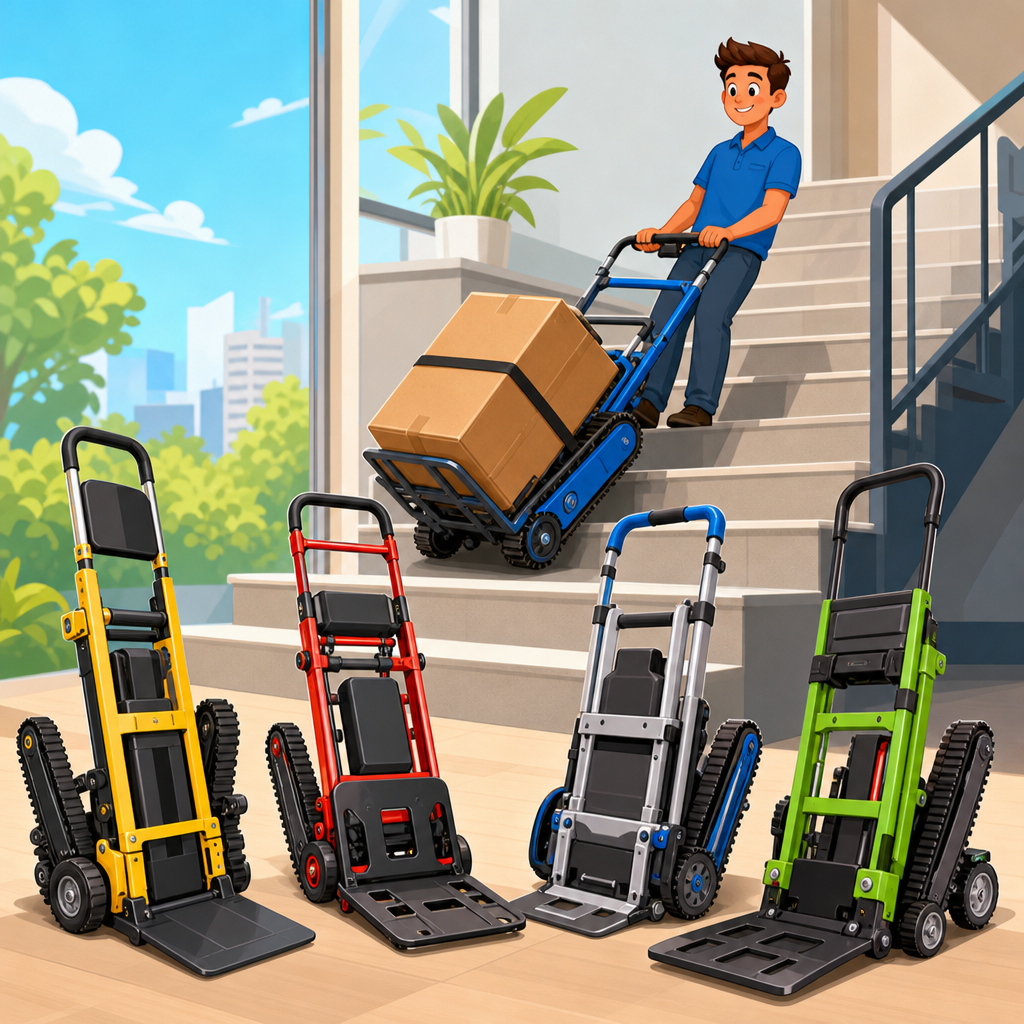
Portable stair climber brands solve a specific mobility problem: how to move a person safely up or down stairs without installing a permanent stair lift. In the chair lift industry, “portable lift” usually refers to a battery-powered tracked chair, stair climbing wheelchair, evacuation chair, or compact assistive device that can be carried to the staircase when needed and stored afterward. I have worked with families comparing these units for private homes, and with facilities weighing them against fixed straight and curved stair lifts, and the difference is practical as much as technical. A permanent chair lift is built for daily independent travel on one staircase. A portable stair climber is built for flexibility, occasional access, caregiver-assisted movement, emergency use, multi-site deployment, or buildings where installation is impossible or undesirable.
This distinction matters because buyers often start with the wrong assumption. They search for a lightweight stair lift, when what they really need is a portable stair climber for wheelchair users, an evacuation chair for fire safety planning, or a tracked patient transport chair for caregivers. Each category carries different expectations for operator training, weight capacity, battery life, stair compatibility, and regulatory use. A church with a short front entry staircase has different needs than a multistory townhouse, and both differ from a hospital that must maintain a compliant evacuation strategy. If you treat all portable lifts as interchangeable, you risk buying a unit that is hard to maneuver, incompatible with your stair geometry, or unsuitable for the user’s medical condition.
As a hub article under chair lift types and designs, this guide reviews the top portable stair climber brands, explains how the leading models differ, and clarifies where portable lifts fit within the larger accessibility picture. The best brands are not simply the ones with the highest weight rating or the lowest price. The strongest options combine stability on stairs, predictable braking, easy battery charging, durable track systems, comfortable seating, and a support network that can supply parts and training quickly. Good brand selection also reduces ownership friction: fewer service delays, clearer documentation, and better compatibility with ramps, landings, and transfer routines. For most buyers, the right decision starts by matching the device type to the use case, then narrowing the field to proven manufacturers with a record in mobility and evacuation equipment.
What Portable Stair Climbers Include and When They Make Sense
Portable lifts cover several product classes. Tracked stair chairs use motorized rubber tracks to climb stairs under caregiver control. Stair climbing wheelchairs may remain in wheelchair form on level ground and shift into a stair-climbing mode. Evacuation chairs prioritize rapid, controlled descent during emergencies, often with friction tracks rather than powered ascent. Some compact “stair walkers” attach to a wheelchair or operate as a transfer aid, but these are more specialized and less common in residential buying. The practical question is simple: does the user need daily independent access, or supervised transport where portability is the main benefit? If independence is the goal on one staircase, a fixed rail chair lift remains superior. If the staircase changes, the building is rented, or the equipment must serve multiple users and locations, portable lifts become compelling.
In my experience, portable stair climbers make the most sense in six situations. First, a home cannot support a permanent installation because of width limits, landlord restrictions, historic preservation, or budget timing. Second, the user only occasionally encounters stairs, such as at family visits, places of worship, or community buildings. Third, a caregiver needs a safer method than manual lifting for a person who cannot transfer reliably. Fourth, a school, clinic, or public venue needs a mobile accessibility solution while a permanent project is planned. Fifth, emergency preparedness requires evacuation equipment for upper floors. Sixth, travel or fleet use matters, especially in medical transport, EMS, and event venues. Those scenarios reward mobility, storage efficiency, and cross-site usability over always-ready installation.
The limitations are equally important. Most portable stair climbers are operator-assisted. They do not replace a self-operated home stair lift for someone living alone. They also demand enough landing space to position the device safely at the top and bottom of the stairs. Very steep stairs, narrow turns, spiral layouts, uneven riser heights, and poor lighting can all compromise usability. Battery units need charging discipline, and caregiver training is not optional. For that reason, brand quality matters more here than in many other mobility categories. Good engineering reduces operator effort and error, especially on difficult transitions where accidents usually happen.
Top Portable Stair Climber Brands Reviewed
SANO is one of the strongest names in portable stair climbers, especially for buyers who want a refined tracked system with long-term durability. The Austrian manufacturer is well known for models such as the Liftkar series, including versions designed for seated transport and others intended for wheelchair handling. SANO products are typically praised for balanced center-of-gravity control, smooth step negotiation, and compact foldability. In residential assessments, I have found SANO especially attractive for narrower straight staircases where precise handling matters. The tradeoff is cost: these are premium devices, and buyers should expect dealer-led demos rather than impulse online purchasing.
Garaventa, a respected accessibility brand better known for platform lifts and stair lifts, also has a serious reputation in portable evacuation and stair transport solutions through product lines used in commercial and institutional settings. The value of Garaventa is not just the chair itself but the broader dealer and service ecosystem. For schools, hospitals, and municipal buildings, that support infrastructure matters because training, compliance documentation, and service continuity often matter as much as the hardware. Buyers seeking one vendor relationship across multiple accessibility categories may find Garaventa easier to integrate than smaller niche brands.
Evac+Chair is the benchmark brand for evacuation chairs. It is not the answer for routine powered ascent, but for controlled descent during fire alarms, power outages, and shelter-in-place failures, it remains a standard reference. The company’s chairs are used worldwide in offices, healthcare facilities, transportation hubs, and universities. Their key strength is simplicity: friction-controlled descent, wall-mounted storage, and straightforward deployment. If your question is which portable stair device belongs in an emergency egress plan, Evac+Chair is usually on the shortlist first. It excels where reliability, training repetition, and regulatory preparedness outrank comfort features.
Tracked mobility brands such as Antano Group and similar European manufacturers deserve attention in the stair climbing wheelchair category. These products often combine transport chair design with powered climbing capability, making them useful for medical transport and higher-frequency caregiver use. They tend to offer stronger weight capacities and robust electronics, though they can be bulkier than simpler evacuation chairs. For private homes, that bulk can be a drawback; for ambulance services, clinics, and buildings with multiple operators, it can be an advantage because the frames are built for repeated duty cycles.
Some buyers also encounter battery-powered stair climbers from specialist mobility importers selling under regional dealer labels. These can offer good value, but brand depth matters. Before buying, verify who actually manufactures the unit, where replacement batteries come from, how long tracks last under normal use, and whether the dealer can provide on-stair training. A lower purchase price is rarely a bargain if parts availability is weak. I have seen organizations save money upfront and lose it later through downtime, rushed replacements, and inconsistent operator confidence.
| Brand | Best Known For | Best Fit | Main Caution |
|---|---|---|---|
| SANO | Premium tracked stair climbers | Homes, caregivers, narrow straight stairs | Higher purchase cost |
| Garaventa | Dealer-backed accessibility solutions | Schools, public buildings, mixed accessibility fleets | Selection may depend on local distributor support |
| Evac+Chair | Emergency descent chairs | Offices, hospitals, code-driven evacuation planning | Not designed as a daily home mobility substitute |
| Antano Group | Heavy-duty stair climbing transport chairs | Medical transport, clinics, frequent assisted use | Can be larger and heavier to store |
How to Compare Portable Lift Features Like a Professional
Start with stair geometry. Measure clear width, tread depth, riser height consistency, landing length, and any turns immediately before or after the staircase. Portable stair climbers often publish minimum stair width and maximum incline ranges, but the real test is transition space. A device can technically climb the stairs and still be awkward at the top landing. I always advise buyers to stage a live demonstration on the actual staircase, with the actual user if medically appropriate. Spec sheets do not reveal whether the caregiver can turn, stabilize, and exit the staircase comfortably.
Next, examine weight capacity realistically. Capacity must include the user plus clothing, accessories, and sometimes medical equipment. A 350-pound rating should not be treated as a target operating weight if the staircase is tight and the operator is inexperienced. Stability margins matter. Higher-capacity units often use stronger frames, broader contact surfaces, and larger batteries, which improve performance but increase transport weight. For facilities, that is usually acceptable. For a family carrying the folded unit in a car, it may not be.
Battery system quality is another dividing line between reputable brands and generic imports. Look for sealed batteries, stated charge cycles, clear charger indicators, and realistic range estimates. Ask whether the unit can complete multiple full stair runs on one charge, how performance changes under heavier loads, and what happens if charge drops mid-operation. Good systems include audible or visual alerts well before failure. Also ask whether replacement batteries are proprietary. Proprietary packs are not automatically bad, but they raise ownership costs if only one distributor can supply them.
Controls and braking deserve close attention. On tracked units, smooth starts and stops reduce user anxiety and operator strain. Anti-slip tracks, automatic braking logic, and intuitive control placement are critical. The safest brands design around human error. For evacuation chairs, the descent friction mechanism should feel predictable across stair surfaces, from concrete to commercial carpet. Handles should support operators of different heights without forcing unsafe posture. If two people are required for normal operation, the training plan must reflect that reality.
Finally, check cleaning, storage, and serviceability. Healthcare settings should prioritize wipeable surfaces and replaceable contact components. Home users should verify folded dimensions and lifting weight. Any portable stair climber should come with a clear maintenance schedule covering batteries, tracks, fasteners, and safety checks. Strong brands document preventive maintenance clearly because reliability depends on inspection, not just initial build quality.
Residential, Commercial, and Emergency Use Cases
For homes, comfort and maneuverability usually matter most. A family caring for an older adult may need a portable stair climber because a permanent stair lift cannot be installed on a narrow staircase or because the person alternates between homes. In that setting, a SANO-style tracked chair often outperforms an evacuation-focused device because it provides better seating, smoother ascent, and less operator effort. However, if the user needs independent access several times a day, a portable lift is still a compromise. It can reduce transfer risk, but it does not remove dependence on another person.
Commercial settings focus on policy, training, and repeatability. A school may keep a portable stair climber to move a student when an elevator is down or when an older building lacks full access. A place of worship might use one for side-entrance steps while fundraising for a permanent lift. In these cases, dealer support, training materials, and staff confidence are deciding factors. Brands with established service networks tend to perform better because turnover is inevitable and refresher training becomes part of safe ownership.
Emergency use is its own category. During a fire alarm or power loss, the goal is not convenience but controlled evacuation. That is why Evac+Chair and comparable products remain distinct from powered portable stair climbers. They are lighter, simpler, and intended to work under stress. Hospitals, assisted living communities, and hotels should not assume a residential-style portable stair climber satisfies emergency planning. The operational context is different, and so are the training and storage requirements.
Buying Advice, Costs, and the Best Next Step
Portable stair climber pricing varies widely by category. Basic evacuation chairs may start in the lower thousands, while premium powered tracked chairs and stair climbing wheelchairs can rise significantly depending on capacity, accessories, and service support. Total cost should include training, spare batteries, maintenance, and any transport case or wall mount. For organizations, annual drills and inspection time are part of ownership cost too. The cheapest unit on paper often becomes expensive if it is hard to deploy or ignored because staff do not trust it.
The smartest buying process is structured. First, define the use case: daily mobility, occasional home access, medical transport, or emergency evacuation. Second, measure the actual staircase and landings. Third, identify the user’s transfer ability, posture control, and weight requirements. Fourth, insist on a live demonstration. Fifth, evaluate after-sales support: service response times, battery sourcing, operator training, and documentation. Sixth, compare the portable option against a permanent stair lift, platform lift, or ramp so you understand the tradeoffs clearly. Many poor purchases happen because buyers compare brands before they confirm the right device category.
The main benefit of top portable stair climber brands is flexible access without permanent installation. The best brands deliver that flexibility with safer handling, better engineering, and dependable support. If you are building out your understanding of portable lifts within chair lift types and designs, use this page as the hub, then move next into model-specific guides, evacuation chairs, and stair climbing wheelchairs. Shortlist two or three brands, book on-site demos, and let the staircase itself decide.
Frequently Asked Questions
What should I look for when comparing portable stair climber brands?
Start with the basics: user safety, staircase compatibility, ease of operation, and after-sales support. The best portable stair climber brands clearly publish weight capacity, battery performance, recommended stair dimensions, and intended use cases, whether that is home mobility assistance, medical transport, or emergency evacuation. A strong brand will also explain how the unit behaves on straight stairs, landings, tight turns, and outdoor steps, because not all portable climbers handle every environment equally well.
Beyond core specs, pay close attention to the control system and training requirements. Some portable stair climbers are designed for caregiver-assisted operation, while others work more like stair climbing wheelchairs with powered controls and a more involved learning curve. Good brands invest in intuitive controls, secure restraint systems, anti-slip tracks or wheels, and stable balance during ascent and descent. In real-world comparisons, families often discover that a machine that looks impressive on paper may feel awkward in a narrow staircase or heavy to position at the top landing.
Brand reputation matters too. Look for companies with documented service networks, available replacement batteries, accessible customer support, and a history of selling into residential or healthcare settings. It is also wise to ask about demonstration options, warranty coverage, maintenance schedules, and operator training. The strongest brands do not just sell a machine; they provide confidence that the device can be used safely and supported over time.
Are portable stair climbers a good alternative to a permanent stair lift?
For many households and facilities, yes, but only in the right situation. A portable stair climber can be an excellent alternative when a permanent stair lift is not practical due to rental restrictions, multi-level access needs, budget limitations, architectural constraints, or the need to serve more than one staircase. These devices are especially useful when the goal is occasional or as-needed transport rather than frequent independent daily travel by the user. Because the equipment can be brought out only when needed and stored afterward, it offers flexibility that fixed rail systems cannot match.
That said, portable units do not replace permanent stair lifts in every case. A traditional stair lift is often better for users who need routine, independent access several times a day and can safely transfer on and off the seat. Portable stair climbers usually require an operator, and even the most advanced models depend on correct handling, battery readiness, and staircase suitability. If a household wants effortless daily use with minimal caregiver involvement, a permanent installation may still be the more practical long-term solution.
The right choice comes down to frequency of use, user condition, caregiver availability, stair layout, and budget. In many private homes, a portable stair climber solves a very specific mobility problem without the cost or permanence of installation. In facilities, it can be a practical backup solution, a transport tool for multiple areas, or part of an evacuation plan. The best brands make these distinctions clear instead of presenting portable equipment as a universal substitute for every stair access challenge.
How safe are portable stair climbing chairs and stair climbing wheelchairs?
When matched to the correct user, staircase, and operator, quality portable stair climbers can be very safe. Reputable brands build safety into several layers of the product: tracked or controlled wheel systems for steady movement, braking mechanisms, harnesses or chest restraints, head support on some models, anti-tip design, and emergency stop controls. Many also include features intended to keep movement smooth and predictable during both ascent and descent, which is critical for user confidence and operator control.
However, safety is never just about the machine. Proper training is essential. The operator needs to understand positioning, loading, securing the passenger, battery checks, stair approach technique, and how to manage landings and transitions. Even the best-reviewed brand can become unsafe if used on stairs that are too narrow, too steep, damaged, wet, or otherwise outside the manufacturer’s guidelines. This is why demos and on-site evaluations are so valuable before buying.
User condition also matters. Some people need additional trunk support, a more reclined posture, or a model designed to accommodate limited upper-body stability. Others may be better served by an evacuation chair or a full stair climbing wheelchair depending on the purpose. The safest brands are transparent about these limitations and recommend specific usage scenarios instead of overpromising. In practice, the safest purchase is usually the one backed by professional guidance, hands-on testing, and realistic expectations about who will operate the device and how often.
Do all portable stair climbers work on every staircase?
No, and this is one of the most important points buyers often overlook. Portable stair climbers vary widely in how they perform on straight interior stairs, split-level layouts, narrow staircases, shallow treads, steep rises, outdoor concrete steps, and multi-landing configurations. Some tracked models are designed primarily for straight runs with adequate landing space, while other compact devices may be easier to maneuver in tighter residential environments. A brand that excels in one building type may be a poor fit for another.
Before choosing a model, confirm the manufacturer’s minimum and maximum stair requirements. Key measurements include stair width, tread depth, riser height, angle, and landing clearance at the top and bottom. If the staircase has turns, curved sections, or limited maneuvering room, that can significantly affect which models are practical. Facilities also need to consider surface conditions, emergency access, storage location, and whether the device may be used on more than one stairway.
This is why experienced buyers insist on a site-specific assessment or live demonstration. A portable stair climber should not be purchased based on online photos alone. The best brands and dealers will ask detailed questions, request measurements, and ideally test the unit in the actual environment. That extra step helps avoid a costly mistake and ensures the model performs as expected where it matters most: on the real stairs it will be used on.
Which portable stair climber brand is best for home use versus facility or emergency use?
The best brand depends less on name recognition and more on the intended application. For home use, families usually prioritize compact storage, manageable weight, easier controls, quieter operation, and a comfortable, secure ride for the passenger. In a residential setting, a portable stair climber often needs to fit narrower stairs, work in limited landing space, and be simple enough for a family caregiver to use consistently after training. Brands that focus on user comfort, smooth movement, and accessible customer support often stand out in this category.
For facilities, the priorities shift. Hospitals, senior communities, schools, and public buildings may need higher duty cycles, faster deployment, durable frames, broader occupant accommodation, and documented staff training protocols. Emergency and evacuation use adds another layer: reliability under pressure, quick setup, safe descent control, visible restraint systems, and compliance with internal safety planning. A brand that is excellent for occasional in-home transport may not be the strongest choice for repeated institutional use or emergency preparedness.
That is why the smartest comparison process begins with the use case, not the logo. Ask whether the device is for daily mobility assistance, occasional stair access, patient transport, or emergency evacuation. Then compare brands on staircase fit, user support needs, operator skill requirements, battery readiness, maintenance expectations, and service responsiveness. The best portable stair climber brand is the one that performs safely and consistently in your real environment, with the right support behind it long after the purchase.