


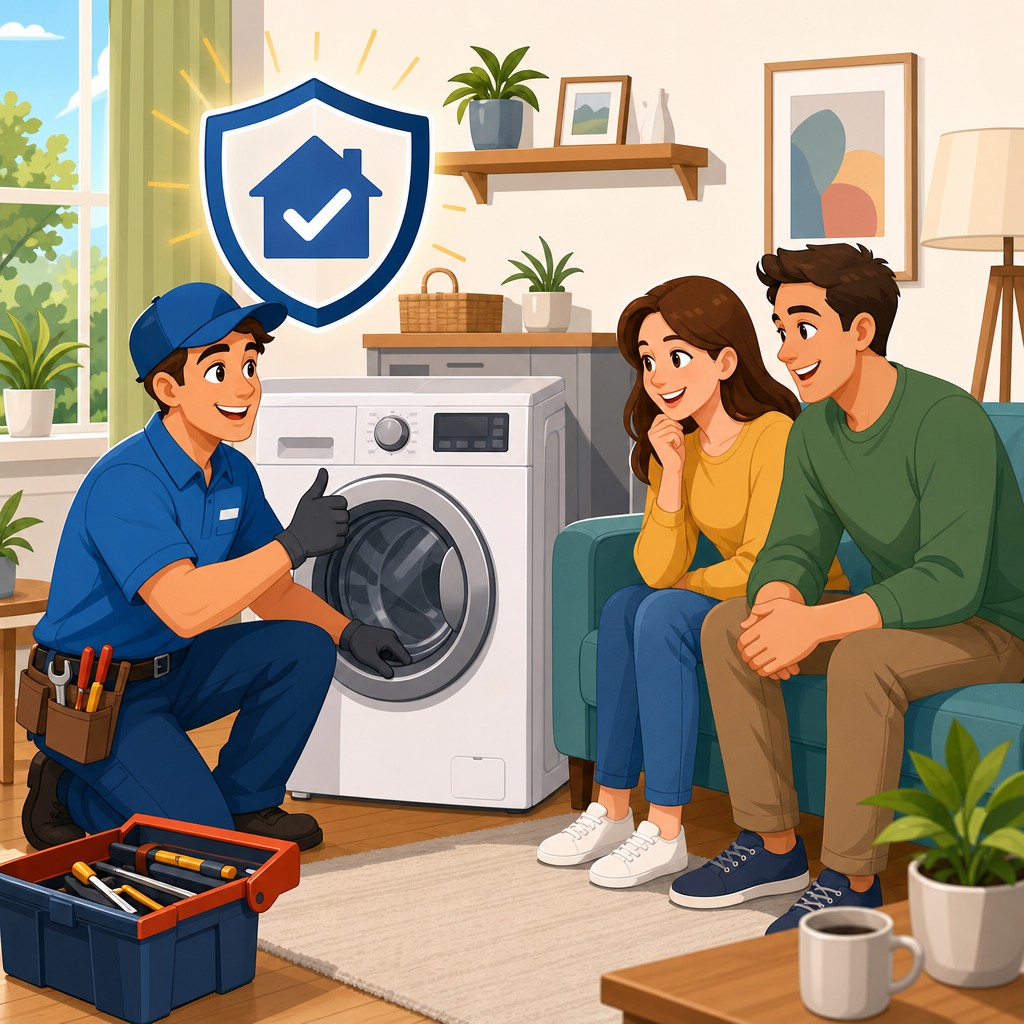
In-home service sounds simple, but in warranty and return policies it has a precise meaning that can save you time, money, and frustration when a major product fails. An in-home service clause is the part of a manufacturer or retailer warranty that explains whether repairs are performed at your residence instead of requiring you to carry, ship, or transport the item to a service center. I have reviewed these clauses for appliances, televisions, fitness equipment, and large electronics, and the language often determines the real value of the warranty more than the coverage period printed on the box.
For buyers researching warranty and return policies, this topic matters because the repair process is where promises become costs. A one-year limited warranty may look competitive across brands, yet one company sends a technician to your home while another requires you to disconnect the product, arrange packaging, pay transport charges upfront, or wait weeks for authorization. The practical difference is enormous for refrigerators, ovens, washing machines, large-screen TVs, built-in products, massage chairs, and treadmills. Even when companies advertise in-home service, the clause may contain limits based on distance from a service provider, accessibility of the installation site, product size, or whether the issue can be diagnosed remotely first.
Understanding in-home service is also essential because it sits at the intersection of warranty coverage, return rights, delivery obligations, and extended protection plans. Buyers often assume a return policy and a warranty solve the same problem, but they do not. A return policy governs what happens soon after purchase if you change your mind, receive the wrong item, or find an immediate defect. A warranty governs defects in materials or workmanship over time. In-home service belongs primarily to the warranty side, though some premium retailers use white-glove return pickups or home exchanges that resemble service benefits.
At a practical level, an in-home clause answers four buyer questions: who comes, what they do, what you pay, and when the company can refuse the visit. Those details are rarely summarized in marketing copy. They are buried in terms such as carry-in service, depot service, on-site labor, service area limitations, no-defect-found fees, and customer-access responsibilities. If you are comparing products in any buying guide or product review, reading these clauses carefully is one of the fastest ways to distinguish a genuinely customer-friendly brand from one that merely advertises a warranty.
What an In-Home Service Clause Usually Covers
An in-home service clause typically states that an authorized technician will travel to your residence to inspect, diagnose, repair, or sometimes replace a covered product. The clause usually applies only during the warranty period and only for defects caused by normal use under the manufacturer’s instructions. In practice, I see three common versions. First is full in-home service, where labor and travel are included for covered failures. Second is limited in-home service, where the visit is covered but parts, consumables, or follow-up visits may not be. Third is conditional in-home service, where the company decides after remote troubleshooting whether a home visit is warranted.
The wording matters. “On-site service” often means a technician comes to the product, but not necessarily at no cost. “In-home service” usually implies residential service for eligible products, but the clause may still exclude remote locations, stairs above a certain level, island addresses, or installations that require special equipment to access. Some brands also reserve the right to provide refurbished replacement parts or exchange the unit instead of repairing it. For built-in appliances, the clause may require the buyer to make the product accessible by removing cabinetry trim or reinstalling parts after service.
Another crucial distinction is between labor coverage and transportation coverage. If the warranty says the company covers parts and labor but is silent on travel, you should not assume the technician’s trip is free. Good warranty language specifically includes in-home labor and travel charges. Weak language says service is available but leaves mileage, surcharges, parking fees, tolls, or diagnostic charges open. For expensive products, these hidden costs can erase the value of the promise.
How In-Home Service Differs From Carry-In, Mail-In, and Depot Repair
Carry-in service requires you to bring the product to an authorized repair location. Mail-in service requires shipping the item, usually with preapproval and packaging rules. Depot service means the item is sent to a central facility for diagnosis and repair. In-home service is usually the most convenient model, but it is not automatically the best in every case. Small countertop appliances, headphones, and laptops are often repaired faster through mail-in or exchange programs because logistics are standardized. For heavy or installed products, in-home service is generally superior because disassembly and transport create additional risk.
Consider a front-load washer. With carry-in service, the owner would have to disconnect water lines, drain the machine, move a heavy appliance, and transport it safely. That is impractical for most households. In-home service is the industry norm for major appliances because the product’s size and installation complexity make off-site repair unreasonable. Compare that with a tablet, where shipping to a service center may be faster than scheduling a field technician. The right service model depends on the product category, weight, fragility, and installation requirements.
Retailers and manufacturers sometimes mix these service models in one warranty. A large television may qualify for in-home service above a certain screen size but require carry-in service below that threshold. Fitness equipment may include in-home labor during year one but switch to parts-only coverage afterward, leaving the customer to pay for the visit. These hybrid structures are common, and buyers should map them against the expected lifespan of the product.
Common Limitations Hidden in Warranty Language
The most important limitation is authorized service territory. Many warranties promise in-home service only within a defined radius of an authorized technician. If you live outside the standard area, the company may deny the visit, require you to pay extra travel fees, or ask you to arrange transport. I have seen brands market national service while the legal terms narrow support to “where available,” which is far less protective than it sounds.
Another frequent limitation involves diagnostic triage. Before dispatching a technician, the company may require phone or video troubleshooting, software resets, error-code reporting, serial number verification, and proof of purchase. This requirement is reasonable, but it can delay repair if call centers are overloaded or if the buyer has not registered the product. Some clauses also exclude cosmetic issues, routine maintenance, filters, bulbs, batteries, alignment, calibration after installation, and damage caused by improper voltage, misuse, pests, or unauthorized repairs.
Installation-related exclusions are especially important for built-in or hardwired products. If a technician cannot safely access the unit, the service visit may be aborted and charged back to the customer. For example, wall ovens, over-the-range microwaves, and built-in refrigerators often require clear access, shutoff availability, and code-compliant installation. If cabinetry, flooring, or plumbing blocks removal, the warranty may cover the defect but not the labor needed to reach the defective component.
| Clause Element | What It Means | Buyer Risk |
|---|---|---|
| Service area limitation | Home visits available only where authorized technicians operate | Rural buyers may pay travel fees or lose on-site coverage |
| Remote diagnosis requirement | Company can require troubleshooting before dispatch | Longer downtime if support is slow |
| Accessible installation condition | Product must be reachable without unusual labor | Built-in units may trigger extra charges |
| Parts-only after year one | Replacement parts covered, visit and labor may not be | Repair still becomes expensive |
| No-defect-found fee | Charge if technician finds no covered fault | User error can become a billable visit |
Which Products Commonly Include In-Home Service
Major appliances are the most established category for in-home service. Refrigerators, ranges, dishwashers, washers, dryers, and freezers usually receive home visits because they are heavy and often connected to utilities. Premium televisions, especially larger OLED and QLED models, may also include on-site service or home exchange. Fitness equipment is another category where the clause matters because treadmills, ellipticals, and rowers are difficult to pack and ship once assembled.
Furniture-adjacent electronics and specialty equipment also appear frequently in this category. Adjustable beds, massage chairs, saunas, water filtration systems, and built-in coffee systems often use in-home repair networks. However, coverage quality varies sharply. Some brands cover technician travel nationwide through third-party administrators, while others rely on regional contractors with inconsistent scheduling. When I evaluate product reviews, I treat service network density as a serious buying factor, not a minor afterthought.
Smaller products may advertise home service as a premium differentiator. Certain high-end audio systems, smart home installations, and luxury kitchen brands offer concierge-style visits. These benefits can be valuable, but they should be verified in the written warranty, not assumed from sales language. If a retailer mentions white-glove support, ask whether that is a delivery benefit, an optional protection plan feature, or part of the standard manufacturer warranty.
How Return Policies and Extended Plans Affect In-Home Service
Return policies matter because the easiest repair is often an early exchange. If a refrigerator arrives dented or a treadmill fails during the first week, a retailer’s return or exchange window may provide a cleaner remedy than a warranty claim. Many buyers miss this because they contact the manufacturer first, only to be routed into repair procedures for a product that the retailer would have replaced. The best practice is simple: during the return window, compare both paths before authorizing service.
Extended plans complicate the picture. Retailer protection plans and third-party service contracts often promise in-home service after the manufacturer warranty ends, but their definitions vary. Some include preventive maintenance, surge protection, food-loss reimbursement, or lemon policies that trigger replacement after repeated failures. Others exclude pre-existing conditions, commercial use, inaccessible installations, and consumables. Service contracts are regulated differently from warranties in many jurisdictions, so claims handling, cancellation rules, and reimbursement timing can also differ.
For buyers evaluating warranty and return policies across products, the smart approach is to read them as a package. Check the retailer’s delivery damage reporting window, the standard return period, the manufacturer’s first-year service model, and the terms of any optional protection plan. A generous return policy plus weak long-term service may still be acceptable for a low-cost product. For expensive installed goods, strong in-home coverage remains one of the clearest signs of lower ownership risk.
How to Evaluate an In-Home Service Clause Before You Buy
Start with five direct questions. Is in-home service included, or merely available? Are travel charges covered? Who performs the repair: factory technicians, authorized local servicers, or a national claims administrator? What happens if the product cannot be repaired on the first visit? And what costs remain your responsibility? If a seller cannot answer these clearly, download the warranty PDF and read the exclusions. This step takes minutes and prevents expensive surprises.
Next, check support infrastructure. Look for brand service locators, Better Business Bureau complaint patterns, retailer review comments about repairs, and parts availability. A strong clause is undermined if replacement parts are backordered for months. For appliance brands, technician availability often matters more than call-center polish. For televisions and fitness equipment, ask whether replacement is handled as an in-home swap, a technician visit, or a freight pickup. The operational detail tells you how painful a claim will be.
Document everything after purchase. Save invoices, serial numbers, installation records, model photos, and registration confirmations. If the product is built in, keep pictures showing code-compliant access and hookups. When a failure occurs, write down symptoms, error codes, and dates. Clear records shorten authorization time and protect you if a claim becomes disputed. This is the core benefit of understanding in-home service clauses: you buy with realistic expectations, avoid weak coverage disguised as convenience, and choose products backed by service terms that work in the real world. Before your next purchase, read the warranty as carefully as the product specs and compare the actual repair process, not just the coverage length. That single habit will improve nearly every buying decision you make.
Frequently Asked Questions
What does an “in-home service” clause actually mean in a warranty?
An “in-home service” clause explains whether the company will send an authorized technician to your residence to diagnose and repair a covered product instead of requiring you to bring it to a store, service depot, or shipping carrier. In practical terms, this matters most for large, heavy, or difficult-to-move items such as refrigerators, washers, dryers, televisions, treadmills, and other major electronics or appliances. The clause usually appears in the warranty’s service section and defines when home visits are available, what kinds of repairs qualify, and whether the manufacturer or retailer decides if the product is serviced on-site or taken away for further work.
Just as importantly, “in-home service” does not always mean every problem will be fixed entirely inside your house on the first visit. Many warranties allow an initial home diagnosis, followed by parts ordering, return visits, or removal of the product if a shop repair is necessary. Some clauses limit service to ground-floor locations, normal residential access, or specific geographic areas. Others require the item to be installed and used according to the owner’s manual before service applies. That is why the exact wording matters: one warranty may promise full in-home labor coverage, while another only offers in-home inspection with the option to transport the unit elsewhere if the repair is complex.
Does in-home service mean the warranty covers all labor, travel, and repair costs?
Not necessarily. One of the most common misunderstandings is assuming that if a warranty mentions in-home service, every expense connected to the visit is automatically free. In reality, the clause may only cover service for defects in materials or workmanship during a defined warranty period, and even then there can be limits. Some warranties cover parts and labor for one year but only cover sealed systems, motors, or frames for longer periods. Others include labor but exclude travel surcharges for remote areas, after-hours appointments, stair carries, installation corrections, or non-defect-related service calls.
You also need to look for exclusions tied to customer-caused issues. If the technician determines the product failed because of misuse, improper installation, lack of maintenance, power surges, pet damage, cosmetic wear, or unauthorized modifications, the visit may become billable even if the product is technically still within the warranty term. Some companies also reserve the right to charge for inaccessible units, disconnected utilities, or situations where the product cannot be safely serviced. The safest approach is to read the sections on “What Is Covered,” “What Is Not Covered,” “How Service Is Provided,” and “Owner Responsibilities” together. That combination tells you whether in-home service is truly comprehensive or simply a method of service delivery with important cost limitations.
Are there conditions I have to meet before I can use in-home warranty service?
Yes, and these conditions are often where consumers get caught off guard. Most warranties require that the product be used in a normal household setting, installed according to the manufacturer’s instructions, and located in an area that allows reasonable technician access. For example, a washing machine crammed into a custom cabinet, a wall-mounted television installed too high for safe removal, or a treadmill placed in a narrow basement with no clear access path can complicate service and may affect what the company is willing to do on-site. Some warranties also require proof of purchase, model and serial numbers, and a documented report of the problem before an appointment can be scheduled.
Another common requirement is that you perform basic troubleshooting first. Manufacturers may ask you to reset the unit, verify power, inspect filters, confirm network settings for smart devices, or follow support steps over the phone. If these steps are skipped, the service request may be delayed. Geographic limitations are also common. In-home service may be available only within a certain distance of an authorized servicer, with alternate arrangements for rural areas. In some clauses, the company can choose replacement, shop repair, or reimbursement instead of sending a technician if your location falls outside the service territory. Reading these conditions ahead of time helps you understand whether the convenience promised by the clause will actually apply in your specific situation.
What is the difference between in-home service, carry-in service, and mail-in service?
These terms describe very different service obligations, and the distinction can have a major impact when a product fails. In-home service means the provider comes to you, at least for diagnosis or the initial repair attempt. Carry-in service means you are responsible for transporting the product to an authorized service location yourself. Mail-in or depot service means you must package and ship the item to a repair center, either at your expense or using a company-provided label, depending on the warranty. For small items, these differences may be minor. For large products, they can mean a significant difference in time, cost, risk of damage, and inconvenience.
This is why consumers should never assume the repair method based on the type of product alone. A large television may still have carry-in service; a fitness machine may require partial disassembly before transport; and an appliance may receive in-home service only for certain components or only while it remains installed in a standard residential setting. Some warranties even use hybrid language, such as stating that the company may provide in-home, carry-in, or mail-in service at its sole discretion. That phrasing gives the warrantor flexibility and gives the customer less certainty. If service method matters to you, especially for bulky or high-value items, it should be confirmed before purchase rather than discovered after a breakdown.
How can I read an in-home service clause carefully and avoid surprises when I need a repair?
Start by locating the exact service language in the written warranty, not just the product page or a sales summary. Marketing materials often emphasize convenience, but the legal warranty defines what the company must actually provide. Look for specific wording about who decides the service method, whether service is limited to certain regions, how long labor is covered, and what happens if an on-site repair is not possible. Pay close attention to phrases like “authorized servicer only,” “at our option,” “diagnosis only,” “reasonable access required,” “ground-floor service,” or “customer is responsible for removal and reinstallation.” Those phrases can materially change what “in-home” means in practice.
It is also smart to review the exclusions and owner duties before there is ever a problem. Save your receipt, register the product if required, keep installation records when relevant, and document maintenance for products like appliances and fitness equipment. If a failure occurs, take photos, write down the symptoms, and record any troubleshooting steps you completed. When scheduling service, ask direct questions: Will the technician repair the item on-site if possible? Is there a trip fee? Are stairs, wall mounts, water lines, or built-in cabinetry an issue? Will I be charged if the problem is excluded? Those questions turn vague warranty language into clear expectations. A well-read in-home service clause can save you the hassle of arguing over transportation, unexpected fees, or denied coverage at the worst possible time.