


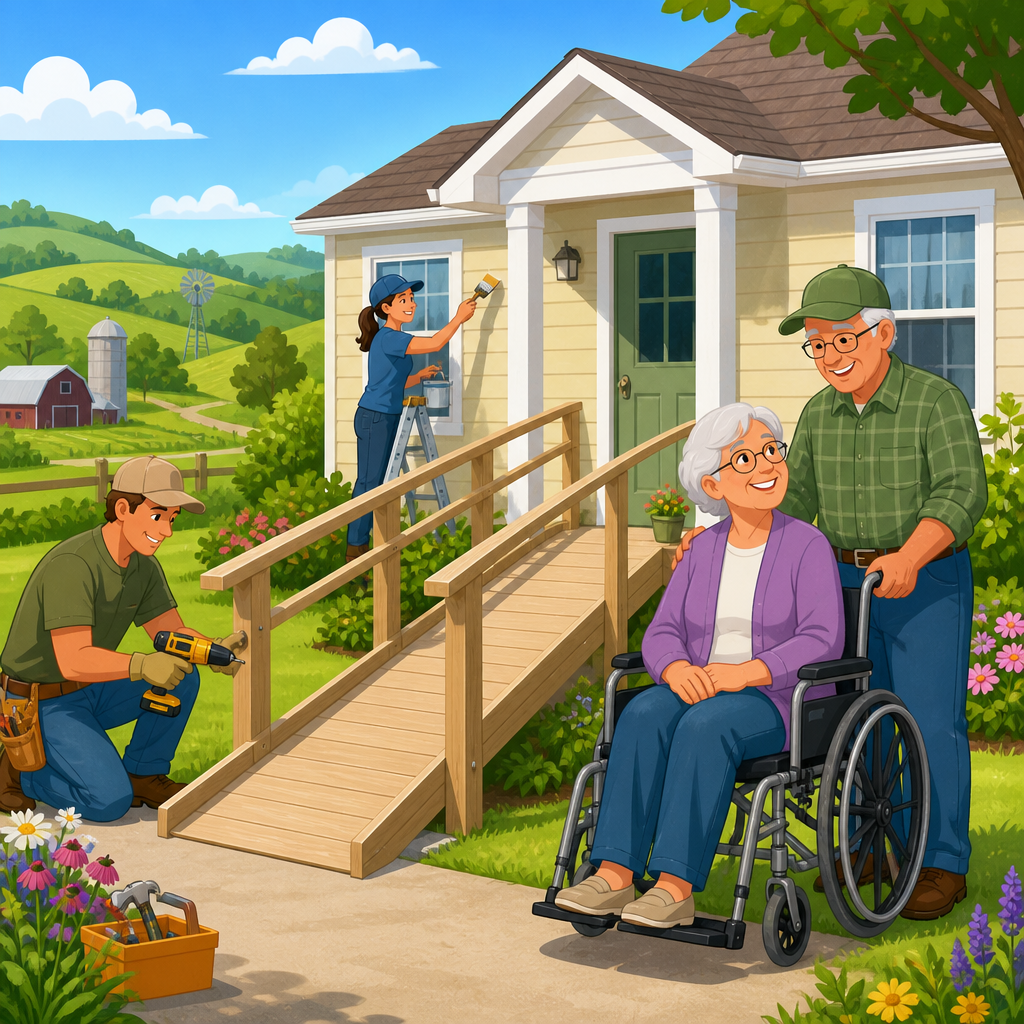
USDA Rural Housing Repair Programs and Accessibility Improvements for Seniors can make the difference between aging safely at home and being forced into a costly move after a fall, plumbing failure, or inaccessible bathroom becomes unmanageable. For older homeowners in small towns and rural communities, the challenge is rarely a single repair bill. It is the combined weight of fixed retirement income, deferred maintenance, rising contractor costs, and homes that were never designed for mobility limitations. I have worked with families comparing bids for ramps, roll-in showers, roof repairs, and electrical upgrades, and the same question comes up every time: what financial help actually exists, and who qualifies? This guide answers that question by explaining how USDA rural housing repair assistance works, how accessibility modifications fit into the rules, and how seniors can use this hub to evaluate grants and assistance programs across the broader cost and financing landscape.
The core program most people mean when they talk about USDA home repair help is the Section 504 Home Repair program, formally administered by USDA Rural Development. It serves very low-income homeowners in eligible rural areas. The program has two parts: loans for repairs and improvements, and grants for elderly homeowners who need to remove health and safety hazards. Accessibility improvements often qualify when they address a documented safety issue or make the home usable for an older adult with mobility, balance, vision, or bathing limitations. That can include grab bars, accessible entries, handrails, widened doors, flooring replacement to remove trip hazards, or bathroom modifications when the need is clearly tied to safety and function.
This topic matters because most seniors want to remain in their homes, and policy research consistently shows that home-based aging is usually less expensive than institutional care. Yet the affordability gap is real. A modest accessibility project can cost several thousand dollars, while larger modifications such as a zero-step entrance or full bathroom conversion can move into the tens of thousands. USDA assistance will not solve every case, but it is one of the few federal options specifically designed for rural owner-occupants with limited income. As a hub page for grants and assistance programs, this article also helps readers understand where USDA fits alongside state housing finance agencies, Medicaid waiver programs, veterans benefits, nonprofit repair initiatives, and local weatherization or rehabilitation funds.
What the USDA Section 504 Program Covers for Senior Homeowners
Section 504 is designed for owner-occupied homes that need repairs, modernization, or hazard removal. The loan portion can be used by very low-income homeowners to repair, improve, or modernize the home, while the grant portion is reserved for homeowners age 62 or older who cannot repay a loan and need to remove health and safety hazards. In practical terms, that age threshold is what makes the program especially relevant for senior accessibility improvements. USDA field staff and packaging partners generally look for a direct connection between the proposed work and the home’s safety, sanitation, or essential livability. A deteriorated porch without railings, an entry with unsafe steps, or a bathroom that creates a major fall risk are stronger cases than purely cosmetic upgrades.
Eligible repairs often include roofing, heating, electrical, structural work, water and waste systems, and accessibility-focused changes. In projects I have reviewed, the strongest applications pair a clear written scope of work with supporting evidence such as photos, contractor estimates, and a physician or occupational therapist note when mobility needs are involved. If a homeowner uses a walker and cannot safely enter the house, a ramp and handrails are easy to justify. If a bathtub wall creates a dangerous transfer, replacing it with a safer bathing setup may be eligible when presented as hazard removal rather than luxury remodeling. That distinction matters. USDA funds basic necessity and safety, not premium finishes or broad redesigns unrelated to need.
Applicants also need to understand the difference between grant and loan dollars. Loans typically carry favorable terms and can support larger repair scopes. Grants have a lifetime cap and are more limited, but for qualifying seniors they can be crucial because they do not require repayment unless the property is sold within a specified period under program rules. Availability depends on annual federal appropriations and local demand, so timing varies by state and county. Some offices move quickly on straightforward, well-documented repairs; others have waitlists or funding cycles that require patience.
Who Qualifies and How Rural Eligibility Is Determined
Eligibility rests on four main factors: ownership and occupancy, age for grants, income, and property location. The home must generally be the applicant’s primary residence, and the applicant must be unable to obtain affordable credit elsewhere. For grants, the homeowner must be at least 62 years old. Income must fall within the very low-income limit for the area, which USDA updates using county-level and household-size data. Because the thresholds are local, a fixed retirement income that qualifies in one county may not qualify in another. That is why checking the current USDA Rural Development income tables is essential before assuming ineligibility.
Rural eligibility is broader than many people expect. USDA uses its own property eligibility maps, and some communities that feel suburban still qualify, while some places residents consider rural do not. I always tell families to verify the exact address on the USDA map rather than relying on ZIP code or local opinion. A house just outside a town boundary may qualify even when a nearby in-town address does not. This single step can save hours of confusion.
Credit standards and repayment ability matter for loans, but they are not evaluated the same way as conventional home improvement financing. USDA is serving applicants who often have lower incomes, limited savings, and older homes with deferred maintenance. That said, documentation still matters. Expect to provide proof of ownership, identification, income statements, benefit award letters, tax information, and estimates for the work. If there are title issues, life estates, or multiple heirs, those may need to be resolved before approval. For seniors in inherited rural homes, title cleanup is a common hidden barrier that delays otherwise eligible accessibility projects.
Accessibility Improvements Most Likely to Be Approved
Not every modification has the same likelihood of approval. The best candidates are changes that clearly reduce immediate health and safety risks or restore essential access. Based on USDA guidance and real application patterns, the most supportable senior accessibility improvements usually fall into a few categories: safe entry, safe bathing, mobility within the home, and correction of structural hazards that interfere with independence. The stronger the link to fall prevention, emergency egress, sanitation, or basic habitability, the stronger the file.
| Improvement | Why it may qualify | Typical documentation that helps |
|---|---|---|
| Ramp or zero-step entry | Removes unsafe stairs and restores access to the primary residence | Photos, contractor bid, mobility-related medical note |
| Grab bars and handrails | Reduces fall risk in bathrooms, hallways, porches, and stairs | Scope of work, photos of hazardous conditions |
| Bathroom conversion for safer bathing | Addresses transfer hazards and supports sanitation | Bid details, physician or therapist recommendation |
| Door widening or threshold reduction | Improves movement with walkers or wheelchairs | Measurements, accessibility need statement |
| Flooring replacement | Removes trip hazards from damaged or uneven surfaces | Photos, contractor assessment |
| Electrical, plumbing, or heating repair tied to use | Restores safe, habitable conditions essential for aging in place | Licensed contractor estimate, inspection findings |
Projects become harder to approve when they blend necessary accessibility work with elective upgrades. For example, replacing a dangerous tub with a basic accessible shower can fit program goals; adding high-end tile, premium fixtures, and decorative expansion usually weakens the application. The same is true for kitchens. Lowering a countertop for wheelchair use may be defensible in some cases, but a full custom kitchen renovation marketed as accessibility may not survive review unless the scope is narrow and necessity is well established.
Another important point is sequencing. If a home also has major health and safety problems such as a failing roof, exposed wiring, or nonfunctional heat, those issues may take priority. In practice, accessibility and core repair often need to be packaged together so the house is both safe and usable. A new ramp is helpful, but if the bathroom leaks into rotted subflooring, the broader hazard must be addressed too.
How to Apply and Build a Strong Case for Funding
The application process usually starts with the local USDA Rural Development office or an approved nonprofit intermediary that helps residents assemble files. A strong application is not just a form; it is a documented case that the homeowner meets program rules and that the proposed work is necessary, reasonable in cost, and tied to safety or livability. Seniors and adult children often underestimate how much easier approval becomes when the file is organized from the beginning.
Start with five essentials. First, confirm rural eligibility by address. Second, verify current income limits and gather proof of income, including Social Security, pensions, disability, and any other household income. Third, collect proof of ownership and occupancy. Fourth, create a written list of hazards in plain language, such as “front steps have no rail and applicant fell twice in the last year.” Fifth, obtain detailed contractor estimates that separate each task and material. Lump-sum bids make review harder because they do not show whether the pricing is reasonable or whether each item is tied to an eligible purpose.
Medical support can materially strengthen an accessibility request, even when not formally required. A brief note from a physician, nurse practitioner, physical therapist, or occupational therapist explaining that the homeowner has balance impairment, arthritis, wheelchair use, or reduced transfer ability gives the reviewer clear functional context. Photos are equally valuable. I have seen cases move faster when the application included images of crumbling steps, narrow bathroom entries, or water-damaged floors rather than relying only on a verbal description.
If the requested work exceeds available USDA grant funding, ask about layering sources. This hub article sits within the broader grants and assistance programs category because many successful rural repair projects combine resources. A USDA grant might cover hazard removal, while a state assistive technology program, Area Agency on Aging referral, nonprofit volunteer labor group, or local rehabilitation fund fills the gap. Blended financing is common, and families should expect to patch together solutions rather than rely on a single perfect program.
How USDA Compares With Other Grants and Assistance Programs
USDA is important, but it is not the only path. As the hub page for grants and assistance programs under cost and financing options, this article should help readers decide when USDA is the best fit and when another source may be stronger. USDA stands out for rural owner-occupants, especially seniors over 62 with very low income and clear safety-related repair needs. It is less useful for renters, higher-income households, or homes outside eligible areas.
State housing finance agencies and local community development departments often run rehabilitation programs funded through Community Development Block Grant or HOME funds. These programs may cover accessibility modifications, emergency repairs, or deferred-payment loans. They are often more flexible in non-rural areas, but availability varies sharply by city and county. Medicaid Home and Community-Based Services waivers can sometimes support home modifications for eligible beneficiaries, though coverage differs by state and is usually tied to medical and functional eligibility rather than general home repair need. Veterans may find stronger options through VA grants such as HISA or specially adapted housing programs when service-connected disabilities are involved. Nonprofits like Rebuilding Together, Habitat for Humanity affiliates, and faith-based repair ministries can also play a crucial role, especially for small but urgent safety fixes.
The key comparison factors are location, tenure, age, income, disability status, and scope of work. USDA is one of the clearest federal fits for low-income senior homeowners in rural places, but it does not replace the broader assistance ecosystem. Readers using this page as a hub should explore related articles on home modification grants, state accessibility programs, Medicaid waivers, veterans housing adaptation benefits, and nonprofit repair services to find the right mix.
Common Challenges, Limits, and Best Practices for Seniors
The biggest misconception is that any senior in a rural area can receive a free home modification grant. In reality, funding is limited, eligibility is narrow, and approval depends on documented need. Grant dollars have caps, local offices have finite allocations, and some requested projects simply do not fit the program. Another challenge is contractor readiness. In many rural markets, there are fewer licensed contractors willing to do small accessibility jobs, and estimates may come in slowly or at prices higher than program staff expect. That can delay approval or require a revised scope.
There are also practical design limits. USDA can fund safer access, but the home itself may impose constraints. A narrow hallway in a mid-century farmhouse may not accommodate full wheelchair circulation without major structural changes. A raised foundation may make a code-compliant ramp long and expensive. In those situations, the best approach is to prioritize the highest-impact modifications first: entry access, bathroom safety, lighting, handrails, flooring, and essential systems. Small changes often prevent injuries even when a full universal design retrofit is not financially realistic.
Best practice is to think in phases and document everything. Begin with a home safety assessment, whether informal with family and contractors or formal through an occupational therapist or aging services provider. Rank hazards by urgency. Match each item to a funding source. Keep copies of bids, photos, medical notes, and communications with agencies. That project-management discipline matters because rural repair funding often moves in stages, not all at once.
USDA Rural Housing Repair Programs and Accessibility Improvements for Seniors offer a practical route to safer aging in place for homeowners who meet the rules and present a well-documented need. The Section 504 program is especially important because it targets very low-income rural owners and includes grant help for adults age 62 and older who need health and safety hazards removed. Accessibility improvements such as ramps, handrails, safer bathing arrangements, doorway adjustments, and trip-hazard reduction can fit when they are framed correctly and supported with estimates, photos, and functional documentation.
The larger lesson from this grants and assistance hub is that USDA works best as one part of a broader funding strategy. Some seniors will qualify for a grant alone. Others will need a USDA loan, local rehabilitation dollars, Medicaid waiver support, veterans benefits, or nonprofit help to complete the job. The most successful households verify rural and income eligibility early, define the safety problem clearly, and submit a focused scope of work instead of a general wish list. If you are planning home repairs or accessibility changes for an older adult in a rural community, use this page as your starting point, then compare every relevant assistance program before you commit to paying out of pocket.
Frequently Asked Questions
What is the USDA Rural Housing Repair Program, and how can it help seniors stay safely in their homes?
The USDA Rural Housing Repair Program, commonly known as the Section 504 Home Repair Program, is designed to help very-low-income homeowners in eligible rural areas repair, improve, or modernize their homes. For seniors, this program can be especially important because it addresses the kinds of problems that often make aging in place difficult or unsafe, such as leaking roofs, failing plumbing, unsafe electrical systems, broken heating equipment, and bathrooms that are not accessible for limited mobility. Rather than treating a home repair as a simple maintenance issue, the program recognizes that for many older adults, an unrepaired hazard can directly affect health, independence, and long-term housing stability.
The program typically offers two forms of assistance: loans and grants. Loans may be available to qualified homeowners to fund necessary repairs, while grants are generally intended for older homeowners who cannot reasonably repay a loan and need help removing health and safety hazards. That distinction matters for seniors living on Social Security, pensions, or other fixed retirement income, because affordability is often the biggest barrier to making essential updates. In many cases, these funds can be used for projects that reduce fall risk, improve sanitation, restore basic utilities, or make the home more livable for someone using a cane, walker, or wheelchair.
For seniors in rural communities, the value of the program goes beyond the repair itself. It can help prevent displacement, reduce the likelihood of injuries, and delay or avoid a move into more expensive assisted living or institutional care. A repaired entryway, safer flooring, or an accessible bathroom can make everyday tasks manageable again. In that sense, USDA repair assistance is not just about preserving a house; it is about preserving independence, dignity, and the ability to remain connected to one’s community.
What kinds of accessibility improvements may be covered for older homeowners?
Accessibility improvements may be covered when they are necessary to remove health and safety hazards or to make the home safer and more functional for an older resident. While exact eligibility and allowable uses can depend on the property, the applicant, and local USDA administration, common accessibility-related improvements can include installing grab bars, ramps, handrails, walk-in showers, widened doorways, non-slip flooring, repaired steps, improved lighting, and other modifications that support mobility and reduce fall risk. In many cases, these are not luxury upgrades. They are practical safety improvements that can make the difference between a senior living independently at home and struggling with basic daily tasks.
Bathroom modifications are often among the most urgent needs for older homeowners. Traditional tubs with high sidewalls, slick tile floors, and narrow doorways can become serious hazards after a change in health or mobility. Funding may help address these issues by supporting shower conversions, toilet upgrades, improved ventilation, water damage repairs, or related changes that create a safer bathing environment. Entryways are another common concern, especially for seniors who cannot safely navigate broken concrete, steep steps, or uneven thresholds. A ramp or properly secured handrail may dramatically improve access to the home and reduce the risk of injury.
It is also important to understand that accessibility improvements are often tied to broader repair needs. For example, a senior may need flooring replaced not only because it is worn out, but because it has become a tripping hazard. A doorway may need repair before it can be widened. Plumbing and electrical issues may need to be corrected before a bathroom can be updated for safer use. Because of this, the most effective approach is usually to think of accessibility as part of an overall safety and livability plan for the home, rather than as a standalone project.
Who qualifies for USDA home repair loans or grants for senior homeowners?
Eligibility for the USDA Rural Housing Repair Program generally depends on several factors, including age, income, homeownership status, occupancy, ability to repay if applying for a loan, and whether the property is located in an eligible rural area. For seniors, grants are typically reserved for homeowners age 62 or older who are unable to repay a repair loan and who need assistance removing health or safety hazards from the home. Loans may be available to very-low-income homeowners who do have some repayment ability, even if their budgets are tight. The home usually must be the applicant’s primary residence, and the applicant must own the property.
Income limits are a major part of the qualification process. The program is aimed at very-low-income households, so seniors living on modest retirement income may be strong candidates if they meet local thresholds. That said, “very low income” is based on area-specific standards, not a single nationwide number, so what qualifies in one county may differ from another. USDA will generally review income sources, housing expenses, and other financial information when determining eligibility. Seniors with limited savings and significant repair needs may still qualify, especially when the repairs address serious safety concerns.
Rural eligibility can also be broader than many people expect. A property does not necessarily need to be in a remote farming area to qualify. Many small towns, less densely populated communities, and outlying areas may fall within USDA’s eligible service map. Because these definitions can be technical, seniors should not assume they are ineligible based solely on how they describe where they live. The best step is to check the property address through USDA resources or speak directly with a local USDA office. Even when a homeowner appears to be a good fit on paper, documentation matters, so applicants should be prepared to provide proof of ownership, age, income, and details about the needed repairs.
How do seniors apply for USDA rural home repair assistance, and what should they expect during the process?
The application process usually begins by contacting the local USDA Rural Development office or reviewing USDA program information for the area where the home is located. Seniors should expect to complete an application, provide financial and property documentation, and describe the repairs or accessibility improvements needed. Common documents may include proof of age, proof of income, recent tax information, ownership records, mortgage information if applicable, and estimates or descriptions of necessary repairs. If the homeowner has medical or mobility-related reasons for the improvements, it may also be helpful to explain how the current home conditions affect safety and daily living.
Once the application is submitted, USDA may review income eligibility, verify that the property is in an eligible rural location, and assess the condition of the home. In some cases, there may be an inspection or additional follow-up to determine the scope and priority of the work. Seniors should be prepared for the process to take time, especially in areas with high demand, limited staffing, or seasonal contractor availability. It is wise to apply before a problem becomes a full emergency whenever possible, because waiting until a roof collapses or a bathroom becomes unusable can make the situation far more difficult.
Applicants should also understand that approval is not just about identifying a problem; it is about showing that the repair is necessary and that the homeowner meets program rules. Clear documentation can make a difference. If a senior has difficulty gathering paperwork or understanding the forms, help may be available from family members, housing counselors, community action agencies, nonprofit organizations, or local aging services providers. The process can feel bureaucratic, but for eligible homeowners, the outcome may be life-changing. A successful application can create a path to essential repairs that would otherwise be financially out of reach.
Can USDA repair funds be combined with other programs to cover larger home repair or accessibility projects?
In many situations, yes. USDA repair assistance may be combined with other forms of aid, depending on the rules of each program and the specifics of the project. This can be especially important for senior homeowners because major repair needs often come in clusters. A homeowner may need a roof repair, plumbing upgrades, subfloor replacement, and bathroom accessibility modifications all at once, and one funding source alone may not be enough. Layering assistance from multiple programs can make a comprehensive safety plan possible instead of forcing seniors to choose which urgent problem to leave unresolved.
Potential complementary resources can include state or local housing rehabilitation programs, weatherization assistance, nonprofit repair organizations, aging-in-place grants, disability-related modification programs, community development funds, or assistance offered through local agencies serving older adults. Some seniors may also find support through faith-based groups, volunteer organizations, or area nonprofits that help with labor, ramps, minor repairs, or case management. In practice, combining resources often requires coordination, patience, and careful documentation to make sure there is no duplication of benefits and that each funding source is used for eligible costs.
This strategy can be particularly useful when accessibility work depends on underlying structural repairs. For example, if a bathroom cannot be converted safely until water damage is fixed and the flooring is reinforced, one program may address the health and safety repairs while another helps fund the accessibility features. Seniors and their families should ask early whether funding can be stacked, sequenced, or paired with local resources. A local USDA office, housing counselor, or elder services agency may be able to point applicants toward additional support. For homeowners facing the combined pressure of fixed income, rising repair costs, and homes not built for aging, assembling multiple sources of assistance is often the most realistic path to staying safely at home.