


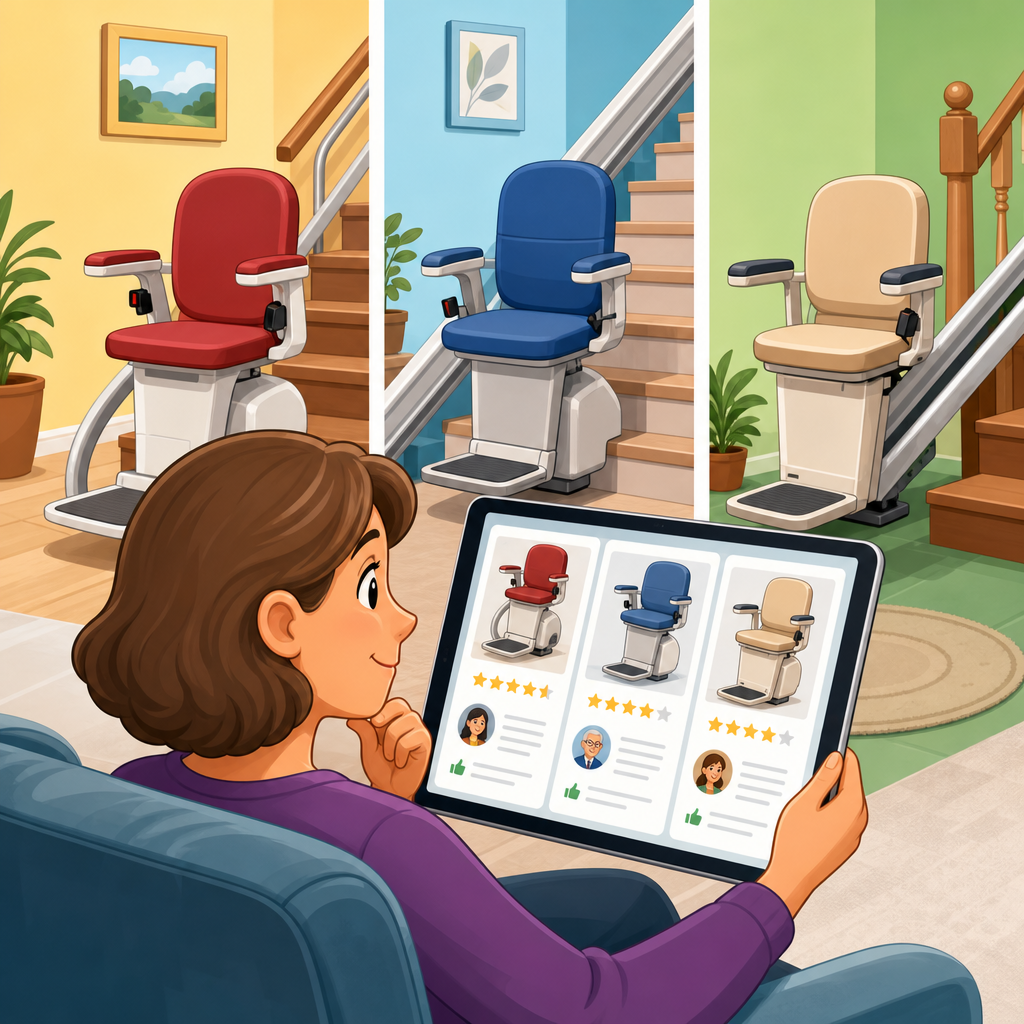
Choosing where to buy a chair lift is almost as important as choosing the lift itself, because the retailer shapes price, installation quality, warranty support, and long-term reliability. In the mobility industry, “chair lift” usually refers to a stair lift: a powered seat that travels along a rail mounted to a staircase, helping users move safely between floors. Some retailers are national brands with factory-trained installers, while others are local dealers that sell multiple manufacturers and provide faster service in a specific region. Reviews are one of the best tools for comparing these chair lift retailers, but only if you know how to read them correctly.
I have worked with families evaluating stair lift quotes, service contracts, and installation timelines, and the biggest mistakes usually happen before purchase. People focus on headline price, then discover that one retailer includes a longer warranty, a maintenance visit, or a custom rail for a curved staircase, while another charges extra for each item. Reviews help surface these differences. They reveal whether installers arrived on time, whether the quote matched the final invoice, and whether the company responded quickly when a battery failed or a seat swivel needed adjustment.
This matters because a chair lift is not a casual online purchase. It is a home accessibility device tied directly to safety, independence, and caregiver stress. A good retailer helps assess staircase dimensions, user weight capacity, seat height, folding clearance, transfer needs, and local code considerations. A weak retailer may oversell features, under-explain limitations, or outsource service to a third party that is hard to reach after installation. When you compare chair lift retailers through reviews, you are really comparing the complete ownership experience: consultation, financing, delivery, installation, maintenance, repairs, and customer support.
For shoppers researching retailers and online stores, this hub explains how to use reviews to compare providers in a practical way. It covers where reviews are most useful, which review patterns actually predict a good experience, how to weigh local and national sellers, and which red flags deserve immediate attention. If you are building a shortlist of chair lift retailers, this guide gives you a framework you can use before requesting quotes and while deciding which store deserves your trust.
What Reviews Can Tell You About Chair Lift Retailers
Reviews are valuable because they capture details that product brochures and sales pages leave out. Most chair lift listings emphasize seat style, speed, weight capacity, and safety sensors. Reviews, by contrast, expose the service layer. They tell you whether a retailer answered questions about straight versus curved rails, whether the in-home assessment felt rushed, and whether the installer explained charging contacts, call/send controls, and folding footrest operation. For older adults and family caregivers, those practical details often matter more than cosmetic options.
When I compare chair lift retailers, I read reviews for seven recurring factors: consultation quality, pricing transparency, installation speed, installer professionalism, product reliability, service responsiveness, and problem resolution. A strong retailer consistently earns praise across all seven. A weaker retailer may still have good reviews for friendliness but poor reviews for scheduling delays or warranty follow-through. That distinction matters. A friendly salesperson cannot compensate for a two-week wait on a repair when a user depends on the lift every day.
Reviews also help separate manufacturer reputation from retailer performance. Brands such as Bruno, Harmar, Stannah, and Acorn are often discussed alongside the local dealer or online store that sold the unit. A negative review may reflect a defective battery, but it may also reflect poor installation, weak setup guidance, or delayed service dispatch. Read carefully to determine whether complaints point to the product platform or the seller’s execution. This is especially important when multiple retailers offer the same manufacturer’s models at different price points.
Where to Find Reliable Reviews and How to Weigh Them
The best comparison starts by checking several review sources, not just the testimonials featured on a retailer’s own website. Google Business Profile reviews are useful for understanding local installation and service patterns. Better Business Bureau profiles can show complaint history and how the company responds. Trustpilot sometimes captures broader online buying experiences, especially for national sellers. Yelp can be relevant in larger metro areas. Social platforms and neighborhood forums may add context, but they tend to be less structured and more anecdotal.
You should weigh review sources differently. Google reviews often provide the largest sample size, making trend analysis easier. BBB complaints are fewer, but they can be more revealing because they usually involve unresolved billing, service, or warranty disputes. Retailer website testimonials are the least objective, though they can still highlight common selling points like same-week installation or technician courtesy. If a retailer has many polished testimonials but only a handful of independent reviews, I treat that as incomplete evidence, not proof of quality.
Volume, recency, and specificity are the three metrics that matter most. A retailer with 300 reviews averaging 4.7 stars usually provides a stronger signal than one with 12 reviews averaging 5.0. Recent reviews matter because ownership, staffing, and service coverage can change quickly. Specific reviews are more credible than generic praise. “Installed a Bruno Elite on my narrow straight staircase in three days and explained the manual lowering feature during a power outage” tells you far more than “Great company, highly recommend.”
| Review Signal | What It Suggests | How to Interpret It |
|---|---|---|
| High review volume | Consistent market presence | More dependable than a tiny sample, especially if ratings stay strong over time |
| Recent detailed reviews | Current service quality | Prioritize comments from the last 12 months, especially those naming products and staff |
| Mixed but answered criticism | Active customer service culture | A few complaints are normal; professional responses often indicate accountability |
| Repeated installation complaints | Operational weakness | Treat patterns about delays, poor fit, or callbacks as serious risk factors |
| Pricing surprise reviews | Weak quote transparency | Ask for itemized written proposals before you compare retailers |
How to Read Review Patterns Instead of Star Ratings Alone
Star ratings are useful, but patterns tell the real story. A chair lift retailer with a 4.4 average can be safer than one with a 4.8 if the first company shows thoughtful responses, steady recent service, and only minor complaints, while the second has suspicious bursts of short five-star reviews and no detail. I look for repetition. If ten reviewers say the technician was punctual, careful, and explained seat belt use and battery charging, that is a meaningful pattern. If five reviewers mention delayed parts and missed callbacks, that is meaningful too.
One-star reviews deserve close reading, not automatic dismissal. In this category, some negative reviews come from understandable frustration during a repair delay or a custom-order curved rail timeline. Custom stair lifts often require manufacturing lead time, and that should not surprise buyers if the retailer explained it upfront. The real issue is whether expectations were set clearly. A complaint about “waiting three weeks for install” means something very different if the quote stated custom fabrication versus “promised next week” and then repeatedly rescheduled.
Watch the language around service after installation. A chair lift can run reliably for years, but batteries, charging strips, swivel seat locks, footrest sensors, and remote controls can require adjustment. Reviews that praise post-install support are powerful because they reflect the stage most retailers advertise least. If people say the company returned calls quickly, stocked parts locally, or sent a technician the same day after a stoppage, that is evidence of a mature service operation. In accessibility equipment, service depth is a competitive advantage.
Comparing Local Dealers, National Retailers, and Online Stores
Local chair lift dealers often perform well in reviews because they control installation and service in a smaller geographic area. Their teams may know regional housing stock, common staircase layouts, and permit expectations. A local dealer selling Bruno or Harmar products may offer highly personalized evaluations and faster repair visits. The limitation is selection and scale. Some local retailers carry only one or two brands, and their financing options or weekend service coverage may be narrower than larger competitors.
National retailers usually benefit from broader inventory, standardized sales processes, and stronger brand recognition. Reviews often mention smoother scheduling systems, longer service hours, and access to straight-lift inventory for quicker installation. However, national scale can cut both ways. In some markets, service may still depend on subcontractors or independent dealers. That is why location-specific reviews matter more than corporate averages. A company can have an excellent national reputation and uneven local execution, especially in rural service territories.
Online stores occupy a different category. Some primarily generate leads and refer buyers to local installers. Others sell reconditioned or do-it-yourself units, though DIY stair lift installation is rarely the best choice for safety-critical use. Reviews of online sellers should be read with extra caution because the transaction may separate product purchase from installation responsibility. If the seller does not provide in-home assessment, rail measurement verification, and local service support, a lower price may not represent better value. For most households, the best retailer is the one that can both supply and support the lift locally.
Key Review Topics That Should Influence Your Buying Decision
Not every review topic deserves equal weight. For chair lift retailers, I prioritize safety and support over minor customer-service niceties. The most decision-worthy review topics are installation quality, responsiveness to breakdowns, clarity of quote, ability to handle your staircase type, and honesty about fit limitations. A curved staircase, narrow tread depth, hinged rail requirement near a doorway, or higher user weight capacity all increase complexity. Reviews should show whether the retailer handles those cases routinely or only occasionally.
Installation quality matters because even premium equipment performs poorly when mounted or calibrated badly. Reviews mentioning secure rail fit, clean workmanship, careful testing, and patient user training are strong positive indicators. I also look for comments about whether the team respected the home, protected flooring, and removed packaging. That sounds minor, but it reflects process discipline. Companies that execute neatly during installation often execute well in measurement, documentation, and follow-up too.
Support responsiveness is the second major factor. Ask whether reviews mention weekends, emergency calls, or part availability. Many stair lifts use battery power with household charging, so a lift can continue briefly during an outage, but batteries degrade over time and need replacement. If the retailer cannot service its installed base quickly, the practical value of the product drops. Good reviews often reference exact response times: “technician arrived next morning” is stronger than “service was good.” Specifics reduce ambiguity and help compare retailers fairly.
Questions Reviews Should Help You Answer Before Requesting Quotes
Before contacting chair lift retailers, use reviews to answer a short set of practical questions. Can this company install on your staircase type? Does it explain options clearly? Does it honor quoted pricing? Does it provide timely service after the sale? Does it have enough local presence to support repairs? Reviews will not answer every technical question, but they should reduce uncertainty. If they do not, the retailer may lack the track record needed for a high-confidence purchase.
For example, if you are comparing retailers for a straight stair lift, reviews should tell you whether same-week installation is realistic in your area. If you need a curved model, reviews should reveal how well the retailer manages custom measurement, fabrication timelines, and communication during the wait. If your budget is tight, look for financing reviews and comments about rental programs, reconditioned units, or buyback policies. Retailers that explain these options well tend to earn more nuanced praise than those pushing only a single full-price purchase path.
This hub page is most useful when paired with deeper buying guides on installation, warranties, financing, used chair lifts, and brand-by-brand product reviews. As you continue researching retailers and online stores, build a shortlist based on review patterns, then verify everything in writing during the quote process. Reviews should guide your questions, not replace them.
Using reviews to compare chair lift retailers works because reviews expose the real ownership experience, not just the sales pitch. The best retailers consistently show strong patterns in consultation quality, transparent pricing, careful installation, and dependable service after the sale. They earn detailed recent reviews, respond professionally to criticism, and demonstrate local support capacity. The weakest retailers usually reveal themselves through repeated complaints about scheduling, surprise charges, poor communication, or slow repairs.
For most buyers, the smartest approach is simple: compare multiple review sources, focus on recurring themes, separate manufacturer issues from retailer performance, and weigh service depth as heavily as price. Local dealers, national retailers, and online stores each have strengths, but the right choice is the seller that can competently assess your staircase, install the correct lift, and support it over time. In mobility equipment, value is measured in safe daily use, not just purchase cost.
If you are evaluating chair lift retailers now, start building a comparison list today. Read recent reviews, note the patterns that matter, and use those findings to request itemized quotes from the most credible providers. That process will help you choose a retailer with confidence and make the rest of your chair lift buying journey easier.
Frequently Asked Questions
How can reviews help me compare chair lift retailers, not just chair lift brands?
Reviews are especially useful because they often reveal the parts of the buying experience that product brochures leave out. When you compare chair lift retailers, you are not only comparing the stair lift models they sell, but also the quality of the consultation, the honesty of the quote, the speed of installation, the professionalism of the technicians, and the support you receive after the sale. A retailer may offer an excellent stair lift brand, but if customers repeatedly mention missed appointments, poor communication, or slow service calls, that is important information. In many cases, the retailer has a direct impact on whether the lift is installed correctly, fits the staircase well, and continues working reliably over time.
Strong reviews usually mention specific experiences, such as how clearly the sales representative explained options, whether the installer arrived on time, how clean the job site was left, and how responsive the company was when questions came up later. Those details matter because a stair lift is a mobility and safety product, not a casual purchase. Look for patterns across many reviews rather than focusing on one extremely positive or negative comment. If dozens of customers praise fast service and respectful installers, that is meaningful. If multiple people complain about warranty confusion or poor follow-up, that should be taken seriously. Reviews are most helpful when they show how the retailer performs before, during, and after installation.
What should I look for in chair lift retailer reviews to know if a company is trustworthy?
The most useful reviews go beyond simple star ratings and describe the full customer journey. Trustworthy retailers are often praised for clear pricing, realistic timelines, patient communication, and professional installation. Look for comments about whether the company explained the difference between straight and curved stair lifts, discussed safety features, measured the staircase carefully, and recommended a solution that fit the user’s mobility needs instead of pushing the most expensive option. Good retailers tend to earn reviews that mention transparency and education, not pressure tactics.
You should also pay close attention to how reviewers describe service after installation. A trustworthy retailer does not disappear once the lift is in place. Reviews that mention prompt maintenance visits, helpful troubleshooting, and fair warranty support are a strong sign of reliability. It is also wise to notice whether the company responds professionally to negative reviews. No business has a perfect record, but a dependable retailer usually addresses complaints calmly, offers solutions, and shows concern for customer safety and satisfaction. Reviews that repeatedly reference dependable communication, knowledgeable staff, and reliable service are often more valuable than reviews focused only on price.
Are national chair lift retailers better than local dealers when you compare reviews?
Not necessarily. Reviews can show strengths and weaknesses on both sides. National chair lift retailers may have advantages such as larger service networks, standardized training, established warranty systems, and access to factory-backed parts and technicians. In reviews, this can show up as consistent installation quality, easier scheduling, and stronger long-term support. For some buyers, especially those who value brand recognition and broad service coverage, these are major benefits. A large retailer may also have more experience handling a wide range of staircase layouts and mobility needs.
Local dealers, however, can score very well in reviews for reasons that matter just as much. Customers often praise smaller retailers for personalized attention, faster in-home visits, better familiarity with the local area, and more flexibility in product recommendations. Many local dealers carry multiple manufacturers, which can be an advantage if you want choices rather than being limited to one brand. Reviews may also reveal that a local company offers more hands-on support and more direct communication with the same team throughout the process. The key is not to assume one type of retailer is automatically better. Instead, compare review themes such as installation quality, responsiveness, pricing clarity, and service reliability. A highly rated local dealer may be a better fit than a national chain in one market, while the opposite may be true in another.
Can reviews tell me whether a chair lift retailer offers good installation and warranty support?
Yes, reviews are one of the best ways to evaluate these areas because installation and warranty service are difficult to judge from marketing materials alone. A stair lift depends on accurate measurement, proper rail placement, safe mounting, and thorough testing. Reviews often reveal whether installers were careful, skilled, and respectful of the home. Look for comments about the installation team explaining how the lift works, testing the controls, reviewing safety features, and making sure the user felt comfortable before leaving. Those details suggest the retailer treats installation as a critical safety service rather than a quick delivery job.
Warranty support also tends to show up clearly in reviews, especially after customers have owned the lift for several months or years. Helpful reviews may mention how quickly the company responded to repairs, whether replacement parts were available, and whether the customer had trouble getting service approved under warranty. This matters because even a high-quality stair lift may eventually need maintenance, battery replacement, or adjustments. If reviews repeatedly say that service calls were delayed, communication was poor, or warranty terms were confusing, that is a warning sign. On the other hand, if customers consistently report that the retailer stood behind the product and resolved issues quickly, that is a very positive indicator of long-term value.
What is the best way to use reviews along with quotes and consultations when choosing a chair lift retailer?
Reviews work best as one part of a broader comparison process. Start by reading reviews to create a shortlist of retailers with strong reputations for service, installation quality, and support. Then schedule consultations and request written quotes from at least two or three companies. During each consultation, pay attention to whether the representative listens carefully, measures the staircase thoroughly, explains available stair lift options, and answers questions in a clear, pressure-free way. Reviews can help you verify whether the experience you are having matches what past customers have described.
When comparing quotes, do not focus only on the lowest price. Use reviews to understand what may be included behind the number, such as technician experience, service response time, warranty administration, maintenance availability, and product selection. A retailer with slightly higher pricing may still offer better overall value if reviews show excellent installation practices and dependable long-term support. It is also smart to ask the retailer directly about any recurring issues you noticed in reviews. Their response can tell you a lot about transparency and accountability. In the end, the best choice is usually the retailer that combines solid customer feedback, clear pricing, a well-explained recommendation, and a proven record of standing behind the stair lifts they install.