


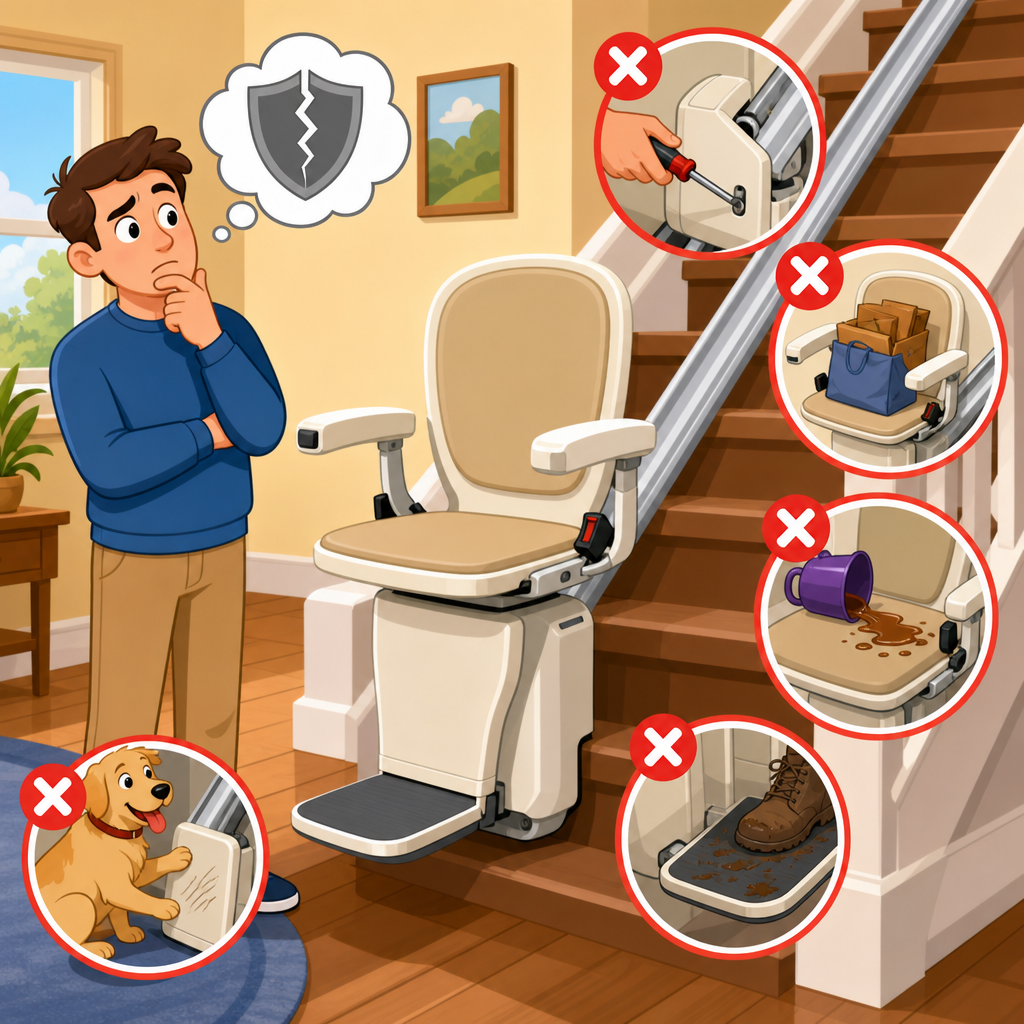
A chair lift warranty can be voided by improper installation, unauthorized repairs, poor maintenance, electrical misuse, overloads, environmental exposure, and failing to follow the manufacturer’s written policy. For buyers comparing stair lifts, platform lifts, and power recline chairs, warranty terms are not small print; they determine who pays when motors fail, batteries degrade, rails loosen, or electronics stop working. I have reviewed lift warranties, dealer agreements, and service claims across multiple brands, and the same pattern appears repeatedly: most denied claims are tied to preventable mistakes rather than rare factory defects. Understanding what voids coverage helps you protect your investment, choose a reputable dealer, and avoid expensive surprises after installation.
In practical terms, a warranty is the manufacturer’s promise to repair or replace covered components for a defined period, usually with exclusions for labor, batteries, wear items, cosmetic damage, commercial use, or misuse. Return policies are different. A return policy governs whether the product can be sent back, under what conditions, and who pays restocking, removal, or freight charges. Because many chair lifts are customized to a staircase or mobility need, returns are often limited, while warranty coverage remains the main long-term protection. Buyers need to read both documents together. The strongest value is not a long headline warranty alone, but a clear policy supported by trained installers, documented maintenance, and responsive local service.
This matters because chair lifts are safety devices, not ordinary furniture. A stair lift draws on batteries, charging contacts, limit switches, seat interlocks, gear racks, and wall-mounted or track-mounted hardware. A recliner lift chair adds actuators, transformers, hand controls, and load-bearing frames. If one part fails, the result can be inconvenience at best and injury risk at worst. Manufacturers therefore write detailed warranty conditions to control preventable damage and reduce liability. For consumers, the best approach is simple: know the common exclusions before purchase, keep records after installation, and use only approved service practices throughout ownership. That is how you preserve coverage and get full value from a chair lift warranty.
Improper Installation Is One of the Fastest Ways to Void Coverage
Improper installation is the most common warranty killer because it affects safety, performance, and fault diagnosis. Most manufacturers require installation by an authorized dealer or certified technician using the specified rail, fasteners, power supply, and setup procedure. If a unit is installed by a handyman, a general contractor, or a family member without approval, the manufacturer may deny later claims on motors, controls, batteries, or rails even if the failure appears unrelated. Their reasoning is straightforward: if the lift was not installed to specification, they cannot verify whether the defect came from manufacturing or from installation error.
On stair lifts, I often see issues begin with rail alignment, bracket spacing, charging point placement, or inadequate power checks. A slightly twisted rail can increase drivetrain strain. Poorly secured footrest or seat assemblies can trigger safety switch faults. Plugging the charger into a switched outlet or extension cord may cause chronic undercharging, which then damages the batteries. Manufacturers such as Bruno, Harmar, Stannah, and Handicare all provide installation requirements for dealers because these details directly affect warranty eligibility. If a claim file shows an unapproved installation, that alone can be grounds for rejection.
The same principle applies to lift recliners. If the transformer is substituted, the chair is assembled incorrectly, or the unit is used before transit bolts or packaging restraints are handled according to instructions, coverage can be challenged. Buyers should ask one direct question before purchase: “Who installs this product, and does the manufacturer recognize that installer?” Get the answer in writing on the sales order. It is also wise to keep the installation checklist, serial number, and commissioning date. These documents matter if you need warranty service later.
Unauthorized Repairs, Third-Party Parts, and DIY Modifications Create Major Risk
Many owners unintentionally void a chair lift warranty by trying to save time or money with unauthorized repairs. When a hand control stops responding or the chair begins beeping, it is tempting to call a local electrician, replace a fuse with a mismatched part, lubricate components with whatever is on hand, or order a generic battery online. Those choices can convert a small covered problem into a denied claim. Manufacturers typically require service by authorized technicians because they need traceable repairs, approved parts, and documented diagnostics.
Third-party parts are a frequent issue. Generic batteries may have the right voltage but the wrong terminal type, reserve capacity, or charging profile. Aftermarket remote controls can interfere with control boards. Non-approved seat components, rails, transformers, and harnesses can change operating loads or safety behavior. Once those parts are installed, the manufacturer may refuse to cover not only the replacement part, but any connected damage. In my experience, this is especially common after owners buy discontinued or secondhand lifts and try to keep them running with mixed components from online marketplaces.
DIY modifications also raise liability concerns. Drilling extra holes, trimming a rail, bypassing a seat swivel interlock, removing obstruction sensors, or altering the footrest to fit a tight staircase may seem practical, but these changes affect certified operating conditions. A manufacturer cannot stand behind a product that has been structurally or electrically modified outside its design. The safe rule is simple: if a repair or alteration is not explicitly approved in writing, assume it could void the warranty. Call the dealer first, document the symptoms, and let an authorized technician determine the fix.
Missed Maintenance and Poor Documentation Lead to Denied Claims
Some chair lift warranties do not require an annual maintenance contract, but many expect reasonable upkeep and evidence that the unit has been cared for according to the owner’s manual. When tracks are dirty, charging strips are corroded, moving joints are neglected, or batteries are allowed to remain discharged for long periods, manufacturers may classify the resulting failure as lack of maintenance rather than a defect. That distinction is important because warranties cover defects in materials or workmanship, not deterioration caused by owner neglect.
Documentation matters more than buyers expect. If you report repeated shutdowns after two years of use, the service department may ask for installation records, prior service invoices, and basic maintenance history. Without records, it is harder to prove that the product was used correctly and inspected when needed. This is especially relevant for outdoor stair lifts, where moisture, debris, UV exposure, and temperature swings increase wear. An owner who regularly cleans the rail, keeps the cover on, and replaces batteries at the recommended interval has a much stronger claim position than one who cannot show any upkeep at all.
For households, the best protection is a simple paper or digital file with the purchase invoice, warranty certificate, serial number photos, installation date, and all service receipts. If the dealer offers annual inspections, ask for a signed checklist. This level of documentation may feel excessive, but it pays off when coverage questions arise years later.
| Issue | How It Voids or Limits Coverage | Best Prevention |
|---|---|---|
| Unauthorized installation | Manufacturer cannot verify setup meets required specifications | Use an approved dealer and keep installation records |
| Third-party parts | Unapproved components can damage electronics or change operating loads | Install only manufacturer-approved replacements |
| Skipped maintenance | Failures may be classified as neglect instead of defects | Follow the manual and save service invoices |
| Power misuse | Surges, extension cords, or wrong voltage can damage chargers and boards | Use the specified outlet and surge protection if approved |
| Overloading or misuse | Exceeding rated capacity stresses motors, frames, and drive systems | Stay within weight limits and intended use |
Electrical Misuse, Battery Neglect, and Environmental Exposure Commonly Void Warranty
Electrical problems sit behind a large share of denied claims. Chair lifts are designed for specific voltage, charging behavior, and standby conditions. Using extension cords, ungrounded outlets, overloaded circuits, or off-brand transformers can damage chargers and control boards. After a power surge, some owners assume any resulting failure is a warranty matter, but surge damage is often excluded because it is external to the product. In those cases, homeowners insurance may be the more relevant path, not the product warranty.
Batteries deserve special attention because they are often covered for a shorter period than major components. Stair lifts usually rely on sealed batteries that charge continuously when parked correctly. If the chair is left away from its charge point, unplugged for long periods, or stored inactive without following the manual, the batteries sulfate and lose capacity. Manufacturers generally treat that as consumable wear or improper use. Lift recliners have similar issues when transformers are unplugged repeatedly or backup batteries are left depleted until they leak or fail.
Environmental exposure is another major limitation. Indoor products used in garages, porches, barns, or damp basements may be considered misapplied if the manual specifies climate-controlled indoor use. Outdoor stair lifts are built differently, but even those models require covers, routine cleaning, and protection from standing water, blowing salt, and storm debris. I have seen rails pit from coastal corrosion and seat vinyl crack from direct sun, neither of which is typically covered as a manufacturing defect. Buyers should match the model to the environment, ask about IP ratings or weather-resistance details, and follow storage guidance precisely.
Overloading, Misuse, Transfers, and Commercial Use Often Fall Outside Standard Terms
Every chair lift has a rated capacity, duty cycle, and intended user profile. Exceeding the weight limit, carrying cargo on the seat, transporting more than one person, or using the lift as a moving support during transfers can stress the frame, carriage, gearbox, and seat post. If the product is rated for 300 pounds and regularly used above that threshold, the warranty may be voided even before a visible failure appears. Service technicians can often spot overload patterns through worn bushings, bent brackets, motor strain, or error histories.
Misuse also includes rough handling. Dropping into the seat, forcing swivel mechanisms, striking rail ends with mobility equipment, or allowing children to play on the lift can all produce damage excluded as abuse. This is especially relevant in multigenerational homes where the product is used by more than one person. Manufacturers expect normal residential use by a user who fits the product’s design assumptions. They do not assume the lift will serve as a toy, freight carrier, or improvised transfer device.
Commercial or institutional use frequently changes the warranty entirely. A lift installed in a church, clinic, office, apartment common area, or short-term rental may be subject to shorter coverage or separate commercial terms because usage frequency is higher and liability exposure is different. Buyers should never assume a residential warranty applies automatically in a business setting. If your use case is anything other than private residential occupancy, get written confirmation before purchase.
How Warranty and Return Policies Work Together When You Buy
Buyers often focus on the length of warranty coverage and overlook return terms, but both shape your real protection. Chair lifts are commonly built to order, cut to staircase measurements, or configured with specific seats, hinges, call stations, and power options. Because of that customization, returns may be restricted once fabrication starts or once installation is complete. A dealer may allow cancellation before the rail is ordered, then impose restocking, removal, or freight charges afterward. That does not make the policy unfair; it reflects the reality that customized mobility equipment has limited resale value.
The most useful questions to ask before signing are direct. What parts are covered, and for how long? Is labor included, or just components? Are batteries and remote controls treated as wear items? Who pays travel charges for service calls? What happens if the product is noisy or uncomfortable but still operating within specification? Can the order be canceled if the staircase measurement changes or the user’s medical needs shift before installation? These answers separate a consumer-friendly dealer from one that relies on vague promises.
This hub topic connects naturally to deeper buying-guide questions such as transferable warranties on used stair lifts, in-home trial periods for lift recliners, battery warranty limits, and the difference between dealer labor guarantees and manufacturer parts coverage. As a rule, the best dealers explain those distinctions clearly before purchase and put every promise in writing. If the terms sound verbal, flexible, or informal, assume they may be difficult to enforce later.
Best Practices to Protect Your Coverage From Day One
Protecting a chair lift warranty is mostly about disciplined ownership. Choose a manufacturer with an established dealer network, verify that installation is authorized, register the product if required, and save every document. Use the exact power setup specified in the manual. Keep charging contacts clean, observe weight limits, and schedule inspections at sensible intervals, especially for outdoor units or high-use households. When something sounds unusual or starts intermittently failing, report it early rather than waiting for a complete breakdown. Small problems documented early are easier to resolve under warranty than major failures discovered after months of neglect.
Just as important, read the exclusions line by line. Most denied claims are predictable once you know the policy language. Damage from accidents, abuse, acts of nature, unauthorized parts, cosmetic wear, normal battery depletion, and installation by unapproved parties are standard exclusion areas. That does not mean warranties lack value. It means they work best when matched with proper buying decisions and routine care. If you are comparing products now, use warranty and return policies as decision tools, not afterthoughts. Ask for the actual documents, compare component coverage and labor terms, and choose the provider whose policy is clear, specific, and realistic for how the lift will be used. That is the simplest way to avoid voiding your chair lift warranty and to buy with confidence.
Frequently Asked Questions
What are the most common things that can void a chair lift warranty?
The most common warranty-voiding issues are improper installation, unauthorized repairs, neglected maintenance, electrical misuse, overloading the unit, environmental damage, and failure to follow the manufacturer’s written terms. In practice, that means a warranty can be denied if the lift was installed by someone who was not approved by the manufacturer, if parts were replaced with non-approved components, or if a homeowner or handyman tried to “fix” a motor, battery, charger, rail, or control board without authorization. Manufacturers also routinely exclude damage caused by lack of routine service, such as rails not being kept properly aligned, batteries being allowed to degrade from poor charging habits, or moving parts wearing prematurely because recommended inspections were skipped.
Another major problem is misuse. If the chair lift is used beyond its rated weight capacity, exposed to weather when it is not designed for outdoor use, connected to the wrong power setup, or operated in a way the owner’s manual specifically warns against, the company may classify the failure as preventable damage rather than a defect in materials or workmanship. This is why warranty language matters so much. A warranty is not a blanket promise to cover every breakdown. It is a conditional agreement, and those conditions often decide whether the manufacturer pays for a failed component or the owner does.
Can improper installation really void a chair lift warranty?
Yes, and this is one of the clearest and most common reasons for a denied claim. Chair lifts, stair lifts, platform lifts, and power recline lift chairs all depend on correct assembly, secure mounting, proper rail alignment, calibrated safety sensors, and compliant electrical connections. If installation is done incorrectly, it can create issues that look like product defects but are actually caused by setup errors. A motor strain issue, rail looseness, battery charging problem, or intermittent electronic fault may trace back to the original installation rather than the factory-built equipment itself.
Many manufacturers require installation by an authorized dealer or certified technician. If the unit is purchased online, installed by an unapproved contractor, relocated by the homeowner, or altered after installation, the manufacturer may argue that it can no longer guarantee how the product was assembled or whether it meets specifications. Even when a failure happens months later, the warranty administrator may inspect the unit and deny coverage if they find noncompliant fasteners, improper wiring, unsupported rail sections, missing safety components, or installation in a location the product was not rated for. Before buying, it is wise to ask whether professional installation is mandatory, whether self-installation is prohibited, and whether the dealer’s labor warranty is separate from the manufacturer’s parts warranty.
Do unauthorized repairs or aftermarket parts affect warranty coverage?
Absolutely. Unauthorized repairs are a major red flag because manufacturers want control over how critical lift components are serviced. If someone other than an approved technician opens the drive system, replaces wiring, swaps batteries with non-specified models, installs a third-party charger, modifies controls, or uses generic parts on the rail or seat assembly, the manufacturer may conclude that the original condition of the lift has been altered. At that point, it becomes much harder for them to determine whether a later failure came from a factory defect or from the repair itself.
Aftermarket parts can create the same problem. A battery that does not meet the manufacturer’s voltage and charging profile, a replacement remote that interferes with the system, or a non-approved seat or armrest assembly can cause stress on the electronics and mechanical systems. Even if the replacement part seems equivalent, the warranty may require original equipment manufacturer parts or specifically approved substitutes. In many warranty disputes, the issue is not just whether the unauthorized repair caused the exact failure, but whether the modification changed the operating conditions of the equipment at all. The safest approach is to use authorized service providers, keep all invoices, and get written approval before any non-routine repair is performed.
How does poor maintenance or misuse lead to a denied chair lift warranty claim?
Warranties generally cover defects, not neglect. That distinction matters. If a chair lift fails because a gearbox was defective from the factory, that is usually a warranty matter. If it fails because the unit was never serviced, the rail was left dirty, the charging points were corroded, the batteries were repeatedly allowed to discharge fully, or routine inspections were ignored, the manufacturer may classify the problem as owner-caused. Some warranties specifically require periodic maintenance by a qualified technician, while others strongly recommend it and reserve the right to deny claims where obvious neglect is present.
Misuse is equally important. Exceeding weight limits, allowing children to play on the equipment, using an indoor model in a garage or exterior stairwell with moisture exposure, forcing the lift when obstructed, or operating it during improper power conditions can all damage the system. Manufacturers often document these restrictions in the owner’s manual and warranty booklet. If a service inspection shows bent components, water intrusion, overloaded motors, impact damage, or signs that the lift was used outside normal residential conditions, coverage can be reduced or denied. Good records help here. Maintenance logs, service receipts, and proof that the owner followed the care instructions can make a major difference when a claim is reviewed.
What should buyers do to protect their chair lift warranty before and after purchase?
Start by reading the actual written warranty, not just the sales summary. Buyers should confirm what is covered, for how long, and under what conditions. Ask whether the warranty covers parts only or parts and labor, whether batteries are prorated or excluded after a shorter period, whether service calls are extra, and whether the rail, motor, electronics, upholstery, and charger have different coverage terms. It is also important to ask who honors the warranty: the manufacturer, the local dealer, or both. Many problems arise when owners assume one party covers labor while the other only covers replacement parts.
After purchase, protect the warranty by following the owner’s manual closely. Use the lift only within its rated capacity, keep it in the environment it was designed for, schedule recommended maintenance, and avoid any repair or modification that has not been approved in writing. Save your proof of purchase, installation documents, serial number information, maintenance invoices, and all service records. If something goes wrong, report it promptly rather than continuing to use a malfunctioning unit. Delaying service can turn a small issue into larger damage that may no longer be covered. For anyone comparing stair lifts, platform lifts, and power recline chairs, this is where warranty terms become a real cost issue: when motors fail, batteries weaken, rails loosen, or electronics stop working, the written policy often determines whether the repair is fully covered, partially covered, or entirely the owner’s responsibility.