


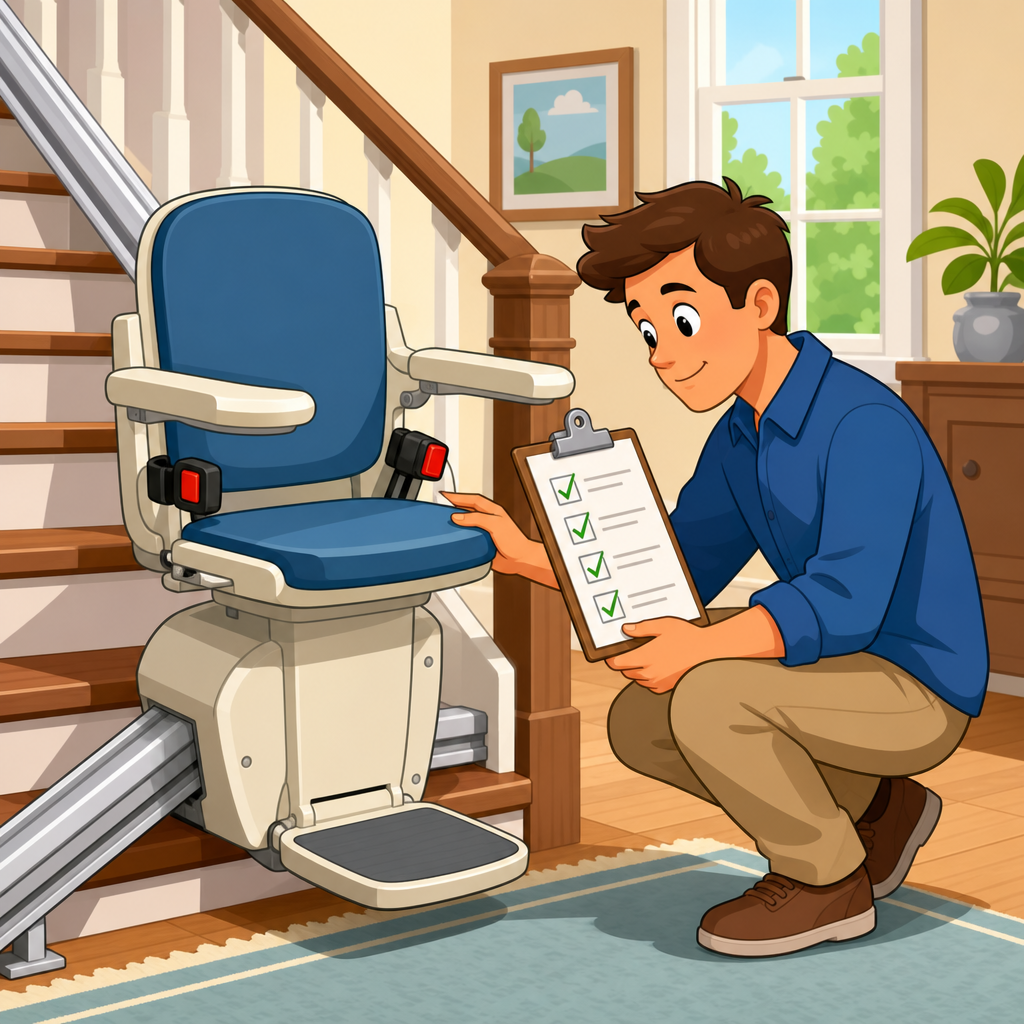
Buying a used chair lift can lower mobility costs significantly, but only if you evaluate the unit, the staircase, the seller, and the total installation plan before money changes hands. A chair lift is a motorized seat that travels along a rail fixed to the stairs, helping a person move safely between levels without climbing steps. In the used market, terms matter. A used chair lift is typically sold as-is after prior ownership. A refurbished chair lift has usually been inspected, repaired, cleaned, and tested by a dealer or technician. A reconditioned chair lift may overlap with refurbished, but the quality standard varies widely between sellers, so buyers should ask exactly what work was done.
I have seen families focus only on the sticker price and overlook the details that determine whether a secondhand lift is practical, safe, and supportable. That is where expensive mistakes happen. A bargain rail that does not fit the staircase, a battery nearing end of life, or a discontinued model without parts can erase any savings quickly. By contrast, a properly matched refurbished stair lift from a reputable dealer can deliver years of reliable service at a substantially lower cost than a new unit. For many households balancing accessibility needs with tight budgets, that difference is decisive.
This guide explains what to check before buying a used chair lift, with special attention to used and refurbished chair lifts as a category. It covers straight and curved staircases, essential safety features, installation requirements, warranty language, hidden costs, and the questions that reveal whether a seller knows the product. It also serves as a hub for the broader topic, because every related decision branches from the same core issue: does the lift fit the user, the home, and the support network available after installation. If you understand those three factors, you can compare options intelligently and avoid buying a machine that looks affordable online but fails where it counts most.
Start With Staircase Type, Dimensions, and Fit
The first check is not the brand or the price. It is whether the chair lift is compatible with the staircase. Straight stair lifts run on a simple rail for stairs without turns, intermediate landings, or significant changes in angle. Curved stair lifts are built for stairs with bends, spirals, split landings, or custom geometry. In practice, most used inventory is straight, because straight rails can sometimes be trimmed or replaced more easily, while curved rails are usually custom fabricated for one staircase and rarely transfer cleanly to another home.
Measure the staircase before discussing any used model. A dealer should confirm overall run length, width, angle, obstructions, top and bottom landing clearance, and whether doors open into the stair path. Most manufacturers recommend a minimum stair width, often around 28 to 30 inches depending on model and seat style, though some compact units fit tighter spaces. You also need enough room at the upper and lower landings for safe transfer on and off the seat. I always tell buyers that rail length alone is not enough; a lift that technically fits the steps can still create a dangerous dismount if the landing is cramped.
Ask whether the listing includes the rail, charging points, brackets, footrest, seat belt, call-send controls, and any hinged rail section. Many low online prices refer only to the chair carriage or an incomplete package. If the staircase passes through a doorway or a hall at the bottom, a manual or powered hinge may be necessary to prevent the rail from blocking traffic. For outdoor stairs, only units rated for outdoor use should be considered. An indoor used chair lift installed outside will fail prematurely because weatherproofing, cover design, corrosion protection, and electrical sealing are different.
Inspect Mechanical Condition, Safety Systems, and Wear Points
Once fit is confirmed, inspect the machine itself. The key components are the rail, carriage, motor, gearbox or transmission, batteries, charging contacts, seat swivel mechanism, footrest, armrests, and safety sensors. A used chair lift should travel smoothly without jolting, grinding, or hesitation. Excessive vibration can indicate worn rollers, alignment issues, or drivetrain wear. Listen for changes in motor pitch under load. A healthy unit sounds consistent; struggling motors often surge audibly on starts or inclines.
Safety features deserve close attention because they are nonnegotiable. Most modern stair lifts include an overspeed governor, obstruction sensors on the footrest and carriage, a seat belt, limit switches, and a swivel seat lock at the top landing. Test every one. The footrest and carriage edges should stop the lift if they contact an object on the stairs. The swivel seat should lock securely so a user can transfer facing away from the staircase. Call-send controls should work from both landings. If the seller cannot demonstrate those functions, treat that as a serious warning sign, not a minor inconvenience.
Battery condition is one of the most common hidden costs. Many units use sealed batteries that charge continuously when parked at designated points. Ask the battery age and replacement history. A chair lift with weak batteries may still operate during a brief demonstration but fail under repeated use or during a power outage, when battery backup matters most. Upholstery condition matters less than drivetrain condition, but torn seats, cracked armrests, and loose footrests can reveal heavy wear or poor storage. Check the data plate for model number, serial number, manufacturing date, and electrical specifications. Without that information, parts sourcing becomes harder and support conversations become guesswork.
Verify Refurbishment Standards, Parts Availability, and Service Support
Not all refurbished chair lifts are refurbished to the same standard. A trustworthy dealer can tell you whether the lift was merely cleaned and reinstalled or whether it received a documented reconditioning process. In my experience, the best refurbishing workflow includes rail inspection, carriage testing, battery replacement if needed, gear and roller inspection, charging system verification, safety sensor testing, seat and footrest checks, and a final load test after installation. Some dealers also replace cosmetic parts and update remote controls. Ask for the checklist in writing.
Brand support matters because stair lifts are not generic appliances. Major names in the North American and UK markets include Bruno, Harmar, Stannah, Handicare, Acorn, and Access BDD. Each brand has different parts pipelines, rail systems, diagnostic methods, and technician familiarity. A discontinued model can still be a good buy if parts remain available and a local dealer services it regularly. Without that support, even a small failure can leave the user stranded. I have seen buyers save a few hundred dollars on an old model only to spend months searching for a control board or charger assembly.
Before purchasing, confirm who will install, maintain, and repair the lift. Many manufacturers and dealers will not service units bought privately, especially if installation was not performed by an authorized technician. That policy exists for good reason. Rail alignment, bracket spacing, charging contact placement, and final limit settings affect safety directly. If a seller says any handyman can install it, that is usually a sign to slow down. Ask whether the dealer offers ongoing service contracts, emergency callout coverage, and preventive maintenance visits. Support after installation is part of the product, especially for an elderly or medically vulnerable user.
Compare Total Cost, Not Just the Asking Price
The most useful buying question is simple: what will this used chair lift cost from purchase through dependable operation in my home? Buyers often compare a private-party listing against a dealer quote without accounting for transport, new rail sections, batteries, installation, permits where applicable, service calls, and removal of an old lift. A used lift can be economical, but only when the total package is calculated honestly.
| Cost Factor | What to Check | Why It Changes Value |
|---|---|---|
| Base unit price | Does it include chair, rail, remotes, charger, and brackets? | Incomplete packages often require expensive add-ons. |
| Installation | Will a certified technician install and test it? | Professional setup affects safety, warranty, and service eligibility. |
| Batteries | Are batteries new, tested, or near replacement age? | Battery replacement is a common immediate expense. |
| Rail compatibility | Can the existing rail be reused or must it be replaced? | Straight rails are easier; curved rails are often unusable elsewhere. |
| Warranty | What parts and labor are covered, and for how long? | Short or parts-only coverage shifts risk to the buyer. |
| Service support | Is local repair available for this model? | A cheap lift without service access is a poor value. |
Ask for an itemized quote that separates product cost, site survey, installation, refurbishment work, batteries, warranty, and future maintenance. If you are comparing a used stair lift with a new one, compare expected ownership cost over three to five years, not just day-one price. New lifts usually carry stronger warranties and current parts support. Used lifts usually win on entry cost. The right choice depends on how long the lift is needed, whether the user’s mobility condition is stable, and how critical uptime is in that household.
Evaluate the Seller, Documentation, and Legal Details
Who sells the lift is often as important as what is being sold. Dealers specializing in accessibility equipment usually inspect, reinstall, and warranty used inventory more carefully than general online marketplaces. Private sellers may be entirely honest, but they often do not know the service history, missing accessories, software revisions, or battery age. If you buy privately, ask why the lift was removed, who removed it, how it was stored, and whether it was working on the day of removal. A unit left in a garage for two winters may have unseen electrical and battery deterioration.
Documentation should include the exact model number, serial number, owner’s manual, installation manual if available, service records, and written warranty terms. If the lift was refurbished, ask for the service report. If the seller says the chair lift is “universal,” be cautious; that usually signals inexperience. Stair lifts are highly model-specific, especially regarding rails and controls. Confirm payment terms, return rights, and whether installation issues create a refund or exchange option. For dealer sales, read the cancellation policy and any restocking fees.
It is also smart to discuss future removal or buyback. Some dealers offer repurchase, trade-in, or rental conversion options, which can matter if the lift is needed temporarily after surgery or during rehabilitation. If Medicare coverage is part of your research, understand that Original Medicare generally does not cover stair lifts as durable medical equipment for home use, although some Medicare Advantage plans or local assistance programs may offer limited help. Because reimbursement is inconsistent, buyers should budget as though the purchase is out of pocket unless they have written confirmation otherwise.
Match the Lift to the User’s Mobility, Weight, and Daily Routine
A used chair lift is only suitable if it matches the person who will rely on it every day. Start with capacity. Standard models often support around 250 to 350 pounds, while heavy-duty stair lifts may handle 400 pounds or more and require wider stairs. Seat height, armrest spacing, footrest size, and ease of swivel all affect safe transfers. For users with limited trunk control, arthritis, Parkinson’s symptoms, or one-sided weakness after stroke, small design differences can determine whether the lift feels secure or unusable.
Think through how the person gets on and off at each landing. If they use a walker, cane, or caregiver assistance, there must be enough landing space for stable positioning. If the user tires easily, remote call-send controls are essential so the lift can be brought to the needed floor without someone carrying it manually. Seat style matters too. Perch seats can help users who struggle to bend their knees fully, while powered swivel or powered footrest features reduce strain for people with limited flexibility. These are not luxury options when they solve a transfer risk.
Finally, consider frequency of use and household dynamics. A lift used ten times per day by one person places different demands on batteries, service intervals, and rail traffic than a lift used occasionally. If multiple people share the staircase, folding dimensions and parking position matter. In narrow staircases, a bulkier older model may be more disruptive than a newer compact unit, even if the used price looks attractive. The best used chair lift is not simply the cheapest workable machine. It is the one that fits the staircase correctly, supports the user safely, and can be serviced without drama for as long as it is needed.
Checking a used chair lift thoroughly before buying protects both safety and budget. The most important steps are straightforward: confirm the lift matches the staircase, inspect the mechanical and safety systems, verify how refurbishment was performed, compare total ownership cost, and make sure parts and service are available locally. Those checks separate a practical refurbished stair lift from a risky secondhand purchase that becomes expensive after installation.
For most buyers, the strongest option is a reputable dealer who can survey the stairs, document the model, install the lift professionally, and provide a clear warranty. Private-party deals can work, but only when fit, condition, and support have been independently verified. Straight lifts are generally easier to buy used than curved models, battery health should never be assumed, and incomplete packages are rarely true bargains once missing components are priced.
As the hub for used and refurbished chair lifts, this guide gives you the framework for every related decision, from comparing brands to reviewing warranties and installation options. Use it as your checklist before requesting quotes or evaluating listings. If you are actively shopping, start with an in-home assessment from a qualified stair lift dealer and ask every question outlined here before committing to a used chair lift.
Frequently Asked Questions
What is the most important thing to check before buying a used chair lift?
The first thing to verify is whether the chair lift is actually compatible with the staircase where it will be installed. Many buyers focus on price and cosmetic condition first, but fit and safety should come before everything else. Start by identifying whether your stairs are straight or curved, because that determines what type of rail system is needed. Straight stair lifts are generally easier to resell and reinstall, while curved models are usually custom-built for a specific staircase and often cannot be reused in another home without major modification or complete rail replacement. You should also confirm staircase width, landing space at the top and bottom, weight capacity needs, power requirements, and whether the chair can fold without blocking the stairs excessively.
Beyond basic fit, inspect the age, brand, model number, and service history of the unit. Ask whether the rail, seat, motor, transmission, batteries, charger, seat belt, footrest sensors, swivel mechanism, and remote controls are all included and working. If the seller cannot clearly identify the make and model or provide maintenance records, that is a warning sign. A low purchase price can quickly become expensive if replacement parts are unavailable, installation is more complex than expected, or the unit does not meet the user’s mobility and safety needs. In most cases, the best used chair lift is not simply the cheapest one; it is the one that can be installed properly, supported with parts and service, and operated safely every day.
How can I tell whether a used chair lift is safe and in good working condition?
Evaluating condition starts with a visual inspection, but it should never end there. Look closely for obvious wear such as cracked plastic, bent brackets, frayed wiring, rust, corrosion, damaged upholstery, loose armrests, or signs that the rail has been modified. Check whether the seat locks securely in place, folds properly, and swivels smoothly at the landing if that feature is included. Examine the footrest and make sure the safety edges or obstruction sensors are intact, because those are important for preventing contact with objects on the stairs. The seat belt should latch securely, the controls should respond consistently, and the lift should move smoothly without jerking, grinding, hesitation, or unusual noise.
You should also ask to see the chair lift run through a full travel cycle more than once. Watch how it starts, stops, and parks. A well-functioning lift should move steadily and stop accurately at the correct positions. If it relies on batteries, find out how old those batteries are and whether the charger is functioning correctly, since weak batteries are a common hidden expense. Ask whether the unit has ever been repaired after a malfunction or removed from service for a safety issue. If possible, have a qualified stair lift technician inspect it before purchase. That independent evaluation is especially valuable because some problems are not obvious to a buyer, including motor wear, charging issues, rail alignment problems, or missing safety features. Safety should never be assumed just because a lift powers on.
What is the difference between a used chair lift and a refurbished chair lift, and which is better?
A used chair lift is typically sold in its current condition after prior ownership, often with limited guarantees or none at all. In many cases, it is removed from one home and offered as-is by a private seller, reseller, or liquidator. That does not automatically make it a bad purchase, but it does mean the buyer usually assumes more risk. You may not know how heavily it was used, how well it was maintained, whether the batteries were replaced regularly, or whether any repairs were done with approved parts. A private sale can offer savings, but it can also leave you responsible for compatibility problems, missing hardware, damaged components, or installation complications.
A refurbished chair lift has usually been inspected, repaired, cleaned, and tested before resale. Depending on the seller, refurbishment may include battery replacement, new upholstery, updated electronics, rail inspection, fresh safety testing, and limited warranty coverage. The quality of refurbishment varies, so you should ask exactly what was done rather than relying on the label alone. In most situations, a refurbished chair lift is the better option because it offers a better balance of cost savings, reliability, and support. You are more likely to get documentation, professional installation options, and access to service if something goes wrong. If budget allows, refurbished usually provides more peace of mind than buying a used lift directly from an individual seller with no follow-up support.
What should I ask the seller before purchasing a used chair lift?
Ask detailed questions that help you verify ownership, condition, compatibility, and what is actually included in the sale. Start with the basics: What is the brand and model? How old is the unit? Was it used on a straight or curved staircase? Why is it being sold? Has it been professionally removed? Are the rail, seat, charger, remotes, mounting hardware, manuals, and keys included if applicable? You should also ask whether the lift is currently working, whether it can be demonstrated, and whether any parts are known to be defective or missing. If the seller hesitates to answer direct questions or cannot provide clear photos, serial numbers, or operating details, proceed carefully.
It is also smart to ask about maintenance history, repair records, battery age, and whether the manufacturer still supports the model. Find out if replacement parts are available locally and whether any installer is willing to work on that specific unit. Some companies will not install equipment they did not sell, and some manufacturers limit support for discontinued models. You should also confirm the return policy, if any, and get all terms in writing. If the chair lift was advertised as refurbished, ask what refurbishment included and who performed it. If it was removed from another home, ask whether the rail was cut, altered, or damaged during removal. The goal is not just to gather information but to uncover potential costs and risks before the purchase becomes final.
Are installation, warranty, and total cost just as important as the price of the chair lift itself?
Yes, and in many cases they matter more than the sticker price. A used chair lift may look like a bargain until you add transportation, professional installation, new batteries, replacement parts, service calls, and any modifications needed to make it fit your staircase safely. Installation is not a minor detail. The rail must be mounted correctly, the charging system must be positioned properly, safety features must be tested, and the unit must be matched to the staircase layout and the user’s needs. Improper installation can create serious safety hazards even if the chair lift itself is in decent condition. That is why buyers should get a full cost estimate before committing.
Warranty and after-sale support also deserve close attention. Many used chair lifts are sold without any warranty, which means a single motor, battery, or control issue could erase the initial savings. Ask whether there is coverage on parts, labor, or installation work, and who will provide service if something fails. It is also worth considering ongoing ownership costs, including battery replacement, annual maintenance, and emergency repair availability. The best buying decision usually comes from comparing total installed cost, expected reliability, and support options rather than focusing only on the purchase price. A slightly more expensive unit from a reputable dealer with installation and warranty coverage is often the smarter long-term investment.