


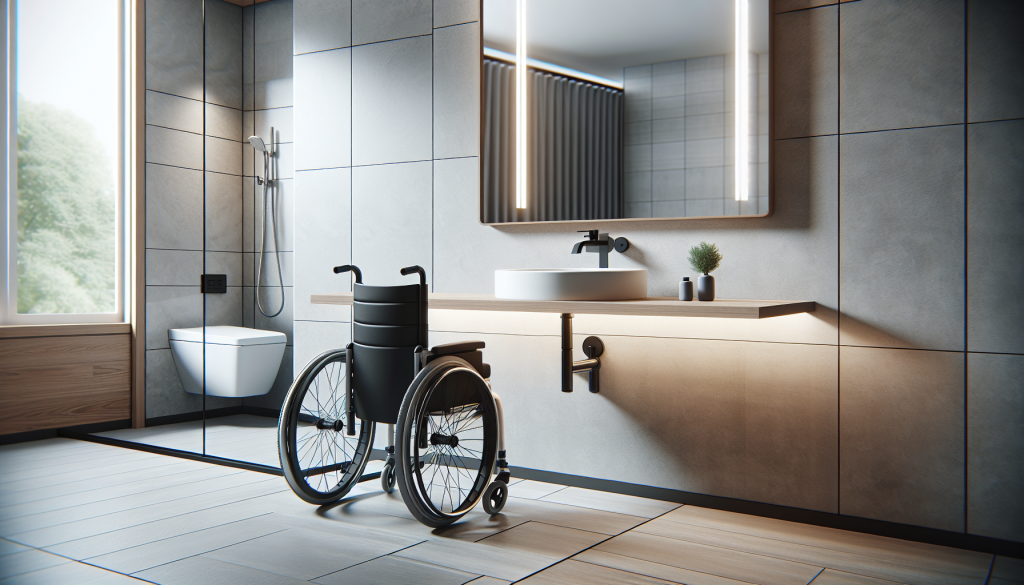
Wheelchair-accessible sink designs are one of the most important details in bathroom and bedroom accessibility because they affect hygiene, independence, safety, and dignity every single day. In projects I have reviewed with occupational therapists, remodelers, and aging-in-place specialists, the sink is often the point where a room either truly works or fails in daily use. A beautiful vanity means very little if a wheelchair user cannot roll under it, reach the faucet, or use the mirror without strain. Good sink design is not just about meeting a measurement on paper. It is about creating a usable, comfortable station for washing hands, brushing teeth, managing medications, shaving, styling hair, and handling personal care tasks with minimal assistance.
Bathroom and bedroom accessibility overlap more than many homeowners expect. The bathroom usually contains the main sink, but bedroom suites, dressing areas, and adjacent personal care spaces often include additional wash stations, grooming counters, or compact ensuite layouts. That is why this hub article addresses the broader category of bathroom and bedroom accessibility while focusing on sink designs that work in real homes, assisted living settings, multigenerational remodels, and recovery-focused adaptations. If you are planning a renovation, supporting a family member, or creating a long-term accessible home, understanding sink design will help you make better decisions about layout, plumbing, storage, lighting, and transfer space throughout the room.
At its core, a wheelchair-accessible sink is a sink with enough knee and toe clearance for forward approach, reachable controls, safe plumbing protection, and surrounding space that supports maneuvering. In the United States, the ADA Standards for Accessible Design provide a useful baseline: lavatories and sinks generally require a rim or counter surface no higher than 34 inches above the finished floor, knee clearance at least 27 inches high, and insulated or otherwise configured pipes to protect against contact. Those figures matter, but they are only the start. Real usability depends on wheelchair dimensions, footrest depth, armrest height, user reach range, caregiver needs, and whether the sink serves a child, adult, or someone with changing mobility over time.
This matters because inaccessible sinks create cascading problems. Users may twist awkwardly, overreach, skip grooming tasks, or rely on unsafe side approaches. Caregivers may struggle in cramped spaces. Water can splash onto laps if the bowl is too shallow or the faucet projects poorly. Storage placed below the sink can block access entirely. In contrast, a well-designed sink improves self-care, reduces fall risk, simplifies routines, and supports aging in place. It also connects directly with other accessibility decisions in this topic area, including roll-in showers, grab bar placement, non-slip flooring, bedside clearances, closet reach design, adjustable lighting, and accessible storage systems. As the hub for bathroom and bedroom accessibility, this guide explains how sink designs fit into the bigger picture and what actually works.
What makes a wheelchair-accessible sink functional
A functional wheelchair-accessible sink must allow direct approach, comfortable use, and safe operation without forcing a user into an awkward posture. In practice, that means open space beneath the sink, sufficient turning room in front, and controls that can be used with limited grip strength or one-handed operation. I have seen many remodels fail because designers selected a “floating vanity” that looked open but left the trap and supply lines exposed in the exact area where knees and shins needed to go. Others installed vessel sinks on top of counters, raising the effective washing surface well above a usable height. The lesson is simple: a sink can look accessible in a photo and still perform poorly in daily life.
Shape and projection matter as much as height. A bowl that is too far back on the counter forces overreaching. A deep basin paired with a short faucet can make handwashing difficult from a seated position. Wall-mounted sinks, open-bottom integrated counters, and some shallow trough-style lavatories usually perform best because they preserve knee space and shorten reach distance. Offset drains can also improve usable knee clearance by moving plumbing away from the centerline. Protective panels or pipe insulation are not optional details; they prevent burns and impact injuries from contact with hot water lines and drain assemblies.
Function also depends on the surrounding room. A perfect sink mounted in a tight bathroom still fails if a wheelchair cannot turn, if the door swing blocks approach, or if the toilet intrudes on transfer and maneuvering space. In bedroom accessibility projects, the same principle applies to grooming stations and dressing counters. Clearance beside the bed, access to wardrobes, and seated reach to mirrors and outlets all support the same goal: independent personal care. Sink design works best when treated as one part of a coordinated accessible layout rather than an isolated fixture choice.
Dimensions, reach ranges, and planning rules that prevent costly mistakes
The most reliable way to avoid expensive rework is to plan around actual use patterns instead of generic assumptions. Start with the user’s wheelchair type, overall width, seat height, footrest depth, and preferred approach. Manual chairs, power chairs, and scooters all have different turning characteristics. A standard guideline for sink height is a maximum of 34 inches, but many users are more comfortable slightly lower, especially in private homes where customization is possible. Knee clearance of 27 inches minimum and toe clearance extending below are baseline numbers, yet the depth of that clear space is what often decides whether someone can pull in close enough to wash comfortably.
Reach ranges should guide the placement of faucets, soap dispensers, outlets, towel rings, mirrors, and medicine cabinets. Forward reach that extends too far over a counter quickly becomes tiring. Controls should generally be within easy reach without leaning hard against the sink edge. For mirrors, either use a tilted mirror, a full-height wall mirror, or mount the reflective area low enough to serve seated and standing users. In bedroom wash areas, place switches and hair tool outlets where cords do not cross circulation paths. Good accessibility is precise, and small dimensional errors become daily frustrations.
| Design element | Typical effective target | Why it matters |
|---|---|---|
| Counter or rim height | Up to 34 inches, often lower in custom homes | Supports seated use without shoulder strain |
| Knee clearance height | At least 27 inches | Allows forward approach under sink |
| Clear floor space | About 30 by 48 inches minimum | Provides positioning and maneuvering room |
| Faucet reach | Near front of bowl or extended spout | Reduces leaning and wrist strain |
| Pipe protection | Insulated or enclosed | Prevents burns and impact injuries |
Mockups save money. Before final installation, I recommend taping the sink footprint on the wall, setting a temporary board at finished height, and having the user test approach in their actual chair. This reveals whether a side wall blocks elbows, whether footplates hit plumbing, and whether a caregiver also needs side access. It is far better to shift a drain line during rough-in than after tile and countertops are complete.
Best sink types, faucet choices, and plumbing details
The best sink type for wheelchair access is usually wall-mounted or integrated into a floating counter with fully open space below. Wall-mounted lavatories remain common in hospitals, rehabilitation centers, and universally designed homes because they are direct, simple, and easy to position at the correct height. Solid-surface integrated sinks are also excellent because they can have shallow basins, rounded front edges, and custom dimensions. Semi-recessed and undermount sinks can work when the counter is thin and the bowl placement is carefully planned. Vessel sinks are usually a poor choice because they add height and increase reach depth.
Faucets should be operable with minimal force and little fine motor demand. Single-lever faucets are often the best residential option because they are simple, familiar, and easy to use with a closed fist or limited dexterity. Sensor faucets can be effective, especially for users with arthritis, but they must be reliable and properly calibrated. I have seen touchless faucets frustrate users when activation zones were too narrow or water shut off too quickly during grooming tasks. If touchless controls are used, test them with real routines such as handwashing, rinsing a razor, or filling a cup. Extended lever handles and temperature limit settings add safety and ease.
Plumbing details are where quality shows. Offset drains, wall drains, shallow trap configurations, and recessed supply placement can dramatically improve knee room. Pipe insulation should cover both hot and drain lines. Shutoff valves and cleanouts must remain accessible for maintenance but not intrude into user space. In higher-end projects, thermostatic mixing valves help stabilize water temperature and reduce scald risk. These choices are not glamorous, yet they determine whether the sink remains comfortable and safe for years.
Storage, mirrors, and lighting in bathrooms and bedrooms
Accessible sink design fails when storage is handled as an afterthought. The area under the sink usually needs to stay open, so designers must shift storage elsewhere. The best approach is to place frequently used items in shallow side cabinets, open shelving within seated reach, or pull-out drawers adjacent to the sink. In bedrooms, grooming stations benefit from drawers with D-shaped pulls, soft-close slides, and compartmentalized inserts for medications, cosmetics, grooming tools, and personal care supplies. Tall linen towers can work if everyday items are stored in the mid-zone, roughly between knee and shoulder height when seated.
Mirrors should support both posture and visibility. A full-height mirror behind the sink often works better than a small framed vanity mirror because it serves users at different heights and allows flexibility over time. Tilt mirrors can help in retrofits, but they sometimes distort the view or create glare if lighting is poor. The most successful setups combine vertical task lighting on both sides of the mirror with even ambient illumination from the ceiling. In bathrooms, choose enclosed fixtures rated for damp locations. In bedroom dressing areas, add focused light at the grooming surface so users are not leaning forward just to see clearly.
Lighting and electrical planning are central to accessibility. Rocker switches, motion-sensing night lights, and outlet placement above side counters are practical improvements. Hair dryers, electric razors, and toothbrush chargers should plug in without forcing someone to reach behind a faucet or across water. If the sink area is part of a bedroom suite used at night, low-level path lighting from bed to bathroom reduces fall risk and supports independence for people with limited balance or vision changes.
Materials, safety features, and real-world layout strategies
Materials affect both usability and maintenance. Rounded counter edges are more forgiving for wheelchairs and forearms than sharp stone profiles. Matte or satin finishes reduce glare for users with visual sensitivity. Solid surface materials are popular because seams are minimal, cleaning is easy, and integrated backsplashes help control water. Quartz performs well too, though edge detailing should stay simple. Flooring around sinks should be slip resistant, especially in bedroom ensuites where users may transition from carpet to tile. Avoid thick rugs that snag casters or walking aids.
Safety features should be layered. Anti-scald protection, lever hardware, moisture-resistant wall backing, and strategically placed grab bars all support the sink area. While grab bars are usually associated with toilets and showers, a nearby support point can help users stabilize while approaching or repositioning near a vanity. In bedrooms, accessible wash stations may need a sturdy side counter for support during grooming or seated transfers. Door hardware, threshold transitions, and pocket-door clearances also shape whether the sink area feels easy or difficult to use.
Real-world layout strategy starts with circulation. In small bathrooms, moving the sink off the centerline or choosing a compact wall-hung model can free turning space. In larger primary suites, a single accessible sink often works better than two cramped vanities. I regularly advise clients to prioritize one excellent station over two compromised ones. In bedroom accessibility planning, this same principle applies to dressing areas: leave generous approach clearance at the primary grooming surface, even if that means reducing decorative cabinetry. Accessibility succeeds when the room supports routine use gracefully, not when every trend is included.
Common design mistakes and how to choose the right solution
The most common mistake is assuming compliance equals comfort. A sink can technically meet minimum dimensions and still be hard to use because the faucet is too far back, the mirror too high, the bowl too deep, or the room too tight for approach. Another frequent error is placing storage baskets, plumbing access panels, or decorative aprons where knee space should be. I also see many remodels choose trendy vessel bowls, thick countertop buildup, or furniture-style vanities that completely block forward approach. These details undermine the entire investment.
Choosing the right solution means matching the sink to the user, the room, and the likely future. Ask direct questions: Will the user approach head-on every time, or sometimes from the side? Do they need caregiver support? Is hand strength limited? Will children and standing adults share the same bathroom? Is this a short-term recovery adaptation or a long-term aging-in-place renovation? The answers shape the best choice. A custom floating counter with integrated sink may be ideal in a forever home, while a simple wall-hung lavatory with a reliable lever faucet may be the smartest retrofit in a guest bath or compact ensuite.
As a hub for bathroom and bedroom accessibility, the key takeaway is that sink design connects everything: circulation space, storage planning, lighting, plumbing, and personal care routines. When those elements are planned together, wheelchair-accessible sink designs work beautifully and support true independence. Review your current layout, measure how the space is actually used, and build around the person first. That approach delivers better bathrooms, better bedrooms, and better daily life.
Frequently Asked Questions
What makes a sink truly wheelchair-accessible?
A sink is only truly wheelchair-accessible when it allows a person to approach, position, reach, and use it safely without strain or awkward workarounds. In practical terms, that means open knee and toe clearance underneath the sink so a wheelchair user can roll in close enough to wash hands, brush teeth, shave, or complete grooming tasks comfortably. The sink height matters, but height alone is not enough. The user also needs enough clear floor space in front of the sink to maneuver and turn, a basin that is not so deep that it forces overreaching, and controls that can be operated with limited hand strength or dexterity.
Thoughtful sink accessibility also includes protecting the user from hot pipes and sharp edges beneath the basin, keeping soap, towels, and frequently used items within easy reach, and making sure the faucet does not require a tight grasp or wrist twisting. Mirrors, lighting, and nearby outlets should support seated use as well. This is why a standard vanity often fails even when it looks attractive: cabinetry blocks wheelchair approach, countertops are too high, and fixtures are placed for standing users only. A well-designed accessible sink works because every part of the setup supports independence, safety, and dignity during daily routines.
How much space is needed under and around a wheelchair-accessible sink?
The most important space requirement is the clear area beneath and in front of the sink. A wheelchair user generally needs unobstructed knee and toe clearance under the basin to roll in closely and use the sink without leaning forward excessively. Just as important is the open floor area in front of the sink, which allows a wheelchair to approach head-on and reposition as needed. If that floor space is cramped by a toilet, tub, cabinetry, or door swing, the sink may technically fit but still be frustrating or impossible to use in real life.
Beyond the basic footprint, good design should account for actual movement patterns. Users may need room to angle their chair, transfer, or approach from one side depending on the bathroom layout and their mobility style. Power wheelchairs and scooters often require more clearance than compact manual chairs. In bedrooms or ensuite spaces, storage pieces, bed placement, and circulation routes can also affect sink usability. This is why accessible planning should focus on functional maneuvering space, not just whether the sink itself meets a minimum dimension. A sink works best when the user can approach it smoothly, stay centered at the basin, and leave the space without backing out awkwardly or bumping surrounding fixtures.
Which sink and faucet features make daily use easier for wheelchair users?
The best sink designs combine reachability, comfort, and ease of operation. Wall-mounted sinks are often a strong choice because they can provide the open space needed below while allowing the installation height to be tailored more precisely. Shallow basins are usually easier to use than very deep ones because they reduce the distance a seated user has to reach downward and forward. Rounded front edges, insulated plumbing covers, and carefully positioned drains all improve safety and comfort. If storage is needed, it is usually better placed to the side rather than directly below the sink, where it would interfere with wheelchair access.
For faucets, lever handles, touchless controls, and other easy-operating designs are usually better than small knobs that require gripping and twisting. The faucet should be placed where the user can reach it without stretching across the basin. Extended or side-mounted controls can make a major difference for someone with reduced shoulder mobility, arthritis, or limited dexterity. Accessories also matter more than many people realize. Soap dispensers, electrical outlets, shelves, and towel bars should be placed at accessible heights and distances. Even the mirror should be chosen with seated sightlines in mind, either by lowering it, tilting it, or extending it to a point where a person seated in a wheelchair can see themselves clearly. These details turn a sink from merely compliant into genuinely usable every day.
Can an existing bathroom vanity be modified to become wheelchair-accessible?
In some cases, yes, but it depends on the vanity construction, plumbing location, countertop height, and the amount of surrounding space available. One common modification is removing the base cabinet under the sink to create open knee clearance. That can work if the countertop height is appropriate and the plumbing can be relocated or protected so it does not interfere with the user’s legs. However, many standard vanities are still too high, too deep, or too bulky even after the cabinet doors and shelves are removed. The result may be a partial improvement, but not a sink that functions comfortably for everyday independent use.
A successful retrofit usually requires more than a cosmetic change. The basin depth may need adjustment, the drain may need to be moved toward the rear, supply lines may need insulation, and the faucet may need replacement with a more accessible model. Flooring, lighting, mirror placement, and storage access should also be evaluated. In many remodels, homeowners discover that modifying a vanity is less effective than replacing it with a wall-mounted or otherwise purpose-designed accessible sink. The right decision depends on the user’s wheelchair dimensions, transfer ability, reach range, and long-term needs. If the goal is true accessibility rather than a temporary workaround, it is wise to review the plan with an occupational therapist, aging-in-place specialist, or experienced accessibility-focused remodeler.
Why are sink details so important for independence, safety, and dignity?
Sink design affects some of the most personal and frequent activities of daily living. Handwashing, dental care, grooming, skincare, medication routines, and basic hygiene often happen multiple times a day. When a sink is too high, blocked by cabinetry, difficult to reach, or unsafe to use, the impact is not minor. It can force someone to rely on a caregiver for simple tasks they could otherwise do independently. That loss of independence can affect privacy, confidence, and quality of life far beyond the bathroom itself.
Safety is equally important. Poor sink design can lead to overreaching, unstable positioning, burns from exposed hot-water pipes, collisions with hard surfaces, or wheelchair strain caused by awkward approach angles. A user may skip hygiene tasks altogether if the setup is too frustrating or tiring. On the other hand, a well-planned accessible sink supports routine, autonomy, and self-respect. It helps the room function as intended, not just look finished. That is why professionals who work in accessibility often pay close attention to sink layout early in a project. When the sink works, the space is far more likely to support real daily living with comfort, safety, and dignity.