


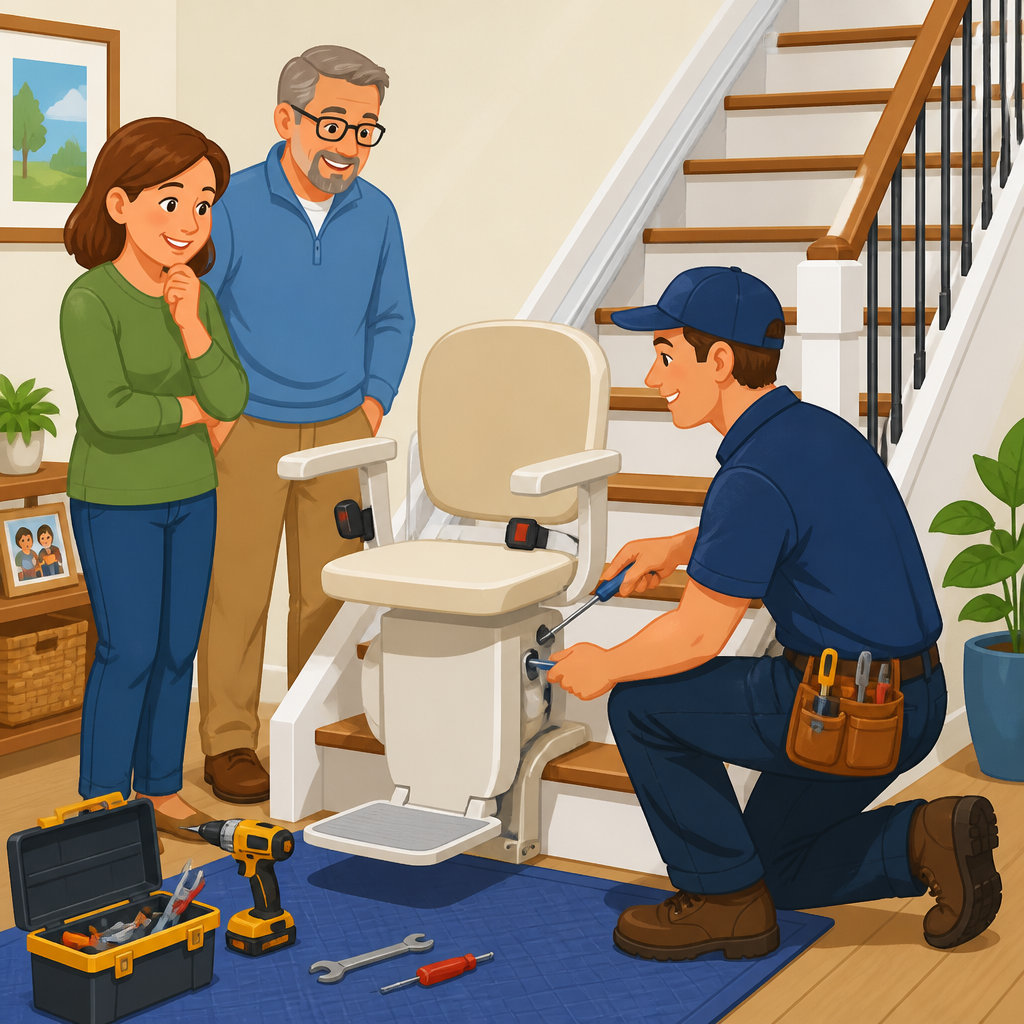
Buying a used stair lift from a private seller can save substantial money, but installation is the step that determines whether the deal becomes a smart purchase or an expensive safety problem. A stair lift is a motorized chair system that travels along a rail mounted to stair treads, designed to help people move between floors when stairs become difficult or unsafe. In the used market, you will also see the terms chair lift, stair chair, reconditioned stair lift, and refurbished stair lift. Those labels matter because private-sale equipment is not the same as dealer-refurbished inventory. A privately sold unit may be removed from another home with little documentation, unknown wear on the gearbox or batteries, and no manufacturer-backed setup support.
I have worked with families comparing private-party stair lift purchases against dealer-supplied refurbished models, and the same question always surfaces first: who will actually install it? The short answer is that the original manufacturer usually will not, many local mobility dealers will only install equipment they sold or refurbished themselves, and general handymen should not be your first call. Installation typically falls to three realistic options: an independent accessibility technician with stair lift experience, a mobility equipment dealer willing to handle customer-supplied equipment, or a specialized repair company that services legacy and used units. The challenge is that used stair lift installation is not just labor. It includes rail measurement, compatibility checks, electrical assessment, carriage programming on some models, final safety testing, and verification that the lift matches the staircase and user.
This matters because stair lifts are safety devices, not ordinary home appliances. A bad installation can create overrun issues at the top landing, loose rack alignment, charging faults, seat swivel problems, and footrest obstruction hazards. For buyers researching used and refurbished chair lifts, this page serves as the hub: it explains who installs a used stair lift bought from a private seller, what installers will require, when a used unit is worth buying, and when a professionally refurbished system is the better choice. If you want the practical answer before spending money, here it is: line up an experienced installer before you buy the lift, not after, and confirm that the exact brand, rail type, and staircase configuration can be installed safely in your home.
Who Can Install a Used Stair Lift From a Private Seller?
The installer is usually not the private seller, and it is rarely the original retail company unless that company explicitly agrees in writing. In practice, the most common installers for a used stair lift bought from a private seller are local mobility dealers, independent stair lift technicians, and home accessibility service firms that repair lifts out of warranty. Some elevator and vertical platform lift companies also service stair lifts, especially in larger metro areas. The deciding factor is not whether someone can bolt a rail to stairs. It is whether they know the brand, have access to replacement parts, and are willing to assume liability for equipment they did not supply.
Many dealers decline private-party installations because of callbacks and risk. If a battery fails a week later, a limit switch is worn, or the rail is missing a mounting bracket, the homeowner often blames the installer even when the defect existed before installation. That is why reputable companies may charge an inspection fee first and may refuse the job after seeing the unit. In my experience, the companies most open to these projects are service-focused dealers with in-house technicians, not sales-only showrooms. Ask directly whether they install customer-owned used stair lifts, whether they service the specific make and model, and whether they offer labor-only work.
Straight stair lifts are much easier to place with an installer than curved models. Straight rails are modular or cut to length and generally fit standard staircases if the measurements work. Curved stair lifts are built to a staircase template and almost never transfer cleanly from one home to another. If a private seller offers a used curved stair lift, assume the rail will not fit your staircase and that only the chair or power components might be reusable. That single fact eliminates many supposed bargains in the used chair lift market.
What Installers Check Before Accepting the Job
A qualified installer starts with compatibility, not price. They will ask for the brand name, model number, serial number, rail photos, staircase measurements, and clear images of the carriage, seat, charge points, and any labels on the power supply. Major brands in North America include Bruno, Harmar, Acorn, Stannah, Handicare, and Savaria. Each uses different rail designs, diagnostics, and parts channels. A dealer that services Bruno may not touch Acorn. A technician familiar with Stannah may reject an older Handicare if parts are scarce.
They also verify whether the lift is straight or curved, battery powered or direct power, indoor or outdoor rated, and whether key parts are present. A missing seat post, armrest sensor harness, charge strip, or rail brackets can stop a project immediately. Installers will want the staircase width, number of steps, top and bottom landing dimensions, and whether there are obstructions such as a doorway, radiator, handrail, or protruding trim. They may ask about the user’s height, weight, transfer ability, and whether a powered swivel or folding rail is needed for safe access.
The most important screening question is often this: can the unit be supported after installation? If batteries, rollers, overspeed governors, or PCB boards are unavailable, a competent company may refuse installation even if the lift can physically fit. That is a good sign, not a bad one. A used stair lift should be serviceable for years, not just operable on day one. Standards and code requirements vary by jurisdiction, but serious installers typically follow manufacturer instructions, verify seat belt function, test obstruction sensors, confirm charging at both ends, and run the lift repeatedly under load before handing it over.
Used vs. Refurbished Stair Lifts: What Buyers Need to Know
Not every used stair lift is refurbished, and buyers should treat those categories differently. A used stair lift from a private seller is typically sold as removed equipment with little or no warranty. A refurbished stair lift usually comes from a dealer or specialized reconditioning company that has cleaned, inspected, repaired, and tested the unit, often replacing wear items such as batteries, rollers, switches, and cosmetic panels. In many markets, a refurbished straight stair lift includes a new rail with a reconditioned carriage and seat, which is one reason it installs more reliably than a fully used setup from another home.
Private-party pricing can look attractive. A seller may list a straight stair lift for a few hundred dollars after a relative no longer needs it, while dealer-installed refurbished units may run several thousand dollars. The gap narrows once you add removal, transport, site inspection, missing parts, new batteries, rail modifications, and labor. If the lift fails inspection, the low purchase price becomes sunk cost. I have seen buyers spend more trying to salvage an unknown used unit than they would have paid for a dealer-refurbished model with warranty coverage and future service.
Refurbished chair lifts are generally the better choice when the buyer values predictable installation, parts support, and a labor guarantee. A private-sale used stair lift can still make sense when it is a common straight model, the staircase match is confirmed in advance, the unit is complete, and a local service company agrees to install it. The closer the transaction looks to a documented dealer sale, the safer the decision becomes.
When a Private-Sale Stair Lift Is Worth Buying
The best candidates are recent-model straight stair lifts from established brands with active service networks. A straight Bruno Elan, Harmar Pinnacle, or similar widely supported model may be practical if the rail length works or can be adjusted, the seller has documentation, and a technician has already reviewed photos. Ask whether the unit was removed by professionals, whether it was working at removal, how old the batteries are, and whether all remotes, keys, charger components, and brackets are included. If the seller cannot answer basic questions or has no clear photos of labels and parts, move on.
A private-sale unit is also more viable when it comes from a smoke-free indoor environment and was not exposed to moisture, pet damage, or corrosion. Outdoor stair lifts face harsher wear from temperature swings, UV exposure, and water intrusion, even when covered. Buyers often underestimate the effect of storage as well. A stair lift kept in a garage for a year with dead batteries can develop electronic faults that were not present when removed.
One useful rule is this: if you cannot identify the exact model and confirm parts availability before purchase, you should not buy it. Another is to avoid orphaned brands or very old units unless you already have a service contact willing to support them. The used and refurbished chair lift market rewards buyers who verify first and pay second.
Common Problems That Stop Installation
Most failed projects collapse for predictable reasons. The rail does not fit the staircase, the lift is missing hardware, the charger is incompatible, the carriage has a fault code that was hidden by dead batteries, or the installer discovers that the unit was damaged during removal. Curved lifts present the biggest mismatch problem, but straight lifts can fail too if the bottom overrun blocks a doorway or the top landing is too tight for safe dismount.
Another common issue is weight capacity. Standard units may support around 300 pounds, while heavy-duty models support more but need additional staircase width. If the user requires a larger seat or higher capacity and the staircase is narrow, the installer may reject the setup because knee clearance or passage width becomes unsafe. Installers also look for structural soundness in the stair treads, not because the lift is mounted to the wall, which it usually is not, but because the brackets anchor into the steps.
Electrical misunderstandings cause delays too. Most modern stair lifts are battery powered and charge from a standard household outlet near one or both ends of the rail. That sounds simple, but missing power supplies, damaged charge contacts, or extension-cord improvisations are red flags. A professional will want dedicated, reliable power and proper cable routing. If the home has frequent outages, some families pair stair lifts with a backup power strategy, but they should still expect periodic battery replacement every few years.
How to Vet an Installer Before You Buy the Lift
Start by calling local mobility dealers and asking a narrow question: do you install and service customer-owned used stair lifts purchased from private sellers? Then ask which brands they support, whether they work on straight or curved units, what their inspection process includes, and whether they offer any labor warranty. Strong companies answer specifically. Weak ones stay vague or say yes before they know the model.
| Question to Ask | Why It Matters | Good Sign |
|---|---|---|
| Do you install customer-owned used stair lifts? | Confirms policy on private-party equipment | Clear yes, with conditions explained |
| Which brands and models do you service? | Prevents hiring a company guessing at compatibility | Named brands, known limitations, parts knowledge |
| Will you review photos and serial numbers before I buy? | Reduces risk of purchasing the wrong unit | Requests labels, rail images, and measurements |
| What is included in your inspection? | Defines scope beyond basic mounting | Safety checks, charging test, run test, user training |
| Do you provide a labor warranty? | Separates installation workmanship from used-part risk | Written labor terms and callback policy |
Also verify business licensing, insurance, online reviews, and how long the company has serviced accessibility equipment. Reviews should mention repairs, maintenance, and follow-up support, not just sales. If possible, choose a company that can supply replacement batteries, remotes, and common wear parts directly. The installation is only the first stage; serviceability is what makes a used stair lift usable over time.
Costs, Warranties, and Alternatives to Private-Sale Purchases
Labor-only installation pricing varies by market, staircase complexity, travel distance, and whether troubleshooting is required. Expect charges for inspection, installation, new batteries if needed, and sometimes removal of old track components or disposal. If the rail must be modified or replaced, costs rise quickly. That is why buyers should compare three numbers, not one: purchase price of the used lift, installation and parts estimate, and the price of a dealer-refurbished system with warranty.
Warranties on private-sale stair lifts are limited. The seller usually offers none, and the installer may warranty only workmanship, not the equipment itself. By contrast, refurbished chair lifts sold by mobility dealers often include parts and labor coverage for a defined period. That warranty has real value because batteries, charge contacts, seat switches, and remote controls are ordinary wear items. A lower upfront price is not a lower total cost if service support disappears after installation.
If a private-sale unit does not work out, alternatives include certified refurbished straight stair lifts, short-term rentals where available, and financing through mobility dealers. Rentals are especially useful after surgery or during rehabilitation, although they are usually limited to straight stair lifts because curved rails are custom built. For many households, the best outcome is not finding the cheapest used stair lift, but securing the safest one that can be installed, serviced, and trusted every day.
The answer to who installs a used stair lift bought from a private seller is simple in principle and demanding in practice: a qualified mobility dealer or stair lift technician who knows the brand, accepts customer-owned equipment, and confirms compatibility before purchase. That installer may be harder to find than the lift itself, which is why smart buyers start with service availability. If no competent company will inspect, install, and maintain the unit, the bargain is not real.
As the hub for used and refurbished chair lifts, this guide highlights the central lesson for every related buying decision. Straight models are usually the only practical private-sale option. Curved models rarely transfer from one home to another. Complete documentation, active parts support, and a pre-purchase installer review matter more than a low asking price. Refurbished stair lifts from established dealers often win on reliability because they pair tested components with warranty coverage and future service.
Before you send payment to a private seller, collect model details, photos, measurements, and a written installation quote from a qualified local company. Compare that total against a refurbished alternative, ask about warranty limits, and choose the option that protects safety and long-term support. If you are building out your research on used and refurbished stair lifts, make this page your starting point and use it to evaluate every listing with an installer’s eye, not just a bargain hunter’s budget.
Frequently Asked Questions
Who can install a used stair lift bought from a private seller?
In most cases, the best person to install a used stair lift from a private seller is a stair lift dealer or mobility equipment company that specifically offers used stair lift installation, reinstallation, or service-only work. Not every company will do this. Many dealers only install equipment they sell themselves because they know the product history, can verify that all parts are present, and can stand behind the installation. Others will agree to inspect and install a privately purchased chair lift if it passes a safety review and if replacement parts are still available.
You may also find independent stair lift technicians who previously worked for major brands or local mobility companies. These professionals can sometimes handle a reconditioned stair lift or refurbished stair lift installation, especially if it is a common make and model. However, experience matters a great deal. Stair lifts are not general handyman projects. They involve mechanical assembly, electrical components, limit switches, charging systems, rail alignment, seat operation, and safe mounting to the stair treads. A poorly installed unit can stop unexpectedly, damage the staircase, or create a fall risk.
If you are trying to identify the right installer, ask whether they have experience with the exact brand, whether they can source missing parts, whether they will inspect the rail and carriage before installation, and whether they will test all safety features after setup. It is also smart to ask if they carry liability insurance and whether they provide any labor warranty. The short answer is that a qualified stair lift installer, not a general contractor or casual repair person, should handle the job.
Will the original stair lift manufacturer install a used unit purchased privately?
Sometimes, but very often the answer is no, or only under limited conditions. Most stair lift manufacturers do not directly install equipment for consumers. Instead, they work through authorized local dealers. Those dealers usually prioritize new sales and may decline to install a used stair chair that came from a private seller. Their hesitation is understandable. They may have no record of how the unit was removed, whether it has hidden damage, whether safety components were bypassed, or whether key pieces are missing.
There is also a model compatibility issue. Stair lifts are not universally interchangeable. The rail is usually cut and configured for a specific staircase, especially on curved units. Even straight stair lifts need the correct rail length, mounting brackets, power supply arrangement, and proper seat-to-carriage fit. If the used lift is an older model, the manufacturer or dealer may no longer support it with parts, service manuals, or software tools. In that situation, even a willing installer may not be able to safely put it back into service.
If you want to pursue manufacturer-backed installation, contact the brand’s local authorized dealer and provide the model number, serial number, rail type, and photos of the unit. Ask directly whether they install privately purchased used stair lifts, whether they will inspect it first, and whether they can still get replacement batteries, rollers, charger components, and safety parts. For a straight used stair lift, you may have a better chance than for a curved system. In general, expect installation approval to depend on age, condition, completeness, and parts availability.
Why do many stair lift companies refuse to install a used stair lift from a private seller?
The biggest reason is liability. When a company installs a mobility device, it is taking responsibility for placing a safety-related product into use in someone’s home. If the unit later fails and someone is injured, questions will immediately arise about who inspected it, who installed it, and whether it was safe to use. A dealer that did not sell the equipment may be stepping into a situation where critical information is missing, including service history, prior malfunctions, water damage, battery neglect, improper removal, or non-original replacement parts.
Another reason is incomplete or mismatched equipment. Private sales often include “everything you need,” but installers frequently discover missing brackets, damaged charging strips, worn gear racks, broken seat swivels, or rails that were cut for a different staircase. A used stair chair may also have been removed without labeling hardware, making reassembly more time-consuming and less predictable. What appears to be a bargain can quickly turn into a difficult troubleshooting job with uncertain results.
Companies also have practical business reasons. Installing a product they sold themselves is usually more efficient and profitable than trying to revive an older system of unknown condition. If they install a used stair lift and it breaks down soon after, the homeowner may still expect support, even if the failure is due to age or prior wear. That can create frustration for both sides. For all of these reasons, many mobility dealers limit their work to new, certified pre-owned, or dealer-refurbished stair lifts rather than privately purchased equipment.
What should be checked before hiring someone to install a used stair lift?
Before you hire anyone, confirm that the stair lift is actually suitable for your staircase and safe to reinstall. Start with the basics: identify whether it is a straight or curved unit, verify the brand and model, and make sure the rail length fits your stairs. A straight stair lift may sometimes be reused on another staircase if the rail can be resized or replaced. A curved stair lift is much more complicated because the rail is usually custom built for one exact staircase layout. In many cases, a used curved lift from a private seller is not practical unless the staircase dimensions are nearly identical and the installer confirms compatibility.
You should also verify that all core components are included. That means the rail, carriage, seat, footrest, armrests, call/send controls, charging system, mounting brackets, power supply, and all hardware. Ask the installer whether they will inspect batteries, seat belt function, swivel locks, obstruction sensors, track overruns, limit switches, and charging contacts. Those are not small details; they are central safety features. If any of them are missing or malfunctioning, installation should stop until the lift can be repaired with approved parts.
On the installer side, ask about experience, insurance, references, and familiarity with the exact model. Ask whether they perform a pre-installation inspection and post-installation safety test. Get a written estimate that separates labor, replacement parts, travel fees, and any no-warranty language. Also ask whether they offer future maintenance or emergency service. A used stair lift is only a good value if it can be installed correctly, serviced later, and used reliably by the person who depends on it.
Is buying a used stair lift privately really worth it once installation is included?
It can be worth it, but only if the numbers and safety factors still make sense after a professional review. Many buyers focus on the low purchase price and assume they are saving thousands, but the real cost includes transportation, inspection, installation labor, new batteries, replacement parts, possible rail modifications, and future service. If the unit is older or from a less-supported brand, you may save money upfront but face expensive repairs or difficulty finding technicians later. That is why installation is not just another line item; it is the point where a bargain either holds up or falls apart.
For straight stair lifts, a private purchase can sometimes work out well if the unit is from a major brand, the rail fits or can be adapted, and a qualified installer confirms that it is complete and in good condition. For curved stair lifts, private purchases are much riskier because custom rails are the biggest issue. Even if the chair and motor are functional, the rail may not fit your staircase at all, which can erase any savings. In those situations, a dealer-supplied refurbished stair lift or reconditioned stair lift is often the better value because it usually includes inspection, installation, and some level of service support.
The smartest way to decide is to get an installer involved before you buy, not after. Send photos, model details, and staircase measurements to a local stair lift professional and ask whether the unit is realistically installable. If the answer is uncertain, proceed carefully. Saving money is important, but when the product is designed to move someone safely up and down stairs, reliability and proper installation should carry just as much weight as price.