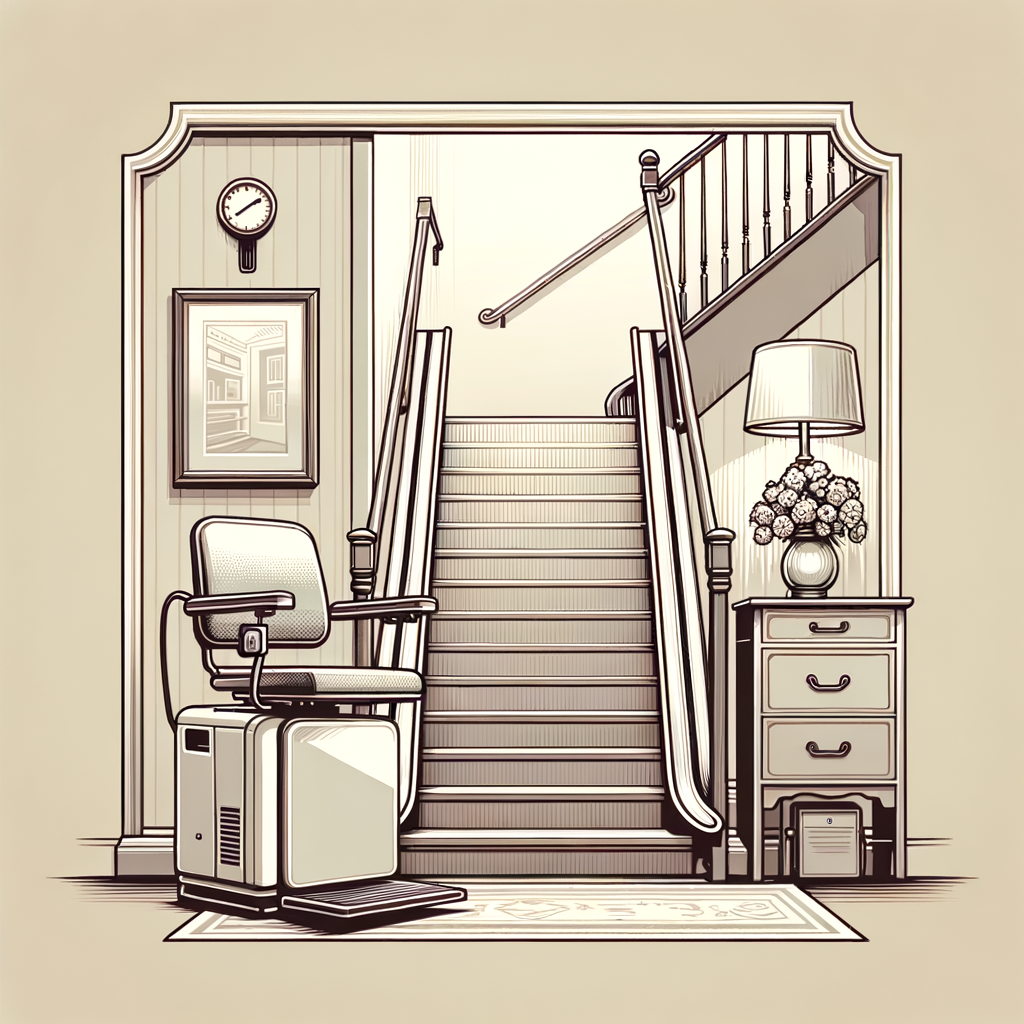
Outdoor chair lifts solve a specific mobility problem: they provide seated, powered travel along exterior stairs, decks, porches, and sloped entryways where weather, grade changes, and structural conditions make walking unsafe or impossible. In the chair lift industry, “outdoor chair lifts” usually refers to stair lifts built with weather-resistant rails, sealed electronics, UV-stable seats, and protective covers for exterior use. They are different from indoor stair lifts because exposure changes everything. Rain affects traction and corrosion, sunlight degrades plastics and upholstery, freezing temperatures alter battery behavior, and wind-driven debris can interfere with sensors, racks, and footrest safety edges.
I have worked on projects where the lift itself was not the hard part; the real challenge was the environment around it. A straight exterior staircase with solid concrete landings can be straightforward. A coastal wood staircase with uneven risers, no dedicated outlet, and a gate at the lower landing is not. Installation challenges with outdoor chair lifts matter because the consequences of a poor installation are immediate: unreliable operation, premature component wear, code conflicts, drainage problems, trip hazards, and unsafe mounting points. For homeowners, caregivers, builders, and accessibility planners, understanding these issues early helps avoid redesigns, delays, and costly change orders.
This article serves as a hub for the outdoor chair lifts category within chair lift types and designs. It explains the core installation barriers, the site conditions that drive product selection, and the practical decisions that shape long-term performance. It also answers the questions buyers ask most often: Can an outdoor chair lift be installed on any exterior stairs? What electrical setup is required? How do installers handle rain, snow, corrosion, and uneven landings? What maintenance burden comes with an exterior lift? By the end, you will have a clear framework for evaluating whether an outdoor chair lift is feasible, what can complicate installation, and which design details deserve the closest review before work begins.
Site assessment and structural constraints
The first installation challenge with outdoor chair lifts is the site survey. Exterior stairs vary far more than interior stairs, and those variations determine whether the lift can be mounted safely. Installers measure overall run, rise, tread depth, nosing projection, stair width, top and bottom landing clearances, and any changes in angle. They also inspect the substrate. A rail may fasten to stair treads rather than the wall, but those treads must be structurally sound. Pressure-treated wood that has checked, split, or softened from years of moisture exposure may not hold anchors to manufacturer standards. Concrete can also present problems if it is cracked, spalled, or too thin at fastening points.
Clearance is another common obstacle. Most manufacturers require enough remaining walking space on the staircase when the chair is folded, often around 24 inches depending on the model and local code interpretation. Narrow porch stairs, especially older residential stairs, may not leave enough usable width once the rail is installed. Landings create their own constraints. A safe transfer requires room for the user to get on and off without backing toward an edge. If the top landing opens directly onto an outward-swinging door, the chair may block the door path or force an awkward transfer position. In those cases, installers may need a rail overrun, a powered swivel seat, or a redesign of the landing area.
Outdoor sites also expose hidden geometry problems. I have seen bottom steps flare wider than upper steps, brick facings add irregular offsets, and handrails interfere with seat knees or arm movement. Even a few inches of misjudged clearance can make the difference between a functional and unusable lift. Because this page is the hub for outdoor chair lifts, a useful rule is simple: before comparing brands, verify that the stairs, landings, and structure can physically support the rail layout and safe rider transfer.
Weather exposure, corrosion, and climate-specific risks
Weather is the defining installation challenge for outdoor chair lifts. Products designed for exterior use include marine-grade or powder-coated components, gasketed covers, sealed call stations, and UV-resistant finishes, but “weather-resistant” does not mean “weather-proof under all conditions.” The exact climate matters. In coastal regions, salt air accelerates corrosion on fasteners, exposed rail surfaces, and connectors. In freeze-thaw climates, water intrusion followed by expansion can damage housings and create ice along the rail. In hot southern exposures, prolonged ultraviolet radiation can fade plastics and make dark seats uncomfortably hot without a cover or shaded landing.
Drainage deserves special attention. If water pools at the bottom landing, the user may step off into a slick surface, and the lift may sit in a persistently wet environment that shortens component life. Leaves, pollen, and windblown grit can accumulate on the rail or drive rack and interfere with smooth travel. Snow is more than a nuisance; packed snow can block the footrest, limit seat folding, and trigger safety sensors. Manufacturers typically advise keeping the rail clear and using the fitted cover whenever the lift is parked, but proper installation also includes choosing a parking position that reduces direct exposure.
The following table shows how common site conditions change installation decisions:
| Site condition | Installation challenge | Typical response |
|---|---|---|
| Coastal salt exposure | Accelerated corrosion of hardware and contacts | Select corrosion-resistant package, inspect fasteners more often, keep cover on when parked |
| Freeze-thaw winters | Ice on rail, battery performance loss, slippery transfers | Protected charging point, frequent clearing, non-slip landing treatment |
| Heavy leaf or debris fall | Obstructed rack or footrest sensors | Regular cleaning plan, park away from trees if possible |
| Intense sun exposure | Surface heat, UV wear on seat and cover | UV-stable materials, shaded parking spot, cover use |
| Poor landing drainage | Slip hazard and persistent moisture | Correct grading or drainage before final installation |
A reliable outdoor chair lift installation is therefore part product selection and part environmental management. The installer is not just mounting a rail; they are planning for years of exposure.
Power supply, batteries, and electrical planning
Most modern outdoor chair lifts are battery powered, with charging contacts at one or both ends of the rail. That design is safer and more practical than running the motor directly from household current during travel, but it does not eliminate electrical challenges. The charger still needs a properly located power source, ideally a dedicated outdoor-rated receptacle protected by a ground-fault circuit interrupter. In many homes, the nearest exterior outlet is either too far from the charging point or positioned where cords would create a hazard. Extension cords are not an acceptable permanent solution.
Electrical planning becomes more complicated when the staircase is detached from the house, such as a long garden stair run, a dock approach, or a detached deck entry. In those cases, adding power may require trenching conduit, installing a new circuit, or coordinating with a licensed electrician to meet National Electrical Code requirements and local amendments. Chargers and control circuits also need protection from water ingress. A charger mounted near a splash-prone lower landing can fail early if location is chosen poorly, even when the lift itself is rated for outdoor use.
Batteries introduce their own tradeoffs. Outdoor chair lifts typically use sealed batteries because they keep operating during a power outage, but battery capacity drops in low temperatures. Homeowners often interpret slow winter performance as a motor problem when it is really a temperature-related battery issue. Charging contact alignment matters too. If the chair is not parking squarely on the charge point because of rail contamination, minor settling, or installer misadjustment, batteries may not recharge fully. That leads to nuisance service calls that could have been prevented by precise setup and user instruction.
Rail configuration, landings, and user transfer safety
Rail layout determines how safe and usable an outdoor chair lift feels day to day. Straight outdoor stair lifts are the most common because many exterior stairs run in a single line and straight rails are simpler, faster, and less expensive to install than custom curved systems. Even with a straight lift, however, top and bottom overruns can become critical. An overrun extends the rail beyond the staircase so the user can board or exit away from the stair edge. On an exposed porch, that can be the difference between a secure transfer and one made inches from a drop-off.
Transfer safety is often underestimated during planning. Installers must consider door swing, storm doors, handrail placement, gate latches, walker storage, and the rider’s physical abilities. A user with limited trunk rotation may need a powered swivel seat at the upper landing. Someone with reduced knee flexion may need a higher seat height and more footrest clearance. If the lower landing slopes for drainage, stepping off can feel unstable even when the stair lift operates perfectly. In practice, some installations fail not because the machine is poorly built, but because the transfer geometry was never aligned with the user’s body mechanics.
Call-send controls and parking positions also affect installation choices. On some homes, the best way to protect the chair from weather is to park it under a porch roof at the top landing. On others, the top landing is too tight, so the safer choice is to park below with a cover and call the lift when needed. These details seem small until the lift is used multiple times a day. Good installation planning matches rail design to both the structure and the user’s routine.
Codes, permits, and property-specific limitations
One of the most overlooked installation challenges with outdoor chair lifts is regulatory review. Residential chair lifts are often simpler to permit than elevators or platform lifts, but local requirements still matter. Building departments may ask whether the remaining stair width satisfies egress expectations, whether electrical work will be separately permitted, and whether fasteners or landings are being altered. Homeowners associations may regulate visible exterior modifications, especially on front entries or shared façades. In multifamily settings, additional accessibility, fire, and insurance considerations can apply.
Codes do not always address outdoor chair lifts in a single clear paragraph, which is why experienced installers coordinate early rather than assuming approval. Product listings, installation manuals, and manufacturer specifications become important documentation. Established brands such as Bruno, Harmar, Handicare, and Stannah provide model-specific guidance on load capacity, folding dimensions, charging arrangements, and environmental ratings, and those documents help resolve site questions before equipment is ordered. If a project involves masonry repair, new footings, or substantial stair reconstruction, the lift installation can become part of a larger permitted scope.
Property constraints can be just as limiting as code. Historic homes may have entry stairs that cannot be easily altered without affecting character-defining features. Shared condo stairs may not allow private equipment that narrows common access. Rental properties raise approval and liability questions. The practical lesson is direct: confirm legal, structural, and ownership constraints before treating any outdoor chair lift as a routine add-on.
Installation timeline, maintenance, and long-term performance
Buyers often expect an outdoor chair lift to install as quickly as an indoor straight stair lift, but exterior conditions can lengthen the timeline. If the staircase needs carpentry repair, concrete patching, drainage correction, or new electrical service, those tasks come first. Weather can delay measurement accuracy, anchoring, sealant cure times, and final testing. Custom lead times also matter. Straight lifts may be available quickly, while unusual rail lengths, heavier-capacity seats, or specialty options can add weeks.
Long-term performance depends heavily on post-installation maintenance. Outdoor chair lifts need more frequent cleaning and inspection than indoor units. Rails should be kept free of grit, leaves, and insects. Covers should be used consistently, not left folded nearby. Batteries typically require replacement every few years depending on cycle count, temperature exposure, and charging consistency. Annual professional service is a sensible baseline, but harsh climates or high-use households may need more frequent checks. During service visits, technicians inspect charging contacts, seat and footrest safety switches, gear engagement, rack condition, anchor tightness, and signs of corrosion.
From experience, the best installations are the ones that prepare owners for routine care. A well-chosen outdoor chair lift can be dependable for years, but no exterior mobility device is maintenance-free. Setting that expectation upfront prevents disappointment and protects the investment.
Installation challenges with outdoor chair lifts are manageable when the project starts with a full site assessment and ends with realistic maintenance planning. The biggest issues are rarely mysterious. They are structural soundness, stair and landing clearance, exposure to rain and sun, corrosion risk, power access, transfer safety, and local approval requirements. When those factors are addressed early, product selection becomes much easier and the installation is more likely to perform reliably through changing seasons.
As the hub page for outdoor chair lifts under chair lift types and designs, this article establishes the core principle that should guide every related decision: exterior accessibility equipment must be matched to the environment, not just the staircase. A model that works well on one home may be wrong for another because drainage, salt exposure, stair width, or landing geometry changes the installation equation. The most successful projects are specific, measured, and user-centered.
If you are evaluating an outdoor chair lift, start with a professional site survey, request model-specific specifications, and review the staircase, electrical supply, and weather exposure as one system. That approach will help you choose the right design, avoid preventable installation problems, and create safer daily access outdoors.
Frequently Asked Questions
What makes installing an outdoor chair lift more difficult than installing an indoor stair lift?
Outdoor chair lift installation is usually more complex because the lift has to perform reliably in a much harsher environment. Unlike an indoor stair lift, an exterior model is exposed to rain, snow, humidity, direct sunlight, wind-driven debris, and wider temperature swings. Those conditions affect nearly every part of the project, from how the rail is mounted to how the electrical components are protected. Installers must account for corrosion resistance, water management, UV exposure, and long-term stability, not just basic fit and function.
Another major difference is the staircase or pathway itself. Exterior steps, decks, porches, and sloped entryways are often less uniform than interior stairs. Tread depths may vary, landings may be narrow, and older concrete, brick, or wood structures may have shifted over time. That means careful measuring is critical. Even small inconsistencies can affect rail alignment, seat clearance, and safe stopping points at the top and bottom.
Structural conditions also add difficulty. Outdoor stairs may have aging lumber, cracked concrete, loose masonry, or railings that interfere with the chair lift’s path. In many cases, the lift cannot simply be attached without first addressing repairs or reinforcement. Installers may need to coordinate with a contractor if the structure is not sound enough to support the system properly. So while the basic purpose of the lift is straightforward, the installation process is often more demanding because it must combine accessibility, weather resistance, and structural safety in one exterior setting.
Can an outdoor chair lift be installed on any exterior staircase or sloped entryway?
Not every exterior staircase or sloped entryway is automatically suitable for an outdoor chair lift, although many can be adapted. The first issue is available space. There must be enough room on the stairs for the rail, the traveling chair, and safe foot clearance. Just as important, there must still be adequate walking space for others using the staircase, where local code requires it. Narrow stairs, tight turns, short landings, and obstructions such as posts, doors, gates, or downspouts can all complicate installation.
The next factor is the condition and layout of the structure. Straight outdoor chair lifts generally work best on straight runs of stairs, while curved or more customized systems may be needed for stairs with turns, intermediate landings, or unusual geometry. Sloped entryways can also be candidates, but the grade, length, surface material, and top and bottom access areas all need evaluation. If the user cannot safely get on or off the chair at either end, the installation may not be considered appropriate without additional modifications.
Installers also look closely at the staircase material and integrity. Concrete, steel, pressure-treated wood, composite decking, and masonry each present different mounting considerations. If the structure is deteriorated, unstable, or poorly anchored, the lift may require repairs before installation can proceed. In some cases, an outdoor chair lift is feasible, but only after reworking the stairs, expanding a landing, relocating an obstruction, or selecting a different mobility solution. A professional site assessment is the best way to determine what is realistically possible and what changes may be needed for a safe, code-conscious installation.
How do weather and climate affect outdoor chair lift installation requirements?
Weather and climate have a direct impact on both product selection and installation method. Outdoor chair lifts are designed specifically for exterior use, but that does not mean every model is equally suited to every climate. In rainy regions, installers pay close attention to water shedding, sealed electronics, and rail placement that reduces pooling and runoff issues. In snowy or icy climates, they must consider how snow accumulation could block the rail, seat, footrest, or charging points. In very sunny areas, UV resistance becomes especially important to help prevent fading, cracking, and premature wear of exposed components.
Temperature extremes matter as well. Batteries, charging systems, plastics, lubricants, and metal components can all behave differently in very hot or very cold conditions. The installer may need to recommend a model with features better suited to local weather patterns, such as more robust weatherproofing, a durable cover, or specific battery and charging configurations. Placement of the chair at parked positions can also be planned to reduce unnecessary exposure when the lift is not in use.
Climate can even affect the installation schedule and preparation work. Wet wood, frozen ground near stair footings, or ongoing exterior repairs can delay a project. In coastal areas, salt air may increase corrosion concerns, requiring more attention to protective finishes and maintenance planning. The key point is that outdoor chair lift installation is not just about attaching a rail outdoors; it is about matching the system and its mounting approach to real environmental stressors so the lift remains safe, dependable, and serviceable over time.
What structural problems commonly delay or complicate an outdoor chair lift installation?
Structural issues are one of the most common reasons an outdoor chair lift project becomes more involved than expected. A lift rail is typically mounted to the stair treads or supporting structure, so those surfaces must be solid, level enough for proper alignment, and capable of holding the system securely. If the stairs are made of rotting wood, cracked concrete, spalling masonry, rusted steel, or loose composite materials, installers may pause the project until repairs are completed. The lift itself cannot compensate for a failing staircase.
Landings are another frequent trouble spot. The top and bottom areas need enough stable space for safe boarding and dismounting, and they must allow the chair to stop where the user can get on and off without being exposed to a fall hazard. If a porch landing is too small, a gate swings into the travel path, or a door opens too closely to the chair position, the layout may need to be changed. Similarly, handrails, columns, trim, or decorative features can interfere with seat clearance, especially when the chair rotates or folds.
Older homes and exterior additions often present hidden complications. Deck stairs may not have been built to modern standards, porch framing may have settled, and concrete may have developed uneven surfaces over time. In those cases, the installer may recommend consultation with a carpenter, deck specialist, or general contractor before proceeding. It is important for homeowners to understand that these repairs are not unnecessary upsells; they are part of making sure the lift is mounted on a safe and durable foundation. A properly installed outdoor chair lift depends on the structure beneath it being just as dependable as the lift itself.
How can homeowners prepare for a smoother outdoor chair lift installation?
Homeowners can make the installation process much smoother by starting with a realistic assessment of the site and the user’s needs. Before the appointment, it helps to think about who will use the lift, how often it will be used, whether it must serve a main entrance, and what seasonal conditions affect that area. The installer will want to know about issues such as heavy snow, standing water, direct sun, narrow landings, or doors that swing outward over the stairs. That practical information helps identify challenges early and reduces surprises later.
It is also helpful to clear the area and address obvious maintenance problems in advance. Loose boards, broken steps, unstable railings, overgrown landscaping, or drainage issues near the staircase can interfere with measurements and installation planning. If the stairs lead to a porch or deck, checking that the surface is in good condition can save time. Homeowners should also ask whether any electrical preparation is needed, since some systems may require a nearby power source or specific charging arrangement depending on the model and layout.
Perhaps most importantly, homeowners should expect a professional site evaluation rather than a one-size-fits-all quote. Accurate outdoor chair lift installation depends on exact measurements, structural review, and a clear understanding of access and safety needs at both ends of the ride. Asking detailed questions about weather protection, maintenance, warranties, service support, and any required repairs will lead to a better outcome. When the site is properly prepared and the installation is tailored to the exterior environment, the result is a lift that not only fits the stairs but works reliably in real-world outdoor conditions.