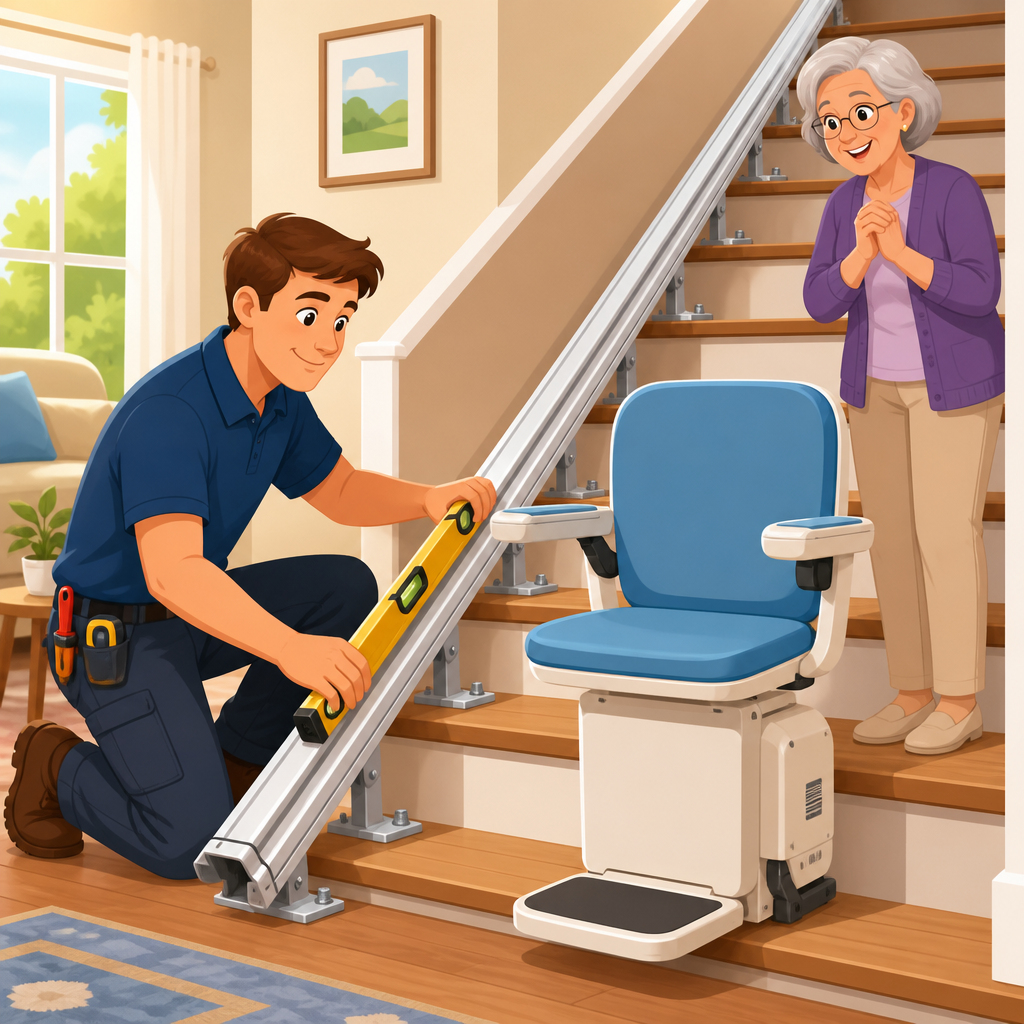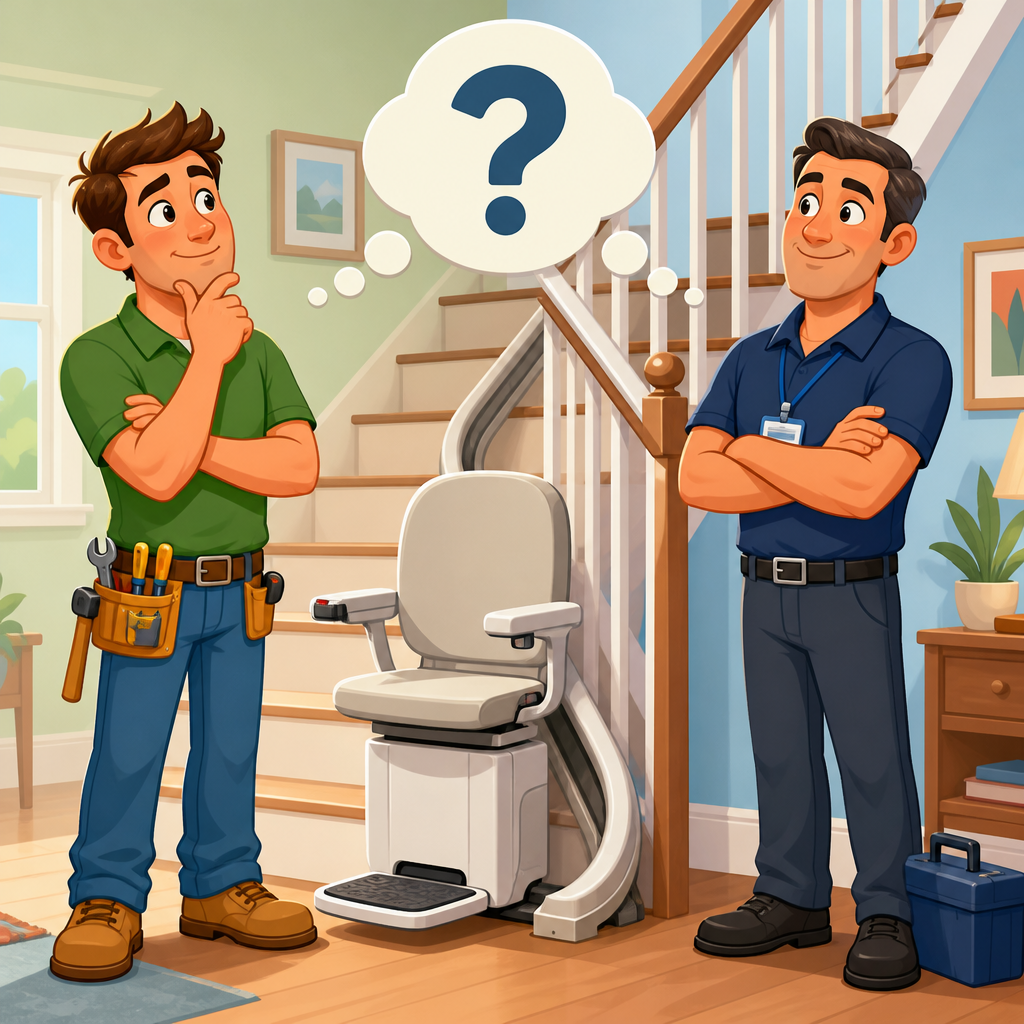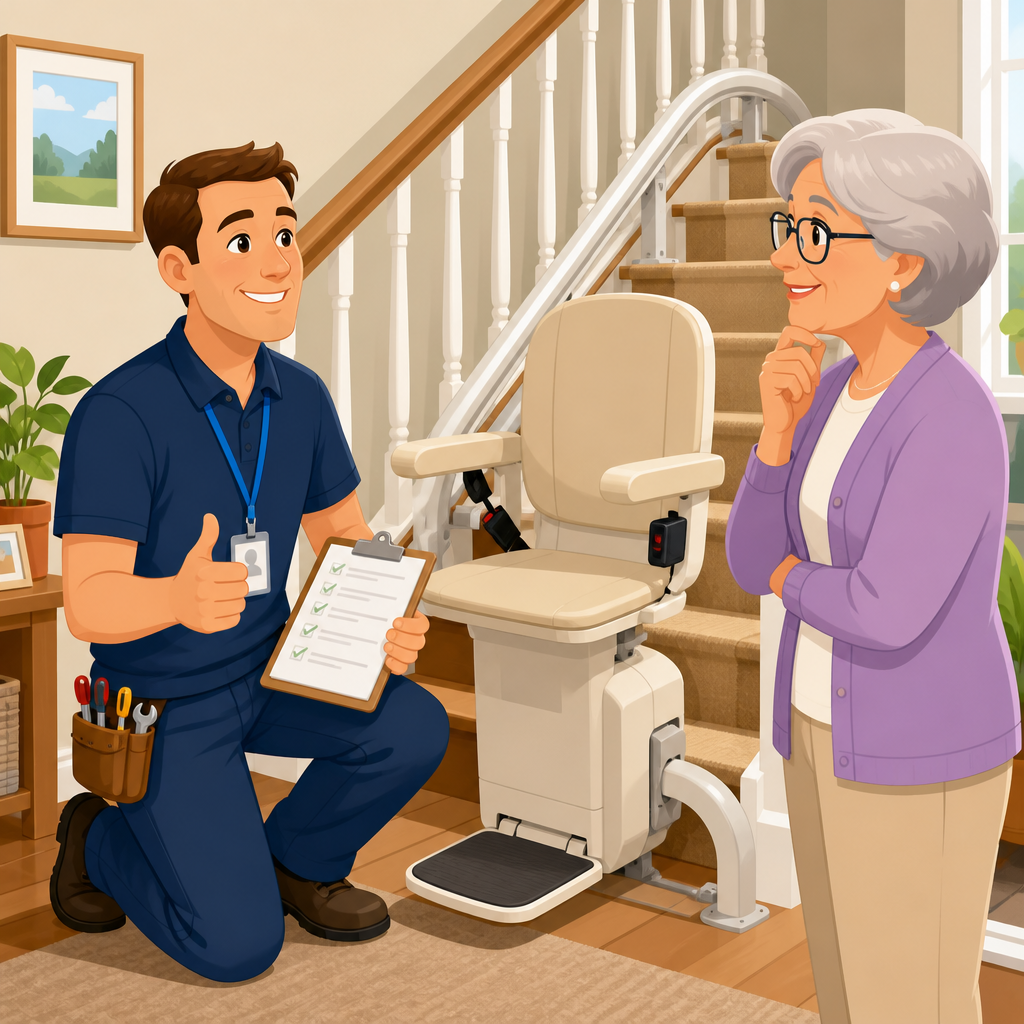
Choosing the right professional to install a stair lift is not a minor detail; it is the decision that determines whether the equipment will be safe, reliable, code-conscious, and comfortable to use every day. A stair lift installer is the technician or company responsible for surveying the staircase, confirming the correct rail and chair configuration, mounting the system, testing its safety functions, and showing the user how to operate it properly. In my work reviewing home accessibility projects, I have seen excellent installations that ran quietly for years, and I have also seen avoidable failures caused by poor measuring, weak fastener placement, skipped testing, and installers who treated a medical-mobility product like ordinary home hardware. That gap is exactly why homeowners need a clear process for verifying training and qualifications before they sign a contract.
This matters because a stair lift is both a mobility device and a powered mechanical system installed inside an occupied home. It carries real weight loads, includes batteries, charging contacts, obstruction sensors, seat belts, swiveling seats, and rail overruns, and must work consistently on stairs that may be narrow, curved, carpeted, or interrupted by landings and doorways. An installer who understands manufacturer specifications, electrical requirements, user transfer safety, and stair geometry can prevent expensive mistakes and reduce the chance of injury. An installer who lacks that background can create clearance problems, premature wear, nuisance faults, and unsafe boarding positions. For many families, especially older adults aging in place, this is not simply a convenience purchase. It is a daily access solution that affects independence, caregiver burden, and fall risk.
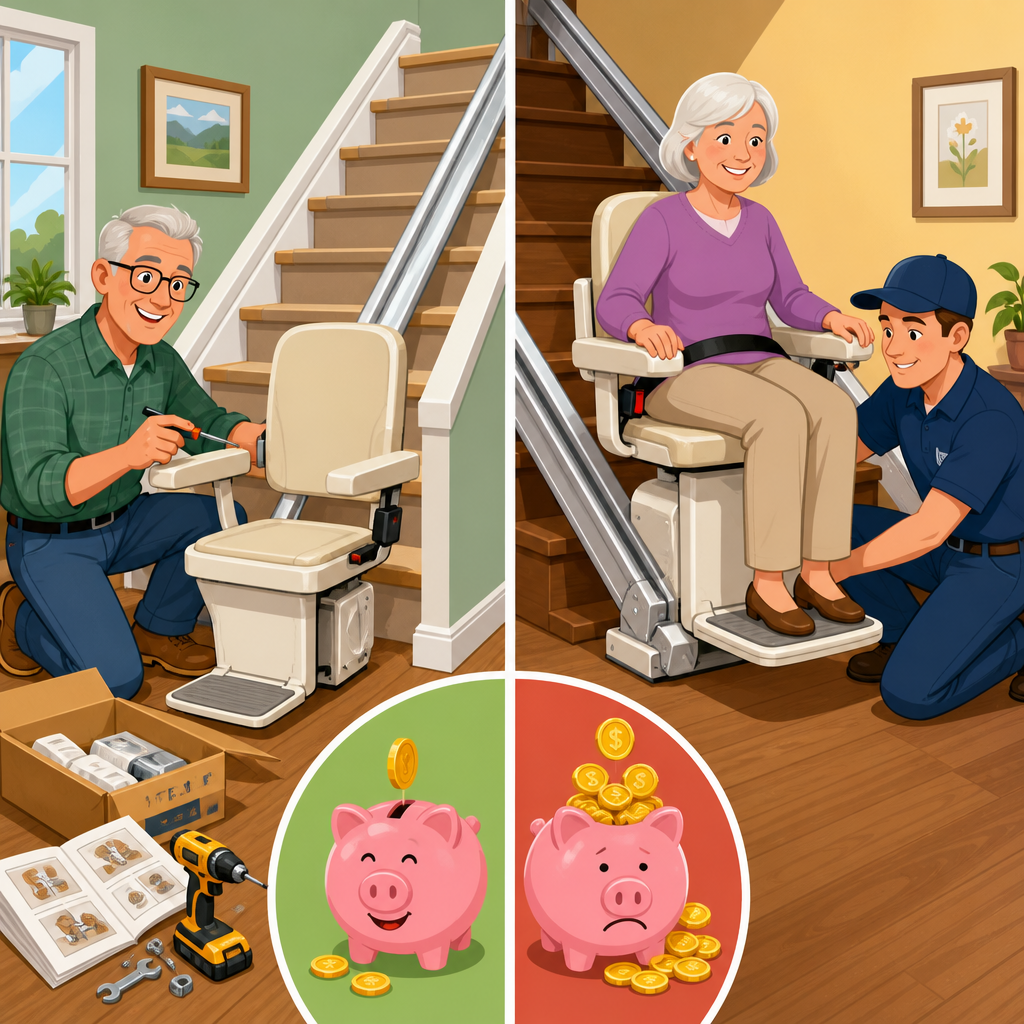
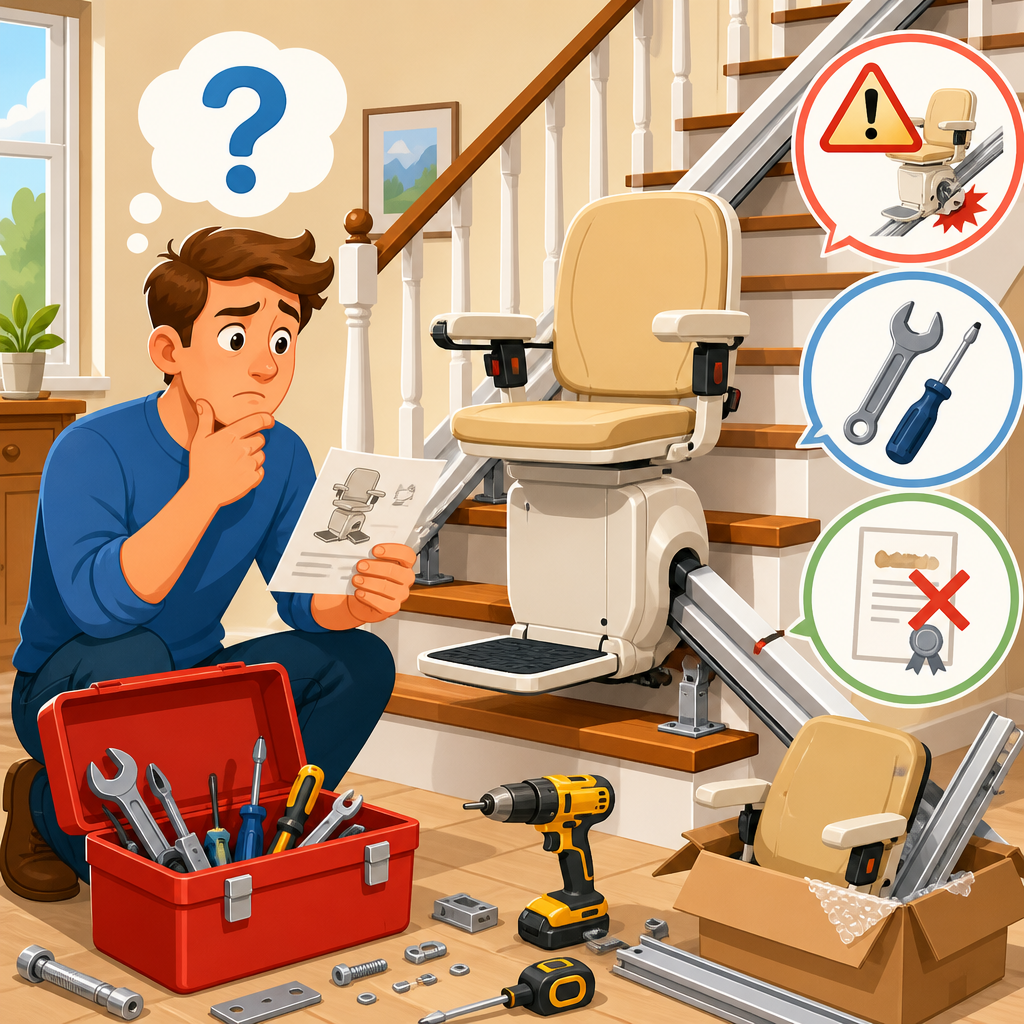
Professional installation versus DIY is therefore the core question in any “Installation & Setup” decision. DIY means a homeowner or non-specialist attempts measurement, delivery, assembly, mounting, wiring, testing, and adjustment without verified factory-backed technical training. Professional installation means a trained technician follows a documented survey process, uses brand-specific instructions, verifies fit and capacity, completes commissioning tests, and typically provides warranty-backed service. While some straight stair lift kits appear mechanically simple, the real challenge is not only attaching parts. It is ensuring the full system performs safely under repeated use by the intended rider. The sections below explain exactly how to verify an installer, what qualifications matter, and how to compare professional service with a DIY approach in practical terms.
What training and qualifications should a stair lift installer have?
A qualified stair lift installer should have manufacturer-specific training, not just general handyman or contractor experience. Brands such as Bruno, Harmar, Handicare, and Stannah each have their own rail systems, fault diagnostics, setup procedures, and approved mounting methods. Ask whether the technician has completed factory training for the exact brand and model being proposed. “Certified” should mean more than a sales phrase; the company should be able to explain who provided the training, when it was completed, and whether refresher instruction is required for new products or software revisions.
Experience with accessibility equipment matters as much as basic mechanical skill. The installer should understand transfer safety, seat height, footrest positioning, call/send controls, folding clearances, and user-specific concerns such as limited trunk strength or one-sided weakness. In practice, the best installers ask who will use the lift, how they transfer, whether a walker is involved, and whether the top or bottom landing presents balance challenges. That user-centered survey is a strong sign that the company treats the installation as an access solution rather than a boxed appliance.
Licensing and insurance are also essential. Requirements vary by state and locality, but you should expect a legitimate business license, general liability coverage, workers’ compensation where applicable, and compliance with any local contractor registration rules. If an installer says stair lifts never require permits or code review, treat that as a cue to verify independently with your building department. Many residential stair lifts do not trigger extensive permitting, but local rules differ, especially when electrical work or structural modifications are involved.
How to verify training, authorization, and service capability
The most reliable way to verify qualifications is to ask for evidence in three categories: manufacturer authorization, technical process, and after-installation support. Start by asking whether the company is an authorized dealer or authorized service provider for the lift brand. Then confirm that status directly with the manufacturer. Most major brands maintain dealer networks and can confirm whether a company is in good standing. This matters because authorized dealers usually have access to technical bulletins, genuine replacement parts, warranty submission channels, and product updates that unauthorized resellers may lack.
Next, review the company’s survey and installation process. A trained installer should perform an in-home assessment before finalizing the proposal. They should measure stair rise, tread depth, staircase width, parking positions, upper and lower landing clearances, and any obstructions such as radiators, trim, or nearby doors. For curved lifts, they should explain how measurements are captured for custom rail fabrication and what tolerance issues can delay production. If a company quotes a lift without seeing the stairs, that is a warning sign unless the project is an unusually standard straight run backed by full photographic and dimensional review.
Finally, verify service depth. Ask who handles warranty calls, whether service is subcontracted, what the average response time is, and whether the company stocks batteries, charge contacts, remotes, carriage components, and diagnostic tools. The installer’s qualifications are only half the story; long-term ownership depends on maintenance and repair capability. In real homes, batteries age, footrest switches get bumped, charging points need adjustment, and users need retraining after a hospitalization or change in mobility.
| Verification point | What to ask | What a strong answer looks like |
|---|---|---|
| Brand training | Who trained your technicians on this exact model? | Named manufacturer, documented training dates, model-specific familiarity |
| Authorization | Are you an authorized dealer and service provider? | Yes, verifiable with manufacturer and warranty access |
| Site survey | Will you measure the staircase before ordering? | Yes, with landing, clearance, power, and user-transfer review |
| Insurance | Can you provide proof of liability and workers’ compensation? | Current certificates supplied promptly |
| Service support | Who performs repairs and how fast is response? | In-house service team, stocked parts, clear response window |
| References | Can you share recent local installations? | Relevant references for straight and curved jobs |
Questions to ask before hiring a stair lift installer
Homeowners often ask, “What is the fastest way to tell if an installer is qualified?” The answer is to ask precise questions that expose whether the company works from procedure or improvisation. Start with: What stair lift brands do you install regularly? How many units like mine have you installed in the last year? Who will actually do the installation: employees or subcontractors? A strong company answers directly, names the lead technician, and explains the handoff from sales survey to installation and final testing.
Ask technical questions too. How is the rail attached, and to what surface? How do you verify the top and bottom stopping points? What safety checks are performed before handover? Good installers explain that most stair lift rails mount to stair treads or manufacturer-approved supports rather than the wall, and that the final stop positions, swivel lock, footrest safety edges, seat belt, overspeed system, battery charging, and call/send controls are all tested during commissioning. Vague answers like “we just bolt it in and make sure it runs” indicate limited training.
You should also ask for documentation. Request a written proposal listing model, weight capacity, rail type, power arrangement, warranty terms, maintenance expectations, and removal or reinstallation policies if the user moves. If the company recommends a reconditioned unit, ask which parts are replaced, how the rail is matched, and what warranty applies. Reconditioned straight lifts can be a practical budget option, but they require the same careful installation standards as new equipment.
Professional installation versus DIY: safety, warranty, cost, and risk
DIY stair lift installation appeals to some buyers because it appears to reduce upfront cost. On paper, a homeowner may save on labor by ordering a direct-to-consumer straight stair lift kit and assembling it independently. In reality, the cost comparison is more complex. Professional installation includes measuring, fit verification, delivery coordination, assembly, leveling, mounting, charging setup, test runs, user instruction, and usually warranty support. DIY shifts all of that responsibility to the buyer, along with the consequences if something is mismeasured, damaged, or installed out of tolerance.
Safety is the biggest difference. Professional technicians know how to assess edge clearance, seat-to-landing transfer position, hinged rail requirements near doors, battery charging alignment, and the specific load path of the rail brackets. They also know when a staircase is a poor candidate for a standard unit. I have seen DIY attempts where the rail ended too close to a doorway, forcing the rider to dismount on a step instead of the landing. I have also seen brackets tightened inconsistently on older timber stairs, leading to noise, vibration, and callback repairs that erased the original savings.
Warranty and service support often favor professional installation as well. Many manufacturers limit full warranty coverage when equipment is self-installed or installed by non-authorized parties. Even when parts warranties remain valid, labor may not be covered, and future service providers may hesitate to assume responsibility for a system they did not survey or install. DIY can make sense only for a technically capable owner, a simple straight staircase, a reputable supplier with strong remote support, and a clear understanding that long-term service may be harder to secure. For most households, especially where the rider is frail or medically vulnerable, professional installation is the safer and more durable choice.
Red flags that signal an unqualified installer
Unqualified stair lift installers tend to reveal themselves early. One common red flag is a quote given without a proper survey. Another is pressure to buy immediately, especially with claims that “all stairs are basically the same.” They are not. Differences in width, nosing, landing space, electrical outlet location, folding clearance, and user transfer needs materially affect the installation. Any company that minimizes those variables is taking shortcuts.
Watch for weak documentation. If the proposal does not identify the exact model, weight capacity, or warranty terms, you cannot compare bids properly. If the installer cannot explain what happens if the lift stops mid-run, how batteries charge, or how service calls are handled after hours, that is a competence issue. You should also be cautious if online reviews mention repeated delays, unresolved faults, or difficulty obtaining repairs. Reviews are not perfect evidence, but patterns matter.
Another red flag is resistance to questions about insurance, training, or authorization. Professional companies expect those questions and answer them easily. They should also be candid about limitations. For example, they should tell you when a narrow staircase may require a perch seat, when a curved model is more suitable than a straight unit with transfer compromises, or when a wheelchair platform lift is a better answer than a stair chair. Honest scope boundaries are a mark of expertise.
How this hub fits the wider Installation & Setup topic
This article serves as the hub for the larger “Professional Installation vs DIY” subtopic because installer qualification affects every other setup decision. Once you know how to verify training and authorization, the next related questions become easier to answer: whether your staircase needs a straight or curved rail, how long installation takes, what home preparation is required, when permits may apply, how to evaluate used or rental units, and what maintenance schedule protects reliability. Each of those topics builds on the same principle: correct setup begins with competent assessment.
The practical takeaway is simple. Verify the installer before you compare prices. Confirm brand-specific training, authorization, insurance, measurement process, testing protocol, and service support. Ask direct questions, request written details, and do not assume general contracting experience equals stair lift expertise. Professional installation usually costs more upfront than DIY, but it reduces safety risk, protects warranty value, and gives the rider a better daily experience. If you are planning a purchase, make a short checklist from this guide and use it during every estimate. The right installer will welcome it, answer clearly, and earn your trust with specifics.
Frequently Asked Questions
What qualifications should a stair lift installer have before I hire them?
A qualified stair lift installer should be able to show clear evidence of product-specific training, practical installation experience, and familiarity with safety standards that apply to mobility equipment in residential settings. Start by asking whether the installer has been trained directly by the stair lift manufacturer or by an authorized distributor. That matters because stair lifts are not interchangeable systems; each brand has its own rail design, power setup, diagnostic process, safety sensors, and installation requirements. An installer who has completed brand-specific training is far more likely to mount the unit correctly, program it properly, and test all functions according to the manufacturer’s expectations.
It is also wise to ask how long they have been installing stair lifts and how often they work with the model you are considering. Experience with general remodeling or electrical work is helpful, but it is not the same as experience installing accessibility equipment. A strong installer should understand staircase measurements, weight capacity considerations, seat height and swivel requirements, charging points, folding clearances, and the practical needs of the person who will use the lift every day. They should also be comfortable explaining how they evaluate straight versus curved stairs, landings, obstructions, wall proximity, and transfer safety at the top and bottom of the staircase.
Beyond training and experience, look for professionalism in documentation and process. A qualified installer should carry appropriate licensing if required in your area, maintain insurance coverage, and be willing to provide references or reviews from recent customers. They should perform an in-home assessment rather than quoting blindly from photos alone, unless the project is unusually simple and the manufacturer’s process specifically allows remote quoting. In short, the best qualifications combine formal training, hands-on experience, knowledge of the exact product being installed, and a careful assessment process that shows they take safety seriously.
How can I verify that an installer has actually been trained by the stair lift manufacturer?
The most reliable way to verify training is to ask for direct proof and then confirm it independently. A reputable installer should be able to provide a certificate of training, proof of authorization, or documentation showing they are an approved dealer or installer for the brand they sell. Some manufacturers list authorized dealers on their websites, and that is often the easiest place to start. If the installer claims to work with a particular brand, check whether the company appears on the manufacturer’s official dealer locator or contact the manufacturer’s customer service department and ask if that company is currently authorized to sell and install its equipment.
It is also helpful to ask more specific questions that reveal whether the training is current and meaningful. For example, ask when the installer last completed product training, whether they receive updates for new models, and whether they are trained to troubleshoot the lift after installation. Technology and safety features can change over time, especially with powered swivel seats, folding rails, diagnostic displays, and battery charging systems. An installer whose training is outdated may not be fully prepared to install or service newer units correctly.
Pay attention to how confidently and transparently the company responds. A trained professional should be able to explain the installation process in a way that reflects hands-on familiarity, including how they measure the staircase, where they mount the rail, how they protect the stair structure, how they verify the charging contacts, and how they test obstruction sensors and seat interlocks. If the company becomes evasive when you ask about training, cannot produce documentation, or claims that “all stair lifts are basically the same,” consider that a warning sign. Verification should be straightforward, and trustworthy installers generally welcome the chance to prove their credentials.
Are licenses, insurance, and code knowledge important when choosing a stair lift installer?
Yes, absolutely. While the stair lift itself is the visible product, the installer’s legal compliance and technical knowledge are a major part of what makes the installation safe and dependable. Licensing requirements vary by state, province, or municipality, so not every area requires the same credentials. However, if your area does require a contractor, electrical, or specialty trade license for this kind of work, the installer should hold it and provide the license number when asked. Verifying that number through the appropriate local agency is a smart extra step.
Insurance is just as important. At a minimum, the company should carry general liability insurance, and if they have employees, they should also have workers’ compensation coverage where required. This protects both you and the workers if accidental property damage or an on-site injury occurs. An uninsured or underinsured installer can expose a homeowner to unnecessary risk, especially in a project that involves drilling, mounting equipment to the staircase, and handling powered components. Asking for proof of insurance is not being difficult; it is part of responsible hiring.
Code awareness also matters, even though stair lifts are usually more specialized than ordinary household fixtures. A knowledgeable installer should understand local electrical expectations, safe outlet use, battery charging requirements, clearance considerations, and any rules that may affect how the equipment is installed in your home. They should also know the manufacturer’s instructions well enough to avoid modifications that could void warranties or reduce safety. Good installers do not just “make it fit.” They install the lift in a way that respects the home, the user, the equipment design, and the applicable rules. If someone seems dismissive about permits, code questions, or safe power setup, that is reason to pause.
What questions should I ask during the estimate or home assessment to judge an installer’s competence?
The home assessment is one of the best opportunities to tell whether you are dealing with a true professional or just a salesperson. Ask the installer to explain how they determine the correct model for your staircase and your mobility needs. A capable installer should discuss not only the shape and length of the stairs, but also the user’s height, weight, balance, transfer ability, seat comfort needs, and whether they will be using a walker, cane, or wheelchair nearby. They should also look at top and bottom landing space, rail overrun options, folded clearance, and any obstacles such as doorways, radiators, handrails, or tight turns.
You should also ask how the rail is mounted, whether any structural reinforcement is needed, and what electrical arrangement the lift requires. Most residential stair lifts run on batteries that charge from a standard household outlet, but the installer should still explain where charging points will be located and how they will ensure reliable operation. Ask how they test safety functions after installation. A knowledgeable installer should mention seat belt operation, swivel seat locks, footrest and carriage obstruction sensors, start-stop performance, charging confirmation, and final ride testing in both directions.
Another excellent question is what happens after the install. Ask whether they provide user instruction, written documentation, service support, warranty labor, and maintenance recommendations. The best installers understand that their job does not end when the chair moves up and down the track. They should be prepared to show the user how to sit safely, fasten the seat belt, fold the unit, use call/send controls, and respond if the lift stops unexpectedly. If the assessment feels rushed, if the person takes very few measurements, or if they cannot explain why a specific configuration is being recommended, those are meaningful signs that the company may not be as qualified as it should be.
What are the warning signs that a stair lift installer may not be properly trained or qualified?
One of the clearest warning signs is a lack of transparency. If an installer cannot show training records, avoids questions about manufacturer authorization, or refuses to provide proof of insurance or licensing when requested, proceed carefully. Reputable professionals understand that homeowners need reassurance, especially when the equipment is tied directly to mobility and fall prevention. Another red flag is a one-size-fits-all approach. Stair lifts should be selected and installed based on the actual staircase and the actual user, not simply based on what the company happens to have in stock.
Be cautious if the installer gives a firm quote without a proper home survey for anything other than the most straightforward situation. Inadequate measuring can lead to poor fit, awkward transfer positions, blocked walkways, or unreliable charging alignment. You should also be wary of statements that minimize the importance of training, such as saying the job is “simple” or that “any handyman can do it.” Proper stair lift installation involves product-specific setup, secure mounting, safety verification, and user instruction. Treating it like a generic household project is not a good sign.
Other warning signs include vague answers about service after installation, no clear warranty support, pressure to sign immediately, or unusually low pricing that seems disconnected from the scope of work. Cheap installation can become very expensive if the lift fails, damages the staircase, voids the manufacturer’s warranty, or creates a safety risk for the user. Trust your instincts during the conversation. A qualified installer should be organized, patient, technically clear, and focused on safety, fit, and long-term reliability rather than simply closing the sale. When you are evaluating training and qualifications, professionalism itself is often part of the proof.