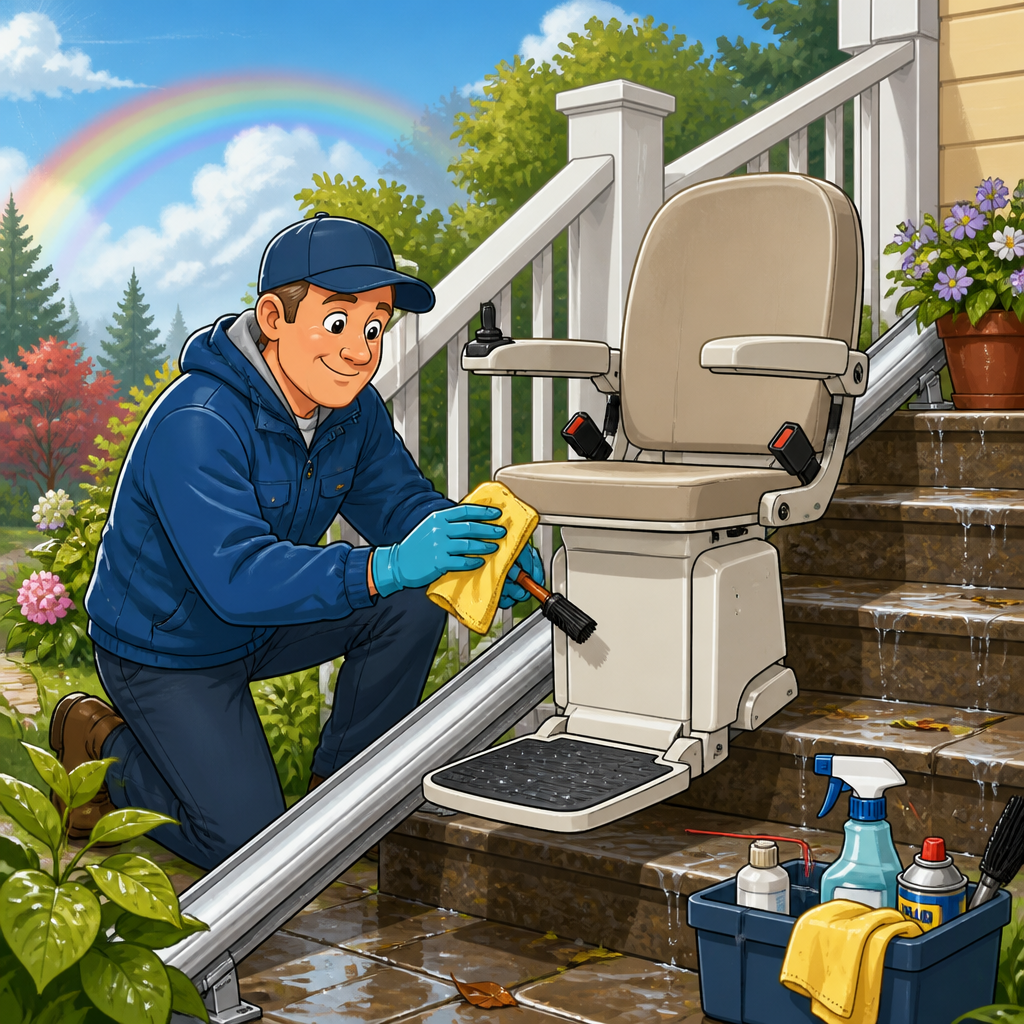
Outdoor stair lifts face harsher conditions than indoor models, and seasonal exposure changes how they should be maintained. Winter leaves behind road salt, freeze-thaw stress, and battery strain. Heavy rain can push moisture into electrical housings, rail joints, and seat hardware. High humidity encourages corrosion, mold on upholstery, and sticky controls. If you want an outdoor stair lift to remain safe, quiet, and reliable, maintenance after winter, rain, and humidity cannot be occasional. It must be routine, structured, and matched to the specific risks of exterior equipment.
Outdoor stair lift maintenance means inspecting, cleaning, testing, and protecting the lift so weather damage does not turn into breakdowns or safety issues. In practice, that includes checking the rail, carriage, batteries, charging points, footrest safety edges, seat swivel, call stations, weather cover, and mounting hardware. It also means knowing what the owner can safely do and what belongs to a certified technician. I have worked with homeowners who assumed a simple wipe-down was enough, only to discover pitted rails, intermittent charging, and water intrusion at the first spring service visit. A routine plan prevents that pattern.
This article serves as the hub for routine maintenance tips within the broader maintenance, troubleshooting, and safety topic. It explains what outdoor stair lift owners should inspect after winter storms, extended rainy periods, and humid seasons; how often to perform each task; which cleaning products to avoid; and when professional service is necessary. Brands differ in details, but core principles are consistent across major manufacturers such as Bruno, Harmar, Handicare, Acorn, and Stannah. Follow manufacturer instructions first, then use the practical maintenance framework below to keep the lift dependable between annual service appointments.
Why outdoor stair lifts need a different maintenance routine
An outdoor stair lift is built with weather resistance, not weather immunity. Most models use powder-coated aluminum rails, sealed controls, UV-resistant plastics, and marine-grade or exterior-rated upholstery. Those materials slow deterioration, but they do not eliminate it. Water still follows gravity into seams and fastener points. Salt still accelerates galvanic corrosion when dissimilar metals are present. Humidity still condenses when warm air meets a cooler motor cover or rail surface. The result is cumulative wear that happens faster outside than inside.
The most common post-winter problems I see are charging interruptions, noisy travel, stiff seat mechanisms, and rust beginning around bolts or exposed steel hardware. After rainy periods, the most common issues are moisture in the charge contacts, debris washed onto the rail, and cover misuse. During humid months, sticky controls, mildew odors, and oxidation at terminals become more common. These are not random failures. They are predictable consequences of exposure, and they respond well to a checklist-based maintenance routine.
Weather also changes safety risk. A stair lift can appear functional while developing hidden issues such as weakened battery capacity, reduced brake performance due to contamination, or obstruction sensors that respond inconsistently because dirt is trapped around moving edges. Because outdoor stair lifts are mobility devices, small maintenance lapses matter more than they would on ordinary patio equipment. Reliability is the safety feature.
Post-winter maintenance: remove salt, inspect for freeze damage, restore charging performance
Winter is typically the most damaging season for an exterior stair lift. Even if snow never directly buries the unit, wind-driven moisture, de-icing chemicals, temperature swings, and long idle periods affect performance. The first priority after winter is cleaning off residue. Salt and fine grit act like both corrosives and abrasives. Use a soft cloth with mild soap and water approved by the manufacturer, then dry thoroughly. Focus on the rail, charge strips or charge points, footrest edges, armrests, and folding joints where residue accumulates.
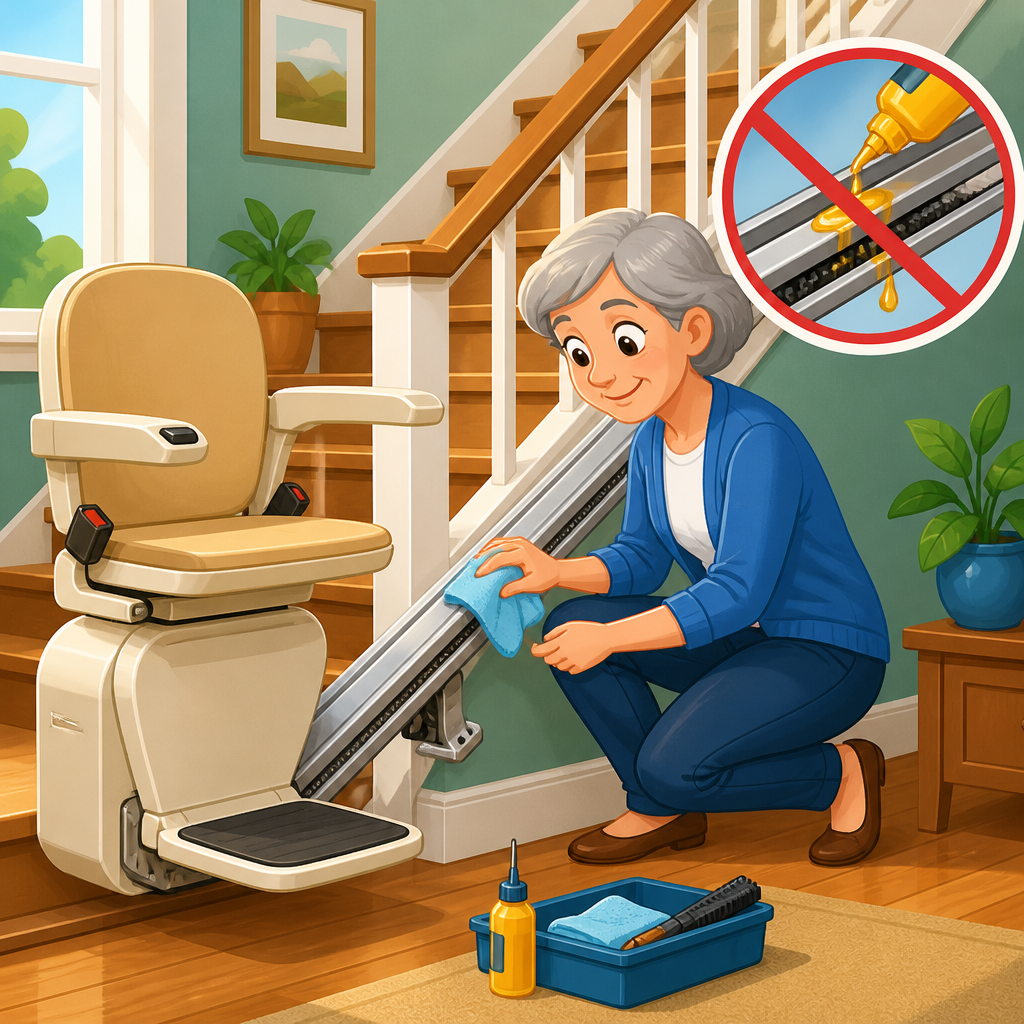
Freeze-thaw cycles can loosen fasteners and stress plastic covers. Inspect rail brackets, end stops, hinge points if the rail is hinged, and any visible cable routing. Look for hairline cracks, swollen seals, or covers that no longer sit flush. A misaligned cover can let in more moisture during spring rain. If you hear a clicking, grinding, or scraping sound after winter, do not assume lubrication is the answer. Many stair lifts use specific lubrication points and dry-running sections, and applying generic lubricant to the wrong area can attract grit or damage rollers. Always follow the manufacturer’s lubrication guidance.
Batteries deserve extra attention after cold weather. Most modern stair lifts run on batteries that charge when parked at designated points on the rail. Cold temperatures reduce battery efficiency, and a lift left off charge during winter can lose capacity permanently. Test whether the unit consistently charges at both park positions if applicable. A lift that beeps unexpectedly, slows under load, or stops after only a few trips may have weak batteries or dirty charging contacts. Cleaning contacts with the approved method often restores normal charging, but voltage testing and battery replacement should be handled by a technician.
Finally, check the weather cover. Covers often trap moisture when put on over a wet seat or rail. After winter, inspect the inside of the cover for mildew, tears, and stiffened seams. A damaged cover is not a minor accessory problem; it is a direct exposure problem that shortens equipment life.
After rain: dry critical components and watch for water intrusion
Rain creates different maintenance demands than winter because the issue is not only corrosion but also infiltration. Outdoor stair lifts are designed to tolerate rain, yet pooled water and repeated wetting can still breach seals over time. After prolonged rain or wind-driven storms, begin with a visual inspection before using the lift. Look for standing water on the seat, inside the footrest fold, around the carriage housing, and at the upper and lower rail ends.
Dry exposed surfaces with an absorbent cloth. Pay particular attention to charging contacts, seat controls, joystick or rocker switch areas, and the swivel seat latch. If controls feel sluggish or the lift responds intermittently, stop using it until the unit is fully dry and assessed. Electrical inconsistency after rain is a warning sign, not an inconvenience. Many service calls that seem like battery failure are actually contact contamination or moisture around a control assembly.
Rain also carries debris. Leaves, pollen paste, dust, and insect material can collect on the rail and obstruction sensors. That buildup increases drag and can trigger false stops. A simple wipe of the rail surface and a check of the footrest and carriage safety edges often prevents repeat shutdowns. If your staircase is near trees or roof runoff, this inspection should happen after every major storm, not just once per season.
Do not pressure wash an outdoor stair lift. High-pressure water can force moisture past seals and into motor housings, switch enclosures, and connection points that would otherwise resist ordinary rainfall. Use low-moisture cleaning methods and dry thoroughly. If you suspect water got inside a housing, disconnect power only if the manufacturer permits owner shutdown, cover the unit, and call for service.
Humidity control: preventing corrosion, mildew, and sticky operation
Humidity is often underestimated because it does not create dramatic visible damage overnight. Instead, it causes slow deterioration. In coastal regions and humid summer climates, I have seen well-installed outdoor stair lifts develop oxidation at exposed hardware much earlier than owners expected. Humid air condenses on metal during temperature shifts, especially in shaded stairways and morning hours. That repeated micro-wetting promotes corrosion even without direct rain.
The best defense is frequent drying, ventilation, and surface protection approved by the manufacturer. Wipe down the lift regularly during humid months, especially after dew-heavy mornings. Keep the protective cover clean and allow it to dry fully before reinstalling it. If the cover remains damp underneath, it creates a microclimate that encourages mildew and corrosion instead of preventing them.
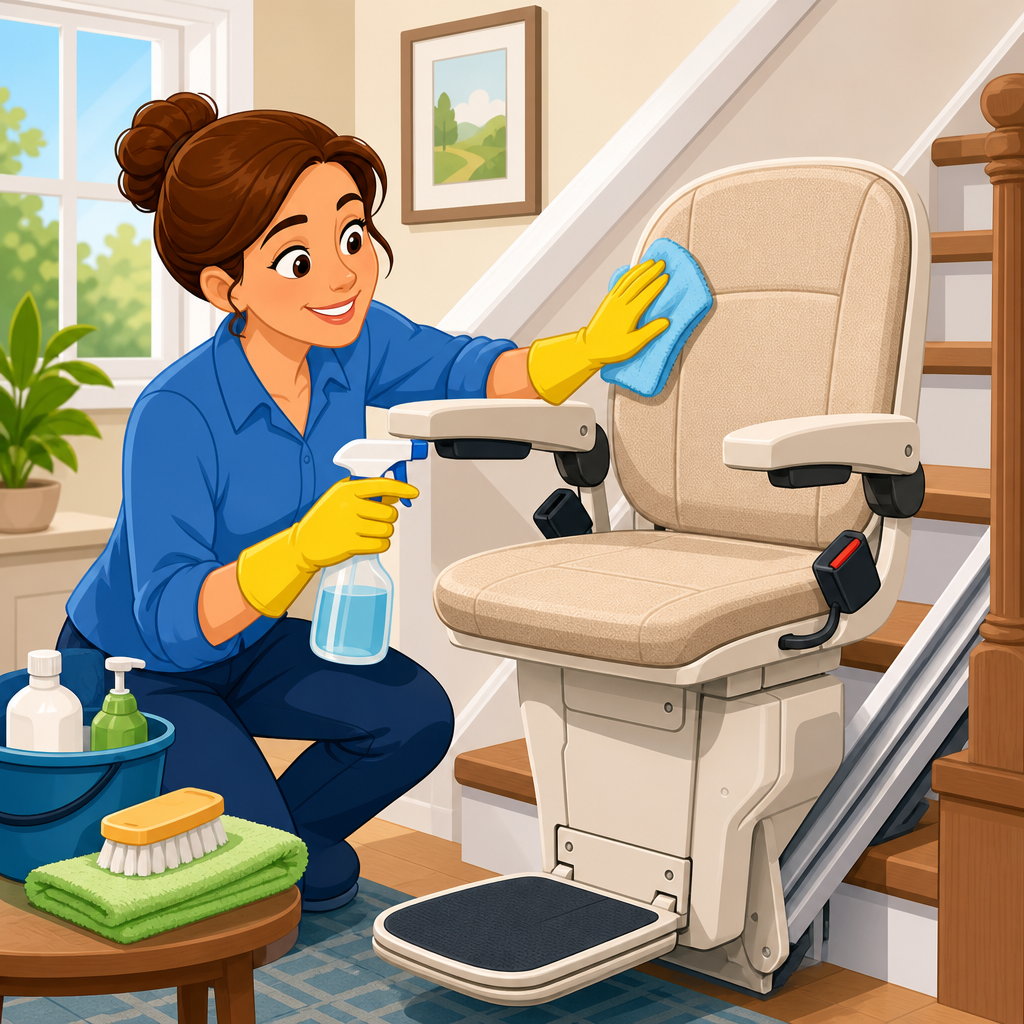
Seat upholstery and arm pads also need attention. Exterior-rated materials resist moisture, but sunscreen residue, skin oils, pollen, and dampness can still support mold growth. Clean with manufacturer-approved products only. Harsh bleach mixtures, solvent cleaners, and silicone sprays may degrade stitching, embrittle plastics, or leave slippery residues on transfer surfaces. A mild soap solution and soft cloth are usually safest, followed by full drying.
Humidity affects mechanics too. Swivel seats, folding hinges, and footrest linkages may begin to feel sticky when contamination mixes with moisture. That does not automatically mean parts are failing, but it does mean the unit should be cleaned and inspected before force is applied. If a user has to shove a folding section into place, alignment or corrosion may be developing.
Routine maintenance checklist for homeowners
Homeowners can do a surprising amount to preserve an outdoor stair lift safely, provided they stay within manufacturer limits. Routine homeowner maintenance is about observation, cleaning, and basic function checks, not disassembly or electrical repair. The goal is to catch early warning signs before they become outages or safety problems.
| Task | Recommended frequency | What to check | Why it matters |
|---|---|---|---|
| Wipe rail and seat surfaces | Weekly, and after storms | Dirt, grit, pollen, salt residue | Reduces drag, corrosion, and sensor interference |
| Inspect charging points | Weekly | Debris, discoloration, moisture, reliable parking | Prevents battery drain and no-start conditions |
| Test call/send controls | Monthly | Consistent response from both landings | Confirms remote operation and control integrity |
| Check seat swivel and folding parts | Monthly | Stiffness, wobble, latch engagement | Protects transfer safety and daily usability |
| Run a full travel test | Monthly | Noise, hesitation, rough spots, unexpected stops | Reveals emerging rail, drive, or sensor issues |
| Inspect cover and upholstery | Monthly | Tears, mildew, trapped moisture, UV wear | Preserves weather protection and seating hygiene |
| Look for rust or loose hardware | Seasonally | Bracket corrosion, bolt movement, paint damage | Identifies structural wear before it spreads |
During each check, note changes in a simple maintenance log. Record date, weather conditions, and anything unusual such as beeping, slower travel, or visible rust. A technician can diagnose problems much faster when the pattern is documented. This is especially useful for intermittent rain-related faults that disappear before a service visit.
What should be left to a stair lift technician
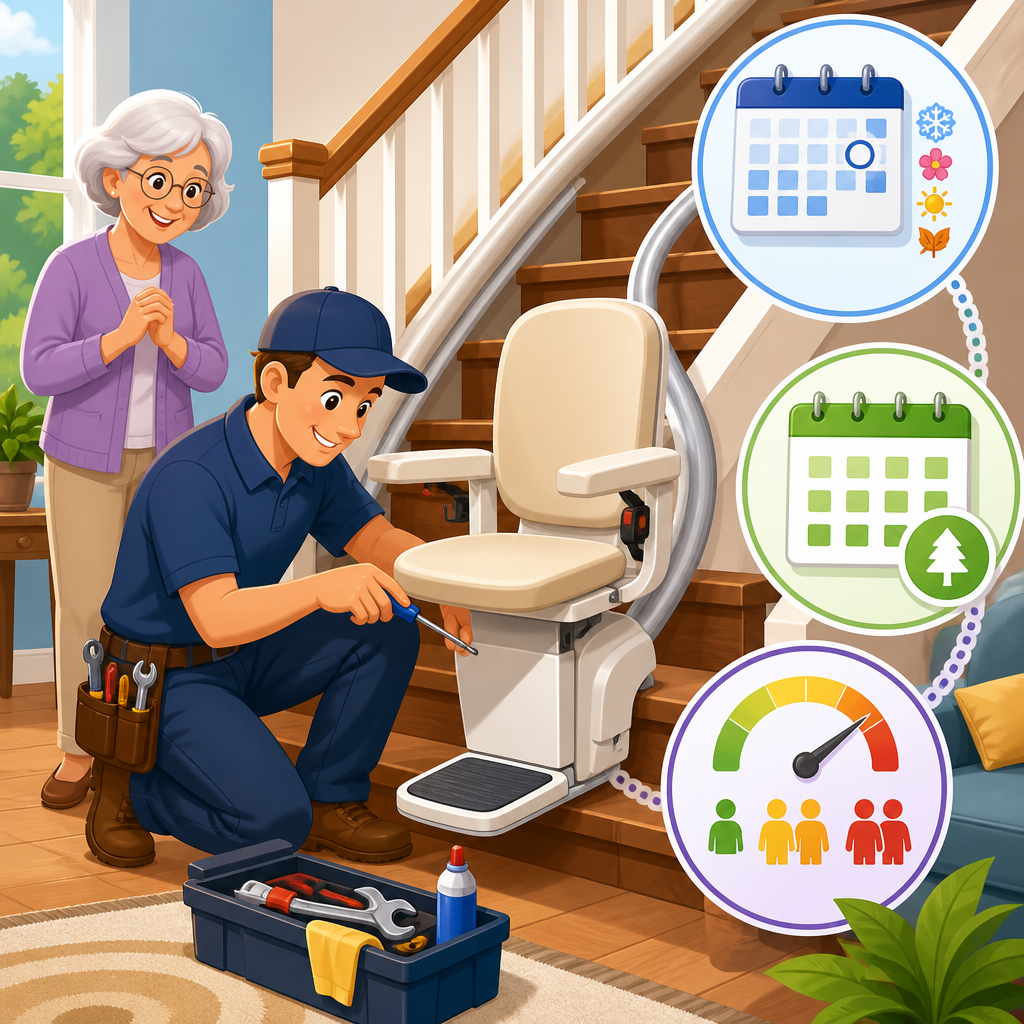
Professional service is not optional for outdoor stair lifts. At minimum, most manufacturers and dealers recommend annual maintenance, and harsh climates often justify service every six months. A trained technician should test battery health under load, verify charging voltage, inspect the drive system, check limit switches, confirm overspeed and braking functions where applicable, evaluate carriage rollers, inspect the rack or rail interface, and tighten mounting hardware to specification.
Technicians also know model-specific failure points. For example, some units are more prone to contact oxidation, while others commonly develop issues at folding rail hinges, remote receivers, or seat interlocks. An experienced technician can spot seal fatigue, wire chafing, and corrosion progression that an owner would miss. They also use manufacturer bulletins, updated parts, and service procedures not available in a general owner manual.
You should schedule service immediately if the lift stops mid-travel, displays fault codes, emits burning smells, trips household breakers, fails to charge consistently, or shows visible water inside covers. Do not continue operating a lift that behaves unpredictably. Mobility equipment should never be “used until it quits.”
Cleaning products, protective practices, and mistakes to avoid
The safest cleaning approach is also the simplest: soft cloths, mild soap, limited water, and full drying. Avoid abrasive pads, degreasers, automotive waxes unless specifically approved, petroleum lubricants on unapproved points, and aerosol sprays near switches or charging contacts. These products may seem helpful in the moment but often create residue buildup or material damage that appears weeks later.
Keep drainage paths around the staircase clear. Overflow from gutters, irrigation overspray, and planters placed near the rail can increase moisture exposure dramatically. If possible, trim vegetation so wet leaves do not rest against the rail or carriage. In snowy regions, never chip ice off the lift with metal tools. Let ice melt naturally or use manufacturer-approved methods only.
One common mistake is storing the lift away from its charging point to “protect” it from weather. Unless the unit is parked on a designated charge station, batteries can discharge and sulfate. Another mistake is covering the lift while it is still wet. The cover should protect a dry lift, not trap moisture against it. Small habits like these determine whether the lift lasts smoothly for years or becomes a recurring repair item.
Building a year-round maintenance plan
The best routine maintenance plan follows the seasons. In late winter and early spring, focus on salt removal, charging checks, and hardware inspection. During rainy months, increase wipe-down frequency and inspect for infiltration after major storms. In summer humidity, prioritize drying, mildew prevention, and corrosion checks. In autumn, remove leaves and organic debris before they hold moisture against the rail.
For most households, a practical schedule is weekly visual cleaning, monthly function testing, seasonal deep inspection, and professional service once or twice a year depending on exposure. Homes near the coast, near heavy road salting, or under dense tree cover should maintain the lift more often because environmental load is higher. That is not over-maintenance; it is matching care to actual conditions.
Outdoor stair lift maintenance after winter, rain, and humidity is ultimately about preserving safe independence. Clean rails, dry contacts, healthy batteries, intact covers, and timely service prevent the breakdowns that most often leave users stranded. If this page is your hub for routine maintenance tips, use it to build your checklist, then schedule a professional inspection if your lift shows any signs of corrosion, charging trouble, or moisture intrusion. Consistent care keeps the lift ready when it is needed most.
Frequently Asked Questions
How should I maintain an outdoor stair lift after winter weather?
After winter, an outdoor stair lift should get a careful top-to-bottom inspection because cold weather tends to leave behind more than obvious dirt. Start by looking for salt residue, sand, grit, and general buildup on the rail, footrest, seat frame, charging points, and exposed hardware. Road salt and de-icing chemicals are especially important to remove because they speed up corrosion on metal parts and can damage finishes if left in place. Use a manufacturer-approved cleaner or a soft cloth with mild soap and water, then dry everything thoroughly. Avoid pressure washing or soaking components, since excess water can be just as harmful as winter debris.
Next, check for signs of freeze-thaw stress. Repeated freezing and thawing can loosen fasteners, affect rail alignment, and place strain on joints and mounting points. Listen for new noises such as grinding, clicking, or rattling during operation, and watch for hesitation, jerky travel, or unusual vibration. These can all suggest that winter has affected mechanical or structural components. It is also wise to inspect the cover if your unit has one, since cracked or poorly fitting covers allow moisture to sit on the lift when temperatures fluctuate.
Battery performance should also be reviewed after winter. Cold weather can reduce charging efficiency and battery capacity, especially if the lift sat unused for long periods. Make sure the lift is parking correctly on its charging contacts, and confirm the charger indicator behaves normally. If the stair lift seems weaker than usual, moves slower, or beeps unexpectedly, the batteries may need testing or replacement. For best results, combine your own visual inspection and cleaning routine with a professional seasonal service visit, particularly at the end of winter when hidden wear is most likely to show up.
What problems can heavy rain cause for an outdoor stair lift?
Heavy rain can affect an outdoor stair lift in several ways, even when the unit is designed for exterior use. The biggest concern is moisture intrusion. Water can work its way into electrical housings, control panels, call/send stations, seat switches, and rail joints if seals are aging or components are not fully protected. Once moisture gets inside, it can lead to intermittent controls, false error codes, corrosion on terminals, and eventually short circuits or component failure. In many cases, the lift may still work for a while, which is why post-rain checks matter so much.
Rain also increases the risk of corrosion on exposed fasteners, brackets, hinges, and charging contacts. If moisture lingers, these areas may begin to oxidize, creating poor electrical connections or causing moving parts to become stiff and noisy. Upholstery and armrests can also suffer if water sits under seams or covers, especially if the stair lift is not dried properly afterward. Over time, that can lead to mildew, cracked materials, and unpleasant odors. Wet rails may collect dirt more easily as well, creating a thin layer of grime that interferes with smooth travel.
After a period of heavy rain, inspect the lift before regular use. Wipe down accessible surfaces, check that the seat, footrest, and controls are dry, and look for water pooling near the rail, carriage, or charging points. If you notice flickering indicators, delayed response from controls, unusual sounds, or any evidence of moisture inside covers or electrical enclosures, stop using the unit and call for service. Outdoor stair lifts are built to handle weather exposure, but they still depend on intact seals, clean connections, and consistent maintenance to remain safe and reliable.
How do high humidity levels affect outdoor stair lift performance and materials?
High humidity is one of the most overlooked threats to outdoor stair lifts because it causes damage slowly and often without dramatic warning signs at first. Moist air promotes corrosion on metal surfaces, especially around bolts, brackets, charging contacts, hinges, and any area where protective coatings have worn thin. Even stainless or treated materials can develop issues over time if they are constantly exposed to damp air. Corrosion may begin as light discoloration but can eventually interfere with electrical continuity, weaken hardware, and create rough operation.
Humidity also affects non-metal parts. Upholstery, padded armrests, and seat surfaces can absorb moisture, which may lead to mildew, mold, musty odors, or premature material breakdown. Plastic controls and switches may become sticky or less responsive if residue combines with damp air. In enclosed or shaded stairways, condensation can build up repeatedly, leaving a thin film of moisture on surfaces even when it has not rained. That is why some lifts seem to have chronic electrical or cosmetic issues in humid climates despite looking sheltered.
To reduce humidity-related problems, keep the stair lift covered when not in use with a proper weather cover, not a makeshift tarp that traps moisture. Wipe down the unit regularly, especially touchpoints and exposed metal, and inspect for early signs of rust, mold, or stiffness in moving parts. Make sure drainage around the staircase is good and vegetation is trimmed back to improve airflow. If you live in a persistently humid area, schedule more frequent professional maintenance so technicians can check seals, contacts, lubrication points, and developing corrosion before small issues become expensive repairs.
What routine maintenance tasks can homeowners safely do themselves?
Homeowners can handle several important maintenance tasks, provided they stay within the manufacturer’s recommendations and do not open electrical housings or attempt mechanical adjustments. The most useful do-it-yourself task is regular cleaning. Wipe the rail, seat, footrest, armrests, and controls with a soft cloth to remove dust, pollen, salt residue, and moisture-related grime. Use only gentle, approved cleaners, and always dry the lift completely afterward. Pay close attention after winter storms, rain, or humid stretches, since environmental buildup tends to collect quickly on outdoor units.
You can also perform a basic visual and operational check. Look for rust spots, cracked covers, loose-looking hardware, worn seat belts, damaged upholstery, or anything that appears out of alignment. Run the lift through a full cycle and listen for changes such as squeaking, grinding, scraping, or hesitation. Confirm that the lift stops and starts smoothly, parks properly at charging points, and that safety features like swivel-seat locks and footrest sensors seem to function normally. If the controls feel sticky or unresponsive, note it early rather than waiting for a full failure.
What you should not do is just as important. Do not lubricate the rail or internal components unless the manufacturer specifically instructs you to, because the wrong lubricant can attract grit or harm the drive system. Do not remove covers, tamper with wiring, or try to correct alignment problems yourself. Outdoor stair lifts combine electrical, battery, and mechanical systems, and improper handling can create safety risks. A good homeowner routine is regular cleaning, observation, and prompt reporting of changes, paired with scheduled professional servicing for adjustment, testing, and deeper inspection.
How often should an outdoor stair lift be professionally serviced in wet or seasonal climates?
In wet, humid, or strongly seasonal climates, an outdoor stair lift should typically be professionally serviced at least once a year, but twice a year is often the better standard. Outdoor units simply experience more stress than indoor models. They deal with temperature swings, rain exposure, condensation, debris, UV wear, and in colder areas, freeze-thaw cycles and salt contamination. A single annual visit may be enough in mild conditions, but where winters are harsh or humidity is persistent, a spring and fall service schedule usually provides better protection.
A post-winter service is especially valuable because it allows a technician to identify corrosion, battery weakness, charging problems, rail contamination, loose fasteners, and seal deterioration before they lead to breakdowns. A second service before or during the wet season helps confirm that covers, housings, and electrical protections are still doing their job. During professional maintenance, the technician can inspect components you should not access yourself, test battery and charger performance, verify safety circuits, examine the drive system, and check the lift for signs of moisture intrusion or structural wear.
You should also arrange service sooner than scheduled if the lift develops new noises, moves unevenly, responds inconsistently to controls, shows warning lights, or has been exposed to unusually severe weather. Waiting for a complete failure is rarely the most cost-effective approach, especially with outdoor equipment. Consistent professional servicing not only extends the life of the stair lift, but also helps ensure it remains safe, quiet, and dependable when users need it most.