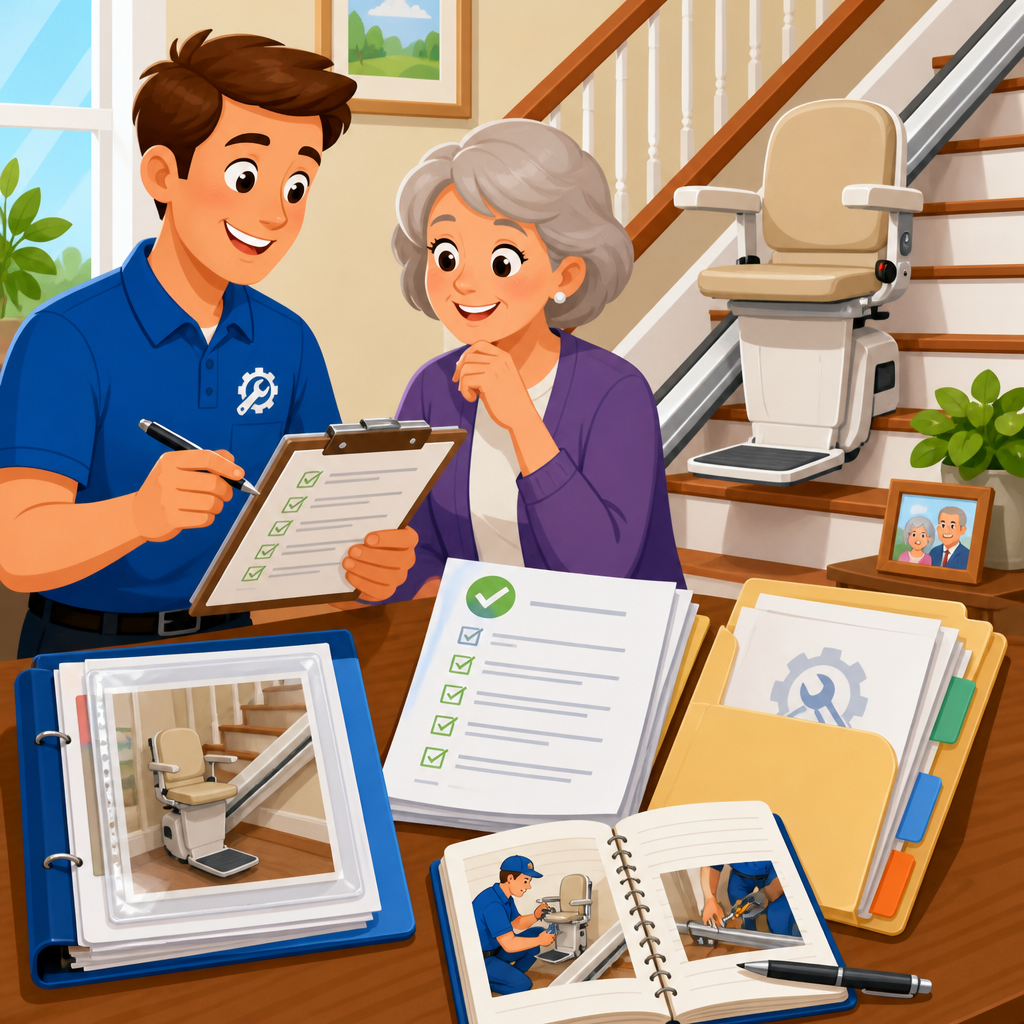
Keeping complete records from stair lift inspections and service calls protects safety, supports warranty claims, speeds up repairs, and gives owners a clear maintenance history that can prevent costly failures. In practical terms, a stair lift record is the written or digital trail of every annual inspection, routine service visit, troubleshooting call, repair, battery replacement, safety test, and parts change connected to one specific lift. That record should identify the unit, document what was checked, show what failed or was adjusted, and state what action was taken. For homeowners, family caregivers, facility managers, and accessibility coordinators, these files matter because stair lifts are mobility devices used by people who may be medically vulnerable, balance-impaired, or unable to safely evacuate without assistance. When I review service histories, the difference between a well-documented lift and a poorly documented one is obvious: the first can usually be diagnosed quickly, while the second often requires repeat visits, duplicate testing, and avoidable downtime. Good records also help verify whether annual inspections were completed on time, whether recurring faults point to a charger, track alignment issue, battery decline, or seat swivel switch problem, and whether the lift continues to operate within the manufacturer’s intended parameters.
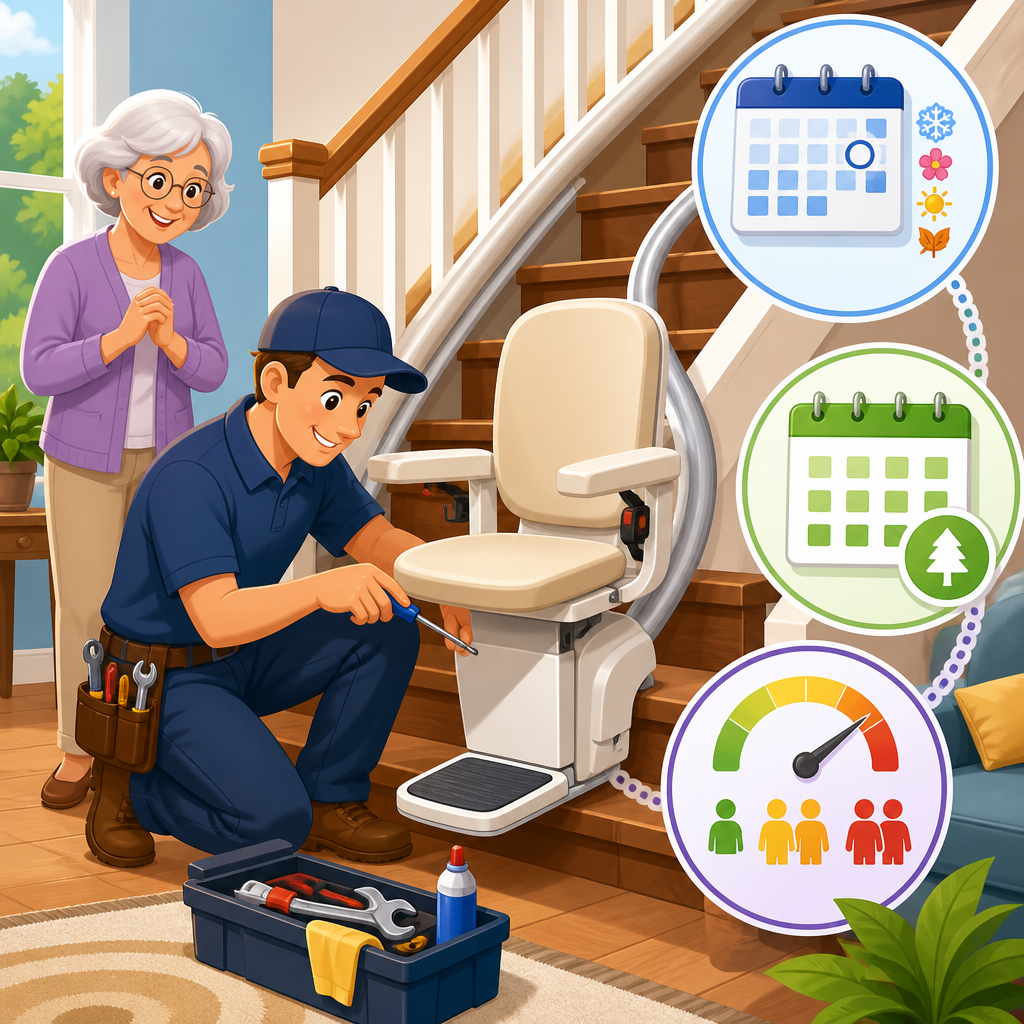
Annual inspections deserve special attention because they are the backbone of a reliable maintenance program. A service call often happens after a fault appears, but an annual inspection is proactive. It is the scheduled, systematic review of the carriage, rail, power supply, batteries, controls, safety edges, overspeed governor or braking system where applicable, seat functions, footrest sensors, call/send stations, charging contacts, and travel performance. On straight and curved stair lifts alike, this yearly review creates the benchmark against which future wear can be measured. It also serves as the hub for every related maintenance article in this topic, because nearly every troubleshooting path starts with one question: what did the last inspection show? If your records answer that clearly, you can make better decisions about repair timing, replacement planning, user safety, and total cost of ownership.
Start With a Master Equipment Record for Each Stair Lift
The first document to keep is a master equipment record, sometimes called an asset sheet or unit profile. This should include the manufacturer, model, serial number, installation date, rail type, weight capacity, power configuration, installer name, dealer contact information, and warranty dates for parts, labor, batteries, and major components. If the stair lift has custom curved rail sections, note the rail drawing number or job reference so replacement parts can be matched accurately. Include the exact installation address and, in larger properties, the building, floor, and stairwell identification. I also recommend storing photos of the installed unit, data plate, track start and stop points, charging stations, and power outlet or dedicated circuit serving the lift.
This single record becomes the anchor for all inspection and service paperwork. Without it, invoices and technician notes become detached fragments. With it, anyone reviewing the file can immediately confirm whether a replacement arm switch, seat belt latch, gearbox assembly, battery pack, or board firmware update belongs to that exact machine. This matters in the field because stair lift brands use different diagnostic logic and replacement intervals. A battery specification that fits one DC-powered lift may be incorrect for another. A charger output reading considered normal on one unit may indicate failure on a different platform. Precise identification is the foundation of reliable recordkeeping.
What an Annual Stair Lift Inspection Record Should Include
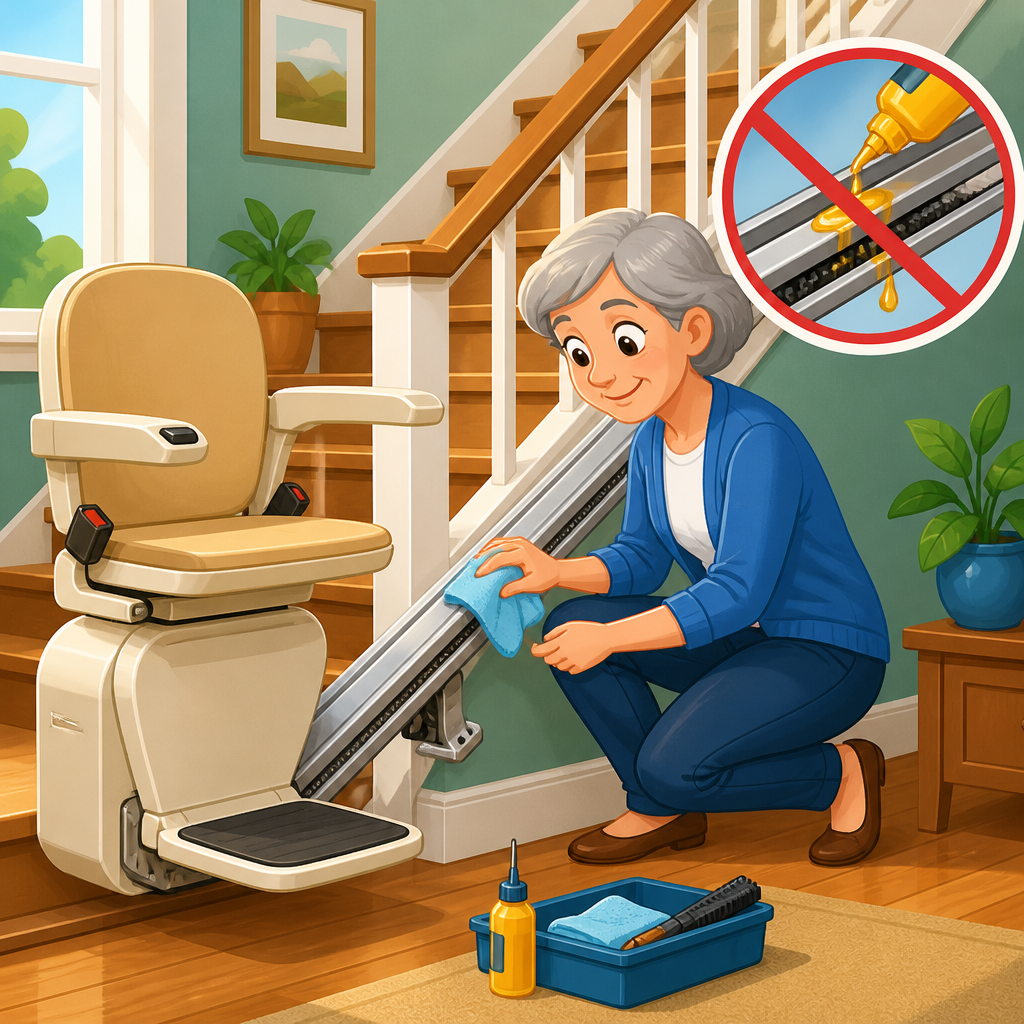
An annual inspection report should document the date, technician name, company, arrival and completion times, reason for visit, and whether the inspection was routine, warranty-related, or prompted by a complaint. The report should list all functional and safety checks completed. At minimum, that includes ride quality, start and stop smoothness, travel speed consistency, obstruction sensor operation, seat swivel lock function, seat belt condition, armrest control responsiveness, call/send station testing, charging status at each charge point, battery voltage or condition assessment, track condition, gear rack or drive interface inspection, lubrication status where permitted by the manufacturer, and verification that mounting points remain secure.
The best reports go beyond a simple pass/fail checklist. They state observed conditions in plain language. For example: “Left-side charging contact slightly pitted; cleaned and retested,” or “Upper final limit engages correctly, but carriage hesitates before charging; monitor at next service.” That level of specificity helps identify trends. If three annual inspections note increasing hesitation at the top landing, that may point to contact wear, rail alignment drift, or battery degradation rather than an isolated event. It also helps a future technician avoid repeating work already done. A thorough inspection record is not paperwork for its own sake. It is the operational memory of the lift.
Service Call Records: Capture the Problem, the Cause, and the Fix
Every service call record should answer three direct questions: what symptom was reported, what cause was found, and what corrective action restored safe operation? The symptom should be described from the user’s perspective first, such as “unit stopped halfway,” “beeping when parked,” “seat won’t rotate,” or “remote does not call lift downstairs.” Then the technician should record the diagnosed cause using technical terms where appropriate: depleted batteries, failed charger, dirty charging contacts, misaligned footrest safety edge, loose seat swivel interlock, damaged wiring harness, worn roller, PCB fault, or track obstruction. Finally, the record should state the fix: cleaned contacts, replaced charger, adjusted interlock, reset fault, replaced batteries, resecured harness, or scheduled return visit for parts.
Include all measurements and test results taken during the call. Voltage readings, charger output, fault codes, travel tests, amperage draw where relevant, and final operational checks provide objective proof that the diagnosis was sound. If the lift was left operational with a temporary workaround, that must be stated clearly, along with any user restrictions. If it was left out of service, document why and note whether the user or caregiver was informed of the risk. In my experience, the most expensive repeat calls happen when notes say only “repaired stair lift” with no symptom history or data. Clear service records prevent that waste.
Key Documents to Store After Inspections and Repairs
Most owners should maintain one complete file, whether physical, digital, or both, containing the documents below. Keeping them together creates a usable maintenance history rather than a stack of unrelated papers.
| Record type | What it should include | Why it matters |
|---|---|---|
| Master equipment record | Model, serial number, install date, dealer, warranty terms | Confirms exactly which lift is being serviced |
| Annual inspection reports | Checklist results, observations, adjustments, safety tests | Shows preventive maintenance history and trend data |
| Service call reports | Complaint, diagnosis, measurements, repairs, final testing | Speeds future troubleshooting and proves corrective action |
| Invoices and parts receipts | Part numbers, labor details, dates, costs | Supports budgets, warranty claims, and replacement planning |
| Battery and charger history | Install dates, voltage notes, charger replacement dates | Helps predict common power-related failures |
| User incident reports | Stops, slips, unusual noises, error beeps, near misses | Connects real-world use issues to service findings |
| Owner manuals and bulletins | Manufacturer instructions, recalls, technical updates | Keeps maintenance aligned with current guidance |
Why Battery, Charger, and Power Records Matter So Much
On many residential stair lifts, batteries and charging systems are the most common source of avoidable service calls. That is why power records deserve their own category. Track the battery installation date, manufacturer, amp-hour rating if provided, charger model, charger replacement date, and any voltage readings taken during service. Also note whether the lift charges continuously on a contact strip or only at designated charge points, because user complaints often relate to parking position. A lift that is left just short of a charge contact may appear to have an intermittent electrical fault when the real issue is simple non-charging.
These records help distinguish age-related battery decline from other faults. Sealed lead-acid batteries, common in stair lifts, often lose performance gradually before they fail dramatically. Symptoms include slower travel under load, warning beeps, failure during power outages, or inability to complete repeated trips. If your records show the batteries are four or five years old and the charger has already tested good twice, the likely diagnosis becomes much clearer. Good battery records also prevent premature replacement of control boards, switches, and motors when the actual problem is unstable DC power.
Document Safety Components and Functional Testing in Detail
Safety systems should never be recorded with vague phrases like “checked OK” unless the checklist separately identifies each function tested. A proper record names every safety-related component inspected and confirms its behavior. That includes footrest obstruction edges, carriage safety edges, overspeed protection or mechanical braking devices where fitted, swivel seat interlocks, seat belt condition, final limits, directional controls, and emergency stop features if the model includes them. If the lift has folding rails, powered hinges, or powered swivel seats, each of those functions should be tested and documented independently.
Detailed safety records are especially important in shared-use environments such as churches, senior housing, clinics, and multigenerational homes. If a user reports a sudden stop, the record should state whether a safety edge activated due to an object on the stairs, whether a switch was sticking, or whether no fault was found during repeated testing. That level of documentation is critical after a near miss or user complaint. It also supports defensible decision-making if a technician recommends taking the lift out of service until a part arrives. Records should show not only that a safety feature exists, but that it was tested and behaved correctly on a specific date.
Use Records to Spot Repeat Faults and Plan Replacement Cycles
One of the strongest reasons to keep organized stair lift records is trend analysis. A single service visit may look routine, but multiple visits over time reveal patterns. Repeated top-landing charging issues, for example, may indicate contact wear, rail movement, parking habits, or charger instability. Frequent seat swivel lock complaints may point to user technique, worn latches, or a misadjusted interlock. Intermittent stoppages on one section of rail can suggest track contamination, rack wear, wiring harness strain, or a leveling issue in the staircase structure itself.
Trend records also support replacement planning. If annual inspections show increasing parts consumption, rising labor time, and diminishing reliability, owners can compare the cost of continued repair against replacement. This is particularly useful for older lifts with discontinued components or custom curved rails. In those cases, the record file becomes evidence for budgeting. Rather than saying a lift is “old,” you can show that it needed two battery sets in five years, a charger, a joystick assembly, repeated contact adjustments, and three no-run calls in twelve months. That is actionable data, not opinion.
Best Practices for Storing, Reviewing, and Sharing Stair Lift Records
The most effective system is simple enough that it will actually be used. For a homeowner, that may mean a labeled binder plus a scanned digital folder. For a facility, use a centralized maintenance platform or computerized maintenance management system with reminders for annual inspections and battery age review. File every report chronologically and name digital files consistently, such as “2026-03-14_AnnualInspection_BrunoElite_Serial12345.” Keep photos, invoices, and technician notes attached to the same event whenever possible.
Review the record at least once a year, ideally before scheduling the annual inspection. Look for unresolved recommendations, deferred parts, expired warranties, and repeated complaints. Share the file with any new service provider before the appointment so the technician arrives informed. If the lift changes owners, tenants, or managers, transfer the full record set with the unit. That continuity has real value. It improves safety, shortens downtime, and helps everyone involved understand the difference between a one-time fault and a chronic condition. If you manage stair lift maintenance, start by organizing your annual inspection reports and service call records today; they are the clearest path to safer operation and smarter repair decisions.
Frequently Asked Questions
1. What records should you keep from stair lift inspections and service calls?
You should keep a complete, organized history for each individual stair lift, not just a few invoices or appointment reminders. A strong record file usually includes the lift’s make, model, serial number, installation date, location in the home or facility, warranty information, and installer details. From there, it should document every annual inspection, preventative maintenance visit, repair call, troubleshooting appointment, emergency service visit, battery replacement, charger issue, remote-control problem, safety test, lubrication service, track adjustment, seat or swivel repair, and any parts replacement. Each entry should clearly state the service date, the technician or company that performed the work, the reason for the visit, what was inspected, what problems were found, what repairs were completed, what parts were installed, and whether the lift was tested and returned to safe operation.
It is also smart to keep copies of written estimates, work orders, paid invoices, service contracts, warranty claim paperwork, owner’s manuals, and any notes about recurring issues such as intermittent stopping, beeping, slow travel, or charging faults. If a technician recommends future repairs or flags worn components, that should be saved too. The goal is to maintain a full written or digital trail that shows exactly what has happened to that specific lift over time. That kind of detail makes future service faster, helps confirm whether maintenance was done on schedule, and provides strong documentation if you ever need to address a safety concern, transfer ownership, or support a warranty or insurance claim.
2. Why is it so important to keep detailed stair lift maintenance and service records?
Detailed stair lift records do much more than create paperwork. They directly support safety, reliability, and cost control. A stair lift is a mobility device, so its service history matters in a very practical way. When inspection and repair records are complete, technicians can quickly see patterns such as repeat battery failure, charging-strip wear, track obstructions, loose seat components, or sensors that have triggered faults before. That history shortens diagnosis time and helps avoid unnecessary replacement of parts that are still functioning properly. It also gives owners a clear picture of whether the lift is being maintained according to manufacturer recommendations, which can reduce the risk of avoidable breakdowns.
Good records are equally important for warranty support and accountability. If a motor, battery, circuit board, footrest sensor, or other component fails, the manufacturer or dealer may want proof that the lift received proper inspections and service. Without that documentation, it can be harder to show that a problem developed despite appropriate maintenance. Records also help if there is a dispute about whether a technician previously identified a hazard, recommended a repair, or replaced a specific part. In short, consistent documentation protects the owner, helps service providers work more efficiently, and creates a maintenance history that can prevent small problems from turning into expensive failures.
3. What details should be included in each stair lift inspection or service entry?
Each service entry should be specific enough that another technician could review it later and understand exactly what happened. At a minimum, every record should include the date of the visit, the lift’s identifying information, the name of the service company, and the technician’s name. It should explain why the technician was called, whether for a routine annual inspection, preventive maintenance, unusual noise, charging problem, stoppage on the rail, battery issue, seat lock concern, remote-control malfunction, or another complaint. The record should then list what the technician inspected, such as the rail, carriage, power supply, batteries, call/send controls, safety sensors, seat belt, swivel seat, footrest switches, charging contacts, and diagnostic indicators.
The most useful records also describe the findings and actions taken in plain language. For example, note whether the batteries tested weak and were replaced, whether the charger output was checked, whether the track was cleaned, whether the gear rack was inspected for wear, whether safety edges were tested, whether travel limits were adjusted, and whether the lift completed normal operation after service. If any parts were replaced, the entry should identify the parts by name and, if possible, part number. If the technician recommended follow-up service, future monitoring, or a pending repair, include that too. Precise notes reduce confusion later and create a reliable maintenance history that can be used for future troubleshooting, resale, compliance, or warranty review.
4. Should stair lift records be kept in paper form, digital form, or both?
The best approach is usually both. Paper records are useful because they can be kept near the lift, in a home maintenance binder, or in a facility equipment file where they are easy to access during a service appointment. Digital records add another layer of protection because they are easier to search, back up, email, and share with family members, caregivers, property managers, or service companies. If a paper invoice is misplaced, a scanned copy can still preserve the service date, technician notes, and proof of payment. Using both formats lowers the chance that important maintenance history will be lost when ownership changes, paperwork gets discarded, or an urgent repair happens outside normal business hours.
If you keep digital records, organize them by stair lift unit and by date. Save inspection reports, invoices, photos, warranty documents, and technician notes in one clearly labeled folder. It can also help to maintain a simple service log or spreadsheet listing dates, issues reported, work completed, parts replaced, and the next recommended service interval. For paper files, keep documents in chronological order and attach receipts or parts documentation to the matching service report. Whichever system you use, consistency matters most. A record system is only valuable if it is updated after every inspection, repair, adjustment, battery change, and safety check.
5. How long should you keep stair lift inspection and service records?
In most cases, you should keep stair lift records for as long as you own or manage the unit, and ideally for the full service life of the lift. Unlike one-time household repairs, stair lift service history can remain useful for many years because older issues often connect to new ones. A technician may need to know when the last batteries were installed, whether a charger was replaced before, how often the lift has had stopping faults, or whether a recurring sensor problem has already been addressed. Long-term records help establish those patterns and can prevent repeated guesswork. They also provide valuable proof if a manufacturer warranty, extended service agreement, or dealer workmanship issue needs to be reviewed.
Even after the lift is removed, replaced, sold, or transferred to another property owner, it is wise to keep the records for a reasonable period. They may still be useful for warranty follow-up, insurance questions, property documentation, or confirming what equipment was installed and maintained at a specific location. If the stair lift is being sold or passed along, providing the maintenance history can increase buyer confidence and demonstrate that the unit was serviced responsibly. As a practical rule, do not throw away older records just because a newer service visit has occurred. A complete maintenance timeline is often far more useful than the most recent invoice alone.